Waiting

by Imee Cuison

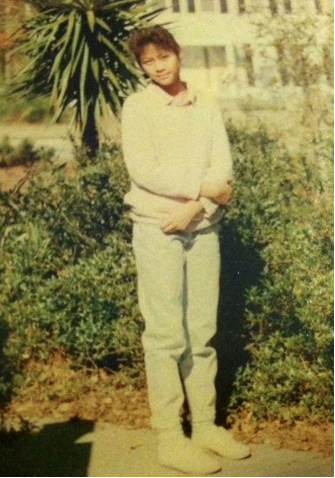
The author at age 11.

The author at age 11.

The buses are late. The children play out in front of the school waiting for them. Hot. Humid. Sticky sweat. She’s ten. Almost eleven. Talking with her girl friends out on the grass.

The boys are running around. Tackling each other. Yelling over the girls’ heads. The girls sneak glances at them. Curious. What’s it like to be a boy?

The boys run circles around the girls now. Her chest tightens. The girls giggle. One girl, Heather: “Thomas, don’t you have anything better to do?” Thomas ignores her. Heather lets out a huff and rolls her eyes.

Eric Esposito has joined in now. They throw a hacky sack to each other as they run. Jamal Wooley and other boys run into the circle. The boys are smiling, winking at each other. Laughing.

Katie Staton: “Quit it! We’re trying to talk, Eric!” She tries to run after him, but he is too quick.

She says nothing. Crossing her arms over her full breasts. Maybe the buses will come. She looks up the road.

Then, Jamal Wooley reaches his hand out as he circles around the girls. And grabs her.

This is why she stopped wearing skirts with only her white thin cotton panties to block her skin, her newly blossomed pussy, from their hands, dirt under the nails. With jeans, the boys can’t touch her bare ass. With jeans and baggy shirts, she can pretend.

The boys laugh and run away. Eric and Thomas and the other boys shove Jamal. A congratulatory tussle.

The girls turn away from her. They have something very important to talk about now. She is not allowed to listen.

She speaks, “I hate when they do that.”

“Shut up. You know you like all that attention,” Katie rolls her eyes.

They go back to their girl chatter. They’re planning a sleepover for the weekend.

“I don’t know if you can come anymore. It might be too many people over anyway,” Heather says to her.

This is the way it is. In two days time, the girls will forget and accept her back, but now, they are angry. None of the girls know why they hate her, but they do.

She sees the vice principal standing, hands on hips, eyes squinting, waiting for the late buses.

She speaks, “Jamaal Wooley grabbed my butt.”

He looks down at her. “What was that?”

“The boys. Jamaal Wooley. This time. He grabbed my butt.” Her voice is soft. A whisper.

The vice principal laughs. Throws his head back in an open mouthed chuckle. “That’s not something to bother me about, okay?”

She walks away still hearing his laughter. Still seeing the sun reflecting off his glasses. His open gaping mouth.

She stands on the concrete away from the girls, away from the vice principal, away from the boys that are all in the grass.

She waits for the buses.

It’s getting late.

About the author

Imee Cuison is a freelance writer based in Charleston, SC and Brooklyn, NY. She is the creative executive for Intrinsic Value Films, an independent film production company. Her prose and poetry work have appeared in numerous literary journals and anthologies such as Maganda Magazine, Tayo Literary Magazine, and Phatitude Literary Magazine.


The Hockey Finals

by C. G. Fewston

To a Boston Bruins Fan:

The Stanley Cup Finals is on the large screens all throughout the Sports Edition Bar next to the Hilton at Chicago O’Hare’s airport. The Cup showcases the Chicago Blackhawks, at home, against the Boston Bruins, series tied 2-2, score: the former team up two goals to nil against the latter at the second intermission. And all I can think about is how damn cool it would be if you were here with me, but I’m alone, as I have been (literally) since my older brother Chaddon Glenn, a.k.a., the Golden Child, went to college in Kansas, my parents divorced soon after, and my older sister Cassie (as in K.C.) Glynn (yes, spelling different than her brothers’ middle name) ran away to fend for herself.

The author and his sister.

The author and his sister.

Overnight, as it seems now looking back, I had a family and a warm and lively home and then I was in the sixth grade coming home to an empty house until nine at night. Every day an empty house, sports and books as my companions. So when I would see you write in your little book as I do now and when you spoke of stories and when you did research in the pool for a story (love that commitment to your art — except the nut-breaking knee whips twice over shoving my balls into my stomach — but, alas, I too know how to suffer for your stories, for you).

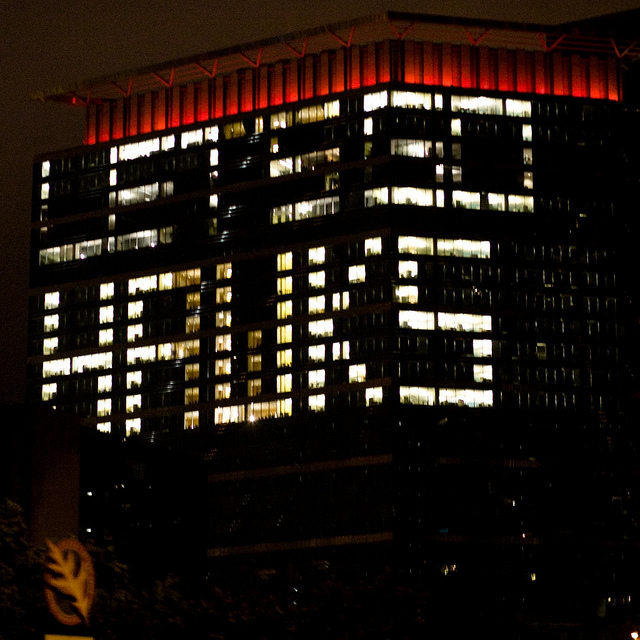
On the television is a shot of the Chicago skyline with a skyscraper lit up with

LET’S

GO

HAWKS!

And I think how I really enjoy coming to this sports bar. Been here about four times. It has Chicago Bears jerseys with my favorite football player, Walter Payton, and Chicago Bulls jerseys with all-time great Michael Jordan. I used to watch these guys perform miracles on the field and court. When I was about three-years old I told my father that the letter “C” on the Chicago Bears helmet was for “Cody” and he responded in his infinite wisdom: “No, stupid. That ‘C’ isn’t for you. It’s for the ‘C’ as in Chicago Bears.” That’s what my emotions tell me of that moment. “Keep quiet and watch the game,” he added. So I did. And my amazing skills connecting the “C” in ABCs to a word, namely my name, was dashed into shame.

Not for "Cody." image source: abearsfan.com

Not for “Cody.”
image source:
abearsfan.com

So here I sit. In the sports bar. In Chicago. Sam Adams Seasonal ($12.50/23 oz.) at my table. And watch the hockey game. Thinking of you. Thinking of my childhood (by the way: I’m a Blackhawks fan. Go Hawks!). And I ordered the smoked turkey stack ($15) with Wisconsin sharp cheddar cheese — score! Bruins score a goal at the 16:18 mark of the 3rd period, and from behind me a guy yells, “Fuck!” then says, “Sorry” and then says, “Damn!” and he reminds me a bit of Chris — applewood smoked bacon, tomatoes, Bibb lettuce and roasted pepper aioli on peasant bread; why do they call it peasant bread? The score is now 2-1, Hawks in the lead.

I’m wearing sneakers with blue jeans and my gray cardigan over my white pool shirt. The beer tastes damn good. I had to wait a moment to write; people think I’m a journalist writing about the game, but about seven feet from my high-table spot there is a family of five, two girls and one boy, when the father jumps up and rushes to the older daughter of ten years, or there about, in orange shorts and a white and orange-striped shirt — she reminds me of you — and she was eating a hot piece of pizza when a slice fell on her exposed legs and she wanted to scream, sure enough, and the mother is now, as I write — dictate more like — the mother is now giving her daughter ice cubes wrapped in a cloth napkin and tells her to press it against the burn and tomorrow they will be in Michigan. Why does the little girl with the burn remind me of you??

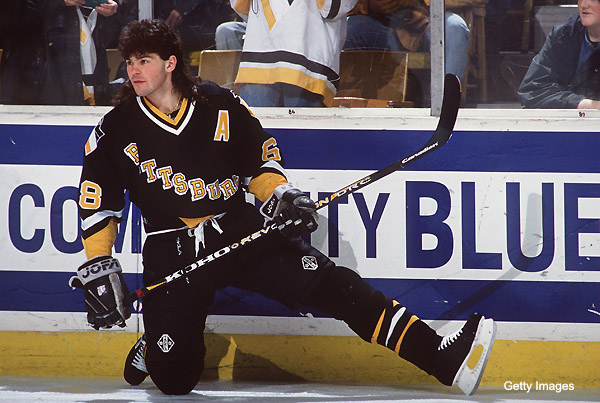
Jaromir Jagr image source: sports.yahoo.com

Jaromir Jagr
image source:
sports.yahoo.com

Jagr looks cool on the ice — is he the same from the Pittsburgh Penguins long ago? And I believe you would love it here, drinking wine, red of course, by my side in a sports bar in Chicago during the Stanley Cup Finals, 2013 (or one in Boston, perhaps). I imagine you now, 10:30 p.m., with your father, you on the cell phone chatting to friends with one eye on the game at 5:09 left with the Bruins down by one and your father rooting for a miracle, but that is my father not yours and that is me not you there in my imagination.

A beggar is behind me outside the bar, which is in the hallway of the hotel’s lobby, and he is watching the game and chanting to Om of cosmic origin in childlike form and a man named Adam comes and gives him a $10 food certificate for some restaurant, and I think of life, of you, of men who fail their dreams. And all is connected and not.

“Less than two,” the beggar with gray clothes and a cane chants about two minutes left in the game with the Hawks up two goals to one. The tension builds in the bar. “1:20,” he says. “Oh! Less than a minute,” he says again, keeping me an accurate time as I write. I’ll give him some money, I think.

Thirty-one point eight seconds left and a waiter comes to the beggar and asks if he needs anything and the beggar responds, “Chicken wings.” The waiter agrees. “20 seconds! 15 seconds!” the beggar says.

The bar custodians cheer. Eruption. A late goal.

“Goodbye Boston!” the beggar sings. “Go home.”

The father of the little girl that burned her leg says, “That’s it.”

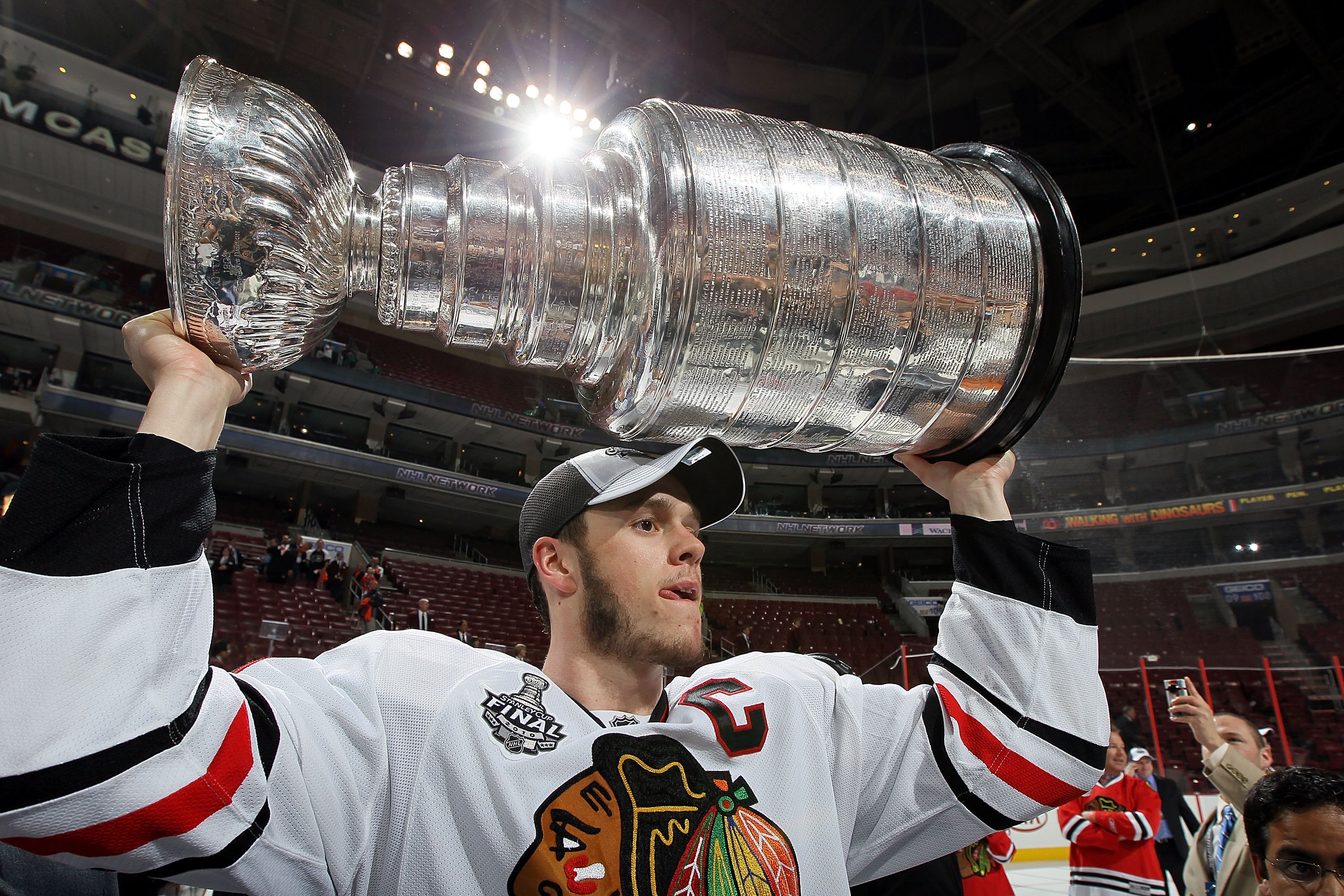
And that is it. But I am still alone. The waiter will bring the beggar some chicken wings and the city of Chicago will erupt in triumph and celebration, leading the series now 3-2, and they will later win the Stanley Cup. And I am here, alone, the final score 3-1 in a Chicago sports bar, and all I can do is think of you and write to you.

The team does the interviews on the ice, I take a bite of my sandwich, then swallow, drink beer, and stop. I get a $10 bill and give it to the beggar, and tell him to “eat well” tonight. The Chicago spirit is with me. The land of my childhood that I dreamed of in awe of that mighty “C” that stood for Chicago and not for “Cody.”

The waiter comes out into the hall and gives the beggar the styrofoam box of chicken wings and the beggar says, “I knew you wouldn’t forget me.”

How true. How true true stories are. How could I forget you?

The waitress comes to me and collects the metal basket that held the french fries and asks, “How you doing, hon?”

And I say, exactly like this, “Wonderful.”

– A Chicago Blackhawks Fan

About the author

C.G. Fewston  lives and works in Ho Chi Minh City, Vietnam as university professor for the University of Sunderland where he also writes for Ho Chi Minh City’s premier English newspaper: Tuoi Tre, “The Youth Newspaper.” He has had short stories published in Nature Writing, Travelmag: The Independent Spirit, and Go Nomad. He also had a Highly Commended short story “Lazarus, Come Forth!” in the Tom Howard Short Story, Essay, and Prose Contest.


Empty Seats

By Terry Barr

A few days ago my wife was sorting through the papers that regularly accumulate in one of our kitchen drawers.  You know, those documents you weren’t sure you couldn’t live without but had no proper place to store or display?  Those seemingly precious artifacts that once consigned to the drawer, you promptly forget ever existed?  It’s only my wife who ever goes through that drawer, and she usually does so when I’m editing a vital piece of writing or agonizing over a Yankee baseball game.

“Do you need this?  And what about this?  How about this?  Or that?”

The process goes on like that for hours, and to be fair, I could step in and take responsibility for my own stuff and sort through it before she does.  I know she hates this part of me—the part that finds my indulgences more important than tending to the nuts and bolts of the papers of our lives.  And I hate to be asked about it all, so I really should do something differently to end this madness.

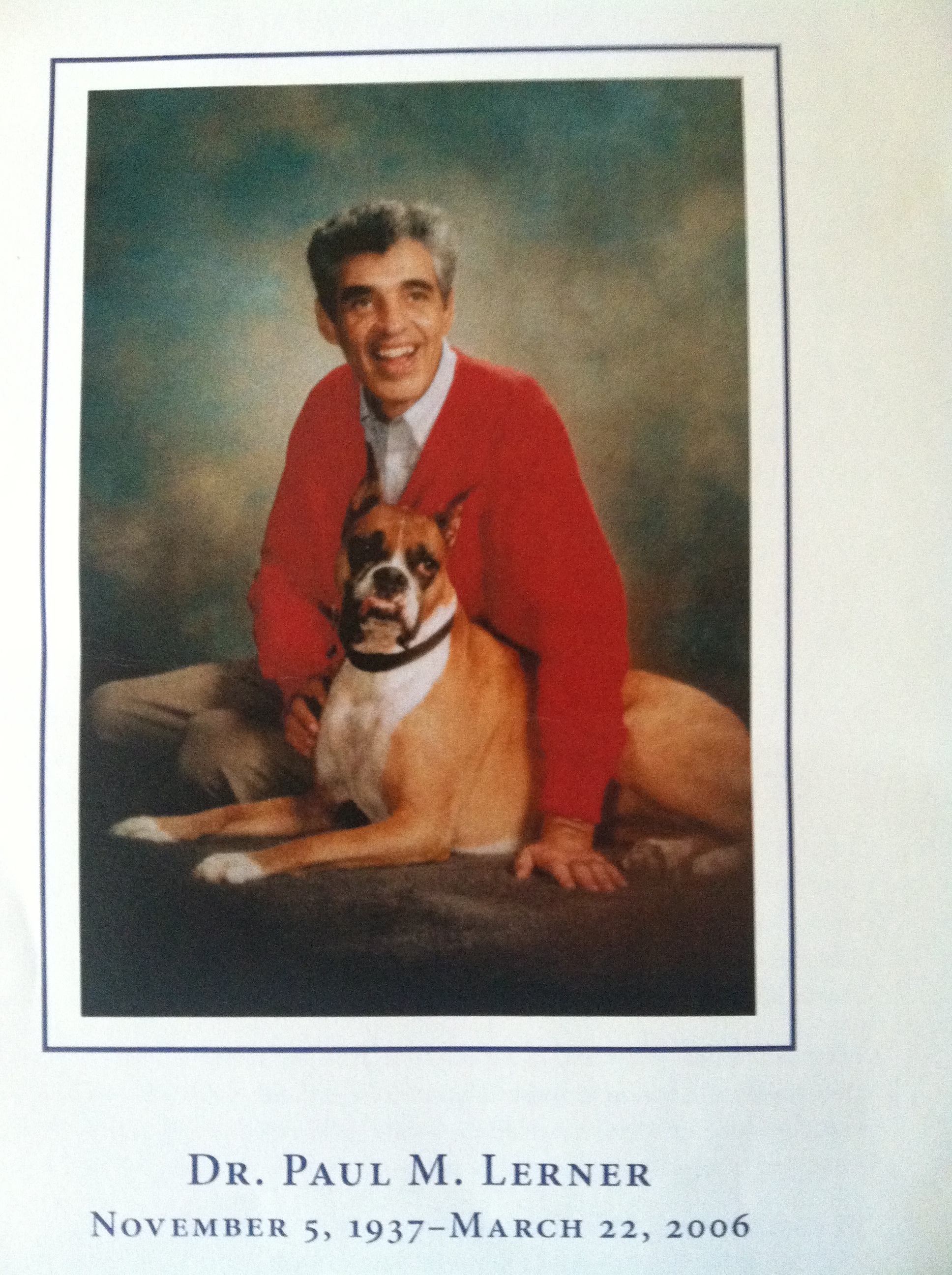
Maybe one day I will, but until that time, I’ll take this opportunity to write about an item that she pulled out for my inspection on this last sorting.  It was a commemorative photograph of my former therapist, posed next to his beloved Boxer dog, smiling as if at that moment he was the happiest man alive.

emptyseatspicdog

“I’m sure you want to keep this,” my wife said.

Yes, I do.

   *******

When your therapist dies of a sudden and massive heart attack, whom do you turn to for consolation, for understanding?

For therapy?

It was seven years ago now, since that evening when my wife broke the news to me. We were winding our way down a mountain road after dropping our daughter off at a weekend youth camp.

“You know that phone call we got before we left home?”

“Yeah.”

“Well, I have some bad news.  Paul is dead.”

I didn’t know what to say, and in some ways I still don’t.

“At least he didn’t suffer,” she said.

Which, I suppose, is the best you can say when it feels like the world has shifted unaccountably and forever.

******

Paul had been my therapist for eleven years, ever since my depression deepened to the point where I felt like I was holding my breath every time my wife left me in charge of our two very young daughters until she came home.  I could do all the functional things—feed them, change them, take them for walks—but I always felt like I would somehow lose or break or forget them somewhere, even inside our house.

So I began seeing Paul.

At first, he wanted to see me every week, sometimes for two-hour sessions.  He uncovered layers of depression that, unsurprisingly, took me back to my childhood, into issues of abandonment, triangulation, secrecy, and loyalty.  Through this process, eventually I became more confident of my power and ability to take care of my loved ones.  My love for them had always been strong, but Paul helped me see my competence, my strength, and most importantly, my worthiness of being loved.

Two particular incidents, I think, best describe the relationship we had.  Once, our beloved family cat Hugo, at this point reaching age 12, developed a severe thyroid condition.  Some in our immediate and extended family thought that Hugo was too old to undergo the costly radiation treatment that could cure him.  But I was determined to take care of my pet, convinced that he still had years of life left to live.  I had begun writing film reviews for a local weekly newspaper, and I dedicated my small salary for my first writing job to paying Hugo’s expenses.  I explained all this to Paul during our next session, especially how I was doing this against the wishes and advice of others in my family.

I remember Paul getting choked up as he listened to my story, and then he told me that not everyone understood the obligation and bond between owner and pet.  He told me of how he bought plots in a local pet cemetery for his dogs and buried them there, complete with their own markers.  I could tell that he wanted to cry as he spoke.  He didn’t tell this story to just anyone.  And then he said,

“And what I want to do for you now is to donate the money for this session to helping you pay your cat’s bill.”

It was enough for me that he had empathy, that he heard my frustration and fear and pain.  But even though I protested, he wouldn’t let me pay him for the session, and so I did use the money to cure my pet.

More to a therapist’s strength, though, came the season in 2000 when Paul helped me deal with my father’s decline and death.  Paul understood how to help me grieve; he was the first person to look me in the eye, three months before my dad actually passed, and say, “Terry, you’re feeling sad because your father is dying.”

I knew, in the middle and back parts of my mind that my father was dying.  But I needed to see it more closely, to accept it.  That’s what a good therapist helps you do.  Accept reality, and then deal with it.

By the time my father actually died, I felt as close to Paul as I did any other man beside my father, and of course, in many ways, Paul understood me better than my father ever had.  Which led me to take a chance on our relationship.

******

My father died on Christmas Eve, 2000.  A few weeks later, as Paul was helping me manage my grief, I blurted out that one of my deepest regrets was never offering to take my Dad to a game at Yankee Stadium.

“Why didn’t I think of doing this?  We used to go to minor league games in Birmingham all the time.  He would have loved it!”

As I was reeling, the idea formed, and I spoke without considering that there might be a conflict for Paul:

“Paul, can I take you to a game this spring?”

But he answered, in my memory, without any hesitation:

“Why sure Terry, I’d be glad to go with you.”

So I made all the arrangements.  Our tickets were for a late April game against the Indians on a Saturday afternoon.  On the Friday before, I flew into New York and met my best friend Jimbo at his apartment on the upper West Side.  We ate lunch at a Colombian café just down the street, catching up and reminiscing.  On returning to his place, we caught the phone on its seventh or eighth ring.

It was Paul.  I had given him Jimbo’s number just in case of an emergency.

Was this an emergency?

“Terry, I’m so sorry, but I’m not going to make it into the city.  The weather is bad up here, and my wife doesn’t like the idea of my taking a chance on flying from our little airport.”

What could I say?  I felt years of therapy shedding itself from my skin.  I’m sure I tried my best to cover my shame, my embarrassment, my feelings of abandonment.

Covering your feelings from your therapist.  What a great idea.

He promised to talk to me the following week, and as we hung up, I felt my insides curling up.  More than anything , then, I wanted to walk out of Jimbo’s place and keep going.

“What just happened?”  Jimbo’s face was as white as mine.

I told him.  And after pausing a moment, he said,

“Uh…you want me to go with you to the game?”

Jimbo’s knowledge of baseball was accurately summed up earlier that day at lunch when he, who had been living in New York for the past twenty years, asked me if there were two New York baseball teams.

“No, Jimbo, I know you don’t care anything for baseball.  Don’t worry, I’ll go to the game and then we’ll go out for dinner later.”

His visual relief actually made me laugh.  And it got me through this moment of crisis, if being doomed to go to a baseball game by yourself in historic Yankee Stadium could ever be said to entail a crisis.

stadium_4

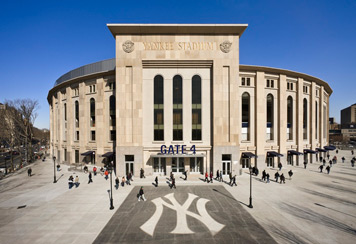
With the game starting at 1:00, I left Jimbo’s place at 11:00, hoping to get there in time to tour Monument Park.  But by the time I navigated the subways and worked my way to the Will Call booth, it was just after 12, and the exhibits had closed.  Still, I enjoyed strolling around the outside contours of the stadium, soaking in the reality that I was here, and only just a bit wistful that I was alone.

And then I saw him.  Not the ghost of my father, or the living being of Paul, but a gray-bearded homeless man, propped up against one of the pillars just outside the main gate.

“Does anyone have an extra ticket?  I don’t want any money!  I just wanna see the game.”

There I stood, two tickets in my hand, and a male voice begging to be my guest.

I wish I could say now that I walked over to this poor man and gave him my extra ticket.  I wish I could say that we entered together, that I even bought him one of Nathan’s finest dogs, and that we enjoyed a Yankee victory together, including that massive home run by Jorge Posada.  I wish I could say that on this day when I looked at the seat beside me, I saw a man who, while not my father or my therapist, was nevertheless a warm body next to me relishing America’s pastime with me in the grand tradition of fathers and sons.

I can’t say that, of course, because while I almost took a step closer to him, the thought that I would be saddled with a homeless stranger for the next four hours—along with whatever else he might bring—stopped me dead.

So I passed on by, went through the turnstiles, found the first trash disposal I could, and tossed that extra ticket in, where it nestled itself among the beer cans and popcorn boxes.

It was a semi-rainy day, and while the game went on without a delay, there were many open seats in the upper deck on the third base side where I was sitting.  I could have sat anywhere up there, and much closer to the front row of the deck than I did.  But it just didn’t feel right to move.  It didn’t feel right to leave that seat next to me where no one was sitting.

******

Paul lived another five years after this life event.  I can still hear his greeting every time we talked: “Hey Terry.”  On our last visit, it sounded to me like he was tired, though I don’t know if that’s just me in hindsight hearing what I now know to be true.  His last words to me on that day were typical, too; “Listen: You be well now, ok?”

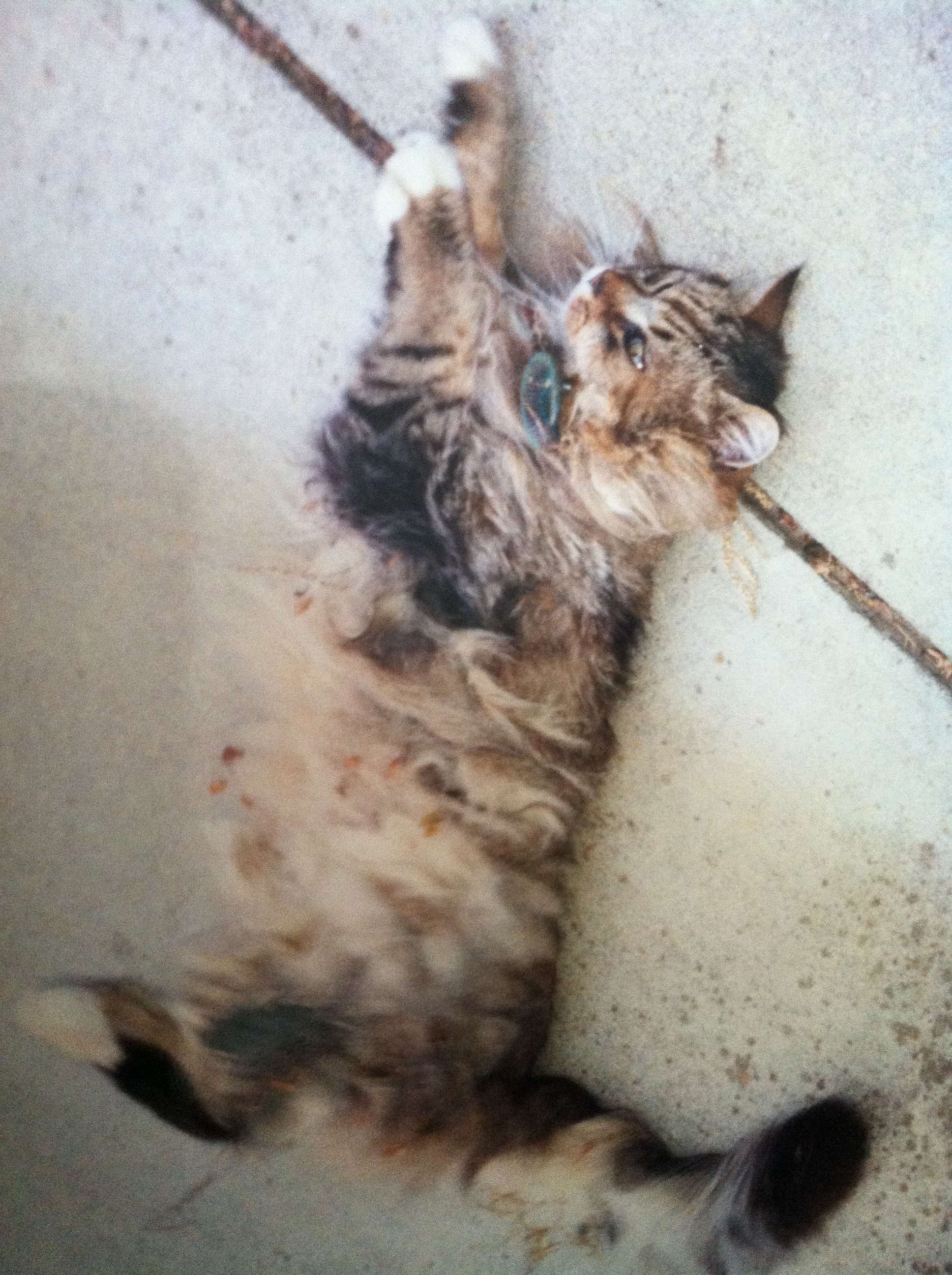
I am well, though I still have my occasional low days.  Hugo eventually passed, too, three years after he recovered from his thyroid treatment.  I found him lying in our driveway one evening, looking as if he were just asleep.  His end, like Paul’s, must have been sudden and quick.  I loved him like Paul did his precious Boxer.

Hugo, the author's cat.

Hugo, the author’s cat.

And as I dug the hole where my wife, our healthy daughters, and I buried our dear kitty, I thought again about all those empty spaces that we see and feel: the ones we fill with all our love.

About the Author

Terry Barr’s essays have appeared in The Montreal Review, The Museum of Americana, Red Fez, and Steel Toe Review.  He is also a regular contributor to culturemass.com, where he writes about pop music and memory. He live in Greenville, SC, with his wife and daughters, and teaches Creative Nonfiction at Presbyterian College.

Meeting Frank

By Shari Barnett

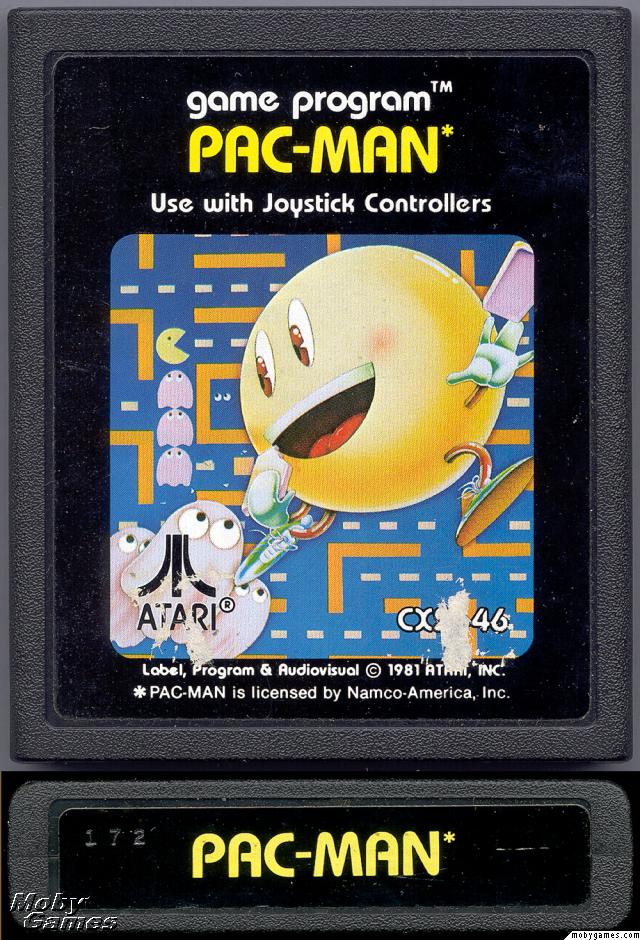
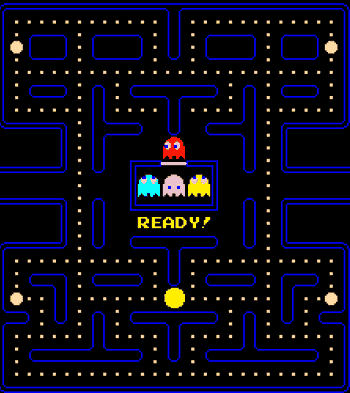
Pacman for Atari (1981) image source:  www.mobygames.com

Pac-man for Atari (1981)
image source:
http://www.mobygames.com

CES (Consumer Electronics Show) fervor started in October 1983.  For any consumer device-focused company, it was, and still is, the trade show of the year, conveniently scheduled at the beginning of January virtually guaranteeing ruined Christmas holidays for everyone involved.  Marketing and Sales were buzzing about Atari’s big introduction, the home console version of Pac-Man.  We were a research and development group and generally weren’t invited to attend the show, but it sounded so…huge…I asked my boss what I had to do to earn a ticket to go.

pacman

Pac-Man, he said.

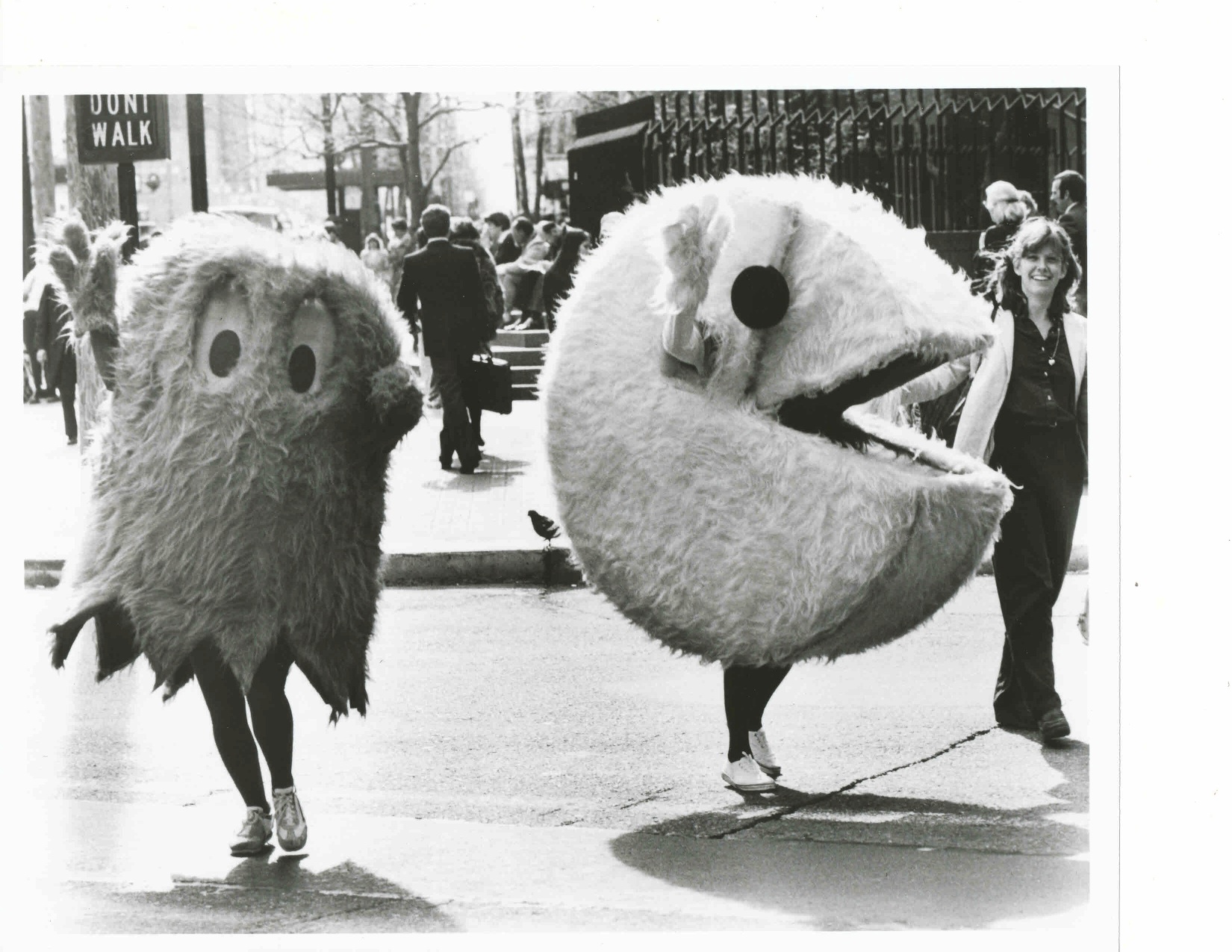
I called someone I knew who was a costume designer at Chuck E. Cheese restaurants. Singing rats, Pac-Man, what’s really the difference? I told her I’d pay her $500 (the amount in the petty cash box in our admin’s bottom drawer) to help me build life-size Pac-Man and Ghost costumes over the weekend. We constructed PVC frames laced with shoulder straps, and a giant foam and yellow fur cover for Pac-Man, red for the Ghost. Pac-Man’s mouth was hinged to open and close. On a cheap plastic Radio Shack audio box I recorded the “wakka, wakka, wakka” Pac-Man sound track using the arcade machine in the company’s game room. Monday morning, I hoisted the thing over my head, put on the furry yellow gloves, hit Play, and modeled the ensemble for my boss. For the next nine months, everything I did at the company had something to do with those damn costumes.

In those days, CES shared the floor with the adult video industry show. You could walk a few feet from the booth and get your picture taken with any number of bunnies and porn stars. I’m still proud that my Pac-Man had a longer photo line than Marilyn Chambers.

I had booth duty, clad in a Brooks Brother navy blazer and khaki skirt as required by Marketing. A  couple of local “dancers” that our trade show manager had found wore my much more fun costumes. Young, strong, free during the day, and probably happy to get some extra under-the-table cash, they did a great job.  At 5:00  all the show attendees headed off to fill the bars of Vegas, while I loaded up the costumes in a rental van and handed a sawbuck to a bellman to cart them up to my room at the MGM Grand (earning an “I Slept with Pac-Man” bumper sticker that mysteriously appeared on my Honda when I got home).

The third night of the show, around 2:00 AM, I was awakened by a call from my boss. “Frank Sinatra wants to meet Pac-Man.” Occasionally life throws you a sentence that you feel privileged to hear, and this was one of them.

The famous costumes

Harry came to my room and put on the yellow tights. Normally he was a give-credit-where-credit-is-due kind of manager and would always let me, the inventor, play the lead character.  But evidently when it came to meeting the Chairman of the Board, rank prevailed.

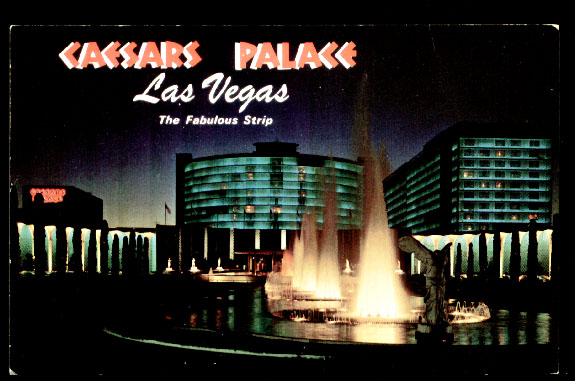
Caeser's Palace (image source: http://www.cemetarian.com/)

Caeser’s Palace
(image source:
http://www.cemetarian.com/)

We walked across Las Vegas Boulevard to Caesar’s Palace where Frank had just finished up his last set of the night. Two men in black suits stood, hands behind their backs, on the sidewalk in front of the hotel. Greek gods sprayed pink and blue water behind them.

“You Pac-Man?” one of them said.

Clearly Frank recruits for brawn, not brains.

Since neither of us had a small of a back to lightly touch,  or even much in the way of arms, the men were forced to hold our big furry hands to lead us around the side of the hotel. Through Ghost’s eyeholes I saw corridor after corridor, linoleum, then garish casino carpet, then plush blue carpet as we wound through the bowels of the hotel. A set of double doors were opened for us and we entered a huge suite with a party underway. Glasses clinking, laughter, dim lighting – our path was suddenly blocked by more black suits. Then a face appeared at knee-level looking up my costume.

“Hey!  This one’s a girl!” I suddenly regretted not putting on a bra under my t-shirt.

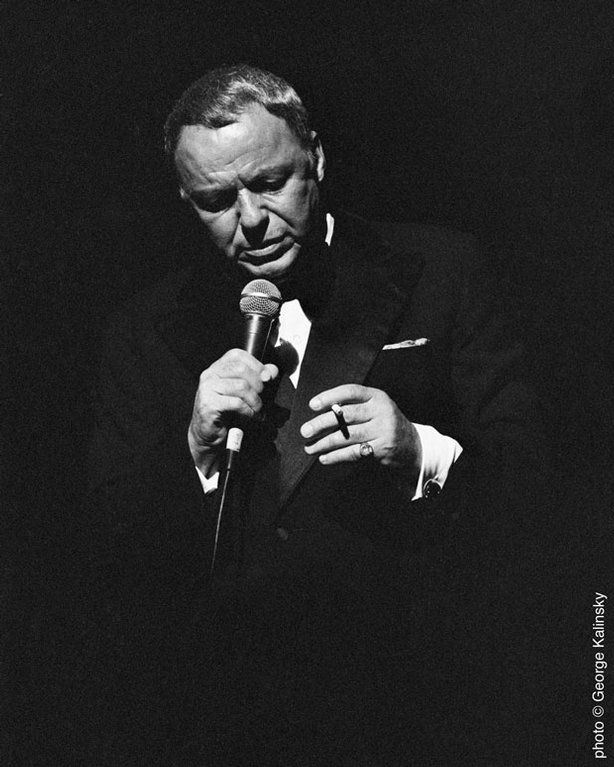
Frank (image source: http://www.kpbs.org/)

Frank
(image source: http://www.kpbs.org/)

“Oh yeah?,” I heard.

It was an unmistakable voice, followed by an unmistakable chuckle. I saw Frank get up from a sofa and take a couple of steps toward us, reaching out to shake Harry’s fuzzy hand.  Harry hit the Play button and the little Pac-Man theme song started. Huge laughs.

He never shook my hand, but then I was just playing the part of the lowly red sidekick. Frank didn’t get where he was by dealing with the guys one rung down.  It was okay. I was 22, had a photo of my boss in yellow tights just in case he didn’t give me a good annual review, and I was standing two feet from Frank Sinatra. Like all aging stars you see outside their airbrushed promotional images, Frank looked old. His hair and skin had thinned. The miles showed. Still he stood before me, blue eyes shining. I could hardly wait to tell my grandmother, the one who had taught me to sew.

The costumes arrived back at the office a week later with all the exhibit gear. They, and I, were shipped off to New York City the next day. Atari’s marketing department had decided to hold a National Pac Man Day in 22 cities all around the U.S. and wanted duplicate Pac Man and Ghost costumes made for each city’s event. I attended the one held in Salt Lake City and appeared on “Good Morning Salt Lake” to publicize the event with Pac Man by my side – fifteen minutes of fame that didn’t hold a candle to my five within that hotel suite.

Fifteen years later, when I heard that Frank Sinatra had died, I, and the rest of the world, thought back to moments we had shared with him. For me it wasn’t a first kiss to “Fly Me To The Moon”, or wedding dance to “The Way You Look Tonight”, it was his laugh, his eyes, and his hand shaking a fuzzy yellow glove I had sewn.

About the author

Shari Barnett is a native Californian (5th generation) who, after 30 years working in the Silicon Valley, moved to North Carolina to change careers and experience seasons. As she now watches her kids move past college and begin their careers, she can’t help but recall some of the crazy stuff that happened at the dawn of her own work life. This happened in 1983. 

Hey Everyone! It’s Shit & Piss Week!

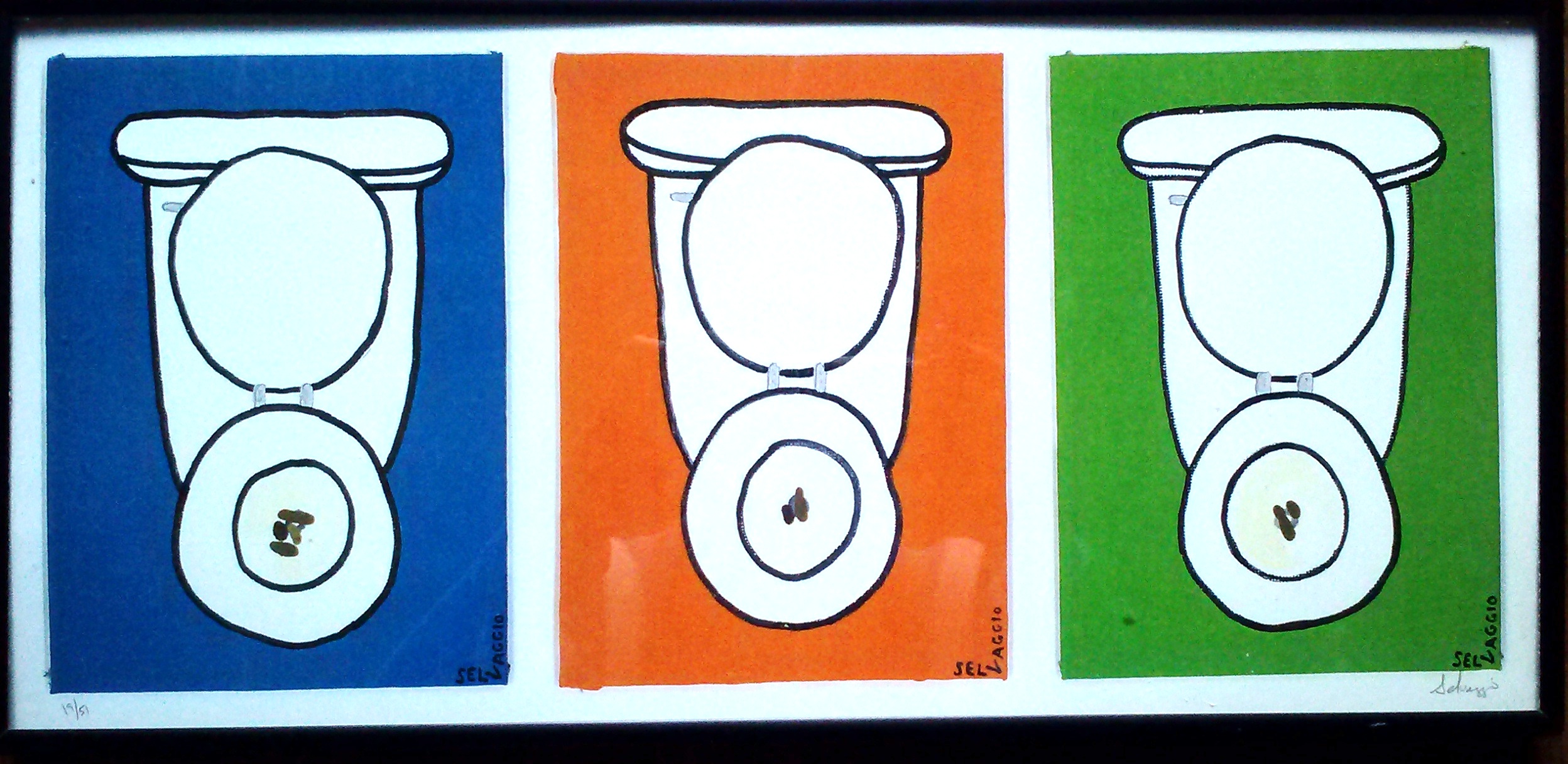
Image credit: Selvaggio

Image credit: Selvaggio

Two stories. Two talented authors. Two bodily functions. Enjoy. . .

Holy Crap

by Dee Dobson Harper
bathroom-stall-300x200

Nightclub toilets in 1980s New York City served multiple purposes. Aside from the obvious, they were meeting rooms, coke dens, retreats from hellish dates or customers, locations for spontaneous trysts, and places to sneak a toke from a clandestine joint. Depending upon one’s need, a good seat in a restroom could be as valuable as the best table or barstool in a crowded Manhattan restaurant or nightspot. One night I discovered what an attraction a simple restroom could be given the right location, the right circumstances, and the right suckers.

As a struggling New York actress, I served drinks four nights a week in 1988 at Chelsea Place, a popular Italian restaurant. Deceptively hidden in the back of a small gift shop, Chelsea Place was modeled in the fashion of a Prohibition-era speakeasy: staid in the front, decadent in the back. From the street, it looked like any other store. Beyond the façade, however, was a world of expensive dining, live music and patrons who loved throwing their money around. An elegant Italian restaurant caught much of it. The main bar with nightly musical acts and an intimate jazz bar upstairs took the rest. The place wasn’t private or exclusive, but it wasn’t a cheap night out either.

Chelsea Place patrons paid four dollars for soft drinks, five for beer, and six for mixed drinks, which for 1988 was kind of pricey. Their complaints were rampant, but the allure of the bars kept their business. Any given Friday night, the week’s busiest, would find a line at the door and a multitude of patrons moving in sardined unison on the dimly lit dance floor. Black lacquered tables with tall, high-backed barstools lined the maroon walls. A massive bar separated a surly Italian bartender named Carlo from the mostly young and corporate-type customers whose constant demands for drinks and penchant for stingy tipping chafed the jaded bartender.

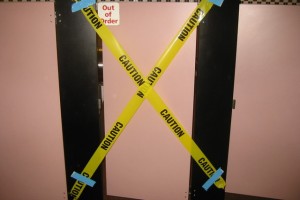
This particular Friday was predictably hectic. I was scheduled to work the jazz bar upstairs, a calmer room than the main bar. The featured performer was a jovial, Reubenesque jazz singer named Clementine Jones who brought Bessie Smith and Dinah Washington gloriously back to life each evening. The bartender, Margit, a pretty Long Island blonde, and the busboy, Harry, a native of India with a great sense of humor, had become my close friends since I joined the team one year earlier. We enjoyed working together and shouldered the toils of cocktail lounge work like sports. Between the three of us, we had amassed a collection of regulars who kept us in tips and employment. In the middle of my normal eight-to-four shift, I passed Harry in the hallway as he posted an “Out of Order” sign on one of the two upstairs unisex restrooms.

“Harry, what’s the matter with that bathroom?” I asked, empty serving tray in hand.

“It’s out of order,” he replied. A native of Calcutta, Harry spoke very fast when he was agitated.

“No shit. I can read. Can anyone fix it?” I asked, remembering the growing throng of customers and dreading long waits in the restroom lines.

“Not ‘no shit.’ Shit is the problem,” said Harry.

“What are you talking about?” I demanded.

“This restroom has been violated,” said Harry, eyeing me with a slight grin. He looked back at his sign and smoothed it with one hand.

“I want to see,” I said.

“You don’t want to look in there,” Harry cautioned, standing in front of the door as if to prevent me from opening it. A group of talking customers emerged from the nearby stairwell and passed us on their way to the jazz bar.

“Yes, I do,” I insisted, laughing at the situation, “Let me see. Now, move!”

Harry threw up his arms in surrender and stepped aside. I twisted the chrome doorknob, pushed the door open, and barreled headfirst into a wall a stench. I froze. And then I saw it: someone’s bowels had exploded against the white back wall of the bathroom, blanketing it with oozing feces. My hand flew up to shield my nose and mouth. I stared, shocked beyond belief, at a heaping mound of dark brown feces dripping off of the gleaming back rim of the toilet seat and chrome flusher and onto the floor. Pools of runny crap were forming beside and behind the commode. Someone has been sick, I thought, and recently, too. In eight years of working off and on in the restaurant business, I never had seen anything to equal this catastrophe. I backed out fast and shut the door tightly. I looked wide-eyed at Harry.

“I warned you,” he shrugged.

“Margit’s got to see this,” I said, shaking my head and laughing as I straightened my black bow tie and white button-down. I could picture some poor soul squatting over the toilet seat and blasting the back wall by accident. I told Harry to guard the door while I went to get Margit. Then I saw Reggie Bowen, a regular Friday night patron, approaching.

“Don’t tell me that toilet’s out of order,” he said as he noted Harry’s sign. “There’s a line at every restroom in this place.”

“Well, you can’t use this one. It’s ruined.” I looked up at his puzzled face. Reggie was a handsome yuppie who suffered from terminal suave. He was a cheap tipper except on occasions when he wanted to impress a date. He was accustomed to getting his way. Right then, he was in a hurry.

“Come on, you guys. Just let me in,” Reggie implored.

“I’m sorry, man,” Harry said, “We can’t. You’ll have to wait for another. This one’s destroyed.”

“What are you talking about?” Reggie asked.

Suddenly Reggie struck me as the perfect mark for a joke. A close encounter with a roomful of shit was exactly what he needed. Now was the perfect time, as the upstairs clientele was gathered in the jazz bar and Giancarlo Santini, my alcoholic and geriatric boss, was downstairs in the restaurant. I started laughing again, then stopped and looked him dead in the eye.

“Okay, Reggie. I’ll let you go in, but it’ll cost you one dollar.”

“Get outta here.”

“Hey! You want in or what?” I thrust my serving tray at poor Harry and crossed my arms in exaggerated defiance.

Harry started laughing, and Reggie frowned at me as he fished his billfold out of his back pocket. He opened it, pulled out a dollar, and handed it to me. I snatched it.

“Girl, you want a tip for everything,” he said. Stepping from in front of the door, I gestured for him to pass. He barreled past me and, in one brisk motion, jerked the restroom door open and entered.

“JESUS F%&#*^$ CHRIST!” boomed the voice of a man who had just come face to face with abomination. I doubled over and held my stomach as my eyes watered from laughter. Hysterical, Harry steadied himself against the wood paneled wall for support. I looked just in time to see Reggie fly out of the restroom and stagger in a gagging heap in the dim hallway. I laughed so hard I thought I would wet my pants. Harry was crying.

I looked at Reggie and blurted, “You said you wanted to go in there!”

“Shut UP! Just shut up,” Reggie shouted, causing himself to cough violently. For a moment, I thought an alien would burst from his chest cavity. He struggled to his feet. He brushed himself off and glared at me. I exploded into giggles and Harry began snorting.

“It’s not funny,” said Reggie, incandescent with disgust. His comment elicited a fresh wave of laughter from the two of us.

“Reggie, I’m sorry,” I managed to say.

“You’re crazy,” he snarled.

“You have to admit it’s worth a dollar,” I said.

“It’s worth a dollar just to see you choking, Reggie,” Harry interjected.

“Get away from me. You’re both sick,” Reggie said, “I need a drink.”

“It’s on me,” I said. I left Harry to shut the restroom door while I whisked Reggie to the bar for a consolation drink. It took twenty minutes and a snifter of top-shelf cognac for Reggie to see the humor in my surprise. He began eyeballing everyone in the jazz bar in hopes of identifying the culprit. He would elbow me and point to suspicious looking customers.

Seeing Reggie’s reaction that night served to whet my appetite for mischief.

Luckily, the entire spectacle escaped the attention of Santini and other sensitive Chelsea Place personnel. By the end of the night, I had exposed six more customers to the restroom atrocity: four random guys who, like Reggie, were desperate to find a vacant restroom and were willing to pay a dollar to get in; one woman named Joanne who always wore thick pink lipstick and had heard about it from Reggie and wanted to see for herself; and Johnny Parker, the jovial house trumpeter who I had caught once standing on a toilet smoking a joint and exhaling into the ceiling vent above the commode. Johnny knew his way around a restroom if anyone did, and the crappy state of this one did not impress him at all. This heinous affair even beat the time a particularly amorous couple took over the other upstairs restroom and dislodged the sink from the wall with their activity. While I felt sorry for the restaurant’s cleaning crew who would be forced to tackle the mess the next day, I was tickled to have pocketed seven dollars without serving one drink. As they say, only in New York.

*****************************************************************************

A Fluid Situation

by Trudi York Gardener

Coincidence, perhaps, or just bad luck that on the morning my husband and I planned to return to Portland after our romantic week at Furnace Creek Inn in Death Valley, California, I awoke at 4:00 a.m. with a burning lower belly. I quickly identified my problem as cystitis — a bladder infection — the bane of any woman traveler and disastrous in a desert National Park without medical facilities.

Fortunately, before I left the Inn, I called my gynecologist in Portland, Oregon. She phoned in prescriptions for me to pick up at Nye General Hospital in Tonopah, Nevada, three hours away. All I had to do, she said, was drink as much fluid as possible and “try to void” often, which sounded cold and commercial, like canceling a check.

Trying to void, I realized, would require the cooperation of local toilets. Our plush hotel room at the Inn featured a commode with water temperatures of 80 degrees from the heated pipes. I knew serviceable restrooms existed at nearby Furnace Creek Ranch and Stovepipe Wells, but beyond these locations, there was a better chance of finding gold in Death Valley than a toilet.

As my husband finished re-packing our car, I weighed the likelihood we’d reach the closest desert town of Beatty, Nevada, forty minutes away, without an off-road stop. My bladder gauge was registering “full” although in several trips to the bathroom, I’d barely managed a few painful dribbles. My husband would go to the bathroom, and I’d listen to a stream with enough force to power a hydroelectric dam.

We hit the road as dawn cracked red across the sky. A recent spring storm had plunged temperatures to the twenties, and in the dimly lit desert, magenta spring blossoms dappled the pockets of powder snow. Strapped securely in the car and shivering, I bundled myself in blankets and sipped dutifully on my third bottled water of the day.

As we sailed across the valley floor that lies between steep mountain walls, the wind kicked at our car and gradually mutated into a semi-sandstorm. The veiled road dipped and rose like a roller coaster across gullies of the salt-washed white desert. With each smack of a gust, and every rise and fall of the road, my bladder threatened to blow.

I tried to quash the rising panic. Could I make it to Beatty? I certainly couldn’t duck behind the car like my carefree husband. Even if there weren’t rattlesnakes, scorpions, and tarantulas out and about in this weather, where would I find vegetation tall enough to hide behind?

Miles earlier I had crossed my legs and clamped my thighs so tight they fused. My teeth chattered, less from the temperature than the internal sloshing that was almost audible. As we passed a sign I couldn’t avoid — “Water for Radiators Only” —  the car whipsawed in the wind. That did it.

“Stop!” I shouted.

Startled, my husband slowed the car and we coasted off the highway. I reached for the door, grimacing. It was no longer an issue of modesty, but whether I could face the right direction in the wind.

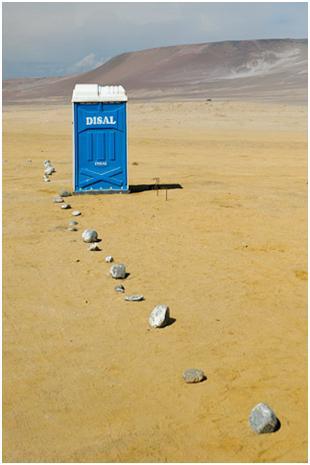
“Look!” my husband cried suddenly and pointed. There it was, several feet off the highway camouflaged in the swirling sand like a biblical miracle — a blue Port-a-Potty. I staggered over to the shed, mumbling prayers under my breath, and flung open the door. Once inside I was heedless of the crawly creatures sharing my cubicle. The ferocious gales rocked the tilting hut as I maneuvered gingerly over the seat, clinging to the low-ceiling interior. Outside I heard my husband thump against one wall, bracing the side as Mother Nature played Kick the Can.

Weakly I wobbled from the battered portable and fell into the car. We sped off and launched up the Grapevine Mountains on a road that twisted through narrow cuts with names like Hell’s Gate and Daylight Pass, ascending 3000 feet in a few minutes. With each wrenching corkscrew turn, I tried to imagine myself in a different and pleasant location, sort of an out-of-bladder experience. But each place seemed to include a lake or a river. Then I tried a scientific approach to help me focus elsewhere. I remembered my high school chemistry teacher’s assurance that liquid evaporates faster at high elevations. So much for high school chemistry.

Eventually the road dropped down to the Amargosa Desert where we exited California and arrived at the Nevada ghost town of Rhyolite by the edge of the Bullfrog Hills. Once a mining boomtown of 6,000 people, the town evaporated along with the gold. There was no bathroom among the sagging shacks, although I considered using a bottle from the Rhyolite Bottlehouse, constructed from 50,000 whiskey bottles. I assumed with my luck a bottle would be a protected historical relic anyway.

Ten minutes later we limped into Beatty’s Exchange Club in the center of a town where every place is the center of town. The casino was surprisingly festive in the wee hours with soldiers from nearby Nellis Air Force base, glittery young women, and the sound of tinkling coins. Instantly I bolted for the ladies’ room. When I reluctantly emerged from that haven, I spotted my husband in the jungle of slot machines.

“Hey,” he said, with a wave, standing amid a bevy of young women, “I think Fran and her girls are here.” Fran was Beatty’s famous madam of Fran’s Star Ranch. She was so popular for her contributions to the town—whatever that entailed — that the town pitched in and rebuilt her trailer when it burned in a fire.

I corralled a young blonde siren with teased hair and dark fringed eyelashes. “Where can I find a doctor in town?” I asked, briefly explaining the urgency of my request.

“Oh, honey,” she said, “there’s no doctor around here.”

“What’s the matter?” A tall redhead with impressive cleavage stopped alongside.

“She’s got female trouble,” said the blonde.

“Well, we could call Steve,” the redhead said. “He’s a paramedic. I think he had some training in Vietnam.”

This was not reassuring. I tried to imagine a Vietnam paramedic treating me. Would he come in fatigues? Did his home resemble a MASH unit? Would he want to amputate something, for God’s sake?

They summoned Steve the sleepy paramedic who arrived and told me his gynecology experience with male soldiers was limited. He proclaimed our best course was to drive to the hospital in Tonopah.

Morosely we drove north, my husband grumbling that he never found Fran, me grumbling that it was two hours to another toilet. My spirits lifted when we reached Goldfield, a ghost town slumbering under a blanket of light snow. Even though the imposing 1908 Goldfield Hotel was padlocked, the County Courthouse closed, and the few brown weathered stores without any signs of life, I knew from previous visits we would find the Chevron gas station open for business.

“There it is!” I pointed triumphantly, thrilled to see the familiar blue and white gas station. Barely waiting for the car to stop, I jumped out, feet crunching on patches of snow. In a minute, I staggered back to the car.

“Frozen,” I croaked, “they said the pipes are frozen so the bathrooms are locked.”

As we shot out of town, I knew I’d never forget Goldfield, the town that promised and failed to deliver. I imagined how miners must have felt when gold ran out in 1919, or the streets coursed with water during the flash flood of 1913.

Bad idea. I had to stop thinking about flash floods.

Forty-five minutes later, I was lying on a table in Nye General Hospital’s emergency room in Tonopah. The bearded young doctor reassured me the pills would start to clear up the infection.

“But,” he said, “you’ve got to drink frequent glasses of water all the way home.”

****************************************************************************

About this week’s authors:

Dee Dobson Harper is a writer of fiction, non-fiction and poetry. Many of her stories, essays and poems are set in New York City, where she lived for 10 years and where a huge piece of her soul remains. She is a longtime advertising copywriter and currently a marketing communications/PR writer at East Carolina University. Her work has appeared in Summerset Review, Scrivener’s Pen, City Writer’s Review, Triangle Business Journal and Business Leader Magazine. She writes in the romance genre as Delora Daye and is the author of Driven, a romantic suspense novel, and two contemporary romance novellas.

Trudi York Gardner resides in Benicia, CA. Her humor pieces and articles have appeared in The Chicago Tribune, The San Francisco Chronicle, The San Francisco Examiner, The Sacramento Bee, The Oregonian, and many other newspapers and magazines. Her humorous short story, “The Lights in the Window,” (1999) was nominated for a Pushcart Prize. Trudi has been the humor columnist for J, the Northern California Jewish Weekly. She writes humor columns on her blog at http://www.tygerpen.wordpress.com.