In the Middle

by Mary Ann Cooper

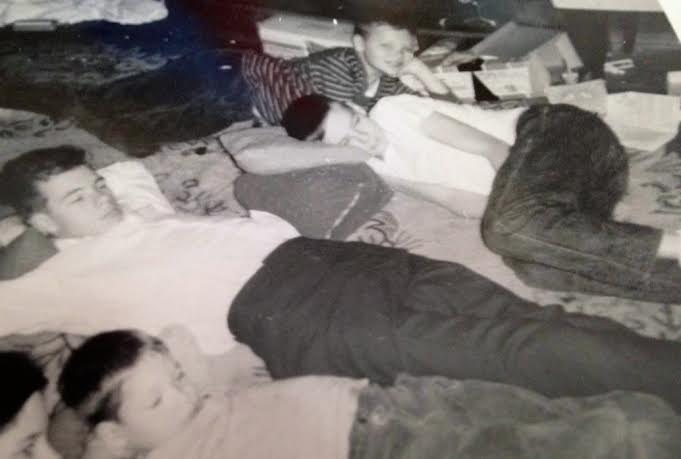
The author's siblings

The author’s siblings

I can’t imagine being an only child. What’s it like not being surrounded by a crowd? Never having to vie for attention, whether it’s a subtle tap on the shoulder or a desperate shout of “Look at ME!” How can you have a game of tag? Instead of racing downstairs on Christmas morning, do you casually stroll, knowing that everything under the tree is for you? Do you only play solitaire and not war? Do you go everywhere with your parents, or have real babysitters, instead of your brothers or sisters? What’s it like to wear something that someone else hasn’t worn before?

I grew up with three older siblings and four younger ones – yup, that’s eight of us. Six boys and two girls, with me wedged in the middle, fourth child and second girl. We were all tall and skinny, our blue eyes and freckles identifying our connection. The size of a small party, everyone in our neighborhood knew us. We played, we fought and always leaned on each other for support and attention.

Sardined into a small house in Queens, New York, we took up every inch of it. It was a small Dutch colonial, sandwiched between others that were identical, a cement ribbon of driveway separating us. Each house had a brick stoop facing a stamp-sized lawn, scraggly shrubs hugging the foundation. A small vestibule opened into our living room, which led to the dining room and a small kitchen. The upstairs held three bedrooms and one bathroom, which was in constant use. It was a tiny bathroom, with faded white walls and a confetti of black and white subway tiles dotting the floor. Thin towels hung next to a chipped radiator, which sizzled and hissed like a subway grate.
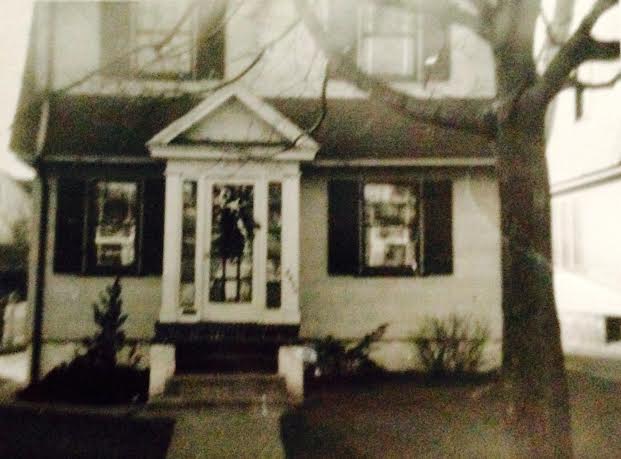
The author's childhood home

The author’s childhood home

The bedrooms weren’t much bigger than the bathroom, the largest one housing four boys. Walking up the stairs to the second floor, it was easy to find the boys’ room, with its permanent odor of dirty socks floating above the landing. It was a wild place in there: clothing flung about, random belts and shoes littering the scuffed floor. A gnawed wooden crib stood against the wall where baby Brian slept, flanked by Bobby’s single bed. My other brothers, Kevin and Timmy, spent their nights in a wobbly double, placed under a window.

Next door to this cave, my sister and I shared the smallest room, our bed nearly spilling into the hallway, allowing me to lie in bed and close the door at the same time. A tired maple dresser hugged the wall, festooned with a gray doily running across the top. This tiny room was where my sister found refuge from being the oldest and a girl. Many nights, lying in our little bed, she confided in me.

“I hate it here. Someday I’m going to marry a rich guy and never have any children.”

“Can I come?” I always asked.

My parents occupied the last room, its walls papered with pink roses and green leaves, yellowed pieces of it curling up in the corners. Dark and mysterious, the metal blinds were usually slanted shut and the air was always filled with the mingled smells of Old Spice and Evening In Paris.

It wasn’t spacious up there, but every night, we all had a pillow to put our heads on.

In my self-absorbed child’s world, I had no idea of the stretch it was for my parents to keep our sizeable group afloat. But I knew they never planned for, nor wanted a large family.

“What’re you doing with all those kids, anyway?” our neighbor Mrs. Glennon once called over to my mother from her tiny backyard, chatting back and forth while hanging laundry. Our clothesline, with its wooden clothespins standing at attention, sagged with the weight of our belongings and the ever-present collection of diapers. I was ten at the time, and there were six children in our house.

Hearing the question, my mother stopped working and put her hands on her hips. And being the polite woman she was, she told the truth.

“Well, Helen, we’re just following our church’s rules. And that means no birth control.” My mother’s response quieted our nosy neighbor, but it didn’t help our situation much; two more babies, Jeff and Kerry, appeared after that.

My mother became pregnant with my sister Dianne on her honeymoon, and thus began her seventeen-year cycle of having children. I see me standing next to her, looking up at her brown hair that’s been wrestled into a French twist, her cornflower eyes above her smile. She’s always dressed in tired elastic maternity pants, topped by something shapeless and flowery. Her pregnancies usually occurred every two years, but sometimes my parent’s rhythm clicked, allowing my mother to venture into real clothing for short periods of time.

But whether my mother was pregnant or not, tired or ecstatic, my father loved her more than life itself. Both the same age, he had married his childhood friend, and called himself “Mr. Lucky.” For many years, Mr. Lucky worked two jobs during the week – one as the manager of a department store and the other as an elevator operator. Weekends, he made extra money tending bar at Herby’s, a local hangout on our corner. We didn’t see a lot of my father – he was busy making sure his family was taken care of. His reward for all that hard work? Coming home to my mother.

I imagine feeding this brood was a constant challenge for my mother and father, especially with limited income and growing children. Food appeared and was promptly eaten. No seconds. No leftovers. Our church provided us with our Thanksgiving and Christmas turkeys, and each week the parish school delivered leftover milk and bread to our home. We weren’t the poorest family in the parish, but we were somewhere on that list.

My father got a paycheck every Friday, which was convenient, because by Thursday night we had run out of money. Weather permitting, most Friday evenings we all sat waiting for him to return from the city. Perched on our scratchy stoop, we climbed its steps and side pillars like hawks hunting for prey. Eventually, my father appeared at the top of the street, newspaper folded under one arm, a brown bag filled with paper boxes of chicken chow mein in the other. At our house, dinners were fancy on Fridays.

Our meals were noisy and quick. Sitting at the long wooden dining room table, we were shoulder to shoulder, my parents at each head and a highchair somewhere in between. Everyone was protective of what was put in front of them; today, many of my brothers still carry the habit of eating with one arm cradling their plate. It was implicit: This is mine; don’t touch it. Once, I was foolish enough to leave my seat during dinner for a bathroom break, learning my lesson when I returned to an empty plate.

“I thought you were done!” my brother pleaded to me.

Keeping all of us clothed was as big an issue for my parents as feeding us was. The school provided us with free uniforms, which helped dramatically. But for after-school and weekend clothing, hand-me-downs were the rule. My brothers shared a revolving wardrobe, clothes going from one to the other, with some of the pieces growing old with us, becoming part of the family. But since there were five years between my sister and me, hand-me-downs were a problem.

Until Barbara Medford moved in up the block.

A year older and a lot richer than I was, Barbara had an extensive wardrobe. And every few months, her mother walked down the street to our house, carrying shopping bags filled with clothing that Barbara had outgrown. Coats and shoes and everything in between had been neatly packed into those bags for me.   Standing silent, watching my mother thank Mrs. Medford, I wanted to grab the bags right out of her hands. Finally taking my goodies upstairs, I arranged each piece on my bed, admiring and petting my treasures for most of the day.

No one but my family knew that I was wearing Barbara’s hand-me-downs. But apparently Barbara did. One afternoon while playing hopscotch with the other eight year olds in the neighborhood, Barbara stopped and pointed at my faded top with tiny pink flowers on it.

“That’s my old shirt,” she said with a catlike smile. The other girls stood quiet, watching.

I felt my cheeks get hot; I wanted to run home. Instead, I stayed and looked Barbara in the eye.

“My mother made me wear this shirt. I hate it.”

I avoided her after that, and the Medfords eventually moved away. The pressure was gone, but so were the clothes.

Besides the hand-me-down’s, the family’s other source of clothing came from my mother’s monthly treks to the rummage sales that took place at the local synagogues. The clothing was inexpensive, and usually of high quality. Everyone benefitted from these monthly wardrobe harvests; besides providing clothes for all of the children, it was also the source of my father’s suits. Leaving early in the morning with one of her older children, my mother stood in line, ensuring she had a first look at the day’s offerings. Hours later, after carting her bargains home in cardboard boxes, she began her sorting process, many of us standing around her.

Occasionally, some of the shorts, tops and pajamas that were doled out to me had tiny labels with names sewn into them.

“Who’s Susan Fisher?” I asked one day, pointing to a label.

“Susan Fisher owned that shirt before you,” my mother said.   “She probably went to camp, and had to have her name on all of her clothing.”

I stared at my mother.

“What’s camp?”

The labels never really bothered me, it was the tops and dresses that did. When I wore a garment and perspired, it seemed to activate the camper’s old perspiration; mixed together, it smelled toxic. When I was older and in high school, the stench usually emerged right after lunch. Nervously clamping my arms down, I wondered if the people around me could smell it also. And from that point on, no matter how many answers I knew, my arm wasn’t going up.

“It’s embarrassing!” I told my mother.

“I know, I know,” she said. “Just keep in motion.”

About the author

Mary Ann Cooper is a writer concentrating on memoir and personal essays.  She has recently been published in Salon, Halfway Down The Stairs, Brain, Child Magazine and Literary Brushstrokes.

She is presently at work on her memoir, “The Hollis Ten,” a group of stories about growing up in a family of eight children in Queens, New York.  Today, she is comfortable in crowds and still never leaves her plate unattended.     

Mary Ann resides in Westport, Connecticut.
Broken and Blended

by Julie Rae Gardner

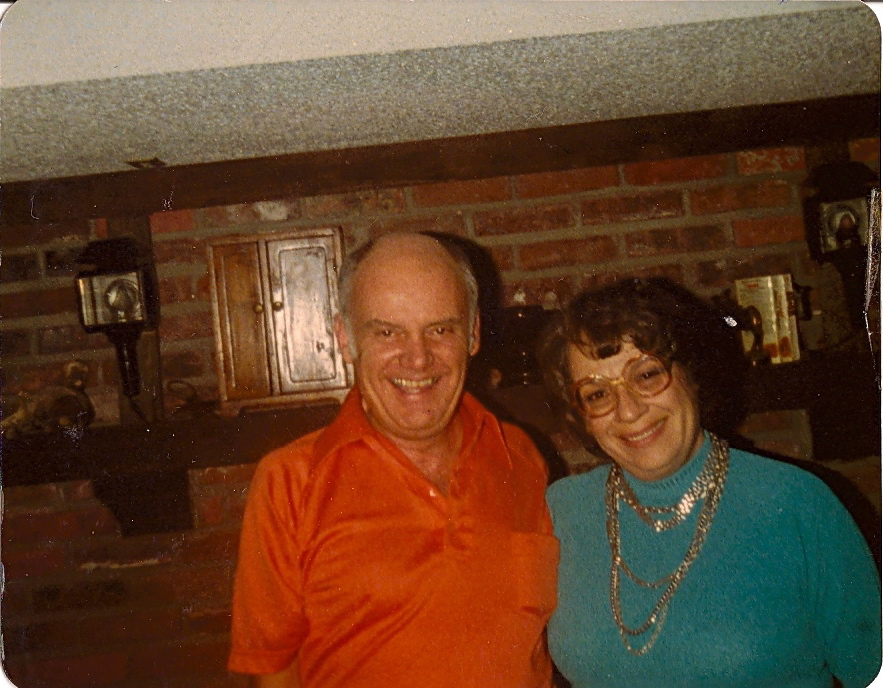
The author's father and his wife Barb

The author’s father and his wife Barb

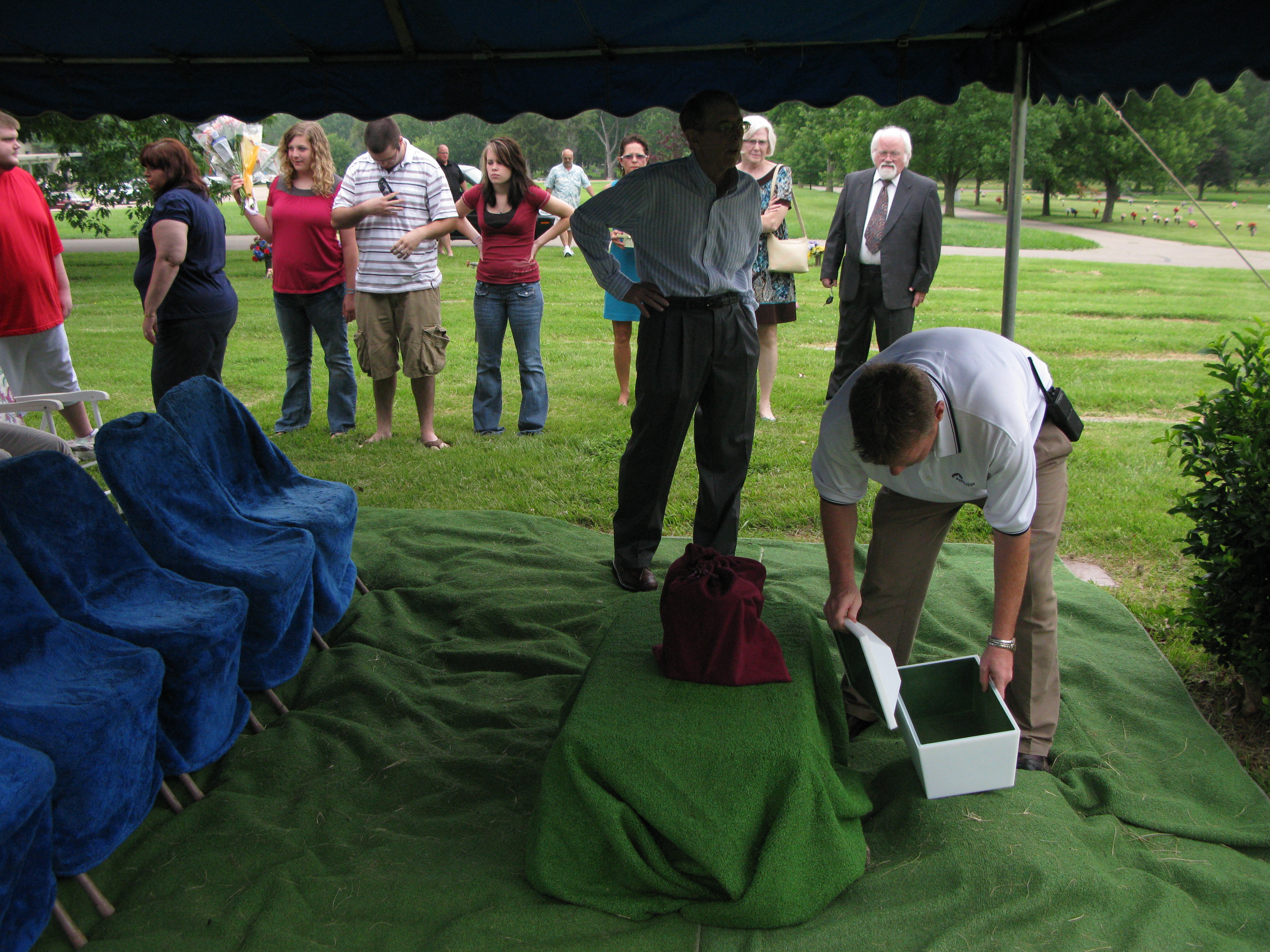
In March, one day after her eighty-fourth birthday, Barb died. The following July, on what would have been Dad and Barb’s thirtieth anniversary, we gathered at the cemetery to celebrate her life and to bury her and my dad’s ashes, something we nine adult children wanted to do when Dad died fourteen years ago. I offered to officiate.

No, I’m not ordained. In my fifties I’m trying to be less aloof in my crazy big family. As a kid I learned to get along by being quiet. Now, I’m trying to speak up. And, I was worried my zealous sister, in the honeymoon stage of being a born again Christian, might try something funny—or not so funny. Recently she attended a funeral of someone she didn’t know because she felt God was calling her to raise people from the dead. I was pretty sure, since Dad and Barb were cremated, resurrection of their bodies on earth wouldn’t happen. Still, I wanted to make sure everything went smoothly and the ceremony reflected Barb’s beliefs. She was spiritual but not a churchgoer. We didn’t know how we’d pull off Barb’s wish to combine her ashes with Dad’s before inurnment. The cemetery manager, who stood upright in the back just outside the tent, made it clear, “You cannot blend their ashes.” We weren’t sure if this was a law or cemetery policy.

Thirty years ago, I didn’t want Mom and Dad to get divorced and I didn’t want to be a member of a crazy blended family. Both happened. Barb and Dad went to a Justice of the Peace then invited us to their celebration. My husband and I left home that morning driving under blue clear skies through the rolling green Flint Hills of Kansas. We drove into gray clouds and blinding rain just outside of Kansas City. When we arrived to the hotel where the wedding reception was being held, the severe weather sirens went off.

Dad was Barb’s third husband. I didn’t believe family rumors: Barb might be a serial husband killer and I knew she couldn’t be a “gold digger” because a divorced tool salesman and father of nine can’t be mined. Before Dad proposed to Barb he took her to meet my oldest sister. My sister drove the car out of the airport. All three sat in the front seat with Barb in the middle. “So what do you think of me?” Barb asked.

“At least you’re not an eighteen year old chick.” That was all the blessings Dad needed.

Barb wasn’t the cause of my parent’s divorce but her marrying Dad meant Mom and Dad’s marriage was over—for good. It took years for me to say, “My parents are divorced.” Just saying it meant I came from a broken home, added to my fear that my husband and I could break.

Outside the hotel the lightning cracked. Thunder boomed. So did Barb. When I arrived to the reception, I headed straight to the beverages. Barb sounded husky, Lauren Bacall-ish, but she looked—well, coarse black hair, colored, toothpick legs, and an impossible five months pregnant. She cackled—a lot. I sipped it all in until Barb’s eyes met mine. She swooped in. Slow, in a long drawn out way, she said, “J-u-l-i-e, I want you to call me Frother, a combination of friend and other mother.”

I called her Barb.

For sixteen years Dad made Barb laugh, something she needed. Once, over a cup of coffee, she told me about the baby who died one week after she gave birth. That same week her first husband walked out. After that, she wasn’t able to have children, worked in real estate and years later married a widower adopting his three children. He died. In her fifties, she met Dad. She cared for him, something he needed. He smoked and drank too much.

After years of threats Mom made Dad choose, “Drinking or us.”

He moved out. When Barb gave him the same ultimatum, shortly after they married, he chose Barb.

Holidays were never the same. No matter whose house we were at, we were all together “for the sake of the kids.” Mom, Dad, all us kids and our families, Barb, her adopted children and their families.

After Dad retired, he and Barb made gifts and furniture in their woodworking shop until Dad cut off three fingers. Barb had to bathe and dress him since he was partially paralyzed on one side from prior polio. Then his strokes started; eventually he couldn’t do yard work or travel. I tried to visit more. At their round oak table in a smoke cloud as we sipped bad coffee, Barb and I had lively conversations about books, politics, feminism, spirituality and whether God cared if people attended church. Dad slipped in, mostly one-liners like “It wasn’t the apple on the tree but the pair on the ground that caused the trouble in the garden,” or Larry Bruce’s “Everyday people are straying away from the Church and going back to God.”

Two months after Mom was diagnosed with a terminal illness, Dad died suddenly. Through our sadness, we joked, “Dad couldn’t stand mom beating him at anything.”

I’ll never forget that cold December day when I arrived to Kansas City hours too late. Entering the dim room, I kept my head down—everything was swirling tile specks, big black wheels. A ghostly white sheet was draped over the body on the silver gurney. I didn’t breathe until I looked fear in the eye. Peaceful. Without pain. Dad looked better dead than alive. I felt relieved for him, for me until guilt about feeling relieved seeped in. Dad died thinking he got away with smoking. He didn’t. Post mortem tests confirmed lung cancer.

Days later, we gathered at Barb’s house. With Dad’s ashes in an urn upon the dark oak mantel, we all sat around the pine tree and shared stories. It was like a big group therapy session. That year, Barb’s frequent winter blues turned into spring, summer and fall’s black grief.

IMG_1721

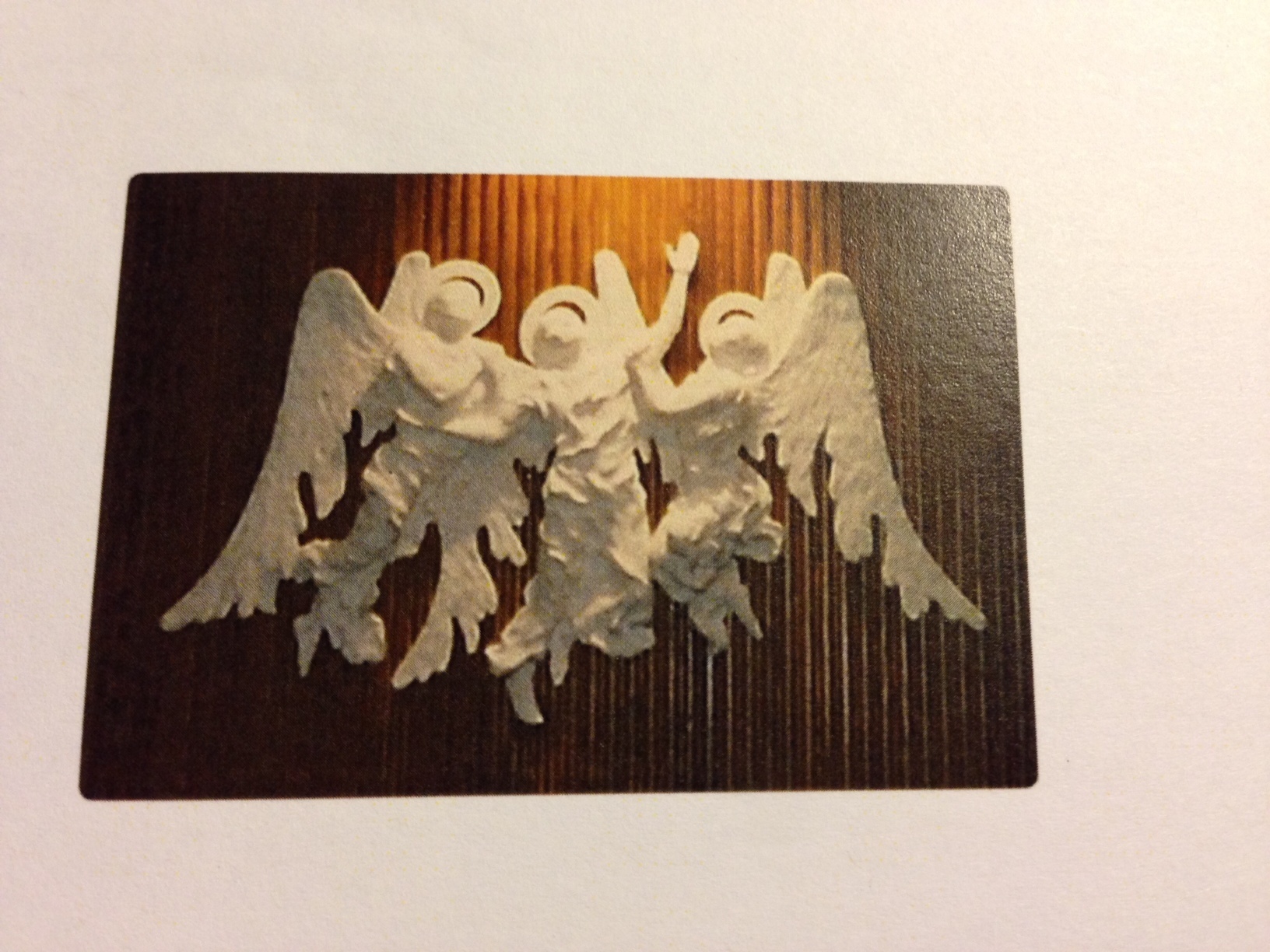
Mom reached out to Barb. Together, they worked with the hospital chaplain to create a warmer place for families to say goodbye to their loved ones before cremation. With memorial funds, an artist created a sculpture. At the dedication the following December, I gazed upon three sculpted angels. To me they were Mom, Dad, and Barb.

The three angels. . .

The three angels. . .

Barb and Mom started traveling together. When I proudly introduced them as, “My mom and my dad’s wife,” people looked at us funny.

Once I asked Mom, “How can you be friends with Barb?”

“I never stopped caring about your father. The drinking killed us, was killing him. I couldn’t take it anymore.” She stared out the window. “If Barb is what it took, she’s a gift.”

As Mom’s health declined, Barb helped to care for her. She even offered a place for Mom’s ashes in her family cemetery plot next to Barb’s mother, second husband, eventually Dad and Barb. On All Saints Day of 1999, Mom died. We had a big funeral dancing our way out of the church. Mom’s wishes. Her final Christmas letter (not the usual cheesy one) was read at the funeral “…I am entering into eternal life. This is not an occasion for sadness…” We cried anyway.

Before Mom’s inurnment, I suggested to Barb, “Maybe Dad’s ashes, which had been sitting upon the mantel for four years, should be inurned.”

That’s when she made her wishes known, “Over my dead body! He won’t go down until I do. He and your Mom might fool around.”

She slammed down her coffee mug and looked at me. “And when I die, mix our ashes together just to make sure.”

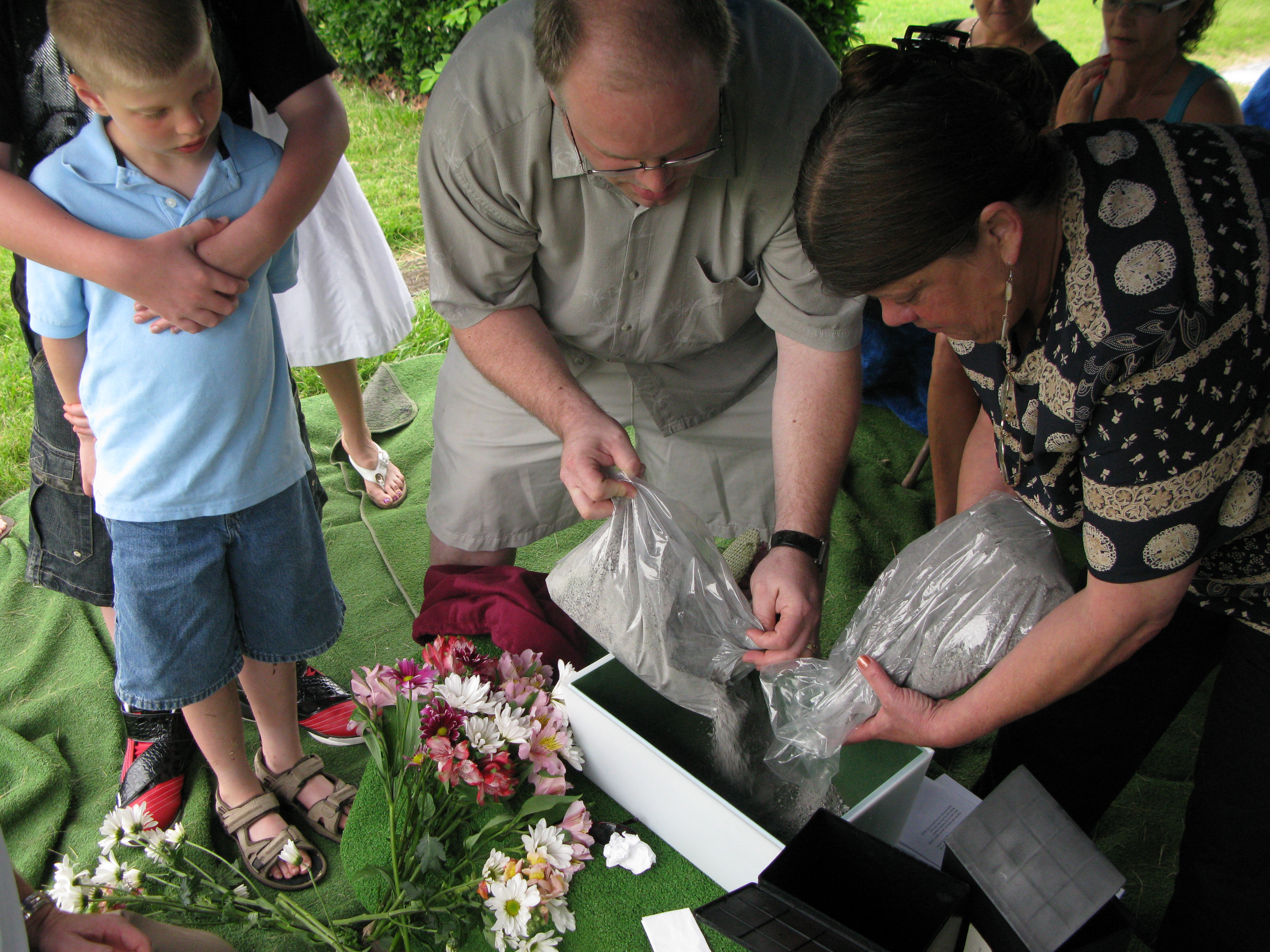
ashes

The spreading of ashes

At Mom’s inurnment my born again sister was still a zealous partier. She filled nine Glad bags, one for each kid, with Mom’s ashes. Maybe I should have taken one and scattered Mom over the sea, a place we shared many memorable times, but then it seemed too much like a nickel bag.

Barb came to family gatherings less and less after Mom’s death. Living miles away, I tried to keep in touch with her but she was pulling away. We didn’t know she was letting go of her life, refusing treatment for bladder cancer. The emails stopped, the answering machine was disconnected and the phone didn’t get answered. When I couldn’t bear being out of touch, I called one of her neighbors who told me Barb was often sitting in the garage in her fuzzy pink robe smoking. I sent letters and photos. She did not write back. Her adopted son moved in and was her full-time caregiver until she passed.

I expected everyone to be raw at the cemetery. Siblings threatened me by holding up iPhones with radar images of the approaching storm. I began with a poem from Rilke’s Love Poems to God, not the formal patriarchal, “Heavenly Father” opening. My born again sister, whom I love dearly asked, “When are we going to have the opening prayer?”

Doesn’t she know? The poem is prayer. I was getting peeved. She asked several times before, but didn’t ask again after my brother, an ordained minister read the Gospel. The Gospel saved my sister—from me. We sang. Terribly.

I looked at the cemetery manager. It was time to honor Barb’s wishes. Members of the self-appointed ash committee seized and opened the bags. Unsure of how to mix the two plastic bags of ashes and then fit them back into the two black metal containers, they argued. I’m often overwhelmed when we’re all together. This day was no different. Some siblings knelt before the ashes. Others, like me, looked on in awe. In that rare moment, I felt love—for each of my broken and blended family members. The rain and wind grew stronger.

In the storm of it all, ashes blew into dust.


About the author

Julie Gardner’s life work has been in early childhood education and counseling.  During the past seven years she took many writing courses, completed the Washington University Extension literary fiction certificate program, and trained to become certified as an Amherst Writers and Artists Affiliate.  She leads writing workshops and retreats in the Seattle area, some with homeless and formerly homeless women.  She is currently writing a memoir.

My Dead Roommate

by Jonathan Levy

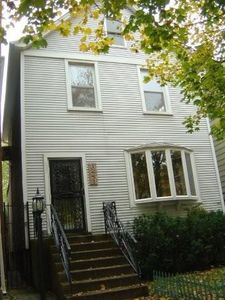
The rental, Chicago.

The rental, Chicago.

I had never been to Chicago until the day I showed up in a U-Haul with all my stuff. Before then, I was at a one-year theater program in Blue Lake, California, where Billy the Clown, the founder and self-titled Chief Goof-Officer of CircEsteem, a nonprofit youth circus in Chicago, came to audition students for a job. Several classmates and I got the job and formed the first CircEnsemble. Our role was to teach, chaperone, perform, tutor, do administrative stuff—basically, we were jacks-of-all-trades who would help ease the burden on the growing, lightly staffed organization.

It was the summer of 2007 when I drove the U-Haul to the 4-bedroom house near the corner of Hollywood and Broadway off Lake Shore Drive’s northernmost exit. My two roommates also went to the theater program in California. Wade, a young, bulky guy, attended the program the year before I did and drove a motorcycle. Debbie was a yoga enthusiast with short, curly hair who was also my next-door neighbor in California. I was 23 and exploring a career in theater, though deep down I knew that law school was inevitable. The owners of the house were two Polish brothers, both named Jerry. (They were friends who had hit on a pair of sisters at a bar and later married them.). Wade got the Jerrys to give us a discount because we were “artists.” The price was a steal, especially when split among four people.

The fourth bedroom was unoccupied, so we sought another roommate on Craigslist. We didn’t want just anybody, so we made our artistic endeavors and clownish tendencies clear in our post. After numerous bogus responses, we finally heard from a real-sounding, possibly even cool person named Shayna. She had just moved back to Chicago and was living in a cramped studio apartment and looking for a job. We arranged for a visit.

Shayna was short, almost dwarf sized, with pale white skin and jet black hair. She was a former Wiccan, she would later tell me, and though she’d given that up, she still wore all black. It was a pleasant visit, and she decided to move in with us after her other option fell through. She soon found a job as an executive assistant.

Shayna joined us the beginning of October, and things were great at first. Wade, Debbie, and I all got along with her. She got to meet our other friends in the CircEnsemble, too. She thought one of them, Pete, whose wardrobe consisted mostly of Hot Topic, was hot and told me so with a sheepish grin—she was 26 and he was 19—but it wasn’t reciprocated.

Though Shayna was amiable, we soon found that she was reclusive. I tried to include her:

“We’re gonna go to juggling night, wanna come?”

“Aw, I wish I could, but I have a raid planned for tonight.”

“A raid?”

It’s an online gaming thing.”

“Any chance you can reschedule? Pete’s gonna be there.”

“Dah! No. I wish you would’ve told me earlier so I could plan for it.”

“Sorry. We don’t really plan anything ahead of time.”

So that’s how things were for the rest of October. We all got along, but Shayna never became part of the group. She spent most of her time in her room with the door closed.

###

This is how we paid rent each month: rather than hand the Jerrys four separate checks, we alternated paying the full amount, and the other roommates reimbursed. November was my month. I paid, and my roommates, including Shayna, reimbursed me. A few days later, she told us she was leaving for California to take care of her grandfather because her grandmother had just died. It would be for only a couple weeks. She took her desktop computer and some clothes with her, but left lots of other clothes, boxes of random stuff, and her Xbox and PlayStation 2.

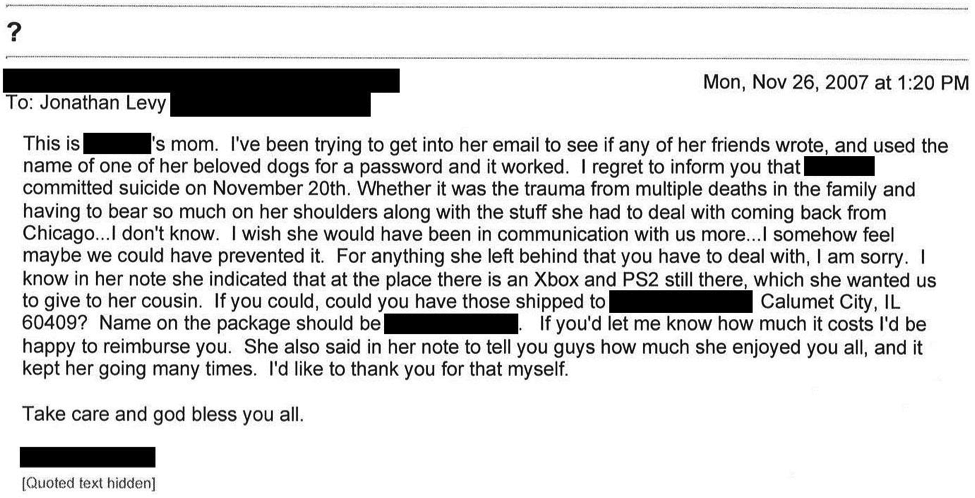
Two weeks later, I called to see how she was doing, but she didn’t answer or call back. Soon after, I got a notice from the bank that Shayna had stopped payment on the rent check she gave me. So I called again, but she still didn’t respond. I emailed her the day before Thanksgiving, told her I knew she was going through a rough time and taking off lots of time from work, asked her when she would return, reminded her that Wade would need to be reimbursed for December rent. No response. I tried again on the 24th. Subject: “?” Text: “When are you coming back to Chicago?” Still nothing. Another email the next day. I told her we would seek another roommate and clear the room of her stuff if we didn’t hear back by the 30th, and that I hoped there was some silly reason she hadn’t responded to a single call or email. Then I received this:

Untitled

We were all, of course, stunned. Pete was the most hurt. When I told him, he looked away, and I could hear his nasal breaths. None of us had any idea that Shayna was at risk for suicide.

We took stock of what Shayna had left: clothes, gaming systems, etc. (Pete would later alter one of her sequined black shirts into a vest for himself.) We intended to mail the gaming systems to her mother as requested, but I figured why stop there? It would be awkward—I wouldn’t know what to say—but I felt it was the right thing to do, and even a bit heroic. Calumet City was less than an hour away. I would take all of Shayna’s remaining stuff home.

I looked up the address on whitepages.com and found the corresponding phone number. I called.

“Hello?”

“Hello. Is this Mrs. _______?”

“Yes, who’s this?”

“My name is Jon. I was one of Shayna’s roommates in Chicago. I don’t know what to say. I’m so sorry. I was going to mail you her Xbox and PlayStation 2, but we figured, you live so close, we could drive everything of hers to you, including books and clothes and everything else, and then you wouldn’t have to worry about shipping.”

“Why don’t you talk to Shayna about that? That’d make more sense. She’s right here.”

Holy-shit-holy-shit-holy-shit!

“I’d love to.”

Shayna did her best to avoid me. First she wouldn’t come to the phone because she was lying down. Then after I tried her cell, she texted me to say she was out of minutes. Finally, when I told her to use someone else’s phone, she gave in and called from hers, and I answered.

“Hi there.”

“Hey.”

“So you’re alive.”

“Yeah.”

“That was good. Really good.”

“Look, I didn’t mean—”

“No I’m just saying it was a good fake. We all believed it. Well done.”

She told me the rest of her story. Allegedly, this is what happened: She went to New York after her grandfather’s death to take care of her grandmother. (Never mind that she had said it was her grandmother’s death in California when she had taken off in early November.). Overwhelmed, she attempted suicide and committed herself to a hospital. After hospital bills, she had only $50 to her name. She went back to Calumet City to visit her parents and make amends—she hadn’t talked to them in two years. She fabricated the email because she wanted to start all over. Now she was about to take a bus to California to visit her aunt and move there indefinitely.

We talked about money. She said of course she would pay, as soon as she got a job in California. We all knew we would never see a dime, and we never did.

###

Shortly after Shayna had left in November, Pete moved into the basement. Then in January, a friend of a friend moved into Shayna’s room, and we were five.

I Googled Shayna once about a year ago, and again as I wrote this story. She’s married, lives in Chicago, and works as a freelancer. She cost me about $200 that winter in 2007, but gave me this story to tell forever. I say it was worth it.

About the author

Jonathan Levy is a law-school graduate living for the time being in Arlington, VA with his wife and two dogs. He joined the writing world late last year, and so far the staff and readers of Boston Literary Magazine and Pure Slush have made him feel so grateful and lucky.


Metal Doors

by Laura Speranza


Photo Credit: Laura Speranza

Photo Credit: Laura Speranza


Clink. The cold metal of the handcuffs pressed into my wrists. I stared down at them, completely dumbfounded. I was expecting a scolding or maybe an increased fine for my transgressions. Being taken into custody was not on my agenda.

Not that I didn’t deserve to be incarcerated. I am an addict in recovery, and in my using days I spent a great deal of time visiting local doctors convincing them of my ‘disabling’ panic attacks which required sedatives or my ‘debilitating’ back pain which necessitated heavy pain killers. My scheme worked because I dressed nicely and spoke well, and had a job and health insurance. Drug addicts didn’t look like me or talk like me, or so I had been told. My offenses were clearly catching up with me though. I was in court that day for bad checks that I wrote to numerous doctors. I missed an ordered work service, and the court’s patience with me had come to an end.

The bailiff led me to the benches towards the side of the court. I had work and children in daycare. I mentally sifted through appropriate excuses that I could use for not showing up at work. I sat patiently through the rest of the cases, noting the particular distaste the (male) judge seemed to have for women.

Photo Credit: Laura Speranza

Photo Credit: Laura Speranza

A young man, who missed work service like I did, also ended up in handcuffs. The bailiff led him to the bench next to me. He looked just as taken aback as I was. I looked at him and down at my cuffs and shrugged.
After the cases were complete, I sidled up to the bailiff’s desk.

“Can I use my phone, just for a minute, please?” I pleaded.

“Just for a minute” he scowled, handing me my purse.

I texted my boss a bullshit excuse about having a child in the emergency room and called my husband to let him know I’d be spending the day in jail and he would have to be home tonight to relieve the sitter. He sounded somewhat amused.

Photo Credit: Laura Speranza

Photo Credit: Laura Speranza

The bailiff led me and the other guy down a corridor and lined us up against the wall. Another bailiff patted down the young man. I swear it looked like he was fighting back tears.

The bailiff leered at me, “You don’t get the same treatment.”

He seemed to relish running his hands over my shoulders, waist and legs. He then led me to a room with a metal door.

“Can I use the restroom?”

“There’s a toilet in here,” he motioned toward the back of the room where a small metal toilet was. Clank. The metal door shut behind me.

The room had dismal brick walls and a cement floor with a wooden bench lining the wall. I eyed the toilet skeptically. What happened if someone walks in? Not to mention the numerous diseases I’m sure were festering on the seat. I would hold it, thank you. I sat down on the bench and shivered. The room was freezing cold; a large air conditioning vent was right above me with icy air blasting out of it. I was wearing a silk wrap dress with high heels. When I got dressed this morning I hadn’t an inkling that I would end up here.

There was nothing in the room. There was no one to talk to, nothing to read, nothing. Wow, I could see how this was an effective form of punishment. As I sat shivering, I contemplated the fact that I was actually worthy of this punishment and worse. Drug addiction had taken me to places I never thought I would go. The constant drive to sate something that can never be satisfied; turned me into somebody I did not recognize. Like when I crawled through my elderly neighbor’s bedroom window while she was gone, ransacking the house for prescription pills. Thinking about it now, it seemed like a lifetime ago. Only by the grace of God and months of tireless work, was I able to I find a reprieve from my disease. I drew my knees up and pulled my dress over them and tried to situate my hands so that the cuffs didn’t dig into my wrists.

After what seemed like forever, which in reality was probably twenty minutes, the bailiff came back and guided us down the corridors beneath the court house. We walked past holding cells packed with men that been detained recently.

In each cell, the men nudged each other and crowded toward the small window, gawking at me as I walked past and saying undoubtedly disgusting things to each other. I slumped and hid my face, wishing I could shrink into the woodwork.

We walked into a waiting area with metal chairs. He sat me down next to a surly woman with wild hair who was shackled to a chair. The nurse was taking her blood pressure and flashing a light into her eyes. A woman behind the desk motioned for me to come over. She shoved various forms at me which I signed. I sat back down and waited for the nurse to examine me.

prison-fence-and-barbed-wire

The nurse finished with the other woman. As she took my blood pressure and medical history, I desperately hoped that nobody was going to shackle me to a chair.

After a bit, a female sheriff called me over to the other counter. She had me stand against the wall, while two large bright lights flipped on and blinded me as she snapped a photo. I walked over to the counter and she put a red bracelet on my arm with my picture on it. I glanced down at the photo; I truly looked like a deer in the headlights.

The sheriff asked me if I was homosexual, bisexual, had gang affiliations, and if there was anybody I needed protection from. I was none of those things, but the question itself scared the daylights out of me.
She led me to a smaller cell. Clank. Another metal door closed behind me. There was one other woman in the cell. She had multiple facial piercings and a perpetual smirk.

“I’m Shana, what are you in for?” she asked.

“Writing bad checks” I didn’t feel like expanding. “You?”

She animatedly recounted a detailed story about being in a Motel 6 to get a face tattoo (yes, a face tattoo) and the room was raided. All eight people in the room were busted for an ounce of methamphetamine, because no one person ‘claimed’ the meth. She did however ‘claim’ her stolen car and bag of marijuana. I nodded sympathetically.

This cell was freezing also. I sat rubbing my hands together while she made a series of calls from the pay phone asking her ex-boyfriend to drop the stolen car charges.

Then, the cell door opened and we were joined by a well dressed woman who looked ill at ease and distinctly out of place. She ignored us and proceeded to make calls on the pay phone trying to get bailed out.

Shana was motioning wildly to her friend, the woman with the crazy hair who was shackled to the chair outside. The other woman finished with her calls and sat down on the bench.

“Whatcha’ in for?” Shana asked her nosily.

“I had an old warrant. They picked me up on disturbing the peace.” She replied, avoiding eye contact and looking at the ground.

“I’m Shana.”

“Sophia.”

I introduced myself also. Then Shana proceeded to tell Sophia her face tattoo story about being a victim to the people who didn’t ‘claim’ their drugs. Sophia wasn’t as good as I was at hiding her revulsion.

At that time, we were joined in the cell by the wild haired woman whose name was Charlie. She and Shana chattered to each other about the ‘bullshit’ charges and how they were going to get out. Shana told Charlie that she had called Jimmy (the ex-boyfriend owner of the stolen car) and told him she would do whatever he wanted if he bailed her out. She emphasized that she did mean anything and proceeded to repeat in detail all of the sexual acts she offered to perform.

Poor Sophia’s jaw dropped and she flushed bright red. I chuckled and maintained my poker face; my ability to not show emotion was serving me well right now.

Charlie walked over to use the toilet, which was right next to me because the cell was so small. Shana followed her, serving look out while she squatted and pulled a small baggie of drugs out of her vagina. I tried to act like I didn’t notice and attempted to tune out the sounds that went with this act. Sophia stared at the wall because she didn’t know where else to look.

We sat for a bit longer, trying to make stilted conversation. Then the cell door opened and the sheriff steered us out. She cuffed each of us to another person; I was cuffed to a very young girl dressed like a boy.

We were then herded into a van where we were to be transported to the woman’s jail. The van was packed with inmates almost sitting on each other’s laps. One of the women who was stumbling and barely coherent, starting throwing up in the back, which caused a couple of the other women to gag. The smell of vomit now permeated the van.

I was crowded next to three women. One of whom was in the hotel room with Shana, and was apparently the alleged owner of the ounce of meth. Shana was sitting across from us, glaring intensely at her. The other two women were already in the orange jail attire and chatted excitedly with each other. They seemed very upbeat considering their circumstances.

The one with her two front teeth rotted out and track marks on her arms, told me she liked my dress. She said I looked like “Beverly Hills.” I smiled and thanked her. This seemed to open her up to telling me about how when she was busted a couple days ago she had a full rig of meth in her pants and she had ‘popped it’ in the cell. She pulled her pants leg up to show me the needle mark and bruise. I wasn’t sure why she was telling this, but I again sympathetically nodded, indicating that I might have done the same.

The other woman was in her fifties with tattoos all over her neck and arms. She asked me why I was in here, and I repeated my bad check story. The owner of the bag of meth started to doze off at this point and her head bobbed forward.

She proceeded to tell me about her bust for heroin and how she had been clean for a year before a recent relapse. Our eyes connected, and I felt a kinship with her. I shared with her that I was an addict too and congratulated her on being able to achieve a year of sobriety. She accomplished something I had not yet been able to and I admired her tenacity. She gazed down, studying her dirty fingernails and softly replied that she lost her sobriety when her daughter was murdered. I had a feeling that I might regret asking about it, but it seemed like she wanted to tell me her story.

Apparently, her 21 year old daughter was working as a nanny for a man who she was (unknown to her) a gang leader. He wanted to have sex with her and she denied him, so he took her and her four year old son to a hotel while he plied her with meth in hopes of getting her to comply. When she didn’t, he beat her senseless then choked her to death with the hair dryer cord. The four year old was witness to the whole thing.

The man then claimed that she committed suicide and hung herself with the hair dryer cord. Despite the bruises all over her body, he was never charged with the murder. The four year old son couldn’t testify because he was so traumatized he hadn’t spoken a word since. She recounted this story without any emotion or inflection in her voice, staring impassively out the van window. I sat silent, not knowing what to say.

We then arrived at the jail and were herded once more out of the van into the building. We were uncuffed and took a seat while we were called into the next room in groups of four. I rubbed my reddened and sore wrists as Shana and the older woman started talking about the bail bonds men that would bail you out if you had sex with them. They claimed they were all ‘tricks’, including a lot of police as well. Shana was talking loudly about how she should give one of the bail bonds men a call.

I couldn’t help but ask her. “Why do that to yourself? Why give your body away like that?”

She turned to me with a hardened expression. “You close your eyes for a minute and it’s done, you know? This country was built on the barter system. They have something I want, and I have something they want.”

When we arrived, we were handed jail attire. As filthy and tattered as the clothing was, I was grateful not to be freezing any more. A few of the women were outfitted in the same striped attire that I was, but the rest were outfitted in orange. Apparently, the striped attire indicated that you had already been sentenced. We were separated out by our uniform and ushered in two different directions. Shana gave me a wave and a lopsided grin, “Good luck doll!” I waved back and off we went.

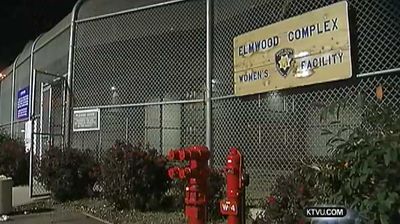
Sophia and I walked across the courtyard with a couple other women and approached a large brick building with barbed wire around the fences. The sheriff led us into the building towards a room where we were instructed to grab a blanket, sheets, a cup with toothpaste and a toothbrush and a plastic mattress. She told us that this was the only cup we were going to get, so don’t lose it. We then followed her to room with a desk that was in the center of glass walls that housed two levels of beds. The beds were divvied into groups of eight, with a letter designating which ‘pod’ they were.

The women inside the glass walls crowded together, straining to catch a glimpse of us and nudging one another. A large woman with purple hair caught my eye, ominously grinned at me and gave me a little wink. I tried to focus my eyes anywhere but on hers. Sophia looked like she was ready to bolt.

“You two are in pod F. You’re bed 4 and you’re bed 2” the sheriff indicated the pod on the second level and opened the door for us so we could drag our plastic mattresses in. Sophia followed me up the stairs as we tried to ignore all of the prying eyes following us.

I threw my mattress on what was meant to be a bed, but was really just a metal rack. I tossed the threadbare blanket down and crawled onto it. As soon as Sophia and I put our things down, a couple of women walked in who were inhabitants of pod F. A woman with a strange amount of facial hair introduced herself as Julie; her heavy set friend was Deb.

Julie and Deb flopped down on their beds and proceeded to chat about a fight that had happened earlier that day.

“They keep telling us that we’re too wild. We’re always getting our privileges taken away because they keep busting us for fighting and drugs.” Deb explained to me.

More nodding on my part. “Welcome to our little home! How long you in for?” Julie asked.

I debated telling her the truth. I sensed that they might not be very welcoming to somebody that was lucky enough to be departing in a day. “Umm, you know. Just a day…” I answered hesitantly.

“Lucky dog!” crowed Deb. “I would hate you, except I’m finally out of here the day after tomorrow. What are ya’ here for?”

“Writing bad checks” I answered. I wished in that moment, as I had several other times that day, that my conviction had been for something a bit more menacing.

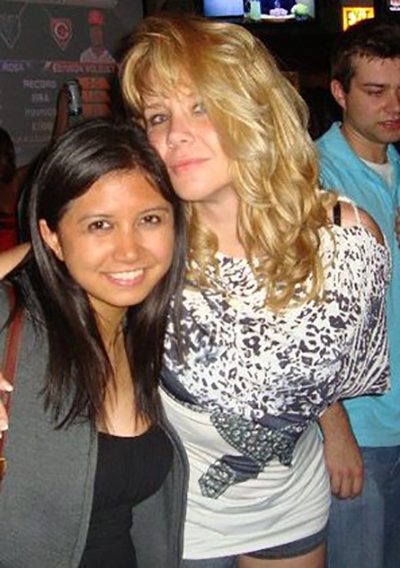
The author is on the right

The author is on the right

At that time a loud horn blared through the room. All of the women scrambled to get on to their beds and the clatter and noise subsided. I looked curiously at Deb. “What is that?”

“Shift change. You can’t get off your bunk, don’t talk either. When they call your last name, answer with your first name.” she instructed.

The women seemed to take this so seriously, that I couldn’t help but wonder why. “What happens if you’re not on your bed?” I inquired.

“They take a privilege away from all of us!” she glowered at me, clearly unhappy by my inquiry.

I nodded in compliance and followed the other women’s lead by answering the male guard with my first name. He seemed inordinately happy with his position, strolling through the room with a swagger and a sneer.

“Asshole.” Julie grumbled after he passed. After he left the room, she turned to Deb. “Can you believe that shit with him and Cora?”

“Fucking, sick pig.” They continued to gossip about how the guard apparently enjoyed regular oral sex with an inmate named Cora in exchange for privileges. When I asked how he didn’t get caught, they laughed heartily and ribbed each other at my hilarious joke. Sophia caught my eye, and then rolled over on her cot.

I folded up the sheet to try to create a semblance of a pillow. I stretched out and tried to get comfortable while I closed my eyes for a moment. This place was truly another world. Whatever all of these women were convicted of, did they really deserve to be treated like this? It was shocking to think that the justice system and those that upheld it seemed more deviant than the convicts. Some of these women were so accustomed to being used and discarded; they seemed to feel that was their role in the world.

At that point, the piggish male guard came back. “Number 4, you’re out of here! Get your stuff, let’s go.”

I tried not to appear too happy, but I inwardly breathed a large sigh of relief. I was told earlier that I may be released early due to overcrowding. I gathered my plastic mattress and accessories, gave Sophia a small hug and wished the other women good luck as they glared at me.

I followed him downstairs, placed my mattress and bedding on the shelf, and changed back into my clothes. My belongings were returned to me and my red bracelet with mug shot was cut off of my wrist. The large metal door clanked, this time with me on the other side.

I walked outside of the building and turned around one last time to look at the drab brick building with barbed wire. I turned my face towards the sunshine and let it warm me while I thankfully said a prayer for the women I left behind.

 About the author

Laura Speranza is an aspiring writer and autism advocate. Her work can be found on Booksie and the Den of Amateur Authors; as well as autism sites such as Autism Awareness. She has a blog about parenting with autism and is working on an autobiographical novel.