Call for Submissions

Tell Us A Story is taking this week off so we can spend some quality time with our families this Thanksgiving. But don’t worry–we are still reading your submissions!

So do you have a good story to tell? Remember, you don’t need to be an author by trade (or by hobby) to submit to us. We’re looking for good, compelling, true stories, in any form.

All submissions must be less than 2000 words and must be based on something that actually happened to you (not to your friend or your cousin or your high school math teacher). We are also interested in very short stories (flash [non]fiction), experimental stories, poems, or plays as long as they are true. When possible, we’d like you to send us a scanned photograph or document that correlates with your story, because those kinds of details are nice.

Please send submissions as an editable attachment (no PDFs please!!!), along with images, and a 100 word (or less) biographical statement to tellusastoryblog@gmail.com.  Put “TUAS Submission” in the subject line. Please submit only one submission at a time (unless you are sending poetry).

The Box

by Melissa Lenos

The Box, lined with archival inserts and conscientiously tagged Ziploc bags full of photos, had become something of a party trick. One friend has a hilarious story that becomes more elaborate with each retelling, another a dog that can open the refrigerator and bring guests beers.

And I had the Grandmother Box: a plastic file bin packed with the history of my mother’s mother, hundreds upon hundreds of photos, newspapers clippings, fan letters and bizarre remnants of the life of a woman I don’t remember. My grandmother: the professional wrestler, the author, the songwriter, the model, the airplane enthusiast, the amateur sports fisherwoman, the possible (probable) escort. I would tell you her name, except that I’m not certain of it – the Box contains documents that use half a dozen different names and variations on their spellings, so I just refer to her as Grandmother.

pic1

The author’s grandmother: “Polaroid Glamor – a Girl’s First Mink”

When my older sister sent me the Box, it was a different Box: brown cardboard packed with the ancient, non-archival photo albums, shredded promotional posters and a handwritten account of my grandmother’s life, taken down by my biological mother, who I haven’t seen or spoken to since I was three years old.

pic2

The author’s biological mother (age 15) and grandmother at a wrestlers’ reunion cookout.

Grandmother launched a legacy of chaotic women; we are prone to extremes, drawn to anarchy, bright but restless, physically powerful and true extroverts. In other words: generally interesting and charismatic women, and not terribly maternal. The photocopies of my mother’s handwritten pages were the only contact I’d had with her in two decades. I noticed that it seemed as though she might be left-handed, because of the slant of the script, then I dropped the sheaf of pages back into the Box, and didn’t open it again for several years.

barpose

The author’s grandmother enjoys the use of her home bar (1964)

It was my husband who saw the Box as a beginning, rather than the end of an extraordinary life. He pointed out that my grandmother was fascinating enough to warrant a biography of her exploits, and that I, her final grandchild, was the perfect candidate for the task: an academic obsessed with research and armed with a friends list full of historians of popular culture. But there was always a reason to put the project off – I was just starting a doctoral program, I was drowning in dissertation, I just began a tenure track job, I need to focus on my promotion binder.

promo2

The author’s grandmother supporting some troops (undated)

All along, the real reason skimmed under the surface: that I reveled in being somewhat pastless; that I feared what Grandmother’s legacy might reveal.

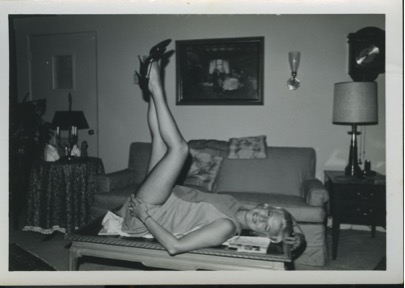
tablepose

The author’s grandmother enjoys her coffee table (undated)

I also struggled with deciding on a format. “Memoir is my least favorite form,” I’d been known to declare in a bitchy tone, so while that did not seem like an option, writing an arm’s-length biography of a family member also seemed disingenuous. “Just start digging,” one of my writing partners said. “Why don’t you hire a research assistant?” my husband asked. To research what? The woman’s life was a hurricane of activity and there didn’t seem like a logical beginning.

book-intro

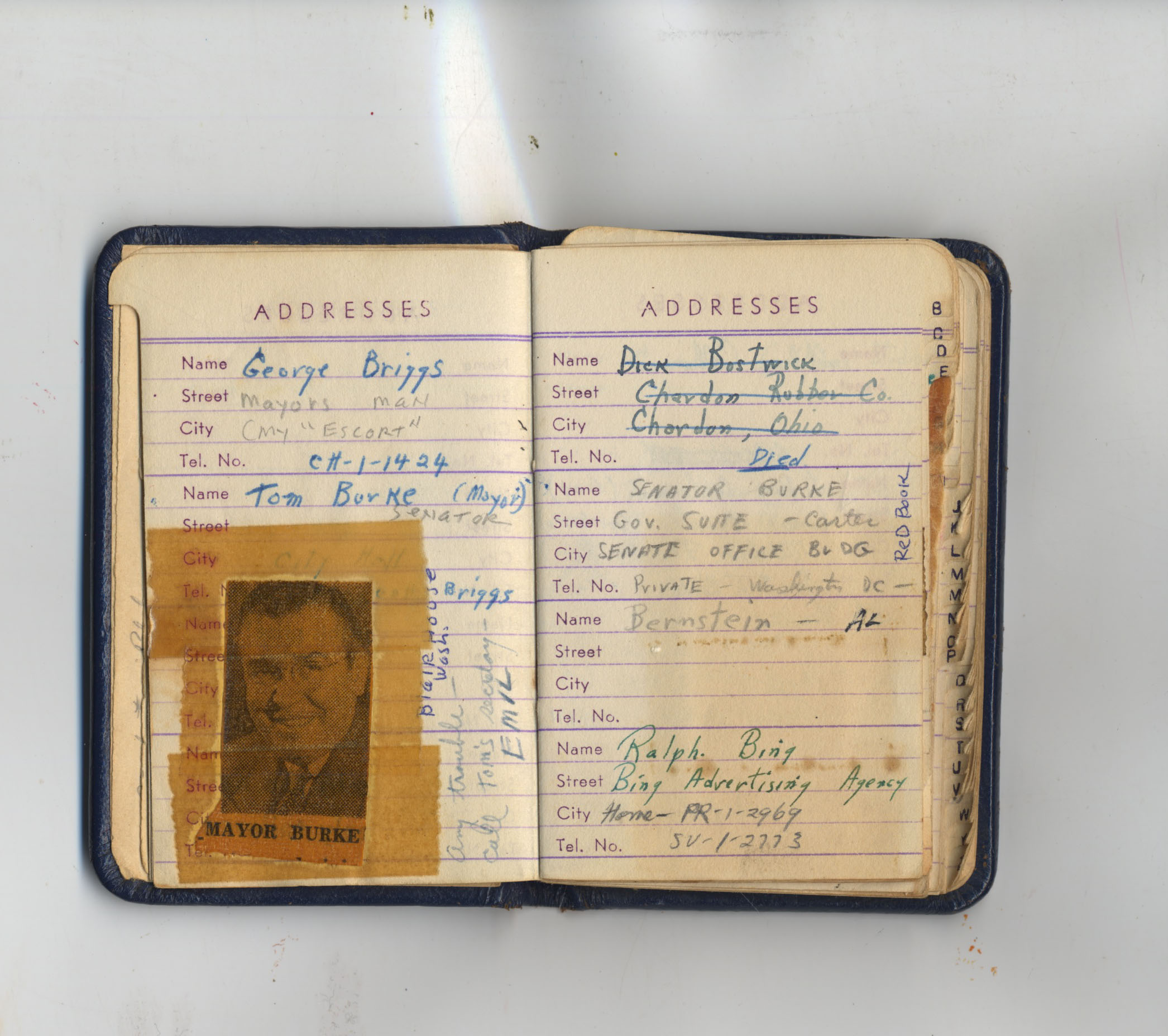
I started with a small address book. The second entry is Tom Burke, a mayor of Cleveland from the mid-1950s. The entry includes a phone number for “the mayor’s man” and a pasted-in photograph of Burke. The second page contains the updated entry: “Senator Burke” and a number that is annotated “private extension.”

book-B

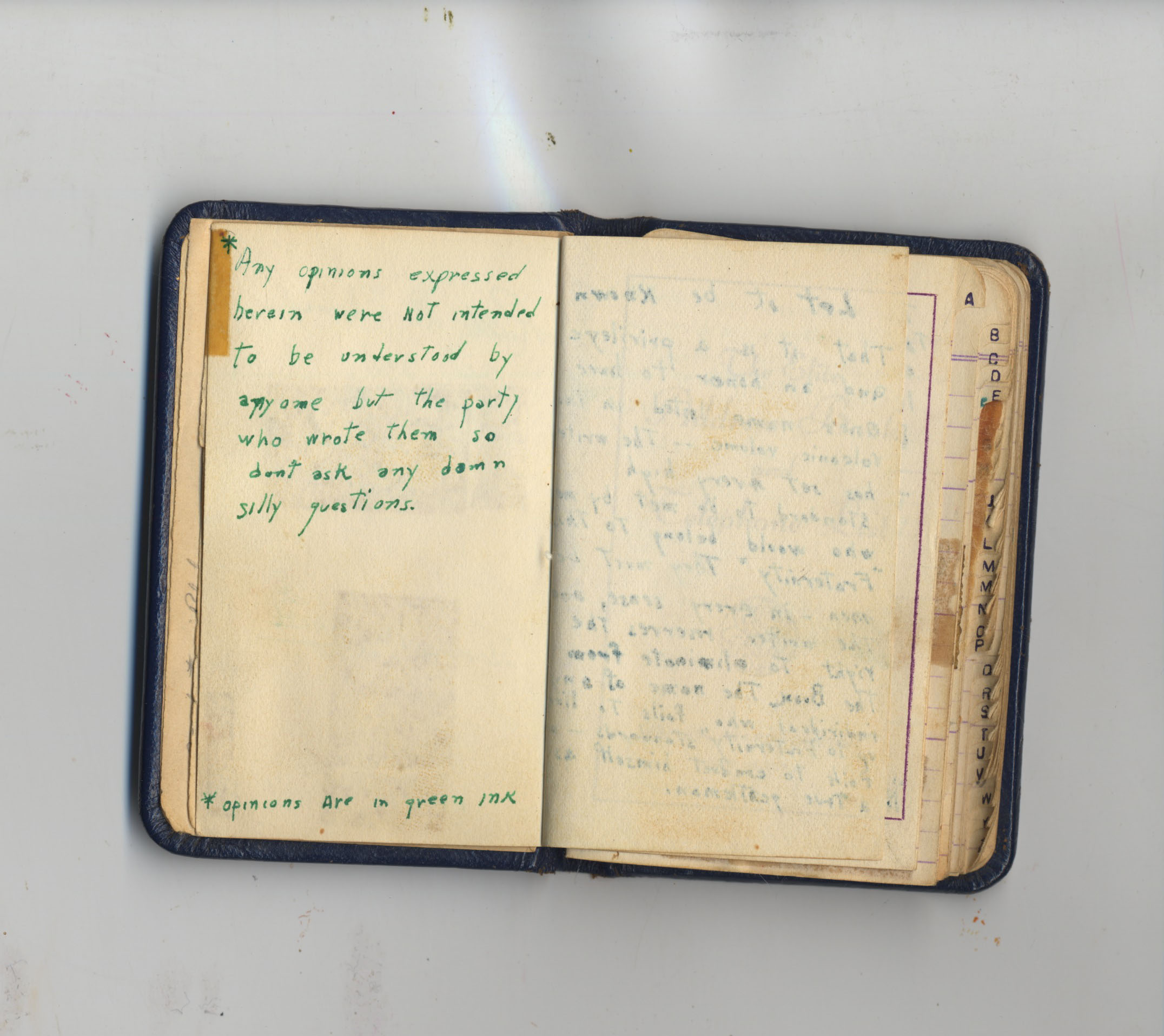
I put down the book. This task is daunting and frankly, surreal. What can this possibly mean? As though predicting my confusion, Grandmother included an additional preface: 

book-opinions

Then below:

* opinions are in green ink

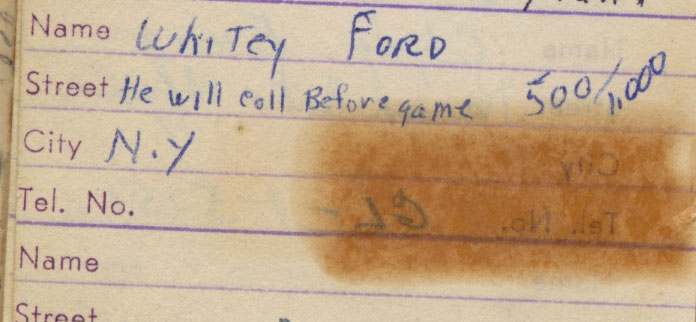
My grandmother had a lot of opinions; most of them are written in a code I cannot decipher. She occasionally made price notations in the margins as well – billing scales? At some point (between World Series wins?) good old Whitey Ford’s bill jumped from $500 to $1,000.

book-Ford-detail

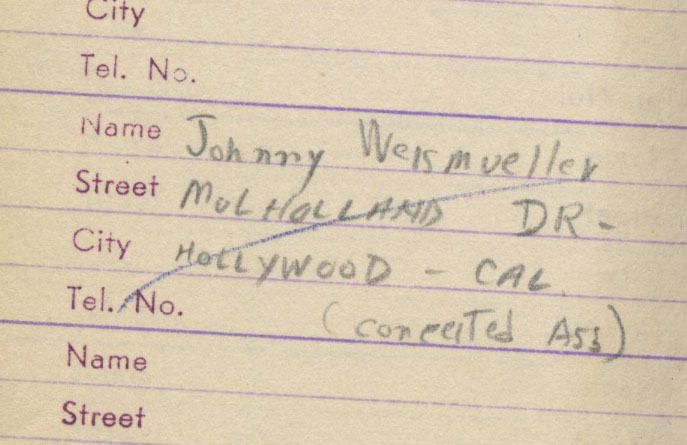
And every now and then someone is crossed out with a violent strike across the page:

Weismueller1

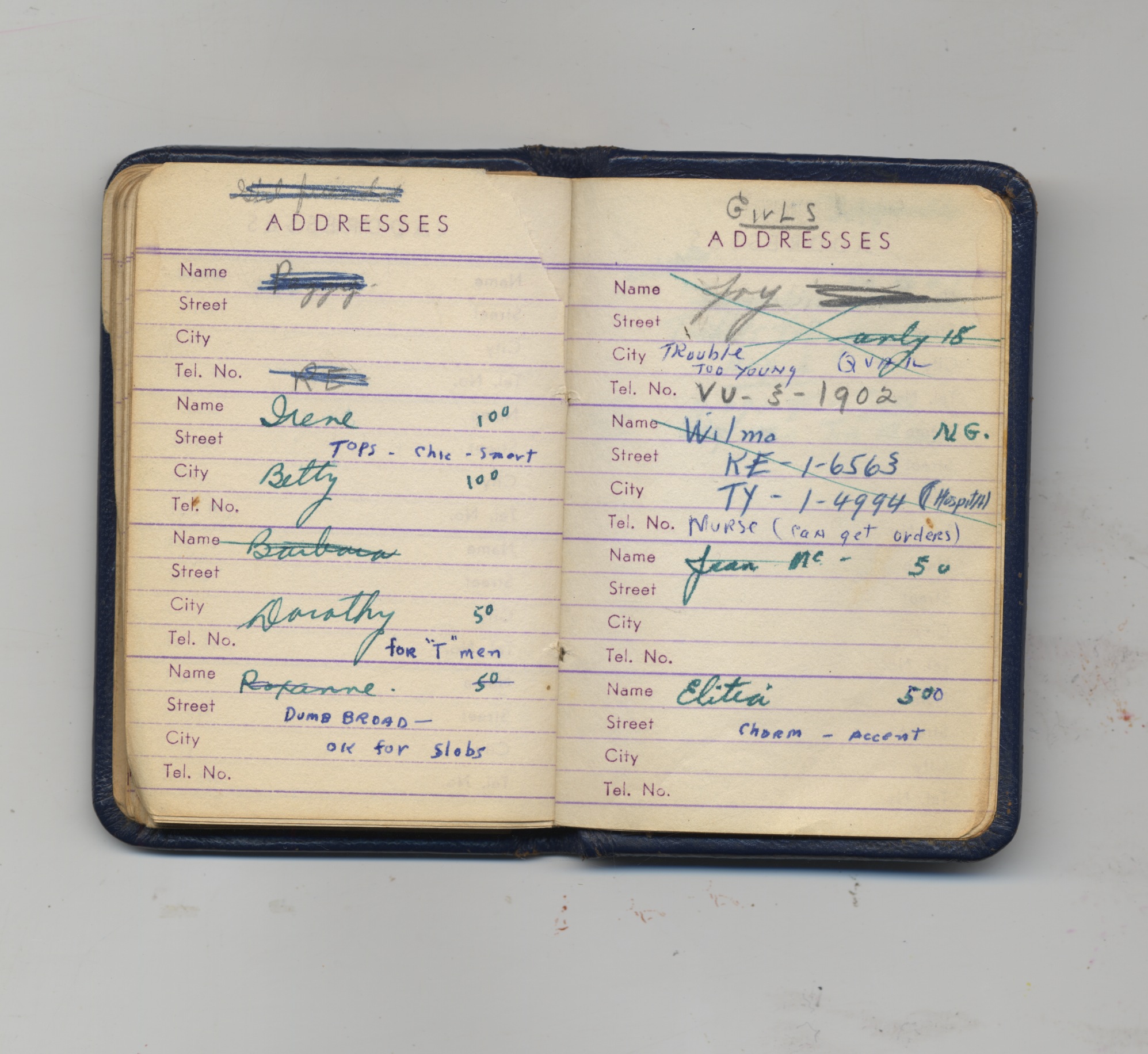
Not all of the notes are about men; near the back is a list of women’s names and brief notes:

book-Girls 

Irene – tops, chic, smart

Joy – TROUBLE too young

Elitia – charmer, accent

Wilma, nurse – can get orders

And poor Roxanne, “dumb broad – okay for slobs before Grandmother changed her mind and crossed Roxanne out altogether.

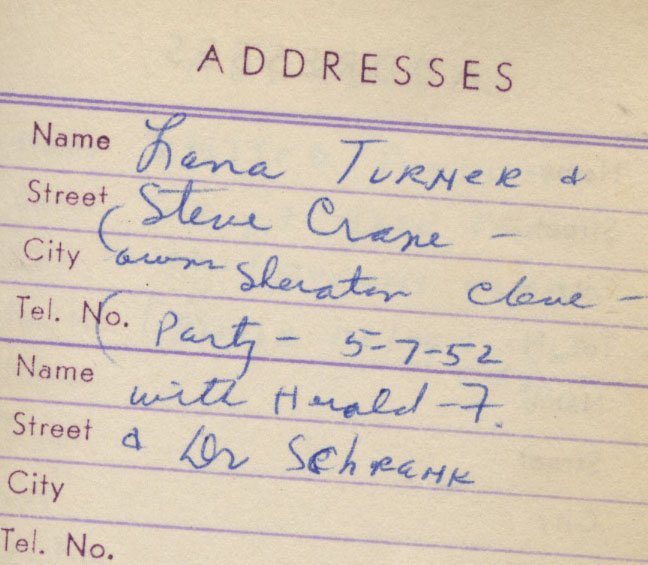
The next time I opened the book, I discovered a page that had previously been stuck to another, in the section marked T, an offhand note in my grandmother’s now familiar script:

book-Turner-detail

My grandmother, who knew me as a shrill, precocious three-year-old, could not have known that I would become a film scholar obsessed with Classical Hollywood and that this single line of text (Lana Turner!) would yank like a steel cable on my heart; backward to her, to my past, more than any actual event in my life ever would.

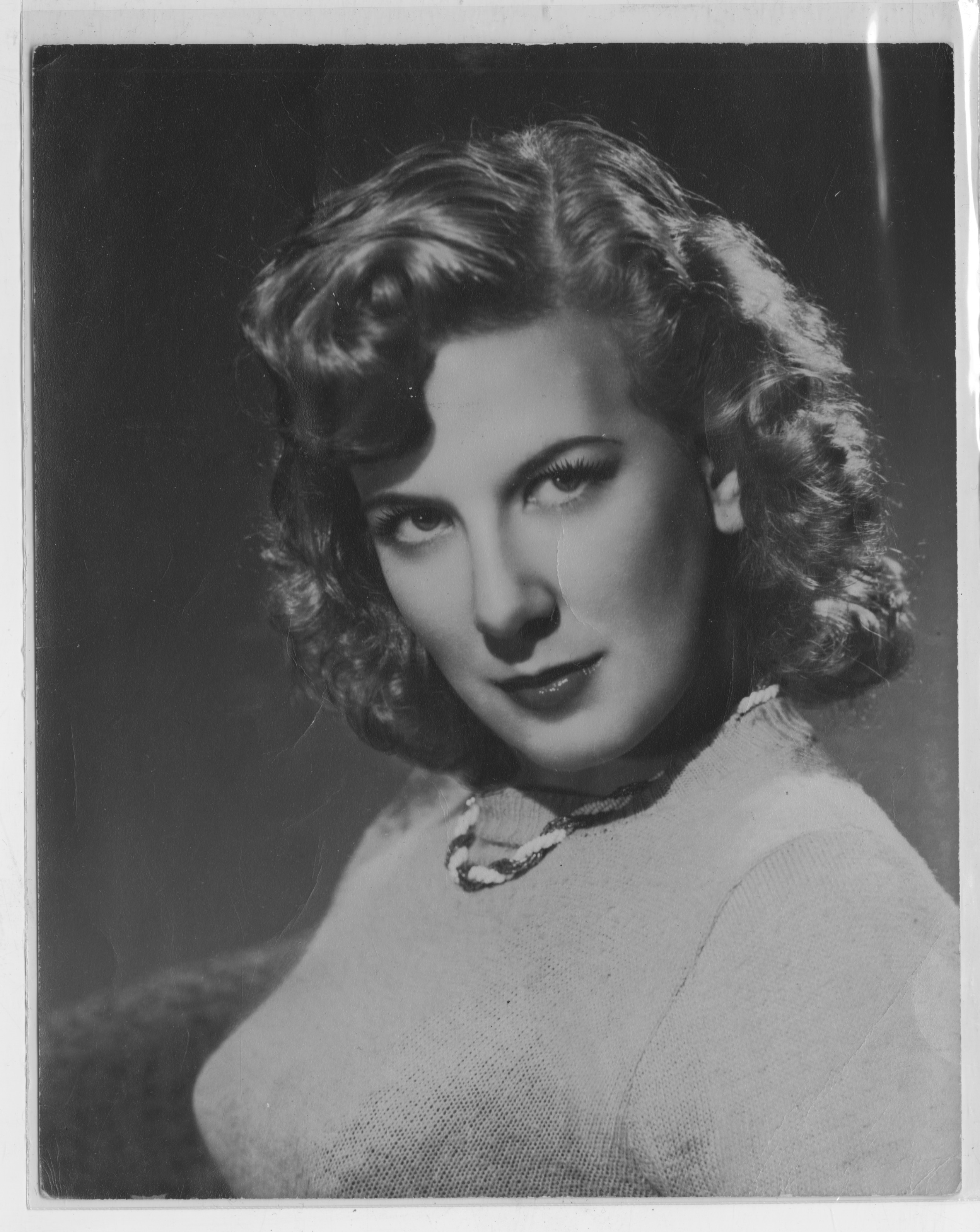
promo

The author’s grandmother in 1947

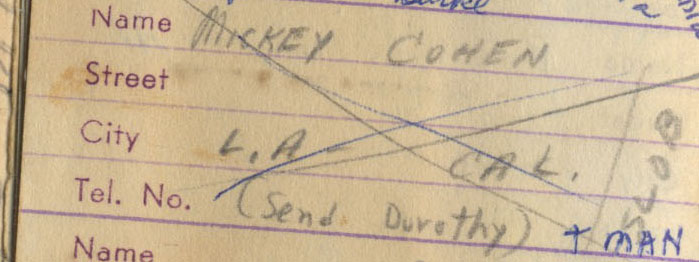
The date next to the party notation is long after Lana and Steve had divorced for the second time, but before Crane’s daughter killed Lana’s boyfriend Joey Stompanato (who, it should be noted, is not in the book – although his boss Mickey Cohen is … or rather, was…)

cohen-slob

Poor Dorothy!

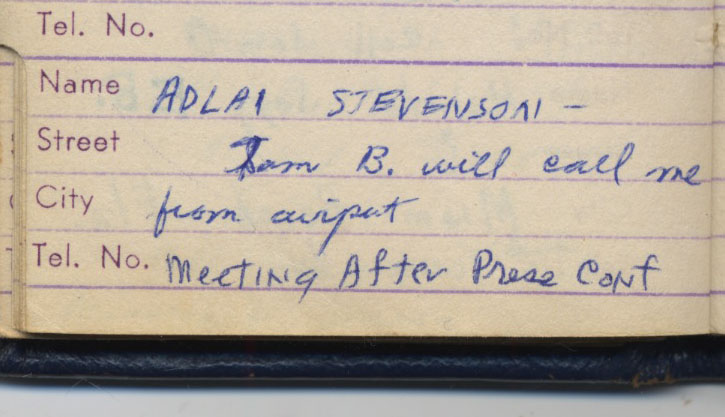
After this discovery, I put the Box away again for a long time. I couldn’t work out if all or none of this was real or fantasy; it seems too bizarre to be made up, and the lists seem deadly serious, full of references to Feds and T-Men and secret entrance instructions (“take elevator to 7 then back hall”) private lines to police chiefs paired with first-name only women, lines and lines of indecipherable code words, acronyms and seemingly random numbers and finally, the somehow ominous, “Sam B will call from airport – meet AFTER press conferences” because of course my grandmother would not be meeting Adlai Stevenson BEFORE press conferences; that would make no sense at all. To paraphrase Sherman Alexie, if my grandmother was a liar, then she was a magnificent liar.

stevenson-detail

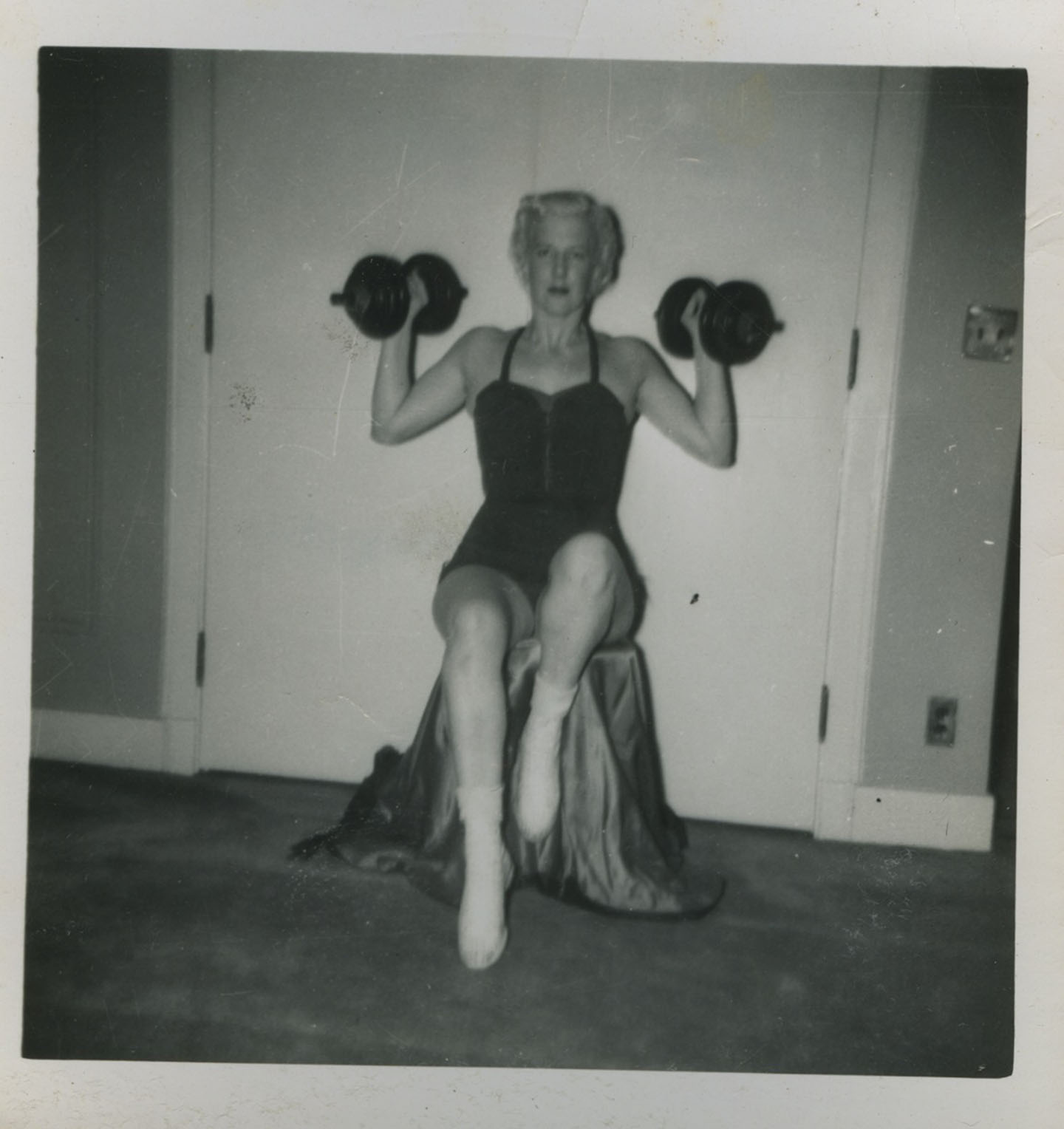
Aside from the little black book (volume 1; my sister still holds its sequel), the most enthralling objects in the box are the photos and newspaper clippings. So far, I can’t, with any certainty, identify anyone except my grandmother, but if the hairstyles and fashions are wonderful, the promotional materials for her stint as a lady wrestler are spectacular. Her competitors often have gimmicks – farm girls in pigtails and gingham rompers, dramatic beauties in capes and elaborate makeup. One particularly frightening-looking woman is billed as a “Lady Angel” who makes children cry.

scrapbook4 1

an undated newspaper clipping

But Grandmother is just herself, platinum blonde in a simple black one-piece. Up until the arrival of the Box, I’d assumed my sturdy build and strength were the results of my father’s genes – northern Greek mountain dwellers and herders of flocks, but my grandmother’s thighs and broad shoulders were immediately recognizable as my own.

lenos_FS11 Each of us creates a story of our lives, a narrative that casts us each as the protagonist of an ongoing serial. By necessity, we design conflict and, inevitably, a mythology that explains who we are and why we are who we are.

The narrative of my life splits with the arrival of the Box. Up until that point, I thought my story was a showstopper. A rural girl from humble beginnings – working class roots and a shy childhood that exploded into what I thought of as a series of defining – and terrific – adventures in my early 20s: working my way through college with a variety of weird jobs, partying with A- and B- list indie rockers and artists. Then scrabbling my way through a Master’s degree, then a PhD program, still occasionally having the odd run-in with celebrities and the stories with them that I collected like pretty stones. The first of my siblings to finish college, the only in my family to obtain this level of education; a woman who achieved her goals and now holds the life of her dreams: the college professor, the author, the scholar.

aggropose

The author’s grandmother challenges all comers

The Box shattered my self-made mythology; my life is so unbelievably dull compared to Grandmother’s, so lacking in adventure and danger and glamour. My stars are pale lights next to Lana Turner, my adventures child’s play beside mobsters, national politicians, actual federal agents.

spycostume

The author’s grandmother was not, as far as the author knows, a secret agent herself

By all accounts, Grandmother was a disengaged and unenthusiastic mother. My own single maybe-memory of her is of a perfectly-coiffed bottle blonde in a red bathing suit and sunglasses standing beside a Florida swimming pool. She is holding a tall glass of something clear, and has a rigid 1970s facelift (her recovery is documented in the Box – meticulously in daily, bloody color Polaroids, carefully dated; they are like horror movie stills). The memory is also a still in my mind; I am wearing jelly shoes and everything has the tint of the late 1970s. She is not looking at me.

About the author

Melissa Lenos is an Assistant Professor of English at Donnelly College where she teaches English, cultural studies and film studies. She is co-author of An Introduction to Film Analysis: Technique and Meaning in Narrative Film, and is currently editing a collection on uses of classical fairy tales in contemporary popular culture. Melissa lives in Kansas City, Missouri with artist Corey Antis and one small cat. Those interested in following her Box research can do so here:  http://cargocollective.com/flyover/The-Box-Project 

Solitary Confinement

by Cindy L. Marvin

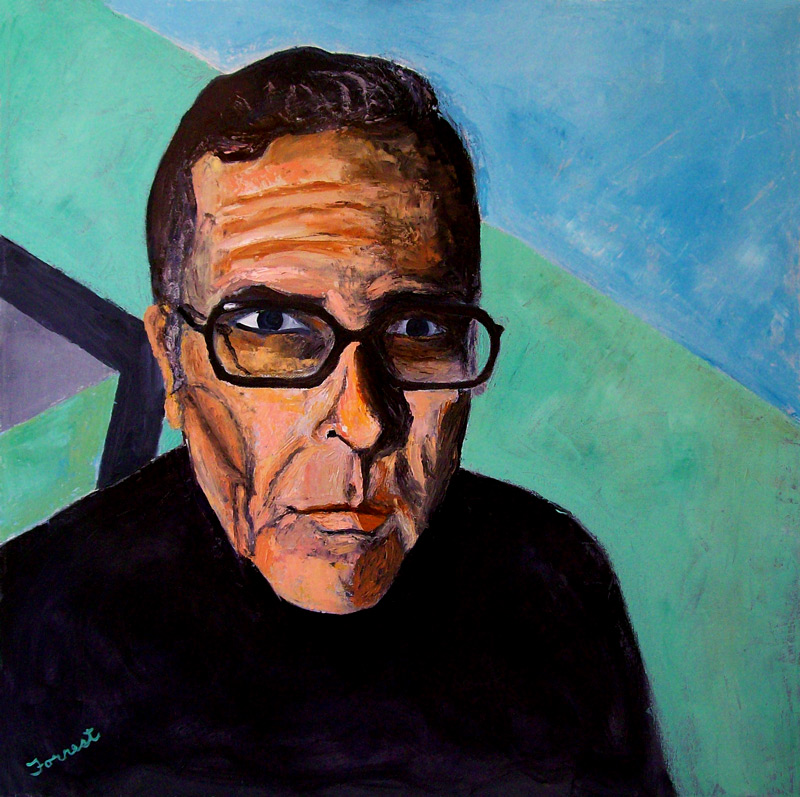
Courtesy of Allen Forrest

Art credit: Allen Forrest


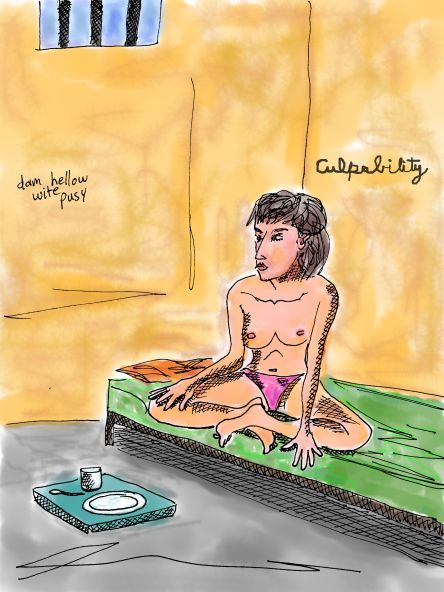
I was lying on a green, plastic covered mattress that made crunchy noises when I moved around. Tan polyester netting was exposed in many areas. When I moved around, flakes of green plastic stuck to my sweaty body and wounds. It smelled like mildew, Jheri Curl hair products, and sweat. I had tried putting my orange jumpsuit down on the mattress and lying on it, but the uniform’s material was stiff and scratchy. It irritated my skin worse than the plastic bed.

To occupy myself, I repeatedly touched an area behind my right ear. It felt wet. A section of my hair was missing. The bald area was no bigger than a quarter and was not bleeding. When I looked at my finger, I saw clear fluid. There was no mirror in my cell, so there was no way for me to look at the injury. I could not look at the wounds on my face either, but I could feel that my eyes, lips, nose, and cheeks were swollen.

Because there was no one to talk to, I lay on my bed and examined my injuries. I counted twenty-seven bruises and three cuts on my arms, legs, and torso. My white body was a canvas of red, black, and purple splatter. I had an interesting bruise on my hipbone that resembled a child’s purple crayon drawing of a butterfly. I searched for other shapes like children look for animals in cloud puffs. With the exception of the butterfly, all my contusions looked like blobs and sponges. I twisted my sore body around on the brittle mattress attempting to find a comfortable position. I closed my eyes. Immediately, the memory of fists, feet, concrete floor, billy clubs, and mace flashed bright and sharp. My eyes sprang open. I flipped over my thin plastic pillow and lay back, eyes open. Eventually, I fell asleep.

I woke up when I heard keys jangling. The sound was exaggerated by the long empty corridor. I tried to speak to the guard who slid my dinner tray under the door. She popped gum and ignored me. I wanted to know what time it was. My meals all arrived cold, so they could be feeding me at any time. The food, served on tan compartmentalized trays, was distinctly breakfast, lunch, or dinner. That was my clock. After dinner, I put an “X” on my homemade calendar to mark off a day.

The lights in solitary were on all the time. I was always locked in my cell except once daily when I was taken out to shower and sometimes exercise in a small outdoor pen. Officers became impatient if I showered too long or stood outside in the cage more than ten minutes. The only thing I had to read was a Bible. It was smaller than my hand, white, and the binding broke, loosening several pages, the first time I opened it. The only other inmate in solitary was in the cell directly across the hall from me. She was an insane woman who screamed and moaned incessantly. Often, it sounded like someone was torturing her. I complained to the guards that she should be in a mental ward.

The second week in solitary confinement, the hours between meals and my shower existed on a clock with a run-down battery. Off and on, I picked up the Bible and tried to read it. Everything I read was scary, confusing. I regularly checked the wound on my head. It was drying up. I only wore panties because of the heat. I spent a great deal of time staring at my limbs and torso. My bruises were fading. The butterfly was dying a putrid greenish yellow death. Many times, I sat staring at my yellow legal pad. I would draw pages full of two dimensional boxes. Most often, I simply lay on my bed, sweating on plastic, staring at nothing.

The walls were made of cinder block that had been repainted so often the bricks’ texture was almost smooth. Previous residents wrote their names, cuss word, and drew pictures on the wall. An inmate wrote, “Burn TPW (Tennessee Prison for Women)” then drew a smiley faced sunshine above her words. Another prisoner wrote “gards is hos.” I scanned the room for misspellings. I read, “dam, hellow, wite, pusy.” To counterbalance, someone wrote, “Culpability,” in beautiful cursive. The letters were two inch high and drawn in thick and dark.

The end of the second week, I watched them take the crazy lady away. I stood at my door and stared out the little window. She was a surprisingly small woman in her late thirties. Her hair was dark and matted, but her features were striking. She had what I called gypsy eyes, light color with dark lashes and brows. Her lips were red, and I knew she was not wearing any make-up. They shackled her, running chain around her waist. Her wrists and ankles looked miniaturized confined in steel. She spit in one of the guard’s faces then started yelling some crazy gibberish, or possibly it was a language totally unfamiliar to me. Four female guards pushed her face down on the concrete hallway floor. Two of them sat on her. I walked away from the window. The crazy lady yelled as they dragged her down the hallway. When I heard the entrance gate to solitary confinement close, I looked out my window. There was red blood on the grey concrete floor where they had slammed her head down. The blood formed a perfect moon shape.

Without the crazy lady screaming and moaning, the only sound was a strange popping and gurgling of the plumbing pipes.

My third week in isolation, I crossed off my nineteenth birthday on my homemade calendar. In spite of extreme exhaustion, I could not sleep. Many dinner trays had come and gone since I had slept. I paced constantly even though I was sweating from heat and humidity. It was July, hot and humid. There was no air-conditioning, no fan. The sink water tasted like iron and smelled like sulfur. I could not drink it. I used it to wet down my body and my hair. Often, I wet my towel and put it around my neck.

For lunch, an officer slid a tray with a fingerprinted bologna sandwich oozing clear mayonnaise out the side, runny applesauce, corn chips, and a carton of what I knew was warm milk under my door. I pushed the tray back into the hall untouched and sat on my bed with my head and shoulders slunk forward. At some point, I looked at the wall to my left. I stared at my shadow on the beige cinderblock. Eventually, I leaned back. My shadow did not follow me. I jerked up and whipped around facing the floor. My breaths came rapid and shallow. I put my head between my legs. I saw my shadow on the concrete floor. It transformed from gray to purple. I squeezed my eyes shut then opened them. The shadow changed. It came to life like an oversized amoeba. I jumped to a standing position on the bed. I heard radio static.

“Is a guard coming down the corridor with a radio? I don’t hear any keys.” I listened intently. I heard arguing voices intermixed with the static. I put my hands over my face and rubbed.

“I’m losing my mind,” I thought.

The noises and moving shadows continued for hours. I leaped from my bed to the floor to standing on the rim of the toilet. When a guard brought my dinner tray, I told her I thought I was going crazy. She asked me if I wanted to kill myself. I said no, but… She left me alone. When I looked at the graffiti on the cinderblock all around me the lines loosened from the walls and danced. When I closed my eyes, I saw red headed beasts with white eyes. I prayed to my grandmother’s God to please help me.

That night, two guards took me out of my cell for a shower. I saw thick dark facial hair on both women. I feared to ask them for help. At the shower, I refused to step into the metal stall. When they attempted to lock me back in my cell, I starting screaming hysterically flailing my arms. At the same time, their walkie-talkies went off, and a prison alarm sounded. They forced me into the cell, locked me in, and quickly headed out of solitary. I kicked at the door and even banged my head on it. Then I crumpled to the floor crying.

Sometime later, I heard screaming, cussing, and keys coming closer and closer. I stood on my bed. I heard the cell next to me being opened and then locked. Then I heard the clang of solitary’s entrance gate.

Several minutes later, someone said, “Blondie. What cell are you in? I saw them bring you back here.”

I jumped off my bed and put my face to the three inch opening at the bottom of the door.

“I’m here, next door.”

My neighbor told me her name was Hawk.

“I heard you got a code red at minimum security. What the hell did you do?”

“I pushed a guard. She was hurting Jolene.”

“Fuck the guards!” yelled Hawk. She banged on her door repeatedly.

When she stopped, I was quiet for a moment then I said, “I was losing my mind back here.”

Hawk slid a stack of magazines over to me. The titles all read Easyriders. I saw sexy, barely dressed women and motorcycles on every cover.

“How did you get these back here?”

Hawk didn’t answer. She laughed loudly.

When Hawk was asleep, I stayed up reading every Easyriders cover to cover. I sat on my bed and read every article and every advertisement. I was mesmerized reading about Harley’s new Softtail, the latest bike alarm systems, a guide to motors, and how to build a chopper.
$(KGrHqNHJE!FEN1l02ggBRG7FkqTFg~~60_35


The next day, Hawk and I lay on the floor talking through the crack. We only got up to go to bathroom. We stayed on our stomachs, backs, or sides with our faces near the tray slot. We even ate our meals lying on the floor. Hawk did most of the talking because she was twenty-eight, a biker chick, and she had many more stories than I did.

The following days, through the three inch space, Hawk filled my ears. She transported me around the United States on the back of a black 1984 Harley Davidson FXSB Lowrider Shovelhead. Hawk took me to dive bars with mean drunks that had knife fights. Then we went to bike rallies. She described Road Kings, Electra Glides, Dyna Glides, Softtails, Deuces, Fat Boys, and Sportsters. She took me to biker clubhouses. She told me endless stories that kept me wide eyed.

When Hawk wasn’t talking, she sang. Her voice was loud, and it filled all the empty spaces in solitary. She only sang Led Zeppelin songs. It seemed she knew them all.

My last day in isolation, they took both of us to the showers at the same time. It was the first time I’d actually seen Hawk. She stepped into the hallway naked with her towel over her arm. She had a strip of white cotton torn from a t-shirt wrapped around her head. It was tied on the left with a tail hanging down. She smiled at me.

“Come on, Suzy Q,” she said.

When she turned around, I saw a three foot high hawk tattooed across her back.
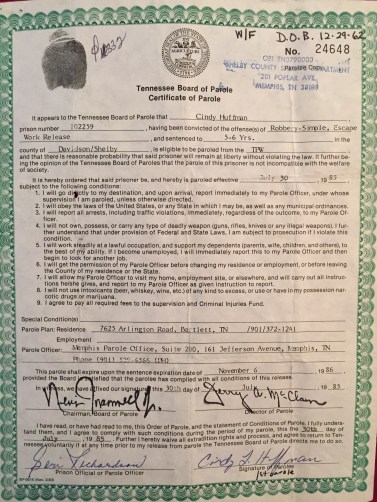
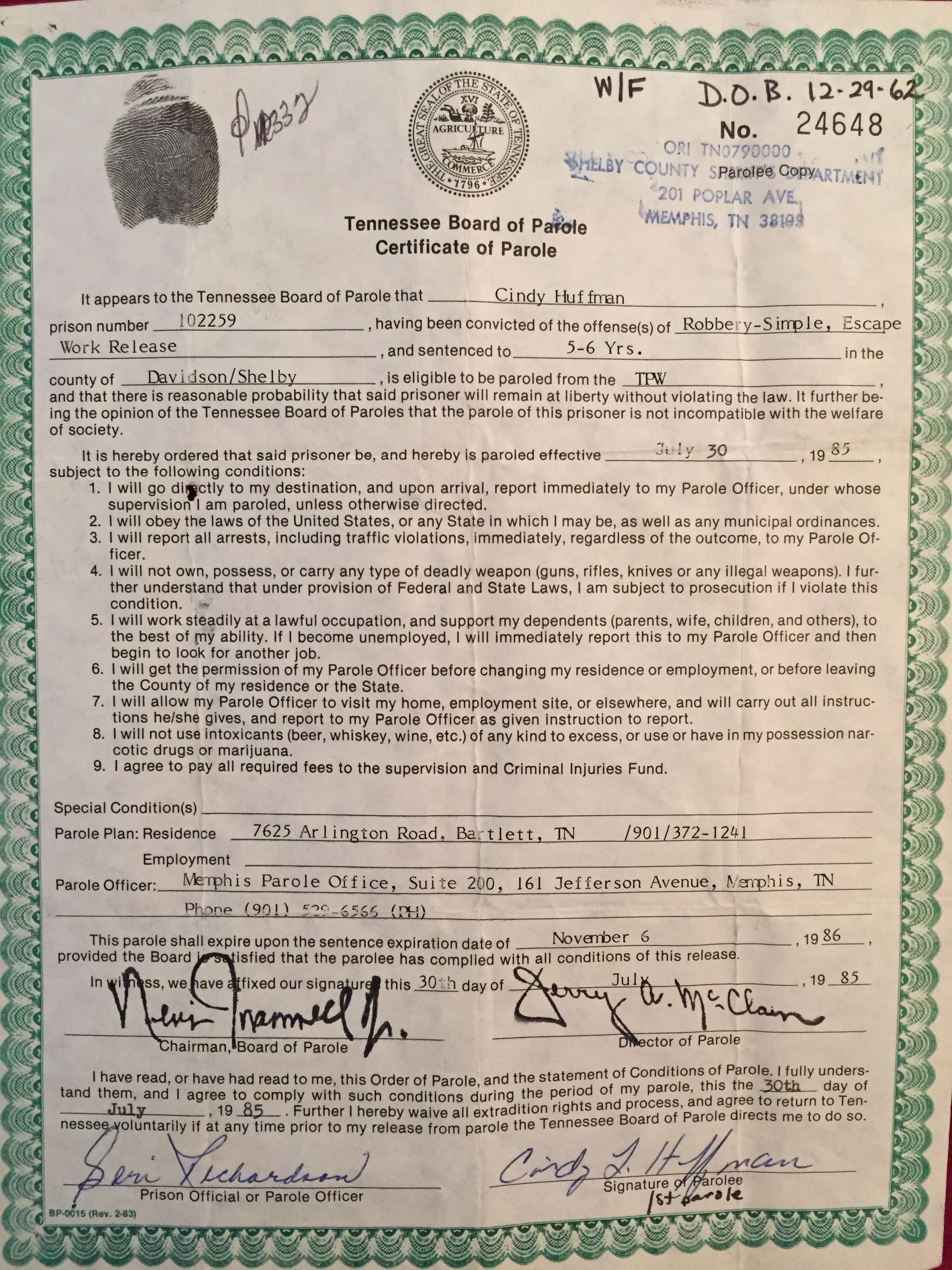
The author's parole paperwork, 1985

The author’s parole paperwork, 1985

About the author
Cindy L. Marvin was released from prison nearly thirty years ago. After her release, she went on to earn her teaching degree and become an English teacher. She is the mother of three boys. 
 About the illustrator
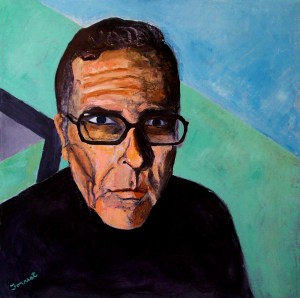
The artist

The artist

Born in Canada and bred in the U.S., Allen Forrest works in many mediums: oil painting, computer graphics, theater, digital music, film, and video. Allen studied acting at Columbia Pictures in Los Angeles, digital media in art and design at Bellevue College, receiving degrees in Web Multimedia Authoring and Digital Video Production.

Forrest has created cover art and illustrations for literary publications: New Plains Review, Pilgrimage Press, The MacGuffin, Blotterature, Gargoyle Magazine, his paintings have been commissioned and are on display in the Bellevue College Foundation’s permanent art collection. Forrest’s expressive drawing and painting style is a mix of avant-garde expressionism and post-Impressionist elements reminiscent of van Gogh creating emotion on canvas.



Survival (Part I)

Editor’s note: When William Masters first submitted “Survival” to us several weeks ago, we were naturally shocked by its content. Was the author really confessing to murder? And why do so on our little blog? In the interest of full disclosure, in the weeks to come we will publish our lengthy correspondence — with the author, the San Francisco police department, with bottled water experts (oh yes!), with friends, and each other — about the claims made in this story. But for this week, we present you the original story without comment.

by William Masters

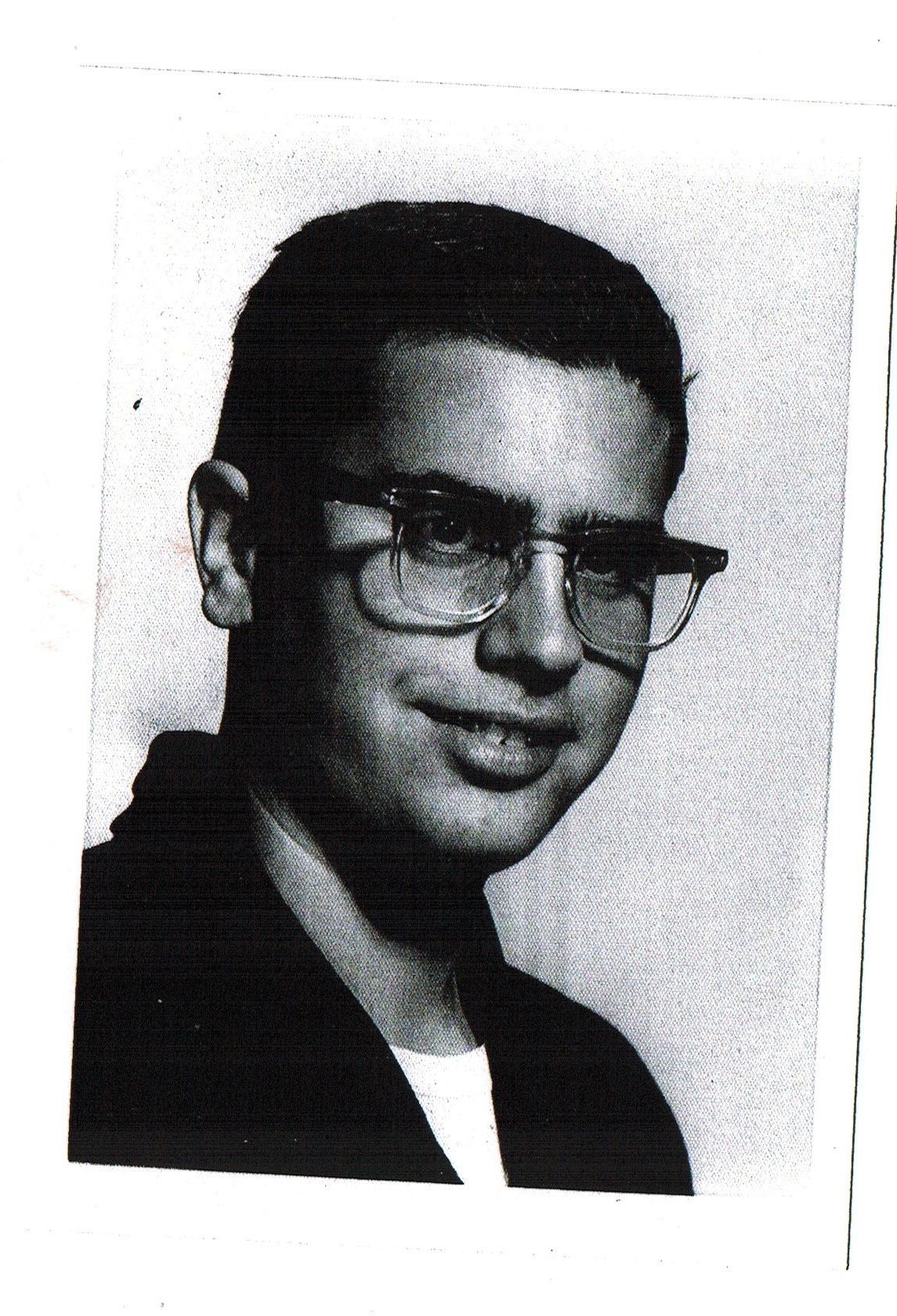
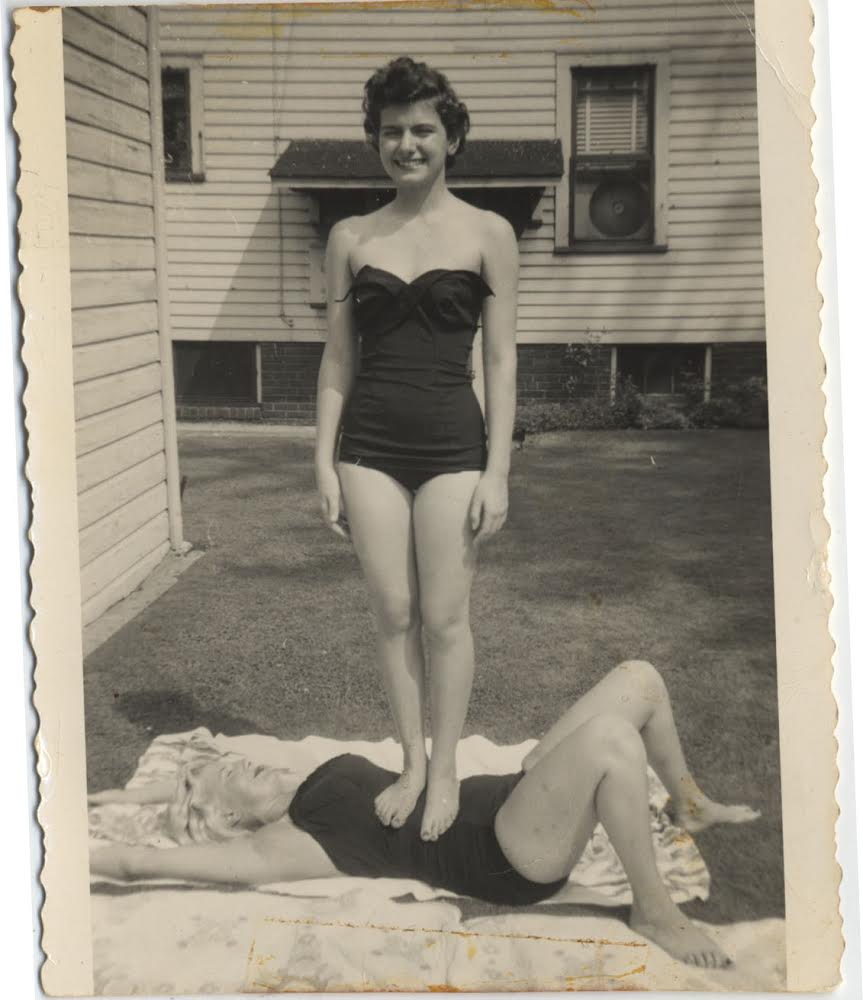
The author as a young man

The author as a young man

At sixteen, my older brother Mike was tried as an adult and sentenced to a year in the lock-me-tight for splitting from the Scottish fast food joint without paying for his order. After a month’s incarceration, he gained 11 pounds. For the first time in two years, he no longer went to bed hungry each night.

At eleven, as soon as the cast came off my younger brother Sam’s left arm, he hopped a freight train to St. Louis. After a month, most of his cuts and bruises healed and faded enough so that he could wear a short-sleeved shirt without having to answer questions or attract unwanted attention.

At fourteen, panicked at being left the sole target for my parent’s attentions, I drained the brake fluid from their car on Thursday night. Desperate, and hoping to survive until Friday morning, I locked the door and barricaded myself in the empty pantry.

The next morning, I heard my parents shout obscenities, blaming each other for the empty coffee canister. One of them threow the canister against the pantry door… followed by an uncanny silence, during which my body shook as I watched the pantry doorknob move from right to left.

“Oh Steve… come out, come out so I can punch you good-bye,” my father said.

“Oh Sweetie… come out, come out and give mother a kiss good-bye before the house burns down.”

I climbed up on the canning table that stood beneath a port sized window and waited… I waited until I saw my parents finally leave the house and climb into the car.

As soon as I saw the car drive away, I released myself from the pantry and rushed through the great room, which reeked of the beer my parents had substituted for the missing coffee , walked out the front door, sat down on the porch swing, and watched the car drive past the first turn.

With sober anticipation, I imagined my father’s surprise as he tried to apply the brakes to the first hair-pin turn as he drove down the steep mountain road. As soon as I heard the explosion, I took a deep breath and exhaled. A few minutes later, too far away to see any flames, I watched a plume of smoke appear, straighten out and rise vertically into the sky. The smoke congealed into a single, dark grey mass, split in half into a pair of clouds, then floated together along the line of the horizon until the November breeze snuffed them both out.

It wasn’t until late in the afternoon when two cars arrived, one from the sheriff’s office and one from Child Services. Still hungry, after eating a can of tomato soup and a small packet of saltine crackers, the only food left in the house, I asked the sheriff if he had a candy bar. His deputy pulled a tootsie roll out of his jacket pocket and tossed it to me. I thanked him.

Child Services looked at both the policemen, then scanned a file folder, and then looked at me. “You don’t want to spoil your dinner with that candy bar, do you… Steven?” Then Services blandly informed me that both my parents had been killed in a car crash that morning.

My body twitched as I concealed my joy in the confirmation.

Then Child Services gave me an empty box with a lid. “You have fifteen minutes to pack one suitcase and fill the box with your belongings before I transport you to a temporary holding area pending your assignment to another location.”

Ten minutes later, I stood silently, holding all my clothes and possessions in my mother’s suitcase. Standing absolutely still in the main room and kitchen area, I felt trapped between the empty frying pan on my right, and the sight of Child Services I saw through the window on my left.

As I touched the back pocket of my Levis to make sure I had my tiny address book, I gripped the suitcase and moved through the front door which Child Services held open for me, and headed to the police car. Like an act of telepathy, the deputy opened the car’s trunk for my suitcase.

Child Services vigorously protested and waved a paper at the two policemen, demanding that they move my suitcase into its trunk and escort me to the backseat of its car.

Silently I stood my ground. I looked the sheriff in the eye, belligerent and pathetic. The sheriff opened the back door of his car for me and told Child Services, “I’m just following protocol.”

Apparently, though still a minor, I needed to make a formal statement at the station and had the right to make calls to anyone I chose to ask for assistance before Child Services could claim me.

As I sat in the backseat, my muscles relaxed and my respiration returned to normal. Ignoring further protests from Child Services, the policemen got back into their car. As the deputy started the engine and shifted the car into gear, the Sheriff offered me a bottled water.

“Here kid, you look like you could use a drink.”

About the author

After the incident, the author spent four years in a group home, then received a scholarship to UCSB, and lived happily ever after, so to speak. No one ever found out about the brake fluid. He lost the copies of the death certificates that were given to him when he reached 18yrs old. “Survival” is part of William’s unpublished anthology, Portraiture: A San Francisco Story Cycle. About 14 stories from the anthology have been previously published in various magazines.
***
So, readers, what do you think? Please weigh in in our comments section below…