The Shocking Story of How I was a Teen Mom to an Egg Lovechild

by Dana Och

I always knew that I didn’t want a child, but at 17 I found myself mother to an egg.

Some women dream of being a mother since childhood—a desire that is rewarded and acculturated through toys, media, etc—but I was not one of them. I never played mom.  I was always a teacher or a therapist or one of those ladies from Cannonball Run. I was much more likely to care for a Gummy Bear in an Avon box than a baby doll with a pretend dirty diaper. Of course, Cabbage Patch Kids were all the rage when I was 10 so I did have one or two of those. I renamed mine Jon-Erik after Jon-Erik Hexum (Voyagers!  was so awesome), who shortly thereafter ended up accidentally killing himself with a gun loaded with blanks on the set of Cover Up.

For my entire life, I have stridently not wanted children. I never thought this was strange, as my mom (one of five children) is the only one of her siblings who had kids. Staying single and childless always seemed normal to me, just as being divorced with four children, single with children, or married with no children seemed like totally cool options too. When my three siblings and I would talk of the future, I would imagine a future where I went to medical school and lived with my long-term boyfriend until the end of the world in the year 2000, which conveniently would wipe out my student loan debt. It was the 1970s, stop judging. If pressed to imagine a wedding, even as a young child, I insisted that my bridesmaids would wear black. But marriage was never really on the horizon (and me marrying my dude after 18 years of living together only happened because we were turned down for domestic partnership. Don’t get me started on that. And my female witness at the wedding did wear black). I have no children. The only thing I got wrong was medical school, but I don’t think I even knew what a Ph.D. was at 6 years old, especially a Ph.D. in film studies where I could look at and talk about blood in horror movies all day but never have to, you know, actually touch it.

Fast forward to 1989. Living in Kentucky, I discovered The Replacements while watching 120 Minutes and seeing the video for “I’ll Be You.” Swoon. That scrawny dude with red hair sure was the bee’s knees. Clearly, my taste had changed in the years between Cabbage Patch kids and Alternative Nation. Ahem. The competition for title of Imaginary Boyfriend between the dude from Gene Loves Jezebel and Daniel Ash from Love and Rockets faded to the background as I went all in on Tommy Stinson, the dreamiest man in the world.
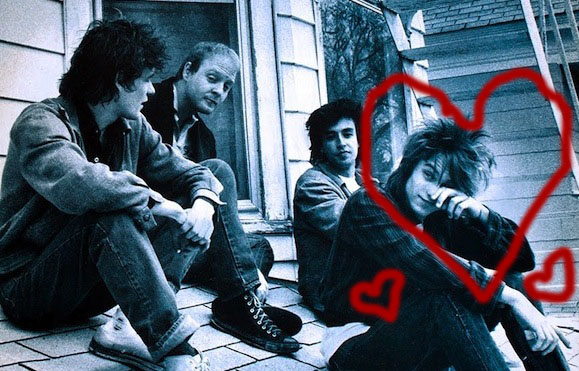
Tommy is the dreamy one with hearts around him.

Tommy is the dreamy one with hearts around him. He is so much hotter than Paul Westerberg, though Paul’s cool cred was famously established with the high school in Heathers being named after him.

When we moved back to Pennsylvania, music is all that I had. It was my refuge from the nightmare of a tiny high school with students who had gone from Kindergarten to high school with the same social parameters in place. It surely couldn’t have been that bad, I sometimes try to reason retrospectively. Except that the student body put together a petition to demand that I not be valedictorian since I came from another school at the end of junior year. It was common knowledge from eighth grade forward that the most popular male in school, the quarterback of the football team, would be valedictorian. How could some Freak Nerd (a mixture of Ally Sheedy’s and Anthony Michael Hall’s characters from The Breakfast Club) from Kentucky, where the classes just couldn’t have been as difficult, waltz in and disrupt this perfect scenario? Tears were shed over this situation, and they weren’t mine. Perhaps unsurprisingly, I have never been invited to a class reunion.
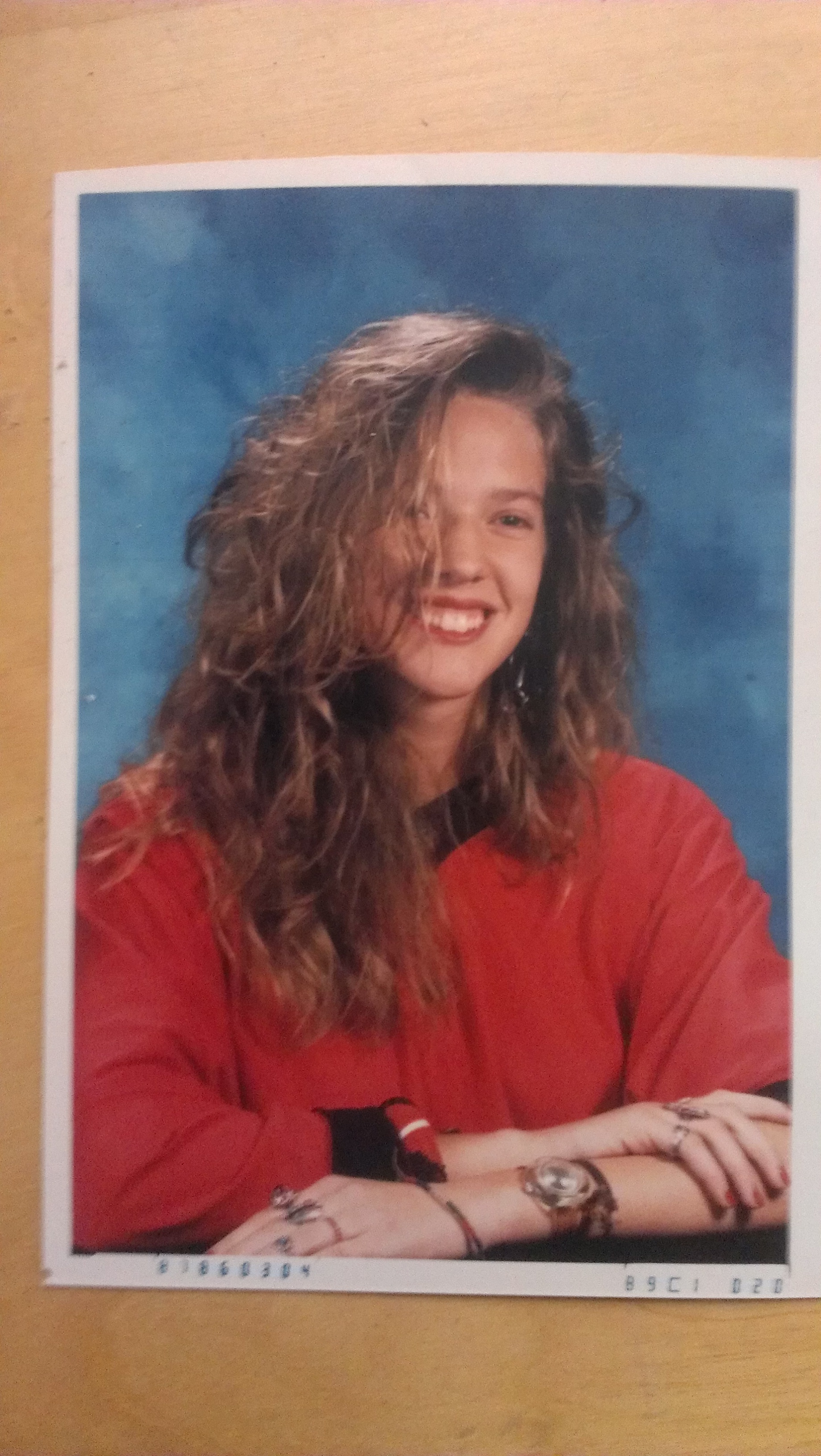
This is what the strange breed of Freak Nerd looked like in high school.

This is what the strange breed of Freak Nerd looked like in high school.

The animosity was so high because my GPA, given the weighted grades of my advanced classes, meant that nobody could catch up to me in class ranking no matter what they did, not even if I failed an occasional assignment. The “Dana Sucks” petition seemed like a lame plot device in a bad movie or television show.  Being forced to mother an egg also seems straight out of a television show (I am pretty sure it happened all the time in late 80s media like 90210. AlsoWillow and Buffy totally had evil egg babies on Buffy in Season 2, which sort of counts).
“Bad Eggs” is generally considered a throwaway ep of Buffy, but it really spoke to me. Baby eggs are evil, you guys.

“Bad Eggs” is generally considered a throwaway ep of Buffy, but it really spoke to me. Baby eggs are evil, you guys.

1991-1992, my senior year, was basically the peak of the teenage pregnancy rates in the United States, when there were 61.8 births to every 1000 adolescent females vs. 31.3 per 1000 in 2011.[i] While only one teen in my (admittedly more affluent and suburban) 2000+ person high school in Kentucky was pregnant, over half of the females in my high school in Pennsylvania were mothers or pregnant. While they weren’t the first, once the cheerleaders started getting pregnant, it resulted in a domino effect throughout the high school and middle school of girls from every social group getting pregnant. A friend of mine went into labor while I gave my speech at graduation. Another friend was pregnant with her second child at the ceremony. In a social situation where pregnancy seemed to generate popularity, being firmly set against having children was just one more instance of hopeless non-conformity. But, at least I got used to being judged for this choice early, at 17.

When health class announced that we had to parent eggs, I freaked. I tried to get out of it, arguing for another type of assignment that didn’t go completely against my being (I was always up in arms about sexism and projected expectations of normalcy. Still am). I was denied; obviously, everybody will be a parent even if they have no interest. Indeed, “you’ll change your mind” has been said to me more than you can ever imagine. Even worse was that the teacher was linking together female and male students as couples to raise the egg. I was still stinging from students literally moving their chairs away from me after I said I was agnostic when the teacher asked if anyone questioned religion.

I was quite bitter about being forced into this situation so I took control in the only way I knew how: I demanded to be a single mother and decided that my egg was the lovechild of Tommy Stinson, conceived at The Replacements show I attended shortly before they broke up (conveniently, around 9 months prior). And this, finally, is how I came to mother Tommy Stinson’s lovechild egg. We probably didn’t need a story, but I made up one up anyway.

My story of the scandal of loving The Replacements (none of this obviously happened other than me loving The Replacements, going to one of their last shows ever, wearing that concert tee for 10 years, and shaving half my head in study hall): I had gone to see The Replacements right after moving back to Pennsylvania, and from the stage of the Metropol Tommy had been winking at me all night, impressed clearly that I knew every word to every song that the band had ever recorded (seven studio releases between 1981-1990). He knew that I loved them so much that I would write their lyrics down emphatically on pieces of paper that I would eventually find in a closet 20 years later.
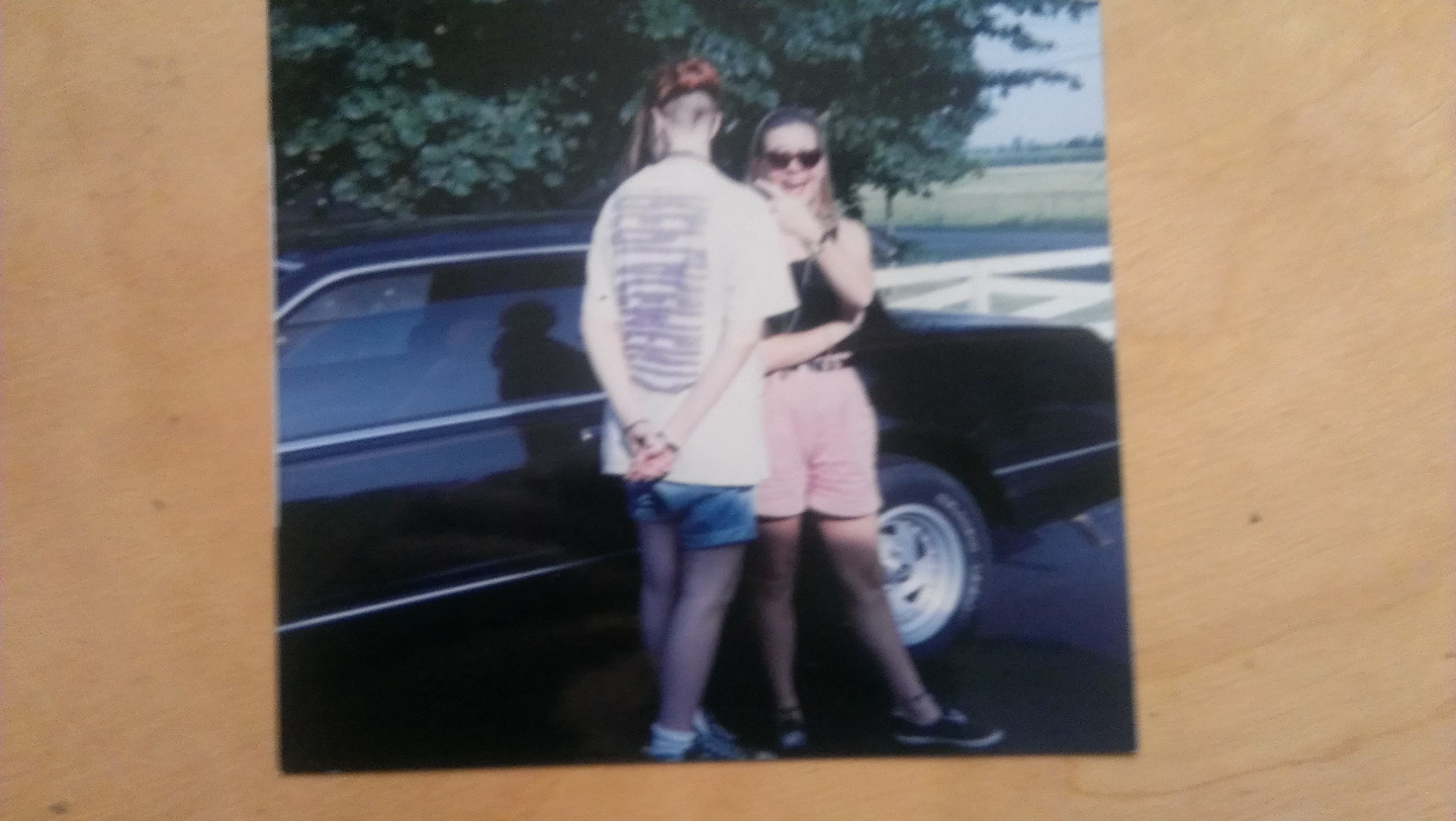
Tommy Stinson loved my half-shaved head, Replacements T-shirt, and baggy shorts. Who wouldn’t?

Tommy Stinson loved my half-shaved head, Replacements T-shirt, and baggy shorts. Who wouldn’t?

Tommy came and found me after the show, and I—in a diabolical moment of storytelling deliberately devised to shock my health teacher—decided that my virginity wasn’t all that important. I did make him use a condom, but unfortunately it broke. Because he was in a band, I was more concerned about STDs initially. Many months later, I finally realized that I was pregnant with an egg, little Tommy Jr. I tried to contact Tommy Stinson to let him know about the situation, but considering he was dealing with the break-up of the band and drinking super hard daily, he denied that this egg was his child. It certainly didn’t look like him. Well, he was right about that, but it also didn’t look like me. A baby egg looks only like a baby egg.

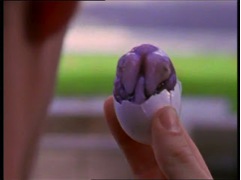
Tommy Jr. looked a lot like this.

Tommy Jr. looked a lot like this.

My teacher was seriously not amused.

I didn’t do well on this assignment because I didn’t have time for a baby egg. I had schoolwork to do. I had a job after school at the supermarket that was decidedly not cool with me bringing my baby lovechild egg to my register. My mom wouldn’t babysit the egg for me. She had other shit to do, like helping out my sister with her real baby. My journal entries were lies upon lies, but how couldn’t they be? I kept getting busted by teachers for leaving my egg to sleep in my locker (trust me, he was really safest there). Forced to carry him around, I cracked him a little and gave him a band-aid. I gave him up for adoption in the final journal entry.

Some people, you see, really aren’t supposed to be parents, not even if it is Tommy Stinson’s lovechild egg. I took no pictures of my little egg.

The moral of the story is one of the following:

  1. Don’t lose your virginity to Tommy Stinson at a Replacements show. He will deny your egg lovechild.
  2. Assignments that imagine the same “normalized” future for all students suck.
  3. Real babies are more difficult than egg babies. They cry. And poop. And they can’t be left in your locker all day.
  4. Real sex education in a school overwhelmed by pregnant teenagers probably would have been more effective than caring for an egg.
  5. If someone tells you that they don’t want children, leave it at that.
  6. If I had taken a picture of the egg lovechild, maybe Tommy Stinson would have gotten a tear in his eye at the Guns n’ Roses show 15 years later where I annoyed Axl fans by yelling “Tommy” over and over. Little Tommy Jr. surely has his own garage band somewhere out there now. I bet they are called All Cracked Up or Over Easy.

About the author

Dana Och lives in Pittsburgh where she teaches film and tweets while watching games shows. She bottle-raised a kitten once and became even more convinced that the egg assignment was stupid. The tagline on her blog is a lyric from The Replacements “I’ll be you.”


[i] These numbers can vary a bit depending on what ages are included. If 15-19 is specifically looked at, the peak is 1990 with 116.9 per 1000 in 1990 and 67.8 per 1000 in 2008 (http://www.guttmacher.org/media/nr/2012/02/08/). All studies do agree that the early 1990s are the peak of teenage pregnancy rates in America and that there has been approximately a 42% decline in this rate.


Quitters

by Brandon Dameshek

After one year of enrollment in Carnegie Mellon’s creative writing program, I quit. I despised everything about it: the dorm life, the male-to-female ratio (7:1), the weird dynamic of a campus overrun with mechanical engineers and theater majors. Nothing made sense there, especially to an aspiring 18-year-old writer who was living away from home for the first time, only to be bunked up with a Turkish student named Can. (“It’s pronounced ‘Jon,’” he would demand repeatedly to my bigoted neighbor across the hall who insisted on calling him “Can.”) I returned to Harrisburg, disappearing deeply into both pot and my mother’s disdain, because how could I possibly throw away a Carnegie Mellon education? “Why couldn’t he make it work,” she often wondered aloud.

Not my dad, though. He was the one who drove the three-and-a-half hours out to Pittsburgh, packed me up, and hauled me back to Harrisburg. He accepted that it wasn’t for me. He made bad jokes that had nothing to do with school. He brought me home without judgment. And that was that.

So rather than pursue a college degree from an esteemed institution, I instead bounced around from restaurant to restaurant, waiting tables, cooking, tending bar, and so on. It didn’t take me long to realize that being back in my hometown and living with my mom and step-dad was way worse than the freedoms of college, even at a college I loathed.

—–

Kurt Vonnegut

Kurt Vonnegut

When it came to Kurt Vonnegut, I was a goner. My step-brother, Pete, first introduced me to the majesty of Vonnegut through what remains my favorite of his books, Cat’s Cradle. I read it in two days. Even then, as a 12-year-old boy awkwardly making my way through 7th grade in a school district that was still new to me, I was obsessed with language and words. I read and imagined the voice of the characters speaking directly to me. I marveled at those authors who could put two words next to one another and somehow make them into something that I’d never seen or heard before.

When I read Vonnegut, I imagined I could hear his voice–or at least what I assumed was his voice: gruff, articulate wisecracks delivered through smoke. I couldn’t hear anything but the sweet, curly-haired, mustachioed man whose face graced the back of every jacket. And with Vonnegut, whose voice was so distinct and accessible, so hilarious and heartbreaking still, it’s the only voice I wanted to hear. Now it’s not to say that I became maniacally obsessed with the man; rather, I became obsessed with his words, and my god, how simple it was.

There was just so much of it! He didn’t write these one-off masterpieces like Harper Lee. He didn’t leave Catcher in the Rye on my doorstep and vanish when I demanded more. Instead, he wrote 14 novels, 7 plays, 7 short story collections, 5 essay collections, and myriad articles, speeches, and poems that settled over the collective deluge of sweet, simple-minded cretins he so often spoke to in his work. Cat’s Cradle and Slaughterhouse Five and Breakfast of Champions and Hocus Pocus and Deadeye Dick and God Bless You, Mr. Rosewater. There were the infinite number of short stories, like “Harrison Bergeron” and “Deer in the Works.” And it would be criminal not to gloss the various commencement speeches and essays that were published in, say, Palm Sunday. With every novel or short story or play or literary criticism I read (yes, even that!), I wanted more – so I devoured everything.

—–

Sam Bowie

Sam Bowie

Sam Bowie was the first celebrity I ever met. Most of you have probably never heard of him. It was 1984, I think, and he’d been drafted second overall by the Portland Trailblazers after an impressive high school and college basketball career. I don’t remember what I was doing there, but I ran into Bowie in an airport, and still now all I remember was shaking his hand and thinking I’d met an actual giant. At 7’1”, he towered over everything. My dad didn’t know him, and yet he introduced me to Bowie as if they’d been college roommates.

See, I wasn’t one of those kids whose parents had author William Kennedy and his wife over for cards and Tom Collins every Wednesday, or whose dad fooled around with the guitar and occasionally talked shit with some unknown session player on the porch late July evenings as the lightning bugs caught fire in the backyard. Instead, I had parents who split up when I was six and were ordinary in pretty much every way. Dad fed us take-out pizza and Mom overcompensated. They came to my soccer games and stood on opposite ends of the field. I guess you could say, though, that my dad was a celebrity of sorts, in that all of my classmates knew him. Did he thwart a robbery at the local Pathmark? Was he a war hero? Did he set the record for most consecutive rounds under par at Blue Ridge Country Club?

No. He sold shoes at the mall to seemingly every kid who passed me in the school hallways on a daily basis. He’d sold all of them shoes. And their brothers and sisters. And their parents and cousins and estranged relatives, even. He handed out pretzel rods and told horrible jokes.

—–

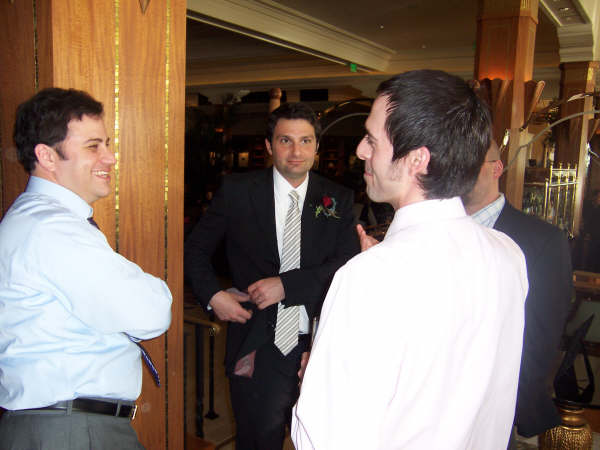
Jimmy Kimmel (far left), clearly delighted to be meeting the author (whose back is to the camera), at a wedding.

Jimmy Kimmel (far left), clearly delighted to be meeting the author (whose back is to the camera), at a wedding.

There have been plenty of celebrity run-ins since Sam Bowie. To call them all “celebrities” would be somewhat presumptuous, as plenty of them were hacks whose celebrity was undeserved. For instance, during my first visit to Los Angeles, I imagined all of the Hollywood elite I might eventually run into and perhaps even strike up some interesting conversation with, which would of course result in them getting me some small part in their next film. Instead, I encountered Joe Millionaire himself, Evan Marriott. No one gives a good goddamn about Evan Marriott. In fact, not even Evan Marriott cares about Evan Marriott.

Don’t get me wrong, though. There were definitely some legitimate stars in there over the years, like Jimmy Kimmel and Sarah Silverman and even Slash. When I turn it over in my mind, though, it would seem that the majority of my encounters with the “elite few” have involved run-ins with musicians.

I once pissed next to Modest Mouse bassist Eric Judy. Years later, in Chicago’s Empty Bottle, I bought a Guinness for Modest Mouse frontman Isaac Brock who, unfortunately, was a prick. I got high with The Subjects inside their Johnny Brenda’s dressing room in Philadelphia. I had beers with Of Montreal after a performance at Schuba’s, again in Chicago. I talked with members of The Apples In Stereo and The Minders after their show at the now defunct Lounge Ax. I had a drunken conversation with Guided By Voices mainstay Bob Pollard. I chatted up Pavement’s Bob Nastanovich after a show in Albuquerque. I used to buy records from former Shins keyboardist Marty Crandall, long before he abused his America’s Next Top Model girlfriend. I spoke briefly with Jeff Tweedy, Matthew Sweet, and Doug Martsch. And if only my memory weren’t ravaged by booze, I’m certain I could rattle off plenty more.

But who the hell cares anyway? Telling someone you met a celebrity is akin to telling someone about your dream: it’s only real to the teller.

—–

The Olive Garden, anywhere.

The Olive Garden, anywhere.

Harrisburg wasn’t what you’d call a “cool” or progressive city, so waiting tables meant having your pick of the chain restaurants: Applebee’s, TGI Fridays, Ruby Tuesday, and, of course, Olive Garden.  When you’re 20 and working in a restaurant you show up as late as possible, stock glasses and plates, fill sugar caddies, do your best not to unleash hell on every last customer, count your money at the end of the night, get drunk till 4 AM with whoever happens to be there, maybe sleep with a co-worker if you’re lucky, and do it all over again the next day. It was mindless, meaningless and laborious. And for a long time, it was my life.

I was waiting tables during the lunch shift at the Olive Garden when the hostess told me I had a call. “It’s your dad,” she said. I grabbed the cordless phone from the hostess station in the front of the restaurant.

“I quit my job,” he said.

“What do you mean?”

“I mean I quit my job. I was tired of it. It was too long. I’d been there too long. So, I quit.”

“Good for you. If you hated it, good.” I think I even told him I was proud of him, or maybe I just remember it that way. But the thing is, I was proud of him. He’d been selling shoes since before I was born. And here he was, in his mid-50s, finally saying he’d had enough.

—–

A couple weeks later I got word that Kurt Vonnegut would be reading at Lebanon Valley College, a mere 30 minutes away. I was, of course, over the moon, and swore that I’d be there no matter what. From what I recall, it wasn’t a ticketed event; rather, it was a simply announced in the local newspaper– a tiny blurb that may as well have been announcing Bingo Night at the VFW. Attendance was open to the public, provided space was available. Space would most certainly be available.

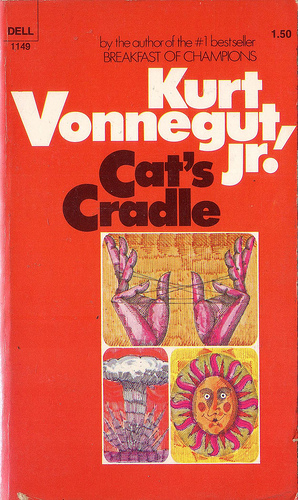
Cover of 1976 edition of Cat's Cradle

Cover of 1976 edition of
Cat’s Cradlle

In my mind I went over what I’d say if I actually had the chance to meet him. I even grabbed my favorite copy of Cat’s Cradle (the 1976 paperback edition) in the hopes that Vonnegut might sign it. I re-read the book. I did everything to prepare for what would be, to that point, one of the quintessential moments of my life. Well, nearly everything.

I came into work that week, took one look at the schedule, and realized immediately I never requested the night of the reading off. In fact, I was scheduled to work a double that day, which meant straight through lunch, maybe a 30-minute break, and right into dinner. I was devastated.

I spent the entire week trying to get someone to cover my shift. But like me, most of the wait staff were 20-something-year-old numbskulls who’d rather get drunk on a Saturday night than actually work. So I showed up that morning for my lunch shift, a change of clothes and Cat’s Cradle on my front seat, knowing what I had to do. I worked lunch, same as always, and then I walked out.

I drove straight to Lebanon Valley College, still dressed in my Olive Garden uniform of black pants, white button-down shirt, and stained tie. I parked and changed in the front seat. I found a seat near the back center of the tiny auditorium, and watched, mesmerized, as my hero talked about war, drawing ridiculous formulas on the chalkboard to illustrate his points. Here he was, breathing the same air as me, in a room so anesthetized and small, yet I couldn’t believe how large the world suddenly seemed.

The Olive Garden management fired me, and they were right to do so. But I was 20 and didn’t give a fuck. I could throw a rock and hit Applebee’s. I never spoke to Vonnegut. He didn’t sign Cat’s Cradle. I never saw him again in the 12 years that followed before his death. That was okay, though.

I quit what would turn out to be just another stopgap, dime-a-dozen job to spend a couple hours with my hero. And I knew my dad, of all people, wouldn’t have blamed me.

—–

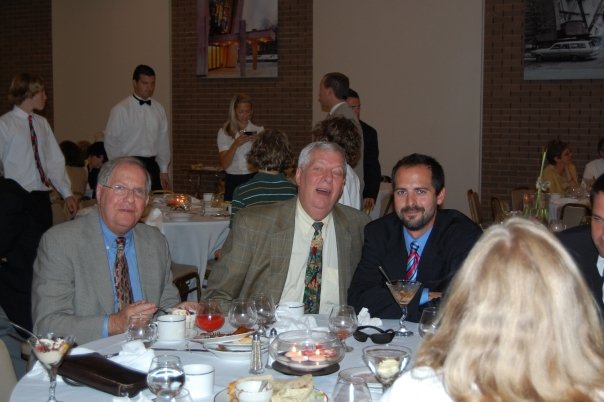
The author (far right) and his father (center) at a Bar Mitzvah in 2008

The author (far right) and his father (center) at a Bar Mitzvah in 2008

About a year ago my dad was diagnosed with Frontotemporal Dementia (FTD). It’s a degenerative brain disorder that’s turned him into someone I don’t recognize. My sister and I had seen it coming for years, really. Here was this affable, gregarious man suddenly withdrawn and reclusive. He no longer cared about seeing his grandchildren. He was fired from a part-time cashier’s job over claims of sexual harassment. He’d stand by the kitchen door and invite total strangers (girls, mostly) into his house, though they wisely never went inside. And then, at some point, the vocal tics started. They started as what sounded like unconscious laughter in response to jokes, only they surfaced for no reason. I mean, I’m not that funny.

These days his vocal tics are constant. He’s incontinent. His leg shakes. He’s afraid to leave the house. He eats till the food is gone, like a dog with bag of kibble. He worries that he might jump out of the window. He thinks the ceiling fan might come unhinged and fall on him while he sleeps. And that’s what he does all day: sleeps. He rises only to eat and watch television, and then it’s back to bed. He’s fallen several times. He stares at me sometimes as if trying to figure out who I am. He’s a 70-year-old child.

He doesn’t realize the condition he’s in. He has no sense of his illness. He has no idea that he’s going to die at some point, prematurely. He doesn’t seem to understand that he and his brain, too, will soon quit. These days my dad reminds me of Vonnegut, or at least how I picture Vonnegut near the end: unshaven, rougher around the edges, slightly unkempt. When I go to his house for dinner it’s like meeting him again for the first time, only now he’s the child and I’m the 7-foot giant. Still, some part of me wonders if he knows what’s happening, and thinks he’d rather die than live like this. And I wouldn’t blame him for quitting. Not one bit.

About the author

Brandon Dameshek’s poetry has appeared in Cimarron Review, Columbia Poetry Review, Harrisburg Review, Coe Review, Portrait, Conte and, most recently, Wildwood Journal. Dameshek hold an MFA in Creative Writing from Emerson College. After living all over the country, he now resides in his hometown of Harrisburg, PA, with his fiancee, daughter, and dachshund.

Scenes From a Marriage

 by Tabitha Wolfe

I.

[Upon the couch, whilst watching Breaking Bad]

Husband: *sniff*… I think my beard smells funny.

Wife: [baleful stare, as she can see where this is going]

Husband: Ummm…will you smell by beard and tell me if it smells funny?

Wife: No, I will not smell your beard, what is wrong with you?

Husband: I don’t mean funny like, “it smells like poop.”  It just smells funny. Just smell it and tell me what it smells like.

Wife: No.

Husband: [leaning in] Come on. Smell my beard. SMELL THE BEARD. SMELL IT!

Wife: You know, I’m pretty sure the neighbors can hear you.

[Reader, the beard smelled like peanut butter cups]

II.

Advair (not a Horcrux)

Advair (not a Horcrux)

[After watching a Harry Potter movie, Wife walks into the bathroom to find Husband brandishing his toothbrush at his Advair diskus.]

Wife: ….

Husband: I’m making a Horcrux.

Wife: Oh, good. Because for a minute, I thought that was your Patronus, and that would be strange.

Husband: No. No, this can’t be my Patronus. Patronuses are something alive.

Wife: Right! Wow, you’re good.

Husband: My Patronus is Lionel Richie.

III.

[On the eve of an airplane journey]

Wife: So, I don’t know how much attention you’ve been paying to the news. Please be aware that you’re definitely going to get groped at the airport tomorrow. Try not to freak out.

Husband: It’s okay. It’s for the greater good.

Wife: What?

Husband: Whenever anyone touches my junk, it’s for the greater good.

IV.

[Wife stumbles into the apartment late at night, after an unusually long day at work]

Husband: So, I got you a present today.

Wife: [hoping it is a donut] Can I have it now?

Husband: You already have it.

Wife: [blank stare]

Husband: [smiles]

Wife: So…I already have it, but I don’t know what it is?

Husband: That’s right!

Wife: … Is it cancer?

Husband: What?! God! No!

Wife: [depressed face] Is it a baby in my tummy?

Husband: Oh my god. What is wrong with you? I borrowed your car and filled the tank with gas. That was your present.

Wife: [brightly] That’s awesome! Thank you!

V.

[Husband and Wife have a particularly… rowdy night. Probably they have had some drinks; they have failed to clear off the bed pre-rowdiness, and as a result, the evidence of said rowdiness ended up on some of their stuff, including Husband’s most beloved messenger bag. They go to the dry cleaners]

Husband: Yes, there are a few spots on the bag, please do your best to get them out, but I’ll understand if it’s not possible.

[Old Lady at the cleaners starts poking at the spots and running her fingers over them. Husband makes the mistake of making eye contact with Wife, who begins snickering]

Old Lady: Is this all of the spots?

Husband: Yes.

Old Lady: [scratching at spots with her fingernail] What are these? Do you know what these spots are?

Husband: …

Old Lady: Hmmm?

Wife: [trying to stop laughing] I’m sorry. I don’t think we know what it is.

Husband: [loudly] IT’S JELLY.

VI.

Toilet seat cover (not a goal post)

Toilet seat cover (not a football team)

[Upon the couch, watching Game of Thrones]

Wife: You know what I really like? Those paper toilet seat covers.

Husband: [cautiously] Yes. Those are a good invention.

Wife: What I like best about them is, when I take a huge dump at school? And it goes crashing through the paper? I like to imagine that my poop is a champion football team taking the field at the homecoming game.

Husband: [horrified, speechless stare]

Wife: Sometimes I sing a fight song for it.

VII.

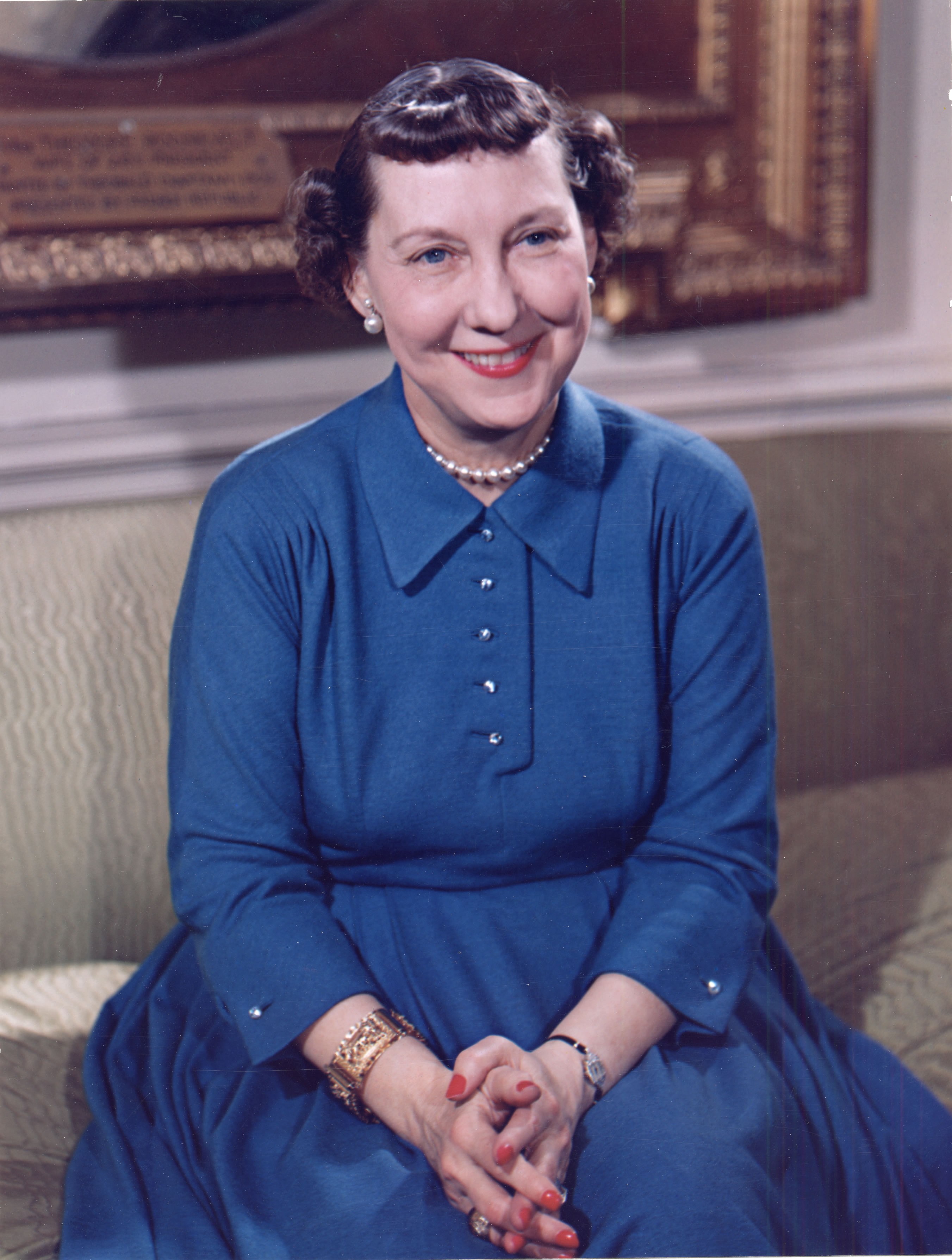
Mamie (not the ghost)

Mamie (not the ghost)

[Just because you’re staying in Abilene, Kansas, and just because you’re staying in a room in a mansion that was where Ike played chess with his childhood friend “Swede,” this does not mean that your Husband will appreciate it if you pounce upon him in the middle of the night and bellow, “I AM THE GHOST OF MAMIE EISENHOWER!!!!”]

VIII.

[On the eve of another airplane journey]

Wife: What’s the next thing on your to-do list before you leave for New York?

Husband: [squinting at list] Cyborg Battle.

Wife: …

Husband: …  I… I can’t really read what I wrote there.

[After an hour: “Super Shuttle.”]

IX.

[Upon the couch, watching Mad Men]

Husband: There’s something sticky on the table. It got on my computer.

Wife: It wasn’t me.

Husband: It had to be you. I was gone. Is this semen? Did you put semen on the table? Have you been collecting semen?

Wife: Have you seen the movieThe Bone Collector?

Husband: Yes…

Wife: Every time we bone, I collect.

X.

[Husband spends at least ten minutes in the bread aisle looking for “Sad Diet Bread” brand bread, not realizing that it is Wife’s bitter description on the grocery list, not an actual product name.]

XI.

[Wife helps Husband to proofread a document. She crosses out the word “synergy” and writes “hateful word; please replace”]

Husband: I don’t think I’ll replace it.

Wife: That’s okay, of course. It’s up to you.

Husband: I mean, if something is truly malworded…

Wife: …

Husband: …

Wife: Don’t worry, honey. If it’s malworded, we’ll reverbify it.

About the author:

Tabitha Wolfe is the pen name of the Wife, who feels it is best to write under a pen name.

The Gibson

by Karra Shimabukuro

The Gibson cleaned up and at auction.

The Gibson cleaned up and at auction.

This is a morality tale, I’m just not sure what the moral is. Maybe it will come to me by the end? I’m sure all of you have at some point heard of Stradivarius violins. These violins are special because of their rarity: Antonio Stradivari crafted 1,116 instruments in his lifetime and only 602 survive. This, in addition to their unique sound, make them very valuable. A Stradivarius regularly sells for 1 to 2 million dollars. This is the story of the Gibson, a very special Stradivarius, if only because of the adventures, drama, and scandal that surround it.

February 28, 1936

It is here that I shall introduce the villain of our story: Julian Altman.  He had a job at the Russian Bear, a restaurant next door to Carnegie Hall. Being quite the accomplished young musician, he would often hang out backstage at Carnegie Hall when not working. Therefore, on this particular February night, the doorman stationed at the stage door thought nothing of letting him in. Nor did he find it strange that Julian walked in carrying his violin case. You see, Julian was often allowed to use the empty dressing and storage rooms to practice and, with his violin case in hand and dressed in the outlandish Cossack costume of the Russian Bear, Julian was a familiar sight around Carnegie Hall.

Let’s pause a moment here for a brief report on the weather. Trust me, it’s important. That night it was humid in the hall, and therefore, the evening’s performer, a Polish violinist by the name of Bronislaw Huberman, decided not to play his Gibson Stradivarius. Instead he played his second best violin. No one noticed when Julian walked into Huberman’s dressing room and replaced the Gibson with his own violin. In fact, Julian was such a friendly and familiar sight that even when it was discovered that Huberman’s Gibson Stradivarius had been stolen out of his dressing room, he was never even questioned. The next day, Julian took the violin to a pawnbroker who promptly informed him that the violin was too hot to sell. Julian, using his own twisted logic, decided to keep it as his own.

Julian 003

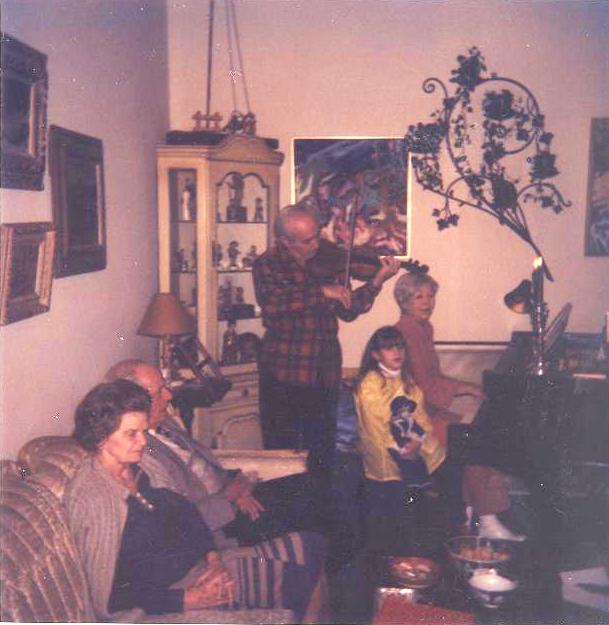
Julian playing for friends in Silver Spring, MD. The author is seated on the piano bench.

Time after that becomes unimportant. Julian spent the next forty years playing the Gibson in piano bars around Washington D.C, often leaving it at the bar when he went home drunk with some random woman. But he also played that violin in the National Symphony, for President Richard Nixon, and Vice President Hubert Humphrey, so maybe it all balances out. In all this time, no one once ever commented on Julian’s violin. Julian also played his violin for a little girl on her birthday — every birthday for as long as she could remember. It was always the same song: “Lara’s Theme” from Doctor Zhivago. It was something special to her because she was the only one (other than Julian) who was allowed to resin the bow and she learned more than you could possibly want to know about violins.

Julian, Marcelle, the author, her mother and her baby sister at her baptism.

Julian, Marcelle, the author, her mother, and her baby sister at her baptism.

Julian was often praised for his talent, for despite being a violent drunk, an asshole, and an all around bad person, God had blessed him with an amazing gift when it came to that violin. From 1968 on, Julian lived with a woman named Marcelle Hall. She was a good match: a drunk and an abusive woman. However, unlike Julian she had no God-given musical talent to redeem her; she was simply evil. Someone could have saved everyone a lot of trouble and simply dropped a house on her like they do to witches in stories.

Anyway, Julian had gotten himself into a bit of trouble because it turns out he was not a nice man to little girls (one little girl in particular, the one he played for on her birthday every year). Let’s just leave it at that, shall we?  He was put on trial, pleaded no contest, and was sentenced to a year at Bridgeport Jail.

When Julian was charged, Marcelle became very upset because, over the fifteen years they had been together, they had never married, but Marcelle had nevertheless managed to sign over everything she owned to him, including her house and her car. She was faced with losing everything it seemed. So, thinking quickly, she convinced Julian that she loved only him, and as a sign of her love, would fly to Vegas to marry him. He said yes, and two days before his sentencing hearing, they flew to Vegas and were married. Aw, isn’t that sweet? Okay, not really.

March 1985

Almost halfway through his paltry one-year jail sentence, in a scene that no writer could create, Julian was climbing onto the toilet in his jail cell one day (no explanation was ever given for this escapade) when he slipped and hit his head. Poor Julian. When he was taken to the doctor to be checked out for a bump on the head, it turned out that he had stomach cancer and had only months to live. Ain’t karma a bitch?

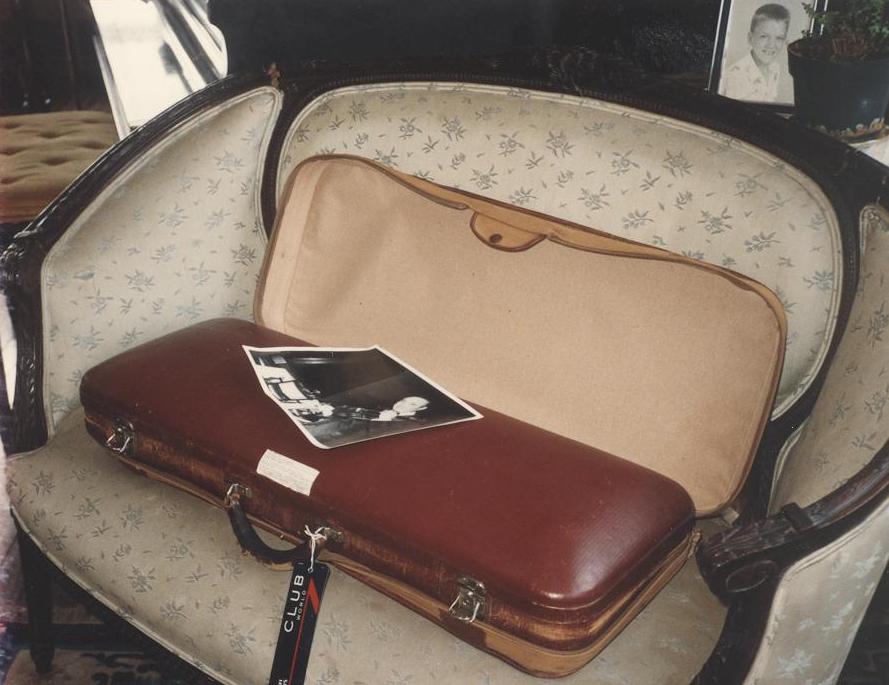
Marcelle was ecstatic. Soon all of her property would revert back to her.  However, there was more good news heading her way. One afternoon, as she visited him in the prison hospital, Julian confessed a deep, dark secret of his. He told her to go home and check the space between the hard and soft cover of his violin. Marcelle rushed home and found dozens of articles about the theft of Huberman’s Stradivarius from almost 50 years before. She went to see Julian the next day to ask about the articles, although, knowing him to be a sneaky bastard, she had a good idea that he was behind the famous theft. Julian’s story changed several times: his mother put him up to it, he bought it for $100, but eventually, he confessed to it all.

Julian 001

Gibson in case.

Alas, on August 12, 1985, poor Julian died. It was not a sad affair and no one mourned him. Marcelle lost no time in contacting her cousin, who was a lawyer, and having him contact Lloyd’s of London. You see, the Gibson, like all Stradivarius violins, was considered a work of art, and had been insured by Lloyd’s. After the theft, Lloyd’s paid Huberman, which meant they now owned the Gibson Stradivarius.

Julian 008

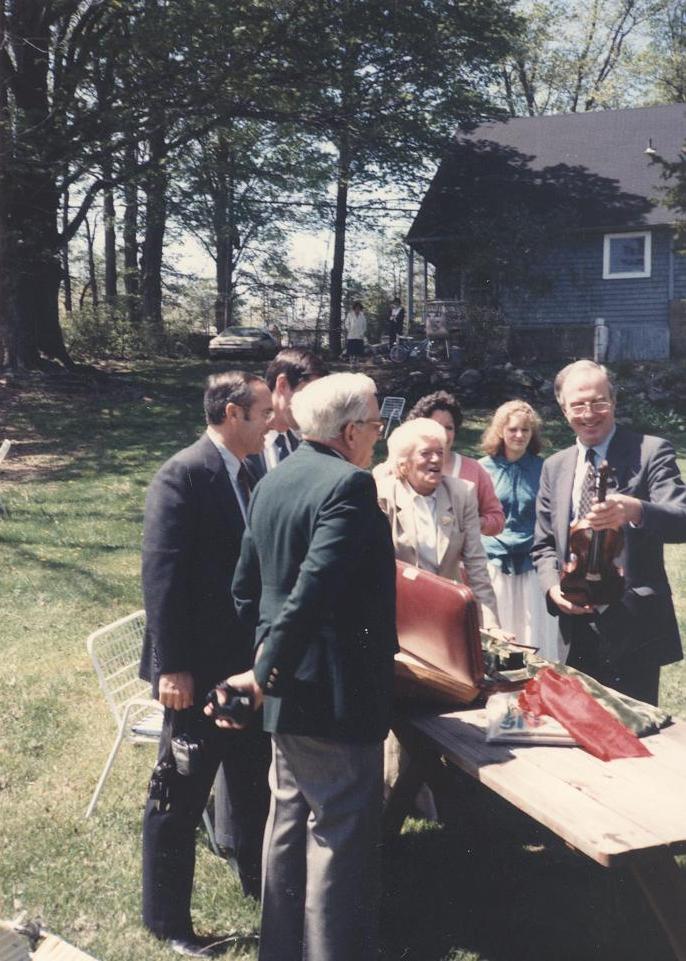
Charles Baere’s visit to Connecticut to appraise the Gibson.

Soon, Marcelle’s Connecticut home was jammed with newspaper reporters from the New York Times, Newsweek, local papers, hell, even Connie Chung made an appearance to interview her. Charles Baere flew in from Lloyd’s of London to look at the violin. He declared its authenticity and took it back with him to be restored and auctioned off later in Milan. Lloyd’s sold it for 1.2 million dollars to Norbert Brainin. Marcelle was invited to the auction and given $263,000 as a finder’s fee, which she blew in a few years. Marcelle died, alone in a trailer park in New Hampshire, under the sad care of her religious, schizophrenic son who cremated her before her daughter could make the trip.  Again, ain’t karma a bitch?

Marcelle at the auction in Milan

Marcelle at the auction in Milan.

June 2003

But, dear folks, that is not the end of our tale.  Our tale has a happier ending. Years later, the Gibson was bought by the attractive and talented Joshua Bell, who loved the drama and scandal that surrounded the violin almost as much as he loved its sound when he played it. The little girl, from way back in our story (remember, “Lara’s Theme”?) happened to see that Joshua Bell had bought the Gibson. On a whim, she emailed him, explaining her relationship to the violin. It turned out he was playing a concert in town the next week, and would she want to come and hear and see the Gibson?

The girl showed up a week later and picked up her VIP tickets, not sure how she felt about this. Then Bell began to play. The sound was as beautiful as she remembered.  As the concert ended, she waited backstage as she had been told, and reflected that Bell was like a modern day rock star: there were droves of women waiting to meet him, and she actually saw several slip him their phone number. Tacky, but true. However, he separated himself from the crowd of groupies and came over to her and took her to a private space over the side and asked her if she wanted to see the Gibson. She nodded yes, almost not trusting herself to speak. He opened the case, and as if sensing her emotions, turned his back on her with the Gibson. She simply stared at it. It looked different now that it was loved.  The layers of cigarette smoke from Julian’s years in cheap bars had been removed and it glowed a lovely red. She touched it gently and remembered the time she had spent with it growing up, and how it had been a bright spot in so many dark years.

She thanked Joshua for this. He said she was welcome and that someday they would have to sit down so he could hear the whole story.

We haven’t yet, but I have no doubt one day we will.

About the author:

Karra Shimabukuro is a 37 year old independent scholar and soon to be PhD student at the University of New Mexico, Albuquerque. She is the proud mom to the puppy, Nehi. She is obsessed with tv, movies, books. And violin music. You can read her blog here: http://scholarlymedievalmadness.blogspot.com/


This is a Dead Cat Story

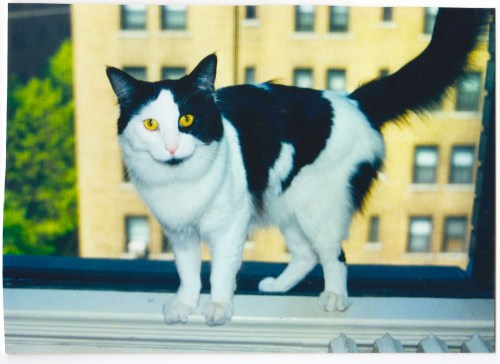
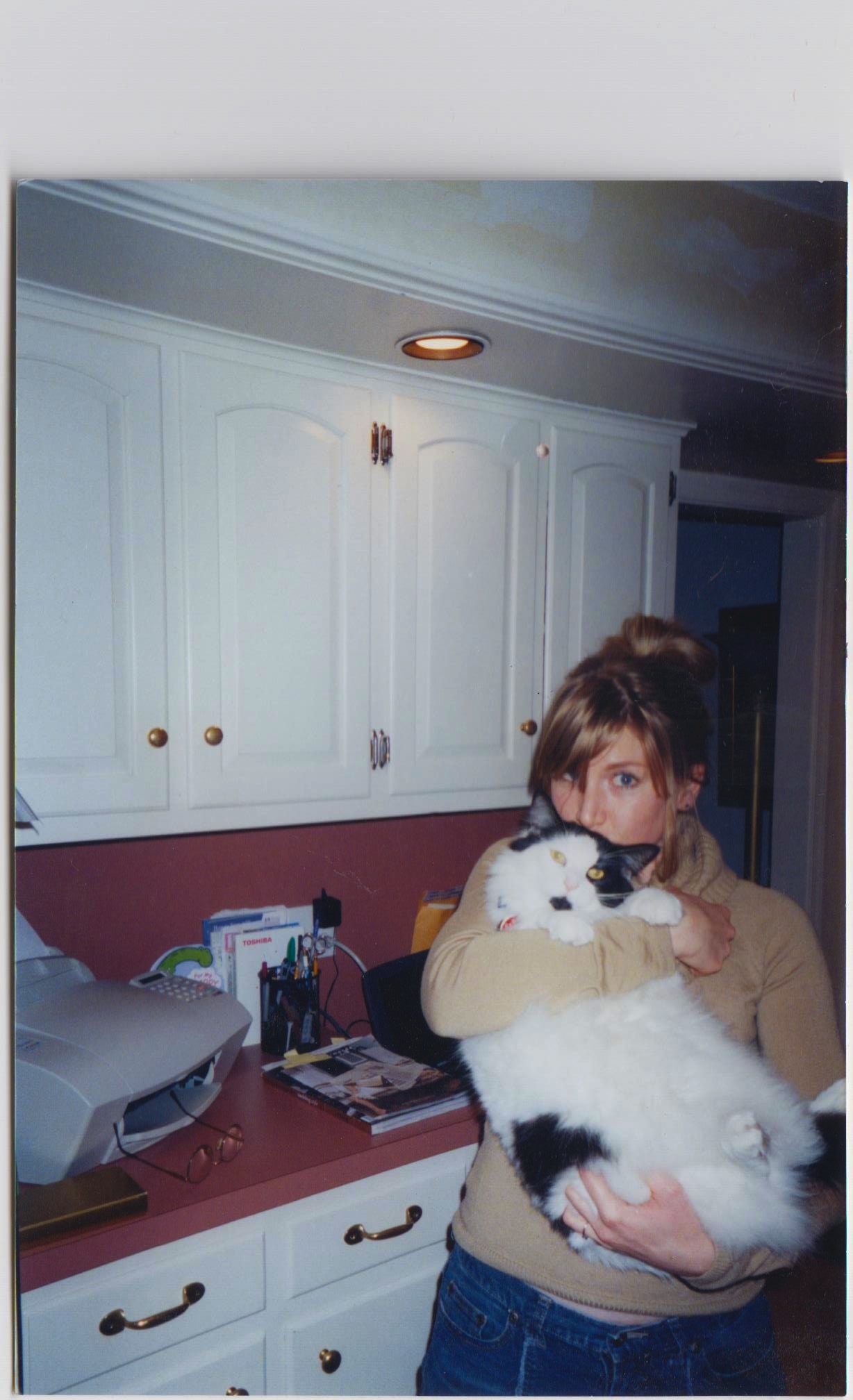
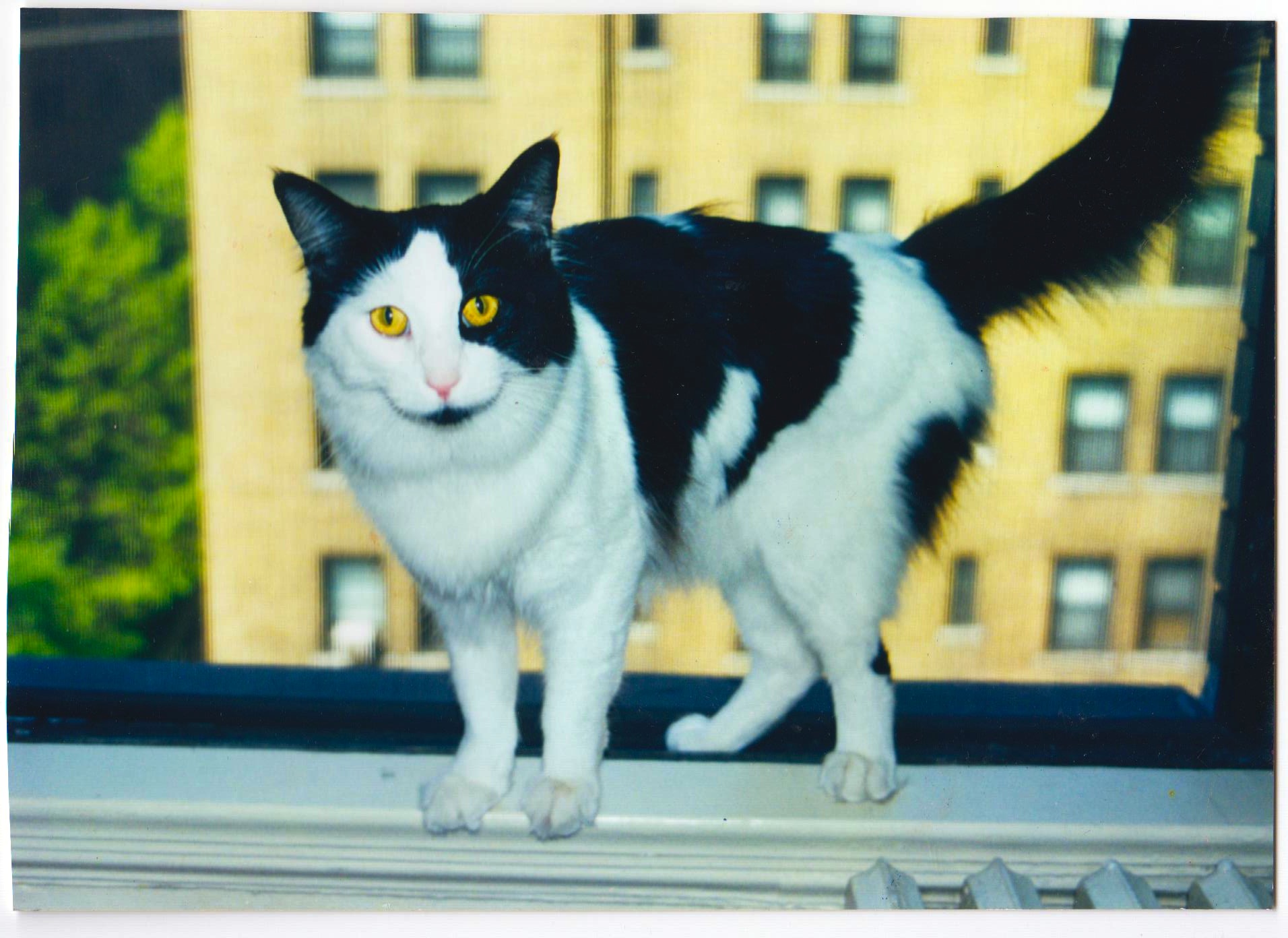
A photo I took of Roogie when he came to visit with me for 2 weeks in the summer of 2000.

Editor’s note: Did you miss our first welcome post? Click here to find out what all this nonsense is about.

This summer, we’re yours for the reading! Click here for submission details.

The author and Roogie, in former times.

The author and Roogie, in former times.

I was raised by cat-hating folk. We had goldfish, parakeets, guinea pigs, rabbits, hamsters, dogs, and the turtle I accidentally boiled to death when I made the water too hot for his evening bath. I even remember an exhilarating few days spent caring for a nest of hungry baby birds. I fed them water with an eyedropper. My mother tolerated this activity, in spite of its futility. When we woke up one morning to find all the little birds dead, their mouths frozen in gaping, pink “feed me!” shapes, no one was surprised. I mention this only to illustrate that my family was not anti-pet, just anti-cat.

When I went to the houses of my cat-owning friends, I viewed their pets with both suspicion and curiosity. My friends assured me that their cats were “friendly” and “loving” but I had yet to see any concrete evidence of this. Compared to my dog, a good-natured mutt who welcomed tight hugs and mandatory tea party participation with the same wagging tail and eager eyes, cats were ice queens. I remember them as blurs of fur, racing under beds and couches at the first approach of little girl feet.

I remained staunchly anti-cat until my early twenties, when I moved to Pittsburgh to attend graduate school. There I befriended a woman who was an avid collector of exotic pets: a gecko, a water dragon, a giant German Shepherd (which is different from a non-giant German Shepherd), two cats, a flying squirrel (who tragically drowned in a toilet), a variety of hamsters and rats, and a skunk that was known to walk about the neighborhood in small straw hats and gingham dresses (sadly no photos were taken of Fonzie in a dress but I assure you this is true).

When Coral spent a few weeks in California one summer, I was tasked with caring for one of her cats, a large black and white male named Roogie. In spite of being raised by a bunch of cat-haters, I found the experience rewarding. Roogie was friendly and warm. He solicited my affection and never hid under my bed. I surprised myself by feeling a little sad, even reluctant, to return him at the end of Coral’s trip.

A photo I took of Roogie when he came to visit with me for 2 weeks in the summer of 2000.

A photo I took of Roogie when he came to visit with me for 2 weeks in the summer of 2000.

Therefore, several years later, when Coral’s wild kingdom was at capacity, she began urging me to adopt Roogie. I refused, reminding her, “I’m not a cat person!” Then one evening, during a particularly heated game of Trivial Pursuit, Coral wagered the cat. I don’t remember what I wagered but it was clear to me that whether I won or lost that game, the result would be the same: I was going home with a cat tucked under my arm. And so I did.

Coral first acquired Roogie in 2000 while volunteering at the West Penn Wildlife Rehabilitation Shelter. For a brief period of time, while the Animal Rescue League was renovating its facility, they sent several cats and dogs, including the star of this story, Roogie, to the wildlife shelter. Whenever Coral walked past Roogie’s cage he would reach out a paw and try to touch her. When Coral inquired about him, a shelter employee told her that he had been saved from euthanization once before and that he was scheduled to die soon if someone didn’t adopt him. She convinced Coral to take Roogie home (ironic, given that Coral chose to work at the wildlife shelter precisely so she wouldn’t be tempted to adopt any of the animals).

When adopting an adult pet, its previous life is a series of gaps and mysteries that will never be solved. All Coral knew about Roogie was that he was relatively young, he had been declawed by someone (his first owners?) and his back legs looked like they had been broken and then healed at odd angles. In this way, his body told us the story of his former life, one filled with violence and abandonment.

***

Upon arriving at my home, Roogie demanded the outdoors. Remembering Coral’s advice — that he was a cat of the streets — I let him out. He promptly disappeared for two days. After that harrowing experience I put Roogie on cat house arrest. When people entered or exited our home they had to step around a mewing lump that was using all of his strength to propel his wiry body through that open door. Our house had become the set of The Great Escape and we were the Hannes Messemer to his Steve McQueen. After 6 months of this, we agreed the situation was untenable. The cat must go free.

We soon fell into a comfortable routine. He meowed at the door, we let him out. A few hours later I would call his name into the night air and he’d return. Just like a dog! Roogie was so domesticated that he would accompany us when we took our dog for a walk. Passersby would stop and marvel at the black and white cat who walked alongside his canine companion. We could not take pride in these cat tricks, of course, because we had taught him nothing. In fact, to call Roogie our “pet cat” would be to misrepresent our relationship. We preferred to think of him as a roommate who happened to enjoy long belly rubs.

One day I saw Roogie in the backyard, batting around a toy. I didn’t know that he even liked to play with toys, so I went outside to investigate. The toy turned out to be a mouse’s head, still bloody along its ragged edges. Another day my husband watched as Roogie leapt into the air and snatched a bird, mid-flight, in his jaws. In these moments it seemed we were getting a glimpse into the life he led before arriving at the animal shelter. What else had he killed? And where were the bodies? This made me only a little afraid of him.

It bears repeating that Roogie was declawed because, in addition to decapitating mice and plucking birds out of the sky, he was able to take on the neighborhood strays and remain, miraculously, scratch free. He was clearly Top Cat. The others — some strays, some “indoor-outdoor” like Roogie — would congregate around our front stoop, looking up expectantly each time we left the house. I imagined them talking amongst themselves: “Is it him? Quick boys, look alive!”

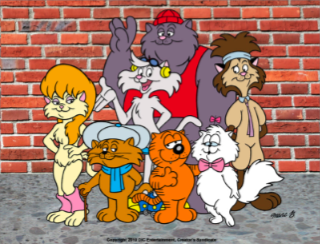
Roogie’s best friend was a ratty looking stray we named Riff Raff, after the Heathcliff cartoon. Riff Raff was always hanging around our stoop and yard, like the kid whose parents don’t want him around and so he always ends up at your house, playing with your kid, eating your food. We never let Riff Raff into the house.

Riff Raff is the baller in the blue scarf. Image courtesy of tvtropes.com

Riff Raff is the baller in the blue scarf.
Image courtesy of tvtropes.com

One evening, while we were watching TV, we heard angry cat noises emanating from the road in front of our house. When I stepped outside I saw two cats perched on their hind legs, swatting at each other with their front claws. It was a catfight. But what surprised me about this scene is that Roogie was lying on his stoop, paws crossed, observing it all with amused detachment. Riff Raff was there too, but hiding in the shadows.

“My God,” my boyfriend exclaimed, “they’re fighting for him!”

“What?”

“They’re trying to impress him.”

See what I mean? Top. Cat.

***

One frigid March evening, I stood at my door calling for Roogie to come inside. But Roogie didn’t come. He didn’t show up the next morning either. I had to catch a flight to New York City that day so I asked a friend in the neighborhood to come to the house and call for him now and then. I was sure he’d come back at some point during my three-day absence — it was a Pittsburgh winter and he would surely freeze to death without any shelter.

But when I returned home from my trip, Roogie had still not turned up. I called my boyfriend, who was out of town at the time, and he was characteristically blunt: “Might as well face it — he’s dead.” I knew it too. But I decided to take one last walk around my neighborhood anyway, just in case I was missing something. I brought my dog along, imagining our combined scents as a cartoon-like cloud snaking its way through the back alleys of my neighborhood towards Roogie’s hidey hole until, at last locating him, it would slowly guide him back to us. This did not happen.

Defeated, I headed home. But before going inside I looked across the street and noticed Riff Raff sitting on the front porch steps of neighbors I did not know. He was looking at me. “Have you seen Roogie?”I asked. Sure, it’s crazy to ask a cat where another cat is but know what’s crazier? I got an answer. “Meow!” was the response, not from Riff Raff, but from concrete steps on which I was standing. “Roogie?” I asked, tentatively. “Meow! Meow! Meow!”

That meow began to move from the steps to the side of the house. I followed, screaming like a crazy cat lady (because what was I at that point if not a crazy cat lady?), until I found myself standing in front of a basement door. The door was locked but also very warped, allowing a one-inch crack between it and the wall. Suddenly, a sooty white paw shot through the crack, reaching out for my hand. I felt like I had inadvertently stumbled into the grisly climax of a slasher film, only with cats.

Long story short — the neighbors had been doing construction on their basement and Roogie must have slipped inside while the doors were open. They completed the job, locked everything up, and hadn’t been down there again in days. Imagine their surprise then when a hysterical, puffy-faced young woman showed up on their porch, accusing them of locking her cat in their basement.

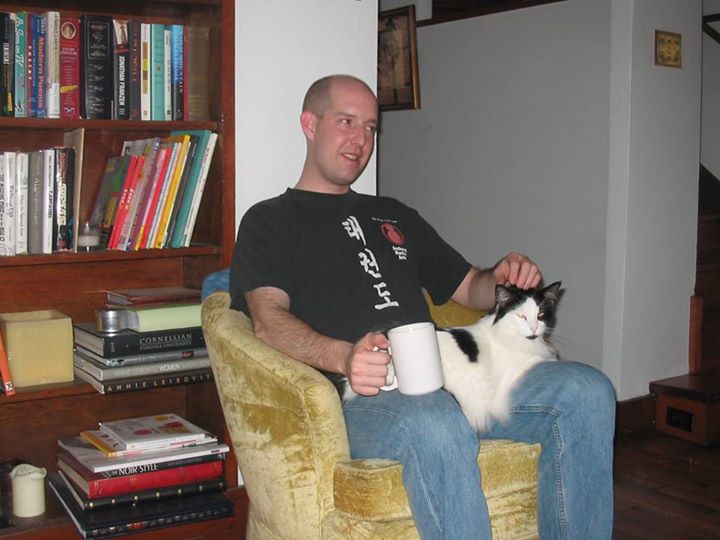
My friend, Griffin, posted this photo to my FB page after I published this story. Seems like it belongs in the story too, then.

My friend, Griffin, posted this photo to my FB page after I published this story. Seems like it belongs in the story too, then.

***

A few years later my husband and I moved to North Carolina with our one year old daughter. We had only been living in our new city for five days when my husband shook me awake at 2 am. “Roogie’s dead” he informed me. Just like that.

It seemed anticlimactic that Roogie survived abandonment by his first family, territorial disputes with a Giant German Shepherd, a winter abduction, and God only knows what else on the streets of Pittsburgh, only to die in Greenville, this shitty little Southern town. He was hit by a car and died instantly. When I held him on the back porch, breathing in the humid July air, his body was still warm. I was sure this inexplicable death was a harbinger of doom, like when the walls in a haunted house start bleeding and a disembodied voice tells those meddling kids to “GET! OUT!” I thought his death meant something. But of course it didn’t. Cats die all the time.

***

Like I said before, I was raised by cat-hating folk. But they made an exception for Roogie. They marveled at the way he solicited their affection by pressing the weight of his silky head against the palms of their hands. “Look at that — he’s just like a dog!” they’d exclaim. And when he’d do anything remotely catlike they were even more impressed, simply because they’d never spent any time with cats before:

“Look at that! He hopped up on the counter! How’d he do that?”

“He’s a cat,” I’d explain.

Roogie has been gone for six years yet my mom still mourns his untimely end. Her lamentations are usually provoked by the presence of our other cat, who she refers to, derisively, as “That Cat”. When That Cat enters the room, demanding our affections with far less finesse than his dead brother did, she wrinkles her nose. “Roogie’s the only cat I ever loved,” she says, as she picks him up and strokes his head, “and you’re no Roogie.” As she tells him this That Cat just buries his head deeper into the crook of her arm. He doesn’t know that she hates cats.

Welcome to Tell Us a Story

Welcome to Tell Us a Story!

Tell Us a Story is a collective blog that publishes stories that are true and happened to the author. We publish new writers and seasoned writers, amateurs and professionals, sad stories and happy stories, dead cat stories and live cat stories. We just want to hear a good story.

Everyone has a good story: it’s the story you tell when you first meet people or maybe only after you’ve known them a long time. It’s the story you tell when the evening gets quiet, or when everyone’s been drinking, or when there’s a fire and comfortable chairs around. It’s the kind of story that passes the time. Your close friends probably know this story by heart. But that’s because it’s a good story. 

Over the next few weeks we will be bringing you a new true story from Amanda Ann Klein, Allyson Wuerth, Karra Shimabukuro, Mark Stricker, Coral Staley, Brandon Dameshek, and Stephanie Baldwin.

We are happy that you’re reading with us today and hope that you’ll pull up a chair, if only to hear a good story; or, maybe, to tell one of your own.