Safety Pin

By Bara Swain

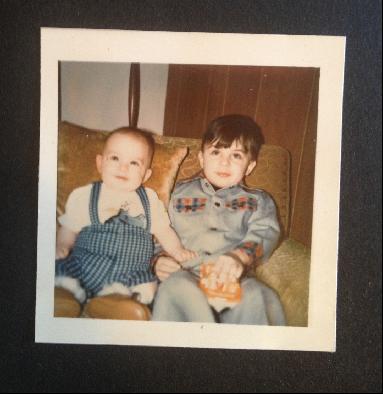
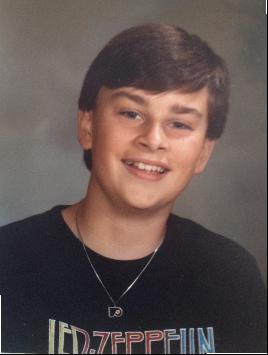
I am told that I climbed to the top of our porch trellis when I was two years old.  I used to believe that I remembered that moment — the ivy tickling my stomach, a caterpillar crawling into my underpants, clinging to the slats until my father’s outstretched hand supported my bottom, letting go, feeling weightless, feeling safe.  But now I think I don’t remember this at all.  It was my father’s retelling of the story that was real.  His voice rang with pride.

Here are some things I do remember.  I remember watching my dad trim the hedge that lined our sidewalk.  The top of his hands were hairy.  His knuckles were scabby and his fingernails stained brown.  He had a workbench in the cellar.  Copper-headed nails were kept in a mayonnaise jar.  Screws and loose buttons were saved in empty cans of Delmonte Fruit Cocktail or Whole Sliced Pineapple.  I remember eating canned fruit before every meal.  Dad sweetened his coffee with leftover syrup and made my mother laugh.

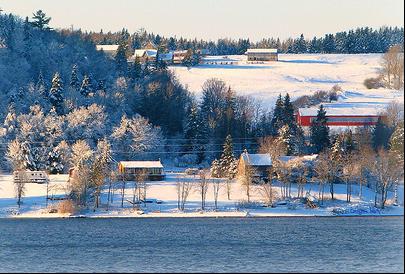
I am eight, nine, ten years old.  We are climbing Beech Cliff Mountain in Maine.  Dad leads the way.  We are lost for hours.  I scout ahead and find an old farmhouse.  No one is there.  We drink water from the horse’s trough.  I take off my shoes and balance across a wooden fence rail.  We leave.  The woods get darker and colder.  Everyone complains.  Judy is afraid of starving to death.  Larry is afraid of bears.  Jean doesn’t want to pee in the bushes.  I look into my dad’s steel blue eyes.  I feel safe and happy.  Dad puts my cold hands under his armpits to warm them.  The next day, I take a safety pin off the strap of my bathing suit and remove a dozen large splinters from the soles of my feet.  It hurts but I don’t care.

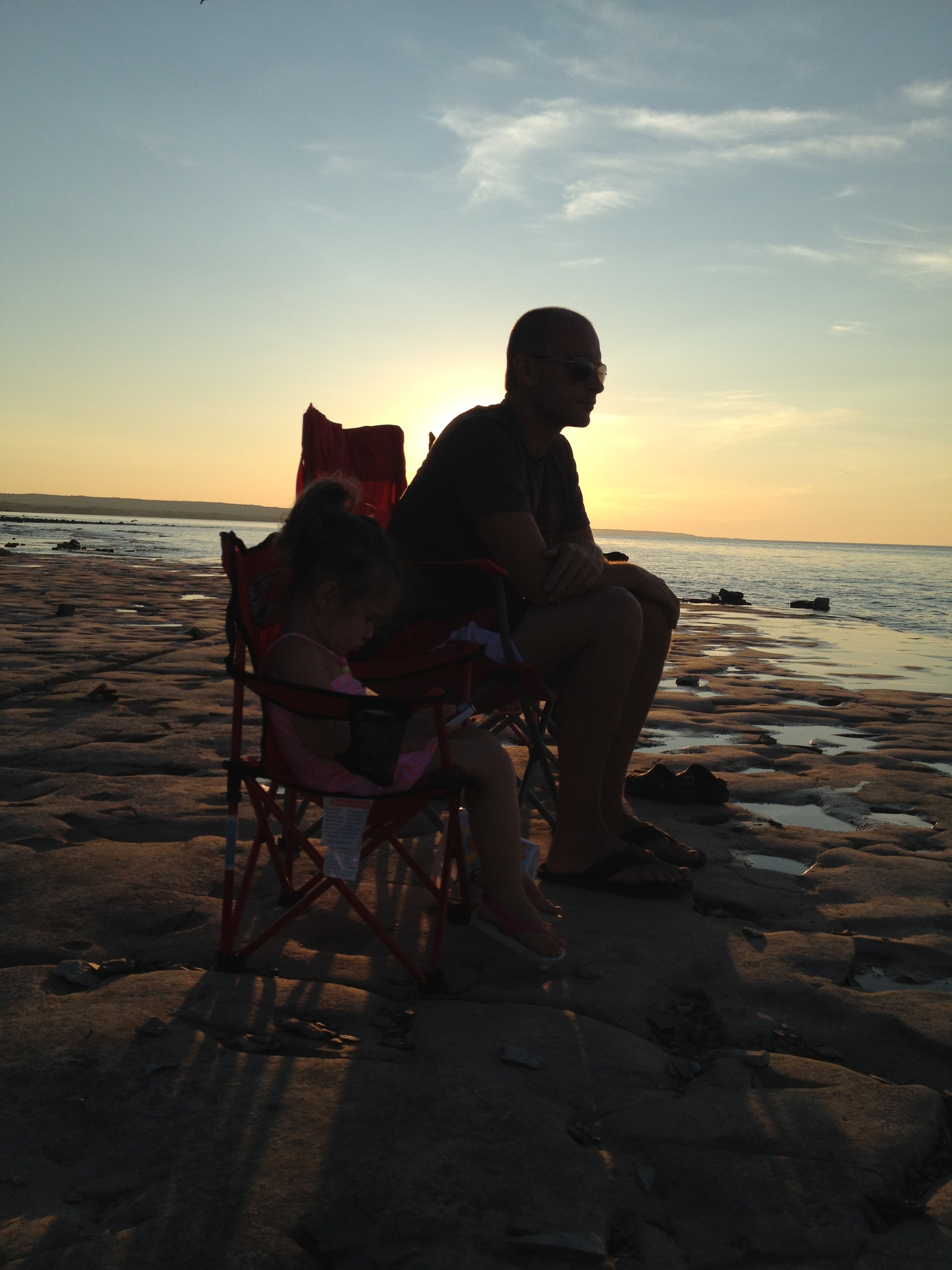
Other memories:  My father boycotts lettuce.  He wears jeans to grandma’s funeral.  His first story is published.  He gets pneumonia hiking the Appalachian Trail.  He gets depressed.  He travels through England on a three-speed bike.  He quits his job.  He washes the dog before Sarah’s wedding.  He loses friends.  He wins an O’Henry.  He gets a job.  He writes a novel.  He visits my husband in the hospital.  He buries our dog.  He buys a color TV.  He reads to my toddler.  He falls down the stairs.  He retires.  He stays with me after my husband dies.  He hikes with my daughter up Cadillac Mountain.  They get lost.  I’m not worried.  I inspect the bottom of my little girl’s feet when she gets home.

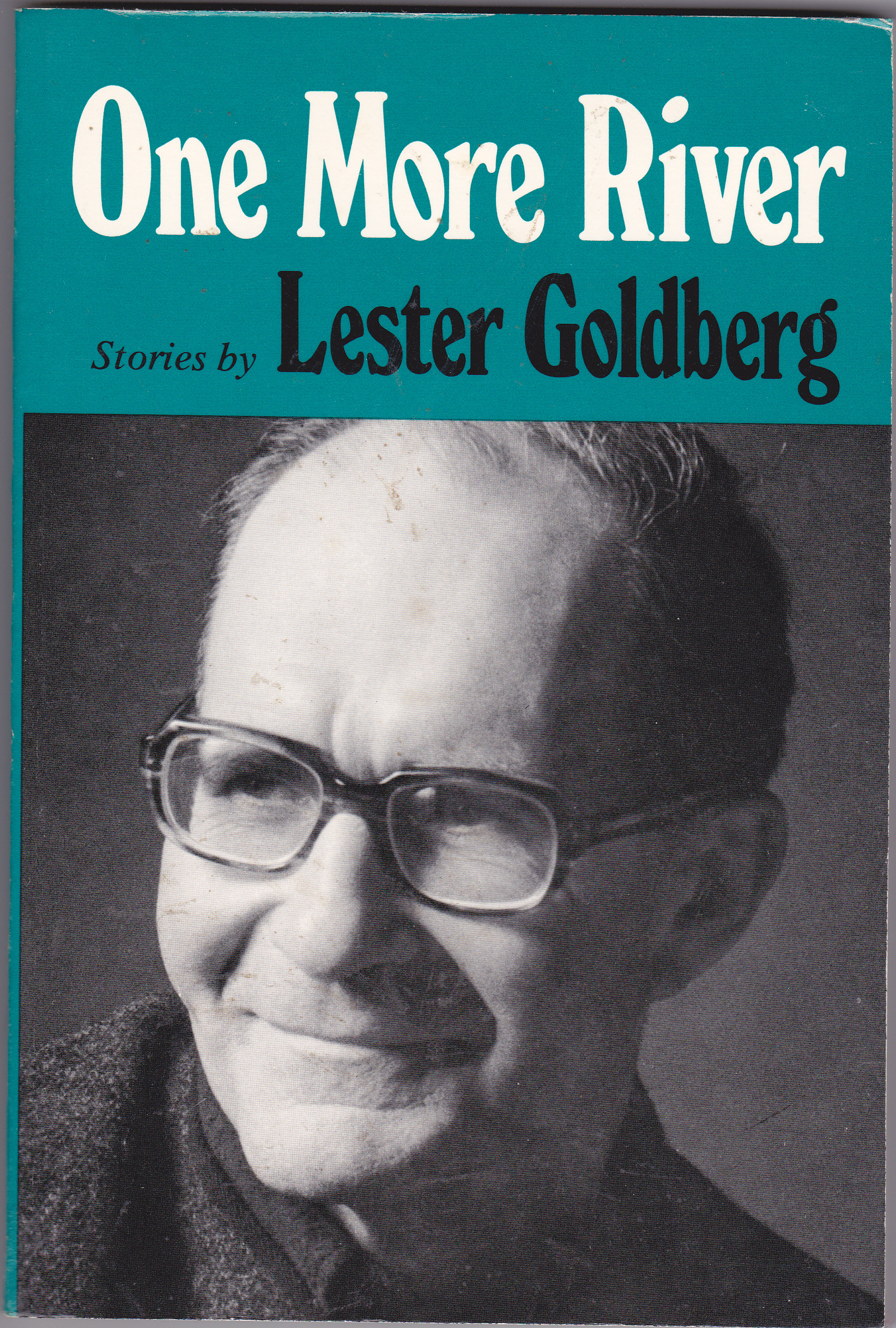
The author's father's novel

The author’s father’s novel

A few years later:  my father is depressed again.  It’s summer.  My mom goes to France on a sabbatical.  My daughter and I visit over the weekend.  Dad looks thin.  I find a salt shaker in the freezer and a chicken breast in the dish washer.  I borrow his car keys to drive to Dryer’s Farm.  As we turn onto Orchard Street, my father says to me, “You know, you drive just like my youngest daughter.”  I pull over to the side of the road.

“Dad,” I say, “I am your youngest daughter.”

A few weeks ago, my father died.  The morning of his funeral, I tried on three different outfits.  My daughter slipped on a pair of blue jeans.  She looked beautiful.

I felt weightless.

About the author:
In August 2012, playwright/fiction writer Bara Swain survived a cerebral hemorrhage and surgery to repair a brain aneurysm, shortly after attending An Evening with Bara Swain in South Florida: a series of 8 short plays directed by Burt Reynolds.  Bara’s husband died in 1995 from complications of an aortic aneurysm.  In 2000, she lost both her parents. Illness informs most of Bara’s writing. Her plays and monologues, anthologized by publishers Smith & Kraus, Meriwether, ArtAge Publications, Oxford U. Press, Applause Books, and JAC Publications, have been performed in more than 100 venues in 13 states.

Making Words

by Heather Babcock

“They blossom every 2 years,” the florist tells me.  “It’s not blossoming now but it is growing leaves.”

I cradle the orchid in my arms and step out onto the busy street.  The dust clouds my vision, softening my anger.

An elderly man plays a mandolin and I give him the last of my coins.  I walk slowly, leaning into his music.

People don’t let me talk about you but I do anyway.  I open my mouth and the words fall out onto the pavement, melting on contact like wet snowflakes.

When Dad came home from the war, his mother wouldn’t let him talk about it.  She gathered up all of the remnants – uniform, badges, medals, photographs – and put them in a big box to grow dust.  Dad wanted to make what he had seen into words but nobody wanted to let him.  Years went by, you and I were born and we asked Dad how it had been in the war.  Dad told us a story about a pet monkey named Simms.  Simms would jump up on the back of an unsuspecting sailor and steal his rum.  “Go get him, Simms!” the sailor’s friends would laugh.  It was the only story from the war that Dad ever told us.  It was the only one that he could make words with.

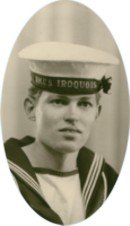
babcockdad

The author’s father shortly after he joined the Navy

I was the one who had to make it into words for Mom.  You know that.  You were there, sitting on top of her stereo, hiding behind her cat and thinking that I couldn’t see you.

You were the one scratching the needle over the record; the song was Daydream Believer and it started skipping.  The Monkees stopped dancing.  Mom’s heart opened up and swallowed the words and I couldn’t reach her anymore.

I look down at the orchid and it is in your hands – so small and strong, with brown dirt wedged under naked fingernails.

Fragmented images make up a sudden memory:

The two of us are standing together, your hand clutching mine.  You are 4 and I am 6 and we both have those terrible bowl haircuts that Dad used to give us with the kitchen scissors.  I remember the raised velvet of the white daisies printed on the starch material of our yellow dresses.  I remember wooden pews, scuffed Mary Janes, Jesus’ protruding ribs.  Everlasting life – is that what the pastor had been talking about that day?  I don’t remember water but there must have been water.  Did they hold us under water?

I don’t need a photo to see my daughter’s face.”

I know what Mom means – I don’t need a photo to see your face either.

I close my eyes and there you are: big floppy hat, wide legged jeans – looking like you just stepped out of sunshine and 1975. Your mouth is open and pink, stretched into a smile big enough to hide the scars on your wrists.

Or was that me, hidden behind the camera, wrapping your scars up in smiles?

I am not allowed to talk about you but today you will not shut up.

Orange is beginning to break through the baby blue of the sky.  Across the street, a crowd is gathering outside a church.  A proud, puffed up groom.  A peach skinned bride.  The bride smiles out into the sun, her eyes briefly resting on me before bouncing away.

She thinks that she is different.

About the author

Heather Babcock is a secretary by day, writer by night.  She has had short fiction published in The Toronto Quarterly (TTQ), Front & Centre Magazine, The Annex Echo newspaper and in the Steel Bananas Anthology Gulch- An Assemblage of Poetry and Prose.  She has fiction forthcoming in Descant magazine.

Clue

by Rachel Hruza

Photo Credit: Rachel Hruza

Photo Credit: Rachel Hruza

Christa sat in her wheelchair without clothes on, her large swollen body hunkered into a black wheelchair in the middle of the room. I looked at my twin sister, Sarah, and we each knew what the other was thinking: She’s naked.

My mother had called and set up a play date for my sister and me. We liked Christa; we loved Christa. She liked to dress-up and when we played house, she liked to be the pet dog, down on all fours and barking in the closet which served as her doghouse. Or we’d pull out our parents’ old trench coats from the costume trunk and play Mystery Club in our bedroom with an unplugged rotary phone and scratch paper to make plans and layouts of other rooms in the house. We had a stuffed animal sidekick, a dog name “Clue,” with a Sherlock Holmes hat on which we’d labeled his name with peeling paper stickers, the glue refusing to stick to the plaid material. We searched throughout the house for some sort of mystery—something out of whack. Once, Sarah, Christa, and I counted the jar of coins my brother had hidden in his closet. We put it back but each took a quarter as a fee for “solving” how much was in it. Christa was always on the same page as us, ready to uncover and unravel the next adventure.

But then something changed. I first noticed it one Sunday morning in church when I left for the bathroom as I always did during the sermon, the most boring part. I walked into a stall and sat there, my white tights around my knees, when I heard someone vomiting in the next stall. I sat for awhile longer, unmoved but cautious, until it didn’t stop. I went back and told my mom. I followed her and two other women back to the bathroom, but I hid behind the wall as I heard them talking. There I learned it was Christa. One woman said to me with a pitiful look, “Christa’s sick.”

Christa stopped going to our school when the cancer in her brain came back a second or third time. I remember seeing her at the swimming pool one summer in between one of the relapses. It was really cold that day, and everyone was leaving at the same time. Our mother stood behind us as we talked to her in the women’s locker room. As she talked about whatever first-graders who are going to be second-graders talk about, she peeled off her swimsuit and stood completely naked in front of us. I had never seen anyone naked besides myself and my sister, and it was scary. She was extremely thin. She put her clothes on as she talked, her mouth never breaking its smile, her eyes never leaving our blanched faces.

Several months later, she was swollen from chemotherapy and as her health worsened, clothes became a nuisance. This was unnatural to me; people wear clothes around other people. I remember thinking that it was the cancer that made her gain weight to four times her previous size and felt extremely stupid when some adult corrected me and said it was her body’s reaction to the chemo treatment. By this time she was going to school in a town twenty minutes away where her mother taught music. That way they could be together if something happened. In her absence, her body had changed so drastically that no one except for Sarah and me recognized her picture on the Sunday schoolroom wall.

On the particular visit when we visited Christa at her home, we brought tracings of Disney characters. She and her family were given money to go to Disneyworld, and so Sarah and I decided to trace pictures for her of Mickey Mouse, Donald Duck, and Goofy. We had traced them because we were given a Disney character drawing set for our birthday, and we had wanted them to look nice. We had colored them in and outlined them in thick, black permanent marker. While following the black outline, I had been proud of my handiwork. Clutching the pieces of paper in my hands, my mother followed us into the living room, pushing on our backs as we slowly walked up the stairs and then leaving us there alone. I slid my tracing across the table attached to Christa’s chair and tried to watch her eyes above her enormously swollen cheeks. I can’t imagine her face anymore as it once was in my bedroom, as she barked happily and sat on her haunches, her front paws in the air.

She was so excited about the pictures, she yelled for her mom, Colleen, to come look at them.

“Look at what Rachel and Sarah drew!” she said.

Her mother proceeded to compliment our artwork. We were avid drawers, lying in front of the television for hours, sketching with markers and colored pencils and paints. I wrote stories, drawing illustrations for each page. I dreamed I would be an artist someday

“We traced them,” Sarah said quietly. I nodded, embarrassed, but I don’t think either of them heard us.

We sat in silence for awhile, waiting for her mother to bring us Kraft macaroni and cheese and hotdogs. Colleen sat and helped Christa eat while we watch television. Sarah and I sat on either side of her, flanking her like bookends, and it was hard to come up with things to talk about when we couldn’t see each other to read the other’s expression. We watched more television until we finished eating. Colleen brought out some board games. I was disappointed. Watching T.V. felt easier.

I don’t remember all the games we played or what we talked about, but I do know we ended up playing the game of Clue for several hours into the late afternoon and evening. For this game, Christa was Miss Scarlet. Sarah was probably Mrs. Peacock since she was going through a “blue” phase, and I chose Colonel Mustard. I liked his name; it was pungent and strong.

We selected cards from the pile and took turns showing one another any card we had to prove our conjectures as defunct. I liked checking each item off the list. The three cards of truth were hidden away in the small manila envelope in the middle of the game board. There was a real mystery here even though it was a game. I could reach out and find out what the problem was, but instead I made small dark x’s in the box next to the name of each weapon, room, or person that I saw.

The game lasted forever. When my mom arrived, I didn’t want to say I was tired of Clue, so I decided to guess at the mystery of the game. It was a premature guess. There were several options left on my list of objects, rooms, and people. Part of me wanted to show off for everyone, to show that I can solve an actual mystery; part of me wished to be done with the game. I guessed the weapon and the murderer—me, Colonel Mustard—but I incorrectly guess the room where Mr. Body was killed. I happily put the cards back in the tiny manila envelope and sat on the couch alone, watching Colleen and my mom talk.

Before Christa dies, the pastor at our church tells my mom that Christa and he talked about what would happen to her—she knew where she was going and what death meant. When I heard this, it frightened me. How could she possibly know? How did she know at eight years old what was going to happen to her? We all had mysteries inside of us.

Christa died one night in her parents’ bed not especially long after our visit. Sarah and I didn’t go to the funeral, didn’t want to see our friend in the casket, her body go into the cold ground.

I often lay awake at night wondering what it feels like to never be gone, to live forever in the sky. Something about my mind always thinking—forever and ever—made me feel a hole in my chest. I pressed my eyes into my pillow and waited until I saw stars streaming behind my closed eyelids.

I imagine death is like this, running through stars.

About the author

Rachel Hruza has an MA in creative writing from the University of Nebraska-Lincoln. She has been published in South Dakota Magazine, AnotherRealm, and Scintilla. She also runs the writing center at Central Community College in Grand Island, Nebraska, where she lives with her husband and curly-haired peekapoo.

Bill

by Gerald Burke

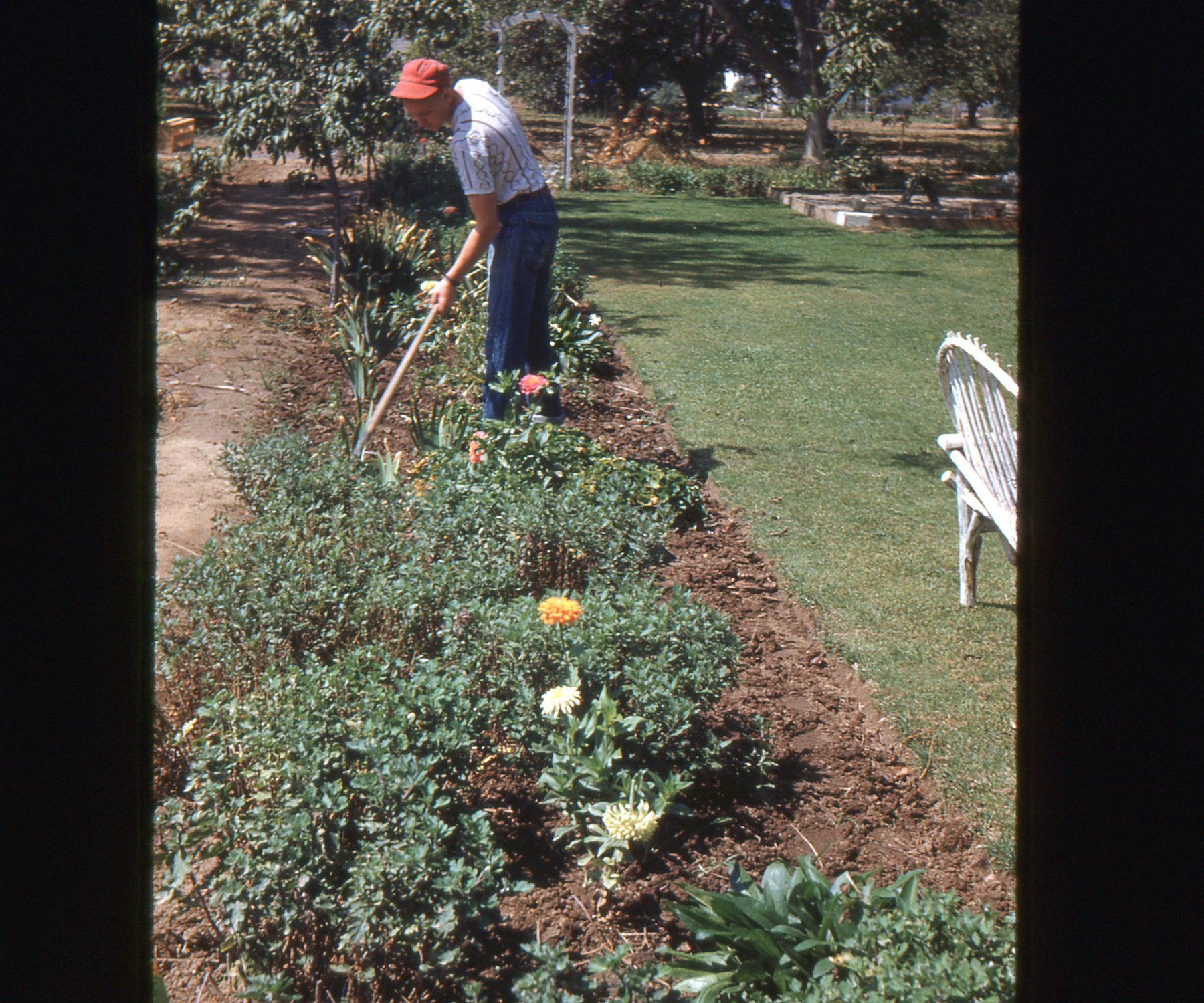
The author tending his farm, 1951.

The author tending his farm, 1951.

Bill was a teamster when teamsters still drove horses. Six feet four inches tall, nearly 300 pounds, hands like grappling hooks, and an unusually small head atop his great body, he was a gentle giant. In Idaho’s early days he worked building roads in and around our hometown, hauling dirt and gravel, running a one-horse slip scraper and sometimes a Fresno scraper, the forerunners of bulldozers and skip loaders.

How he became a close friend of my father I never knew. He was always just there. In the early 1900s my father and mother came west and settled in Idaho, where dad was a federal marshal, a deputy sheriff, and the first chief of police in my hometown. He farmed, too, in those early days, and in 1930 we moved from town to a farm and he began farming full time on two 40-acre pieces of land, and renting another 80 acres that lay across the road from the home place.

Somewhere in his many civic and farming activities, he and Bill became friends, and I saw Bill often as a child and a young man, when he worked for my father from time to time on the farm. Bill had a wife at one time, but she was long gone when I knew him, and he lived alone in a small house on the outskirts of town near the Snake River.
He kept his magnificent teams of horses there, huge animals as he was huge, but gentle and quiet, shoulders and haunches heavy with muscles, horses that could pull almost anything, unlike some of the scrubs my father had picked up over the years.

While Bill may not always have been wearing the cleanest blue shirt and bib overalls, his horses were always groomed to the last detail. They were curried and brushed until they shone, their manes neatly trimmed and the tails often clubbed.

Even if the horses didn’t impress a young boy, the harness did. The silver knobs atop the hames were polished to a high luster, and the flat straps of the harness, crupper, and traces wore shiny spots that glittered in the sunlight.

Bill was past middle age when I knew him, and he commanded great respect among the itinerant, depression farm workers, as well as the farmers around the countryside. I never heard him raise his voice except to urge a team of horses on, and he was as good as two men on a haying or threshing crew. I saw him at farms other than ours, since he worked out for several farmers, and as I grew older and began to do almost a man’s work, I’d see him here and there as we traded work with others. Many of the lesser mortals would work a little harder just to keep up with Bill, or out of his way.

He wasn’t a conversationalist. Once when Mother was feeding a haying crew and he was living on the farm with us while he worked for my father, I remember her asking him at breakfast how he liked his eggs done.

“Anyways, jest so they’s fried,” was his laconic response.

When I was younger, ten or eleven, I don’t ever recall Bill saying much of anything to me. He was a man’s man, and kids were tolerated, but that was about all. My first real conversation with him, as I remember, came when I was about 15.

I had dislocated and broken my right arm in sports in high school, and the joint stayed stiff and unresponsive. Just beginning to be of some use on the farm, I couldn’t milk cows, pitch hay, drive horses, and I couldn’t shoulder a shovel and irrigate. Bill suggested a remedy.

“Rub it twice a day with angle worm oil.”
I certainly knew what angle worms were, which is what we called earthworms, but angle worm “oil” was beyond me.
“You gather up a bunch of angle worms, squeeze the oil out of them and use it,” he said.

I never tried it and my parents didn’t seem to think it was the answer either, but for all I know it may have been a medical miracle waiting to be discovered.

When I was sixteen my older brother, who lived and worked in Salt Lake City, died from pneumonia following surgery. My younger brother and I were too young to take in the full impact of the loss. While he and I looked up to our sibling as a man of the world, we were perturbed by the way his death affected Dad. Mother was a strong, quiet woman, taking the death in stride and going on with life, but Dad was disconsolate and depressed for months. He stopped reading the paper, didn’t want us to play the radio, and he seemed to lose interest in life.

Bill put it all in focus one day as he and I worked together pitching bundles of wheat onto the bundle wagon.

“That there was his first boy, and it’s hard to lose your first boy.”
As I grew older, and had boys of my own, I often thought of that and wondered if Bill had ever had children, or a “first boy.” I never knew.

Eventually high school was over for me and college meant the University of Idaho, Southern Branch, in Pocatello, now Idaho State University. Moscow, Idaho, in the northern part of the state had the university, but none of my family had gone there. My older sister and the brother that died had gone to the University of California in Berkeley. She graduated from there, but he wasn’t happy there and left after the first year and attended a business college in Salt Lake City.

By 1939 the Great Depression was ending, things were better on the farm, and it was a big thing for me to leave family, loved ones and friends and go to the big city of Pocatello. There, trains thundered through the town day and night, there were several theaters, many paved streets, all with names, traffic lights at intersections and many restaurants and stores. And girls, one in particular, who caught my fancy and has stayed at my side for over 50 years.

So, I didn’t see Bill for two or three years. But one summer, when I was home from college, Dad and I drove into town to get some repair parts for machinery. He went to the bank first, next door to the Rose Pool Hall. There were always a few loungers around the bank and the pool hall and I spotted Bill among them. In my new status as an adult I had no reservations about going up to him, shaking hands and saying hello. He seemed smaller, older, and not the man I remembered. We talked for a few minutes while I waited for Dad.

“What you goin’ to do with all that education?” he asked.

I answered that some day I hoped to work on a newspaper and be a writer. He pondered that for a moment. “Just don’t fergit how to plow,” was his response.

As we drove back to the farm I asked Dad why Bill was hanging around there in front of the bank in the middle of a working day.

“Things haven’t been too good for Bill lately. Most people don’t use horses much anymore, it’s all tractors now.”

I knew that. My father now had a tractor, a bright red Farmall F-14, with rubber tires, and the only horses he had were a couple used for riding.

“Bill hasn’t been able to work much anymore,” said Dad, “and he’s sold all his horses except one team.”

I felt sad to think of that great, gentle, man left stranded by progress.

So I went on through college and never worked for a newspaper in Idaho. Instead I worked in Pocatello for a while, then in 1942 with many others, went into the military, served overseas and left Idaho for good.

I never saw Bill again, but I remember well when he died. My wife and I were living in California and my mother wrote that Bill had died, had the last rites of the church, and had been buried after a funeral Mass, though to the best of my knowledge he had never been next or near the church in my lifetime.

Mother said that everyone in town who could, went to the funeral. There were bankers, doctors, lawyers, farmers, storekeepers, the mayor, housewives, and some loungers from in front of the Rose Pool Hall. He had been a friend to all of them.

I asked my father many months later, when we took the kids up to Idaho to visit their grandparents, what Bill had died of.

“Nothing special that I know of,” he said. “Not even old age. I guess there just weren’t any more horses to drive.”

It might be just what Bill would have said.

About the author

Gerald Burke is a freelance writer of fiction, non-fiction, horticulture and travel . He has been published in Westways, Trailer Life, Country Discoveries, Your Home, Horticulture, SoCal Senior Life, Plus Magazine, Inland Empire Magazine, LA Times, LA Daily News, San Jose Mercury News, Toronto Sun, Christian Science Monitor, San Diego Union Tribune and other periodicals and newspapers.

It’s Poetry Week!

By the Sea, By the Sea

by Gerard Sarnat

Dawn fog aslant, the blob bobs,

slipslides, waddles, slumps its neck underneath

our condo. Tangled in kelp,

the elephant seal’s gargantuan gray

flab slaps her glistening new baby pup

then nuzzles his proboscis.

Here for a moment, soon the marine gypsies

will flip-flop slate topaz,

paddle past the sandbars to battle the shoals.

For an instant, the mom’s

glassy eyes shine through the window into mine.

I signal to my wife,

“Come quick!”  She who called herself Harbor Seal

carrying ours, reaches shore

first. Each mother bellows and barks

but nothing happens.  Dogs and bipeds

gather near; pelicans flock to check out

this pregnant incoherence.

Against seas of dirty diapers and sunscreen

we sense deconstruction —

a mammal’s mammary expectations

going wrong, terribly wrong.

The bluish translucency untethers

from blubbery hips, plopping

among tarry feathers, candy wrappers,

and stiff fish.  A cartoonish

hero materializes to shoo

the beached mama back into

the breakers. The crowd grimaces

as she wades out. When the dune buggy

pulls up, stragglers shrink away

as lifeguards wrap up the colloid remains

in mourning papers.  Pleasure

not syncopated yet drawn together,

we phone the kids over a tasteless

breakfast. After which, diving back

in my inkwell, seeking a brush

with redemption, I capture my mood.

Photo Credit: AAK

Photo Credit: AAK

*******************************************************************

Triolet in Winter

by Yvonne Gonzalez

Sometimes things don’t fit, like my hand

when I wore your old gloves at the beach.

You, with crook tooth smile, face tanned.

Most times we didn’t fit, left near the ocean’s edge of sand.

I want to square myself to fit under your shoulder

and find your hand every time I reach.

Sometimes things don’t fit as well as our hands.

So I sleep with your old gloves found at the beach.

Photo Credit: Gonzalez

Photo Credit: Gonzalez

********************************************************************

and green.

by Daniele Walker

vii. daniele walker is dead.

not actually dead.

i’m just sleeping deeply and roughly and fakely on a cold table

because

the doctors who have ripped open my scalp and my skull

have their hands and their metal

in my brain.

i. daniele walker is dead.

wait, i’m not, though.

i just blacked out

again.

the vertigo was just too much.

i couldn’t cling to light, couldn’t find a place

to plant my feet, couldn’t embrace gravity, had to let go

and now i have to admit that something is wrong with me.

the reeling

was too much for me

and all i did was move my eyes.

v. daniele walker is dead.

no, in fact, i’m just waking up.

not that i can tell you so.

not that i’ve ever been this cold in my life,

this confused,

and i can’t see anything but splatter paint—

splotches—green and green and red

and green and red and blue and green

and green

and green

and i can’t even talk

can’t even say come back, can’t ask

for my mom, can’t see, all the green, can’t

tell them to roll me off of my fucking incision

before it rips again and i gush right out of my skin and splatter

on the floor like the green—

not that i can talk,

but i can’t stop screaming.

ii. daniele walker is dead.

i’m not dead yet

but if i live, i will never again be able

to look at a nectarine,

because the surgeon with the ochre eyes and the steady handshake

just compared the size of the tumor in my head

to the size of a nectarine

and now i can’t rid the image of

a nectarine made of fear and grey and cancer.

vi. daniele walker is dead.

i’m not dead.

i’m not going to die.

i’m not going to die

but before the blue mask chokes me out of living and running

i say goodbye to my mother

i try to thank her

just in case.

iv. daniele walker is dead.

nope, not dead.

but not sleeping either

even though it is 3:38 in the morning and i’ve never heard the hospital this quiet.

they’re going to cut into me when the sun rises.

all i can hear is some machine beeping.

all i can see is some light glinting in the river outside my window.

and all i can do

is shake my head up and down and back and forth

as violently and silently as i can

to see if i can feel the impostor.

iii. daniele walker is dead.

I’M NOT DEAD

but i’m lost

in a wheelchair in some blank hallway staring at

some blank wall where some nurse,

a nurse much more bored than i can be,

abandoned me when i was supposed to get an x-ray,

the x-ray that will tell us if

there are more nectarines sucking the life out of my spine,

and i’m just

lost

and i just want to know.

viii. daniele walker is dead.

but not dead.

the tumor

was

benign.

so not actually dead.

at least not yet.

Credit: Walker

Image Credit: Daniele Walker

About the authors:

Gerard Sarnat is the author of two critically acclaimed poetry collections, 2010’s “HOMELESS CHRONICLES from Abraham to Burning Man” and 2012’s “Disputes.” His short stories and poetry have been published in over 60 journals and anthologies.  Harvard and Stanford educated, Gerry’s been a physician who’s set up and staffed clinics for the disenfranchised, a CEO of health care organizations, and a Stanford professor. For “The Huffington Post” review of his work and more visit GerardSarnat.com.

***********************

Yvonne Gonzalez is a graduate of Texas Tech University with degree in English Studies. A secondary English teacher at William Brennan High School, she has taught the Wordsmith Creative Writing Club for the past three years and plans to continue to cultivating young writers. She resides in the San Antonio area with her Chihuahua, Thor, and a host of brilliant students and friends that inspire her. She writes daily and is currently working on a collection of poetry entitled things that are Brown which includes
“Triolet in Winter” and a memoir 100 Days of Me, a story of re-inventing yourself by appreciating being you.
**************************************

Daniele Walker is twenty-two years old, and graduated Summa Cum Laude with editorial aspirations. She describes herself as deeply serious, impossibly quirky, fiercely loyal, and endlessly surprising. “and green.” was previously published, in print, in the inaugural volume of The Writers Circle Journal in December of 2012.

Every Picture Tells a Story

 by Sheree Shatsky

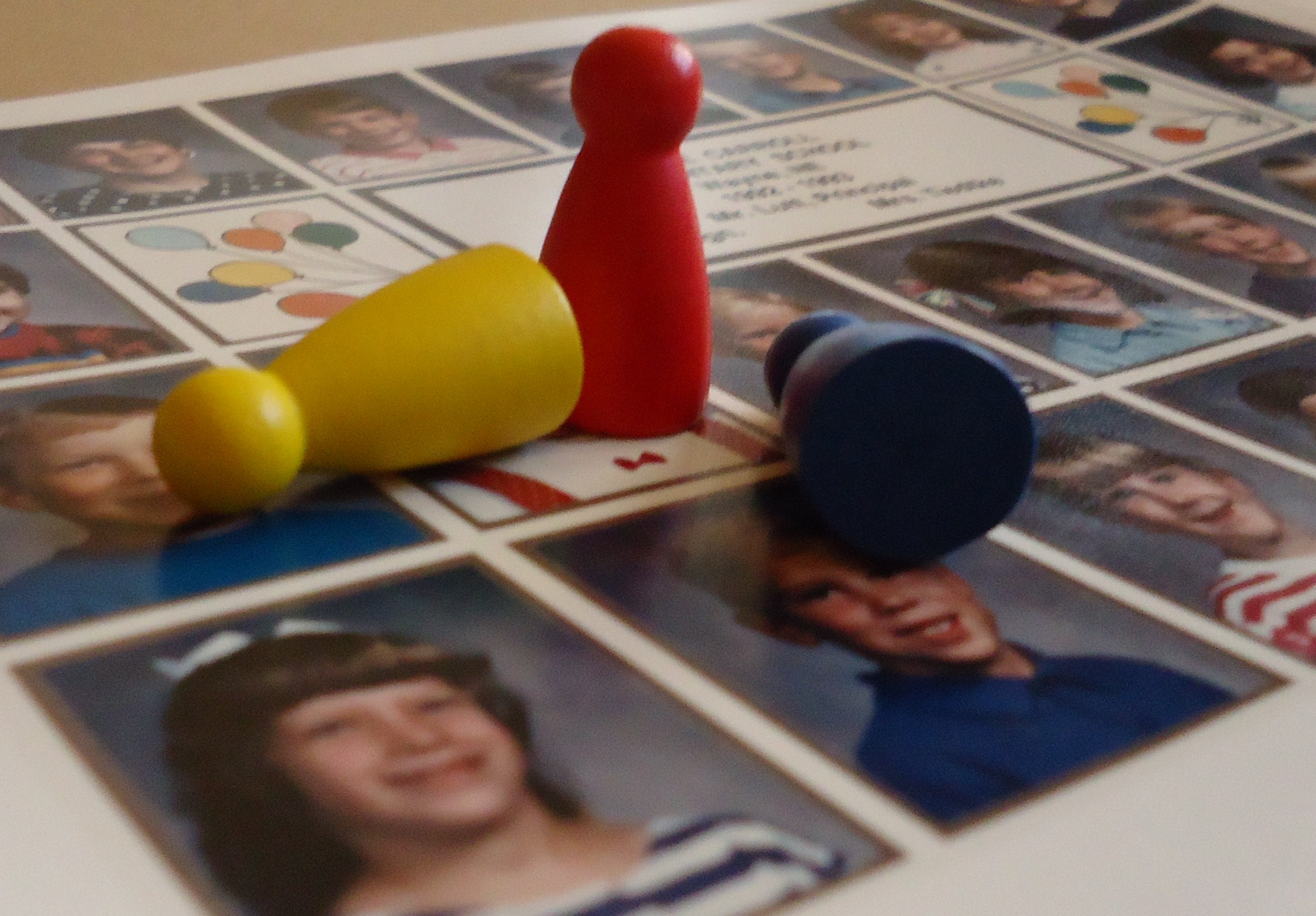
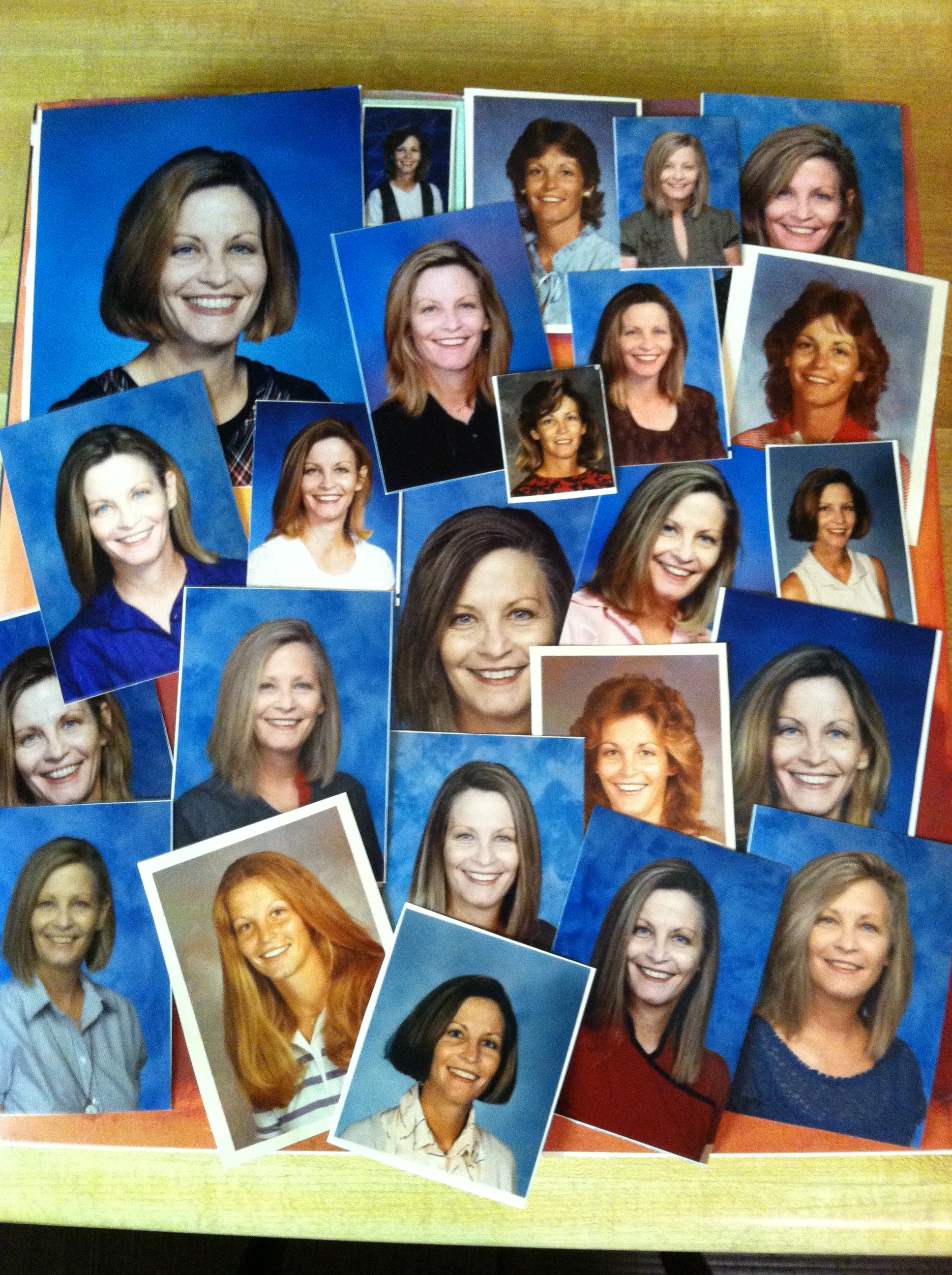
Thirty years of faculty photos really do tell a story. . .

Thirty years of faculty photos

She discovers the photographs sealed tight inside a sandwich bag in the mess of her desk.

Thinking it might be fun to review her aging process, a morbid curiosity enjoyed by those photographed every year the length of their career (in her case, thirty) she lines the wallet-sized photos corner to corner in perfect solidarity.

She tacks the last picture on the bulletin board and looks at herself looking back.

She had been sick as a dog the first year, plagued by beginning teacher’s flu. The shadows circling her eyes lessened to hollows as her immune system fought back the onslaught of kid germs but after five years of teaching under her belt, she was back to her old healthy self and wearing the smile of the newly married.

New mom, new teacher

New mom, new teacher

At ten and twelve years, she lit up the frame, pregnant with her own children.  At fifteen, she took on grad school and welcomed back the black circles, the bane of all who juggle kids, spouses, work, school and impending college loans.

Yet, she was happy in the craze of her life.  Others, not so much.

Twenty or so years on the job, the economy failed.  She witnessed friends and family lose homes and jobs and face what the media called the new normal—a discouraged middle class suffering its own black eyes called poverty and public assistance.

People were beyond angry. With no recovery in sight, the fury and the blame exploded toward the steady of the working world–teachers, police, public safety and state employees, all paid far less than counterparts employed by private industry. Pension envy and calls for union busting blasted nationwide as the unemployed turned economic and personal frustrations on those whose salaries they paid through tax dollars.

The campaign to strip public education hit her school district hard, but she had survived the deep cuts. I wonder, she thought, comparing wrinkles earned between years five and twenty-five, if taxpayers realize school photos are provided to teachers free of charge.

Her eyes scan the pictures left to right along with the memories — graduations, deaths of friends and family, the birth of her grandson — to settle on the last.

She plucks the photo off the board to study the image taken during her last autumn as a teacher.  Retirement had finally caught her, no longer two to five years away, but today in the here and now.

The school photograph is an annual ritual that, shot with the right lens integrated with great lighting, can reflect the fervent optimism stoked from that place within that inspires those who do good work to keep on keeping on, no matter how difficult.

The author smiles for one last photo before retirement.

The author smiles for one last photo before retirement.

The love for the job, the respect for her students, her core unflinching belief that one person can effect positive change was as plain as the nose on her photographed face.  She would leave this dance with the convictions she brought with her, onward and forward to the next chapter of her life.

The author and her grandson

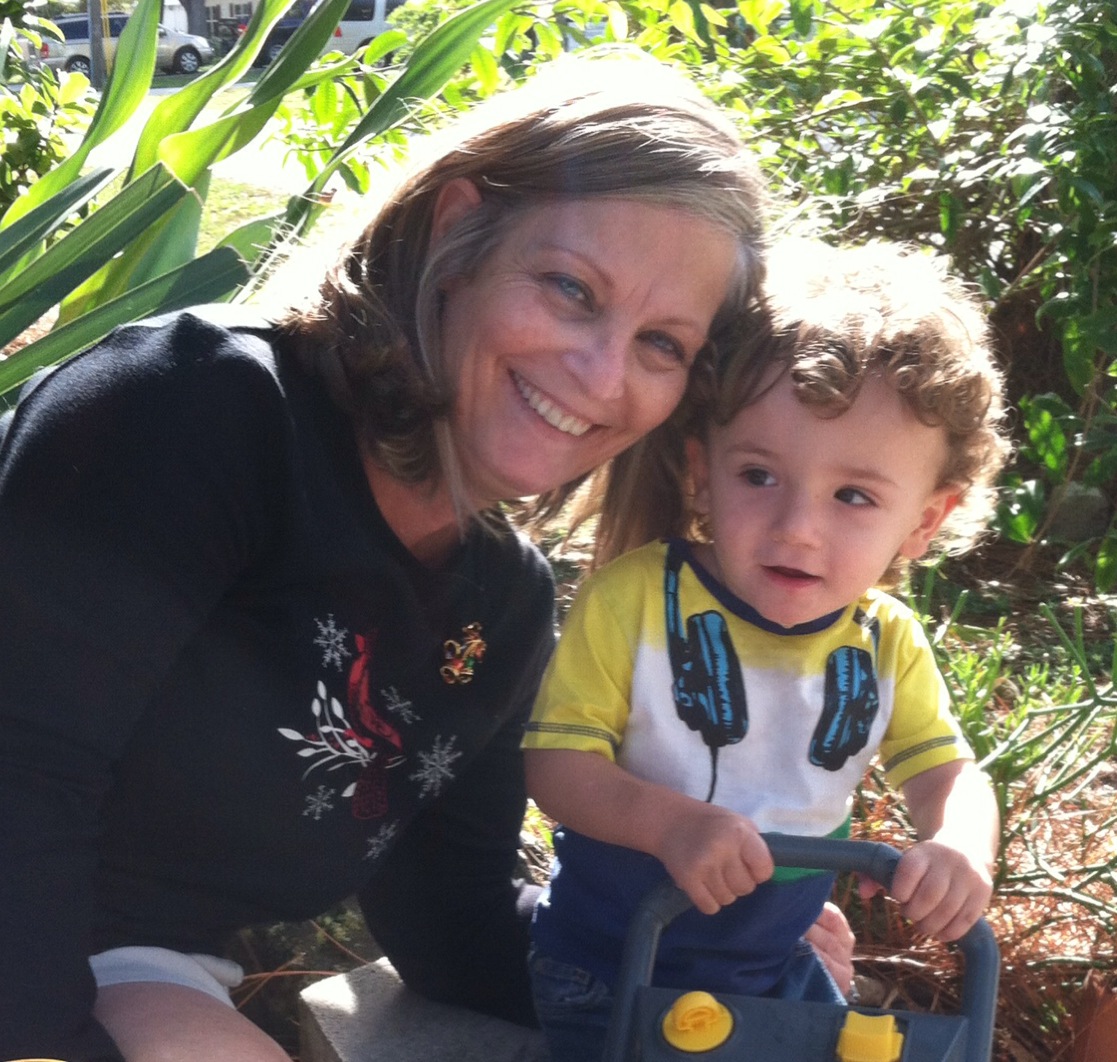
The author and her grandson

Gathering the photos together, she thought her grandson might get a kick out of thirty years of grandma.  Every picture, she would tell him, tells a story.

Sheree Shatsky has called Florida home for fifty years. Her writing has appeared in print and online. She writes flash fiction believing much can be conveyed with a few simple words.

The Tooth Fairy

by Raymond Cothern

I suddenly develop a malady called James Dickey Syndrome, becoming a lapsed and demented guitar player who emerges from the swamp with a gap-tooth grin and knocks the first guy he sees to the ground after ripping his newly pressed camouflage jumpsuit off and telling him to kneel and squeal like a pig, immediately adjusting the guy’s attitude toward womanly rape.

(I could digress here, but it is so soon in this cheery narrative.)

Before the long 4th of July holiday weekend, Dee and I sit down to enjoy some tender chicken breasts she had smothered in mushrooms and caramelized onions.

Delicious.

Not long after the first bite, my tongue hits a gap in my teeth previously not there. Naturally concerned I am dissolving, like one of the bad guys in Raiders of the Lost Ark, I find a tooth among the food in my mouth and take it out, staring at it like I do in the mirror at my ever-growing and sagging man-breasts. But this is not just any tooth though. Oh, no, it’s the one next to my two front teeth.

A melting bad guy:  Raiders of the Lost Ark, 1981

A melting bad guy: Raiders of the Lost Ark, 1981

Oh, yeah.

Putting the delicious meal on hold, I hurry to the bathroom, a wounded moth in flight, mushy and comfy evening garb flapping around me, looking in the mirror and this time not even noticing the handfuls of man-titties under my shirt. I have been transformed into a denizen of the swamp, the new gap now separated by one tooth from another old gap around the side of my mouth, a leering jack-o’-lantern grin that would inspire Stephen King to write another novel.

Lovely.

Ugly.

My beauty gone in an instant.

With my other broken and loose teeth, the deep pockets from periodontal disease, and generally having bad teeth since I popped out of my mother’s womb, I was told by more than one dentist that false teeth are coming down the road, the unstoppable 18-wheeler menacing Dennis Weaver in The Duel. So besides all the head adjustments to self-image—and that is huge for me—trying to convince myself it’s not the end of the world—there is the very real cost of five to ten-thousand dollars for pearly dentures, upper and lower tectonic plates ready to rub against each other for the duration of my eternity. What with a lack of much surplus funds, this old age thing is everything people said it was cracked up to be. And the topper is being told by friends with false teeth that the first look at yourself without any teeth is quite a shock, a flashback to Walter Brennan advising John Wayne they are about to be scalped by Indians, except in my movie The Duke is staring at Walter’s black maw and Walter’s whirlpooling lips and he can’t hear a word of the warning before it’s too late.

O barefoot old man with sunken cheeks of pale . . .

At least Walter put his look to good use, winning three Oscars for Best Supporting Actor.

For me, I am afraid when they come to visit that my granddaughters will run screeching into my daughter’s arms, forever traumatized that Pop Pop is now the monster under the bed.

So no smiling through the weekend, although the tongue is constantly probing the opening, feeling the sharp edge of the tooth at the gum line so it looks like I’m eating caramel candy and can’t dislodge it from my front teeth. At work on Monday morning and the rest of the week there is no problem of people gawking since no one really looks at anybody else. I do notice a leakage of air when I say certain words, a sibilant hissing sound with room to roam.

Some solution will have to follow.

All 4th of July weekend, any time I visit the bathroom for a quick sit-down pee so I can read a page or two in a novel or memoir without standing and dribbling around the toilet bowl, my penis a leaky garden hose, I always pause and grin in the mirror. Well, grin implies humor and there is nothing humorous about the snaggletooth look and the missing neighbor in the yellow enamel housing. Or standing nude while the water for the shower or bath heats up, I absolutely cannot resist turning and opening my mouth, my lips curling up like those of a horse going after a carrot or a lump of sugar, wide open and me staring like maybe the view will be different, the tooth fairy operating in reverse, missing teeth but a dream. All that weekend, grinning as I pass the mirror with a full bladder or standing with sagging stomach and breasts while the water heats up, I cannot thwart that impulse to look, to gauge what has happened to the fairest in the bathroom at that particular moment.

I don’t even do any holiday beer-drinking to blunt the dilemma for a while.

Something is wrong with me.

It must be that holding a beer bottle would complete the picture, the imagined mob of friends rushing toward me holding not torches but goalie hockey masks and screaming for me to put one on.

The villagers and their torches!

The villagers and their torches arrive, The House of Frankenstein, 1944.

About the author

Raymond Cothern studied writing at LSU under Walker Percy and Vance Bourjaily. He is winner of both the Deep South Writers Conference and the St. Tammany National One-Act Play Festival. Two of his plays have been produced in New York City, The Long Hymn of Dilemma as part of the DTE New Play Festival, and Fat Girl From Texas in the Distilled Theatre Company Short Play Festival. He was also a 2011 semi-finalist in the Playwrights First Award sponsored by the National Arts Club of New York City and a finalist in the 5th Annual Play Tour sponsored by cARTel Collaborative Arts Los Angeles. His fiction, poetry, and essays have been published in Manchac, Intro 8, Two Thirds North, American Antheneum, Burlesque, EWR: Short Stories, and in the book Meanwhile Back at the Café Du Monde. He recently completed work on a memoir, Swimming Underwater, about growing up in Louisiana and framed by the story of the devastating effects of viral encephalitis on his daughter and of her triumph in achieving a normal life.

The Summer Before my Brother Died

by Rob Stanley

The author and his older brother.

The author and his older brother.

The first punch hits me in the left ear and it actually feels good, invigorating. I duck around the next few but the second one to connect hits me in the jaw and it hurts a lot. By the time the third one hits me in the forehead the sweat and moisture gathering on the faux leather gloves has a stinging effect, and that, combined with the actual force of the blow through my neck and spine, leaves me reeling.

“You hit like a girl,” I mutter as I step back and roll my head low across my chest a couple of times, my chin tucked in a defensive position the whole time.

My brother smiles. Even he finds this funny.

We’ve been combatants like this for most of my thirteen years, but this battle is different than the others. Tho others are usually fought inside, on our paper-thin carpet during miniature versions of sports we see on TV; knee hockey in the living room, sponge-ball tennis in the upstairs hallway; full-contact mini-hoop basketball against my brother’s bedroom door. Those are battles. Sometimes just for fun, but most times they have an undeniable edge that my mother hates seeing in us. This boxing thing today though, this is fun.

The author as a teen

The author as a teen

“That’s enough,” my brother says as he extends one of his gloved hands to cup my shoulder. The air is warm and we’re both sweating.

There in our driveway, perched on a hill amidst a hay field that never seems well kept, we draw deep breaths and eye each other. In years past I might have cringed at the prospect of my brother delivering a sucker punch at this point, but Billy and I have changed a lot recently and the thought of a sneak attack doesn’t cross my mind.

The landscape of the author's childhood.

The landscape of the author’s childhood.

I step into his embrace and let my shoulders slump in a sign of respect to my big brother. This male-affection thing is something we do now, ever since he got back.

“You want some more?” I ask with just enough sarcasm in my voice for him to know he shouldn’t take me seriously.

He grins again and doesn’t even bother responding. We both know his sinewy strength is more than my pudgy frame can bear, especially considering the fact that he’s three and a half years older and four inches taller than I am.

To me it seems as if those final few inches have been added in the past few months, during the time when Billy was away. That’s probably not true, but I’m shocked at how grown up he is right now and can’t settle in my mind why it is I’m viewing him in that light. It’s only been two months since we last saw each other, but it seems like years.

I’d been surprised back in the Spring when I’d heard that he was planning on heading to Toronto for the summer. Mom has family there, and the idea was for Billy to head to one of their homes to enjoy the big city as well as the much larger minimum wage that jobs in Ontario offered. It’s 1988 and the only job prospects awaiting any of us here in New Brunswick all seem oddly beneath him. I felt oddly excluded from that decision-making process and very much left behind when he left our rural Eastern Canadian life for the city that I’d only heard about in stories from my mom.

We didn’t know much about Mom’s family. The bare minimum, really. We knew there were lots of aunts and uncles, and that the word abuse often got thrown around whenever the topic of Mom’s absent father came up, but the whole scene was sheltered in some urban dream for us.

Billy though, was ready for that sort of trip. Dreams didn’t scare him. There was always a sense of largeness and destiny about him, and most of us knew that he wouldn’t be in New Brunswick for long. He spoke of travel, of the army, of radio technology school; all large dreams in their own right, but each of them seemed firmly within his reach. He’d always been blessed with an innate sense of accomplishment and likability. Friends gravitated toward him, teachers loved him and young women flocked to him. Even at a young age, he radiated a quiet warmth and a sense of safety that people just found endearing. The trip to Toronto then, wasn’t some flight of fancy, it was the first step in an unfolding plan that most of us thought would end very well for him.

I just wish he could have somehow explored those sorts of dreams without leaving me behind in the process.

On this day in the driveway all of Bill’s goodness and quiet strength of character, the things that now define him most to me, aren’t on display. This time, it’s brute force that’s called for. Having been manhandled in that department by him, I move away from the battle and I’m immediately intercepted by the lone spectator who has taken in our match – our father.

Before I have a chance to protest, he emerges from the windowed porch door and wordlessly lifts one of the gloves off my hand to place it on his own. His eyes are on Billy the whole time, and as he slides the other glove onto his hand you can see that both of them are very much relishing what’s about to happen.

Billy has Dad’s body down to a T, save for the thick padding that years of office work have added to my father’s midsection, and they both share quick feet and great eye hand coordination. Right now they also share the same bemused look of concentration and outright fear, part cocky grin and part studied intensity. This is in good fun, yes, but there’s a lot riding on this and we’re all beginning to sense it.

A rush of warmth fills me as I step back from the fray and realize that the grown-ups have let me be here to see this. No one is telling me to run along, and no one is holding back so I won’t be adversely affected in some way. I’m a participant in this, even if it’s just as an occasional brow-wiper and potential referee. It’s a huge step for me. Heck, Mom wasn’t even invited.

Before I have time to dwell on this for too long, I’m snapped back to reality by the first wave of punches. Billy and Dad are circling each other and straight right jabs are flying. Only straight right jabs, the safest of all the punches. Each volley is cautious and aggressive at the same time,. Skinny arms extending for a quick sting but never venturing too far from a defensive position. As the seconds roll by, the feeling-out process evaporates into the late summer air and the punches extend. They’re longer, a tad slower, but a hint of menace accompanies each one. Adrenaline crackles with every slash, and each one is yearning for some damage.

The cars on the road well below us pass by every so often without even a hint of recognition of what’s happening on the hill above. The waves lapping against the shore of the rocky beach just beyond the road continue unabated as well. All is at it should be, yet a seismic shift for our family is happening right here in the open.

A constant patter of nervous laughter and semi-audible grunts fly back and forth, but the punches aren’t matching the ferocity of the verbal assaults. No one is really connecting, and I’m rather proud of the fact that my bout with Billy had a lot more action than this. Less emotion, but a lot more action.

Just then, a punch lands. Then another. Then there’s a spirited reply that’s none too polite. Eyes are now slits and the mood changes. Another punch lands. My adrenaline begins to flow and the warmth of simply being there evaporates. The action spills into my face and I’m forced to recoil to move away from them.

They don’t even notice me.

Another punch.

Another.

Soon my hands are flailing in front of me, trying in vain to deflect the action and voice some protest, but nothing stems the tide. My heart pounds and I realize that this is inching toward the danger zone when a shriek pierces the melee and I cringe from its fierceness.

“God, Bill! What are you doing?”

My mother’s voice jerks us back to reality, and for a moment we pause awkwardly and by instinct try to look as nonchalant as possible. Our hands fall, our backs straighten and the pained expressions ease from our faces. Frozen in time, we all try our best to deflect the intensity of the past few moments.

Mom though, isn’t falling for it. She missed the run-up to the bout because she’d been busying herself deep inside our farmhouse, and now all she saw was her entire family, all three of us, flailing and spitting at each other in the driveway.

Her shoulders sag incredulously and a look of complete bewilderment causes her mouth to gape wide open. She bores a hole in my father with her gaze, and an elongated blink and a shake of her head is all she leaves with him as she closes the porch door and retreats to the safety of the home she’s created for us.

We’re still frozen in place. Dad is the first to relent, removing his boxing gloves just as silently as he put them on, and handing them to me without even so much as a gaze in my direction. He steps toward the void in the doorway where Mom stood seconds before, knowing that any sort of comment would be fruitless. This is going to warrant a longer conversation than that.

Billy and I stand staring, transfixed on his back as he walks, wondering if there might be repercussions for us here too. As he steps up into the doorway he uses the shift in weight as an opportunity to glance back at us over his shoulder. We immediately catch his eye.

A slight grin crosses his face.

It isn’t a defiant look, or one that could be misconstrued against Mom in any way. It’s simply a man speaking through a look to two other men. Nothing more needs to be said.

Dad disappears into the house. Billy and I shuffle for a second, then realize that we should busy ourselves with something else. We go our separate ways, both filling time with nothing.

I think I ended up listening to Aerosmith, probably Permanent Vacation, and reading an Archie comic. I don’t really remember. For me, the beauty of the day had already been cemented.

The author as he is today.

The author as he is today.

About the author

Rob Stanley is a normal guy who finds himself drawn to re-telling his life’s events for others to enjoy. He lives near Toronto, Ontario with his wife and kids.

Empty Seats

By Terry Barr

A few days ago my wife was sorting through the papers that regularly accumulate in one of our kitchen drawers.  You know, those documents you weren’t sure you couldn’t live without but had no proper place to store or display?  Those seemingly precious artifacts that once consigned to the drawer, you promptly forget ever existed?  It’s only my wife who ever goes through that drawer, and she usually does so when I’m editing a vital piece of writing or agonizing over a Yankee baseball game.

“Do you need this?  And what about this?  How about this?  Or that?”

The process goes on like that for hours, and to be fair, I could step in and take responsibility for my own stuff and sort through it before she does.  I know she hates this part of me—the part that finds my indulgences more important than tending to the nuts and bolts of the papers of our lives.  And I hate to be asked about it all, so I really should do something differently to end this madness.

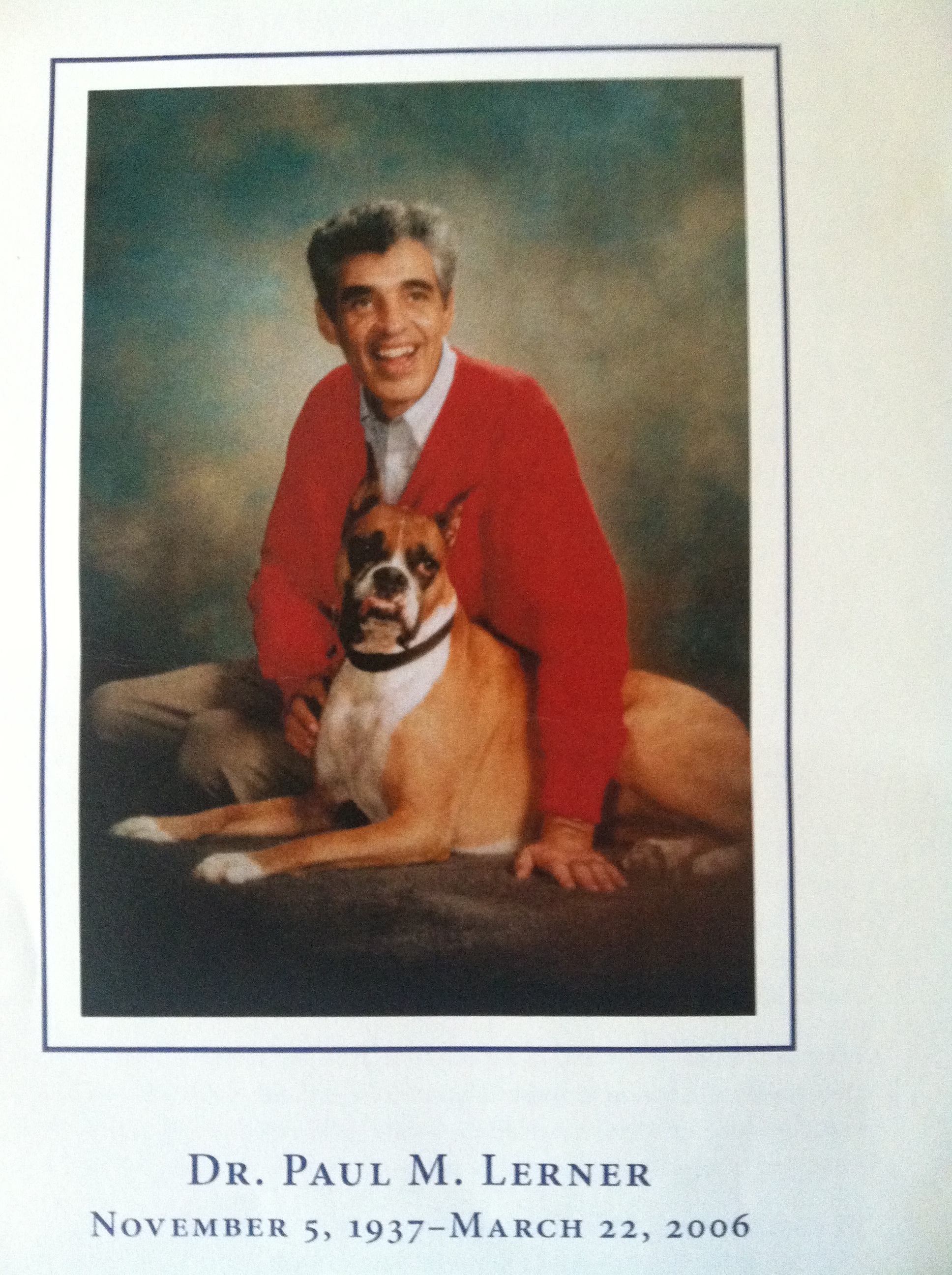
Maybe one day I will, but until that time, I’ll take this opportunity to write about an item that she pulled out for my inspection on this last sorting.  It was a commemorative photograph of my former therapist, posed next to his beloved Boxer dog, smiling as if at that moment he was the happiest man alive.

emptyseatspicdog

“I’m sure you want to keep this,” my wife said.

Yes, I do.

   *******

When your therapist dies of a sudden and massive heart attack, whom do you turn to for consolation, for understanding?

For therapy?

It was seven years ago now, since that evening when my wife broke the news to me. We were winding our way down a mountain road after dropping our daughter off at a weekend youth camp.

“You know that phone call we got before we left home?”

“Yeah.”

“Well, I have some bad news.  Paul is dead.”

I didn’t know what to say, and in some ways I still don’t.

“At least he didn’t suffer,” she said.

Which, I suppose, is the best you can say when it feels like the world has shifted unaccountably and forever.

******

Paul had been my therapist for eleven years, ever since my depression deepened to the point where I felt like I was holding my breath every time my wife left me in charge of our two very young daughters until she came home.  I could do all the functional things—feed them, change them, take them for walks—but I always felt like I would somehow lose or break or forget them somewhere, even inside our house.

So I began seeing Paul.

At first, he wanted to see me every week, sometimes for two-hour sessions.  He uncovered layers of depression that, unsurprisingly, took me back to my childhood, into issues of abandonment, triangulation, secrecy, and loyalty.  Through this process, eventually I became more confident of my power and ability to take care of my loved ones.  My love for them had always been strong, but Paul helped me see my competence, my strength, and most importantly, my worthiness of being loved.

Two particular incidents, I think, best describe the relationship we had.  Once, our beloved family cat Hugo, at this point reaching age 12, developed a severe thyroid condition.  Some in our immediate and extended family thought that Hugo was too old to undergo the costly radiation treatment that could cure him.  But I was determined to take care of my pet, convinced that he still had years of life left to live.  I had begun writing film reviews for a local weekly newspaper, and I dedicated my small salary for my first writing job to paying Hugo’s expenses.  I explained all this to Paul during our next session, especially how I was doing this against the wishes and advice of others in my family.

I remember Paul getting choked up as he listened to my story, and then he told me that not everyone understood the obligation and bond between owner and pet.  He told me of how he bought plots in a local pet cemetery for his dogs and buried them there, complete with their own markers.  I could tell that he wanted to cry as he spoke.  He didn’t tell this story to just anyone.  And then he said,

“And what I want to do for you now is to donate the money for this session to helping you pay your cat’s bill.”

It was enough for me that he had empathy, that he heard my frustration and fear and pain.  But even though I protested, he wouldn’t let me pay him for the session, and so I did use the money to cure my pet.

More to a therapist’s strength, though, came the season in 2000 when Paul helped me deal with my father’s decline and death.  Paul understood how to help me grieve; he was the first person to look me in the eye, three months before my dad actually passed, and say, “Terry, you’re feeling sad because your father is dying.”

I knew, in the middle and back parts of my mind that my father was dying.  But I needed to see it more closely, to accept it.  That’s what a good therapist helps you do.  Accept reality, and then deal with it.

By the time my father actually died, I felt as close to Paul as I did any other man beside my father, and of course, in many ways, Paul understood me better than my father ever had.  Which led me to take a chance on our relationship.

******

My father died on Christmas Eve, 2000.  A few weeks later, as Paul was helping me manage my grief, I blurted out that one of my deepest regrets was never offering to take my Dad to a game at Yankee Stadium.

“Why didn’t I think of doing this?  We used to go to minor league games in Birmingham all the time.  He would have loved it!”

As I was reeling, the idea formed, and I spoke without considering that there might be a conflict for Paul:

“Paul, can I take you to a game this spring?”

But he answered, in my memory, without any hesitation:

“Why sure Terry, I’d be glad to go with you.”

So I made all the arrangements.  Our tickets were for a late April game against the Indians on a Saturday afternoon.  On the Friday before, I flew into New York and met my best friend Jimbo at his apartment on the upper West Side.  We ate lunch at a Colombian café just down the street, catching up and reminiscing.  On returning to his place, we caught the phone on its seventh or eighth ring.

It was Paul.  I had given him Jimbo’s number just in case of an emergency.

Was this an emergency?

“Terry, I’m so sorry, but I’m not going to make it into the city.  The weather is bad up here, and my wife doesn’t like the idea of my taking a chance on flying from our little airport.”

What could I say?  I felt years of therapy shedding itself from my skin.  I’m sure I tried my best to cover my shame, my embarrassment, my feelings of abandonment.

Covering your feelings from your therapist.  What a great idea.

He promised to talk to me the following week, and as we hung up, I felt my insides curling up.  More than anything , then, I wanted to walk out of Jimbo’s place and keep going.

“What just happened?”  Jimbo’s face was as white as mine.

I told him.  And after pausing a moment, he said,

“Uh…you want me to go with you to the game?”

Jimbo’s knowledge of baseball was accurately summed up earlier that day at lunch when he, who had been living in New York for the past twenty years, asked me if there were two New York baseball teams.

“No, Jimbo, I know you don’t care anything for baseball.  Don’t worry, I’ll go to the game and then we’ll go out for dinner later.”

His visual relief actually made me laugh.  And it got me through this moment of crisis, if being doomed to go to a baseball game by yourself in historic Yankee Stadium could ever be said to entail a crisis.

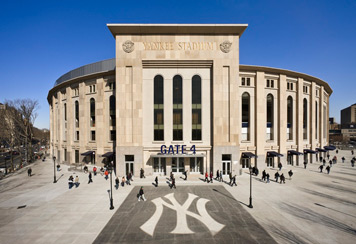
stadium_4

With the game starting at 1:00, I left Jimbo’s place at 11:00, hoping to get there in time to tour Monument Park.  But by the time I navigated the subways and worked my way to the Will Call booth, it was just after 12, and the exhibits had closed.  Still, I enjoyed strolling around the outside contours of the stadium, soaking in the reality that I was here, and only just a bit wistful that I was alone.

And then I saw him.  Not the ghost of my father, or the living being of Paul, but a gray-bearded homeless man, propped up against one of the pillars just outside the main gate.

“Does anyone have an extra ticket?  I don’t want any money!  I just wanna see the game.”

There I stood, two tickets in my hand, and a male voice begging to be my guest.

I wish I could say now that I walked over to this poor man and gave him my extra ticket.  I wish I could say that we entered together, that I even bought him one of Nathan’s finest dogs, and that we enjoyed a Yankee victory together, including that massive home run by Jorge Posada.  I wish I could say that on this day when I looked at the seat beside me, I saw a man who, while not my father or my therapist, was nevertheless a warm body next to me relishing America’s pastime with me in the grand tradition of fathers and sons.

I can’t say that, of course, because while I almost took a step closer to him, the thought that I would be saddled with a homeless stranger for the next four hours—along with whatever else he might bring—stopped me dead.

So I passed on by, went through the turnstiles, found the first trash disposal I could, and tossed that extra ticket in, where it nestled itself among the beer cans and popcorn boxes.

It was a semi-rainy day, and while the game went on without a delay, there were many open seats in the upper deck on the third base side where I was sitting.  I could have sat anywhere up there, and much closer to the front row of the deck than I did.  But it just didn’t feel right to move.  It didn’t feel right to leave that seat next to me where no one was sitting.

******

Paul lived another five years after this life event.  I can still hear his greeting every time we talked: “Hey Terry.”  On our last visit, it sounded to me like he was tired, though I don’t know if that’s just me in hindsight hearing what I now know to be true.  His last words to me on that day were typical, too; “Listen: You be well now, ok?”

I am well, though I still have my occasional low days.  Hugo eventually passed, too, three years after he recovered from his thyroid treatment.  I found him lying in our driveway one evening, looking as if he were just asleep.  His end, like Paul’s, must have been sudden and quick.  I loved him like Paul did his precious Boxer.

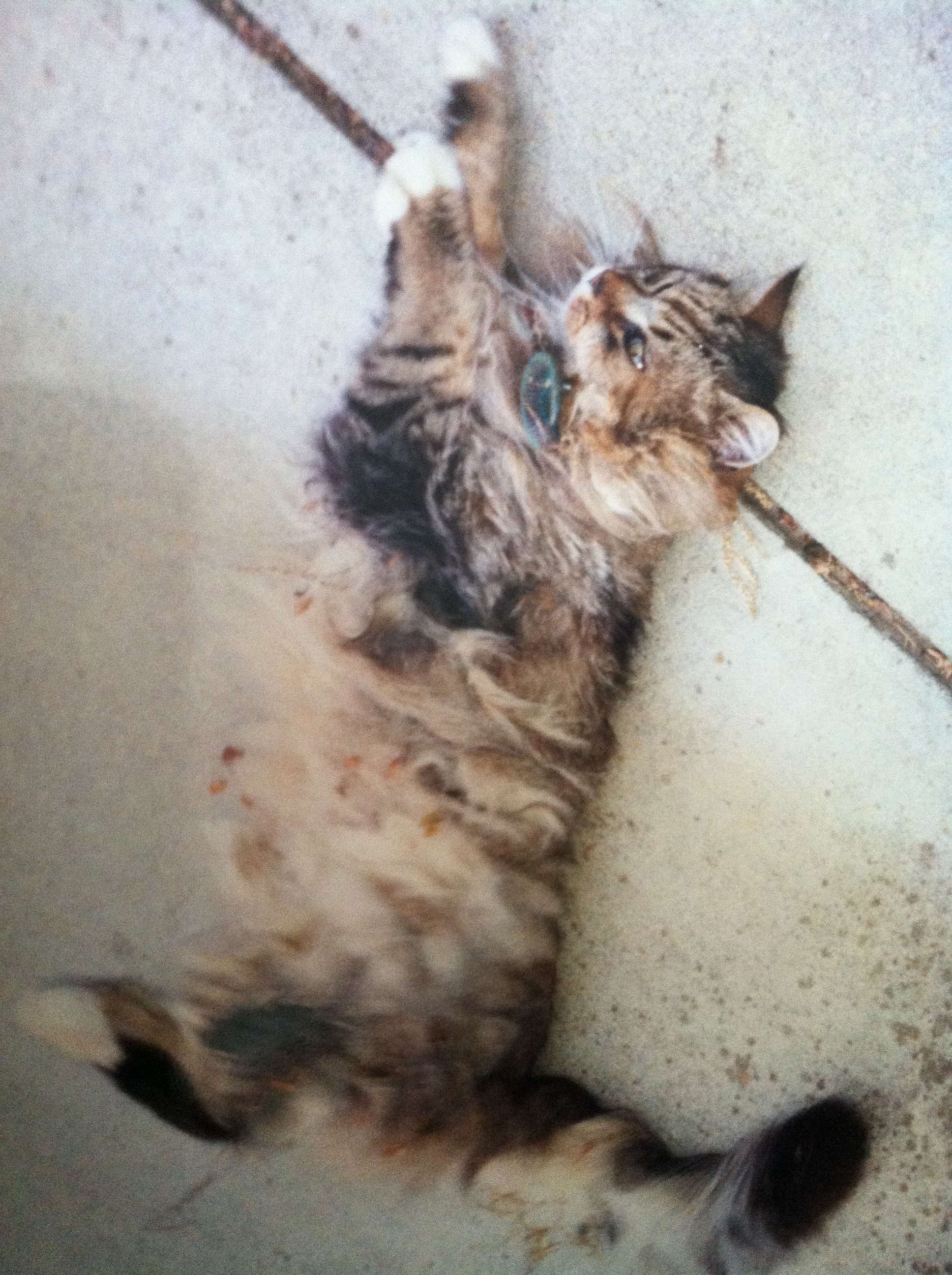
Hugo, the author's cat.

Hugo, the author’s cat.

And as I dug the hole where my wife, our healthy daughters, and I buried our dear kitty, I thought again about all those empty spaces that we see and feel: the ones we fill with all our love.

About the Author

Terry Barr’s essays have appeared in The Montreal Review, The Museum of Americana, Red Fez, and Steel Toe Review.  He is also a regular contributor to culturemass.com, where he writes about pop music and memory. He live in Greenville, SC, with his wife and daughters, and teaches Creative Nonfiction at Presbyterian College.

Hey Everyone! It’s Shit & Piss Week!

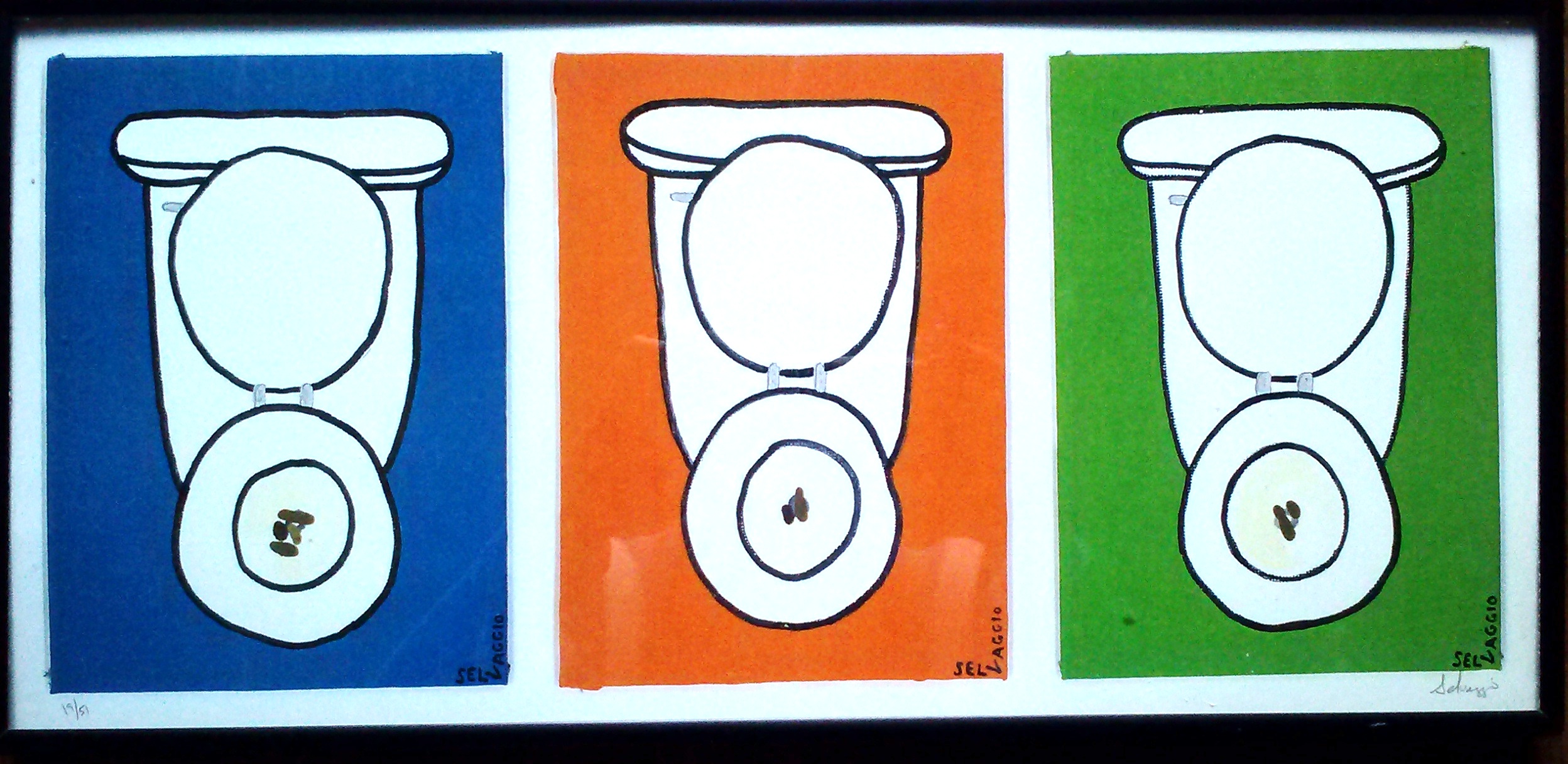
Image credit: Selvaggio

Image credit: Selvaggio

Two stories. Two talented authors. Two bodily functions. Enjoy. . .

Holy Crap

by Dee Dobson Harper
bathroom-stall-300x200

Nightclub toilets in 1980s New York City served multiple purposes. Aside from the obvious, they were meeting rooms, coke dens, retreats from hellish dates or customers, locations for spontaneous trysts, and places to sneak a toke from a clandestine joint. Depending upon one’s need, a good seat in a restroom could be as valuable as the best table or barstool in a crowded Manhattan restaurant or nightspot. One night I discovered what an attraction a simple restroom could be given the right location, the right circumstances, and the right suckers.

As a struggling New York actress, I served drinks four nights a week in 1988 at Chelsea Place, a popular Italian restaurant. Deceptively hidden in the back of a small gift shop, Chelsea Place was modeled in the fashion of a Prohibition-era speakeasy: staid in the front, decadent in the back. From the street, it looked like any other store. Beyond the façade, however, was a world of expensive dining, live music and patrons who loved throwing their money around. An elegant Italian restaurant caught much of it. The main bar with nightly musical acts and an intimate jazz bar upstairs took the rest. The place wasn’t private or exclusive, but it wasn’t a cheap night out either.

Chelsea Place patrons paid four dollars for soft drinks, five for beer, and six for mixed drinks, which for 1988 was kind of pricey. Their complaints were rampant, but the allure of the bars kept their business. Any given Friday night, the week’s busiest, would find a line at the door and a multitude of patrons moving in sardined unison on the dimly lit dance floor. Black lacquered tables with tall, high-backed barstools lined the maroon walls. A massive bar separated a surly Italian bartender named Carlo from the mostly young and corporate-type customers whose constant demands for drinks and penchant for stingy tipping chafed the jaded bartender.

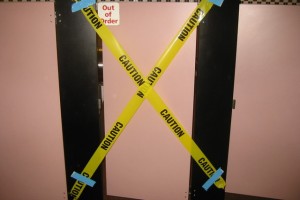
This particular Friday was predictably hectic. I was scheduled to work the jazz bar upstairs, a calmer room than the main bar. The featured performer was a jovial, Reubenesque jazz singer named Clementine Jones who brought Bessie Smith and Dinah Washington gloriously back to life each evening. The bartender, Margit, a pretty Long Island blonde, and the busboy, Harry, a native of India with a great sense of humor, had become my close friends since I joined the team one year earlier. We enjoyed working together and shouldered the toils of cocktail lounge work like sports. Between the three of us, we had amassed a collection of regulars who kept us in tips and employment. In the middle of my normal eight-to-four shift, I passed Harry in the hallway as he posted an “Out of Order” sign on one of the two upstairs unisex restrooms.

“Harry, what’s the matter with that bathroom?” I asked, empty serving tray in hand.

“It’s out of order,” he replied. A native of Calcutta, Harry spoke very fast when he was agitated.

“No shit. I can read. Can anyone fix it?” I asked, remembering the growing throng of customers and dreading long waits in the restroom lines.

“Not ‘no shit.’ Shit is the problem,” said Harry.

“What are you talking about?” I demanded.

“This restroom has been violated,” said Harry, eyeing me with a slight grin. He looked back at his sign and smoothed it with one hand.

“I want to see,” I said.

“You don’t want to look in there,” Harry cautioned, standing in front of the door as if to prevent me from opening it. A group of talking customers emerged from the nearby stairwell and passed us on their way to the jazz bar.

“Yes, I do,” I insisted, laughing at the situation, “Let me see. Now, move!”

Harry threw up his arms in surrender and stepped aside. I twisted the chrome doorknob, pushed the door open, and barreled headfirst into a wall a stench. I froze. And then I saw it: someone’s bowels had exploded against the white back wall of the bathroom, blanketing it with oozing feces. My hand flew up to shield my nose and mouth. I stared, shocked beyond belief, at a heaping mound of dark brown feces dripping off of the gleaming back rim of the toilet seat and chrome flusher and onto the floor. Pools of runny crap were forming beside and behind the commode. Someone has been sick, I thought, and recently, too. In eight years of working off and on in the restaurant business, I never had seen anything to equal this catastrophe. I backed out fast and shut the door tightly. I looked wide-eyed at Harry.

“I warned you,” he shrugged.

“Margit’s got to see this,” I said, shaking my head and laughing as I straightened my black bow tie and white button-down. I could picture some poor soul squatting over the toilet seat and blasting the back wall by accident. I told Harry to guard the door while I went to get Margit. Then I saw Reggie Bowen, a regular Friday night patron, approaching.

“Don’t tell me that toilet’s out of order,” he said as he noted Harry’s sign. “There’s a line at every restroom in this place.”

“Well, you can’t use this one. It’s ruined.” I looked up at his puzzled face. Reggie was a handsome yuppie who suffered from terminal suave. He was a cheap tipper except on occasions when he wanted to impress a date. He was accustomed to getting his way. Right then, he was in a hurry.

“Come on, you guys. Just let me in,” Reggie implored.

“I’m sorry, man,” Harry said, “We can’t. You’ll have to wait for another. This one’s destroyed.”

“What are you talking about?” Reggie asked.

Suddenly Reggie struck me as the perfect mark for a joke. A close encounter with a roomful of shit was exactly what he needed. Now was the perfect time, as the upstairs clientele was gathered in the jazz bar and Giancarlo Santini, my alcoholic and geriatric boss, was downstairs in the restaurant. I started laughing again, then stopped and looked him dead in the eye.

“Okay, Reggie. I’ll let you go in, but it’ll cost you one dollar.”

“Get outta here.”

“Hey! You want in or what?” I thrust my serving tray at poor Harry and crossed my arms in exaggerated defiance.

Harry started laughing, and Reggie frowned at me as he fished his billfold out of his back pocket. He opened it, pulled out a dollar, and handed it to me. I snatched it.

“Girl, you want a tip for everything,” he said. Stepping from in front of the door, I gestured for him to pass. He barreled past me and, in one brisk motion, jerked the restroom door open and entered.

“JESUS F%&#*^$ CHRIST!” boomed the voice of a man who had just come face to face with abomination. I doubled over and held my stomach as my eyes watered from laughter. Hysterical, Harry steadied himself against the wood paneled wall for support. I looked just in time to see Reggie fly out of the restroom and stagger in a gagging heap in the dim hallway. I laughed so hard I thought I would wet my pants. Harry was crying.

I looked at Reggie and blurted, “You said you wanted to go in there!”

“Shut UP! Just shut up,” Reggie shouted, causing himself to cough violently. For a moment, I thought an alien would burst from his chest cavity. He struggled to his feet. He brushed himself off and glared at me. I exploded into giggles and Harry began snorting.

“It’s not funny,” said Reggie, incandescent with disgust. His comment elicited a fresh wave of laughter from the two of us.

“Reggie, I’m sorry,” I managed to say.

“You’re crazy,” he snarled.

“You have to admit it’s worth a dollar,” I said.

“It’s worth a dollar just to see you choking, Reggie,” Harry interjected.

“Get away from me. You’re both sick,” Reggie said, “I need a drink.”

“It’s on me,” I said. I left Harry to shut the restroom door while I whisked Reggie to the bar for a consolation drink. It took twenty minutes and a snifter of top-shelf cognac for Reggie to see the humor in my surprise. He began eyeballing everyone in the jazz bar in hopes of identifying the culprit. He would elbow me and point to suspicious looking customers.

Seeing Reggie’s reaction that night served to whet my appetite for mischief.

Luckily, the entire spectacle escaped the attention of Santini and other sensitive Chelsea Place personnel. By the end of the night, I had exposed six more customers to the restroom atrocity: four random guys who, like Reggie, were desperate to find a vacant restroom and were willing to pay a dollar to get in; one woman named Joanne who always wore thick pink lipstick and had heard about it from Reggie and wanted to see for herself; and Johnny Parker, the jovial house trumpeter who I had caught once standing on a toilet smoking a joint and exhaling into the ceiling vent above the commode. Johnny knew his way around a restroom if anyone did, and the crappy state of this one did not impress him at all. This heinous affair even beat the time a particularly amorous couple took over the other upstairs restroom and dislodged the sink from the wall with their activity. While I felt sorry for the restaurant’s cleaning crew who would be forced to tackle the mess the next day, I was tickled to have pocketed seven dollars without serving one drink. As they say, only in New York.

*****************************************************************************

A Fluid Situation

by Trudi York Gardener

Coincidence, perhaps, or just bad luck that on the morning my husband and I planned to return to Portland after our romantic week at Furnace Creek Inn in Death Valley, California, I awoke at 4:00 a.m. with a burning lower belly. I quickly identified my problem as cystitis — a bladder infection — the bane of any woman traveler and disastrous in a desert National Park without medical facilities.

Fortunately, before I left the Inn, I called my gynecologist in Portland, Oregon. She phoned in prescriptions for me to pick up at Nye General Hospital in Tonopah, Nevada, three hours away. All I had to do, she said, was drink as much fluid as possible and “try to void” often, which sounded cold and commercial, like canceling a check.

Trying to void, I realized, would require the cooperation of local toilets. Our plush hotel room at the Inn featured a commode with water temperatures of 80 degrees from the heated pipes. I knew serviceable restrooms existed at nearby Furnace Creek Ranch and Stovepipe Wells, but beyond these locations, there was a better chance of finding gold in Death Valley than a toilet.

As my husband finished re-packing our car, I weighed the likelihood we’d reach the closest desert town of Beatty, Nevada, forty minutes away, without an off-road stop. My bladder gauge was registering “full” although in several trips to the bathroom, I’d barely managed a few painful dribbles. My husband would go to the bathroom, and I’d listen to a stream with enough force to power a hydroelectric dam.

We hit the road as dawn cracked red across the sky. A recent spring storm had plunged temperatures to the twenties, and in the dimly lit desert, magenta spring blossoms dappled the pockets of powder snow. Strapped securely in the car and shivering, I bundled myself in blankets and sipped dutifully on my third bottled water of the day.

As we sailed across the valley floor that lies between steep mountain walls, the wind kicked at our car and gradually mutated into a semi-sandstorm. The veiled road dipped and rose like a roller coaster across gullies of the salt-washed white desert. With each smack of a gust, and every rise and fall of the road, my bladder threatened to blow.

I tried to quash the rising panic. Could I make it to Beatty? I certainly couldn’t duck behind the car like my carefree husband. Even if there weren’t rattlesnakes, scorpions, and tarantulas out and about in this weather, where would I find vegetation tall enough to hide behind?

Miles earlier I had crossed my legs and clamped my thighs so tight they fused. My teeth chattered, less from the temperature than the internal sloshing that was almost audible. As we passed a sign I couldn’t avoid — “Water for Radiators Only” —  the car whipsawed in the wind. That did it.

“Stop!” I shouted.

Startled, my husband slowed the car and we coasted off the highway. I reached for the door, grimacing. It was no longer an issue of modesty, but whether I could face the right direction in the wind.

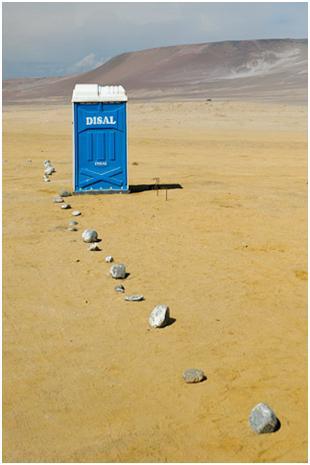
“Look!” my husband cried suddenly and pointed. There it was, several feet off the highway camouflaged in the swirling sand like a biblical miracle — a blue Port-a-Potty. I staggered over to the shed, mumbling prayers under my breath, and flung open the door. Once inside I was heedless of the crawly creatures sharing my cubicle. The ferocious gales rocked the tilting hut as I maneuvered gingerly over the seat, clinging to the low-ceiling interior. Outside I heard my husband thump against one wall, bracing the side as Mother Nature played Kick the Can.

Weakly I wobbled from the battered portable and fell into the car. We sped off and launched up the Grapevine Mountains on a road that twisted through narrow cuts with names like Hell’s Gate and Daylight Pass, ascending 3000 feet in a few minutes. With each wrenching corkscrew turn, I tried to imagine myself in a different and pleasant location, sort of an out-of-bladder experience. But each place seemed to include a lake or a river. Then I tried a scientific approach to help me focus elsewhere. I remembered my high school chemistry teacher’s assurance that liquid evaporates faster at high elevations. So much for high school chemistry.

Eventually the road dropped down to the Amargosa Desert where we exited California and arrived at the Nevada ghost town of Rhyolite by the edge of the Bullfrog Hills. Once a mining boomtown of 6,000 people, the town evaporated along with the gold. There was no bathroom among the sagging shacks, although I considered using a bottle from the Rhyolite Bottlehouse, constructed from 50,000 whiskey bottles. I assumed with my luck a bottle would be a protected historical relic anyway.

Ten minutes later we limped into Beatty’s Exchange Club in the center of a town where every place is the center of town. The casino was surprisingly festive in the wee hours with soldiers from nearby Nellis Air Force base, glittery young women, and the sound of tinkling coins. Instantly I bolted for the ladies’ room. When I reluctantly emerged from that haven, I spotted my husband in the jungle of slot machines.

“Hey,” he said, with a wave, standing amid a bevy of young women, “I think Fran and her girls are here.” Fran was Beatty’s famous madam of Fran’s Star Ranch. She was so popular for her contributions to the town—whatever that entailed — that the town pitched in and rebuilt her trailer when it burned in a fire.

I corralled a young blonde siren with teased hair and dark fringed eyelashes. “Where can I find a doctor in town?” I asked, briefly explaining the urgency of my request.

“Oh, honey,” she said, “there’s no doctor around here.”

“What’s the matter?” A tall redhead with impressive cleavage stopped alongside.

“She’s got female trouble,” said the blonde.

“Well, we could call Steve,” the redhead said. “He’s a paramedic. I think he had some training in Vietnam.”

This was not reassuring. I tried to imagine a Vietnam paramedic treating me. Would he come in fatigues? Did his home resemble a MASH unit? Would he want to amputate something, for God’s sake?

They summoned Steve the sleepy paramedic who arrived and told me his gynecology experience with male soldiers was limited. He proclaimed our best course was to drive to the hospital in Tonopah.

Morosely we drove north, my husband grumbling that he never found Fran, me grumbling that it was two hours to another toilet. My spirits lifted when we reached Goldfield, a ghost town slumbering under a blanket of light snow. Even though the imposing 1908 Goldfield Hotel was padlocked, the County Courthouse closed, and the few brown weathered stores without any signs of life, I knew from previous visits we would find the Chevron gas station open for business.

“There it is!” I pointed triumphantly, thrilled to see the familiar blue and white gas station. Barely waiting for the car to stop, I jumped out, feet crunching on patches of snow. In a minute, I staggered back to the car.

“Frozen,” I croaked, “they said the pipes are frozen so the bathrooms are locked.”

As we shot out of town, I knew I’d never forget Goldfield, the town that promised and failed to deliver. I imagined how miners must have felt when gold ran out in 1919, or the streets coursed with water during the flash flood of 1913.

Bad idea. I had to stop thinking about flash floods.

Forty-five minutes later, I was lying on a table in Nye General Hospital’s emergency room in Tonopah. The bearded young doctor reassured me the pills would start to clear up the infection.

“But,” he said, “you’ve got to drink frequent glasses of water all the way home.”

****************************************************************************

About this week’s authors:

Dee Dobson Harper is a writer of fiction, non-fiction and poetry. Many of her stories, essays and poems are set in New York City, where she lived for 10 years and where a huge piece of her soul remains. She is a longtime advertising copywriter and currently a marketing communications/PR writer at East Carolina University. Her work has appeared in Summerset Review, Scrivener’s Pen, City Writer’s Review, Triangle Business Journal and Business Leader Magazine. She writes in the romance genre as Delora Daye and is the author of Driven, a romantic suspense novel, and two contemporary romance novellas.

Trudi York Gardner resides in Benicia, CA. Her humor pieces and articles have appeared in The Chicago Tribune, The San Francisco Chronicle, The San Francisco Examiner, The Sacramento Bee, The Oregonian, and many other newspapers and magazines. Her humorous short story, “The Lights in the Window,” (1999) was nominated for a Pushcart Prize. Trudi has been the humor columnist for J, the Northern California Jewish Weekly. She writes humor columns on her blog at http://www.tygerpen.wordpress.com.