Who I Was and How I Came To Be

by Will Brooker

Untitled

I used to keep a diary. A diary is a map of your old life.

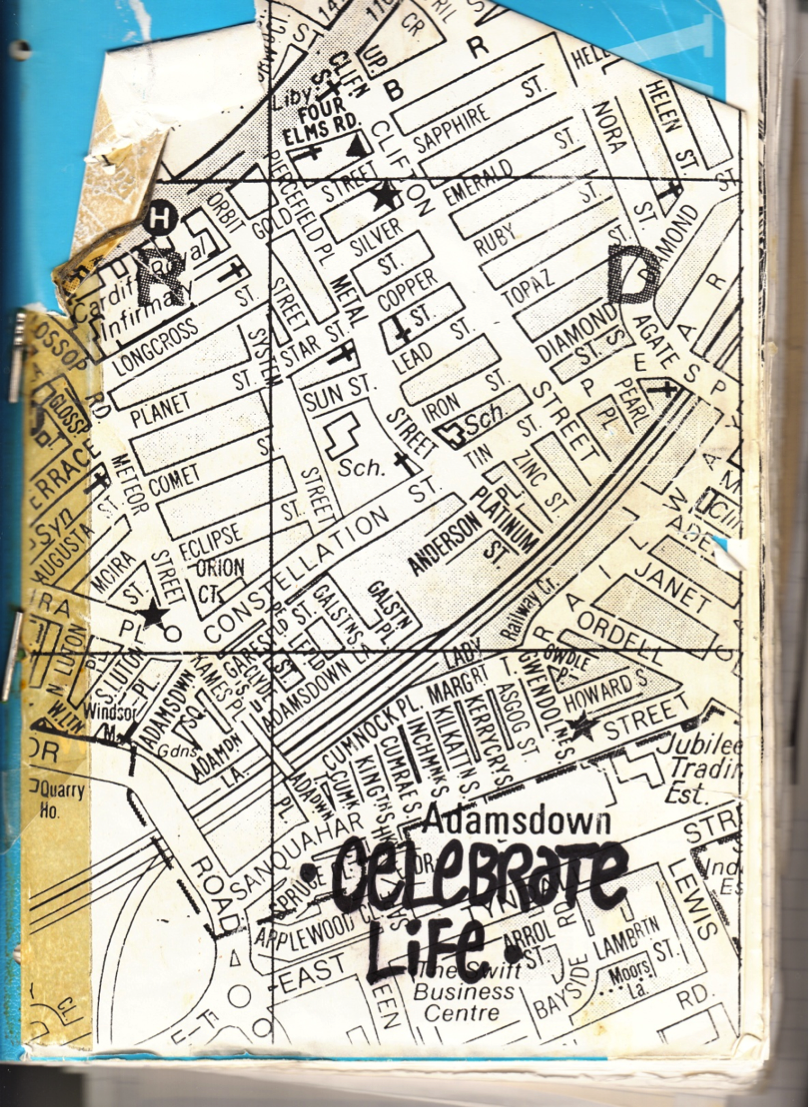
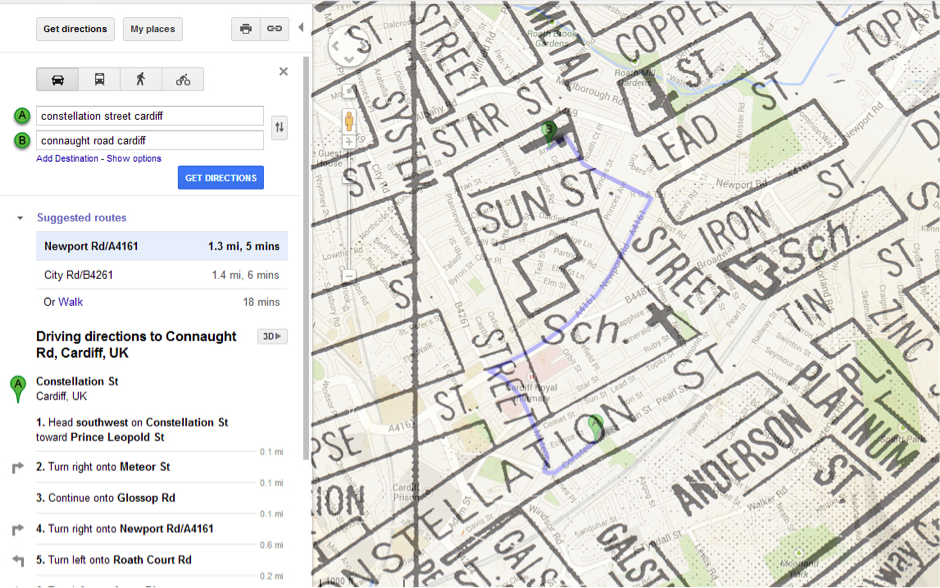
I used to live in Cardiff. On Connaught Road. Can you see it, on the map? Strung onto that constellation of resonant names: sapphire, topaz, silver, planet, emerald, star. Like a science fiction universe: a map of manyworlds, of infinite earths. A roll-call of superheroes.

Wait, Connaught Road isn’t on that map – that photocopied and enlarged A-Z from fifteen years back. Wait while I…
Untitled2

Wait. Here it is. Sometimes the past slips and skids away.
Untitled3

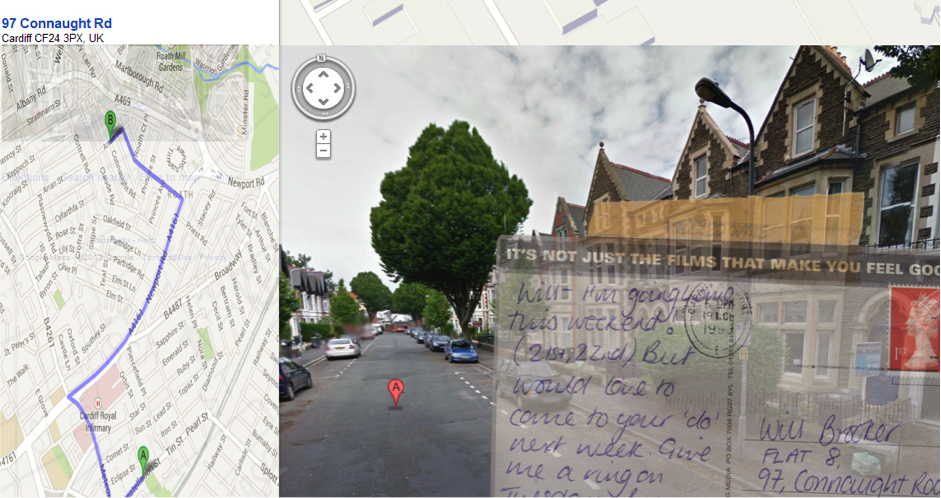
Here it is. Here’s the street where I lived. Flat 8, 97, Connaught Road.

But that was 1998, and this story begins in 96. Let’s start again.

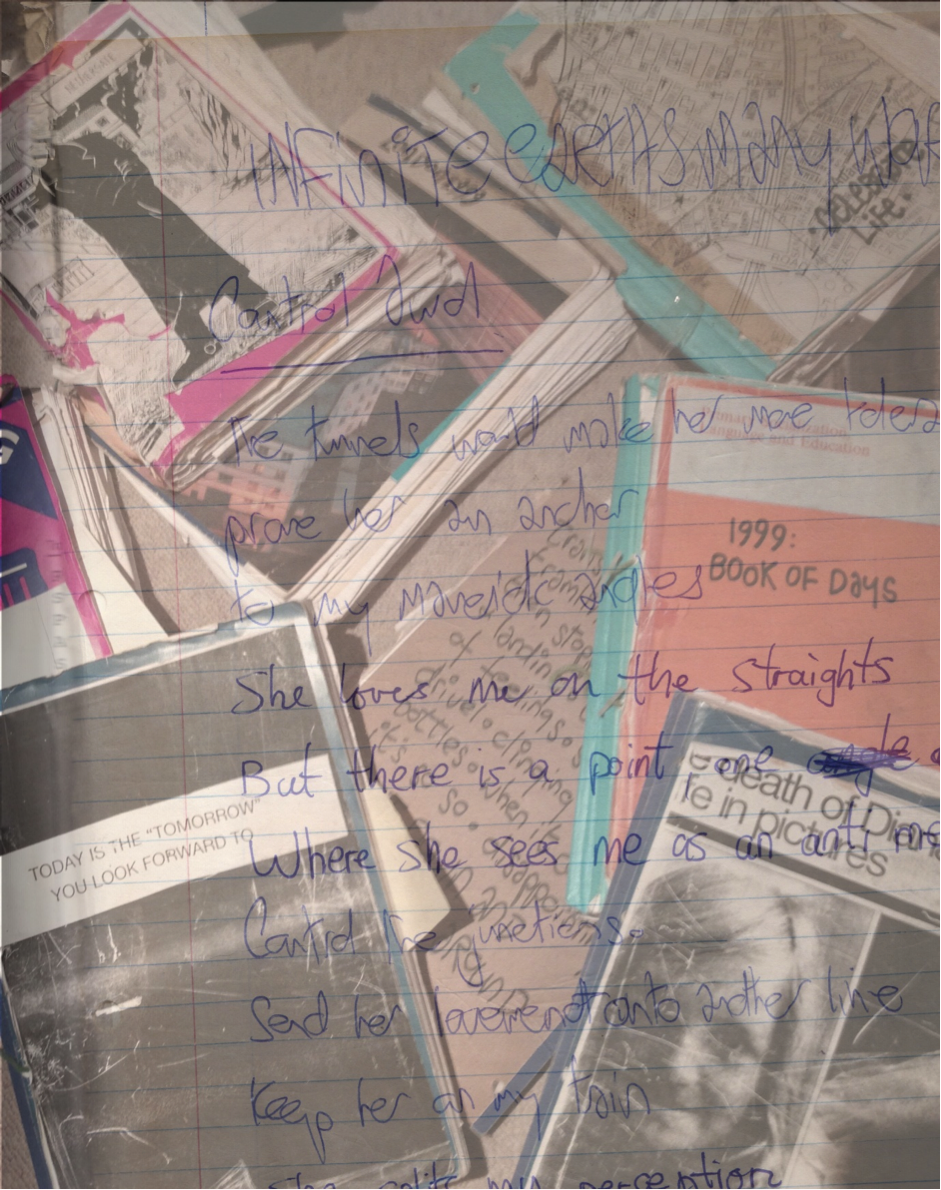
I used to keep a diary. I’ve kept many diaries (though some are lost).
Untitled4

I’ve kept many diaries.

Untitled5

This is the one I should have started with.
Untitled6

This is the one. This is the place where it began.

Cathays Terrace is a scruffy, scrubby long road, five minutes from Cardiff University. You could tell how long people had lived there by whether they could pronounce the name of the next street, Crwys.

Cathays itself is one of Cardiff’s student zones. It has a tiny railway station, the size of a tilt-shift miniature, where trains stop outside the undergraduate club, The Terminal.

I’d come up from London in 96. I’d grown up in London. Cathays – and the surround of Cardiff itself – seemed a small world, to me. It suited me perfectly. I felt I could master its map.

That was arrogant. But, you know. I was twenty-six. When else can you be arrogant?
Untitled8

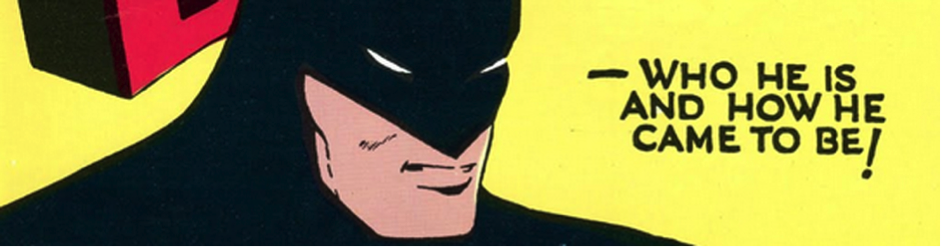
Now we begin. (And it’s my story, so I get captions and a narration, obviously.)
Untitled9

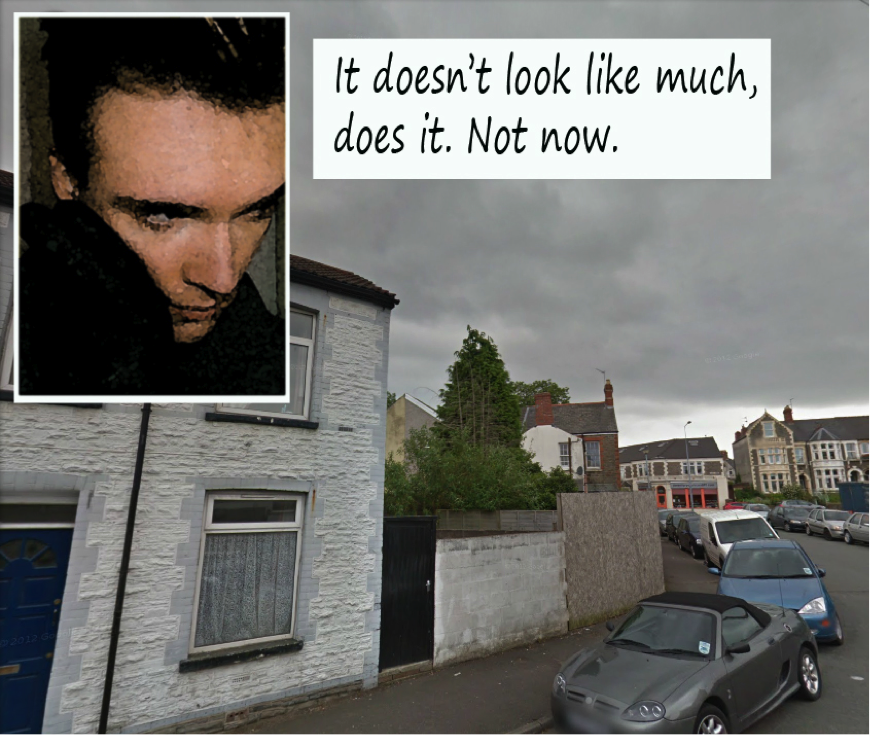
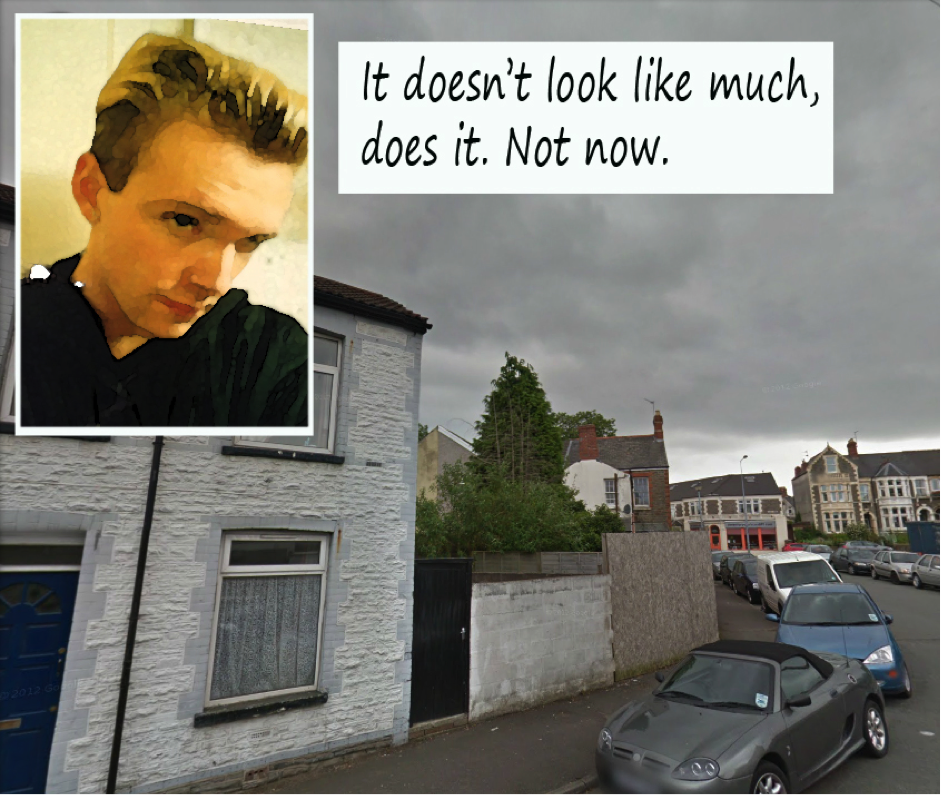
Wait. I was still blond at this point. My hair was yellow like a block of vanilla ice cream.
Untitled10

It doesn’t look like much. They film Doctor Who around here now, and pretend it’s London, but it doesn’t look like London; not even the scruffy parts of London I was from. The houses – even the windows and doors – are smaller. The sky hangs lower, always threatening rain.

The picture above doesn’t actually show my road, Cathays Terrace. I had to manoeuvre Google Street View around the corner and swivel its virtual camera back, to find my own origin point. That window in a white wall. That’s where I stayed.

It was a tiny room – a tiny room divided in two with a thin partition. People joked that it was my Batcave, but I used to call it my cell. There was a shower in a cupboard and I shaved at the kitchen sink, using a plastic mirror propped against the taps.

There was no internet – no personal internet, no going online at home. But the university had 24-hour computer rooms with sluggish 484s, scattered around the city, and I knew where they all were. I added them to my map. I spent twelve hours there at a time, 5pm to 5am, and walked home at sunrise; I slept until 10.

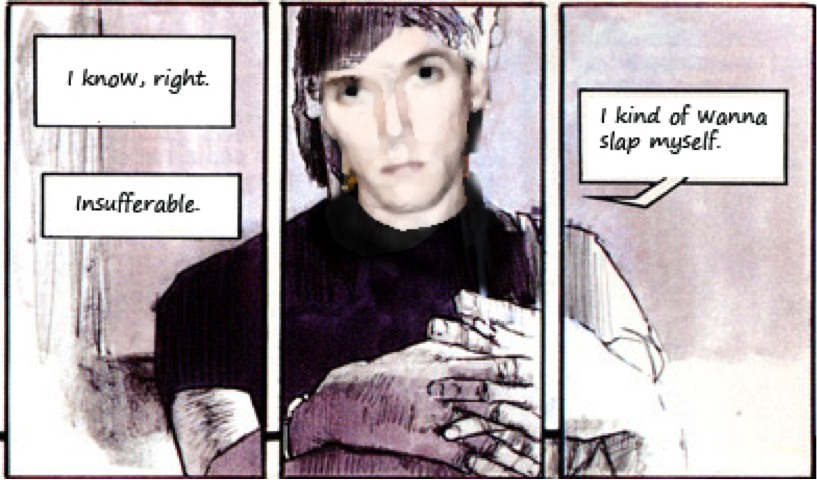
Social networking then was done through notes, postcards, landlines. Somehow – because I was from London, because I was 26, because I was doing a PhD (because I was doing a PhD on Batman) I became the kind of social kingpin I’d fantasised about when I was a sixth former, watching 1980s party movies. Those diaries are a collage of phone numbers with lipstick prints.
Untitled11

What can I say. I’d spent my teenage years reading feminist science fiction, programming in BASIC and doing my homework. I’d spent most of my early 20s painstakingly plucking my eyebrows and being chatted up by businessmen in cross-dressing clubs, like someone from a Lou Reed song. Now Cardiff offered me the chance to be a kind of small-town Bruce Wayne. It was a fun role to play, at the time. It isn’t an interesting story to tell.

What’s more interesting is that I was only this poor-man’s Bruce Wayne by day – and for the sociable part of the evening and night. Nightlife, in Cardiff at least, ends by about 3am. The day doesn’t start – the cleaners don’t wake up and leave for work – until a couple of hours later.

In that time – during that unsociable slice of night – you can be almost alone in the city. And in a small city, you can cover a lot of ground within two hours. You can get a lot done.

You can cover a lot of ground if you run. And I ran every night.

Of course, people asked me if I wanted to be Batman; if I had the costume, if I had the car. I denied it, because look at the Batman everyone knew, back then.
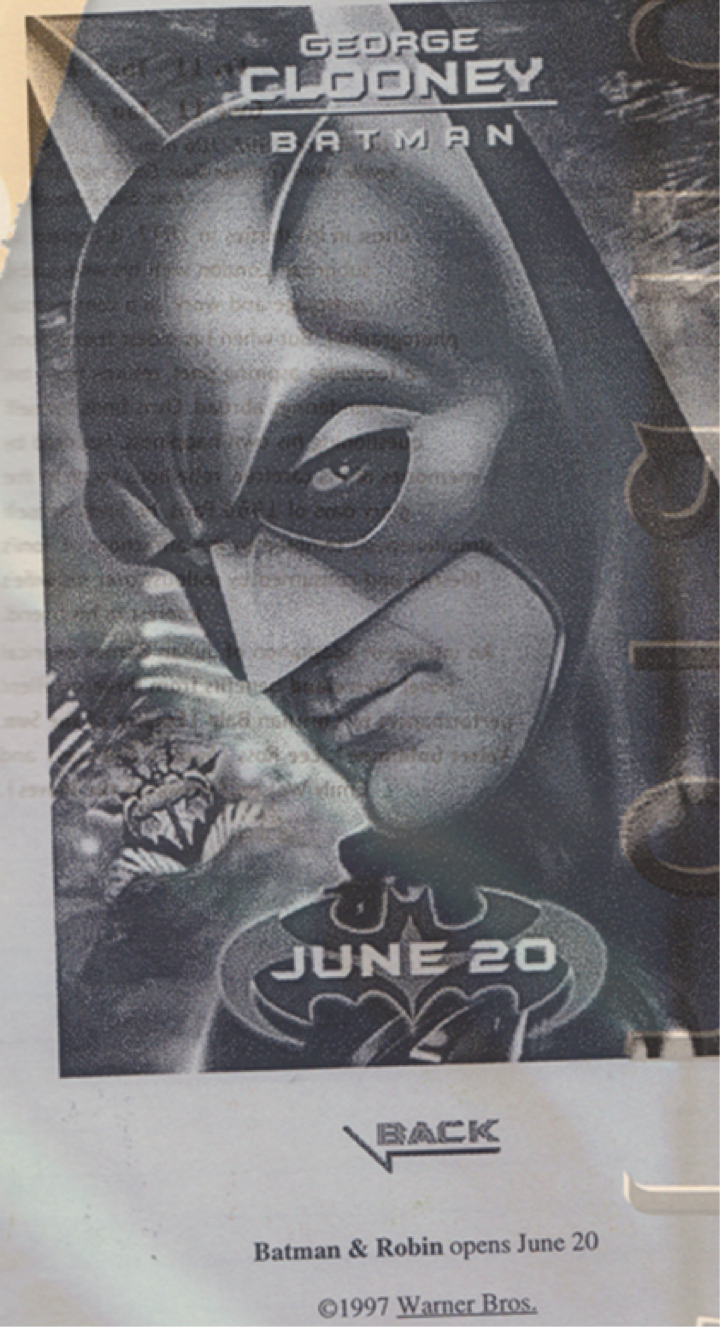
Untitled12

A strange thing happened, though: the day after I saw Clooney as Batman at the Cardiff Odeon, I went to another film called Metroland, at Chapter, the city’s art cinema – on the outskirts of town, across a river bridge, hidden at the end of a park.
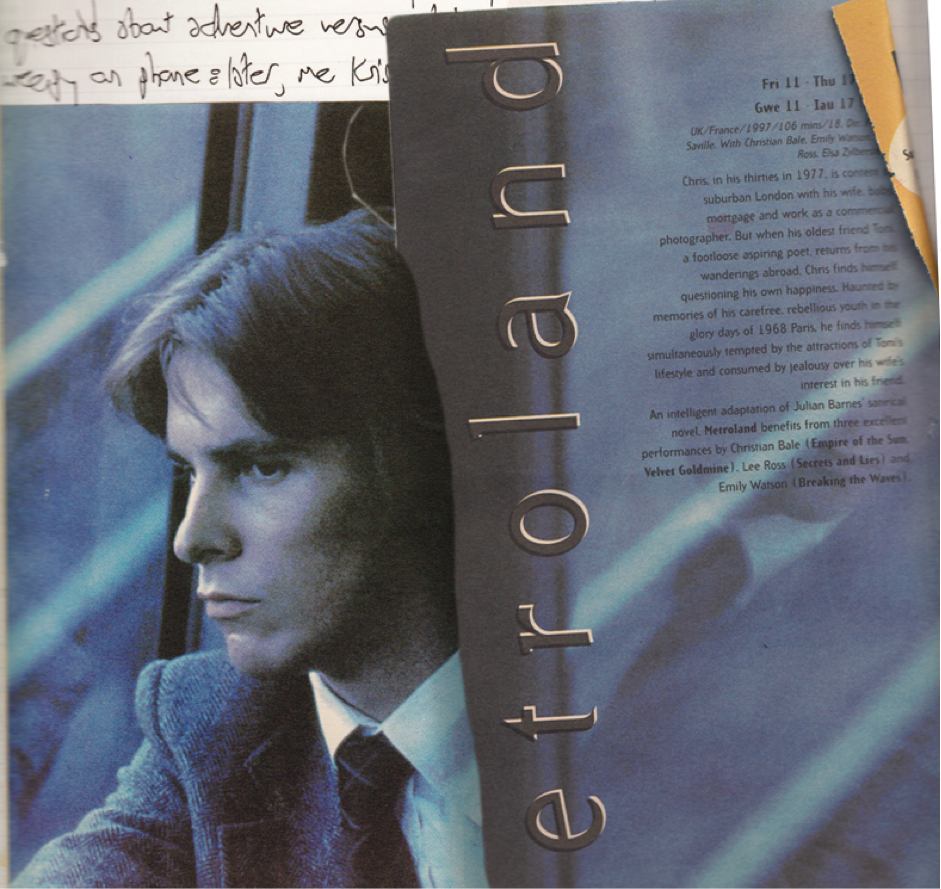
Untitled13

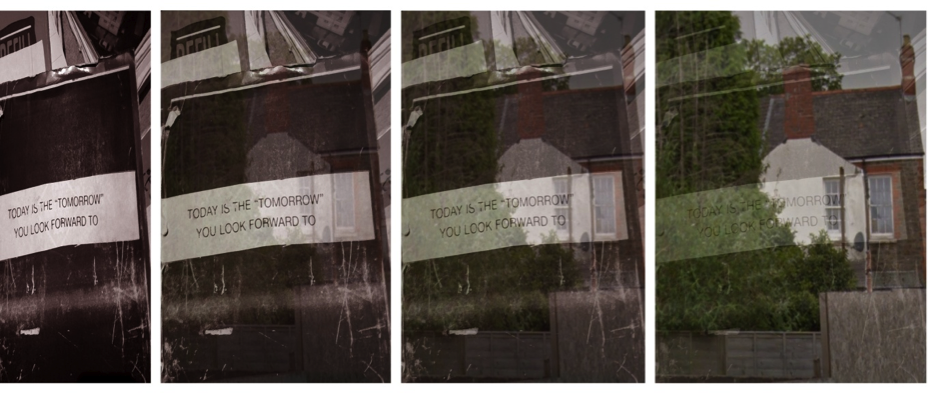
A strange thing sometimes happens, in diaries; especially diaries with thin pages.

One page sometimes bleeds through to another.
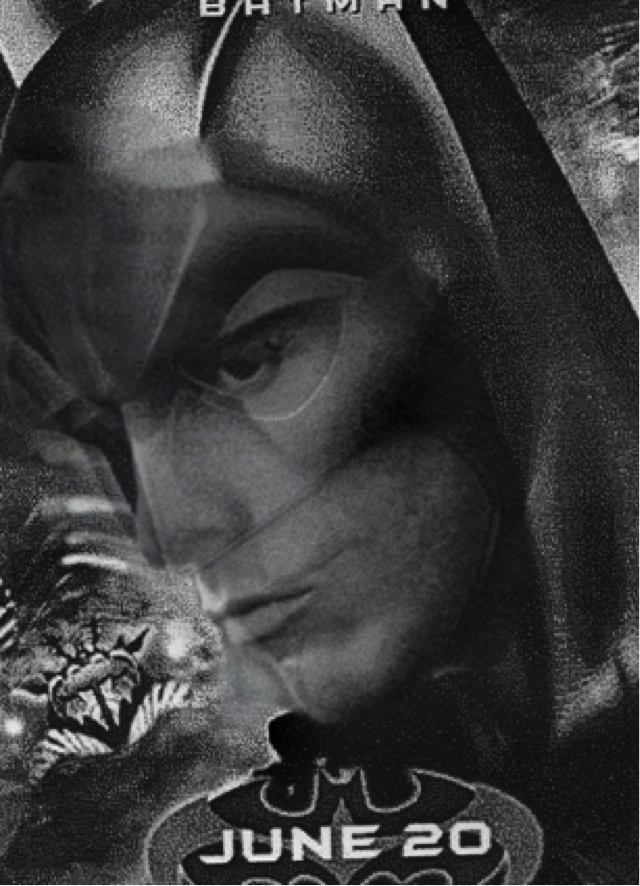
Untitled14

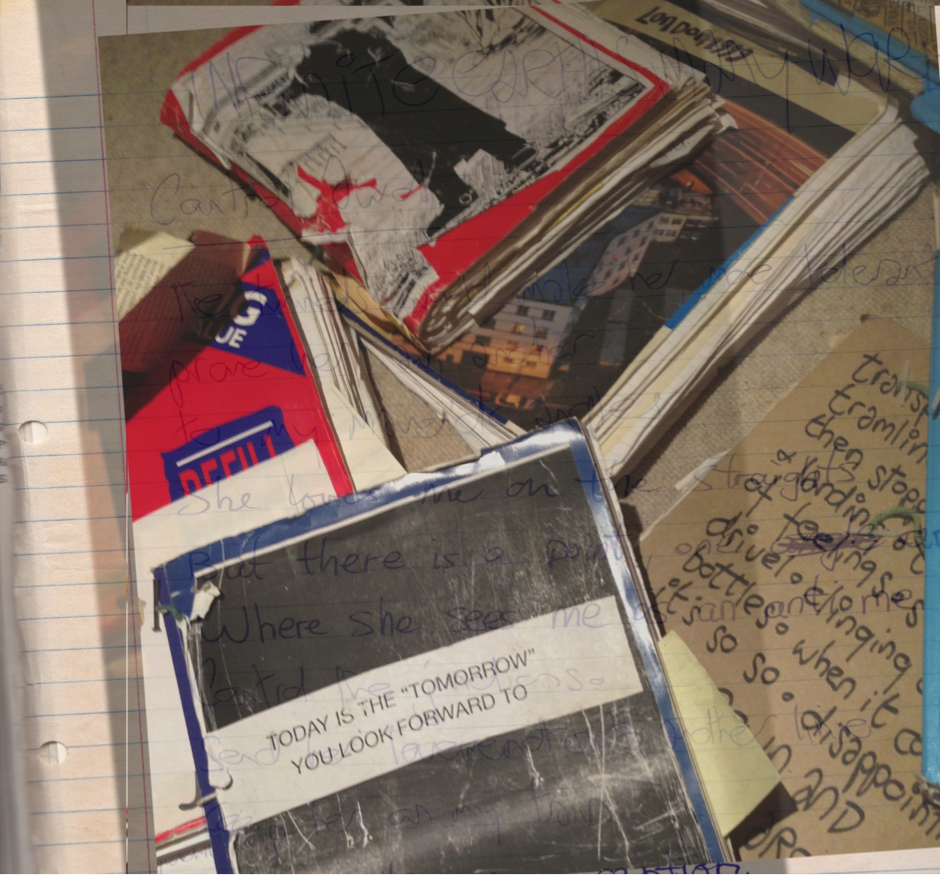
Today is the ‘tomorrow’ you look forward to.

Anyway. This wasn’t my Batman, at the time.

Officially, I embraced the Batman of multiple, mosaic earths. My kitchen was plastered in postcards of Adam West. One metre along the wall, where it became my living room, there were framed images of the Animated Series Batman and Frank Miller’s Dark Knight of 86. Another few steps across my cell, and the mantelpiece by the shower cubicle was decorated with a print of Tim Sale’s Long Halloween Batman from the late 1990s.

But these weren’t really the Batman I connected with; the Batman I aspired to be. You couldn’t be those Batmen. They were too professional, too slick, too rich.
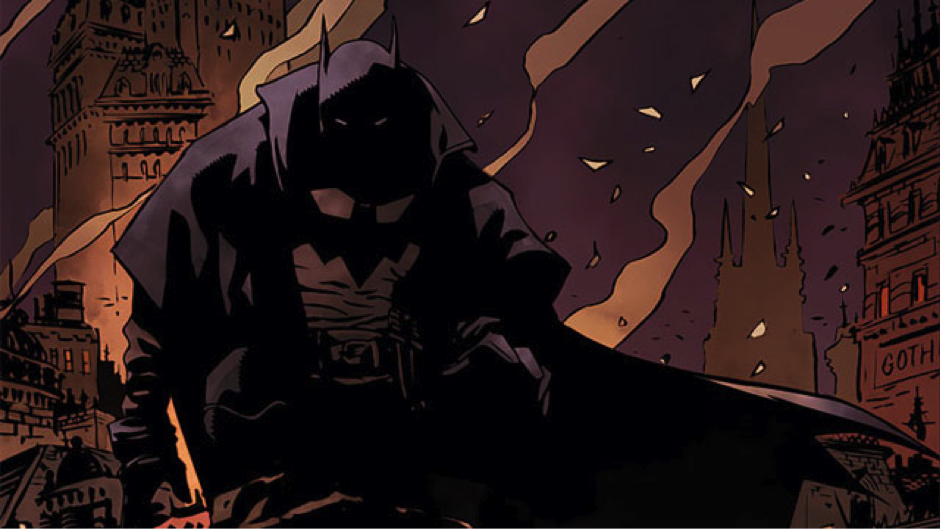
Untitled15

But you could be this Batman, from Brian Augustyn and Mike Mignola’s Gotham by Gaslight. He wasn’t a billionaire or a technocrat. He was just wearing a big coat with the collar turned up, heavy boots, and leather gloves.

I already had a big black coat, which I wore with the collar turned up. I bought black heavy boots and black leather gloves. That was easy: The Matrix had just come out, and Neo-style outfits and accessories were popping up in the indie shops next to Spillers Records, on Canal Street. You couldn’t buy Batman t-shirts at the time, so I scanned a logo from the back of a comic and had it printed onto a tight grey top.

I still went out, as normal, as a civilian – to the Terminal, to the Rummer, to the Clwb Ifor Bach – then came home at 3am, got changed and went out again. I lived mainly on oranges and bread; baguettes from the Tesco bakery at opening time, shoved still-warm in my mouth as I walked home. I started sleeping until 2pm, waking myself with espresso the colour and thickness of tar.

In the afternoon, I trained. I stopped listening to indie pop and began lifting weights to a soundtrack of Tricky, Chemical Brothers and Prodigy.

After a while, I stopped going out – that is, I stopped going out socially. I just went out…antisocially.

When I say I went out: I mean, I went out of that window. That back window in the photograph. And across the garage roof below, along the wall, and down to the street.

I knew a lot of people and a lot of places. I had a lot of contacts, a lot of keys, a lot of door codes. I was twenty-six. It wasn’t a large city. I could cross it in twenty minutes.

I didn’t do anything wrong. I was being Batman. I was gathering information. That’s what Batman does: he’s a researcher.

I didn’t do anything wrong. At least, I didn’t think I was doing anything wrong.

Something happened, later, but it really wasn’t my fault.

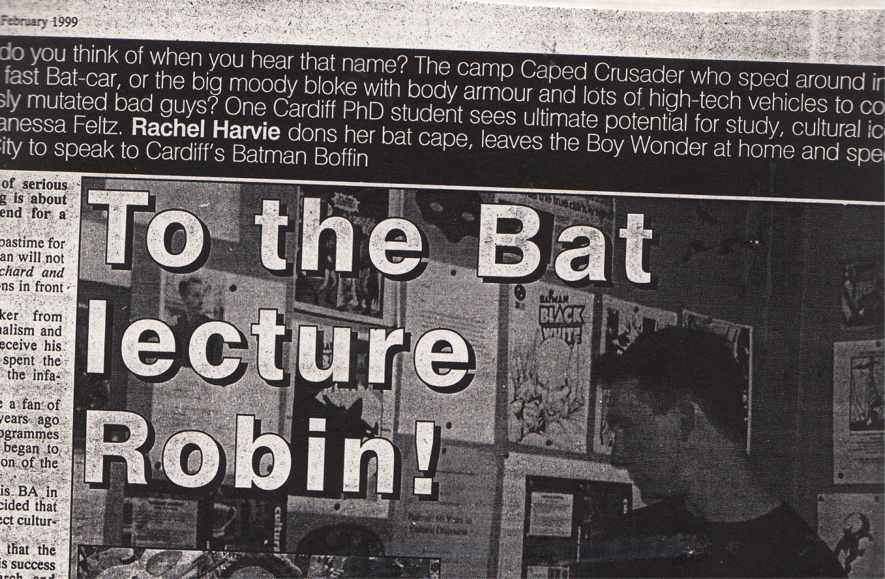
I stopped the training, the night-time patrols, but not because I’d done anything wrong. I stopped because I’d become too well-known. First in Cardiff, after I gave a lecture on the Dark Knight from 1939-99 – Y Marchog Tywyll was the headline (in Welsh) in Gair Rhydd, the student newspaper – and then beyond, as the media picked up on the story that someone was doing a doctorate in Batman.
Untitled16

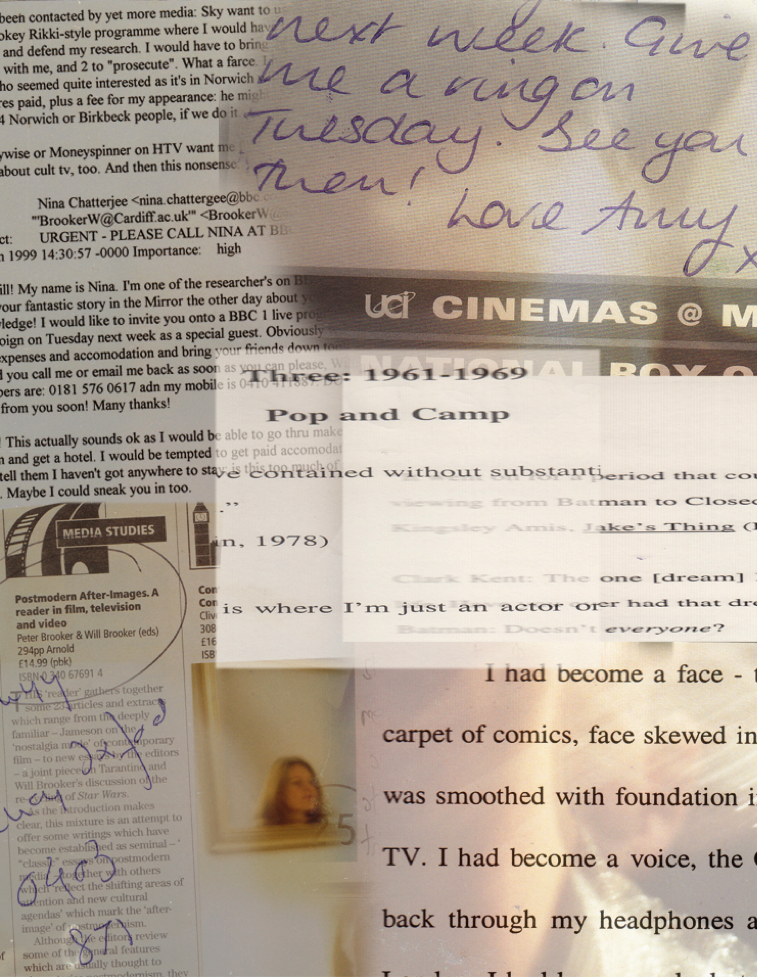
I’d enjoyed being a local face, a familiar name on a small scene. Suddenly I was getting calls from the BBC and invitations back to London to appear on TV. For the first time in my life, companies were paying me to take cabs and stay in hotels.
Untitled17

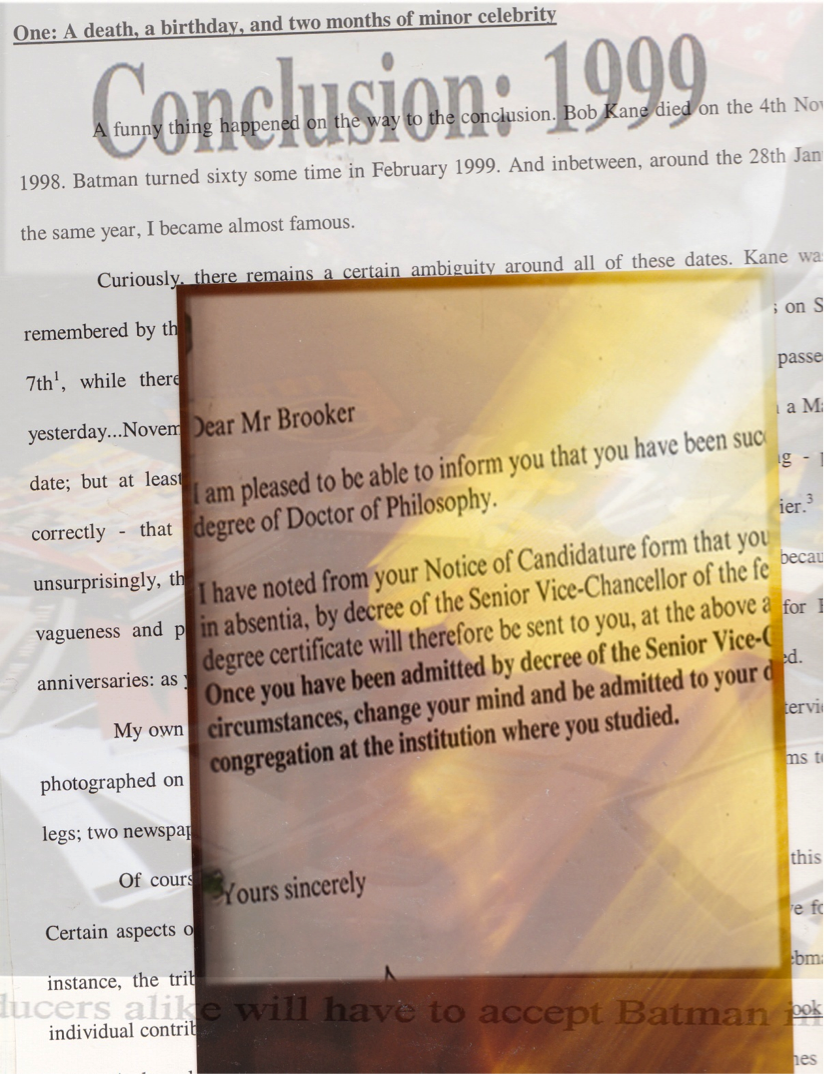
I moved to a far larger flat on Connaught Road. I had a steady girlfriend now. I bought things like matching cups and plates. Fridge magnets. Bottle stoppers. Things like that. I finished my PhD. I applied for jobs.
Untitled18

I got a job. It wasn’t as easy as that makes it sound, but I got a job. I moved back to London. I became an assistant professor. My thesis was published as a book. I became respectable, on the surface at least.

It was the twenty-first century now. People had internet at home. I joined discussion forums. I checked them with my first coffee of the day, before work. I wore a suit now.
Untitled19

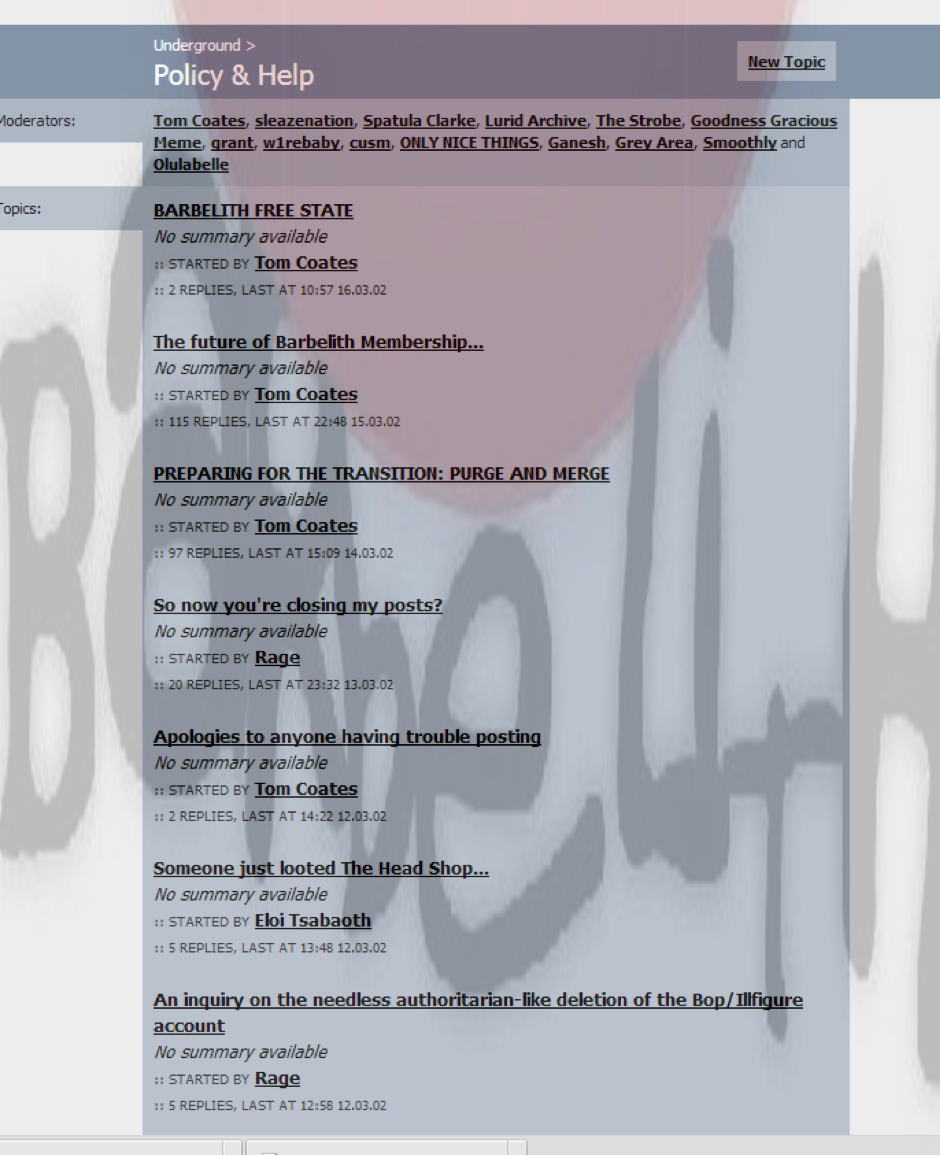
Barbelith was a progressive, intelligent site named after a scarlet satellite – a cosmic stoplight – from Grant Morrison’s comic book series The Invisibles. It was a supportive community, but tightly run and strictly policed. I posted on there for many years, first as myself and then, changing persona to give myself more freedom, under a female name. That name may have saved my career.

Barbelith was tightly run and strictly policed, but someone managed to sabotage it. His name circulated on the discussion boards like a curse, a word of power. His original handle was ‘DisInformation’, and people even became superstitious about invoking it: they referred instead to DisInfo, or The Formation.

I can’t remember the details of his strategy: a back-door exploit that took advantage of the ‘forgot your password’ facility, and mailed the details of regular board members to his own multiple accounts. But the community lived in fear of this guy, who had discovered the real identities behind their codenames and contacted their employers.

Nobody was doing anything wrong exactly. But it was a board based on Grant Morrison’s The Invisibles, and most everyone on there styled themselves as a member of Morrison’s subversive superhero group, a real-life extension of the fiction. There was a lot of discussion about chaos magic, ritual drugs, sexual fetish, political protest. Not the kind of thing you talk about at work; not if you have the kind of job where you wear a suit.
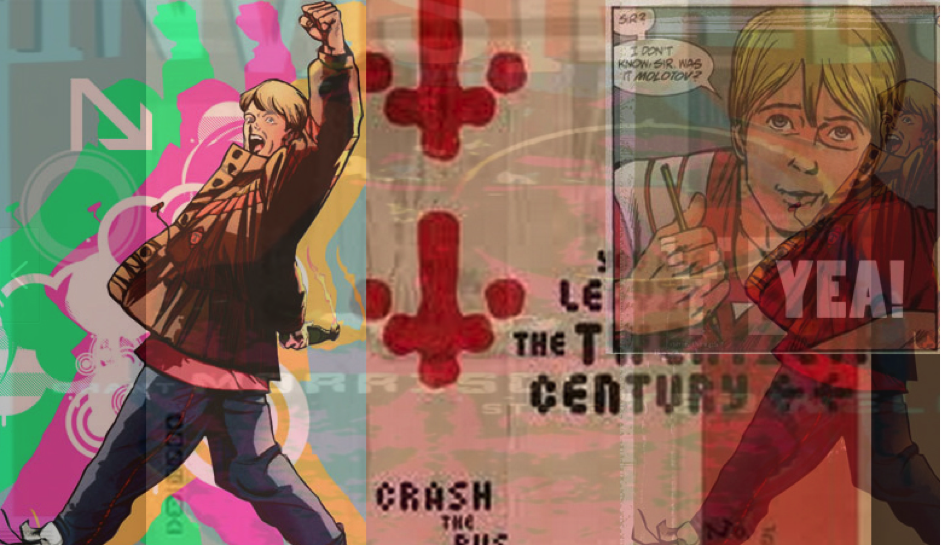
Untitled21

Like me, most people on Barbelith were living a double life, a secret identity, a phantom existence behind the official day-to-day. Separate pages in a diary. But sometimes pages bleed through.
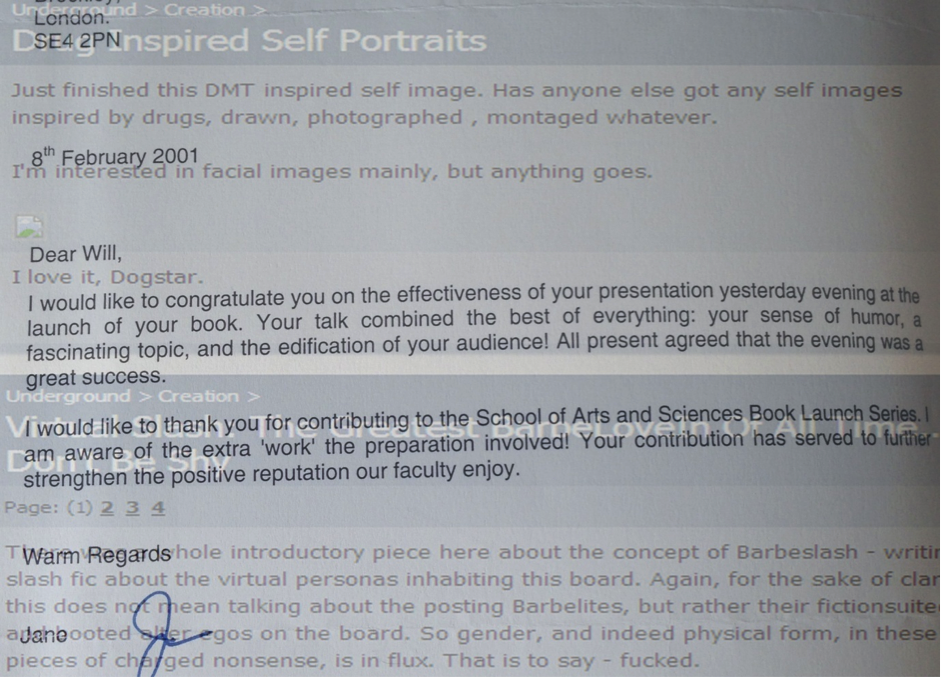
Untitled22

Most people on Barbelith were living a double life. Unlike me, most of them hadn’t genderswapped.

Except, it turned out, for the guy causing so much trouble. He emailed the site manager, Tom Coates, under the name ‘Andrea’, and confessed the password exploit. Their correspondence was made public.
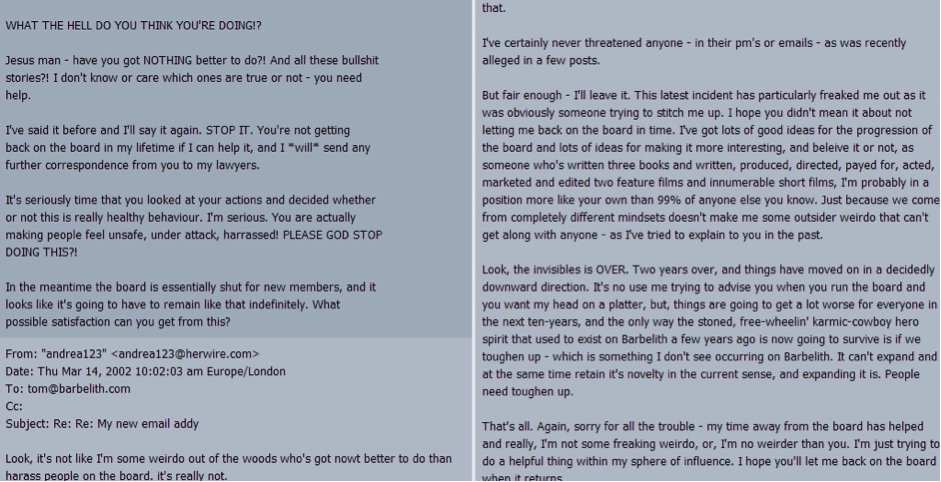
Untitled23

Barbelith had a private message function, a back-channel behind its public discussion forums. Messages flew back and forward between the moderators, the manager and the veterans, sharing and collating information on DisInformation; trying to claw back some power from this guy who seemed to know everything about them. They pieced together details about his identity, and frantically pasted it into a dossier. One private message bled through to the main boards, posted in the wrong place by mistake, and before it was deleted, I saw a name I recognised; starred out like a curse word (‘A***** C****’) and then repeated, uncensored.

I recognised it, and the boundary between two worlds, the real and the virtual, suddenly collapsed. The barriers I’d imagined between Barbelith and my professional life, I realised, had never truly existed. I recognised the name from one of my class registers. The guy under the name DisInformation was a first year student called Andrew. I taught him.

I went through all my posts that morning, erasing and revising any giveaway clues – I’d even written about a specific class, on John Ford, that Andrew had taken part in.  Barbelith was a large discussion board, and I hoped he hadn’t read every detail. I emailed the moderators, the manager and the veterans, telling them I knew who this Andrew was; I knew his email, I knew what he looked like, I knew, roughly, where he lived. They invited me to their private discussion room and took my evidence very seriously. It was exciting, like being a boy witness surrounded by grave but kindly policemen. They thanked me for letting them know, and said they would act on it.

Then I went to work, and taught Andrew as usual, except of course nothing was usual and nothing was the same. Whenever he spoke, I studied his face, wondering what he knew about me; wondering if he knew I knew.

At the end of class, he approached me at my desk, and I prepared myself. But he just gave me a video cassette – this was 2000, or ‘the year 2000’ as we said at the time – and awkwardly told me he thought I’d find it interesting. I imagine we both blushed. Fortunately, he left the room.

In fact, I later realised, he left the university that day.

I watched the video at home. I couldn’t screengrab it, of course. It was a video, on a television. But I took a photograph of it, on freezeframe, then had it developed and stuck it in my diary.
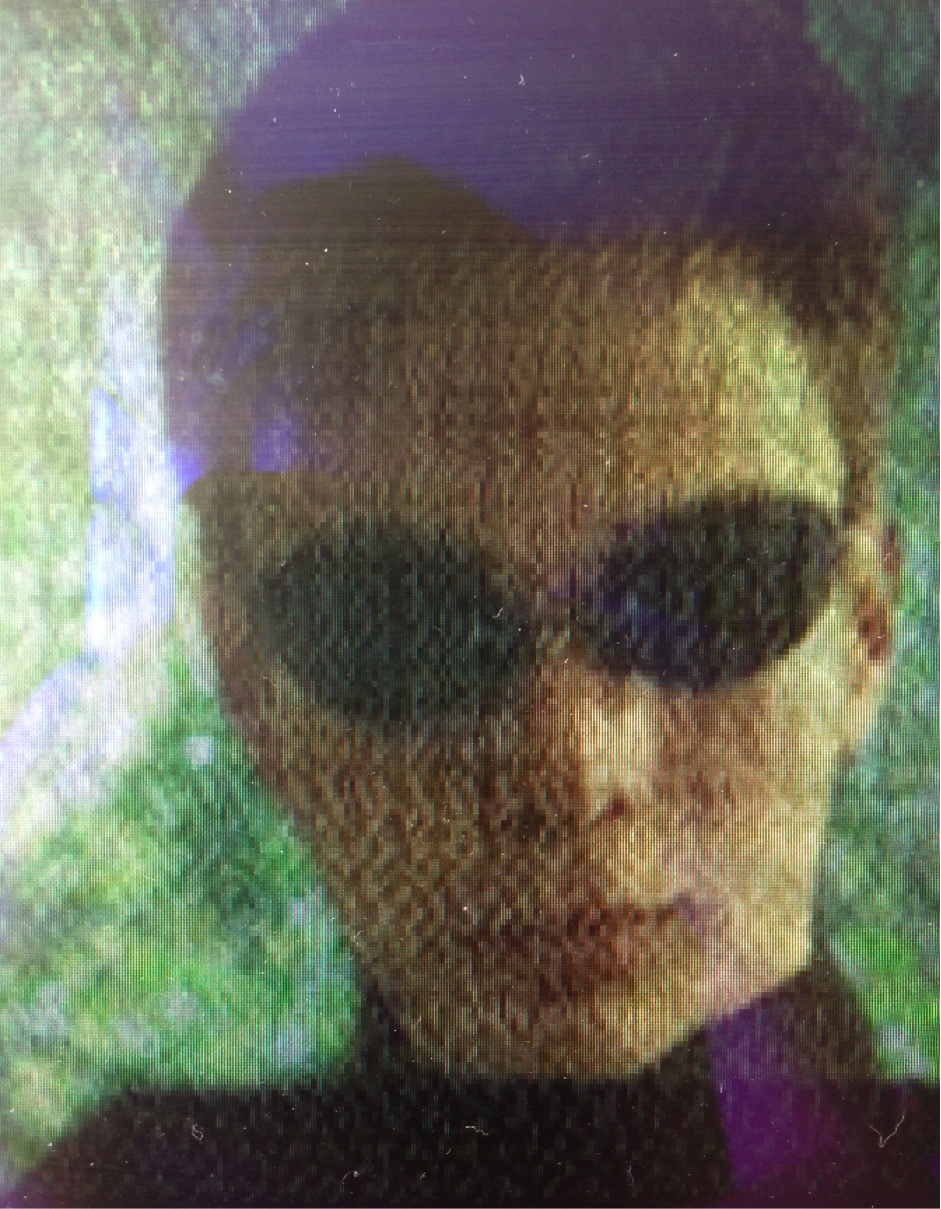
Untitled24

He was in a forest, dressed like Neo from The Matrix. There was a lot of rhetoric about conspiracies, government cover-ups and what humanity would need to do to survive in the 21st century; the kind of thing he wrote on Barbelith. After ten minutes, I fast-forwarded it to the end. Nothing but static and snowstorm.

Andrew dropped out from college, and DisInformation was finally banned from the boards. I never heard from him again, though I searched for his name a few months later (I would have said I googled it, but it probably wasn’t Google, at the time) and found a blog of travel photos, showing him in various locations around the world.

My credibility was boosted on Barbelith and I became regarded as one of the big players, the iconic characters, until the boards declined and collapsed, overrun with spam and deserted by the regulars. You can check it out now at www.Barbelith.com and see what I mean. My old posts are still there. In the real world, I got promoted and continued to climb.

I wish I could give you a better story. I don’t know how much Andrew knew of me; whether he’d witnessed my branding as ‘Dr Batman’ and decided to make himself into a kind of online supervillain, a worthy enemy. He was Welsh, and he could have been in Cardiff at the same time as me; he would have read the local newspaper stories, even seen my lectures. Perhaps the whole online performance was for my benefit. Perhaps that’s vanity, and the crossing of our paths, online and in real life, was just coincidence.

I’d like to give you a better story, a better ending. But this is a true story, and true stories never end.

About the author

Will Brooker is editor of Cinema Journal and author of several books including Batman Unmasked (2000) and Hunting the Dark Knight (2012)
 

Safety Pin

By Bara Swain

I am told that I climbed to the top of our porch trellis when I was two years old.  I used to believe that I remembered that moment — the ivy tickling my stomach, a caterpillar crawling into my underpants, clinging to the slats until my father’s outstretched hand supported my bottom, letting go, feeling weightless, feeling safe.  But now I think I don’t remember this at all.  It was my father’s retelling of the story that was real.  His voice rang with pride.

Here are some things I do remember.  I remember watching my dad trim the hedge that lined our sidewalk.  The top of his hands were hairy.  His knuckles were scabby and his fingernails stained brown.  He had a workbench in the cellar.  Copper-headed nails were kept in a mayonnaise jar.  Screws and loose buttons were saved in empty cans of Delmonte Fruit Cocktail or Whole Sliced Pineapple.  I remember eating canned fruit before every meal.  Dad sweetened his coffee with leftover syrup and made my mother laugh.

I am eight, nine, ten years old.  We are climbing Beech Cliff Mountain in Maine.  Dad leads the way.  We are lost for hours.  I scout ahead and find an old farmhouse.  No one is there.  We drink water from the horse’s trough.  I take off my shoes and balance across a wooden fence rail.  We leave.  The woods get darker and colder.  Everyone complains.  Judy is afraid of starving to death.  Larry is afraid of bears.  Jean doesn’t want to pee in the bushes.  I look into my dad’s steel blue eyes.  I feel safe and happy.  Dad puts my cold hands under his armpits to warm them.  The next day, I take a safety pin off the strap of my bathing suit and remove a dozen large splinters from the soles of my feet.  It hurts but I don’t care.

Other memories:  My father boycotts lettuce.  He wears jeans to grandma’s funeral.  His first story is published.  He gets pneumonia hiking the Appalachian Trail.  He gets depressed.  He travels through England on a three-speed bike.  He quits his job.  He washes the dog before Sarah’s wedding.  He loses friends.  He wins an O’Henry.  He gets a job.  He writes a novel.  He visits my husband in the hospital.  He buries our dog.  He buys a color TV.  He reads to my toddler.  He falls down the stairs.  He retires.  He stays with me after my husband dies.  He hikes with my daughter up Cadillac Mountain.  They get lost.  I’m not worried.  I inspect the bottom of my little girl’s feet when she gets home.

The author's father's novel

The author’s father’s novel

A few years later:  my father is depressed again.  It’s summer.  My mom goes to France on a sabbatical.  My daughter and I visit over the weekend.  Dad looks thin.  I find a salt shaker in the freezer and a chicken breast in the dish washer.  I borrow his car keys to drive to Dryer’s Farm.  As we turn onto Orchard Street, my father says to me, “You know, you drive just like my youngest daughter.”  I pull over to the side of the road.

“Dad,” I say, “I am your youngest daughter.”

A few weeks ago, my father died.  The morning of his funeral, I tried on three different outfits.  My daughter slipped on a pair of blue jeans.  She looked beautiful.

I felt weightless.

About the author:
In August 2012, playwright/fiction writer Bara Swain survived a cerebral hemorrhage and surgery to repair a brain aneurysm, shortly after attending An Evening with Bara Swain in South Florida: a series of 8 short plays directed by Burt Reynolds.  Bara’s husband died in 1995 from complications of an aortic aneurysm.  In 2000, she lost both her parents. Illness informs most of Bara’s writing. Her plays and monologues, anthologized by publishers Smith & Kraus, Meriwether, ArtAge Publications, Oxford U. Press, Applause Books, and JAC Publications, have been performed in more than 100 venues in 13 states.

Dear Lt. Colonel

by Cathy Warner

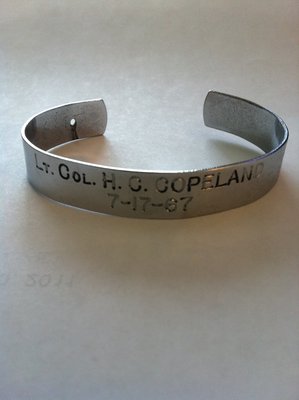
Image by Glenn Copeland (http://www.tourofhonor.com/tohforum/memberlist.php?mode=viewprofile&u=104)

Image by Glenn Copeland
(http://www.tourofhonor.com/)

Dear Lt. Colonel,

I don’t remember your name even though I wore it around my wrist. I don’t remember if you were in the army, air force, navy, or marines. I don’t know if you’re alive or dead—the only things I ever knew were your name and rank engraved on a bracelet. I want to remember that it was copper and left a thin green line around my wrist, but I think the line came from a bracelet stamped with Native American designs I received as a gift when I was ten or eleven.

That bracelet came from a friend, I think, or maybe I bought it with birthday money at the shop near the Long Beach marina where my friends and I bought each other strawberry bubble bath and apricot shampoo in tall bottles with fruity scripted labels.

I felt grownup pedaling across town and over the bridge and paying with coins and multi-folded dollar bills I kept in a gold-mesh purse. They offered free gift-wrapping at the Village Shoppe—spelled the fancy way—and I’d place the package with its pretty bow under the “mouse-trap” on my bike and peddle home down Pacific Coast Hwy.

Lt. Colonel, I never imagined you as a child, like me, a kid who might play baseball with the neighborhood kids on a summer night. Maybe like me you were lousy at batting, but a good runner who liked to steal bases after you were walked to first, and tore up your knees sliding into home.

It was my stepmother who bought me the bracelet with your name on it. My sister got one too, a private. I was given the higher rank because I was eighteen months older than my sister. My stepmother—unaware of the precedent my mother and grandparents set, that I should receive the lesser gift because being older I could better handle disappointment—gave me the prize, although I’m not sure I should call your name inscribed in nickel, a prize: It meant you were a prisoner of war, or missing in action. I don’t know if I knew which.

My sister and I were the first girls at McGaugh Elementary to wear POW bracelets, refusing to take them off when we bathed, swam, slept. We took gymnastics lessons and as I twirled on the uneven bars, the bracelet slid up my wrist onto my arm, the open sides digging into the tender flesh as my muscles flexed and tendons tightened while I gripped and spun, leaving angry red marks on the inside of my wrists. I’d like to think my small suffering in some way helped to relieve yours, but I know it didn’t.

I’d like to say I prayed for you, but we weren’t churchgoers and the only prayer I knew was one I invented to ward off intruders when my mother left my sister and me alone overnight to sleep with her boyfriend.

I’d like to say I thought about you, but you were an abstraction. I was eleven or twelve and I pictured you thirty like my father who was a lieutenant in the Los Angeles County Sheriff’s department. Now, I think it’s more likely you were in your early twenties. Maybe you enlisted. Maybe you were drafted.

You were just a regular guy, working in the shoe department at J.C. Penney, saving money for college when your notice came. Maybe you had a girlfriend, a high school sweetheart you were going to marry once you were promoted to assistant manager and could afford to rent a house.

Or maybe, and I hope not, you married young, too young like my parents, and you joined the army so you could get a paycheck and job training and go to college on the GI bill and buy a home with a VA loan. But somehow you got trapped in the jungle.

It must’ve been hell, at least that’s the picture I got from my stepfather. He was a prisoner twice, caught by the Viet Cong, thrown into a cell—bamboo if I remember it right from his stories. Both times he escaped. He did it, as he liked to tell it, by pretending he was dead.

He taught himself to slow down his heartbeat—a mind over matter trick that also kept him from going crazy. It took months, but finally his captors mistook him for dead. I don’t remember now if they pitched him into the jungle to rot, or if they left his cell unlocked while they called another guard or a medic to come with a stethoscope, or if he used the element of surprise, a dead man springing to life, and fought them off.

I don’t remember if he shot anyone, stabbed anyone, killed anyone, but I do remember the shrapnel scars on his chest and bicep, the bullet holes slick and shiny unlike his regular skin, lined and circle-burst at the edges.

He liked to talk about his capture, his escape rather. Every friend of mine heard his story over dinner, or on a camping trip, or sitting on the couch watching black-and-white episodes of Sherlock Holmes. He’d peel off his T-shirt offering his scars for the touching. He couldn’t feel them anymore.

I didn’t wonder then about other things he couldn’t feel. I suppose he should have scared me when, the first night he moved in with my mother and me, he said, “Don’t ever wake me up while I’m sleeping. I might think you’re VC and kill you.” But he said it in a voice that sounded like a Wolfman Jack’s, a voice I’d spoken to dozens of times on the phone before I met him.

And so if I woke in the night and heard a noise I kept my panic to myself and kept out of my mother’ bedroom, which wasn’t a change because my father, when he lived with us, kept his gun in his sock drawer when he was off-duty and their room was off-limits.

And you Lt. Colonel, did you have a place to come home to? And if you did, did you charm a young divorcee, lie about your age, pretending you were older so she would marry you? Did you endear yourself to her children, shower them with attention they never had?

Did you have a giant circle of friends and family and ride dirt-bikes at Agua Caliente and charge over dusty brown hills in Ensenada in your Ramcharger while your new wife screamed and braced herself against the dashboard and your oldest stepdaughter slid out of her seatbelt and onto the floor laughing with the thrill and danger of it all?

The author's stepfather

The author’s stepfather

And who Lt. Colonel did you warn to stay away from you? And what did you do when you came home, if you came home, when the horror of the war got to you? Did you wake screaming and sweating next to a wife who had no idea how to comfort you? Did you leave your bed and patrol the halls at three a.m. and stand in the doorway of your oldest stepdaughter’s room and watch the quilt over her chest rise and fall ever so slightly and wonder if you put your hand there if you could teach her with just the slightest pressure to stop breathing, to stop feeling, to pretend she was dead and somehow escape?

Lt. Colonel, your name, my bracelet, snapped in two, hit too many times against the concrete deck of my father’s swimming pool as I pulled myself out of the water and onto the scratchy cement, lying corpse-like in my chlorinated puddle until my skin dried taut.

If I could’ve thought beyond the cinder block fence that divided my father’s backyard from Seal Beach Boulevard and the boulevard from the Naval Weapon’s Station beyond it, I might have wondered if you’d become a career military man and been assigned to this base after the war, moving with your wife with her Mary Tyler Moore hair and big sunglasses, enrolling your daughter at the school just across the barbed-wire, just across the boulevard, just two short blocks from my father’s house.

Your daughter would like me because I could outrun any boy on the playground, and your wife would like me too, because my father was a sheriff and I would call her Mrs. Lt. Colonel and say please and thank you.

The author in a 7th grade collage.

The author in a 7th grade collage.

I think your daughter would invite me over, just once before you moved again at the end of the school year, and we would walk past the guards and the barbed wire to your house made of cinder blocks, but you wouldn’t have a fence, just green grass on a gentle slope and further away, grass covered mounds behind more barbed wire where we couldn’t play because the missiles where there underground and we could get blown up.

And Lt. Colonel, you’d come home just before dinner, wearing a spiffy uniform like my father did, with pins and stripes and symbols and your name written across your chest, but it would look different on the crowded cloth than it had on my wrist, smaller and less lonely on a live man than my skinny arm.

Your live arm would hold a Budweiser and a cigarette would dangle from your lips. You’d stand just inside the doorway, carefully removing your shoes, lining them against the wall, recalling that the ones you bought at J.C. Penney before the war had better arch support, that you could stand in them all day no problema.

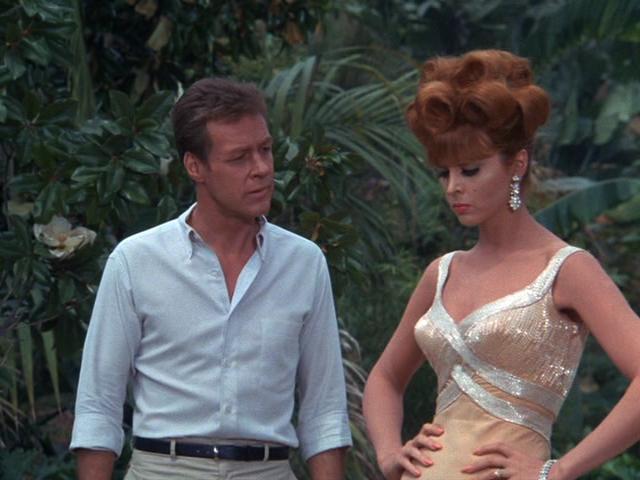
The Professor and Ginger Image by: www.sitcomsonline.com

The Professor and Ginger
Image by:
http://www.sitcomsonline.com

You would sit on the couch with its scratchy plaid cushions, your daughter next to you, and me next to her, and we’d watch Ginger flirting with Professor Hinkley on Gilligan’s Island and you’d snort and say they didn’t know crap about how to survive when they were marooned and ask where she got that evening gown. Or maybe you’d think all that, but not say it, not want your daughter to ask “Daddy?” or say “Da—ddy,” and grab your beer can and set it on the coffee table.

Then Mrs. Lt. Colonel, apron tied at her waist would invite us all to sit down, as if we were company. Were you the kind of man who didn’t say, “Just a minute,” but turned off the TV in the middle of an episode? I think you are.

I wouldn’t be surprised at all Lt. Colonel if you were also the kind of man who sat at the table and looked down at your plate and asked us to hold hands. You’d reach for my skinny tan fingers with your pale firm ones. Then while I felt our palms throb as if we held one of our classroom mice between them, I think you’d say something to God and then Amen and when I let go of your hand, I’d see your sleeve pulled up at the wrist and notice that you too wore a bracelet with a name on it, just like mine before I broke it.

And before you saw me looking, you’d brush your thumb across the name, as if it were braille, as if you could absorb the soldier by feel, and then I’d hope that my friend’s father was really you Lt. Colonel, and that you had come home and weren’t going to kill anyone if they woke you up wrong, or touch anyone at night when they were sleeping because you were still in a jungle still at war still trying to escape.

I kept the two halves of that broken bracelet for years, until I grew up and packed for college and took that box with me, everything but the broken bracelet inside. I threw it in the trash. What does it say about me that even then, Lt. Colonel, I’d already forgotten your name?

 About the author

Cathy Warner’s poetry collection, Burnt Offerings is forthcoming in January from eLectio Publishing. She holds an MFA in creative writing from Seattle Pacific University, and her writing has appeared in a number of literary journals and anthologies. Cathy renovates homes in the Puget Sound with her husband. Her website is cathywarner.com

Making Words

by Heather Babcock

“They blossom every 2 years,” the florist tells me.  “It’s not blossoming now but it is growing leaves.”

I cradle the orchid in my arms and step out onto the busy street.  The dust clouds my vision, softening my anger.

An elderly man plays a mandolin and I give him the last of my coins.  I walk slowly, leaning into his music.

People don’t let me talk about you but I do anyway.  I open my mouth and the words fall out onto the pavement, melting on contact like wet snowflakes.

When Dad came home from the war, his mother wouldn’t let him talk about it.  She gathered up all of the remnants – uniform, badges, medals, photographs – and put them in a big box to grow dust.  Dad wanted to make what he had seen into words but nobody wanted to let him.  Years went by, you and I were born and we asked Dad how it had been in the war.  Dad told us a story about a pet monkey named Simms.  Simms would jump up on the back of an unsuspecting sailor and steal his rum.  “Go get him, Simms!” the sailor’s friends would laugh.  It was the only story from the war that Dad ever told us.  It was the only one that he could make words with.

babcockdad

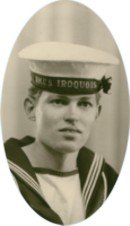
The author’s father shortly after he joined the Navy

I was the one who had to make it into words for Mom.  You know that.  You were there, sitting on top of her stereo, hiding behind her cat and thinking that I couldn’t see you.

You were the one scratching the needle over the record; the song was Daydream Believer and it started skipping.  The Monkees stopped dancing.  Mom’s heart opened up and swallowed the words and I couldn’t reach her anymore.

I look down at the orchid and it is in your hands – so small and strong, with brown dirt wedged under naked fingernails.

Fragmented images make up a sudden memory:

The two of us are standing together, your hand clutching mine.  You are 4 and I am 6 and we both have those terrible bowl haircuts that Dad used to give us with the kitchen scissors.  I remember the raised velvet of the white daisies printed on the starch material of our yellow dresses.  I remember wooden pews, scuffed Mary Janes, Jesus’ protruding ribs.  Everlasting life – is that what the pastor had been talking about that day?  I don’t remember water but there must have been water.  Did they hold us under water?

I don’t need a photo to see my daughter’s face.”

I know what Mom means – I don’t need a photo to see your face either.

I close my eyes and there you are: big floppy hat, wide legged jeans – looking like you just stepped out of sunshine and 1975. Your mouth is open and pink, stretched into a smile big enough to hide the scars on your wrists.

Or was that me, hidden behind the camera, wrapping your scars up in smiles?

I am not allowed to talk about you but today you will not shut up.

Orange is beginning to break through the baby blue of the sky.  Across the street, a crowd is gathering outside a church.  A proud, puffed up groom.  A peach skinned bride.  The bride smiles out into the sun, her eyes briefly resting on me before bouncing away.

She thinks that she is different.

About the author

Heather Babcock is a secretary by day, writer by night.  She has had short fiction published in The Toronto Quarterly (TTQ), Front & Centre Magazine, The Annex Echo newspaper and in the Steel Bananas Anthology Gulch- An Assemblage of Poetry and Prose.  She has fiction forthcoming in Descant magazine.