Dear Lt. Colonel

by Cathy Warner

Image by Glenn Copeland (http://www.tourofhonor.com/tohforum/memberlist.php?mode=viewprofile&u=104)

Image by Glenn Copeland
(http://www.tourofhonor.com/)
Dear Lt. Colonel,

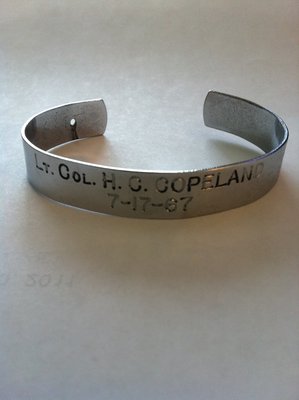
I don’t remember your name even though I wore it around my wrist. I don’t remember if you were in the army, air force, navy, or marines. I don’t know if you’re alive or dead—the only things I ever knew were your name and rank engraved on a bracelet. I want to remember that it was copper and left a thin green line around my wrist, but I think the line came from a bracelet stamped with Native American designs I received as a gift when I was ten or eleven.

That bracelet came from a friend, I think, or maybe I bought it with birthday money at the shop near the Long Beach marina where my friends and I bought each other strawberry bubble bath and apricot shampoo in tall bottles with fruity scripted labels.

I felt grownup pedaling across town and over the bridge and paying with coins and multi-folded dollar bills I kept in a gold-mesh purse. They offered free gift-wrapping at the Village Shoppe—spelled the fancy way—and I’d place the package with its pretty bow under the “mouse-trap” on my bike and peddle home down Pacific Coast Hwy.

Lt. Colonel, I never imagined you as a child, like me, a kid who might play baseball with the neighborhood kids on a summer night. Maybe like me you were lousy at batting, but a good runner who liked to steal bases after you were walked to first, and tore up your knees sliding into home.

It was my stepmother who bought me the bracelet with your name on it. My sister got one too, a private. I was given the higher rank because I was eighteen months older than my sister. My stepmother—unaware of the precedent my mother and grandparents set, that I should receive the lesser gift because being older I could better handle disappointment—gave me the prize, although I’m not sure I should call your name inscribed in nickel, a prize: It meant you were a prisoner of war, or missing in action. I don’t know if I knew which.

My sister and I were the first girls at McGaugh Elementary to wear POW bracelets, refusing to take them off when we bathed, swam, slept. We took gymnastics lessons and as I twirled on the uneven bars, the bracelet slid up my wrist onto my arm, the open sides digging into the tender flesh as my muscles flexed and tendons tightened while I gripped and spun, leaving angry red marks on the inside of my wrists. I’d like to think my small suffering in some way helped to relieve yours, but I know it didn’t.

I’d like to say I prayed for you, but we weren’t churchgoers and the only prayer I knew was one I invented to ward off intruders when my mother left my sister and me alone overnight to sleep with her boyfriend.

I’d like to say I thought about you, but you were an abstraction. I was eleven or twelve and I pictured you thirty like my father who was a lieutenant in the Los Angeles County Sheriff’s department. Now, I think it’s more likely you were in your early twenties. Maybe you enlisted. Maybe you were drafted.

You were just a regular guy, working in the shoe department at J.C. Penney, saving money for college when your notice came. Maybe you had a girlfriend, a high school sweetheart you were going to marry once you were promoted to assistant manager and could afford to rent a house.

Or maybe, and I hope not, you married young, too young like my parents, and you joined the army so you could get a paycheck and job training and go to college on the GI bill and buy a home with a VA loan. But somehow you got trapped in the jungle.

It must’ve been hell, at least that’s the picture I got from my stepfather. He was a prisoner twice, caught by the Viet Cong, thrown into a cell—bamboo if I remember it right from his stories. Both times he escaped. He did it, as he liked to tell it, by pretending he was dead.

He taught himself to slow down his heartbeat—a mind over matter trick that also kept him from going crazy. It took months, but finally his captors mistook him for dead. I don’t remember now if they pitched him into the jungle to rot, or if they left his cell unlocked while they called another guard or a medic to come with a stethoscope, or if he used the element of surprise, a dead man springing to life, and fought them off.

I don’t remember if he shot anyone, stabbed anyone, killed anyone, but I do remember the shrapnel scars on his chest and bicep, the bullet holes slick and shiny unlike his regular skin, lined and circle-burst at the edges.

He liked to talk about his capture, his escape rather. Every friend of mine heard his story over dinner, or on a camping trip, or sitting on the couch watching black-and-white episodes of Sherlock Holmes. He’d peel off his T-shirt offering his scars for the touching. He couldn’t feel them anymore.

I didn’t wonder then about other things he couldn’t feel. I suppose he should have scared me when, the first night he moved in with my mother and me, he said, “Don’t ever wake me up while I’m sleeping. I might think you’re VC and kill you.” But he said it in a voice that sounded like a Wolfman Jack’s, a voice I’d spoken to dozens of times on the phone before I met him.

And so if I woke in the night and heard a noise I kept my panic to myself and kept out of my mother’ bedroom, which wasn’t a change because my father, when he lived with us, kept his gun in his sock drawer when he was off-duty and their room was off-limits.

And you Lt. Colonel, did you have a place to come home to? And if you did, did you charm a young divorcee, lie about your age, pretending you were older so she would marry you? Did you endear yourself to her children, shower them with attention they never had?

Did you have a giant circle of friends and family and ride dirt-bikes at Agua Caliente and charge over dusty brown hills in Ensenada in your Ramcharger while your new wife screamed and braced herself against the dashboard and your oldest stepdaughter slid out of her seatbelt and onto the floor laughing with the thrill and danger of it all?

The author's stepfather

The author’s stepfather

And who Lt. Colonel did you warn to stay away from you? And what did you do when you came home, if you came home, when the horror of the war got to you? Did you wake screaming and sweating next to a wife who had no idea how to comfort you? Did you leave your bed and patrol the halls at three a.m. and stand in the doorway of your oldest stepdaughter’s room and watch the quilt over her chest rise and fall ever so slightly and wonder if you put your hand there if you could teach her with just the slightest pressure to stop breathing, to stop feeling, to pretend she was dead and somehow escape?

Lt. Colonel, your name, my bracelet, snapped in two, hit too many times against the concrete deck of my father’s swimming pool as I pulled myself out of the water and onto the scratchy cement, lying corpse-like in my chlorinated puddle until my skin dried taut.

If I could’ve thought beyond the cinder block fence that divided my father’s backyard from Seal Beach Boulevard and the boulevard from the Naval Weapon’s Station beyond it, I might have wondered if you’d become a career military man and been assigned to this base after the war, moving with your wife with her Mary Tyler Moore hair and big sunglasses, enrolling your daughter at the school just across the barbed-wire, just across the boulevard, just two short blocks from my father’s house.

Your daughter would like me because I could outrun any boy on the playground, and your wife would like me too, because my father was a sheriff and I would call her Mrs. Lt. Colonel and say please and thank you.

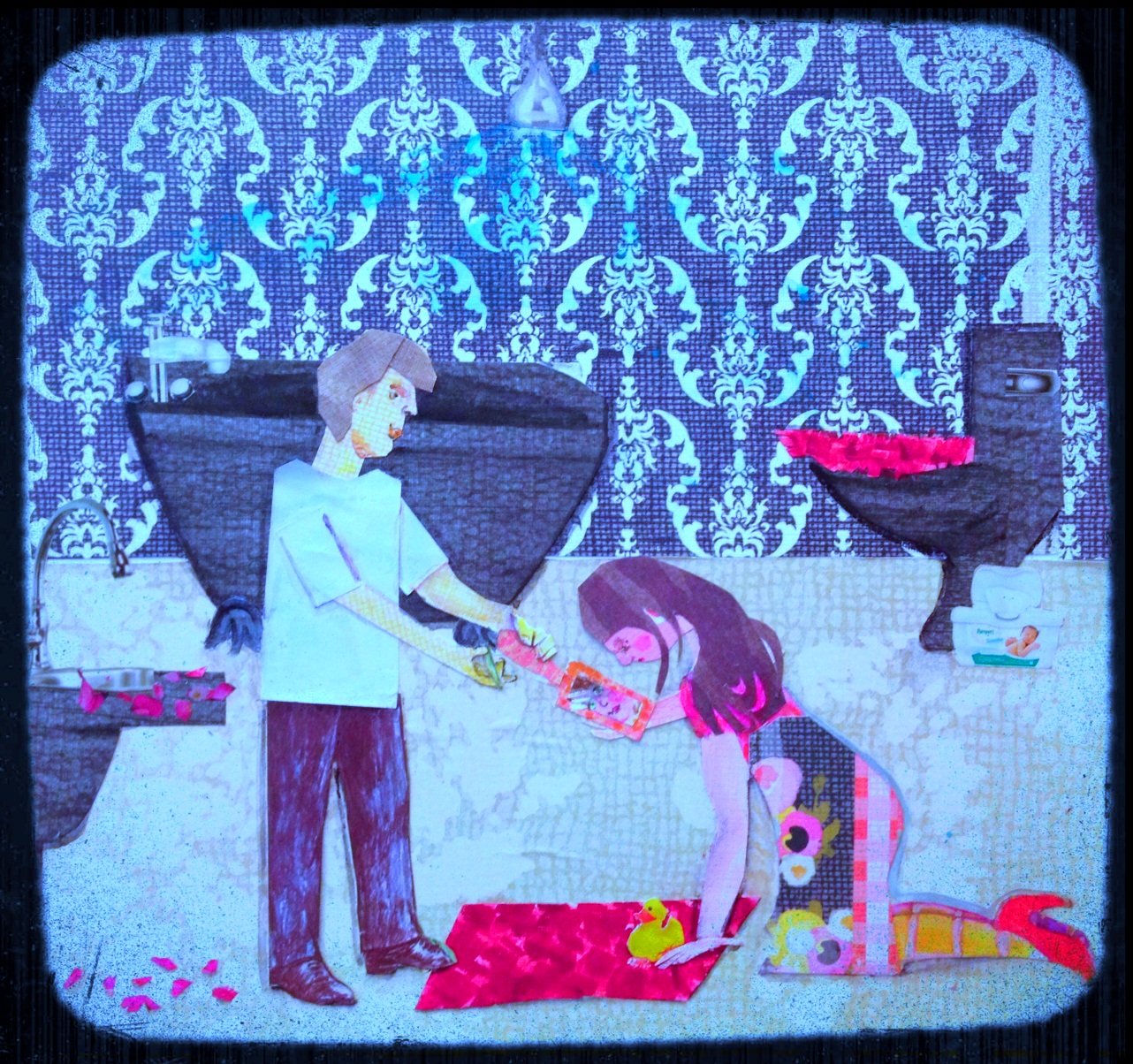
The author in a 7th grade collage.

The author in a 7th grade collage.

I think your daughter would invite me over, just once before you moved again at the end of the school year, and we would walk past the guards and the barbed wire to your house made of cinder blocks, but you wouldn’t have a fence, just green grass on a gentle slope and further away, grass covered mounds behind more barbed wire where we couldn’t play because the missiles where there underground and we could get blown up.

And Lt. Colonel, you’d come home just before dinner, wearing a spiffy uniform like my father did, with pins and stripes and symbols and your name written across your chest, but it would look different on the crowded cloth than it had on my wrist, smaller and less lonely on a live man than my skinny arm.

Your live arm would hold a Budweiser and a cigarette would dangle from your lips. You’d stand just inside the doorway, carefully removing your shoes, lining them against the wall, recalling that the ones you bought at J.C. Penney before the war had better arch support, that you could stand in them all day no problema.
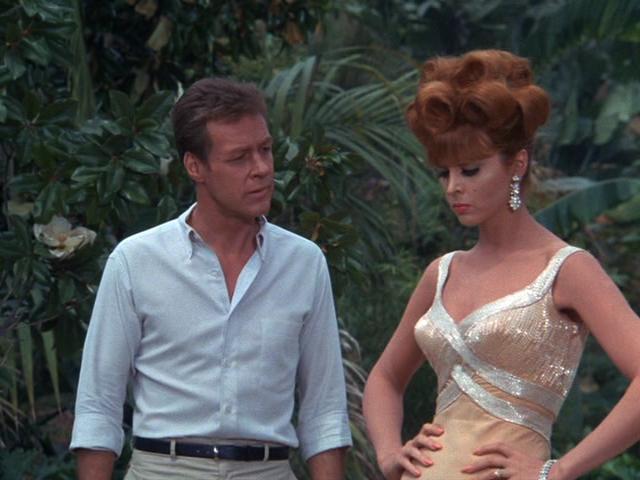
The Professor and Ginger Image by: www.sitcomsonline.com

The Professor and Ginger
Image by:
http://www.sitcomsonline.com

You would sit on the couch with its scratchy plaid cushions, your daughter next to you, and me next to her, and we’d watch Ginger flirting with Professor Hinkley on Gilligan’s Island and you’d snort and say they didn’t know crap about how to survive when they were marooned and ask where she got that evening gown. Or maybe you’d think all that, but not say it, not want your daughter to ask “Daddy?” or say “Da—ddy,” and grab your beer can and set it on the coffee table.

Then Mrs. Lt. Colonel, apron tied at her waist would invite us all to sit down, as if we were company. Were you the kind of man who didn’t say, “Just a minute,” but turned off the TV in the middle of an episode? I think you are.

I wouldn’t be surprised at all Lt. Colonel if you were also the kind of man who sat at the table and looked down at your plate and asked us to hold hands. You’d reach for my skinny tan fingers with your pale firm ones. Then while I felt our palms throb as if we held one of our classroom mice between them, I think you’d say something to God and then Amen and when I let go of your hand, I’d see your sleeve pulled up at the wrist and notice that you too wore a bracelet with a name on it, just like mine before I broke it.

And before you saw me looking, you’d brush your thumb across the name, as if it were braille, as if you could absorb the soldier by feel, and then I’d hope that my friend’s father was really you Lt. Colonel, and that you had come home and weren’t going to kill anyone if they woke you up wrong, or touch anyone at night when they were sleeping because you were still in a jungle still at war still trying to escape.

I kept the two halves of that broken bracelet for years, until I grew up and packed for college and took that box with me, everything but the broken bracelet inside. I threw it in the trash. What does it say about me that even then, Lt. Colonel, I’d already forgotten your name?

 About the author

Cathy Warner’s poetry collection, Burnt Offerings is forthcoming in January from eLectio Publishing. She holds an MFA in creative writing from Seattle Pacific University, and her writing has appeared in a number of literary journals and anthologies. Cathy renovates homes in the Puget Sound with her husband. Her website is cathywarner.com

Chapter 50 from Country*

by Shelby Stephenson

Photo of Shelby and Linda by Jan G. Hensley

Photo of Shelby and Linda by Jan G. Hensley

A biography of a place rolls up in the

sand:  wind blows an image of a burned-down


house:  a shotgun appears in the hand of

one who escapes the fire and in time wind


builds a face, eyes, a spindly man hunched

over a shadow that looks like a microphone


and it is all sand shaping I see in

a life of one mother scrounging to clothe


the children and put food on the table, the

father, a shell-shocked veteran of World


War I, living off and on in a veteran’s

hospital, the face, the spine, the limbs shaking


off what grains a person gains and walks

road-shoulders, dirt sidewalks, and the streets of


Montgomery, Alabama − calling the boy

to grow up − around Greenville, I believe,


where the little boy meets an African-American

named Rufus Payne, nicknamed Tee Tot:  the boy’s


about eight years old, the year I learned you

don’t live forever, when I lived for hours in


the crotch of an apple tree on Paul’s Hill

and dreamed things would turn out right and so Tee Tot


played the guitar and the boy climbed down the tree

and followed Tee Tot around, begging him


to teach him to play guitar and that’s why,

I’ll bet, Hank Williams’s songs hold so much pain


and blues of troubled times; his mother took

in boarders at rooming houses in Greenville


and hired herself out to clean houses and

dress hogs, gutting them like a Woman and


pulling haslets out, two at a time, always

walking to a fence-post to hang the maw,


the end of a hog’s biggest gut, jiggling

the wire to dry the sun’s blood into sunset,


the hedges skirting her life, this woman,

Lillie Skipper Williams, strong enough to raise


Hank’s daughter, Jett Williams, imposing strong

for Audrey, Hank’s wife and the mother of


Hank, Jr., who was about three when his

father died in the backseat of a babyblue


Cadillac convertible near Oak Hill, West

Virginia, either late December 31, 1952, or


January 1, 1953, on the way to do a

concert in Canton, Ohio, the boy living


his twenty-nine years, writing his life into

his songs.  Bobbie Jett was Jett Williams’s


mother:  see Jett’s autobiography, written

with Pamela Thomas − Ain’t Nothing As Sweet as My


Baby:  The Story of Hank Williams’

Lost Daughter (Berkley Publishing Group:  1992).  I


try hard to get it right, to show my concern, my

love, my scheme:  let me not be afraid:  for


forty years I waited to read biographies of

Hank Williams:  the first one left me too close


to myself, how I sang on the radio at

Coats, North Carolina, 1952, my brother Marshall


playing his banjo, “Dim Lights, Thick Smoke, and

Loud, Loud Music,” first, for him to play, and


then “Honky Tonk Blues”:  Ray Godwin, emcee, said

I reminded him of Hank hunching over in a


hug around the microphone:  I left my

home, too, the rural route, my parents


knowing I was stepping out, beyond the

farm, not to get the honky tonk blues but


to go to college:  I left my guitar at home:  I

had no money:  I worked for my room and


board, “busting” tables, morning shift, Lenoir

Dining Hall, at times falling asleep on the cart


which held the dishes, always singing in the corridor

leading to the dishwash-room, “You’ll Never


Walk Alone.”  Thank you, Edwin S. Lanier,

Director of the Student Self-Help Bureau.


My feet propped up on the pull-out leaf of

my desk, I never quite know why My


Story, old as Time, does not include my

leaving home for a stint in Nashville, Tennessee.


A musical career defining Who

am I?  After reading biographies of


Hank Williams, after reading The Faron Young Story: 

Live Fast, Love Hard (Illinois:  2007),


Diane Diekman, after reading San Antonio Rose:

The Life and Music of Bob Wills (Illinois:  Illinois


Books Edition:  1986), Charles R. Townsend,

after reading Looking Back to See:  A Country Music


Memoir (Arkansas:  2005), Maxine Brown, after

reading Ragged But Right:  The Life & Times of George Jones


(Contemporary Books:  1984), Dolly Carlisle, after

reading Down in Orburndale:  A Songwriter’s Youth in


Old Florida (Louisiana, LSU:  2007), Bobby Braddock, after

reading more − my favorite Hank Williams bio my friend


Bill Koon wrote:  Hank Williams: A Bio-Bibliography

(originally published, Greenwood Press, Westport, CT,


1983, reprinted U PR Mississippi:  2001), George W. “Bill” Koon,

my preference, because Koon’s book contains less hype


than the others I’ve read.  Let’s say Hank Williams was

born September 17, 1923, died (I learned of his death)


January 1, 1953, elected to Country Music Hall of

Fame, 1961:  let’s say he was a lot like Jimmie Rodgers, the


way each did in a short space what they did, Hank

writing all those songs in about half a decade, Rodgers, too − Rodgers


dead at thirty-five, Hank at twenty-nine.  No question, Hank

might have stayed around Montgomery, if Audrey


had not said Let’s go to Nashville:  I don’t know:  holding

things together is not easy, especially if you remember


as a little boy your mother going out and killing

what small game she could find, food for the table, including


road-kill if it was warm, the father in a V. A. hospital

a lot, plus working away from home as an engineer


on a log train for a lumber company, no beds to

sleep on in the house, the mother stuffing feed sacks


with corn shucks for bedsteads:  I must say a shuck-bed’s

not bad; old people used to do that:  I remember


featherbeds.  My father tells of killing a goose for

feathers his mother, my grandmuh Nancy, made


pillows and beds out of:  our slave girl July and

my greatgrandparents, Manly and Martha, certainly


knew how bed-shucks felt:  Hank’s mother, Lillie, could

tell her son loved music, for he knelt by her side while she


played the organ in church; Tee Tot set Hank’s love

not for amber-neon but for the country blues:  consider


these songs Hank wrote or sang, each one enrapt with that

miserable feel for troubled souls:  “Long Gone Lonesome


Blues,”  “Dear John,” “Why Don’t You Love Me

Like You Used to Do,” I’ll Never Get Out of this


World Alive,” “Lonesome Whistle,” “I’m So Lonesome

I Could Cry,” “Alone and Forsaken,” “I Won’t Be


Home No More,” “You Gonna Change or I’m Gonna

Leave,” “A House without Love Is Not a Home,”


“House of Gold,” “Jambalaya,” “Hey Good Looking,”

“Cold, Cold Heart,” “Someday You’ll Call My Name


and I Won’t Answer,”  “I Don’t Care If Tomorrow

Never Comes,” “Mansion on the Hill,” “Take These


Chains from My Heart,” “Wedding Bells,” “The Lonesome

Sound of a Train Going By Makes Me Want to


Moan and Cry,” “Crazy Heart,” “I Can’t Help It,” “Half as Much,”

“Kaw-liga,” “Darling, I Could Never Be Ashamed


of You,” “My Bucket’s Got a Hole in It,” “There’s a Tear in

My Beer,” “Darling, Let’s Turn Back the Years,” “You Win


Again,” and scores more.  His first hit he didn’t

write.  Cliff Friend and Irving Mills?  Friend wrote


popular songs for Tin Pan Alley which spread from

late nineteenth century until the Great Depression.  My


mind dishes pans as drums, a bunch of pianos of varied

tunings and timings, upright, set in the faces of


customers drinking beer and having fun.  Friend

wrote the words to “Lovesick Blues” and dozens


others, including “When My Dreamboat Comes Home.”

Irving Mills, a jazz music publisher, printed “Lovesick Blues.”


2004. Audio Farm Records. CD $15

2004. Audio Farm Records. CD $15

Chapter 50 is not out anywhere.

It comes from a 52 Chapter (unpublished book):  poem, memoir, essay, some poetry:

I don’t quite know what it is:  it is “true.”  I know that, to memory, whatever memory is,

and to joy, and the beauty of joy, and the sorrow, too, of all the desire in everyone’s life

from morn until night and home.

About the author

Shelby Stephenson’s The Hunger of Freedom (2014) is now available from Red Dashboard (www.reddashboard.com) His Family Matters: Homage to July, the Slave Girl won the Bellday Prize (2008), Allen Grossman, judge. www.bellday.com

Social Services

by F.S. Symons

Image by AAK

Image by AAK

Before you go in there you should listen to what I have to say. Jessica has been one of my cases for two, going on three years.  I talked with her today and she told me what happened.   

She moved as little as possible in this mobile home where she lives; she felt heavy, very heavy, the child in her belly like a lead balloon. She preferred not to move. She just lay down.

Where could she go? For her everywhere is the same, the same dirt, the same sharp rocks, the same glaring sun.  The same trees. Same as the last trailer where she lived. “True,” she said, “the trees they don’t move. But the others, them people, they move around all the time and they know how to find me. I can’t escape them. I know they might come any minute and haul me off to their prisons.”  “They” are us, the doctors, the psychologists, the police officers, and the social workers.

It’s been so long since Jessica has seen anyone. The last time was four, maybe five days ago. Over the years she has alienated what remains of her family, and both parents are dead. She’s been alone here for months.  She’s hardly eaten anything since three nights ago; she’d get hungry and then it passed.  Every so often she got out of bed and walked the length of the mobile home, barefoot on the old knobby carpet marred with cigarette burns. She hasn’t gone out for so long now. Loneliness weighs down upon her like the heavy body of her dead soldier.

While she was still in high school Jessica was already manic depressive, and for long periods she wouldn’t sleep; she fell fast asleep at the wheel one time in a car she had stolen from a cousin, and crashed the car into a tree — almost killing herself. Then the depression would hit her like a bullet; when she was supposed to be in school she spent day after day, week after week lying on her bed, refusing to take her medication. She’d really try hard to uncurl herself from the fetal position and do something, anything, but this had proved too great a challenge.  Sometimes, walking to and from the bathroom, she’d felt that the air, through which she moved, was becoming substantive. Its weight would press in, and hurt terribly, yet when she tried to locate the source of the pain she could not.  It came, as she knew, only from herself. Lying on her bed, she’d feel crushed by the air itself.

Yesterday she let out her dog, Jake, her half-wolf only friend, and let herself down the front steps.  She teetered on the hot surface of the dirt. The light was blinding.

She raised her hand to screen her eyes, then she realized she was barefoot because the sharp stones were cutting her feet. She stood in front of the mobile home without moving.  The sun beat down, throbbing out in painful waves.  There were rings swimming before her eyes, and off in the distance she saw fleeting silhouettes, maybe children, or cars, or the supermarket; it was hard to tell.

Jessica wanted to take a few steps backward but she staggered and the flat surface of the earth began to turn, pulling in its path the trees and the elongated bodies of the mobile homes, even the buildings.  The earth spun slowly, as if there was music playing somewhere. Suddenly she felt she was falling; her body hit the ground like a piece of wood.  She heard a loud noise in her head, like a gunshot, then she didn’t hear anything.

When she woke up she tried to get to her feet but she was too heavy. She fell down again. A neighbor passing by said, “I’m going to get a doctor.”

“No! No!” replied Jessica sharply. “I’m fine; I’m going inside.”  She limped over to the steps of the mobile home.

“Are you sure you don’t want to see a doctor?” the neighbor asked.

In a sort of rage Jessica screamed, “No!  Leave me alone!”

“What if you get dizzy again?”

Jessica said coldly, almost cruelly, “I don’t have dizzy spells.  My dog knocked me down.” To prove the truth of the dog she called out two or three times, “Jake! Jake!  Jake!…”  Of course the dog didn’t come. Looking over his shoulder repeatedly, the neighbor moved off towards the supermarket.

Jessica crawled back to the mobile home, putting her arms and legs forward with great care. All around her the light was blistering hot; she saw sparks burst forth from the leaves, the sharp stones, everything, even at the end of each of her nails. She felt like there was a sort of electrical storm passing over the trailer camp, making a strange kind of music, a low humming sound, a grating sound that was getting inside her ears and body. Jessica felt her throat tighten with nausea. A cold chill made the palms of her hands sweat, and her heart started to race in her arteries.

In slow motion she crawled to the mobile home steps, stopping to rest a couple of times. She saw two beetles, and a spider that looked like a scorpion. They had also stopped moving, and they seemed to her to be watching her, the four of them frozen in their motion, as if waiting, all of us uneasy, she mused.

Once inside she lay down and soon felt her waters seeping out into the bed beneath her. When she got to her feet to clean the bed she was suddenly overcome with strong contractions. She fell to the carpet, whimpering, unable to walk.  Waves of pain coursed through her body. The loneliness was filling up the mobile home, spreading its terrifying silence. She didn’t want to scream, she couldn’t.  She mustn’t, no matter what happened.  Her opened knees allowed her arms to hug her watermelon-like belly, holding it in like a belt. It was like her mind was having a conversation with her body. Slowly, instinctively, her arms began kneading, doing their work of expulsion, forcing long, feverish chills through her limbs. Suddenly she was no longer alone—the baby was at her breast.

Now you can go in there and get her and the baby and take them away.

 About the author

After a career with the UN and the federal government, F.S. Symons  turned to writing, and his poetry and short fiction has been published in literary journals such as Gloom Cupboard, Mused, New Verse News and Dark Matter. Last year he was nominated for a Pushcart Prize (Small Presses/poetry).

True Stories with Richard John: The Camera

by Randi Lee

IMGP4476

“Hey, let’s go raid that abandoned house that caught fire,” my big brother said to me one day.

Naturally, I responded in the manner in which I always responded when he proposed a situation that would potentially get us killed.

“Yay!”

How could I say anything else? Big brother wanted to play with me. RJ wanted to play with me! The strong wind in my lungs drove me to stand. My head smacked against the ceiling with enough force to generate a nearly instant lump, but I didn’t care.

“Grab your backpack and let’s go,” he said. I stopped jumping on the top bunk of our rickety bunk bed, brushed ceiling bits from my hair and did as I was told.

Our first stop was not the condemned house, but the playground. “Strength in numbers,” RJ always said. In RJ-nese this meant, The more people who are involved, the more people I have to blame it on if we get caught.” Given the amount of times we got caught, it was a solid plan.

In the end, three kids joined us. There was Jordan the Strong, a.k.a. The Bully of Worcester Road; there was Corey the Slick who could rig his way out of any situation. And then there was Will the Paste Eater. The slowest of us in every way, Will was typically the one to take the rap. That’s why RJ liked to say him: “We can’t do it without you.”

The abandoned house was at the far end of South Road, the closest house to the cliffs everyone referred to as The Big Leap. It was a pity of a home—a white bungalow with peeled siding and rotten windowsills…Not the kind of home a newlywed couple would be interested in, but perfect for a vagabond bunch like us with the energy and exploratory nature of youth.

We snuck around to the back of the house, near the kitchen door. RJ retrieved a butter knife from his bag and handed it to Corey. Corey stuck the knife between the two window panes and slid it back and forth until the lock on the window came undone. He opened the window and, one by one, we filed in.

The kitchen floor was primarily missing. Exposed nails stuck up in every direction, ready to puncture our feet. Jordan, Corey, Will and I stood against the kitchen wall, our eyes wide and our foreheads sweaty. RJ scanned the floor and carefully placed his feet in the small pockets were there were no nails. Once he was halfway through the room I swallowed hard and followed, mimicking his steps. Jordan, Corey and Will came too.

When we made it to the safety of the hallway, we selected to divide and conquer. Corey followed Jordan into the living room. Will wandered down the hall into one of the bedrooms. I moved toward the other bedroom, but stopped when RJ said my name.

“I bet there’s something good up there,” he said, pointing to the stairs.

I bit my thumbnail and nodded.

With a Come on, then,” he stepped on the first tread. It creaked and shook under his weight. So did the next eleven steps he climbed up. Above, the floor moaned as if alive and in pain.

My nail remained firmly clamped between my teeth while I made my way upward. My other shaking hand clutched the banister. A splinter stuck into my palm; I stifled a shout. Up I went, tears welling, teeth clenching, until I reached the last stair.

That’s when my foot fell through.

RJ grabbed my arm and pulled me up before the rest of me went down. He yanked so hard that we fell down, arms and legs jumbled together like sailor’s knots. A crash resounded behind us. We untangled from our web of limbs and crawled to the edge of the staircase. The top two treads were missing.

“H—how are w—we going to get down?” I stuttered.

“We’ll figure that out later,” RJ said dismissively.

The furniture in the second floor bedroom was either burnt or worn down by age. RJ immediately went for a cobweb-covered dresser in the far corner and rummaged through the drawers. I looked about, staring from the dresser to the bed with an exposed mattress, to the nightstand with a melted alarm clock, to the desk by the window. My eyes lit up at the sight of it. I just knew there were treasures waiting inside.

I was right. After sifting through the drawers for a moment I found the most interesting thing I’d ever seen: A camera.

A camera!

I’d wanted a camera for so long but my mother always told me that I was only ten and she didn’t want to spoil me. This one was great! It was big and clunky, sure. It had a cracked lens, sure. The battery looked corroded, sure—but none of that mattered. Not when I finally had my own camera.

While I put my camera in my bag I heard a noise coming from outside. Looking through the window I found that not one, but several cars were parked around the exterior of the lot, and so was—oh, snap.

“R—RJ,” I said with my mouse-squeak voice. “L—l—ook.”

“Not now,” he replied. “I’m doing something.”

“R—RJ,” turn around, blast it. Turn around! “You n—need to see this.”

After several more requests RJ walked over to the window, looked out, and dropped his bag.

“Oh, snap…” he said, followed by “Run!”

RJ grabbed my hand yanked me toward the stairway. “Let’s go!”

I stumbled as I tried to keep up, feeling as if my arm was going to be ripped clean off. But shouting, “Slow down!” or “Let me go!” were not options I could afford—not with the bulldozer quickly advancing on the front of the house…and us. Hand in hand, we hurried along to the other side of the room until we reached—

—The stairs. Two treads were now missing at the top. Oh, stars. Oh stripes. Our only way out was ruined! I turned to my brother, my eyes as wide as silver dollars, hoping he would tell me that he had one of his plans.

He did.

Unfortunately, it involved him picking me up and throwing me over the hole in the floor as if trying to sink a basketball. I couldn’t scream. I couldn’t blink. All I could do was spin my arms in pinwheels in an attempt to keep my balance.

My rear end touched down on a tread in the middle of the stairwell. The rotting board broke instantly, causing me to stumble down the remaining stairs and face-plant at the bottom. It hurt. It stung. My ten-year-old mind was sure I’d broken my face in at least sixty-three places—but I was down the stairs, at least.

But what about RJ? The stairs were ruined! How was he going to make it down? I couldn’t just leave him behind to die. Ma would kill me! Or worse, she’d take away my Nintendo games! Praying for a miracle that would preserve Link—I was already up to the Fire Temple, darn it—I pushed myself up off the floor and spun around…

…Just in time to watch him jump over the stairwell like some sort of crazed billy-goat leaping around a mountainside. He landed somewhere in the middle and leapt up again right before the stair below him collapsed.

“Get out of the way!” he shouted a little too late. I didn’t have time to brace myself before he slammed into me like an angry buck slamming into a much more frightened buck. For the second time we collectively tumbled to the ground.

“I swear to God you’re the stupidest person I’ve ever met,” the fifteen-year-old who had said, Hey, let’s go raid that abandoned house that caught fire,” told me.

Shouts from the hallway caught our attention. We picked ourselves up and ran to the entrance of the kitchen to find the other boys pointing at the kitchen’s floor. That’s right…the maze of nails. It’d taken us a good five minutes to cross it the last time. The sound of the bulldozer crashing into the front of the house alerted us to the fact that we didn’t have five minutes this time around.

“Just go for it!” RJ shouted. He pushed the others aside and sprinted across the kitchen, miraculously missing every rusted nail on the way. Jordan and Corey followed, leaving Will and I at the kitchen’s entrance.

My stutter scratched at my throat as I tried to utter, You go first.” The paste eater beat me to it and pushed me through the doorway. Letting out a yelp, I grabbed hold of a rogue chair and balanced myself before my face landed on the bed of nails. Behind me, the roar of the bulldozer shook the walls as it landed another strike. Ahead of me was RJ calling my name, and salvation—salvation! With careful steps I dug my chipped nails into my fists and made a mad dash for the other side of the kitchen.

Everything was going well until that stupid paste eater sprinted forward and collided with my back, disrupting my concentration, and my footing. A sudden sharpness shot through my toe, over my foot and up my leg. I looked down to find a nail sticking straight through my shoe.

I screamed more out of disbelief than out of pain. I was stuck, trapped by that nail tacking me down while the walls shook and the roof threatened to fail and the sixty-three broken parts of my face continued to swell.

“Idiot!” RJ screamed. “Don’t just stand there!”

Wait, where’d he come from?

He grabbed my arm and pulled me through the kitchen, me shrieking and limping all the way. When we made it to the door he picked me up and slung me over his back. I looked back over my shoulder as the bulldozer crashed into the house, which didn’t put up too much of a fight. The kitchen wall fell. The roof caved in. A symphony of snapping beams and shattering glass surrounded us.

RJ made sure the other boys were with us, then they all ran and ran until we were again in the safety of the neighborhood playground. He dropped me in the sand by the chain link swings. Each winded, the boys sat around me, taking turns between high-fiving and forced shouts of, “That was awesome!” and staring at my white, blood soaked sneaker.

“Take her shoe off!” Jordan said. “I want to see!”

Despite my pleas, RJ removed my shoe and sock. The boys gasped in chorus. RJ told me to look down. I couldn’t. I wouldn’t! I—oh my stars, there’s a hole in my foot. There’s a hole in my foot!

Jordan stuck his head a little too close to my wound. “Can I poke it?”

“No, you can’t poke it!” RJ growled.

“I promise I’ll be gentle,” Jordan whined.

“No poking.”

“What if I use a stick?”

“No poking!”

“What if I took my own shoe off and used my toe, or—”

A slap to the back of Jordan’s forehead. “—No poking!”

“She’s hurt bad,” Will said, examining my foot. “How are we going to explain this?”

“It’s Will’s fault,” RJ said when we got home and Ma rocketed out of her chair at the sight of me. “There was this board with nails on it. He dared her to press the nails down with her foot. She did and when the nail went through she fell flat on her face and bruised it up good.”

“My poor baby,” Ma cried, placing her hands on my shoulders. “My poor baby!”

“You know how impressionable she is,” RJ continued. “And then with peer pressure and bullying these days? I don’t blame her for trying, if I’m honest. You shouldn’t, either.”

The last bit about bullies and peer pressure nailed any of Ma’s disbelief into a coffin. She called Will’s parents, threatened extensive violence and gave us treats to compensate for our troublesome afternoon. Having successfully passed the buck for the umpteenth time, RJ the snake charmer stood tall.

I stood tall, too—at least, I would have stood tall if there wasn’t a massive hole in my foot—because something came out of that day. You see, hidden in my backpack resided the camera, my camera, the one I’d always wanted. So, in the end, the house, the stairs, the bulldozer and the nail were totally worth it; I had my very own broken camera and Zelda wasn’t going to get taken away.

The night ended with a trip to the hospital and a shot. Afterwards, Ma took us out for more treats. We smiled to ourselves as we sucked down our sugar and high fructose corn syrup, pleased with the fact that we’d lived to lie another day.

About the author

Randi Lee is a Marketing and Communications Coordinator who specializes in writing news articles for her Firm. Her poetry and short stories have appeared in several publications such as Crack the Spine and Pure Slush, and her most recent work was featured in a print anthology. 

This Age of Miracles

by Jesse Millner

On our way to the family reunion we take Route 49 from Jackson to Hattiesburg, past D’lo, Touchstone, Magee, Mize, Mt. Olive, Ora, Hot Coffee, Dry Creek, and Sanitorium. There’s a water park at Dry Creek, and nothing much at all in D’lo. There’s an ancient woman in Hot Coffee who remembers General Grant, how his mule-skinner boots were thick with red clay as he aimed his blue hammer toward Vicksburg. Sanitorium is named after the mental hospital that was built during the Great Depression where broken-down farmers were shipped for processing, stripped of their chewing tobacco-stained bibs and forced into white pajamas. On moonlit nights the townsfolk would watch the crazies dance behind barred windows covered by yellow blinds. In Ora the locals grow a lot of okra, season it with fatback and then bathe their innards with grease.  Touchstone is named for the blue rock that fell from the heavens in 1927. Most thought it signaled the Second Coming, so even the Methodist Church was full the following Sunday. There’s a watermelon festival every summer in Magee, and pretty girls fight to be the next Miss Melon. Last year’s winner married the only used car salesman in Mize; they live now in a tiny brick house in Belzoni, fighting a lot, their marriage as shaky as the foundation of their house, which rides a shifting bed of Yazoo clay.

We arrive at my wife’s family’s reunion in Hebron, where a multitude of Baptists gather to honor God and family, to drink Dr. Peppers and 7up, to eat fried chicken, pork roast, baked ham, snaps, butter beans, crowder peas, black eyed peas, potato salad, pasta salad, Jell-O salad, cornbread, rolls, biscuits, pecan pie, pumpkin pie, chocolate pie, lemon custard pie, sweet potato pie, chess pie, apple pie, banana pudding, strawberry cake, brownies, oatmeal cookies, chocolate chip cookies, sugar cookies and German Chocolate cake, listed last because it is my favorite, and because near its three layer majesty is where I listed last.

Image by Amanda Ann Klein

Image by AAK

After two helpings I venture across the highway to the BP station-convenience store looking for Pepto Bismal and a welcoming bathroom where I might sit and think. I wander toward a dark area in the back, seeking relief, finding instead row after row of adult videos. I retreat with alacrity, ask the teenage cashier about a restroom. “It’s out of order,” she says, so I buy the pink liquid and drink it down as I cross the hot highway that leads back to the reunion.

Where the Baptist aunts are singing karaoke.

After hearing “Stop in the Name of Love” destroyed by white-haired Betty, we climb into the car and retreat to the Comfort Inn and search each other’s bodies for ticks in air-conditioned comfort. My wife had told me earlier, on the drive down, about learning how to swim in the Strong River at some kind of summer church camp when she was little. And as she checks my groin for intruders, I think of her young body finding the current, her blonde hair plastered down her face as she discovered the strength of movement, how powerful the thrust of arms and legs can be, how fluid the girl treading towards the pine-lined bank.

Image by Amanda Ann Klein

Image by AAK

Later we eat sweet peaches and watch TV Land, The Andy Griffith Show with a very young Opie shadowing Aunt Bea, waiting for Andy to come home from the sheriff’s office. We are naked and tick free and lost in that old world of black and white where good always triumphed and Earnest T. Bass and his brothers were the biggest threat to peace. Mayberry throws it arms around us as just past our afternoon window, Mississippi greens and shimmers in the August heat.

*

And now, back in Florida, back in the thunderstorm capital of the world, right now the setting sun is turning big raindrops silver as clouds move in from the east. There’s a sea breeze off the Gulf that keeps the storm inland, while at the same time providing the lift to the gaining nimbus.

But I’m thinking about looking for ticks, the way I examined my wife in that motel in Mississippi, the way I admired every inch of her body. Let me offer a grateful prayer to the Lord for ticks, and how they provide reasons for nakedness and close inspection, especially in those sacred places of our bodies where the roots of all our desires lie. Because I am fourteen years older than my wife, I’m sure the ticks like her better, and because I’m so much older, I’m also grateful for all the ways in which she is not old, and I’m most happy for the memory of her earlier, swimming in that childhood river. This is not because I’m a pervert, this is because I imagine her free and happy in that beautiful grace that comes from being young, being alive to the currents of the cool water.

Image by AAK

Image by AAK

And that’s what’s most strange: as selfish as I’ve become in late middle-age, I know what it’s like to value someone else’s happiness over your own. To pray for her life and mean it. So, thank you dear Mississippi god, god of Baptists and pies, god of June bug and summer river, god of watermelon and falling meteorite, god of karaoke and Andy of Mayberry, god of the blessed ticks, god of the naked trance we fell into after making love after not finding ticks. God of the quiet that comes to the late afternoon when the heart is light and heavy like a cloud bursting with the purest rain.

*

And here’s something I just remembered: We stopped at a fruit stand outside of Jackson and I bought sweet peaches and a big watermelon. A teenage girl took my money and said, “Thanks, Jesse.” For a moment the world trembled beneath my feet: was this some long lost child from a long-forgotten romantic encounter back in the 70s when I drank a lot and did too many drugs? Or, was this child clairvoyant, some kind of female wizard who could peer right into my brain? I figured out there was no magic; I still had on my reunion nametag.

Aren’t those the moments we live for? When just for a second we’re freed from this tired world of cause and effect, when the Age of Miracles returns, and we’re able to imagine ghosts and angels and maybe even, a life after this one?

About the author 

Jesse Millner’s poems and prose have appeared or are forthcoming in the Florida Review, upstreet, Conte, River Styx, Pearl, The Prose Poem Project, Tinge, The New Poet, Cider Press Review, Real South, The Best American Poetry 2013 and numerous other literary magazines.  He has published six poetry chapbooks and two full-length collections, most recently Dispatches from the Department of Supernatural Explanation (Kitsune Books, 2012). Jesse teaches writing courses at Florida Gulf Coast University in Fort Myers, Florida.

Squat

by Anjila Joi Guadet

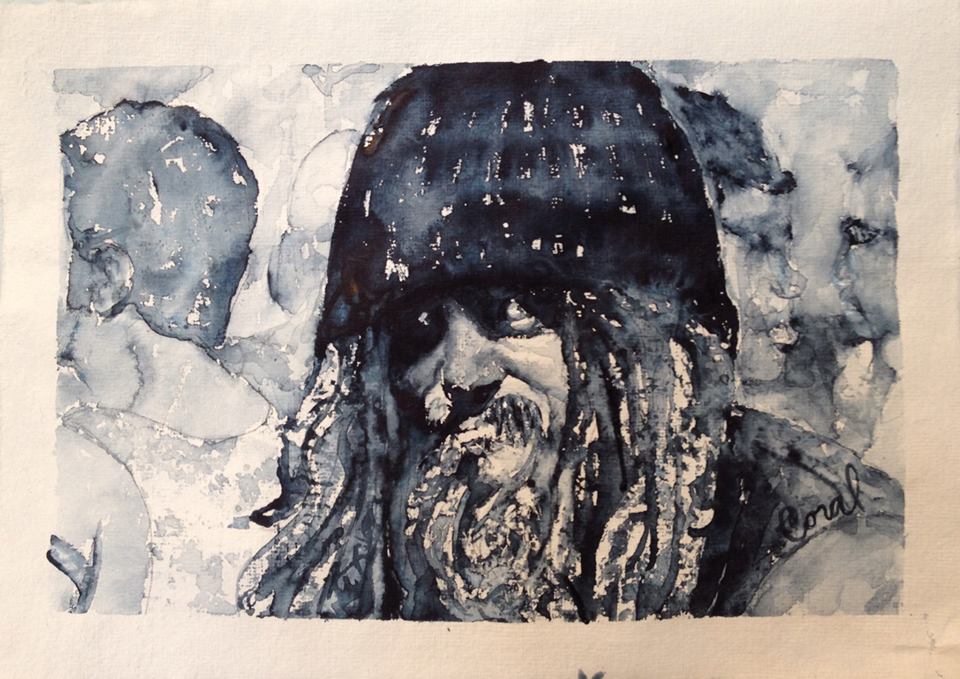
homless man

Image by Coral Staley
Based on the original photograph by Tala Brandeis http://www.rustrat.com/

After hitch-hiking to Washington D.C. for a protest I ended up living in the park across the street from the White House. It was a man named “Care Bear” who showed me the ins-and-outs of surviving in this D.C. park. Care Bear was a black man in his forties. He had a picture of his eight-year-old daughter that he would show to people. There was nothing significant about him as a homeless man, meaning he looked just as dirty and unapproachable as any picture of a random man who slept in the parks anywhere. He drank—a lot. He was filthy and carried all of his belongings in his broken down back-pack. He panhandled and wore shoes that had become asphalt black and were complemented with holes in strange places.

My relationship with Care Bear started with him offering to help me get some blankets for sleeping. What he called “blankets” were actually broken down cardboard boxes which we retrieved from nearby dumpsters. It was necessary to be quick before rats the size of cozy house cats came together and chased you out of their territory. Along with providing me with the blankets, he also showed me where the soup kitchen was and one of the places I could go to get clean, if I thought it necessary. There was a fountain in the park that some of the other homeless women would use as a bath late at night. I stopped cleaning myself even in the fountain when I noticed a dead bird floating in the water. A homeless person has got to have some standards.

In most of the big cities, restaurants would either refuse to let in the dirty, smelly people who wanted to use their bathrooms or would require a token, which one could only get by purchasing food. This made it hard to find a place to bathe and even harder to find a place to pee. Alleys usually worked fine, and I rarely gave it a second thought, though one of my friends had been raped while peeing in an alley in Texas.

It was not unusual for me to go three months without a bath or shower and I never brushed my teeth. When I think about it today, I get a glint of sad protectiveness for my teenage self, remembering that when I got my period each month, I would look for clothing on the side of the street, rip a square off, roll it up and find a private alley to deposit it as a tampon. At the time, it was the least of my worries, but today, I wish I could go back and give that girl a bath.

I have slept in the Lafayette Park across from the White House, Golden Gate Park and parks in Cleveland, Minneapolis and Milwaukee. When a park was not an option, there were always squats in the bigger cities. A squat in San Francisco on the corner of 4th and Folsom had once been a recording studio. Most of the remnants of this building’s music making days had been gutted out and replaced with all types of homeless people: old women who were batty or whose social security just didn’t cut it, Latino immigrants who had not yet found a community, addicts or alcoholics, and young runaways. Each homeless group had their room and it was the unspoken law of the street that you stayed in your part of the building. To aid me in my understanding, I had once ventured off into a section of the building that I hadn’t ever explored. I did not get too far in before I heard people behind me. Two men were waiting behind me with a knife pulled. I suppose when they saw my age and the fear in my eyes, they lost any idea of me as a threat, started laughing at how scared I was and walked away. As in most situations in my life, I was given that lesson very gently and I walked away unharmed.

 by Coral Staley

Image by Coral Staley

I belonged to the space full of runaways. We were all teenagers and had a room the size of my bedroom today, so full of young kids that after we all lay down to sleep at night  there was no empty space on the floor to walk. One night after all the floor was covered with horizontal dreamers, I realized I had to go pee—bad. I lay there, crossing my legs and visualizing an empty bladder, trying to make it till morning, but I had to go. This squat was not really an organized community, but we did have enough cooperation to have created a room whose sole purpose was to hold the defecation and urine of all the inhabitants. This is how we kept the squat livable.

I had to find my way to that “bathroom.” When I finally got up to make my way across the dark room, toward the door, I ended up stepping on a bunch of sleeping bodies. Groans and yells filled the darkness and my request for the people sleeping next to the door to move was met with a variety of curses. Dancing the pee dance, I managed to pull the door open and run to the “bathroom” to pee, with great relief.

Upon returning to the “teen room,” I could not push the door open and the bodies lying in front of the door had already made it clear that they were not getting up again. After having learned that the only rooms safe to me were the “teen room” and the “bathroom,” and knowing that the “teen room” was not an option, I returned to the space where I had just gotten so much relief.  I tiptoed around piles of crap all over the floor to a closet that was across the room, in the hopes that this one small area had not been disgraced, but even the closet floor was covered in shit.  I grabbed a grocery cart that was sitting outside the closet door and pulled it across the piles of crap into the closet, where I would be hidden away safely from other bathroom goers. I slept that night in the grocery cart, in a closet, safely three feet or so above poop.

I drive by abandoned buildings today and recognize the tale-tell signs of inhabitants.* I am amazed at the resourcefulness of some of the people who have found themselves on the streets.  If there ever is a worldwide disaster that leaves society without  modern day luxuries, it will be these homeless individuals who will be showing us where to find a blanket, a bathroom, and place to lay our heads.

*These include: plywood boards that are not completely nailed to the building (allowing a space for people to fit through), 5 gallon buckets  (used for toilets), tin cans or other signs of foods (that others might write off as garbage), and articles of clothing or blankets (that others might dismiss as rags, but are legitimately being used as clothes and blankets).

About the author

Anjila Joi Guadet is currently a Home Based Case Manager in the small town of New Albany, IN. She has an MA in Creative Writing and an MFA in Creative Nonfiction. One of her areas of interest when she was in school was the use of writing to work through traumatic experiences. She occasionally teaches journaling and memoir at local women’s homeless shelters in the hope of addressing some of that need in the community.

Postmortem

Poetic in style and brilliantly written, Postmortem certainly makes the best of 2013! Dedicated to director Richard F. Mason, author Nancy Caronia writes, “There was his laugh, his scarves, his cigarettes, and his requests for coffee the color of Simone, but mostly what I remember is his silence.” Just poetry. . .

by Nancy Caronia

for Richard F. Mason (1929-2010)

1. I have each one. Every note he wrote during the run of “Garden District”—Tennessee Williams’ double bill of Something Unspoken and Suddenly, Last Summer. Each day’s grouping is stapled neatly one on top of the other into the small yellow spiral bound notebook I kept close through the process.

2. On the first day of rehearsal my handwriting in black ink is meticulous and neat:

Rehearsal more important than performance.

The word EXPLORATION is carefully boxed in red ink.

3.  The first of his director’s notes that I reread after I learn of his passing:

Hal tells me man next to him is asleep.

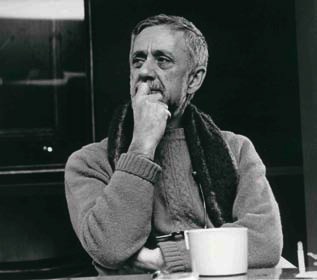
Richard F. Mason at his directing desk, a cup of coffee never far away.

Richard F. Mason at his directing desk, a cup of coffee never far away.

4. There was his laugh, his scarves, his cigarettes, and his requests for coffee the color of Simone, but mostly what I remember is his silence. During rehearsals in the West End black box, he sat in the back of the theater and listened. His silence was more present than anything or anyone I had ever encountered. It was punctuated only by the occasional hiss, the bang of his fist against his director’s table — a large plywood square set atop a grouping of seats — or, more frequently, the scratch of a pencil on a half sheet of recycled 8- x 11-inch paper. The scratching was urgent, insistent:

We can work on “white lisle” segment if you want; See RFM about “what manager? God?” & your arms

5. More of my notes from our first rehearsal:

Ensemble: w/out obvious stimuli totally aware of other persons on stage

NON-VERBAL AWARENESS

6. He was teaching us how to be silent, but not quiet. He was teaching us to listen. His notes were not simply requests, reminders, demands or praise, but charms to create our presence. He was not perfect. He did not expect us to be perfect. He hoped we would engage fully as the imperfect human beings we were. We did not need to be nice or kind although he did expect compassion (though that compassion could seem rough at times). We had to be ourselves completely or we could not be present for our characters or the other actors or our stage manager in the booth waiting to hear her cues through our cues or the audience, who, he told us on the first day of rehearsal: has no art to listening.

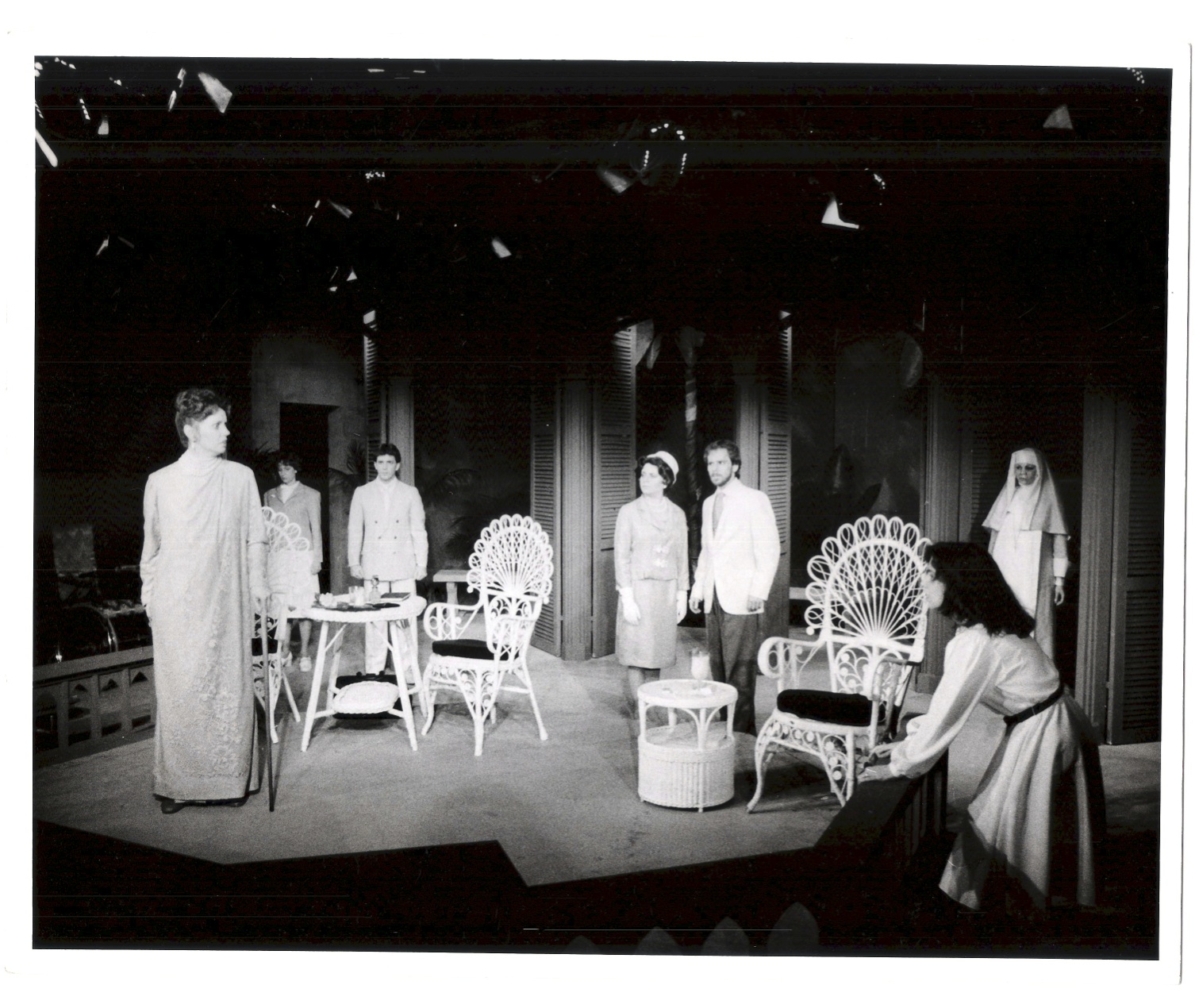
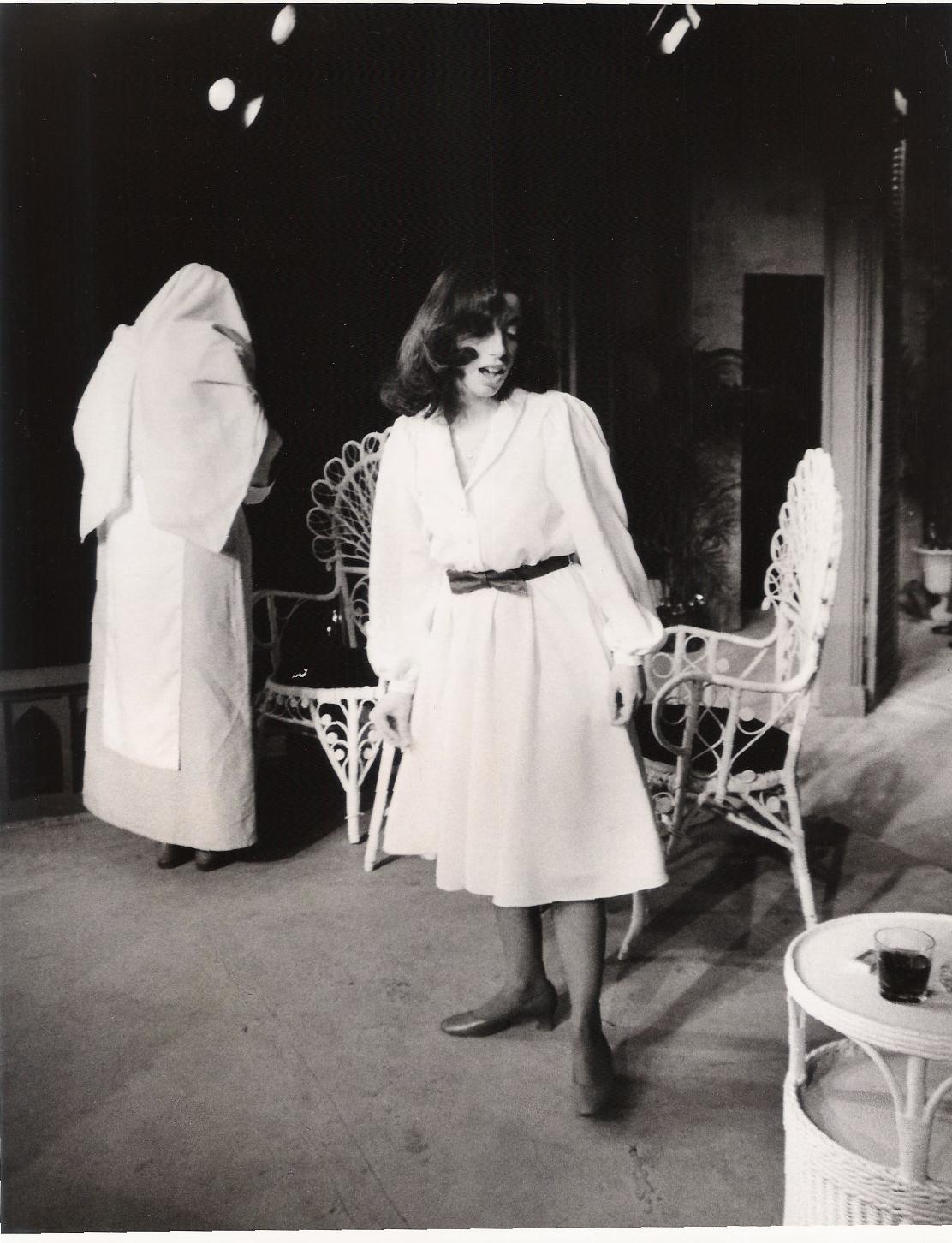
From left to right, Nancy Kaiser, Stacy Lynn Hein, David Shatraw, Lori Gunty, Hal Katzman, Nancy Caronia, and Kym Grethen in Tennessee Williams' Suddenly, Last Summer directed by Richard F. Mason.

From left to right: Nancy Kaiser, Stacy Lynn Hein, David Shatraw, Lori Gunty, Hal Katzman, Nancy Caronia, and Kym Grethen

7. WAKE UP

8. Early on in the rehearsal process he reminded us to: Look into the eyes! Communication!!!! My handwriting not so neat, but my punctuation emphatic.

9. The art of collaboration: We were not alone and we could not do it alone. But what was it? At first, it seemed to be the words on the page transformed to the stage, but it had more to do with Hamlet’s to be or not to be. He wanted us to be and to be with each other. He gave notes on the first day of rehearsal and the last day of performance. His notes assured us that someone nearby was listening, interacting, caring about what we were or were not doing or who we were or were not. His notes focused and helped us to realize his vision. His notes forced me to show up for myself, for him, for the other actors, for the stage crew, and for the audience. Showing up and collaboration were the only things we had—in rehearsal, on stage, and in life. If we did not or could not participate the not to be was assured. This it was the stuff that dreams were made, if only we could learn to stay in our skins. Collaboration was the role to which we were all born and to which he wanted us to aspire.

10. Excellent

11. I worried about hurting the actress who played Sister Felicity with the cigarette I put out in her hand each night and one night he gave me the direction: Not side of but go below table a cig burn fit (w/ashtray). I continued to be too delicate, too careful, too caring.

12. You are singlehandedly boring audience.

13. You must burn Sister Felicity

14. When I finally let go and stamped the cigarette out in the actress’s carefully taped hand, I was sent the note: That’s more like it! and then, a further correction: Don’t hide behind nun on introduction.

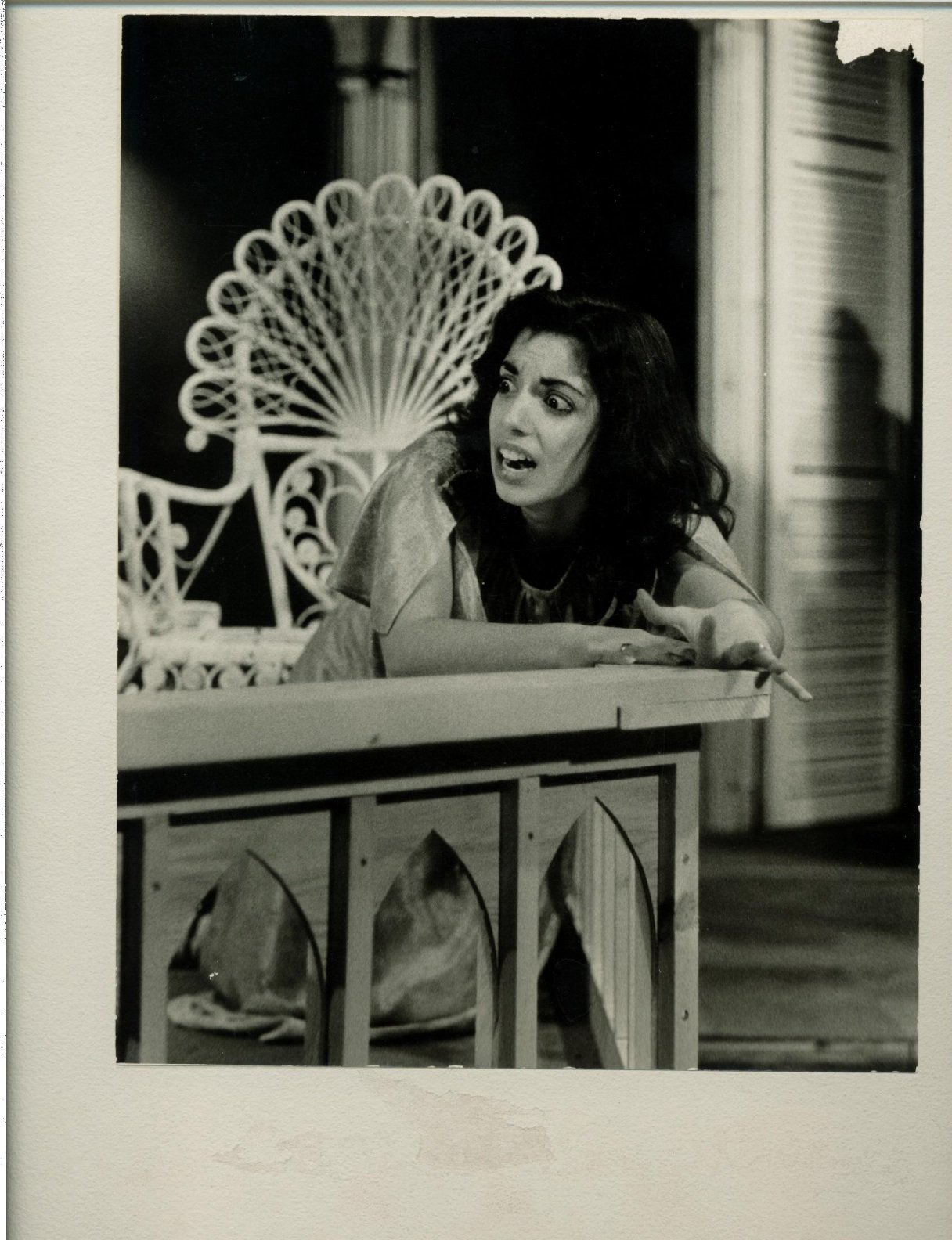
Nancy Caronia as Catharine in Tennessee Williams' Suddenly, Last Summer.

Nancy Caronia as Catharine 

15. The actor who played Doctor Cukrowicz and I were upstage in Mrs. Venables’ garden waiting for our cue. Matt, the actor, pulled out a small red plastic drill and put it against my head and made whirring noises. His satire was a reminder of Catharine’s fate–a forced lobotomy to save Mrs. Venables’ delicate sensibility. I swatted the drill away with my right hand and shot him a look that said, Stop, but I chuckled under my breath. We missed our cue, but there was no yelling, banging, or cursing from the darkness. We were safe—the other actors were asked to return to their previous positions and were given new directions. Our beloved director, who never missed anything, never learned that Matt brought the toy drill to rehearsal. Or perhaps he did, but chose to allow us, the actors playing the handsome doctor and the mentally unstable Southern belle, our mysteries.

16. Later that week, during dress rehearsal, he sends this note back with the assistant director: Lovely physical work during the seduction scene.

17. Two or three days before opening night, he asks to see on stage me and the actors who play my character’s mother Mrs. Holly and brother George Holly. He had already had our assistant director write: See Mason about “how elegant George looks” as left-handed compliment. He was pushing me to not see the Holly family as a cohesive or loving group. Once we three are on stage, he re-blocks our entire scene on the portico—a stage area that was meant to be a boxing ring. I believed he thought the scene wasn’t working, but now I know he saw a spark of what was possible and enclosed us in ourselves so that we could not escape the clash of family dynamics. We had arrived at the inevitable.

18. The previous semester he was to have directed Skin of Our Teeth by Thornton Wilder. He became ill and disappeared. At least that was how it felt. I panicked. He spoke my language or at least I thought if I could learn his language, I could speak with him and anyone else who knew this mysterious tongue of the living. I visited him in Lenox Hill; I needed to know that he would return. He smiled at me, raised his eyebrows slightly, and shrugged when I entered his room — blindingly white and dull — no scarf, no cigarette, and no coffee. Only a pencil and a notebook were on his table. Plans for the future. I don’t remember our conversation, although I know I worried about how pale he looked and that he liked my boyfriend — 23 and a bit of a bad boy (not a college student)— since he raised his eyebrows and smiled at me when Phil entered the room at the end of our visit. He asked about rehearsals and I said we missed him; I couldn’t tell him his vision for the play was ruined—not when he was sitting before me looking like a ruin. As Phil and I left (I felt as though we were abandoning him), he croaked out: Do you have a cigarette? He could tell a smoker a mile away; Phil gave him the cigarette. I rolled my eyes, but said, I’ll see you soon. We all miss you.

19. See Mason about “procuring.”

20. Nota Bene to Language: I first witnessed the magic of his language during his production of Six Characters in Search of an Author—I sat in the back of the West End listening to the sounds of the play—the voices like Bellini’s Norma—a carefully orchestrated musical score playing one against and with the other. The costumes set against the pitch and shadow of the black box theater—a visual collage influenced, I imagine, by Modigliani’s color palate, attitude, and love of long and lean figures and Visconti’s 1963 film Il Gattopardo for the social decay and displacement. The director of the play within Pirandello’s play conducted the action from atop a black box of a throne off to the side of the main playing area—he mimicked Doc’s laugh, and although he was taller and wider, the life on that stage was perhaps the most autobiographical work our beloved director ever conceived. After he had passed, I found out he was not merely a Massachusetts man, but also a Southern Italian. I should have known, but his last name — Mason — was purposefully chosen and thwarted my understanding of our connection, which, I now recognize in retrospect, I had sensed in his production of Six Characters. That silence again. Something unspoken, yet plain if one were paying attention.

Nancy Caronia as Catharine and Kim Grethen as the nun in Tennessee Williams' Suddenly, Last Summer.

Nancy Caronia as Catharine and Kim Grethen as the nun 

21. Opening night note written with black marker in the assistant director’s hand: See Dr. Mason about “it began w/ his kindness”

22. There was a moment when I lost faith in the process. I went to see him in his office; I was terrified of failing. I accused him of not caring for me. I had never been so bold and so stupid in my life. He was compassionate; he told me to leave his office—now. I sat in the balcony of the John Cranford Adams Playhouse. I knew I was wrong, but I didn’t know what, exactly, I had miscalculated. The actor playing my brother George appeared, put his arm around me, and allowed me a good long cry. That night (or the night after), Doctor Mason handed me my notes, raised his eyebrows, smiled, shrugged his shoulders, and then disappeared through the dressing room door—an imp in the night.

23. What’s wrong is your attitude at the beginning of the story. See Mason about “How it began.”

24. He was the first adult of whom I was not terrified; intimidated—yes, terrified—no.

25. Where is “the mad, are you mad?”

26. He lived in the same apartment on the same street in the West Village for much longer than I ever knew him. We rarely spoke after I graduated (I had abandoned him), but when we did, I was always reminded of possibility.

27. BIGGER pause before “and this you won’t believe” and written under that request: we have to understand “devoured.”

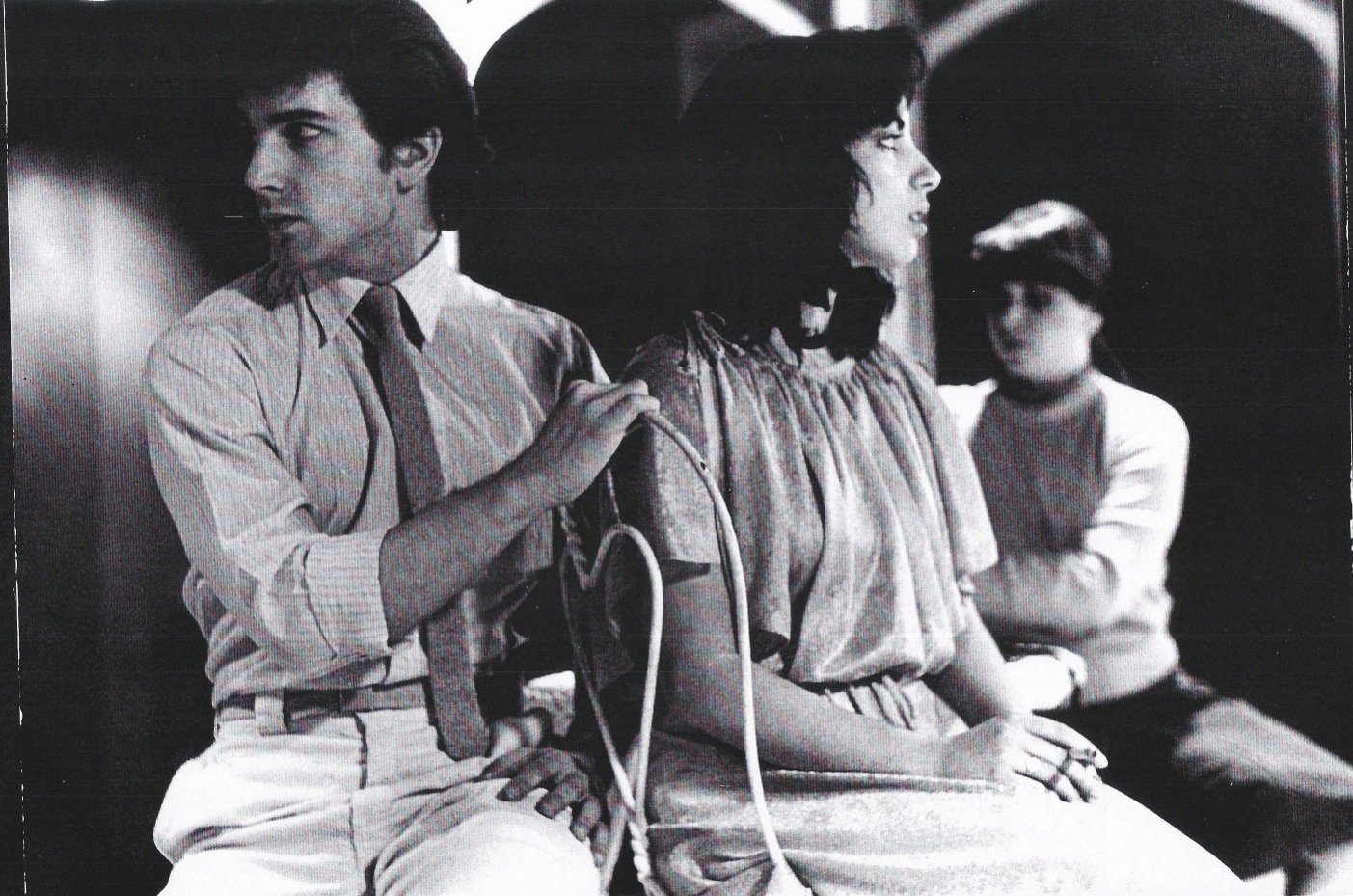
Rehearsal photo, from left to right, David Shatraw as George, Nancy Caronia as Catherine, and Lori Gunty as their mother Mrs. Holly in in Tennessee Williams' Suddenly, Last Summer directed by Richard F. Mason

from left to right, David Shatraw as George, Nancy Caronia as Catherine, and Lori Gunty as their mother, Mrs. Holly

28. Years later, we were eating dinner at this little Italian place in the West Village that he loved—the owners were Caprese and I had lived on Capri and we spoke of shared acquaintances. I loved kissing Doc’s cheek—his scratchy gray beard reminded me of a cat although I have never touched a cat that felt like him or his beard. Doctor Mason was fawning, ordering dinner (The salmon is a good choice for you. Yes, let’s order you salmon.) and making sure my wine glass never sat empty. He could still direct my movement, my every moment in his presence, even though I was no longer his student nor even his friend.

29. Note from my notebook on the first day of rehearsal: Acting is believing/ Art is involved.

30. On the next to last night of the closing of the “Garden District” run, he handed me one note where he had scrawled one word repeated twice. He held it in his hand as I reached out to take it, but he made me meet his eyes before he would release it. We looked at one another for only three seconds, then he let go and turned away from me.

31. Superb! Superb!!

About the author

Nancy Caronia is currently a Lecturer in the Department of Writing and Rhetoric at the University of Rhode Island. Her essays, fiction, and poetry have appeared in the Italian American ReviewThe Milk of Almonds, Don’t Tell Mama!: The Penguin Book of Italian American Writing, and Coloring Book: An Eclectic Anthology of Multicultural Writers.


*Postmortem in theater parlance takes place after the sets are struck, the costumes cleaned and stored away, and the actors have left the stage. A postmortem discussion focuses on the successes and failures of a production with an eye towards the future.

The Shocking Story of How I was a Teen Mom to an Egg Lovechild

Next up in our “Best of 2013” is “The Shocking Story of How I was a Teen Mom to an Egg Lovechild” by Dana Och. “The Shocking Story of How I was a Teen Mom to an Egg Lovechild” was one of most popular posts of the year, earning lots of page views and active comment threads on social media. We love this story because it’s a great example of how a simple incident — like a teenager’s rebellion against the restrictive doctrine of her high school — can become a hilarious story, depending on who’s doing the telling. Enjoy!

by Dana Och

I always knew that I didn’t want a child, but at 17 I found myself mother to an egg.

Some women dream of being a mother since childhood—a desire that is rewarded and acculturated through toys, media, etc—but I was not one of them. I never played mom.  I was always a teacher or a therapist or one of those ladies from Cannonball Run. I was much more likely to care for a Gummy Bear in an Avon box than a baby doll with a pretend dirty diaper. Of course, Cabbage Patch Kids were all the rage when I was 10 so I did have one or two of those. I renamed mine Jon-Erik after Jon-Erik Hexum (Voyagers!  was so awesome), who shortly thereafter ended up accidentally killing himself with a gun loaded with blanks on the set of Cover Up.

For my entire life, I have stridently not wanted children. I never thought this was strange, as my mom (one of five children) is the only one of her siblings who had kids. Staying single and childless always seemed normal to me, just as being divorced with four children, single with children, or married with no children seemed like totally cool options too. When my three siblings and I would talk of the future, I would imagine a future where I went to medical school and lived with my long-term boyfriend until the end of the world in the year 2000, which conveniently would wipe out my student loan debt. It was the 1970s, stop judging. If pressed to imagine a wedding, even as a young child, I insisted that my bridesmaids would wear black. But marriage was never really on the horizon (and me marrying my dude after 18 years of living together only happened because we were turned down for domestic partnership. Don’t get me started on that. And my female witness at the wedding did wear black). I have no children. The only thing I got wrong was medical school, but I don’t think I even knew what a Ph.D. was at 6 years old, especially a Ph.D. in film studies where I could look at and talk about blood in horror movies all day but never have to, you know, actually touch it.

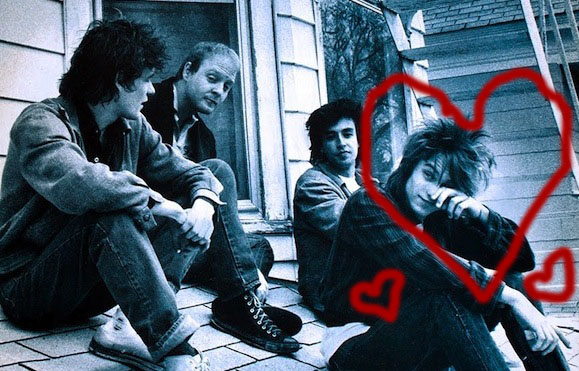
Fast forward to 1989. Living in Kentucky, I discovered The Replacements while watching 120 Minutes and seeing the video for “I’ll Be You.” Swoon. That scrawny dude with red hair sure was the bee’s knees. Clearly, my taste had changed in the years between Cabbage Patch kids and Alternative Nation. Ahem. The competition for title of Imaginary Boyfriend between the dude from Gene Loves Jezebel and Daniel Ash from Love and Rockets faded to the background as I went all in on Tommy Stinson, the dreamiest man in the world.

Tommy is the dreamy one with hearts around him.

Tommy is the dreamy one with hearts around him. He is so much hotter than Paul Westerberg, though Paul’s cool cred was famously established with the high school in Heathers being named after him.

When we moved back to Pennsylvania, music is all that I had. It was my refuge from the nightmare of a tiny high school with students who had gone from Kindergarten to high school with the same social parameters in place. It surely couldn’t have been that bad, I sometimes try to reason retrospectively. Except that the student body put together a petition to demand that I not be valedictorian since I came from another school at the end of junior year. It was common knowledge from eighth grade forward that the most popular male in school, the quarterback of the football team, would be valedictorian. How could some Freak Nerd (a mixture of Ally Sheedy’s and Anthony Michael Hall’s characters from The Breakfast Club) from Kentucky, where the classes just couldn’t have been as difficult, waltz in and disrupt this perfect scenario? Tears were shed over this situation, and they weren’t mine. Perhaps unsurprisingly, I have never been invited to a class reunion.

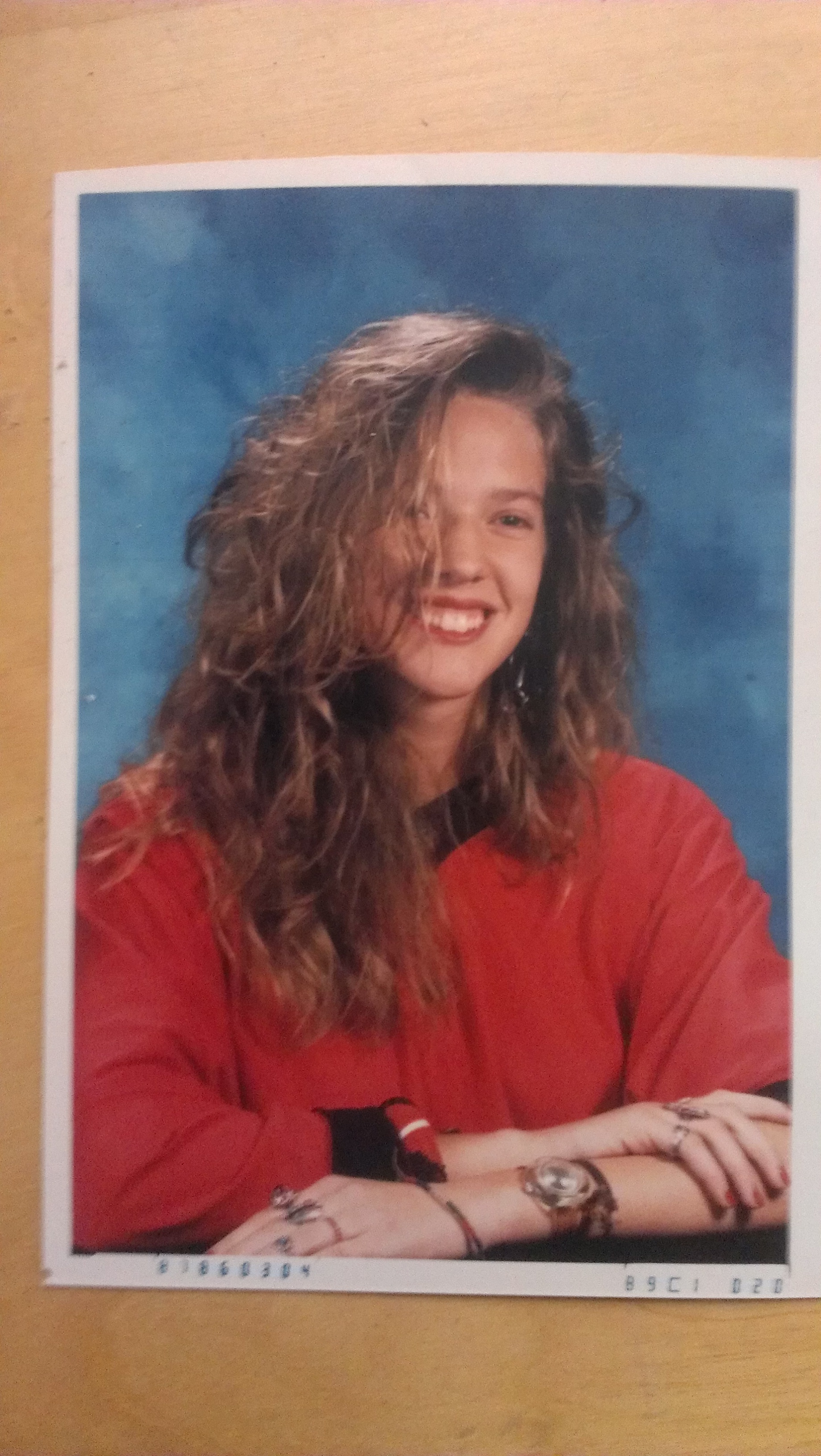
This is what the strange breed of Freak Nerd looked like in high school.

This is what the strange breed of Freak Nerd looked like in high school.

The animosity was so high because my GPA, given the weighted grades of my advanced classes, meant that nobody could catch up to me in class ranking no matter what they did, not even if I failed an occasional assignment. The “Dana Sucks” petition seemed like a lame plot device in a bad movie or television show.  Being forced to mother an egg also seems straight out of a television show (I am pretty sure it happened all the time in late 80s media like 90210. AlsoWillow and Buffy totally had evil egg babies on Buffy in Season 2, which sort of counts).

“Bad Eggs” is generally considered a throwaway ep of Buffy, but it really spoke to me. Baby eggs are evil, you guys.

“Bad Eggs” is generally considered a throwaway ep of Buffy, but it really spoke to me. Baby eggs are evil, you guys.

1991-1992, my senior year, was basically the peak of the teenage pregnancy rates in the United States, when there were 61.8 births to every 1000 adolescent females vs. 31.3 per 1000 in 2011.[i] While only one teen in my (admittedly more affluent and suburban) 2000+ person high school in Kentucky was pregnant, over half of the females in my high school in Pennsylvania were mothers or pregnant. While they weren’t the first, once the cheerleaders started getting pregnant, it resulted in a domino effect throughout the high school and middle school of girls from every social group getting pregnant. A friend of mine went into labor while I gave my speech at graduation. Another friend was pregnant with her second child at the ceremony. In a social situation where pregnancy seemed to generate popularity, being firmly set against having children was just one more instance of hopeless non-conformity. But, at least I got used to being judged for this choice early, at 17.

When health class announced that we had to parent eggs, I freaked. I tried to get out of it, arguing for another type of assignment that didn’t go completely against my being (I was always up in arms about sexism and projected expectations of normalcy. Still am). I was denied; obviously, everybody will be a parent even if they have no interest. Indeed, “you’ll change your mind” has been said to me more than you can ever imagine. Even worse was that the teacher was linking together female and male students as couples to raise the egg. I was still stinging from students literally moving their chairs away from me after I said I was agnostic when the teacher asked if anyone questioned religion.

I was quite bitter about being forced into this situation so I took control in the only way I knew how: I demanded to be a single mother and decided that my egg was the lovechild of Tommy Stinson, conceived at The Replacements show I attended shortly before they broke up (conveniently, around 9 months prior). And this, finally, is how I came to mother Tommy Stinson’s lovechild egg. We probably didn’t need a story, but I made up one up anyway.

My story of the scandal of loving The Replacements (none of this obviously happened other than me loving The Replacements, going to one of their last shows ever, wearing that concert tee for 10 years, and shaving half my head in study hall): I had gone to see The Replacements right after moving back to Pennsylvania, and from the stage of the Metropol Tommy had been winking at me all night, impressed clearly that I knew every word to every song that the band had ever recorded (seven studio releases between 1981-1990). He knew that I loved them so much that I would write their lyrics down emphatically on pieces of paper that I would eventually find in a closet 20 years later.

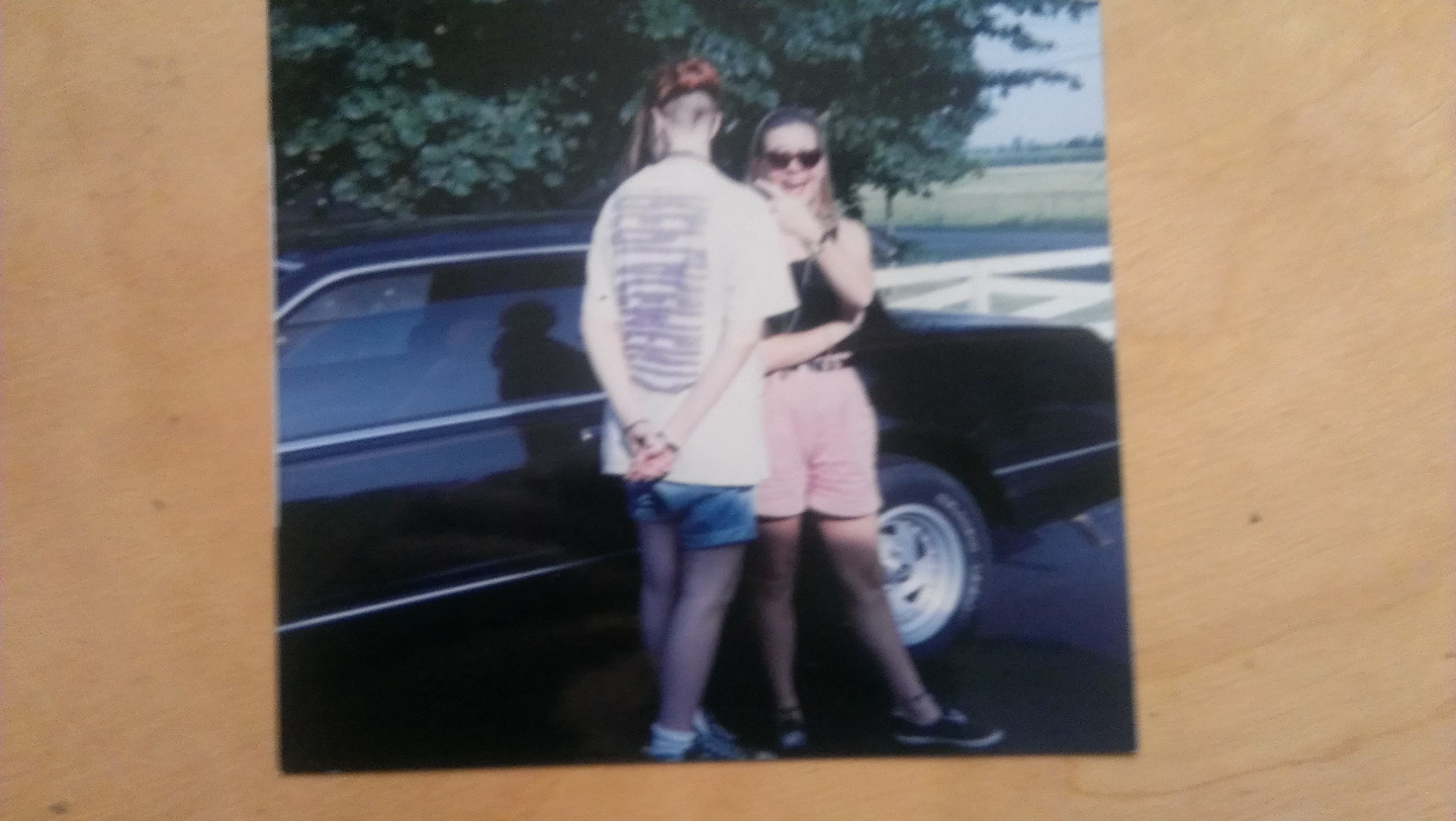
Tommy Stinson loved my half-shaved head, Replacements T-shirt, and baggy shorts. Who wouldn’t?

Tommy Stinson loved my half-shaved head, Replacements T-shirt, and baggy shorts. Who wouldn’t?

Tommy came and found me after the show, and I—in a diabolical moment of storytelling deliberately devised to shock my health teacher—decided that my virginity wasn’t all that important. I did make him use a condom, but unfortunately it broke. Because he was in a band, I was more concerned about STDs initially. Many months later, I finally realized that I was pregnant with an egg, little Tommy Jr. I tried to contact Tommy Stinson to let him know about the situation, but considering he was dealing with the break-up of the band and drinking super hard daily, he denied that this egg was his child. It certainly didn’t look like him. Well, he was right about that, but it also didn’t look like me. A baby egg looks only like a baby egg.

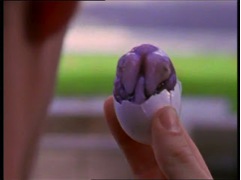
Tommy Jr. looked a lot like this.

Tommy Jr. looked a lot like this.

My teacher was seriously not amused.

I didn’t do well on this assignment because I didn’t have time for a baby egg. I had schoolwork to do. I had a job after school at the supermarket that was decidedly not cool with me bringing my baby lovechild egg to my register. My mom wouldn’t babysit the egg for me. She had other shit to do, like helping out my sister with her real baby. My journal entries were lies upon lies, but how couldn’t they be? I kept getting busted by teachers for leaving my egg to sleep in my locker (trust me, he was really safest there). Forced to carry him around, I cracked him a little and gave him a band-aid. I gave him up for adoption in the final journal entry.

Some people, you see, really aren’t supposed to be parents, not even if it is Tommy Stinson’s lovechild egg. I took no pictures of my little egg.

The moral of the story is one of the following:

  1. Don’t lose your virginity to Tommy Stinson at a Replacements show. He will deny your egg lovechild.
  2. Assignments that imagine the same “normalized” future for all students suck.
  3. Real babies are more difficult than egg babies. They cry. And poop. And they can’t be left in your locker all day.
  4. Real sex education in a school overwhelmed by pregnant teenagers probably would have been more effective than caring for an egg.
  5. If someone tells you that they don’t want children, leave it at that.
  6. If I had taken a picture of the egg lovechild, maybe Tommy Stinson would have gotten a tear in his eye at the Guns n’ Roses show 15 years later where I annoyed Axl fans by yelling “Tommy” over and over. Little Tommy Jr. surely has his own garage band somewhere out there now. I bet they are called All Cracked Up or Over Easy.

About the author

Dana Och lives in Pittsburgh where she teaches film and tweets while watching games shows. She bottle-raised a kitten once and became even more convinced that the egg assignment was stupid. The tagline on her blog is a lyric from The Replacements “I’ll be you.”


[i] These numbers can vary a bit depending on what ages are included. If 15-19 is specifically looked at, the peak is 1990 with 116.9 per 1000 in 1990 and 67.8 per 1000 in 2008 (http://www.guttmacher.org/media/nr/2012/02/08/). All studies do agree that the early 1990s are the peak of teenage pregnancy rates in America and that there has been approximately a 42% decline in this rate.

Pipe Dreams

First up in our “Best of 2013” is “Pipe Dreams” by Randall Martoccia. “Pipe Dreams” was 2013’s fan favorite. Set in the early 1980s and  loved for its recollection of a popular head shop in small North Carolina town, Pipe Dreams really struck a chord with folks who grew up in Greenville. Enjoy!

by Randall Martoccia

Pipe Dreams' logo

Pipe Dreams’ logo

I was in fifth grade when the governor of North Carolina called my mother a parasite. Not to her face, of course—Governor Hunt didn’t even know my mother. He was referring to all of the storeowners in his state who sold drug paraphernalia, and Mom ran the largest head shop in Greenville. She knew not to take the words of politicians too seriously, and she understood that Hunt’s attack was not personal, but she never did forgive him. When Hunt ran against Jesse Helms in 1984, Mom didn’t even vote for him. She was and still is a steadfast Democrat. The attention given to Hunt’s words by the local media bothered her the most. News crews, who know a little about blood-sucking themselves, flocked to her store, thrust microphones in her face, and asked her, “How does it feel to be called a parasite … by the governor?”

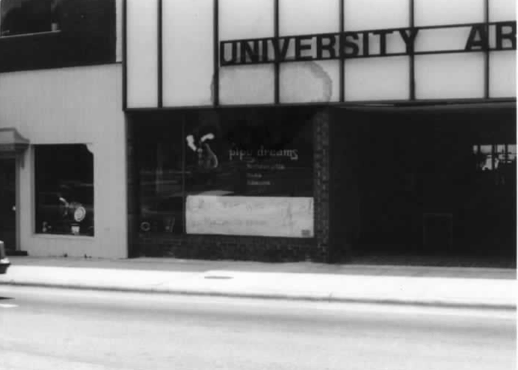
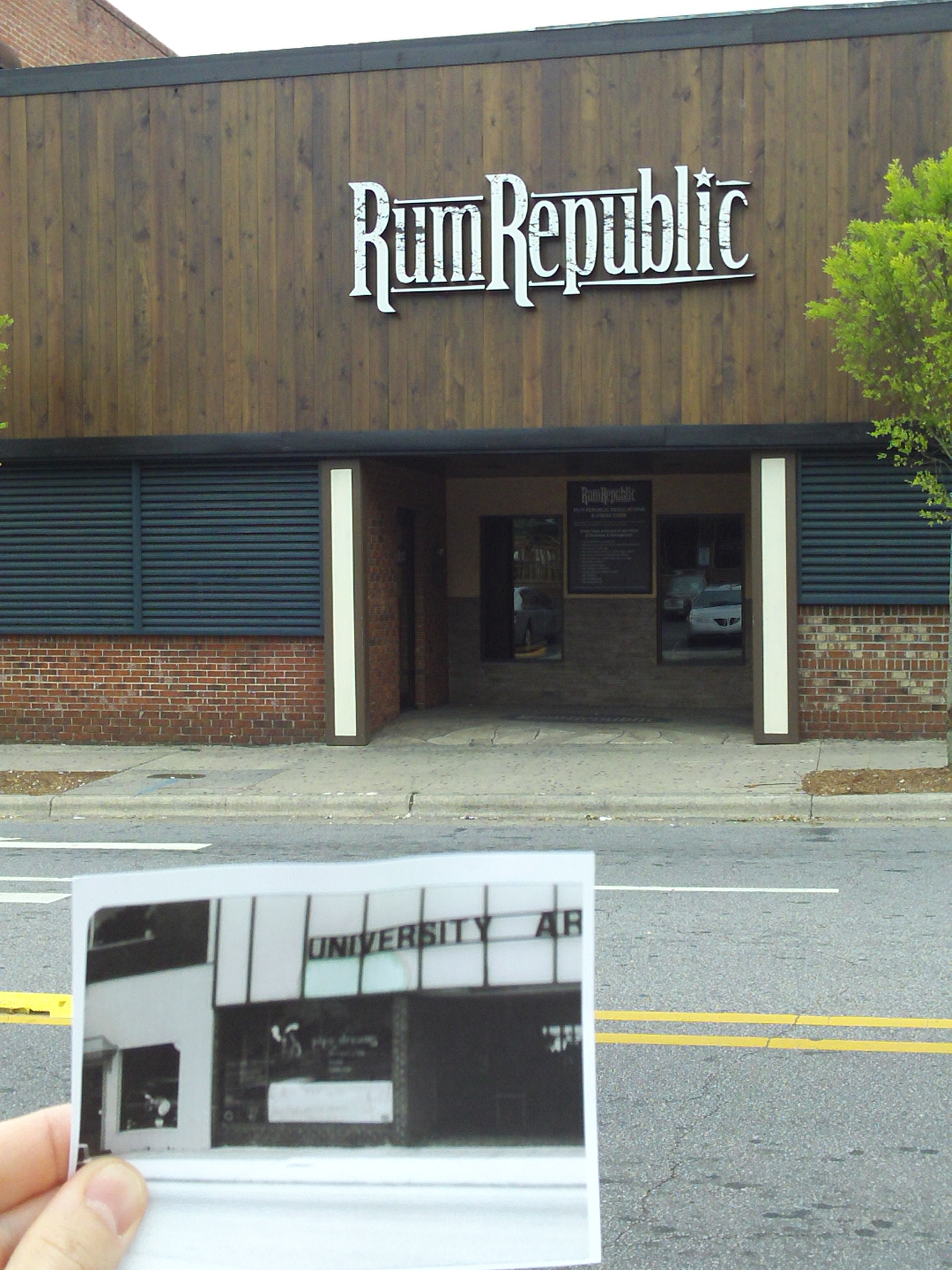
Mom’s shop was called Pipe Dreams. It sat along the main stretch of stores in downtown Greenville, beside Mike’s Bike Shop and across from Heart’s Delight, an ice cream parlor. Pipe Dreams was not a dark and seedy place — hard to be dark when two of your walls are plate-glass, hard to be seedy with a colorful rendering of the caterpillar from Alice in Wonderland (nicknamed Utokia by my mother and her friends) painted on your door. Mom sold a wide assortment of things — posters, buttons, tee shirts, costumes at Halloween time — but drug accessories were her most consistent money-maker. When the Drug Paraphernalia Law went into effect on October 1, 1981, making the selling of bongs illegal in North Carolina, Mom knew the store would never survive. She tried hard, but the store had lost its focus. In the final months, she sold, or attempted to sell, Rubik’s cubes, board games, and suede cowboy hats, which became an emblem of the store’s aimlessness. Pipe Dreams closed down less than a year after the law went into effect.

Pipe Dreams as it was.

Pipe Dreams as it was.

She kept Pipe Dreams running for three years, a good record for any business in downtown Greenville. Looking at the bars along Fifth Street today, it is hard to imagine children playing there. Things were different then. In the late seventies, downtown Greenville was a rich playground for my friends and me. Within a block of each other were the already mentioned ice-scream shop, Barrel of Fun, an arcade; Hodges, a sporting-goods store; and the Book Barn, a kid-friendly bookshop.

However, Pipe Dreams was one of our favorite haunts. The bongs lined up on the shelves looked as harmless as vases, so we ignored them. Instead, we pinched each other with roach clips, yukked it up over the “Ayatollah Assahollah” tee shirts and the posters of Steve Martin with an arrow through his head or Frank Zappa with his pants around his ankles. We thumbed through exotically titled magazines —like High Times or Heavy Metal—looking for a breast or two. Mom had no problem with us hanging around. In addition to keeping me within sight, our presence in the store seemed to amuse customers. I think that a few ten-year olds running around made first-time customers feel more comfortable about being in a head shop.

We helped to make Pipe Dreams look and feel like a normal shop, which was how Mom always considered the place. As she explained to a campus reporter in 1981, “It’s simply a store and I sell the things that people request.” Mom, I believe, oversimplified the purpose of Pipe Dreams for that reporter, but how do you describe things like friendship and camaraderie to a newspaper reporter? Sure, she showed great joy over the October windfalls (from Halloween costume sales), but she never showed much anxiety over the store’s usual limited successes and ultimate diminishing profits. And how could Mom say that the main reason she kept the store going was so she wouldn’t be lonely in the afternoon? She couldn’t have told him these things without sounding just as flaky as people expect an operator of a head shop to be.

She may have been a lousy entrepreneur, but she was not a flake. I’m sure she mystified a lot of people back then. One of my favorite photographs shows her smiling in front of her store. She wears a white blouse with a navy-blue knee-high skirt and a matching neckerchief. Her blond hair is short and swept to the side. She favors Angie Dickinson from her Police Woman days. She’s 36 in the photo but looks years younger. Mom did not look like the stereotype of a head-shop operator.

She also did not have a background that one might expect from someone in that line of work. My mother grew up on a dairy farm outside of a Rocky Mount in a strict Southern Baptist household. She graduated East Carolina College in the mid-1960s and, while the drug revolution took hold in parts of the country, she raised my older brother and me. When I started going to kindergarten, Mom got a job as an X-ray technician. Then she tried to sell real-estate. “I’m too honest to be a real-estate agent,” she’d say, and the mere three houses she sold during her entire tenure prove that selling houses was not her calling. In 1979 she and two friends launched Pipe Dreams. Soon afterwards, she bought out her co-owners. Pipe Dreams was her baby.

Mom often said that eastern North Carolina was about ten years behind the country when it came to marijuana use: late ‘70s Greenville was no late ‘60s Haight Ashbury. Truth is, even when Mom could sell bongs, Pipe Dreams barely broke even. The traffic of customers was never busy enough to interrupt the almost-daily games of Scrabble. When they did come in, the customers — most of them college students — usually took more of an interest in Mom and Max, her part-time worker, than in any of the inventory. Some customers became regulars. They’d hang around Pipe Dreams for hours just taking turns talking and listening. My friend Colin and I would drop by the store just to listen to the torrent of words. Here, grownups talked like real people. They censored none of their racy jokes for us. They treated us with respect, something that teachers and other parents failed to do. Colin and I liked Max most of all; he told the best, dirtiest jokes.

If we liked Max the best, then we liked Beaver second best. Beaver was a dog; his name came from his stumpy, paddle-like tail (and not because he smelled like one, as Max once cracked). He used to sit in Pipe Dreams all day long and stare at the goldfish that Mom kept in a bowl near the window. Mom would lead him out at closing time and would find him curled up in front of the door when she opened the store in the morning. Beaver stunk like hell from bathing in the river. His hair was knotty and matted, like a Rastafarian’s, and hung down in front of his eyes. He became Pipe Dreams’ biggest attraction. People walking along the sidewalk would see Beaver through the front window — sitting up on his front paws, looking into the fishbowl — and would just have to come in and meet him. My friends and I would stop in just to look at Beaver quietly contemplating the fish. He never barked. He never acknowledged the gawkers. He just stared. To us, his eyes seemed to hold wisdom. There was even a legend going around that, at night, Beaver presided over canine congregations. My friends and I believed that legend and knew to respect that dog. Even though Beaver made our hands stink, we never refused to pet him (once I even brushed the hair out of his eyes and kissed him on the forehead), and we never complained about the smell that stayed on our skin for hours afterwards.

Beaver the dog (far right). Goldfish (left).

Beaver the dog (far right). Goldfish (left).

Colin’s parents would never have let him hang out with me if they knew we were spending so much time at Pipe Dreams, so he never told them. Colin’s parents were not unique, as those of most of my friends disapproved of Mom and her shop; I could see it in their faces. Even though the parents in my neighborhood probably supported Mom’s right to sell paraphernalia (my neighborhood, across the street from the university, was mostly liberal), they still did not want their children near “that kind of element.” When I went into their homes, they kept an eye on me. When I acted politely, they were pleasantly surprised. Wow, they probably said to themselves, look at that boy rise above his family. Colin’s parents were the most suspicious of the lot. Mr. and Mrs. Todd had had seven children before Colin, and their ideas of the right way to raise a child were settled. They almost never let Colin and Owen, his older brother, spend the night. I suspect that Mrs. Todd resented the fact that her son spent so much time at my house.

That Mr. and Mrs. Todd were the last customers of Pipe Dreams is a fact I still do not quite understand.

In the months before Pipe Dreams closed for good, Mom watched as the store shriveled up around her. As she stopped ordering products to replace the inventory being sold, shelves cleared, the display cases emptied, and racks lost their shirts. Then she sold the shelves, the display cases, and the racks too (one of the cases going to the Greenville Police Department, much to my mother’s amusement). What she failed to sell was moved on June 30, 1982 into our living room. As for me, my attention was focused mostly on the former contents of the drink machine. I had never seen that many cans of Cheerwine at one time. Yard sales followed in the weeks ahead. The heap shrank, sure enough, but was still large enough in November to threaten our traditional arrangement of the Christmas tree.

cheerwine

Mom got desperate. She had Dad ask his students if they wanted any comic books or tee shirts. I was told to look out for any potential customers of cowboy hats. Seeing the hats, all dozen of them stacked one on top of each other in a column in the living room, constantly reminded Mom of how questionable her business sense was. Although the custom-made hats were nice — suede, leather band, protruding feather — cowboy hats were just not fashionable in Greenville in 1982. Another problem was the price. Mom bought the hats for twenty dollars a piece, and her pride wouldn’t let her drop below that to get rid of them. I told friends about the hats, even had them tell their parents about them, but I explained to Mom that she shouldn’t get her hopes up: “Greenville just ain’t cowboy country,” I told her.

Then one week before Christmas, we got a phone call. It was Mrs. Todd, Mom said, and she’s coming over. Mrs. Todd had never come over to our house before, and I was scared. (Hell, she rarely even phoned our house, except to tell Colin to come home). Before I had time to worry, the front doorbell rang. Mom made me get the door. I opened it and was shocked to see Mrs. Todd and Mr. Todd and Buzzy and Sean and Colin and Sarah and Ruth and Rosie and even Michael Doyle, Colin’s nephew. They’d come for the hats.

Mr. Todd bought all of the hats that day: one for him, one for Mrs. Todd, one for each of his kids (even Mary and Dennis, who weren’t there), one for Michael Doyle, and one for I-don’t-know-who. Mom and I stood at the front window. She held Mr. Todd’s twenties in her hand, smiled at me, and felt not a bit like a parasite. We watched the Todds make their way down the street, walking in single file. “Look,” Mom said, “it’s Papa Duck and Mama Duck and all the little ducks,” and we laughed at that image of them, even as the last pieces of Pipe Dreams bobbed down Fifth Street on their heads.

This undergraduate haunt stands where Pipe Dreams once nestled itself into downtown Greenville, NC society.

This undergraduate haunt stands where Pipe Dreams once nestled itself into downtown Greenville, NC society.

About the author

Randall Martoccia teaches at East Carolina University. He writes short stories and poetry and produces short films, which languish on YouTube, thus far failing to distract a high number of the nation’s office workers–his goal, as an anti-capitalist. He is considering adopting a cute cat to boost viewership. His wife Christie disapproves of the cat, but his daughter Mira and two dogs are warm to the idea. 

Houston Insomnia

by Stephanie Dickinson

* Texas Street *

4:00 a.m. on Houston’s Texas Street and in the depot you’ve staggered into carrying your red patent leather hatbox that’s been riding all night from Austin through the vastness of Texas. Sunday, left hours ago, has reached blue Monday and the magnolias still open are already closing—a thickness you can swallow—the sullied odor of a too-sweet sock. Bus women shift in the peach orchards of sleep, their rope-tied suitcases like cypress knees under their feet. He walks toward you: wide-awake, tall, late twenties, not handsome, not ugly. Dressed in black jeans, a tee, a good-looking antelope-colored suede jacket. The janitors have returned from their break and lift the long poles of their mops, the greasy eels drowned in Pine Sol. He’s come looking for a match to light his cigarette. In the depot no one complains of second-hand-smoke. He’s looking for the easy ones he can talk into his ride parked outside. Surely, he already knows the ones to approach, the ones who never learned to say no, who wear tight clothes, the fatherless ditch girls who move to the city to be noticed, the ones already damaged (i.e., like you).

mirror

*  Newports *

He drops into the chair next to you,  an unlit cigarette behind his ear. He lights a Newport, offers you one from a pack. You take it. “Where you heading?” he asks.

“I’m here. Houston is my destination. What about you?”

“Nowhere.” He flicks his ashes with a long fingernail. He suffers from insomnia and comes here to the depot when he can’t sleep. “What do you do?” he asks. You tell him you’re a teacher. Not that you’re a lover of books and strong coffee, of fruity words dipped into rose petals and the wet red of a girl’s lips against the white stem of her throat, paragraphs scribbled in the dialect of flesh. You don’t tell him this job is our first after getting your MFA in poetry. To teach the profoundly retarded at a private school, a Master of Fine Arts will do. “A teacher,” he repeats. “What do you teach?” Laughing, he looks at your matador pants and heels. His eyes, the color of amaretto, they forget something; they travel you up and down.

The ladies room is up an open staircase, its banister a grillwork lattice of 1920s elegance.  You explain you were visiting friends in Austin over the weekend.  You’ll change clothes in the bathroom and go straight from here to work. You start at 7:00 a.m.

The Center for the Retarded on West Dallas. Google it and you’ll discover it recently changed its politically incorrect name.

Screen Shot 2013-11-26 at 10.32.05 AM

* Parallel Universe *

He asks if you get high. “You have enough time,” he says with a watch glance. “Let’s go to my place and then I’ll drive you to work.” The lure of crystal. A South African diamond. A conifer singing to the sunrise. You let him swing your red patent hatbox over his shoulder and follow him out into the last of the charcoaly night. The icehouse dregs where the men and women watching for dawn switch from beer to coffee. The Houston sky waits for that first blaze of hot blue.  75 percent humidity and 102 degrees by the Allied Chemical Bank.

He unpockets his car keys, and crosses the street. “By the way,” he says, “I’m Larry.”

Not Lawrence. Not Leonardo. Not Layton. Larry.

In a parallel universe, which physicists postulate there could be millions of, the car still exists, as you do, the 25-year-old who should know better. Nothing mathematically prevents it. Perhaps Larry has a different, richer name there—Lionel or Leopold. In that universe the girl who is you passes the aqua-painted storefronts and empty lots, the nine-foot fence where homeless men nursing beer quarts lean, that girl walks past the rib shack, its pit cookers sizzling breakfast brisque, and keeps going.

* Liz *

Monday’s exhausted classroom of the profoundly retarded with autistic overlays lies before you. A week of preteens in diapers, none able to speak, some hum the music of drool, others groan and giggle. There are other teachers like you. Single. Imports from the North. The clean ones like Faye Fish you love right away. With the dirty ones the love takes longer. Like Andrew Dickey, the doctor’s son suffering brown lice in his eyebrows, who lives in a locked room at his father’s manicured River Oaks home. Theresa in her upside down sunglasses. Liz, a cretin, welded into blue stretch pants and drool-soured pink turtleneck. Hair is her poetry, her drug, her sex, her fascination. Her transcendence. Why the gleam in her deep blue eyes when she stretches a single strand of your long hair between her fingers? What is it Liz sees? A tiramisu stallion? Leaf shadow? Sweeping the floor with her fingers, she collects hair. Her head’s half-bare but for baby-fine wisps of chick-yellow. All her life she’s pulled out her hair, playing with it, tasting it. Blue eyes like dark violet pools of water, startlingly beautiful. How stunning Liz is in the parallel universe where her brain awakens, her thoughts like moth wings, and her hair’s a waterfall. Not crouching on all fours, as she scours the floor for hair prey. A long dead day ahead in the universe of soiled diapers and puzzles no student can master.

glowing viewfinder

*5:00 a.m.*

He fits the key in the ignition and a woman on the radio sings in a thick voice like a pillow that wants to pull you into papaya and mango, the sweet sob of the tropics—orange too orange, green that tastes pink. The street where you live flashes past and he begins to whistle a birdsong of perfect white incisors. On Westheimer the sun is the color of a flesh wound. Like the hummingbird thrumming of your heart in love with the interstate’s jitter. Cleveland Drive. Washington. Jefferson. Streets named after gone presidents where fists of men—Mexicans, Guatemalans, Columbians—line up for day labor. Dawn-strong roosters but after a day in the sun pounding nails, they’ll shrivel red-pink like the bleeding heart flowers on your grandmother’s farm, their muscle-stems trembling in the sweat rag of 5:00 p.m. Houston, the most air-conditioned city on earth. Gateway to hell. Elevators high as skyscrapers, prefabricated apartments, thrown up, flash and scurry by. Everywhere there’s construction, a hunger for walls, sliding glass patio windows, queen-sized mattresses slabbed between plywood bones.

Lamar Drive past the strip shopping centers and Used Auto Parts where you’ve forever arriving in the gutlessness beyond the Dunkin Donuts and dusty magnolia trees. “I live here with my sister,” he says. Two tiers of apartments painted brown and thrown up around a parking lot. Box air conditioners hum from each unit. Azaleas snuggle against aluminum window frames. A baby is crying as you climb the stairs.

She’s sitting at the round kitchen table nursing her son when the two of you walk in. A young woman with espresso-colored curls glances up. Her visible breast—a fallen fruit where her baby smacks his milk and claims her as first food. She’s taken one look and without a word to her brother (or boyfriend or husband) starts packing: tote, diaper bag, car seat. Jars of Gerber skitter over the Formica of the dinette, strained carrots and beets, apple sauce, thud. You listen to her disappearing into the boom city of grain elevators and icehouses, of glass towers glinting like enchanted kingdoms.

* Confirmation *

He opens the refrigerator and reaches in the butter slot for baggies nestled in white rice. You flip through the Houston Chronicle. A beautiful eight-year-old girl in her confirmation dress touched the third rail of a train. “Come on, let’s go party in the bathroom,” he says.

* Red & Black Bathroom *

The bathroom is luminous: blue projection lamps glow cool as pool lighting, dried orchid petals litter the black sink and vanity. You’ve never seen a black bathtub, especially one where rubber ducks and squeeze toys frolic in its depths. The toilet lid and tissue dispenser adorn themselves in burgundy fur. He takes out a hand mirror, a bouquet of golden flowers enameled on its back, scrapes methadrine with a razor blade; it’s damp and crumbles like gum eraser no matter how fine he chops it. Dividing it while you moisten your lips and bat your eyes not at him but at it, he tells you to kneel. Bible verses begin to float through your mind. You notice the sponge duck’s webby feet. The toilet seat and Kleenex dispenser begin to sweat under their furs of red. Likewise, when they had killed the rams, they sprinkled the blood up the altar. Kneeling before the mirror and black sink, under the racked lighting, kneeling for the prize that makes your heart race, how glitter-sharp its edges. In purgatory you’ll kneel forever in the forbidden thick red carpet, in the scarlet blood of too-salty beets. On the mirror the taste of cat urine and yellow apples. The roots in your teeth quiver. In the parallel universe of goodness you’re not bowing your head over the mirror, pressing the last taste of yellow into your gums, sucking the bitterness from your thumb. Over the razor blade’s edge your grandmother’s in the farmhouse kitchen making strudel, draping  rolled-out dough long as cheesecloth over the table, chopping the orchard apples with raisins and walnuts and cinnamon. When your grandmother looks up, you hide yourself. 

1232480_10152114389401349_1226101433_n

* Box Room *

He’s led you into room where his sister stores her college textbooks; he wants to show you the beige carpet and cardboard boxes, the peculiar room with a door that bolts from the outside. When he leaves to get his cigarettes you try to follow him and discover he’s locked you in. Left alone you think it’s a joke.  You read titles. The Aztecs and the Making of Mexico. Red Star Over China.  He returns dressed only in a hooded Joseph’s robe of many colors—woven grapes and maroons and dark blues. Was it Israel who adored Joseph more than his other sons, because he was the child of his old age? There’s an ashen shine to his knees as if he’d rolled in Lent ashes. For this reason I fall on my knees before the Father.

He’s brought you a Coke, to ease the hard ball of spit from your lips. He’s still wearing his robe of many colors. He doesn’t want to see your face. Not this Lancelot or Lazarus. When he touches you – word pictures of chokecherries, mayflies, of wasps stinging cicadas and burying them in the dirt for their larvae to feed on, of plate glass shattering, used salvage, tacos el carbon and lard. He finishes and leaves you to the walls. Pressed sawdust. To the sounds of the overpass, traffic high on the girders splashing through. In the classroom they must be missing you now that the afternoon sun is starting its climb down to the horizon. It’s time to take the students out to sit under the magnolia trees, the leaves, dry and flat as lunch sacks. Footsteps shuffle in the living room. A key turns, someone closes a window. Is it his sister? You rattle the door. Locked. Gaetano Mosca’s The Ruling Class. Every generation produces a certain number of generous spirits who are capable of loving all that is. You imagine the sister sits at the plywood dinette with her son, cooing the name Wand, soft breeze over the place mats.  Night.  Thirst. You fall into a sleep he wakes you from. Not Lewis. Not Lathrop. Larry. You hear your breaths, quick little pants like puffs of a light cigarette, and your fingers still burning. A day later you’ll walk through the empty living room outside into the parking lot’s explosion of sun. Looking back you’ll not recognize the you as the first person singular. One of your divided selves.

About the author

Stephanie Dickinson was raised on an Iowa farm now lives in New York City. Her novel Half Girl and novella Lust Series are published by Spuyten Duyvil.  Other works include the short story collections Road of Five Churches and Port Authority Orchids. Her story “A Lynching in Stereoscope” was reprinted in Best American Nonrequired Reading and “Dalloway and Lucky Seven” and “Love City” in New Stories from the South. Her chapbook essayHeat: An Interview with JeanSeberg will appear in late 2013 from New Michigan Press.   

About the artist

Coral Staley has an MFA in Creative Nonfiction but is too busy with her two boys to give writing much thought these days. She does, however, find time to paint and considers it another form of creative nonfiction.