Blacky

by Holly Gross

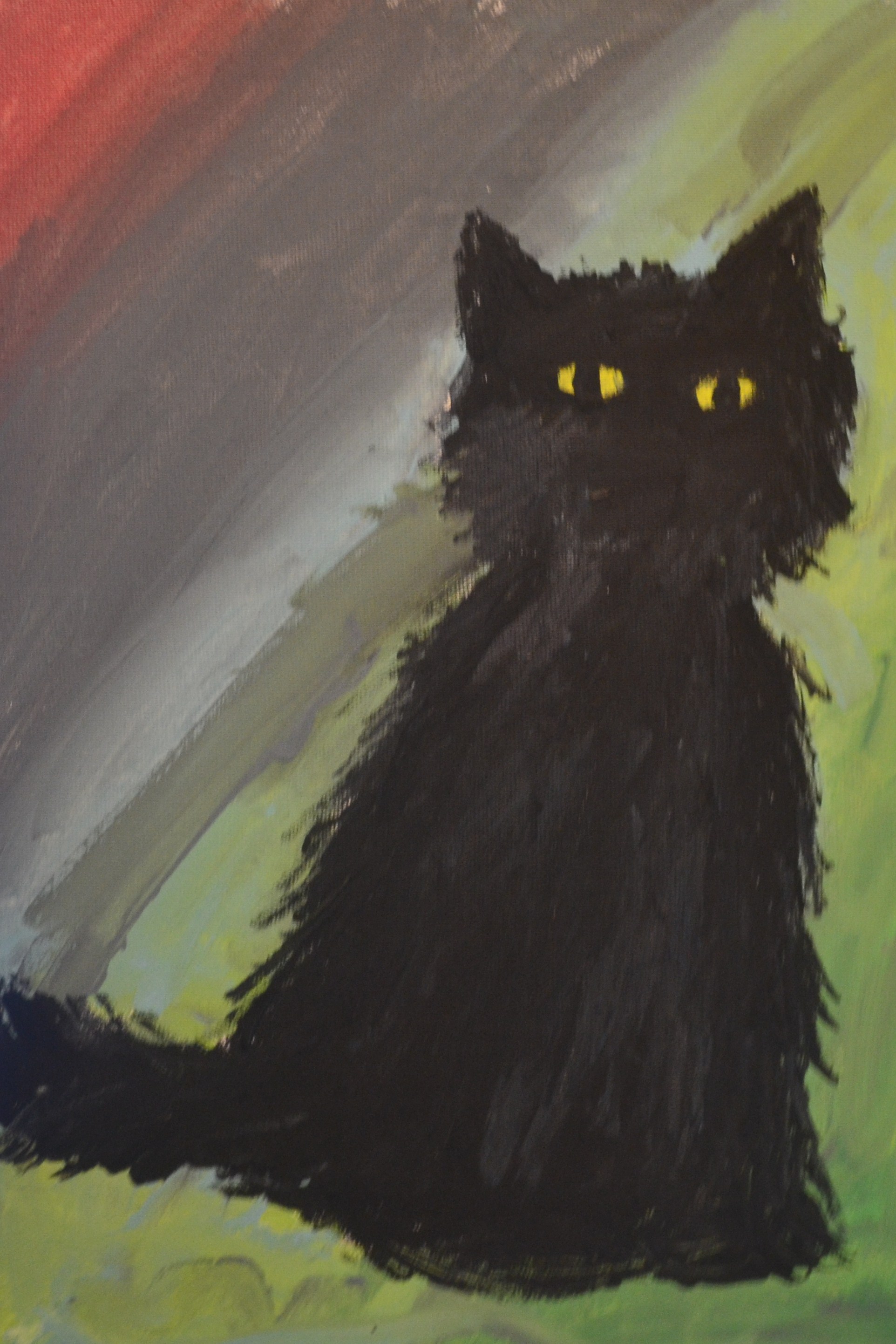
The author's daughter, 9, paints the Blacky of her mother's memories.

The author’s daughter, 9, paints the Blacky of her mother’s memories.

I was in first grade the year we lost Blacky.

My sister Sherri and I were still in our room getting dressed when we heard Mom and Jerry arguing downstairs.  Jerry was Mom’s live-in boyfriend at the time.  It was only faint mumblings at first, but his voice soon took on a familiar boom.  Our eyes locked; both of us regretting our decision to get ready with such leisure that morning.

“We’re not spending money on a goddamned cat!” we heard him shout.

“I think he’s gotten into some kind of poison,” Mom said.  “We have to do something.  We can’t just leave him to suffer.  The girls—”

“Damnit, we are NOT spending money on a goddamned cat!  That’s it, end of story!”

“We have to do something,” Mom said sharply.  “He’s sick.  He’s been lying around here for days.”

“Put him in the garage!”

“In the garage, you want me to—”

Sherri plopped down on the bed tracing her finger along the quilted grooves of our Holly Hobby bedspread.

“I think something’s wrong with Blacky,” I said sitting down next to her.

Mom and Jerry continued arguing, punctuated with long intervals of silence. Sherri and I stayed where we were, waiting and listening for signs of a denouement.

Finally, it seemed, Mom had relented.

“Fine,” we heard her say sounding defeated.  “We’ll leave him. We’ll just leave him.”

When I returned home from school the next day, Mom was washing dishes at the kitchen sink.

“Where’s Blacky?” I asked, hoping she’d say that she’d taken him to the vet or that he was better, and already roving the neighborhood.

“Upstairs,” she said.

I started toward the stairs.

“Just a minute,” she said wiping her hands. “I need you to do something for me.”

“What?” I asked, suspicious of her tone. It was the tone Mom took when she had to tell me something that she knew I wouldn’t like. I hated that tone.

She paused and sighed.  “I need you to go upstairs and carry Blacky out to the garage for me.”

I knew then that Blacky would never make it to the vet. I stared down at the green and yellow linoleum floor and felt my tears rising up and retreating. Our garage was no place for a sick cat, especially not Blacky. He liked to be curled up in our bed. The thought of his exile turned my grief into anger.

Blacky as envisioned by the author's younger daughter, 7.

Blacky as envisioned by the author’s younger daughter, 7.

“I’m not taking Blacky to the garage!”

He’s going to have to stay out there until he gets better,” Mom said as she started back toward the sink.

“Wait, he’s going to get better?”  The faint possibility renewed my hopes.

“I don’t know,” Mom said turning back toward me.  “Just go on,” waving her hand in dismissal.  “Just do what I asked you to do.”

Upstairs in our room Blacky wasn’t curled up on our bed like I had expected. He was lying on our bedroom floor with a towel beneath him. I dropped to my knees in front of him.

He was a beautiful cat with long, fluffy black fur and piercing glow-in-the-dark eyes. He looked too regal to be a stray, but he had been loitering around Jerry’s ceramic shop for months, without a collar or tags when we found him.

“Can we have him?” we had chimed in unison.

“You’ll have to think of a name,” Mom had said.

Sherri and I stood there for a moment looking at each other and our new ebony cat.  “Blacky,” I said finally.  “I think we should call him Blacky.”

On my knees in our bedroom I leaned forward, placing my forearm under his chest. I pulled him up into the folds of my arms, and felt the familiar rough-softness of his fur against my hands and arms.

Blacky was an independent cat, not accustomed to being carried, and I was not accustomed to carrying him. He was also a large cat. He let me carry him, but it wasn’t what either of us wanted. Blacky valued his freedom. I respected it.

Pressing him against my chest I lifted to a standing position. I carried him across the hallway, and down the first set of stairs, pausing at the landing to readjust my grip. I proceeded down the second, longer set of stairs with slow, concentrated movements.

Mom was still at the sink when we passed through. She didn’t turn to acknowledge us. I stared at her profile, willing her to turn our way, but she busied herself by scrubbing a plate.

Just off the kitchen and three more stairs was the backdoor. Just three more stairs, I reminded myself. Then Blacky and I would have a straight, even shot to the garage. I stepped down on the first step and felt a sharp jolt up my leg; the floor rising to meet my foot much quicker than I’d anticipated. I felt something else too—warm liquid on the inside of my arm. I stepped down on the second step, no longer focused on Blacky but the warmth against my flesh. I felt my heart lurch forward, pushing against the wall of my chest. My arms involuntarily jutted out in front of me, collapsing onto themselves as Blacky fell to the floor.

“Mom!” I yelled, my voice cracking from the tears gathering at the back of my throat.  “I dropped him!  I dropped him!”

Mom came to the top of the stairs. Blacky didn’t move.

“He’s bleeding!  He’s bleeding!” I said smudging my palm across my forearm, and raising it up for her to see.

“He’s bleeding,” I repeated, scooping him back up and into my arms.

Inside the garage a ray of light streamed through a small, dirty window, illuminating particles of swirling dust that all seemed to land on the blanket that had been placed on the floor for Blacky.

I hated the garage, and I was certain Mom did too. It remained almost empty except for a few yard tools, which were placed just inside the door so that they might be retrieved quickly. Within its walls it held a sense of morbidity and appeared to be in a perpetual state of dusk. Regardless of the time of day, the garage consistently refused to acknowledge the sun’s light.

Later that evening, I filled Blacky’s food and water dishes. He hadn’t moved since I brought him there hours earlier. Still, he appeared strong and beautiful, all stretched out, his head resting on his front legs. He raised his brow to meet my gaze, and his eyes glowed yellow and bright against the dark shadows of the garage  I felt a twinge deep within my chest and along my spine when I’d thought about the haste in which I had carried him there.

I spent the next several days diligently avoiding the garage, except to bring in food and water. When I did venture inside I avoided Blacky, stealing only quick glances as I filled his dishes and dashed out the door. I dreaded the weekends when I’d have no school, and no distractions.

Still when the following Saturday arrived I was feeling suddenly and unexplainably hopeful about Blacky’s condition. I ate breakfast and headed to the garage determined to give Blacky the care and attention I knew he deserved.
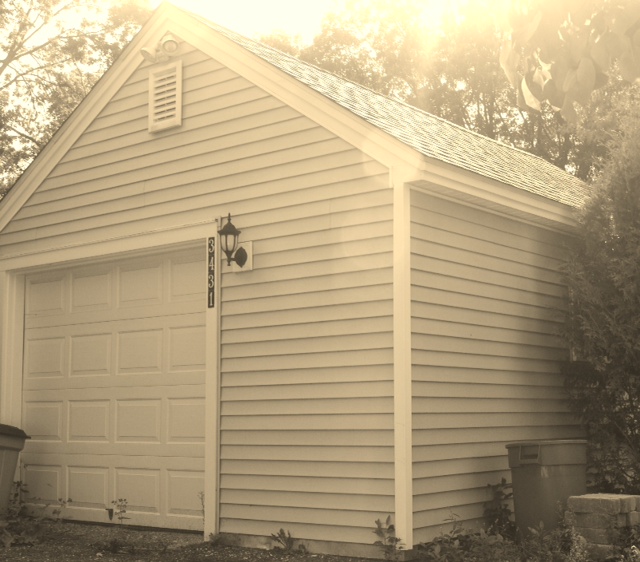
Although it has since been remodeled, the garage where Blacky died still stands.

Although it has since been remodeled, the garage still stands.

Inside the garage the suffocating aroma of cat spray hung heavy around my face and chest, making it difficult to breathe. Blacky was still there, lying on his blanket with his front paws outstretched in front of him. His head and neck were upright, and turned toward the door as though he’d been expecting me.

I walked toward him, noting a shadowy line that appeared to be moving across the floor. I crouched down to take a closer look and began to half-walk, half-crawl as I followed it. The line was made up of hundreds, perhaps thousands of tiny red ants; ants that were marching straight towards Blacky’s blanket, up onto his paws, his neck and his eyes.  Oh God—his eyes.

I pulled my hands to my mouth. Blacky’s eyes no longer shone bright against the darkened backdrop of the garage. They had been snuffed out—swarmed by hundreds of these tiny red ants. They were feasting on his eyes. Blacky was gone. He was dead—or being eaten alive. I wasn’t sure which.

I grabbed the sides of my head with both hands, covering my ears as I stood up and slowly backed away. I was going to scream, I could feel it rising and pushing up from the depths of my stomach. I turned with my head still in my hands, and ran from the garage. I stopped just outside the door and began circling the large oak tree that took up half of our backyard.

Mom came running out from inside of the house, stunned by the spectacle I was creating.

“What’s going on?” she asked shaking her hands out in front of her, then grabbing onto both sides of her hair.

“Are you hurt?” she asked, surveying the yard for clues. “My God,” she yelled, “What happened?”

I clenched my fists together against my outer thighs, and began circling the tree again. Mom tried talking me in, but I wasn’t budging. She stumbled after me trying at first to match my pace around the tree, finally grabbing onto one of my stiffened wrists. She put her arms around my shoulders and directed me toward the house.

Our neighbor emerged from her backdoor to see what was happening.  Mom raised her hand slightly, her palm facing upward and shrugged.

“We’re having some issues with the cat,” she offered.  “Holly’s pretty upset about it.” She tried to pull me in closer. I jerked away from her and resumed my dizzying pace around the tree, while the neighbor looked on in confusion.

It wasn’t often that I held the cards, but I deserved this moment of defiance.  I had earned it.

About the author

Holly Gross is an aspiring writer, and homemaker. She was a finalist in the 2011-2012 Loft Mentor Series. She was born and raised in Minneapolis, Minnesota where she now resides with her husband and two daughters. She is currently working on her Memoir, and enjoys further developing her craft through an array of classes and other writing opportunities offered by the Loft Literary Center.

That Easter

field

by Leonore Wilson

I remember how cold it was that Easter, a bitter cold that kept us in as if it were winter, but the sun was out; the sun was a big deception in the sky. We were all at dinner — picture the ham, mashed potatoes, dyed eggs, the jelly beans. Then the phone rang. My mother answered. The dispatcher said people saw a naked woman running through traffic, she was running like a scared doe in headlights. They couldn’t shout her down or weave her in. They asked us if we had seen her, that she was last spotted running into the open field in back of the house. The police wanted to know if they could come up to the ranch and find her. A naked girl? Or was it a woman? My mother said it didn’t matter, no we hadn’t seen her. Then my husband left the table as if he were a doctor and this was his call. He ran out of the house and so did our boys. I was left with my mother at the table. We were the women. The food like a big accident before us. We ate the ham, the salad, drank our milk in silence to the sirens.

My husband came back. He said something about her wearing only underwear, big panties, nothing fancy, and that she had lived in the field for three days. He said she was nothing to look at really. In fact she looked like a dog, dog-ugly. He asked if I would give her a sweatshirt, some pants. I went to the laundry room, picked out the pink ones I hated, the color of peonies. Later I saw her at a distance. They had her handcuffed. They were taking her down the mountain. It was starting to rain. She had her head down, the way Jesus had his head hung, ready for the crucifixion; she was that scrawny. I put my body in her body. She was wearing my clothes. My husband told me she kept telling the cops that she was a mother, that no mother should be treated with handcuffs, that she was no danger. The cop said she was covered with bruises, that her husband had beaten her and left her on the highway, that she wanted to die in the field where she first met him, her lover. The cop said she was on drugs and loony. He said she’d probably go back to her husband. That they always do. These strays, these losers.

That was ten years ago, but I still think of her. This woman, not the only inconsolable stray I’ve found on my rural road, in this paradise called Napa, this manna of land fluted by canyons, sharpened by cliffs. Wappo territory where wild irises bloom their white flags from the portholes of meadows. There’s been others. Other women. The woman with purple welts around her neck, scourged neck of the black and blue, weeping near her stalled U-Haul and the oversized drunken tattoo of a man. Or the woman whose husband drove his black sedan behind her as she walked the dotted line, the mean bumper of his souped-up car butting up against her like a bull. But it was she, the woman discovered on Easter, who remains in my center like the blue throat of the owl in the center of moonlight. She the vixen’s red breath coming out of the garden and into the pitch. She emerging from the earth-bed like Persephone released from Hades, but returning to Hades. She, the matted camellia, the numbed apostrophe of the killdeer stirred from the cinders. Who is she, whose handiwork? Whose heat did she trigger? What ownership? Who was she, that threadbare girl of skin and ribs, feeling invisible, that field witch? Did anyone ask her; what are you feeling, do you feel anything, as they cuffed her bare feet, stuffed her in back of that cop car? Was she bound and flogged before he, her lover, her spouse, tossed her out like rotten trash? Is there any way to explain her naked body? Her naked fingers? Her fallen legs collapsing under her like unplayed cards?

I think of her, of all the women I have found in my country, their shadows writhe within me. I who have stayed silent. They with their loosened hair, stained with soil and blood, drugged eyes glazed forever on the black chart of amnesia. There have been many in these hills, this valley. Wild, hard women. Endangered sisters. Their heaped colors suddenly gone ashen like the cloudiness that forms over winter blacktop. They who scratch themselves, who urinate, who stay in unspeakable loneliness, their feminine power routed backward like miles of barbwire. They are homeless cursed women, naughty women, the words stolen out of their teeth like bread. They who would rather choke than be vulgar.

How can I wrap my house in sleep thinking of them, thinking of her making a fire of wet wood, telling stories to herself, singing lullabies, nursing the tragedy of her sex. I pace the floor thinking of her. I poke my spade into the dry loam and think of her. I find her everywhere. I have learned her by heart. I have worn her close to my body. For she is my body. She is the foundling of the woods, the one slip of tongue, the liquid mist that burns off the highway as the new day forms.

I want to know who touched the match to her flesh, who left her blanketless in the frost as I stoked and blazed my stove. I know she was there in the twilight and thorns. I’ve felt her mouth on mine like a lump of bitter jelly all those times alcohol was fire on my breath. The times I starved myself with pills in my pocket, wanting love, wanting the brisk taste of airports and ferries, I’ve been her. The times I wanted the impermissible. I’ve been her. Discontent as a cormorant that pokes around the corpses of roses, wanting to be fractured, exiled under the floss of many petals, I’ve been her. Wanting to be seduced by that floral nard. Me, in the snowstorm of unimaginable longing while the hangman’s noose rose inside my chest, taunting, taunting. I too tried on death too many times. I who wore my own bruises like badges around my jaw. I of steely posture.

Why?

I lowered myself in the chaparral, afraid, my breasts full of milk, my hair disheveled. I thought I could stand betrayal, that I could spill myself like purple vetch, like legend down the lush gametrails into drink. What soothed me? Sometimes mint in the mouth, sometimes the pearl-gray mist. I wanted to be like my ancestors. I wanted to be strong as shattered rock, as basalt mortars. I didn’t think it right that a woman go off like a kettle full boil. But I was proud and half-blind. I was a stuttering tadpole. A spectacle. An odd empty thing.

I was a master of nothing. I wrestled with the serpent inside me, the female totem of melancholy. Me with my teacups and miniature cakes. I sucked in my midnights, my howls and my whelps. Why? How many dead girls like me smelled of old lunatic lies?

My sentence was mine: my well-piped breeding, my pilgrim dreams. Guardian of chandeliers, when my heart was always squawking like an interior swan.

Be damned the well-scrubbed house, the family snapshots. Be damned the flowers of Hell, the ostracized penance, the lowermost regions, Lethe’s spell where Eurydice wastes away with Persephone. Be damned if the dark snake of Eden flew out of my mouth. I want the Easter woman at my table, I want her story. I want to take her groggy hand, lead her away from the fettered ring, the life of sacrifice, of thick-scented curses. My tongue dips into the chewed meat of thistled honey when I say this. Mothering is the dilation of feathers. Forget the flower-pressed face concealing its failures, bleeding its kindness like a parasite. Inside our smile is the knife-grind, the winged lion. What abscesses in our flesh — not our humiliation, nor our quarrel, but our rising.

grain

About the author

Leonore Wilson is the mother of three sons in their early twenties. Her husband is a scientist. She lives in the wilds of Northern California. Like it or not, she comes from generations of rugged females keeping nature both fertile and sacred. She has won awards as well as fellowships for her work and has published in Poets Against the War, Madison Review, Sing Heavenly Muse, Rattle, Quarterly West, Third Coast, Pedestal, Laurel Review, Pif, DMQ Review, and Unlikely Stories.

The True Story of why I Hate Math*

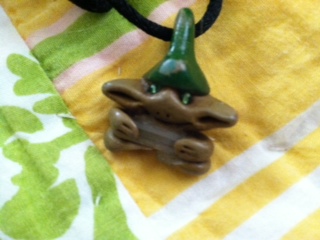
The author's troll necklace, the cracked neck invisible.

The author’s troll necklace, the cracked neck invisible.

by Allyson Wuerth

*Some of the names and places in this true story have been changed.

Binomial distribution, I still don’t understand it. What I do know is this: as with any problem, one of two outcomes is possible, success or failure. I say this like it’s that simple. Success or failure. Black or white, like so much from our early years.

I was always a failure at math. Numbers never made any sense to me. Oftentimes in grammar school, well-meaning teachers would send me off to Mrs. Cole, the math tutor whose fingers were spindly wands of smoke. Later she became my middle school language arts teacher and my high school western civilization teacher (I can still hear her raspy voice pronouncing “Ne-buch-ad-nezzar”). We’d count lima beans over and over again, as if this would somehow force logic into my head. 9 beans + 1 bean = 10 beans. Her yellowed fingers sliding them across the desk, bean by bean. Her mouth dryly and slowly managing the numbers, “Nine beans. Plus one bean. Equals. Ten. Beans.” Her voice would rise an octave as she stated the answer, like it was so simple, a you’re-making-this-unnecessarily-complicated tone that I couldn’t quite shake.

She had frosted hair and a tight perm. But in those days I’d walk the hallway back to my classroom remembering nothing but Mrs. Cole’s chalky hands and the smooth feel of so many beans, the icy sound of numbers being dumped back into their glass jar.

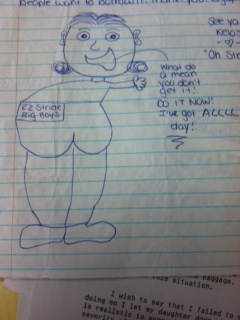
But let’s go back to the beginning or look ahead to high school, depending on how you see things. Binomial distribution. My 10th grade algebra class with Mr. Kilo, or “Billy K.,” or “Blob Jello” as my friend Casey and I called him in our frequent note passing. It was one class. One year. But even now, twenty years later, I say this class changed my life.

. . .through the eyes of teenagers. . .

. . .through the eyes of teenagers. . .

First, let me explain how each and every one of Billy K.’s classes ran. Even so many years later, this routine, inculcated to memory. We’d all file into his classroom where he would be sitting quietly at his desk drinking his coffee and reading the Evening Sentinel or drinking his coffee and working on the blueprints to a house he was building.

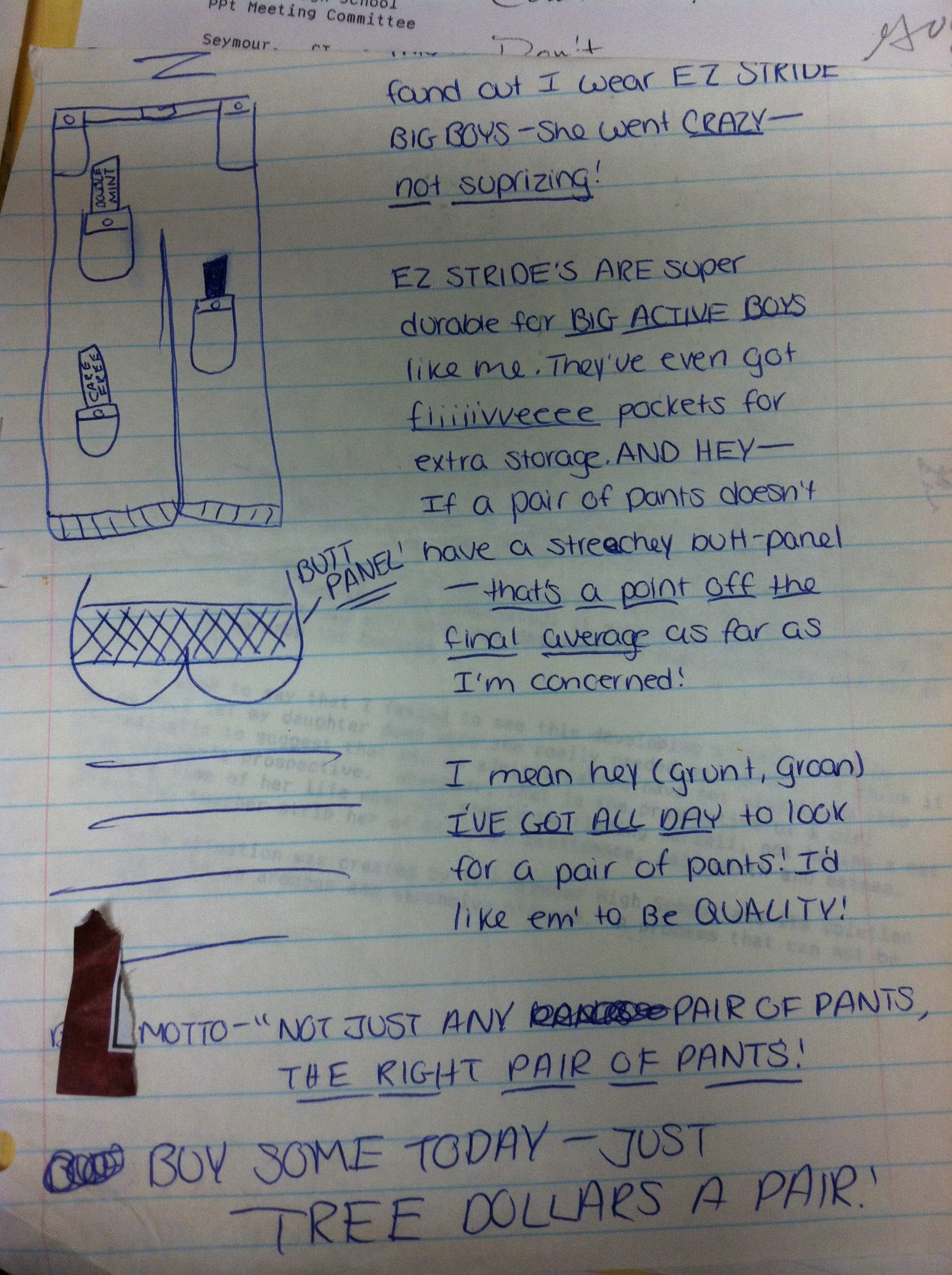
Whichever way Billy K. chose to occupy himself, he stuck to it. He rarely looked up, not to greet us and never to teach us. The blackboard was full of numbers, notes, and lessons. With his head hidden behind blueprints /Sentinel, he’d call out, “Copy the board into your notes. Then do 1-45 odd in your book.” He said the word “odd” like he hated it, as if he’d stuffed his mouth full of a horrible paste. “Odd.” The caw of an unexpected crow. If he did speak, “Dat’ll be a point off yer final average.” Any offense could warrant it. “No book cover on dat algerbra book? Point off yer final average.” Wrong answer? “Point off yer final average.”

Okay, so maybe things would have turned out differently if I had only been taking math notes!

Okay, so maybe things would have turned out differently if I had only been taking math notes!

We sat dead silent, a mixture of the riff-raff of the school, smarter freshmen, and jocks who were sent to Coach Billy K. for the sake of the Bobcats. Sometimes he’d stand up, adjust the elastic waist on his cargo pants and spend fifteen minutes checking to see that we all had book covers on our school-issued math books. Casey claimed his pants were called “EZ Stride Big Boys,” and every time he ran his stubby thumbs under the elastic I had to force down a laugh. He’d move through the room, only pausing to clear his throat and ask, “’Comin’ to practice today, Todd?” or “How’s dat arm, Brand?” or “No book cover, Brian? Not surprising. Dat’ll be a point of yer final average.”

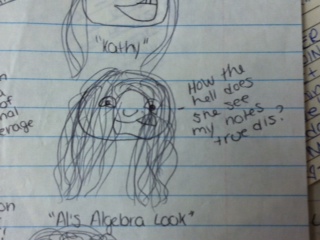
Me, I was the riff-raff. I sat against the far wall, second seat in with only Casey  in front of me. We passed notes all of class, every class, amusing ourselves by drawing pictures of Mr. Kilo or making fun of his very obvious weight problem. We were fifteen and willing to risk almost anything. I kept my book covered and my mouth shut; I thought I was okay. The room had two windows, one by Mr. Kilo’s desk and one in the back of the classroom. Later, this became very important to me.

And then, those binomials. I opened my book to do the classwork/ homework, but it didn’t make sense to me. To this day, I don’t know what made me get up from my desk and ask Mr. Kilo for help. But I did. “I’m not sure I understand this. Can you help?” I must have said something like that. His face went tomato red. “Look at yer notes.” He didn’t even look up from his paper.

“I did. I don’t get—‘’

“LOOK at yer notes. Bring me yer notes. Go get ‘em.”

Everyone was looking at me. I went to my desk and gave him my notes. He looked through them, carefully licking his index finger in order to turn each page. I panicked that he would see how at the top of every page I’d written “Algerbra notes.” That’s how Billy K. pronounced it. It was another joke between Casey and me. But he didn’t notice. He handed me my notebook back. It was pink. The cover said, “Algerbra” in cursive with the final “a” transitioning into a blackened heart.

“Go si’down an’ do yer work,” he mumbled. I went and sat down, thought I’d have another silent 15 minutes to collect myself from the embarrassment that just ensued. But, no. Today was different. Mr. Kilo decided we would go over the odd problems in class, without being able to look at the answers in the back of our books. Aloud. Together.

No one in class struggled with these binomials the way I did. Answer after answer: correct, correct, correct. Until he got to me. It was like watching the fire trail on a stick of dynamite, and waiting for the explosion. “I didn’t get this far,” was all I could muster when my turn came, my voice sore and dry.

“Yer answer.”

“I don’t know.”

“Go back to yer notes!” As Billy K. yelled at me, his eyes bulged like such tiny, sweaty blueberries.

I flipped the pages, but the numbers had blurred into nothing but grey lumps. Page after page of foggy grey mountains. Still, I struggled to form those pages into some sort of sense, something more palpable than grey mist. But, I had no answers. I started to cry and quickly covered my face with my long hair. “Look, she’s crying,” he laughed. “Look. She thinks she can hide behind her hair.” Again, laughing. This time the class roared with him. A basketball player looked over at me and glared.

Funny, but not funny.

Funny, but not funny.

I’ve never even come close to being buried alive, but this is how I imagine it feels: thrown in a hole, you scratch and fill your fingernails with dirt, you claw and climb but you keep slipping further and further down into an abyss that swallows you up and hates you for your taste.

Panic Disorder,” is what the therapist said. But, you know, I thought I was dying in the darkness of those days. Panic attacks. I began having them in each of Mr. Kilo’s classes. A dark tunnel would envelop me, breathlessness soaking down inside me. I wanted so badly to “move on,” “get over it,” like the school administrators told my parents time and time again — but my brain forbade it, kept me locked up, caught up in that horrible haze of panic.

Leaving was the only way to break the trance. So, I left. Time and time again. Sometimes I raised my hand; sometimes I just walked out of algebra. Eventually, I began to associate my clothing with panic attacks, foods with panic attacks; days of the week even would lead to panic attacks. I would drink long swigs of Benedryl before math just to disorient the panic, trick it into submission. But those panic attacks were smarter than any elixir I could concoct from my parents’ medicine closet. It always found a way out of my daze. Another trick was to look out the window, imagine myself unlocked in the outdoors. But the truth is, I looked outside and saw nothing but an expanse of weedy land and beyond those sad sights, a new sub-division being built.

Once, at some lame new-age store in the Post Mall, I bought a necklace that was supposed to bring good luck. I actually told myself “Nothing bad can happen if I wear this.” It was a clay troll holding a fake diamond. Who knows what it really meant? Once, in my best friend Zach’s driveway, it cracked. I glued it together meticulously — the crack imperceptible. I wore it every day until the day I graduated high school. To this day, I keep that necklace in my night stand, as if the life I’ve built will disintegrate, disappear into the ether if it’s ever lost.

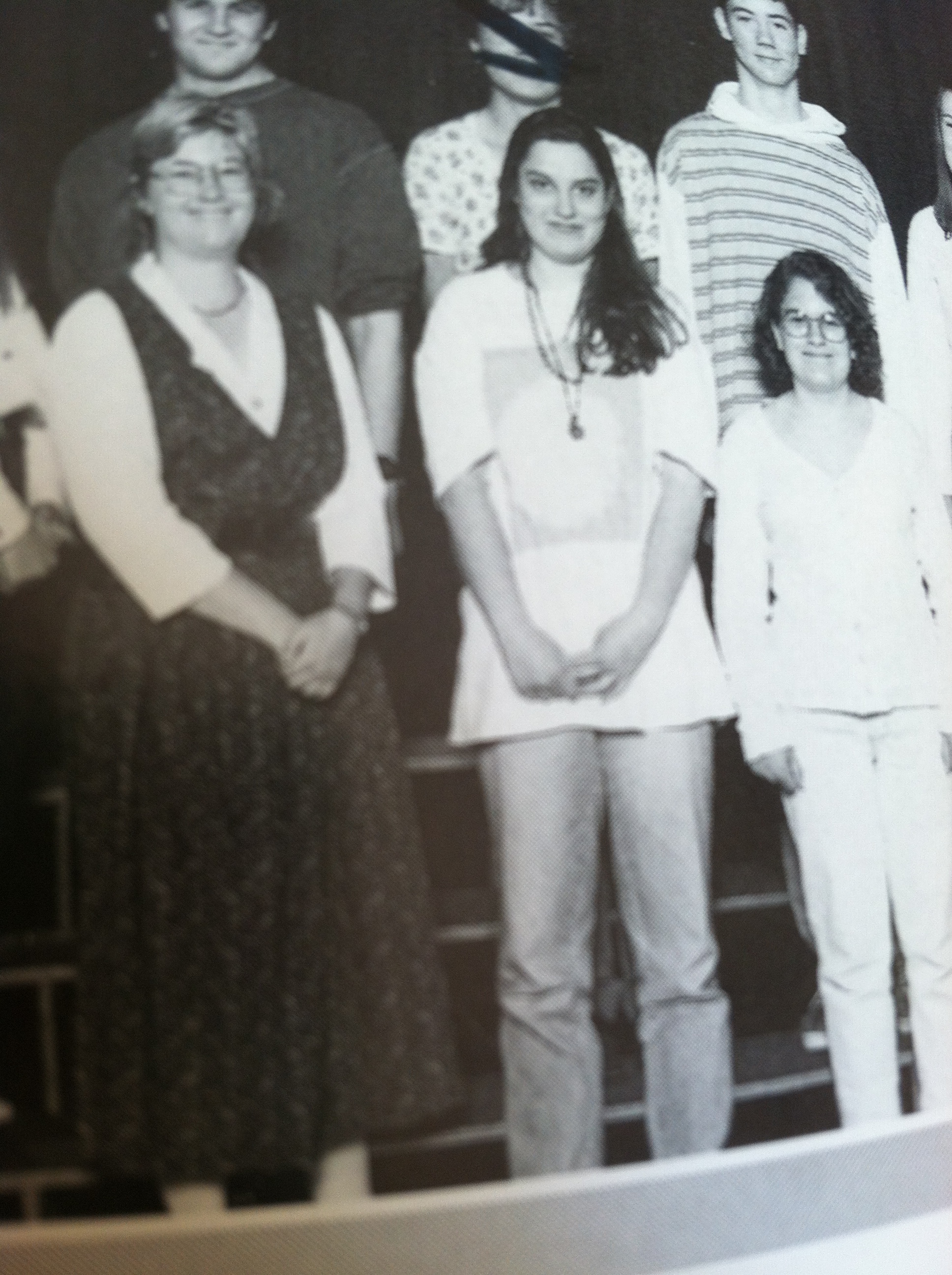
That's me in the front with a Tori Amos shirt on (I only wore Tori Amos shirts or shirts with Smurfs sewn onto them.) I'm wearing my troll necklace! Also, this is the only club I ever joined, Creations, the literary magazine.

That’s me in the front with a Tori Amos shirt on (I only wore Tori Amos shirts or shirts with Smurfs sewn onto them.) I’m wearing my troll necklace! Also, this is the only club I ever joined, Creations, the literary magazine.

But even with my potions and charms, the panic overwhelmed me. When I could no longer keep it inside me, my body erupted in bright islands of eczema. My toes, legs, arms, breasts consumed by such a shape shifter, this panic. Even my heart became an uncontrollable thing, always mixing up its beats and rhythms. “Phobic anxiety,” Teri, my therapist explained. “Your ability to decipher fight or flight is confused.” She gave me a pamphlet that detailed it all with stick figures and thought bubbles, misguided arrows that exposed the true nature of my chemical imbalance. If anything, I found this insulting. We went on this way for months.

Before long I’d missed much of my sophomore and junior years of high school. It was my father who brought me to see that therapist, and later the psychiatrist, Dr. Klugman, who worked with her. My mother was hesitant, embarrassed. But with the promise that I wouldn’t broadcast the news, she let me go. And, eventually, I learned how to cope. A combination of Klonopin, Prozac, breathing exercises, focal points (animal stickers with inspirational sayings), preferential seating (always near a door or window), and a permanent hall pass (golden ticket) allowed me to finish my junior year with mostly passing grades.

Where was this bitch when I needed her? Playing Winnie Cooper, that's where!

Where was this bitch when I needed her? Playing Winnie Cooper, that’s where!

In addition to all these accommodations, my father insisted on having a meeting with school officials and guidance counselors. Mr. Kilo opted not to come, but sent another math teacher in his place. He got married, turned those coffee-stained blueprints into a real home (I’m assuming) while I sat in my closet practicing breathing out the black and breathing in the blue. Out black. In blue. Deep breaths of the blue. Huge exhales of black. For a long time, things were this way. Just this tenuous. My future, ephemeral, bundled tightly in those sad black breaths.

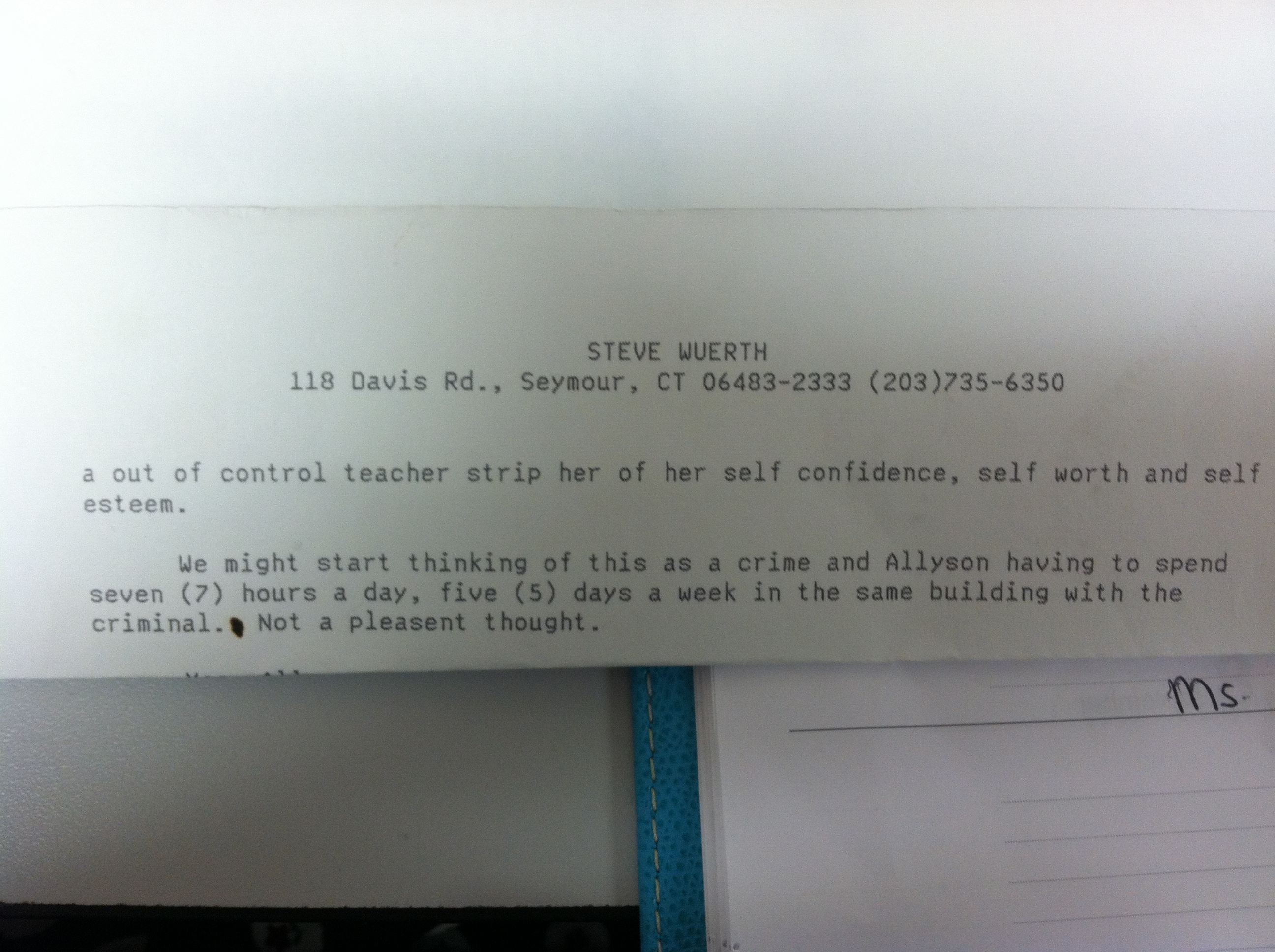
Years after high school ended, I found many drafts of a letter my father had written to the accommodation committee. He had been dissatisfied with our meeting, although I didn’t know it then. One draft had been left out for my mother to read. At the top, he wrote: “Comments?” and then, “Don’t let Allyson see this yet.” I’m not sure what he meant by “yet.” The letter is dated February 14, 1994. I found it in a folder labeled “X High” in his garbage after my parents divorced in 2006.

My father wrote, “I wish to say that I failed to see this developing situation and in doing so I let my daughter down when she really needed my support. I think it is realistic to suggest that you as administrators have not visualized this from Allyson’s perspective. Remember, that is the perspective of a girl during a time in her life when she should be having fun, making friends, and finding herself. Not having an out of control teacher strip her of her self- confidence, self-worth, and esteem.” In his revision, he changed the word “visualized” to “grasped.” I love that he revised his letter again and again. Each draft saved for so many years. In his final copy, he added into his conclusion: “Even with this traumatic experience Allyson is still doing better than most X High School students.”

The author's dad's letter

The author’s dad’s letter

I don’t know if my father ever mailed his letter, but I will always love him for writing it. Where my high school labeled me “emotionally weak,” my father had pointed out that they too had failed. Thanks to his persistence, I finished algebra my junior year with a new teacher, and geometry my senior year with a tutor. Trust me, there were no miracles. I passed algebra with a D. My senior year tutor, frustrated with my mathematical incompetence, eventually decided the first half of each of our hour long sessions would be “lunch time.” For the second half hour she’d pile bright sheets of construction paper before me and I’d construct geometrical shapes.

Somehow, this seemed a fitting conclusion to my tenure as a math student, a way for my hands to construct what my mind could not. My rhombus always misshapen, conjuring only nostalgia for Mrs. Cole’s pile of beans. I held them tightly, despite their grimy husks, despite the fact that they were really never mine to hold. All these years, I kept them, then let them go, only to watch them take root here in this story.

Allyson Wuerth received her MFA from the University of Pittsburgh and teaches literature at a private school in Connecticut. She still hates math.

85% Wolf

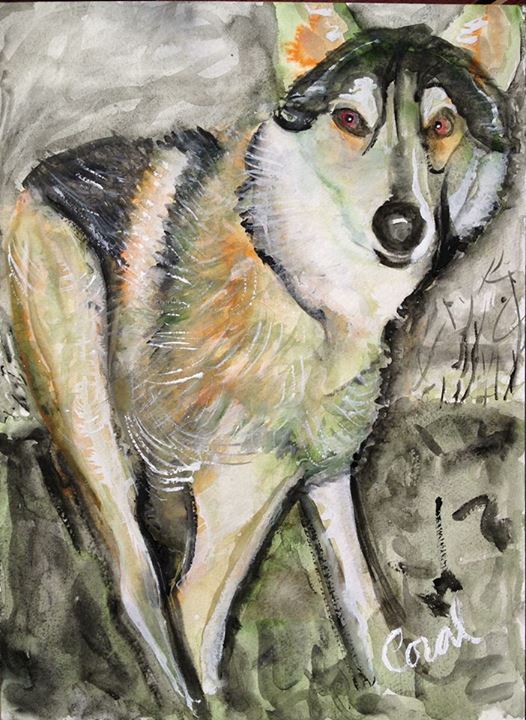
The author painted her Damien.

The author painted her Damien.

by Coral Staley

We hadn’t seen my father in 7 years when he showed up on our doorstep that hot summer day. All I felt was fear. I was the oldest, at 15. My sisters were 12 and 9. I told him he would have to return when my mother was home from work. I don’t think this went over well with my sisters, who were, without shame, excited to have their father back. And I admit, I wanted a father too. But not this one. I wanted a different father, a big strong man who would protect us from this one, the one I had no doubt would be beating on my mother again in no time. And maybe us too.

I knew for a short time there would be gifts and sweet talking, so I set upon my mission. I had wanted a dog for a long while, mainly for protection from him. I had a fantasy of a dog attacking my father, risking its own life to protect us. I expected my dad to object to my getting a dog for this reason, but he surprised me when, after showing him a picture of the Rottweiler puppy I wanted, he said he knew about a guy in the Ozarks who was selling wolf pups, and wouldn’t I rather have a wolf? Well, of course I would! The only problem was that I would have to sit in close proximity to my dad for over 8 hours, in the cab of his truck, the same damn green GMC I remembered him pushing my mother out of all those years ago without even slowing down.

This page from the author's diary includes a photo of Damien as a puppy.

This page from the author’s diary includes a photo of Damien as a puppy.

I don’t remember what took place during that long ride from Cape Girardeau to the Ozarks and back. I remember the man breeding the wolves was also breeding pythons — in his trailer, which he explained was the reason it was close to 85 degrees in there. He had a box with 4-week-old wolf pups he was bottle-feeding. They were dark brown, almost black, and already mewling little howls, which I found terribly cute. My pup, which was 10 weeks old, was the last one left of his litter and in a cage outside all by himself. He let us see all of his wolves, then the Malamutes, Huskies and German Shepherds he used for cross-breeding. He said in order for it to be legal to have a pet wolf, they couldn’t be more than 85% wolf. But he confided to us that mine was likely even more wolf than that. I didn’t know if this was true, or how someone could even verify this, but I wanted it to be true.

I had just finished reading The Omen. So naturally I named him Damien. It was one of those strong names, like Madonna, that stands by itself. He had lost that first dark coat and was light blonde. He had some of the wolf markings already; his tail had a prominent V of dark hair about three-quarters up, and a similar V up on his forehead. His ears were already standing up and filled with downy white hair, like he was ready for the Arctic.

The book that inspired the author.

The book that inspired the author.

We were in no condition to have a dog. For one, I knew nothing about obedience training a dog. And dog food was expensive. Our poor cat, Applejack, was forced to live on birds, rabbits and squirrels or else be served stale bread, cereal, or whatever we could come up with once the generic cat food ran out. Food stamps didn’t cover cat food. And we couldn’t afford getting her spayed, so we always had gooey-eyed kittens we were trying to figure out what to do with.

The landlord only said yes to the dog as long as the dog stayed outside. So he was kept on a chain in our backyard for the first couple years of his life. It wasn’t long before my mom and dad were fighting again, and eventually he moved to St. Louis, claiming he was getting his life in order and buying a house for us. Life pretty much resumed to normal. Mom got a new boyfriend.

Damien grew into a beautiful animal that stopped traffic when we went for walks, “Is that a wolf??” I often snuck Damien inside the house and let him sleep in my bed, and I taught him tricks, which back then I equated to obedience training. To teach him to sit, I pushed his butt down into the sitting position and said, “Sit.” After that, I said “Sit,” and he sat down. It was that easy to teach him things. I taught him to lie down, stay, roll over, speak and give kisses. I don’t think he ever went to the bathroom in the house. And really he was like a dog for the first few years. It wasn’t until around three or four years old that he “turned to breed.”

Damien, in the flesh.

Damien, in the flesh.

One day, Damien decided he wasn’t going to take orders from us anymore. And that was that. You could tell him to sit, but he’d just look at you, with those piercing wolf eyes. We moved into a house in what was considered the bad part of town, where white folks were the minority. And almost right away my sisters and I became targets for bullying, especially my youngest sister, who was routinely followed home from school by several kids. On one occasion, she was hit in the back of the head by a basketball. She thought if she brought Damien out on a leash that he would be intimidating enough that they would leave her alone. What she didn’t expect is that the minute he was let out, he went right for them, breaking free from his leash, and pinning the girl who had thrown the basketball at my sister up against a wall and biting her back. When my sister recounts the story to me, what amazes her most is that the bullying had taken place long before this point, but somehow he knew what had happened, who had done it, and what he needed to do. What’s also amazing is that he did not draw blood from this girl. The bite was simply a warning to leave my sister alone. Still, there were threats about putting him down and this or that, but ultimately, my sister wasn’t bullied anymore. And this is also when Damien became her dog.

The neighbors showed their reverence for him by throwing a whole pig into his enclosure. Alive or dead, we don’t know. It was my sister who cleaned up the mess of intestines and guts strewn all over the yard. She remembers him playing with the four pig’s feet. He would throw them into the air, then, not knowing where they had landed in the deep snow, sniff them out and dig them back up.  Rosie says: Almost all the neighbors regularly threw treats and toys to Damien. (All but the home of the girl he attacked and her family anyway.) He had something about him that made people love him.  Even though he looked wolf and could be intimidating, something about him made the people of that neighborhood really love him.  You mentioned that he was revered by the neighbors but it doesn’t really convey completely the way they felt about him.  I also wonder if they felt like they had to take care of him because we couldn’t always.

When I was 18, I joined the Air Force, and like so many irresponsible teenagers do, I left Damien for my mother to figure out what to do with. It was also around this time that my mother was left a small inheritance from her aunt and put down a deposit on a house a couple miles away. The problem was, we had no idea that wolves mate for life, and unbeknownst to us, Damien had chosen his mate back in that other neighborhood: a dog across the alleyway that I’d hardly even noticed before, chained to a doghouse. Every opportunity he got, he was escaping from the new house and returning to her.

It’s almost a sweet story, except, he was very protective of this other dog. He wouldn’t even let her owners feed her, snarling and snapping and causing quite a stir. There were times that my mother was able to get him into the car herself. But other times Animal Control was called, and every time it got harder to catch him. He became even more possessive and vicious. They tranquilized him after the third time and told my mother if it happened again, the Conservation Department would be called, and he would be taken into their custody.

Eventually, on one of these treks back to our old house, he was hit by a car and came home with a pin in his leg. It was then that he became a house dog, and as my sister says, he slowed down. Another reason I believe that he became a house dog is that he simply stopped taking orders to go outside. He’d taken up growling, as if daring my mother or sisters to even try forcing him. Rosie says: I don’t think Patty was around.  She moved to California with Dad shortly after we moved to this house. I remember him always darting in the house but never being aggressive to stay in.  When he had the pin put in his leg they discovered that he had heartworms pretty bad. At that point in time they were just discovering how to treat them with strychnine. It was 50/50 if he would even survive. It was really expensive for Mom too.  Somehow Mom would always take care of the animals when it counted.  Once at home, the treatments gave him life-threatening diarrhea. He hid in the basement for the most part. The vet told my mother and sisters to try to get Pepto Bismol into him. It didn’t take long for Damien to only just see that pink bottle and become the scariest thing you’d ever seen, like having Cujo in your basement Rosie says: I remember he seemed a little crazy right after his treatment.  I wondered if he was having a bad trip like being on acid. While he was in the basement he was having an episode and scratched the door at the top of the stairs as he was desperately trying to come upstairs for whatever thing that spooked him.  The door looked torn up as if a bear had done it. It is still that way today. I came home for a visit and thought I’d just waltz on down there and he’d know who was boss. But Damien quickly let me know that our dynamic was no longer. He was now the alpha, and I better back off. I was worried about my family after that, and knew I’d blame myself if something happened. And I felt like it was just a matter of time.

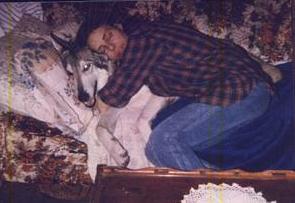
My mother for whatever reason was sleeping on the couch (Rosie says: Mom slept on the couch because I was always getting into trouble and juvenile detention was calling her so much) and he’d even claimed her spot on the couch as his. And she submitted to this arrangement. Mom says: Actually we ended up sharing the couch. I wasn’t about to give up the couch. I liked the couch because it was close to the door and phone, but also because it was easiest on my back. It’s the little things that count sometimes.

The author's mom and Damien on the couch.

The author’s mom and Damien on the couch.

Always a spiritual person, my mother was heavy into astrology, and it was around this time that she developed a deep spiritual bond with Damien, a relationship I don’t think she ever had before or after with a pet. While stationed in England, I found a book called Women Who Run with the Wolves and sent it to her. It was about women learning to embrace their wild, instinctual selves. I connected my mother’s kinship to Damien as her way of embracing her own wildness, a wildness continually being stamped out–by men, by being a single mom to three unruly girls, and by the hard manual labor of working at a saw mill for twelve hours a day. I believe she saw Damien, 85% wolf or not, driven by instincts, refusing to be domesticated, and it fanned the embers of her own stubborn soul, and maybe even vindicated the path she had taken so far, raising us on her own, as hard as it was.

women who run

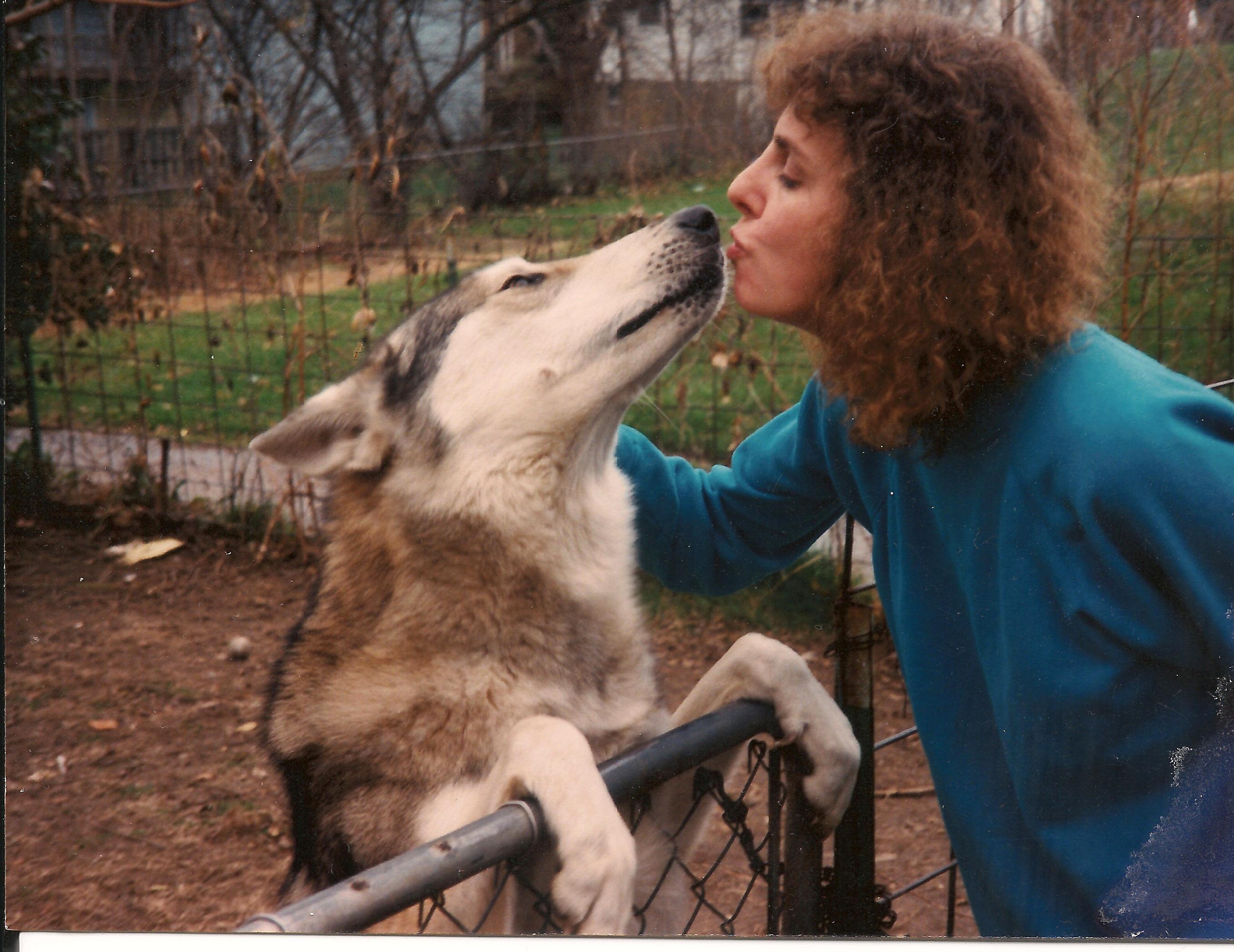
The author's mother gets a kiss from Damien.

The author’s mother gets a kiss from Damien

The day finally came that he somehow sneaked out the front door and ended up back at that house, which brought the Conservation Agency into things. Rosie says: Damien became so docile that we would trust him to be outside off a leash.  Mom left his gate open after doing some yard work or something and he wandered off.  That’s where her guilt stems from. The conservation authorities said the laws had changed. Damien would be released to my mother only if an enclosure was built that met the requirements for housing an exotic species. He would no longer be allowed on walks. While my mother set about having this enclosure built, he was kept at Animal Control in a small cell and not taken out for six weeks. My sister visited him on a regular basis, and one day she walked in and was simply told, “The animal went crazy and was euthanized.” What broke my heart was my mother, hearing her sob as she told me about the last visit to see him, when he jumped up whining, wagging his tail, expecting her to take him home as usual. Twenty years later, my mother still finds it too painful to even recall her memories of Damien.

About the author

Coral Staley has an MFA in Creative Nonfiction but is too busy with her two boys to give writing much thought these days. She does, however, find time to paint and considers it another form of creative nonfiction.

Pipe Dreams

First up in our “Best of 2013” is Pipe Dreams by Randall Martoccia. Pipe Dreams was 2013’s fan favorite. Set in the early 1980’s and  loved for its recollection of a popular head shop in small North Carolina town, Pipe Dreams

by Randall Martoccia

Pipe Dreams' logo

Pipe Dreams’ logo

I was in fifth grade when the governor of North Carolina called my mother a parasite. Not to her face, of course—Governor Hunt didn’t even know my mother. He was referring to all of the storeowners in his state who sold drug paraphernalia, and Mom ran the largest head shop in Greenville. She knew not to take the words of politicians too seriously, and she understood that Hunt’s attack was not personal, but she never did forgive him. When Hunt ran against Jesse Helms in 1984, Mom didn’t even vote for him. She was and still is a steadfast Democrat. The attention given to Hunt’s words by the local media bothered her the most. News crews, who know a little about blood-sucking themselves, flocked to her store, thrust microphones in her face, and asked her, “How does it feel to be called a parasite … by the governor?”

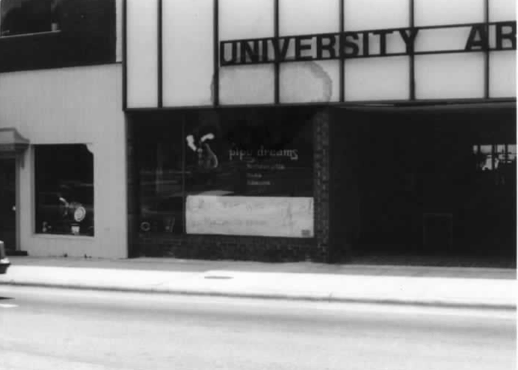
Mom’s shop was called Pipe Dreams. It sat along the main stretch of stores in downtown Greenville, beside Mike’s Bike Shop and across from Heart’s Delight, an ice cream parlor. Pipe Dreams was not a dark and seedy place — hard to be dark when two of your walls are plate-glass, hard to be seedy with a colorful rendering of the caterpillar from Alice in Wonderland (nicknamed Utokia by my mother and her friends) painted on your door. Mom sold a wide assortment of things — posters, buttons, tee shirts, costumes at Halloween time — but drug accessories were her most consistent money-maker. When the Drug Paraphernalia Law went into effect on October 1, 1981, making the selling of bongs illegal in North Carolina, Mom knew the store would never survive. She tried hard, but the store had lost its focus. In the final months, she sold, or attempted to sell, Rubik’s cubes, board games, and suede cowboy hats, which became an emblem of the store’s aimlessness. Pipe Dreams closed down less than a year after the law went into effect.

Pipe Dreams as it was.

Pipe Dreams as it was.

She kept Pipe Dreams running for three years, a good record for any business in downtown Greenville. Looking at the bars along Fifth Street today, it is hard to imagine children playing there. Things were different then. In the late seventies, downtown Greenville was a rich playground for my friends and me. Within a block of each other were the already mentioned ice-scream shop, Barrel of Fun, an arcade; Hodges, a sporting-goods store; and the Book Barn, a kid-friendly bookshop.

However, Pipe Dreams was one of our favorite haunts. The bongs lined up on the shelves looked as harmless as vases, so we ignored them. Instead, we pinched each other with roach clips, yukked it up over the “Ayatollah Assahollah” tee shirts and the posters of Steve Martin with an arrow through his head or Frank Zappa with his pants around his ankles. We thumbed through exotically titled magazines —like High Times or Heavy Metal—looking for a breast or two. Mom had no problem with us hanging around. In addition to keeping me within sight, our presence in the store seemed to amuse customers. I think that a few ten-year olds running around made first-time customers feel more comfortable about being in a head shop.

We helped to make Pipe Dreams look and feel like a normal shop, which was how Mom always considered the place. As she explained to a campus reporter in 1981, “It’s simply a store and I sell the things that people request.” Mom, I believe, oversimplified the purpose of Pipe Dreams for that reporter, but how do you describe things like friendship and camaraderie to a newspaper reporter? Sure, she showed great joy over the October windfalls (from Halloween costume sales), but she never showed much anxiety over the store’s usual limited successes and ultimate diminishing profits. And how could Mom say that the main reason she kept the store going was so she wouldn’t be lonely in the afternoon? She couldn’t have told him these things without sounding just as flaky as people expect an operator of a head shop to be.

She may have been a lousy entrepreneur, but she was not a flake. I’m sure she mystified a lot of people back then. One of my favorite photographs shows her smiling in front of her store. She wears a white blouse with a navy-blue knee-high skirt and a matching neckerchief. Her blond hair is short and swept to the side. She favors Angie Dickinson from her Police Woman days. She’s 36 in the photo but looks years younger. Mom did not look like the stereotype of a head-shop operator.

She also did not have a background that one might expect from someone in that line of work. My mother grew up on a dairy farm outside of a Rocky Mount in a strict Southern Baptist household. She graduated East Carolina College in the mid-1960s and, while the drug revolution took hold in parts of the country, she raised my older brother and me. When I started going to kindergarten, Mom got a job as an X-ray technician. Then she tried to sell real-estate. “I’m too honest to be a real-estate agent,” she’d say, and the mere three houses she sold during her entire tenure prove that selling houses was not her calling. In 1979 she and two friends launched Pipe Dreams. Soon afterwards, she bought out her co-owners. Pipe Dreams was her baby.

Mom often said that eastern North Carolina was about ten years behind the country when it came to marijuana use: late ‘70s Greenville was no late ‘60s Haight Ashbury. Truth is, even when Mom could sell bongs, Pipe Dreams barely broke even. The traffic of customers was never busy enough to interrupt the almost-daily games of Scrabble. When they did come in, the customers — most of them college students — usually took more of an interest in Mom and Max, her part-time worker, than in any of the inventory. Some customers became regulars. They’d hang around Pipe Dreams for hours just taking turns talking and listening. My friend Colin and I would drop by the store just to listen to the torrent of words. Here, grownups talked like real people. They censored none of their racy jokes for us. They treated us with respect, something that teachers and other parents failed to do. Colin and I liked Max most of all; he told the best, dirtiest jokes.

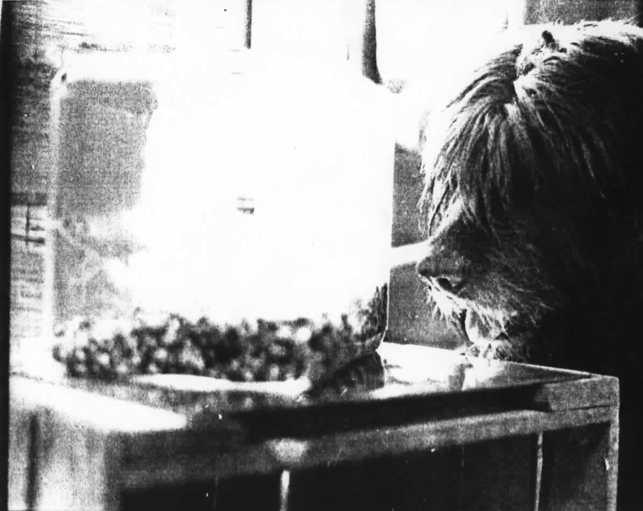
If we liked Max the best, then we liked Beaver second best. Beaver was a dog; his name came from his stumpy, paddle-like tail (and not because he smelled like one, as Max once cracked). He used to sit in Pipe Dreams all day long and stare at the goldfish that Mom kept in a bowl near the window. Mom would lead him out at closing time and would find him curled up in front of the door when she opened the store in the morning. Beaver stunk like hell from bathing in the river. His hair was knotty and matted, like a Rastafarian’s, and hung down in front of his eyes. He became Pipe Dreams’ biggest attraction. People walking along the sidewalk would see Beaver through the front window — sitting up on his front paws, looking into the fishbowl — and would just have to come in and meet him. My friends and I would stop in just to look at Beaver quietly contemplating the fish. He never barked. He never acknowledged the gawkers. He just stared. To us, his eyes seemed to hold wisdom. There was even a legend going around that, at night, Beaver presided over canine congregations. My friends and I believed that legend and knew to respect that dog. Even though Beaver made our hands stink, we never refused to pet him (once I even brushed the hair out of his eyes and kissed him on the forehead), and we never complained about the smell that stayed on our skin for hours afterwards.

Beaver the dog (far right). Goldfish (left).

Beaver the dog (far right). Goldfish (left).

Colin’s parents would never have let him hang out with me if they knew we were spending so much time at Pipe Dreams, so he never told them. Colin’s parents were not unique, as those of most of my friends disapproved of Mom and her shop; I could see it in their faces. Even though the parents in my neighborhood probably supported Mom’s right to sell paraphernalia (my neighborhood, across the street from the university, was mostly liberal), they still did not want their children near “that kind of element.” When I went into their homes, they kept an eye on me. When I acted politely, they were pleasantly surprised. Wow, they probably said to themselves, look at that boy rise above his family. Colin’s parents were the most suspicious of the lot. Mr. and Mrs. Todd had had seven children before Colin, and their ideas of the right way to raise a child were settled. They almost never let Colin and Owen, his older brother, spend the night. I suspect that Mrs. Todd resented the fact that her son spent so much time at my house.

That Mr. and Mrs. Todd were the last customers of Pipe Dreams is a fact I still do not quite understand.

In the months before Pipe Dreams closed for good, Mom watched as the store shriveled up around her. As she stopped ordering products to replace the inventory being sold, shelves cleared, the display cases emptied, and racks lost their shirts. Then she sold the shelves, the display cases, and the racks too (one of the cases going to the Greenville Police Department, much to my mother’s amusement). What she failed to sell was moved on June 30, 1982 into our living room. As for me, my attention was focused mostly on the former contents of the drink machine. I had never seen that many cans of Cheerwine at one time. Yard sales followed in the weeks ahead. The heap shrank, sure enough, but was still large enough in November to threaten our traditional arrangement of the Christmas tree.

cheerwine

Mom got desperate. She had Dad ask his students if they wanted any comic books or tee shirts. I was told to look out for any potential customers of cowboy hats. Seeing the hats, all dozen of them stacked one on top of each other in a column in the living room, constantly reminded Mom of how questionable her business sense was. Although the custom-made hats were nice — suede, leather band, protruding feather — cowboy hats were just not fashionable in Greenville in 1982. Another problem was the price. Mom bought the hats for twenty dollars a piece, and her pride wouldn’t let her drop below that to get rid of them. I told friends about the hats, even had them tell their parents about them, but I explained to Mom that she shouldn’t get her hopes up: “Greenville just ain’t cowboy country,” I told her.

Then one week before Christmas, we got a phone call. It was Mrs. Todd, Mom said, and she’s coming over. Mrs. Todd had never come over to our house before, and I was scared. (Hell, she rarely even phoned our house, except to tell Colin to come home). Before I had time to worry, the front doorbell rang. Mom made me get the door. I opened it and was shocked to see Mrs. Todd and Mr. Todd and Buzzy and Sean and Colin and Sarah and Ruth and Rosie and even Michael Doyle, Colin’s nephew. They’d come for the hats.

Mr. Todd bought all of the hats that day: one for him, one for Mrs. Todd, one for each of his kids (even Mary and Dennis, who weren’t there), one for Michael Doyle, and one for I-don’t-know-who. Mom and I stood at the front window. She held Mr. Todd’s twenties in her hand, smiled at me, and felt not a bit like a parasite. We watched the Todds make their way down the street, walking in single file. “Look,” Mom said, “it’s Papa Duck and Mama Duck and all the little ducks,” and we laughed at that image of them, even as the last pieces of Pipe Dreams bobbed down Fifth Street on their heads.

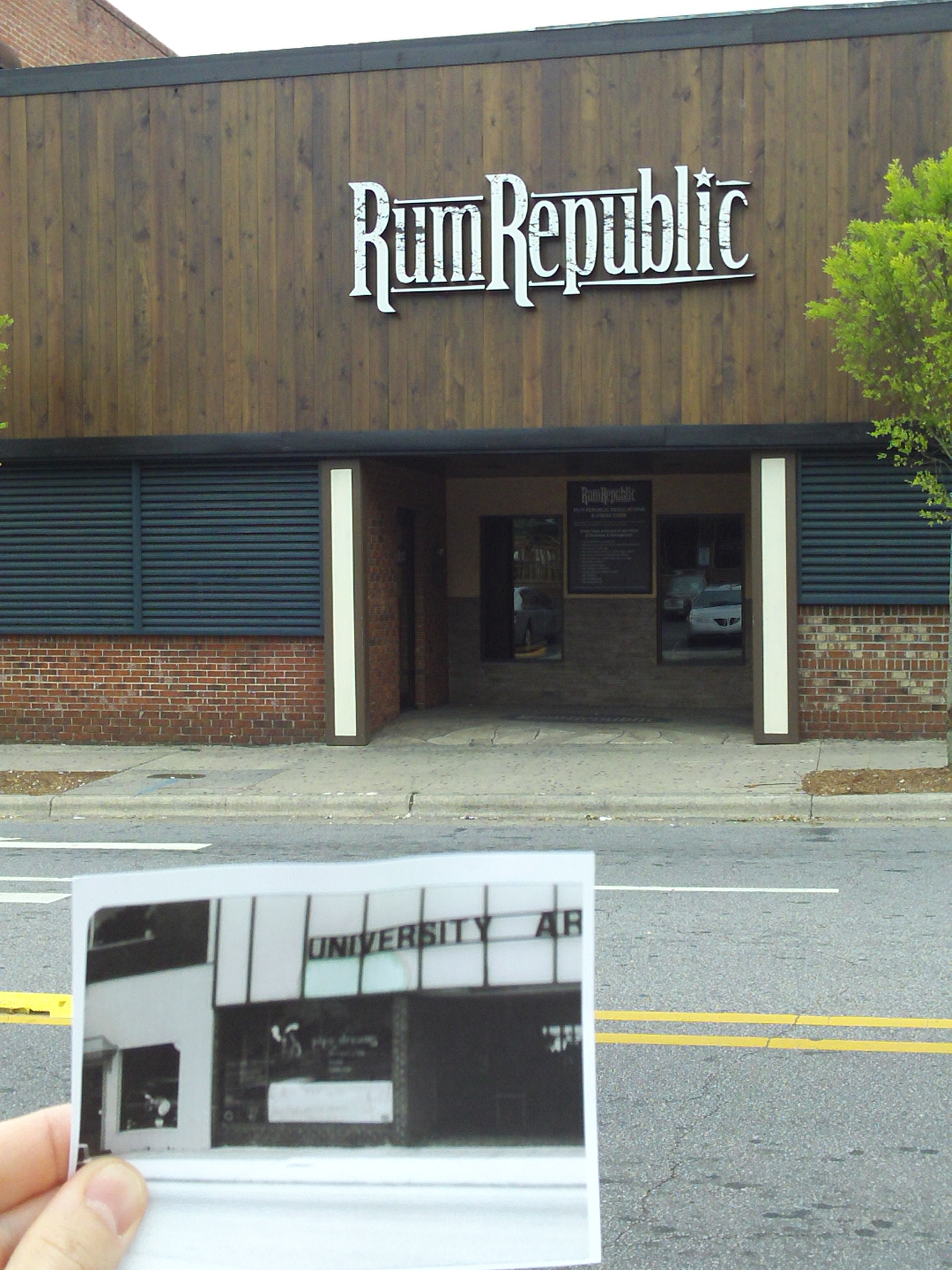
This undergraduate haunt stands where Pipe Dreams once nestled itself into downtown Greenville, NC society.

This undergraduate haunt stands where Pipe Dreams once nestled itself into downtown Greenville, NC society.

About the author

Randall Martoccia teaches at East Carolina University. He writes short stories and poetry and produces short films, which languish on YouTube, thus far failing to distract a high number of the nation’s office workers–his goal, as an anti-capitalist. He is considering adopting a cute cat to boost viewership. His wife Christie disapproves of the cat, but his daughter Mira and two dogs are warm to the idea. 

The True Story of an Unlikely Friend

by Stephanie Baldwin

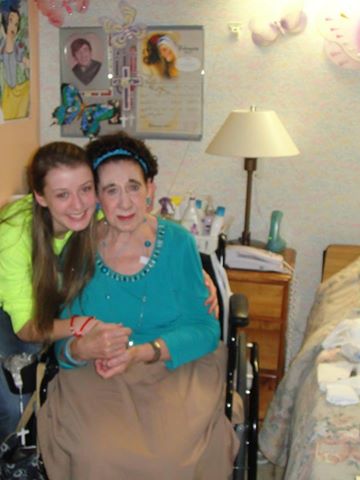
The author and Frances together. Behind them is a weathered photograph of Frances's late son, Raymond Scott. The blue butterfly is a drawing made by the author for Frances who has always seen butterflies as a sign of hope and a sign of love from her son. Also, Frances's outfit theme was blue that day.

The author and Frances together. Behind them is a weathered photograph of Frances’s late son, Raymond Scott. The blue butterfly is a drawing made by the author for Frances who has always seen butterflies as a sign of hope and a sign of love from her son. Also, Frances’s outfit theme was blue that day.

“In all my work what I try to say is that as human beings we are more alike than we are unalike.” -Maya Angelou

Doubled over in laughter, Frances and I are smacking the table between us with the free hands that we aren’t using to hold each other for stability. Our eyes filled with tears, the laughter between us only grows louder as we realize what a scene we are causing in a place normally so quiet. I felt like she had been my best friend for ages, but we had only met 5 days before.

For my school’s 2011 NYC Mission Trip I signed up to work with children; I believed that my brief time with a child would then guarantee a change in the world’s future. Much to my dismay, I was somehow stuck working at St. Patrick’s Home for the Aged and Infirm, the last place I wanted to spend my winter vacation. The first day I was terrified. All of the residents and volunteers were squished into one tiny chapel for a morning Mass. I recall glancing around wide eyed as the residents shuffled in and thinking to myself: My God, this is what death looks like. Half the chapel was cluttered with creaking wheelchairs; the other half with an abundance of canes and walkers. I was trying with all my heart to focus on the service, but I was far too distracted by the violent coughing and obscene yells from confused residents. The only thought that could push through this noise was the fear that I was going to be living somewhere just like this someday. I am going to be the woman alone in that wheel chair, covered with several knit blankets screaming, “Shut up!” to the priest. I am going to be that man, pulling a tube of toothpaste out of his pants, asking the young volunteer if she brushes her teeth with Close-Up. I am going to be one of those women murmuring in the back, or the woman in the corner cradling a plastic baby doll. I am going to be alone and forgotten.

But, my time with Frances changed how I thought about getting old. All the volunteers and I were hosting a Valentine’s Day party, singing Andrew Sisters tunes as we served food and drinks to the residents. Frances, quite bored with this sort of thing, asked to be taken back upstairs. She was such a vibrant character, dressed head to toe in purple. Her hefty gold necklace, gaudy earrings, violet sweater all complimented her lilac headband as well as her plum slacks and blouse. I pushed her wheelchair quickly to her room and very politely turned to leave when she whipped out a photograph of her granddaughter. I prepared myself for an earful of boasting but was caught off guard when she began to speak about her son. He wanted to be a doctor, but died before he could reach his dream. A brain tumor took his life at 28, leaving Frances to care for her son’s only daughter, who, unaware of her late father’s unfulfilled dream, studied to become a doctor as well. Looking back at his sepia-tinted photograph tacked to the bulletin board, her voice cracked with sorrow, “I gave him a beautiful name. I always knew it would be the name of a doctor.” I asked her what his name was. “I can’t say it,” she said. “It is too hard. I miss him.”  She paused for a very long time before finally whispering, “Raymond Scott.” I sat next to her quietly as she revealed her story from the beginning; where she started and how she got where she is now.

I had been missing for an hour and a half before someone noticed my absence. Almost every resident downstairs seemed to be asking: “Where’s Charlotte?” The fact that my name is Stephanie, and not Charlotte, probably wasn’t much help for those trying to track me down.

I had stayed with Frances as long as I could that afternoon, taking in whatever she desired to share with me. I learned that she had to raise four children on her own. She never had much money, and worked several jobs including being a coat checker at a night club and working as a bridal store associate. She laughed, “You name it, I’ve done it!” Regardless of her financial situation, she always volunteered. She single-handedly organized a program for the homeless of the Bronx, and volunteered for 46 years at the exact same nursing home I was volunteering at, before checking herself in four months ago.

As I spent more time with Frances I truly began to relate to her. I listened to her tales of  a childhood friend whom she still calls three times a day, and to her gossip about nuns and priests running away together. I laughed when she was reminiscing about how she was the best at “spin the bottle,” and took to heart her advice on when is the best time to get married. Ironically, spending time in a place where people are at the end of their lives, taught me a great deal about starting my own. I learned to enjoy every minute of life and each opportunity I am given, regardless of the situation. I was inspired to continue speaking my mind, and to not allow others to stand between me and my goals. Frances taught me that you can always find beauty within sorrow and that helping others is the most valuable reward in life. Most importantly, she taught me that in the end, everyone just wants to be loved.

It was through her guidance that I could now envision the residents of the old folks’ home as they were in the prime of their youth. I could see the woman who yells in church — tall and beautiful — marching for her rights in Washington, D.C. I could see the man pulling the toothpaste from his pants standing in his Marine uniform, brushing his pearly (real) teeth. I could hear the beautiful singing voices of the women in the back, dressed in the latest fashions, dancing on young and lean legs. I could see the woman with the baby doll cradling a lively, wriggling, infant, an apron tied tight around her waist. They all lived unique lives and had their own stories to tell. My high school, Sacred Heart Academy, always encouraged me to look beyond appearances and instead look into another’s heart. I tried so hard to apply such teachings to my life before, but this mission trip made it a reality.

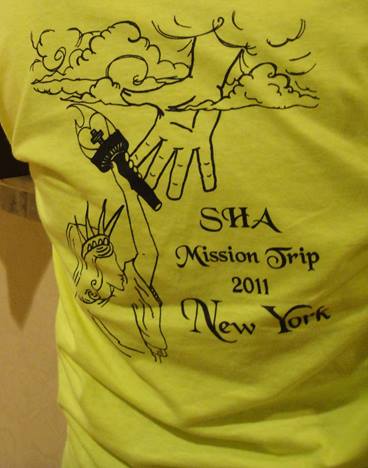
The students at Stephanie's Alma Mater have shirts designed for almost every occasion, mission trips are no exception. Stephanie designed these shirts for the student volunteers on the 2011 mission trip, although she did not choose the color.

The students at Stephanie’s Alma Mater have shirts designed for almost every occasion, mission trips are no exception. Stephanie designed these shirts for the student volunteers on the 2011 mission trip, although she did not choose the color.

Since then I have done service every week and even went on Sacred Heart Academy’s  2012 Mission Trip — this time volunteering to become the leader of the Old Folk’s Home group. I developed many friendships that would not have formed if I chose to not go on that first mission trip. I still think about Frances and wonder how she is doing: what color themed outfit she is wearing today, what stories she is telling to others in her thick New York accent? I still have the package and card she sent me in response to my letter filled with butterflies and paper cranes for her room.

She wrote “I feel that you are a lot like me by how you feel and the compassion that you have.”

These words mean the world to me.

About the author

Stephanie Baldwin graduated from Sacred Heart Academy in 2012. She now attends Fordham University LC in New York City. Stephanie has continued her love of service by becoming a Social Justice Leader through Fordham, and participating in Global Outreach projects — her most recent trip being a week long service-learning trip to Nicaragua over spring break. Although she is an undecided major, she will most likely pursue a career in creative writing and film.

Reading

by Mark Stricker

This is a story about Pittsburgh.

And reading. 

And writing.

And erasure.

I was supposed to create a “portrait of myself as a reader.”

As with any portrait, its likeness only made me more aware of the limits of representation.

The past self seen in the photo, or the essay, or even the mirror (given the lag of light-speed), lies there like a sloughed-off skin, and is merely a record of where we have been, the distance we have traveled, willingly or not.

To speak of the past in the present tense is the freedom of the living.


I am standing on the sidewalk waiting for the 54C.

I am reading an essay:

Shafts of sunlight, backyards, lakes, the black helix of a phone-cord, a solid wooden desk, the wooly muzzle of a collie.

The bus doors engulf me; I sit, turn the page.

I get off at 19th street and walk ten blocks home.

The husband and the dog and the woman are reunited in the bathroom where she has been crying, and where she has said to herself in the mirror, “It’s a good thing none of this has happened”… the sentence breaks off mid-thought.

Someone has ripped out the final page.

Holy shit.

I sit motionless in the rocking chair.

I rub Christopher’s whiskery face and he slides his wet gray gums against my knuckle.

He purrs.

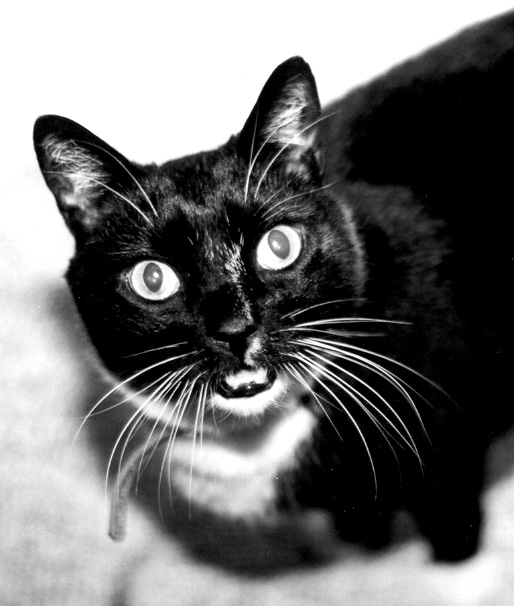
Christopher

Christopher


It is Wednesday.

The fluorescent lights hum above my head.

Emily has loaned me her book.

Instead of waiting, I stand in the hallway and read it immediately.

I am disappointed by the closure.


We read and we are read.

Allyson unzips the black leather case.

Inside: a small machine, needles.

She pricks her fingertip and a red dot of blood appears from beneath the surface.

The blood goes onto a strip of plastic.

The plastic goes into the machine.

The machine reads the blood.

If the number is too high or too low, she must revise the story her blood tells.


Allyson moves away.

I am alone.

Reading is painful.

Writing is worse.

She once wrote:

Whatever we do with all our keys,
blank spaces,
awful tricks of the heart,
whatever becomes of them,
we swear them our ghosts.


The walls in the Hall of Botany are the color of the sound of water.

In one corner, a diorama: the edge of a house juts into a brick patio.

Rosemary, shallots, lemon basil, rose germanium, and tarragon line the windowsill.

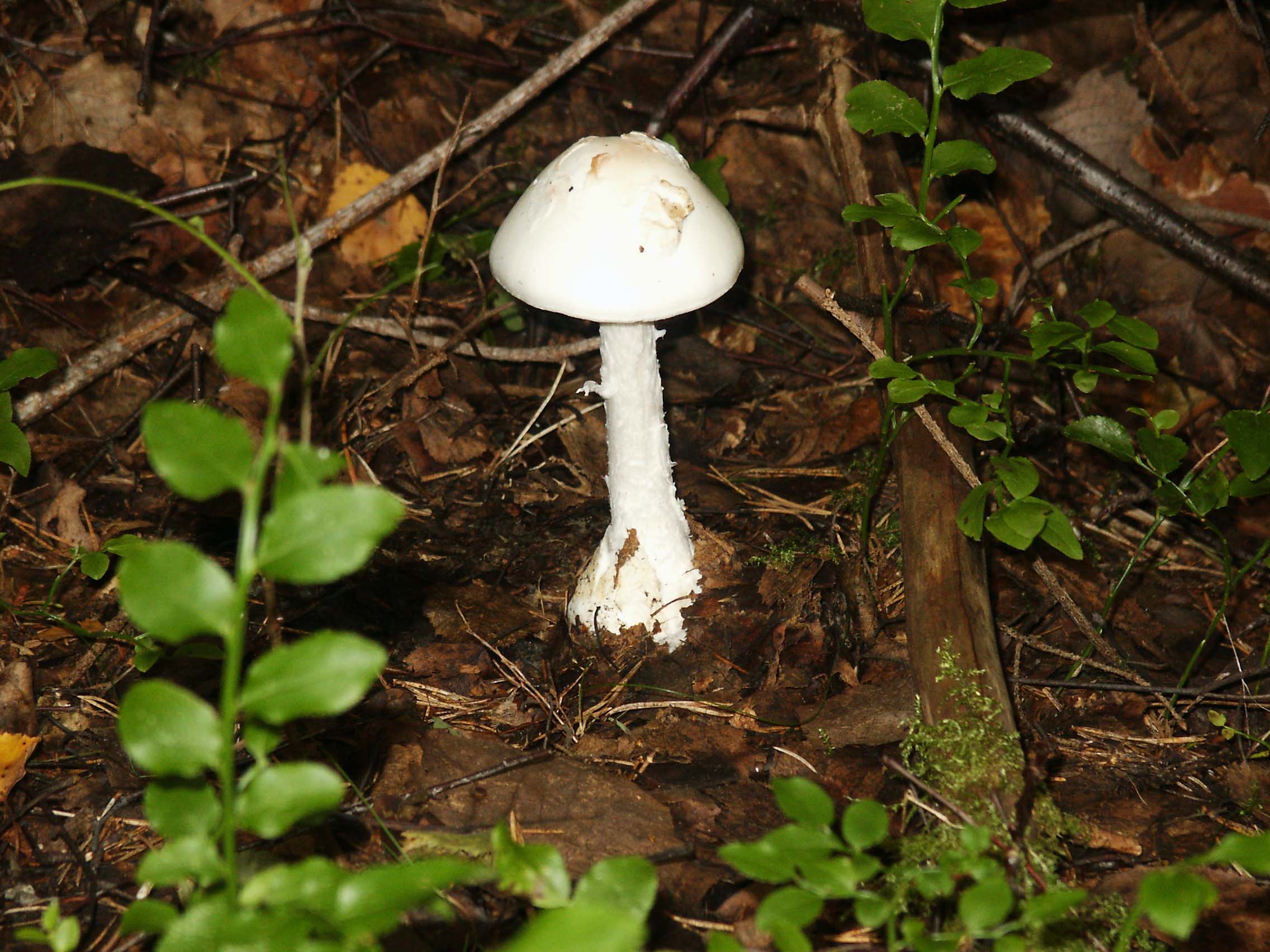
When you stand looking at the herb garden, the Destroying Angel lurks behind you:

Death is certain if you eat this, the most deadly of our poisonous fungi, which causes ninety percent of all mushroom poison deaths.

What is this desire to put the beautiful and the dangerous behind glass?

As if to name possesses.

The Destroying Angel

The Destroying Angel


I am netted from a tumultuous sea of dream.

I get out of bed.

I do the morning things one does alone in a big house.

I put on my coat, step off the front stoop.

Overnight an ice storm turned everything into glass.

Surfaces whistle light.

I stand perfectly still, but slide slowly, slowly, down the sidewalk to the intersection.

Later I write:

The streets are slick with an ambiguous precipitation I am hesitant to name.
All I can do is describe this place, peopling it with abstractions
fashioning fabulous escapes clacking hopes together like dumb rocks
as if to speak slackens constrictions. I call it sleet, this sluice of ice,
and proceed down the slippery slope working a subtle magic
berserk for an afternoon or more of comfort because the job
my brain makes my skin do is boring. All this talk of fine lines,
separations, fractions, broken not like a dish dropped
or a stopped clock, but a clock between seconds.  I want to show you
borders as one shared edge, the map of the body broken into
what cannot be held forever: breath and blood,
the flooded landscape smooth, unbroken.

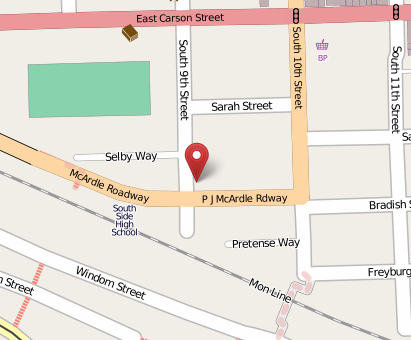
93 S. 9th St. Pittsburgh, PA

93 S. 9th St. Pittsburgh, PA


Think about a song you carry with you: the one you return to in times of sorrow or joy.

Hum its refrain and feel its vibrations in your throat.

You will never be able to communicate, to anyone, exactly how that feels.


Jo Ann sits in the front and faces our class.

She answers our questions.

I cannot think of anything to ask her.

She talks about knowing when a piece of writing is working:

When something isn’t right, it’s like those spaces on the car radio dial when you can hear two stations bleeding together.

When something is right, it is the clear voice of a single channel.


She writes:

The collie wakes me up about three times a night, summoning me from a great distance as I row my boat through a dim, complicated dream.

She writes:

There are squirrels living in the spare bedroom upstairs….  The collie fell down the basement stairs…. Chris Goertz is sitting near the door and takes the first bullet in the back of the head.

The crisis is inevitable.

And so is the rest of life.

Remember.

Jo Ann has to remember; she has no choice.

Remember.

The reader will remember, too.

You have no choice.

The collie does not die in the essay, but her death is inevitable.

Jo Ann prepares us for this.

Yet, we are unprepared.

Like the story broken before its conclusion.

Like the mind racing across the white spaces between words.

Like the blinking of our eyes, darkness accumulating unnoticed.

Until all at once:

About the author

Mark Stricker is a writer & publisher who lives in Hamden, CT.

What we Miss Most

Editor’s note: Did you miss our first welcome post? Click here to find out what all this nonsense is about.

This summer, we’re yours for the reading! Click here for submission details.

by Allyson Wuerth

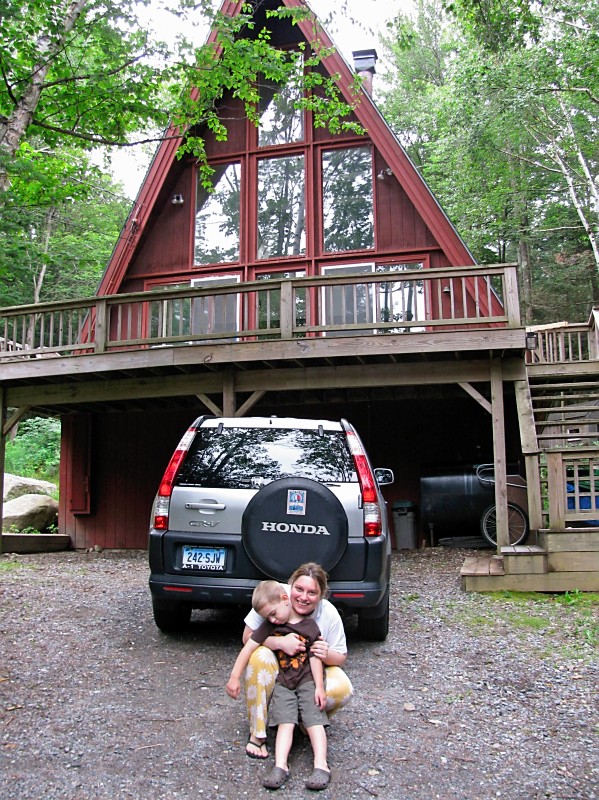
While rifling through the candy basket in our kitchen cabinet, I came across half a bag of Vermont maple candies, so pasty and sweet.  And, immediately, I got sad.  The maple candies, long forgotten, were purchased last summer on our family vacation to Vermont. The perfect vacation with my husband, four year old son, and thirteen month old daughter.  We rented a ski lodge off a winding country road.  We, despite the cool temperatures of that summer, swam in the waters of the private lake that came along with the A frame rental home.

A frame house in Wilmington, VT!

A frame house in Wilmington, VT

And mid-week, our good friends joined us for an overnight visit on their way to their own vacation in Maine.  Together we canoed, most of us for the first time, and fished in the sunny lake.  I have pictures of this:  Mati, Noam and Dana’s four year old son, and his giant toothless smile.  Dana and her mother aboard the teetering canoe—not quite as worried as I would be.  That day was one of perfect summer weather, the sweet feel of it in the sand.

Dana puts on a brave face for the canoe ride!

Dana puts on a brave face for the canoe ride.

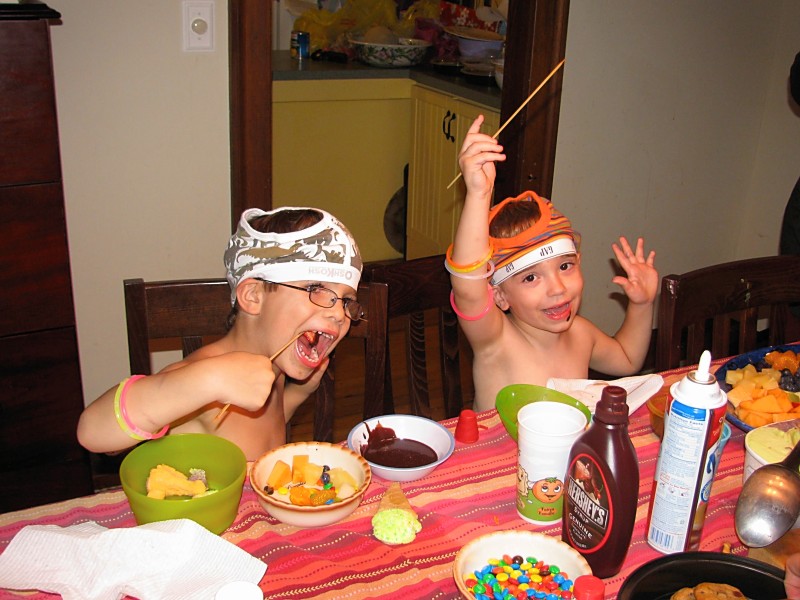
Our boys were best friends.  They were 2 1/2 years old and instantly loved each other.  It just happened that way, their love.  They saw each other nearly every day—if not at daycare, then the park after daycare.  They loved Lightening McQueen and dressing like Iron Man.  They loved talking about underwear and poop.  They felt they were owed each other, even.  And we, the four parents of these two boys, did not disappoint.  We spent summery Friday nights at a local ice cream shop, Kelly’s Kone Konnection. We talked while the boys drenched themselves in ice cream.

This "candy party" got way out of hand!

This “candy party” got way out of hand!

Shortly after our return from the Vermont trip, still the heart of that summer, we met at a local carnival.  The boys rode every ride their height allowed, ate hot dogs and cotton candy.  It was there—in the twilight din of carnival—that Dana told me that she was moving back to Israel to take a job with her old law firm and Mati was going with her. Noam would stay behind and finish up his doctoral work. And there in the midst of snow cones and cheap stuffed animals, my story begins.

Or maybe it begins much sooner than that, when I was five and my best friend Jenna moved to some southern state. Florida? Georgia? Both sound true. Anyway, I couldn’t imagine living without our sleepovers, our flower-picking treks through the woods, our friendship. My mother told me there would be visits, trips, meet-ups, more time for us to play. And by the time I realized these promises were all lies, I’d forgotten the color of Jenna’s hair. Her last name, forgotten. She did visit once when I was much older. She didn’t expressly come to see me, rather other neighbors of ours. Our parents re-introduced us, but we looked at each other like strange cats—disinterested, cautious. Her skin was bronze and she wore white leggings and crimped hair and we never said a word to one another.

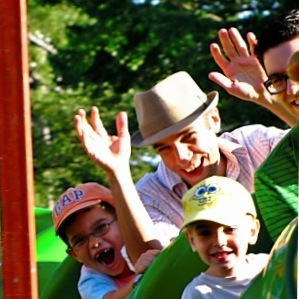
This, I consider at the carnival, when Dana tells me she will move with Mati. Our boys and their fathers are on a green caterpillar roller coaster, happy. The sadness I felt when I realized I didn’t care about Jenna anymore, this would happen to Tristan and Mati. There would be a time when they no longer cared to know each other, when they might meet up and regard each other as animals of a different scent.

Happy! Happy!

Happy! Happy!

In this world there is a force that keeps pushing us forward, propelling us into a future for which our past selves are not quite ready. Only the past we crave keeps changing, constantly rendering itself obsolete.

When I told Tristan Mati was moving to Israel, he asked if we could go on the train to visit. “Like Maisy’s?” he asked.  “Like when we went to visit Maisy?”  Earlier that summer, during what could only be termed a temporary lapse in sanity, I boarded an Amtrak train in New Haven with a four year old and a one year old in order to visit my friend and her family in North Carolina. During that night on the train, North Carolina had seemed a lifetime away. My daughter cried almost the whole time, and my son was terrified of the dog that accompanied the soldier sitting near us. She had been injured with shrapnel in the Iraqi War, and her guide dog lay at her feet, loyally.

“No.” I said. “Only on a plane. It would be hard for us all to get there. We might not see him for a little while.” To make our boys feel better, and maybe ourselves too, Dana and I told them that the following summer we would all take a big road trip, rent an RV and travel through America together.

“When? When?” Both boys would ask.

“When you are five,” we would answer.

One warm September day in 2010 my husband and I took Tristan to Bassett Park to say goodbye to Mati. Bassett Park, the place where their friendship grew sturdy, where they smeared their hearts with dirt and let their lungs fill with cool wind. Even though they were four and a half years old, they knew this day was the last of its kind. Tristan did not want to get in the car to meet Mati. “. . .because if I don’t see him today, then it won’t be the last time I see him,” he rationalized. But once together, they stuffed their sadness somewhere deep in the trees behind the park where they ran for pee breaks.

Their last time together at Bassett Park

Their last time together at Bassett Park

The morning Jenna moved she came over one last time to swing on my swing-set with me. It was early and the dew-coated grass shone like snow against the morning sun. Eventually we heard her mother calling her. Maybe the car was loaded, and ready to go. Who knows? She slid down the slide, told me the word vagina was actually pronounced bagina, and left. I believed her and said it that way for a long time.

Special thanks to Mark for cropping out the "baginas"!

Special thanks to Mark for cropping out the “baginas.” That’s Jenna on the left and me on the right.

When it was time for our boys to say their goodbyes, they ran together to a club house where Mati said, “Tristan, I need to tell you a secret.” I pretended not to hear the secret, but I listened closely. I won’t tell it here, but it was sweet and honest, and my son had serious eyes.

A few days later, Tristan started full-time pre-kindergarten at Davis St. School. Our little world of daycare, park, home became a bit more complicated. I told Tristan’s new teacher, extremely experienced with small children, about his best friend moving. Like a fool, I couldn’t even breathe the words without tearing up.

“This must be hard for you too.” Mrs. Bryant’s sympathy made me feel stronger. “Small children are amazingly resilient. He’ll stop talking about his friend before winter, you’ll see.”

But the truth was I didn’t want him to stop talking about Mati. I wanted their story always remembered, always clear. And, really, for a whole year Tristan asked about the road trip with Mati. “Are you and Dana planning, Mommy?” he would ask.

Such purposeful digging from these boys!

Such purposeful digging from these boys.

“We’re planning.” I’d lie. Although, it’s not exactly a lie if you want it to be true. The truth was that Dana had become pregnant with baby Dori, and plane tickets either way were expensive. We tried to explain the cost to Tristan in i Pods, something that he was saving his own money for.  “It would cost our family twenty i Pods to get to Israel, Tristan.”

“Twenty? That’s a lot.” But still he would ask, “How long until we see Mati, Mommy? Is it months yet? Will he look different?” Each time the trip seemed too close, we’d put it off until September. Then May. Then. . .

So, as probably you assumed, the trip to Bassett Park was the last time (to date) that the boys saw each other.  They are now seven, and thriving on their own sides of the world. We still send each other gifts—mostly Israeli and American candies for the kids. Dana and I talk on the phone and email each other;  Noam stays at our house when he has business at Yale.

Once, while talking to Dana, I heard Mati in the background. “Put him on the phone!” I suggested. “And I’ll put Tristan on the phone.”

“He’s lost most of his English.” Then she added, “But it comes out at random moments. Still, I don’t think he could converse in it.” I admit, my heart sank, and I hated my heart for doing that. Added to the countries and oceans that lay between them, would be a language barrier … perhaps the greatest rift of all.

And then there was the day Tristan came home from kindergarten proclaiming, “Joe is my new best friend because we both love army and have a secret code.”

Last week at dinner my husband shared the contents of his email with Noam: “Mati is taking guitar lessons!”  Our son didn’t even look up from his pizza, as if the name itself didn’t register as familiar, loved.

If, for Tristan, Mati has been relegated to what Hawthorne termed the “irrevocable past,” where does that leave me? Afternoon visits to the park have been replaced with baseball games, meetings at work, or doctor appointments. My life will never be as blissfully uncomplicated and innocent as it was in those days of two little boys digging buried quarters from the earth until the air became thick with the hum of crickets.

Or, I suppose, as blissfully uncomplicated and innocent as it was in those days of two little girls crossing a splintered foot-bridge to get to one another’s yard, a passageway that still haunts me.