The Old Man and the Santa Sprint

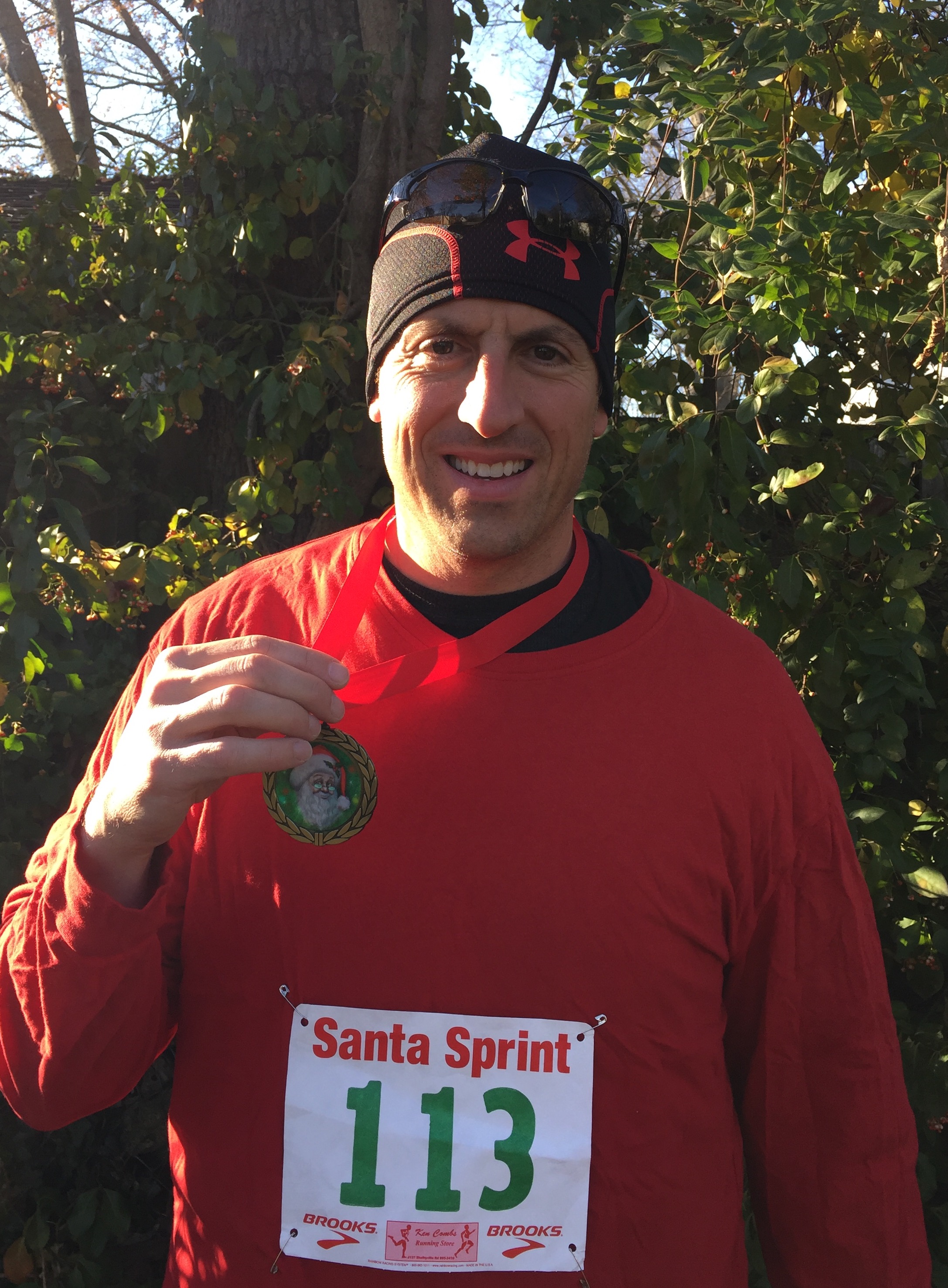
The author at the finish line with his Santa Sprint medal

The author at the finish line with his Santa Sprint medal


It was the first Saturday in December and the annual Santa Sprint, a 5K run to benefit a local ministry. The Olympic Trials it was not. It was a fun-run. It was a fun run – people dressed in red and green, wore festive caps, jingle bells, some brought their dogs nattily attired in plaid sweaters, and dashed, or strolled, down Frankfort Avenue and back before the road was reopened to traffic to release the barrage of Christmas shoppers.

I had run this race before. It was a holiday tradition for me. But unlike the guy who was doing high knee kicks before the start in only a singlet and teeny-tiny shorts despite temperatures hovering around freezing and a threat of snow, I had no aspirations for a podium finish. I was merely out for an easy run, and to maybe do some Christmas shopping myself afterwards.

The race went off as scheduled, sort of, at nine-ish, and after weaving through flocks of hyperactive youngsters bursting forth in every direction, and harried parents pushing oversized strollers, and groups of walkers three or four wide, I settled into a comfortable pace and proceeded on past coffee shops and boutiques and that one bakery that had the flaky croissants.

About fifty yards from the finish line, as the course veered into the middle school parking lot where we had begun, I heard heavy breathing behind me. I glanced over my shoulder and there was a young girl, not older than thirteen I would later learn, quickly gaining ground. I had a niece about her age just getting into running whom I encouraged to keep at it. I immediately got the brilliant idea to do the same for this girl, to ease up and allow her the satisfaction of passing a seasoned runner like myself. It was, after all, a fun-run, and the holidays. And truth be told, I was about out of steam at that point anyway.

As we approached the turn, I noticed a woman up ahead, standing off to the side, hollering and carrying on more than anyone else among the scattering of frigid spectators, no doubt the girl’s mother. Perfect, I thought, my opportunity to do an especially good deed by allowing her to watch her daughter outdistance me, and I would really play it up, feign to struggle to hold my position.

We got nearer to the woman, and her exuberance peaked to a crescendo. She began gesticulating wildly, her entire body shaking, her voice shrill and blaring. “Go on, so-and-so,” she yelled out to the girl, whose name I didn’t catch as I was not paying particular attention to what the woman was saying, not until she completed her sentence, “you can beat this old man!”

Wait, what? What was that? What did she say? Everything about me – my pride, my ego, my sense of worth – deflated like a Mylar balloon squashed by Santa’s sleigh. Had she just called me an old man? I did a double take to check if someone else had come upon us, some legitimately old man, perhaps Jolly Old Saint Nick himself. But it was still only me and the girl. Granted, among the participants – lots of children, and high school- and college-age kids, not to mention the babies in strollers – I skewed toward the adult end of the scale, yet I was by no means an old man.

I stared at the woman, directly, intently, for any indication, no matter how subtle, that her comment had been in jest, a joke that had fallen terribly flat, for some hint of irony, a twinkle in her eyes, an upturn to her mouth, a grin, a dimple. Something, anything. I was willing to give her the benefit of the doubt. It was the blasted holidays after all, and the Santa Sprint for heaven’s sake. But nothing. She meant it, she obviously meant it. That woman had just called me an old man – and she meant it.

Before I responded, and I had a few zingers, I caught myself, remembering that there was a young girl running next to me, and doing her best, and this was her mom – no matter how impolite. I resolved to take the high road, and simply said, incredulous, “Really?” which made the brash expression on the woman’s face drain blank, and offered her a terse “Merry Christmas.” She repeated “Merry Christmas” back to me, sheepishly, devoid of her prior vitriol, and I could tell that in her Grinch-size heart she felt slightly not right with what she had said about me. Nonetheless, undaunted, she continued to root on her daughter, “Looking good, honey, keep going!” – to which I replied, “Thanks.”

What followed was not my finest moment, but I had to do what I had to do or be eternally instilled with the moniker of “old man,” and what I did was to abandon any noble notion of letting this girl pass me in front of her insufferable mother. I instead shifted into another gear, and in the true name of the race, I sprinted away, running as hard and as fast as I could. I ran like there was no tomorrow. I ran like my life depended on it, like I was being pursued by a pack of rabid reindeer. I ran with everything I had left, ignoring the pleas from my body to take it easy and coast in since it was, after all, just a fun-run.

I ran with the will and the desire and the singular determination to not allow this girl to beat me, to not even come anywhere close to beating me. And she didn’t. Not only did I soundly leave her in my wake, I sped by several other runners I had theretofore been content with allowing to finish ahead of me, the timing clock proclaiming in bright red numbers that I had shattered all of my previous 5K records. I could not say that I was entirely pleased with myself for my convincing defeat of that young girl down the homestretch of the annual Santa Sprint – but I was.

At the awards ceremony, the girl came in first in the girls’ thirteen-and-under division, while I placed third in the men’s 40-49 age group. It was a win for both of us. It was a win for old men everywhere. And the tin Santa Clause medal I received for my efforts would forever be a fixture on my Christmas tree.


About the Author:

Peter Stavros earned a BA in English from Duke University, and studied creative writing on a graduate level at Emerson College and Harvard University. His work has appeared in The Courier-Journal, Literary LEO, Hippocampus Magazine, Fiction Southeast and Juked, among others. He lives in Louisville, Kentucky with his wife.

True Story: Selective Mutism has my Daughter’s Face

by Allyson Wuerth


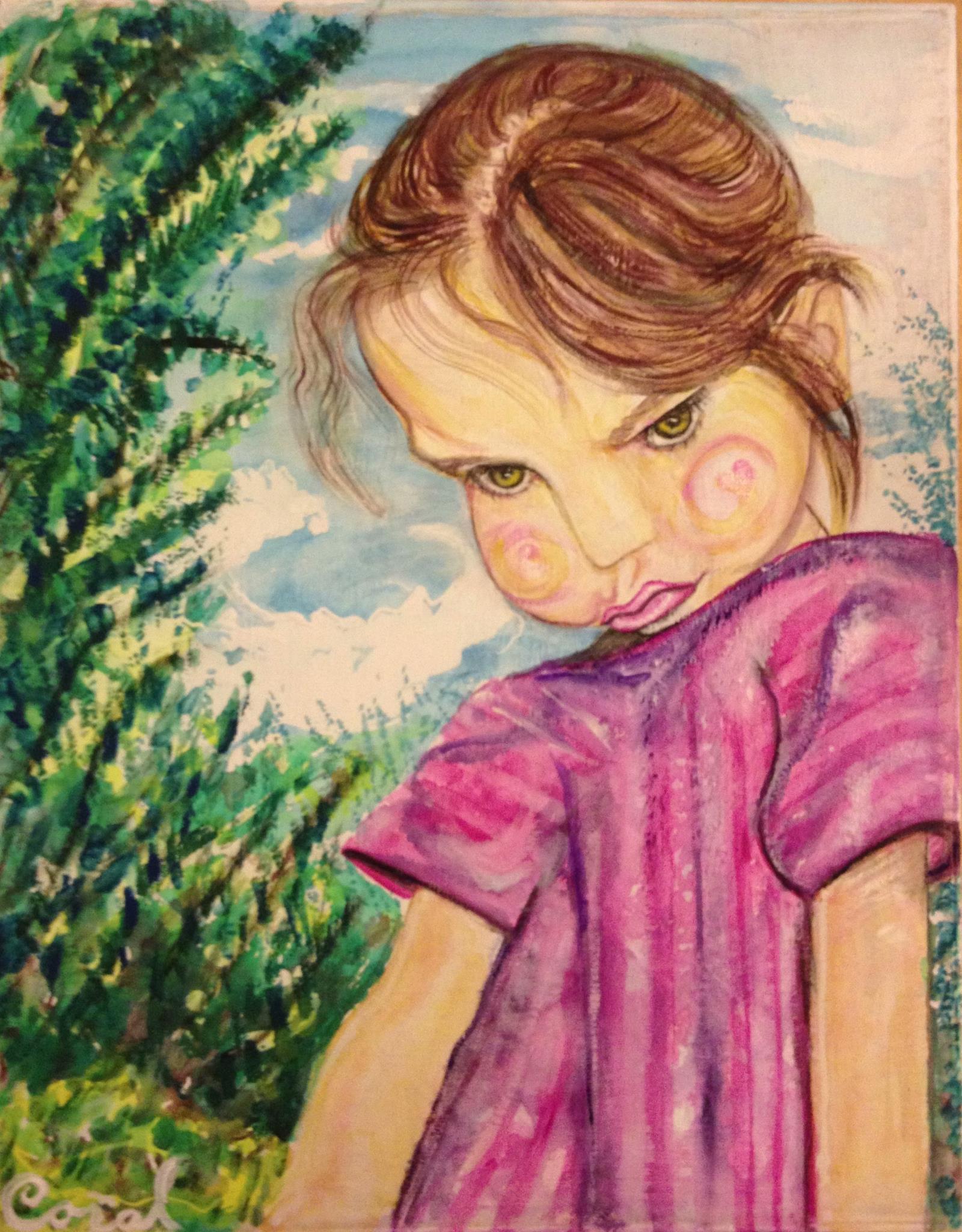
painting by Coral Staley

Sawyer by Coral Staley


She came into this world silently, too. We held our breaths and waited for the sharp cry that came only after doctors intervened. Her lungs pulling in air and screaming only when her life absolutely depended on it. Such a birth was meant to foreshadow the way we came to know this girl.

IMG_0096

Newborn day

As she grew, we noticed that she wouldn’t speak outside our home. At all. She’d freeze, attach herself to our legs and whimper. Coupled with, what people came to call, her “shyness” were articulation problems that went beyond that of an average 2.5 year old. She had a language of her own, and my family and I became translators of a stony language. “Mem” she would say, when she meant “friend.” Her brother Tristan she would call “Chichin.” “B”s and “D”s, “M”s and “F”s, “K”s and “T”s, “L”s and “W”s all whirled around inside her head and settled into the wrong words. Family and friends convinced us this was the problem. She had the voice but not the language, the desire but not the words. The pediatrician said she was literally tongue-tied, so we scheduled the procedure to have her frenulum clipped. When the words still did not come, the doctor suggested that we get her ears checked. But when she would not acknowledge the sounds provoked by the audiologist, he pronounced her “too young.” “Come back in another year,” he said.

Her silence was under my skin, in my blood. Hadn’t our hearts beat together for nine months? Hadn’t she grown inside me, shifting her weight against my ribs? Hadn’t her heartbeat been enough to assure me of the room she would need in this world? The space she would fill? I felt her silence as a betrayal. But by whom? Of whom?

Photo credit: Kelly Kirkland

Sawyer and her brother

Our pediatrician was hesitant to recommend therapy—firmly stating that Sawyer was too young to be expected to communicate with strange adults. I wanted badly to agree, to believe that with time my tiny girl would smile at people and tell them her name when she was asked it. That she would volunteer stories or hold hands with little girls on the playground. But she’d never even spoken to my grandmother. My grandmother’s declaration still hangs over me, “She just don’t like me, doll.” There was no arguing. For my grandmother, this was just the way it was with Sawyer.

Then, after nearly a full year of pre-school, the words of Miss Mandy, Sawyer’s pre-school teacher, urged me to push harder, “We’ve never even heard her speak.” I was imploding. Really? No words? Never? As in not EVER? Miss Mandy added, as if we were two ladies gabbing over tea, “Yeah, we keep saying we wish some of these other kids were as quiet! Think of the self-restraint a 3 ½ year old must have to not speak all day!”

I called the pediatrician that evening, “I think my daughter has selective mutism.”   I spit the words out and let them sizzle between us. And her own silence told me that she–like so many doctors, teachers, therapists, I’ve spoken to since—had no clue what I was talking about.

Stages of Sawyer. . .

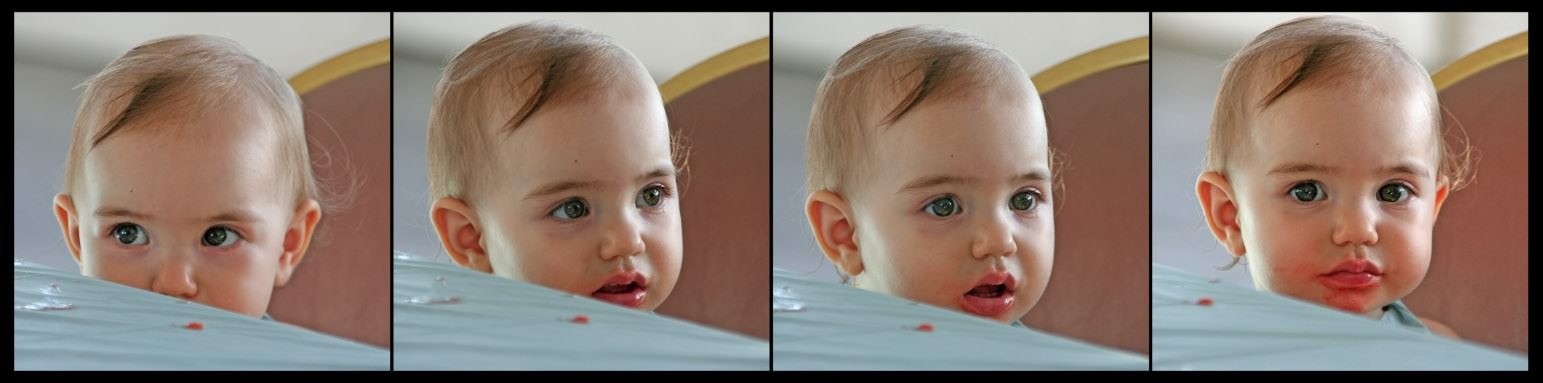
This photo burst–emblematic of Sawyer’s ongoing journey to find her voice…

Selective mutism. I first heard those words, all hushed and breathy sounding at a holiday cookie swap in 2011. The conversation caught my attention—some silent girl–a girl whose mother also affirmed, “She’s a chatterbox at home, I swear!”  This one a little older than my two and a half year old. Somebody mentioned a child psychologist. Another the diagnosis. I listened closer. This girl sounded so much like mine. Mine too looked through strangers and family as if they were ghosts. Mine too chatted happily in our house only to go out into the world pale and blank. I kept those two words–selective mutism– within me for another year before I unpacked them, left them at the ear of the pediatrician. Like the girl’s mother from the conversation I overheard, I too knew the difference between shyness and the eeriness of a silence that ran much deeper.

To make myself understand my girl, I had to go back to 1984 where I am walking up Davis Rd. with some neighborhood boy. He has an idea: let’s throw acorns at cars. Even though his face is too blurry to name him, his words are clear as if they were spoken only yesterday. Let’s. Throw. Acorns. At. Cars. The first two cars don’t stop. The third does. A man gets out. He has shoulder length feathered brown hair. His eyes are invisible. The neighborhood boy yells for me to run. He himself disappears into the fir trees between two raised ranches. But I am frozen. I try to scream, but no words come out. No part of me is willing to move. The man chases the neighbor boy through the trees, walks back to his car, and drives off. And there I am. Still.

Thirty years later, this moment is etched into my heart and it has the ability to change my heart’s rhythm and stumble into its beats. Why didn’t I run? Scream? Even at six, I wondered if I would ever be able to defend myself. Why had my own body betrayed me when I needed it most? As the car drove off, slowly my limbs unfettered themselves. The first few steps I took were numb, heavy, and frustrating. I wore black patent leather Mary Janes, but the feet inside them didn’t seem my own. It was the first time I remember being conscious of my own consciousness. And from that day I decided three things would always be true:

  1. Somewhere in the world there was a better version of me.
  2. Somewhere in the world there was an evil version of me.
  3. One of us wasn’t real.
12045278_10207917391717219_7126229998517242869_o

Not sure which version of me this is…

When you imagine a body wired this way, silence becomes palpable—and your body is a whisper that almost no one can hear.

For the next two years we spent our Thursday afternoons in Dr. Schiller’s small New Haven office filled with Playmobil toys from the 70s, baby dolls, play-doh, and an old wooden doll house. At first it was the three of us—me, the collector of her whispers. Later, I sat in the waiting area and Dr. Schiller and Sawyer negotiated this tricky path of communication together.


Later, in my bedroom we sit like old ladies folding laundry on my bed. I ask her if it’s okay for me to ask her a few questions. “About what?” She asks.

“Your talking,” I say. She looks at me uncomfortably and says okay.

And it is uncomfortable, this interview between my daughter and me. She is shifty and covers her face with a pillow. She tells me that talking to her teacher is scary, that sometimes she knows the answer but it’s too scary to say it. “What’s so scary?” I ask.

“I don’t know. Just talking.”

“Is it scary to talk to mommy?”

“No.”

“Daddy?”

“No.”

“Tristan?”

Again her answer is, “no.” I ask her about friends and classmates. She tells me sometimes it is scary to talk to them, but not mostly. I ask about Alexa, her close friend from class.

“No. It’s not scary to talk to her.”

“Why?” I ask.

“Because she’s quiet…like me.”
11406278_10207098871214718_4628923386358645453_o

And so, we will navigate this silence as one, she and I.

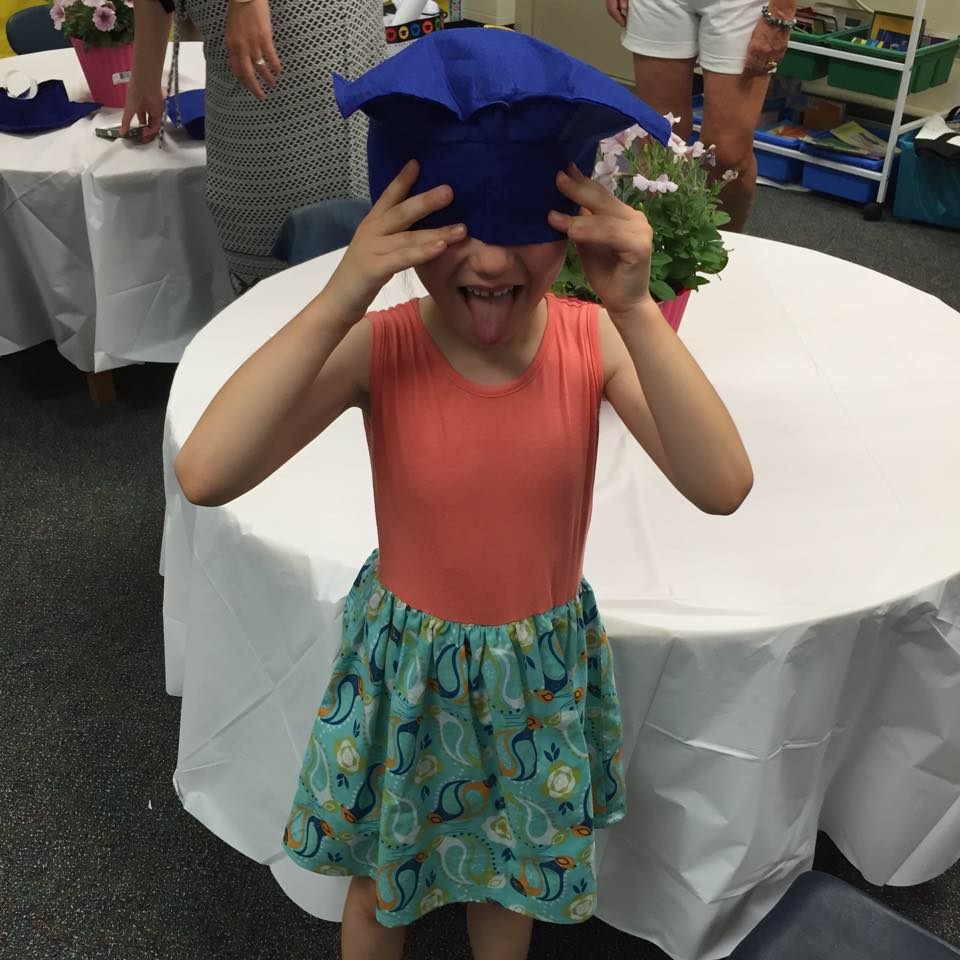
Six years after my daughter’s birth, I sit with her after kindergarten graduation. Her classmates are busy about the room, carrying small plates of grapes and brownies. They squeal, the girls in their frill. But mine sits in her chair, mute. Stone-faced. She pulls me down beside her and whispers in my ear, “snack.”

“Let’s go together,” I say back. She shakes her head. So I collect brownies, grapes, a cup of juice. I hand them to her and she tells me she is tired. She wants to go home from this party she’s been looking forward to for the last few weeks. And so, we gather her things: the papery blue graduation cap, the brightly painted art, her backpack—these final bits of a school year. I say goodbye for her: “Sawyer hopes you have a great summer!” “Sawyer really liked the grapes you brought.” I’d be lying if I said this didn’t unhinge me, this speaking up for a girl perfectly capable of speaking for herself. What must that be like—hearing your own voice filtered through your mother’s body?

But none of it matters. Every day I learn new strategies to help her communicate, to mitigate her social anxiety.

Along with this truth, she’s left kindergarten forever.

11391147_10207097863749532_5506411382685564356_n


About the Author:

148742_10204744922807479_5368057708672071095_n

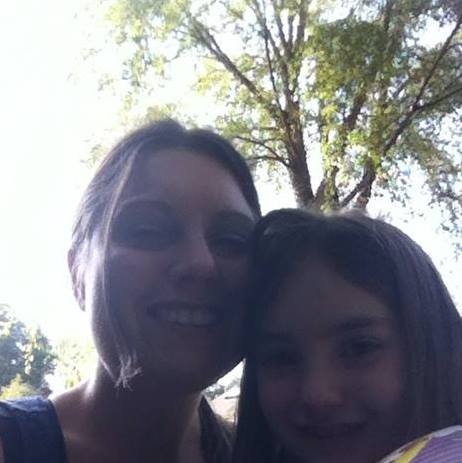
The author and her daughter

Allyson Wuerth is a co-editor of Tell Us a Story. She is a mom, a wife, a high school English teacher, and a writer. She has published poetry in several literary magazines, and has poetry forthcoming in the anthology, Verse Envisioned: Poems from the Pittsburgh Post-Gazette and Works of Art They Have Inspired. You can read her other two blog posts, The True Story of Why I Hate Math , Two Years and 20 Miles from Sandy Hook, and What we Miss Most by clicking these links.