Veteran’s Week

“Destiny in Bangkok”

by Bruce Sydow
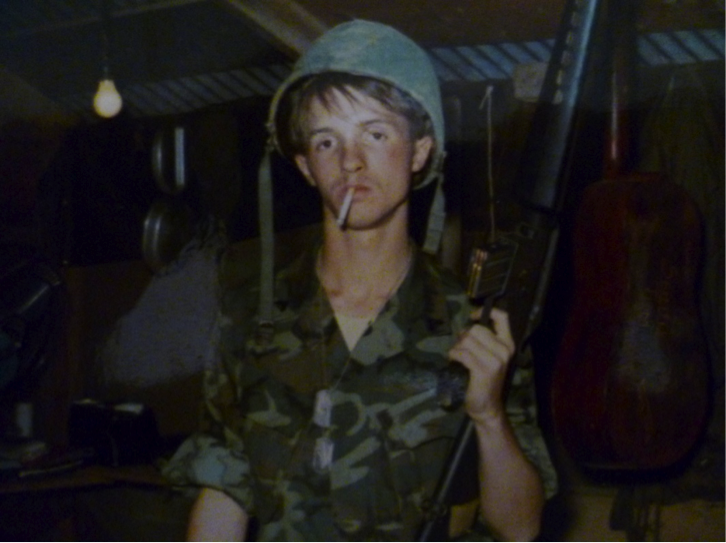
The author

The author

Headquarters calls it R&R for rest and recuperation, but the troops call it I&I for intoxication and intercourse.

Whatever the name, it is our reprieve from the fighting and we want to make the most of it.

Seated on a stage with ten Thai beauties, Destiny looks up when her name is called and squints into the lights like she is in a police lineup.

She is twice my age and is wearing nothing but a jewel encrusted sombrero, chaps, and spike heels.

The cowgirl takes me by my lead rein with the authority of Linda Evans in The Big Valley guiding a spooked horse through a canyon infested with rattlesnakes.

An hour later I am walking with a hitch in my giddy-up, and she is wearing nothing but a heavy-lidded smile.

All of 19 and the runt of the litter, I make my fellow Marines proud that night.

My grandmother back home, not so much.

About the author

Bruce Sydow has been published in numerous books, literary magazines, and anthologies including Penduline PressSwitched-on Gutenburg, andWriting by American Warriors. He served as a door gunner in a Marine Corps helicopter attack squadron and was decorated with the Combat Aircrew Wings, United States Air Medal, and Gallantry Cross. Bruce has held faculty positions at Saint Martin’s University and Chapman University, among other colleges, was elected Professor of the Year twice, and received the Excellence in Teaching Award.


“Firefight”*

by Rebecca Goodrich
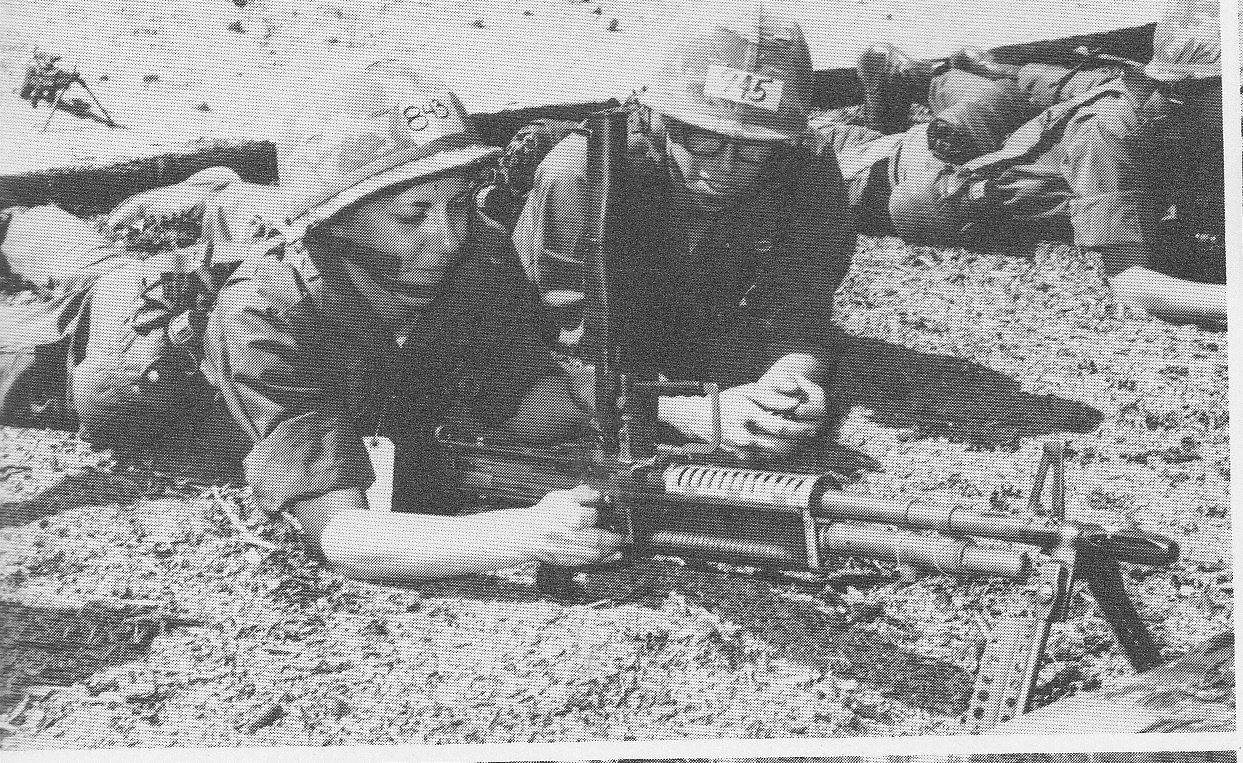
IMG_0001

The author.

“This, ladies and gents, is an M60: a 7.63mm, lightweight, air-cooled, disintegrating metallic link belt-fed portable or tripod-mounted machine gun designed for ground operations.” A staff sergeant with ropy forearms hefts the gun with both hands, performs two biceps curls. “Eighteen pounds of pure rock and roll.”

It’s 7 a.m., mid-morning by military reckoning. Two hours ago a drill sergeant played reveille on garbage can lids and since then I’ve showered, dressed, run two miles in Army boots, wheezed through sit-ups, push-ups, six-count burpees, eaten baking powder biscuits smothered in milk gravy, and apple pie for breakfast. Now I stand at parade rest at the crest of a hill surrounded by undulating acres of green, heels shoulder width apart, hands in the small of my back, listening to a lecture on firing-range procedure.

I’m eighteen—I have never known guns before boot camp. Never tasted red dust, inhaled the resiny note of longleaf pine, wilted under the oppressive weight of southern mid-day sun. Before this I’ve experienced little outside the damp borders of the coastal northwest, but a month ago, in May 1979, the U.S. Army paid my way to Ft. McClellan, Alabama. Here the air swims with the scent of blooming camellia, the heat makes my brain buzz, and the red grit on my tongue tastes faintly like blood.

Months earlier as a recruiter leafed through the list of available military occupational specialties, I asked for “a job as close to combat as a girl can get.” To his credit he didn’t laugh; he’d recruited enough confused country kids to know exactly what I meant, even if I didn’t. This was 1978. Vietnam was still a wound barely healed, a collection of images and stories yet to be revealed over the next two decades. My naïve wish for something like combat was an atavistic response to the cramped and prescribed boundaries of a girl’s small-town life. My first airplane flight had been only two weeks before: Seattle to Alabama— more escape than means to a destination. My enlistment contract read 95B: Military Police. Not because I had any aptitude for law enforcement; only because it sounded “exciting.”

The gun takes two of us to operate, one to pull the trigger and one to feed the linked belts of bullets into the ratcheting chamber. The barrel is wrapped in a perforated metal grid that keeps it cool. The finish is opaque gray. The stock is heavily padded and presses into the socket of my shoulder. Prone behind the trigger, thigh to thigh with a Detroit kid named Davis, I limber up my index finger. His job is to lightly guide the rattling belt of bullets that whip through the dust while I aim and fire at the large square of white paper downrange.
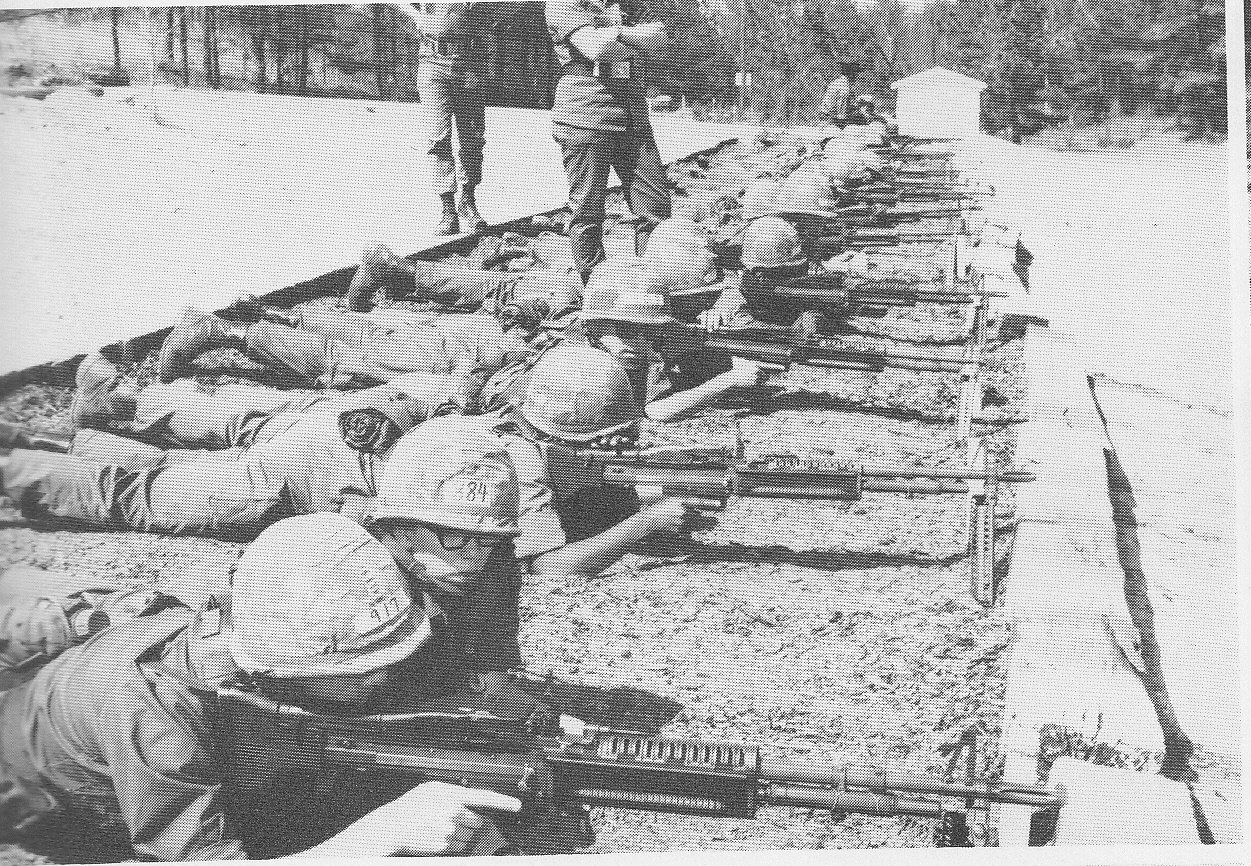
IMG_0002

The M60 range.

“Maintain your trajectory at target level,” the rangemaster harps. Every sixth round in the belts is a red-tipped tracer. It holds a hot, phosphorescent charge that burns white in daylight and illuminates the normally invisible trajectory of the bullets. In a few moments the range will appear strewn with ropes of tiny white lights strung from barrel to target. The maximum effective range of each round is 3,600.1 feet but at the right moment, on the right day, a bullet might travel over two miles before gravity defeats velocity. “Keep those tracers out of the wood,” he warns. “It’s been a dry spring.”

I grip the heavy handle with slick palms, wait for the command to fire, hear the bark of the loudspeaker, then squeeze. Inches from my face, in a chamber the diameter of my little finger, expellant ignites and explodes 9.17 times per second, 550 times per minute. Gas expands with each blast. Projectiles rifle through space 2,800 feet per second. My teeth clatter and my eyeballs jump. I feel unhinged and rearranged—I am pushing every lame-wheeled shopping cart in the universe. The barrel fights to rise. My biceps bunch and burn to hold it level. I breathe once, squeeze again and watch the red-hot rain of rounds and tracers arc through Alabama air. The targets riddle and shred before my eyes.

“Cease fire, cease fire!” The command from the range tower cuts through the chaos. The sun has moved high overhead. Far beyond the targets, out of the rolling green lifts a slender spiral of white, and I imagine I can detect the faint, singed-tinder smell of fire. A buzz travels down the line, something’s burning…someone dropped a tracer in the woods. Drill sergeants spring like they’re bee-stung, clearing the range of weapons, amassing us in formation, gathering in a knot, gesturing among themselves toward the thickening tendril of smoke.

USDA Forest Service Southern Region Station Archive, Bugwood.org.

USDA Forest Service Southern Region Station Archive, Bugwood.org.

“You, you, you, you,” one sergeant prowls down the line. “Line up here.” Twelve of us break rank and run, arranging ourselves in two lines. I am swept along with the squad, too dazzled at being chosen to wonder what’s in store. “Forward, h’arch.” We step out, down a two-wheel dirt track. Our boots drum a dusty cadence on the thick red dust. “Double time, h’arch!” We trot downhill toward the smoke.

In two minutes I am out of breath. I often lag behind the pack during morning runs, but today I will not suffer the humiliation of one who can’t quite keep up. We pound down the dirt road in unison, raising a cloud of fine red grit that rasps my eye, works its way between pursed lips. Around our waists we each we each wear a web belt and an assortment of gear: canteen, rolled plastic poncho, flat folding shovel in a green canvas case. My one-size-fits-all steel helmet jounces painfully as I shuffle in time to the drill sergeant’s called cadence.

Then the smell of road dust becomes mingled with the fresh-lit cigarette scent of fire. The blaze is out of sight; it’s the aroma of burning resin that shows where to enter the forest. I’m winded from the run but now I become aware of another sensation—a coffee-on-an-empty stomach fizz of adrenaline that makes me quiver. We enter the woods, treading as if we expect the long needles and cones to ignite beneath our feet. These trees are all spindly second growth, angled half-fallen trunks and bare, tangled limbs. The duff is spiked with clusters of needles and foot-long cones glistening with pitch. Nothing feels alive in this dim understory. We unsheathe our shovels, unbend the metal handles, and I wonder if any one of us actually knows what to do once we find the blaze.

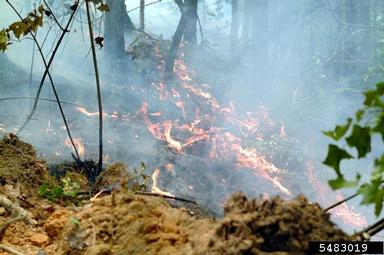
Ahead, small flames sprout from the litter in a fifty-foot circle. “Fan out,” the drill sergeant points us toward the fire. “Just beat the hell out of every flame you find.”Within minutes the flames have danced themselves higher and spread farther. The fire fighting seems instinctive—an ancient, adaptive response to fire gone out of control. I remember the fire I started as a child when I was supposed to be burning trash, tempted by matches, wasted paper, and dry stems of grass. What followed was a heart-pounding, boot-stomping frenzy that left me shaking, and a burned circle of pasture.
USDA Forest Service Southern Region Station Archive, Bugwood.org.

USDA Forest Service Southern Region Station Archive, Bugwood.org.

“Make a fire line, like this.” In a reversal of authority one of the trainees has taken over. He seems to know exactly what to do, and the rest of the squad follows his lead. We turn the shovel blade ninety degrees and lock the collar with a twist. Shoulder to shoulder with the others I stoop and hoe, scraping the forest floor to bare dirt. Behind us others beat the life out of each glowing spark. One section of the fire circle dies, then another springs to life. Laughing and reckless, we hack with more energy than the flames demand. There is a rhythm to our assault, an instinctive choreography of advance, reconnoiter, regroup, that we didn’t learn in basic training. One boy trips backward into a bed of glowing cinders, but two more lift him before he knows he’s down. Three advance on a new flame, five follow behind, a few patrol the areas we’ve covered. My original adrenaline-spiked fear has mellowed into a fierce confidence, and I feel as if I could fight fire forever. When the drill sergeant blows his whistle I check my watch and find that we’ve been at this for four hours; it seems like a fraction of that time.

The danger is over. The understory is still warm to the touch, still smells charred and resinous. Only now do I realize that my uniform is wringing wet, pocked with holes and singed around the trouser cuffs. My chest aches, my eye sockets seem lined with sandpaper, and my face feels swollen and sore. Our drill sergeant reports in by two-way radio that the blaze is under control. An olive-drab troop bus pulls up in a gritty billow and we climb on, mute, wrung out. As I lift my boot to the first step I notice my prized spit-shine has dulled to ash.

Evening heat settles around Company E, 12th Battalion like wool. As the bus pulls up, our off-duty friends lounge on the concrete steps of the barracks, smoking or learning to smoke. Dinner finished up an hour ago; the mess hall is closed and any leftovers have been discarded or sealed up. All the mess sergeant can offer us is a loaf of white bread, two sticks of margarine and a butter knife. I raise my buttered bread and find a perfect black handprint on white.

Others crowd around, eager to hear about the fire. They spent the day picking up litter; we spent the day on the front lines and have news to report. This is another new sensation in a day of sensory awakenings; being the center of attention for some risky physical feat. Ordinarily I hang in the background, but tonight I describe the flames, the smells, the burns, the boy who tripped, his rescue. Our features are dusky with whorls of soot, like camouflage paint. Someone passes me a cigarette, the first I’ve ever tried, and instead of declining I lean over the dancing flame for a light. Why not? I feel invincible, as if I’ve been to war.

* “Firefight” originally appeared in the print anthology A Mile in Her Boots: Women Who Work in the Wild.

 About the author

Rebecca Goodrich served in the U.S. Army as a Military Police for six years. These days she teaches creative writing and digital storytelling at Washington State University.
Waiting

by Imee Cuison

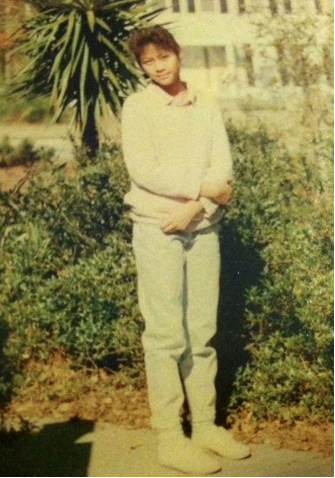
The author at age 11.

The author at age 11.

The buses are late. The children play out in front of the school waiting for them. Hot. Humid. Sticky sweat. She’s ten. Almost eleven. Talking with her girl friends out on the grass.

The boys are running around. Tackling each other. Yelling over the girls’ heads. The girls sneak glances at them. Curious. What’s it like to be a boy?

The boys run circles around the girls now. Her chest tightens. The girls giggle. One girl, Heather: “Thomas, don’t you have anything better to do?” Thomas ignores her. Heather lets out a huff and rolls her eyes.

Eric Esposito has joined in now. They throw a hacky sack to each other as they run. Jamal Wooley and other boys run into the circle. The boys are smiling, winking at each other. Laughing.

Katie Staton: “Quit it! We’re trying to talk, Eric!” She tries to run after him, but he is too quick.

She says nothing. Crossing her arms over her full breasts. Maybe the buses will come. She looks up the road.

Then, Jamal Wooley reaches his hand out as he circles around the girls. And grabs her.

This is why she stopped wearing skirts with only her white thin cotton panties to block her skin, her newly blossomed pussy, from their hands, dirt under the nails. With jeans, the boys can’t touch her bare ass. With jeans and baggy shirts, she can pretend.

The boys laugh and run away. Eric and Thomas and the other boys shove Jamal. A congratulatory tussle.

The girls turn away from her. They have something very important to talk about now. She is not allowed to listen.

She speaks, “I hate when they do that.”

“Shut up. You know you like all that attention,” Katie rolls her eyes.

They go back to their girl chatter. They’re planning a sleepover for the weekend.

“I don’t know if you can come anymore. It might be too many people over anyway,” Heather says to her.

This is the way it is. In two days time, the girls will forget and accept her back, but now, they are angry. None of the girls know why they hate her, but they do.

She sees the vice principal standing, hands on hips, eyes squinting, waiting for the late buses.

She speaks, “Jamaal Wooley grabbed my butt.”

He looks down at her. “What was that?”

“The boys. Jamaal Wooley. This time. He grabbed my butt.” Her voice is soft. A whisper.

The vice principal laughs. Throws his head back in an open mouthed chuckle. “That’s not something to bother me about, okay?”

She walks away still hearing his laughter. Still seeing the sun reflecting off his glasses. His open gaping mouth.

She stands on the concrete away from the girls, away from the vice principal, away from the boys that are all in the grass.

She waits for the buses.

It’s getting late.

About the author

Imee Cuison is a freelance writer based in Charleston, SC and Brooklyn, NY. She is the creative executive for Intrinsic Value Films, an independent film production company. Her prose and poetry work have appeared in numerous literary journals and anthologies such as Maganda Magazine, Tayo Literary Magazine, and Phatitude Literary Magazine.


The Hockey Finals

by C. G. Fewston

To a Boston Bruins Fan:

The Stanley Cup Finals is on the large screens all throughout the Sports Edition Bar next to the Hilton at Chicago O’Hare’s airport. The Cup showcases the Chicago Blackhawks, at home, against the Boston Bruins, series tied 2-2, score: the former team up two goals to nil against the latter at the second intermission. And all I can think about is how damn cool it would be if you were here with me, but I’m alone, as I have been (literally) since my older brother Chaddon Glenn, a.k.a., the Golden Child, went to college in Kansas, my parents divorced soon after, and my older sister Cassie (as in K.C.) Glynn (yes, spelling different than her brothers’ middle name) ran away to fend for herself.

The author and his sister.

The author and his sister.

Overnight, as it seems now looking back, I had a family and a warm and lively home and then I was in the sixth grade coming home to an empty house until nine at night. Every day an empty house, sports and books as my companions. So when I would see you write in your little book as I do now and when you spoke of stories and when you did research in the pool for a story (love that commitment to your art — except the nut-breaking knee whips twice over shoving my balls into my stomach — but, alas, I too know how to suffer for your stories, for you).

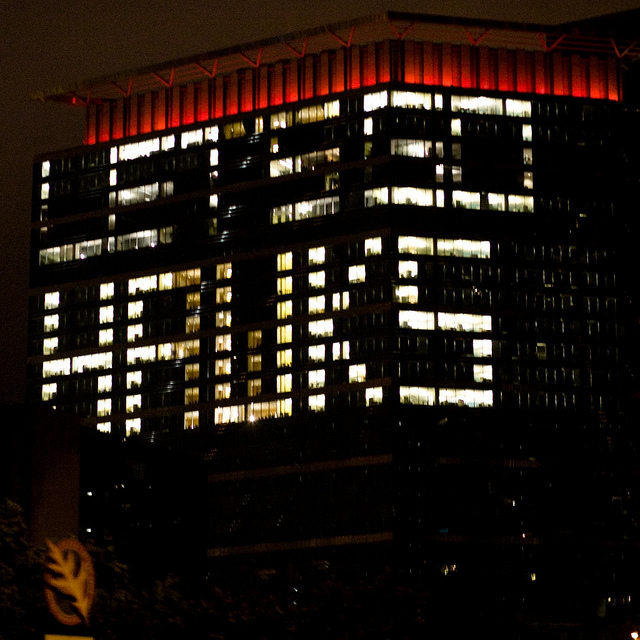
On the television is a shot of the Chicago skyline with a skyscraper lit up with

LET’S

GO

HAWKS!

And I think how I really enjoy coming to this sports bar. Been here about four times. It has Chicago Bears jerseys with my favorite football player, Walter Payton, and Chicago Bulls jerseys with all-time great Michael Jordan. I used to watch these guys perform miracles on the field and court. When I was about three-years old I told my father that the letter “C” on the Chicago Bears helmet was for “Cody” and he responded in his infinite wisdom: “No, stupid. That ‘C’ isn’t for you. It’s for the ‘C’ as in Chicago Bears.” That’s what my emotions tell me of that moment. “Keep quiet and watch the game,” he added. So I did. And my amazing skills connecting the “C” in ABCs to a word, namely my name, was dashed into shame.

Not for "Cody." image source: abearsfan.com

Not for “Cody.”
image source:
abearsfan.com

So here I sit. In the sports bar. In Chicago. Sam Adams Seasonal ($12.50/23 oz.) at my table. And watch the hockey game. Thinking of you. Thinking of my childhood (by the way: I’m a Blackhawks fan. Go Hawks!). And I ordered the smoked turkey stack ($15) with Wisconsin sharp cheddar cheese — score! Bruins score a goal at the 16:18 mark of the 3rd period, and from behind me a guy yells, “Fuck!” then says, “Sorry” and then says, “Damn!” and he reminds me a bit of Chris — applewood smoked bacon, tomatoes, Bibb lettuce and roasted pepper aioli on peasant bread; why do they call it peasant bread? The score is now 2-1, Hawks in the lead.

I’m wearing sneakers with blue jeans and my gray cardigan over my white pool shirt. The beer tastes damn good. I had to wait a moment to write; people think I’m a journalist writing about the game, but about seven feet from my high-table spot there is a family of five, two girls and one boy, when the father jumps up and rushes to the older daughter of ten years, or there about, in orange shorts and a white and orange-striped shirt — she reminds me of you — and she was eating a hot piece of pizza when a slice fell on her exposed legs and she wanted to scream, sure enough, and the mother is now, as I write — dictate more like — the mother is now giving her daughter ice cubes wrapped in a cloth napkin and tells her to press it against the burn and tomorrow they will be in Michigan. Why does the little girl with the burn remind me of you??

Jaromir Jagr image source: sports.yahoo.com

Jaromir Jagr
image source:
sports.yahoo.com

Jagr looks cool on the ice — is he the same from the Pittsburgh Penguins long ago? And I believe you would love it here, drinking wine, red of course, by my side in a sports bar in Chicago during the Stanley Cup Finals, 2013 (or one in Boston, perhaps). I imagine you now, 10:30 p.m., with your father, you on the cell phone chatting to friends with one eye on the game at 5:09 left with the Bruins down by one and your father rooting for a miracle, but that is my father not yours and that is me not you there in my imagination.

A beggar is behind me outside the bar, which is in the hallway of the hotel’s lobby, and he is watching the game and chanting to Om of cosmic origin in childlike form and a man named Adam comes and gives him a $10 food certificate for some restaurant, and I think of life, of you, of men who fail their dreams. And all is connected and not.

“Less than two,” the beggar with gray clothes and a cane chants about two minutes left in the game with the Hawks up two goals to one. The tension builds in the bar. “1:20,” he says. “Oh! Less than a minute,” he says again, keeping me an accurate time as I write. I’ll give him some money, I think.

Thirty-one point eight seconds left and a waiter comes to the beggar and asks if he needs anything and the beggar responds, “Chicken wings.” The waiter agrees. “20 seconds! 15 seconds!” the beggar says.

The bar custodians cheer. Eruption. A late goal.

“Goodbye Boston!” the beggar sings. “Go home.”

The father of the little girl that burned her leg says, “That’s it.”

And that is it. But I am still alone. The waiter will bring the beggar some chicken wings and the city of Chicago will erupt in triumph and celebration, leading the series now 3-2, and they will later win the Stanley Cup. And I am here, alone, the final score 3-1 in a Chicago sports bar, and all I can do is think of you and write to you.

The team does the interviews on the ice, I take a bite of my sandwich, then swallow, drink beer, and stop. I get a $10 bill and give it to the beggar, and tell him to “eat well” tonight. The Chicago spirit is with me. The land of my childhood that I dreamed of in awe of that mighty “C” that stood for Chicago and not for “Cody.”

The waiter comes out into the hall and gives the beggar the styrofoam box of chicken wings and the beggar says, “I knew you wouldn’t forget me.”

How true. How true true stories are. How could I forget you?

The waitress comes to me and collects the metal basket that held the french fries and asks, “How you doing, hon?”

And I say, exactly like this, “Wonderful.”

– A Chicago Blackhawks Fan

About the author

C.G. Fewston  lives and works in Ho Chi Minh City, Vietnam as university professor for the University of Sunderland where he also writes for Ho Chi Minh City’s premier English newspaper: Tuoi Tre, “The Youth Newspaper.” He has had short stories published in Nature Writing, Travelmag: The Independent Spirit, and Go Nomad. He also had a Highly Commended short story “Lazarus, Come Forth!” in the Tom Howard Short Story, Essay, and Prose Contest.


Meeting Frank

By Shari Barnett

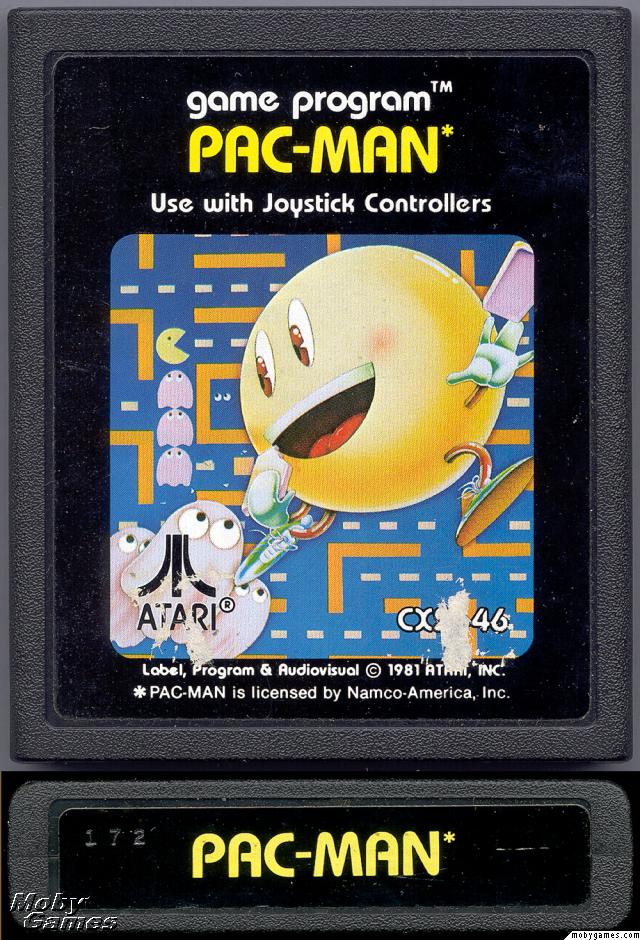
Pacman for Atari (1981) image source:  www.mobygames.com

Pac-man for Atari (1981)
image source:
http://www.mobygames.com

CES (Consumer Electronics Show) fervor started in October 1983.  For any consumer device-focused company, it was, and still is, the trade show of the year, conveniently scheduled at the beginning of January virtually guaranteeing ruined Christmas holidays for everyone involved.  Marketing and Sales were buzzing about Atari’s big introduction, the home console version of Pac-Man.  We were a research and development group and generally weren’t invited to attend the show, but it sounded so…huge…I asked my boss what I had to do to earn a ticket to go.

pacman

Pac-Man, he said.

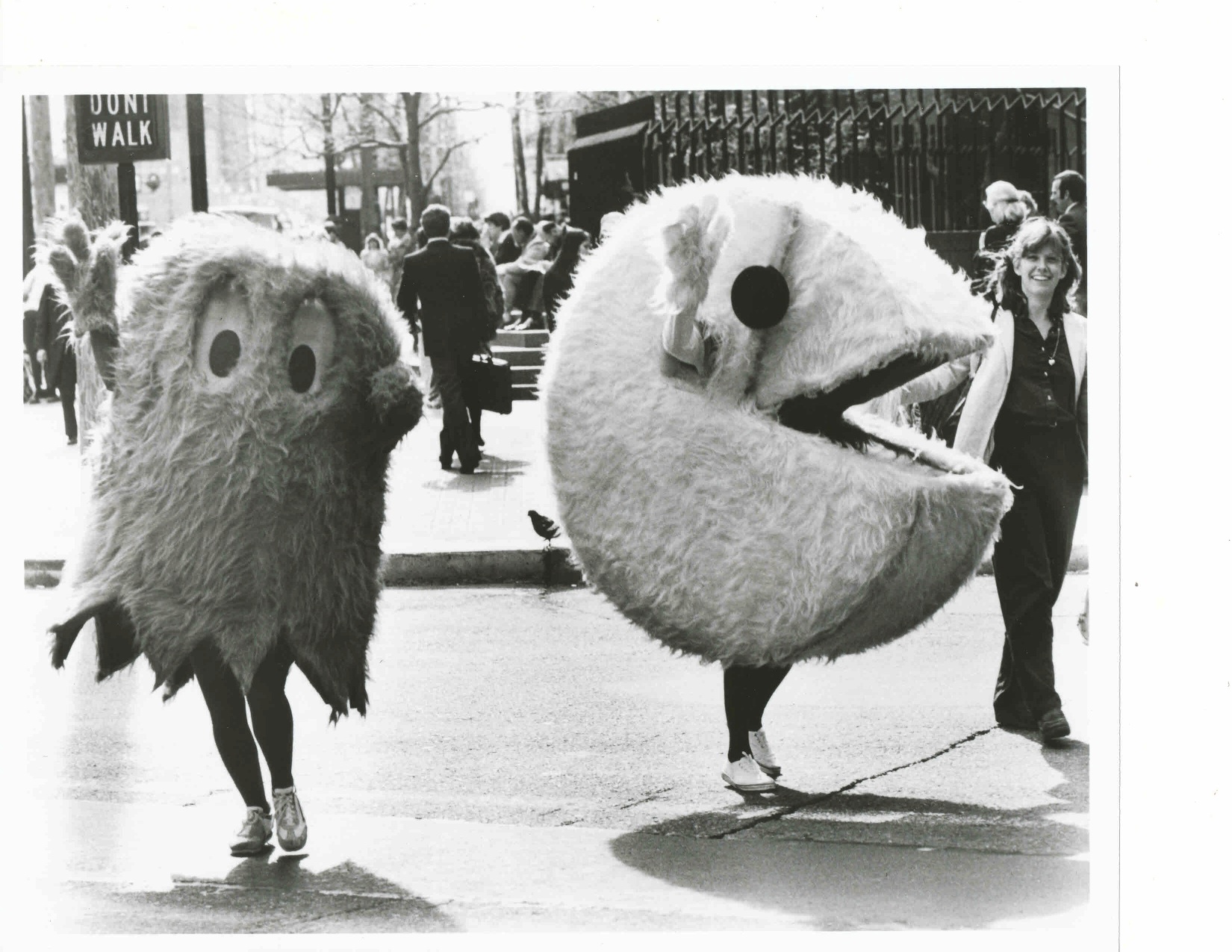
I called someone I knew who was a costume designer at Chuck E. Cheese restaurants. Singing rats, Pac-Man, what’s really the difference? I told her I’d pay her $500 (the amount in the petty cash box in our admin’s bottom drawer) to help me build life-size Pac-Man and Ghost costumes over the weekend. We constructed PVC frames laced with shoulder straps, and a giant foam and yellow fur cover for Pac-Man, red for the Ghost. Pac-Man’s mouth was hinged to open and close. On a cheap plastic Radio Shack audio box I recorded the “wakka, wakka, wakka” Pac-Man sound track using the arcade machine in the company’s game room. Monday morning, I hoisted the thing over my head, put on the furry yellow gloves, hit Play, and modeled the ensemble for my boss. For the next nine months, everything I did at the company had something to do with those damn costumes.

In those days, CES shared the floor with the adult video industry show. You could walk a few feet from the booth and get your picture taken with any number of bunnies and porn stars. I’m still proud that my Pac-Man had a longer photo line than Marilyn Chambers.

I had booth duty, clad in a Brooks Brother navy blazer and khaki skirt as required by Marketing. A  couple of local “dancers” that our trade show manager had found wore my much more fun costumes. Young, strong, free during the day, and probably happy to get some extra under-the-table cash, they did a great job.  At 5:00  all the show attendees headed off to fill the bars of Vegas, while I loaded up the costumes in a rental van and handed a sawbuck to a bellman to cart them up to my room at the MGM Grand (earning an “I Slept with Pac-Man” bumper sticker that mysteriously appeared on my Honda when I got home).

The third night of the show, around 2:00 AM, I was awakened by a call from my boss. “Frank Sinatra wants to meet Pac-Man.” Occasionally life throws you a sentence that you feel privileged to hear, and this was one of them.

The famous costumes

Harry came to my room and put on the yellow tights. Normally he was a give-credit-where-credit-is-due kind of manager and would always let me, the inventor, play the lead character.  But evidently when it came to meeting the Chairman of the Board, rank prevailed.

Caeser's Palace (image source: http://www.cemetarian.com/)

Caeser’s Palace
(image source:
http://www.cemetarian.com/)

We walked across Las Vegas Boulevard to Caesar’s Palace where Frank had just finished up his last set of the night. Two men in black suits stood, hands behind their backs, on the sidewalk in front of the hotel. Greek gods sprayed pink and blue water behind them.

“You Pac-Man?” one of them said.

Clearly Frank recruits for brawn, not brains.

Since neither of us had a small of a back to lightly touch,  or even much in the way of arms, the men were forced to hold our big furry hands to lead us around the side of the hotel. Through Ghost’s eyeholes I saw corridor after corridor, linoleum, then garish casino carpet, then plush blue carpet as we wound through the bowels of the hotel. A set of double doors were opened for us and we entered a huge suite with a party underway. Glasses clinking, laughter, dim lighting – our path was suddenly blocked by more black suits. Then a face appeared at knee-level looking up my costume.

“Hey!  This one’s a girl!” I suddenly regretted not putting on a bra under my t-shirt.

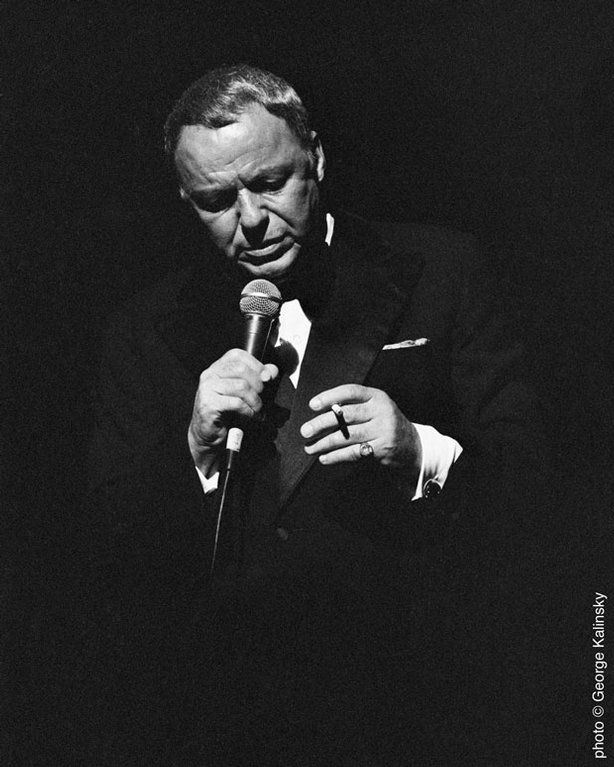
Frank (image source: http://www.kpbs.org/)

Frank
(image source: http://www.kpbs.org/)

“Oh yeah?,” I heard.

It was an unmistakable voice, followed by an unmistakable chuckle. I saw Frank get up from a sofa and take a couple of steps toward us, reaching out to shake Harry’s fuzzy hand.  Harry hit the Play button and the little Pac-Man theme song started. Huge laughs.

He never shook my hand, but then I was just playing the part of the lowly red sidekick. Frank didn’t get where he was by dealing with the guys one rung down.  It was okay. I was 22, had a photo of my boss in yellow tights just in case he didn’t give me a good annual review, and I was standing two feet from Frank Sinatra. Like all aging stars you see outside their airbrushed promotional images, Frank looked old. His hair and skin had thinned. The miles showed. Still he stood before me, blue eyes shining. I could hardly wait to tell my grandmother, the one who had taught me to sew.

The costumes arrived back at the office a week later with all the exhibit gear. They, and I, were shipped off to New York City the next day. Atari’s marketing department had decided to hold a National Pac Man Day in 22 cities all around the U.S. and wanted duplicate Pac Man and Ghost costumes made for each city’s event. I attended the one held in Salt Lake City and appeared on “Good Morning Salt Lake” to publicize the event with Pac Man by my side – fifteen minutes of fame that didn’t hold a candle to my five within that hotel suite.

Fifteen years later, when I heard that Frank Sinatra had died, I, and the rest of the world, thought back to moments we had shared with him. For me it wasn’t a first kiss to “Fly Me To The Moon”, or wedding dance to “The Way You Look Tonight”, it was his laugh, his eyes, and his hand shaking a fuzzy yellow glove I had sewn.

About the author

Shari Barnett is a native Californian (5th generation) who, after 30 years working in the Silicon Valley, moved to North Carolina to change careers and experience seasons. As she now watches her kids move past college and begin their careers, she can’t help but recall some of the crazy stuff that happened at the dawn of her own work life. This happened in 1983. 

Postmortem

Poetic in style and brilliantly written, Postmortem certainly makes the best of 2013! Dedicated to director Richard F. Mason, author Nancy Caronia writes, “There was his laugh, his scarves, his cigarettes, and his requests for coffee the color of Simone, but mostly what I remember is his silence.” Just poetry. . .

by Nancy Caronia

for Richard F. Mason (1929-2010)

1. I have each one. Every note he wrote during the run of “Garden District”—Tennessee Williams’ double bill of Something Unspoken and Suddenly, Last Summer. Each day’s grouping is stapled neatly one on top of the other into the small yellow spiral bound notebook I kept close through the process.

2. On the first day of rehearsal my handwriting in black ink is meticulous and neat:

Rehearsal more important than performance.

The word EXPLORATION is carefully boxed in red ink.

3.  The first of his director’s notes that I reread after I learn of his passing:

Hal tells me man next to him is asleep.

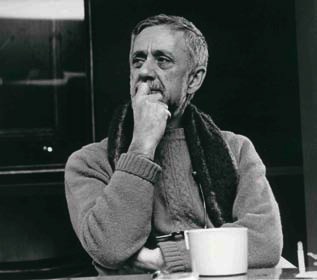
Richard F. Mason at his directing desk, a cup of coffee never far away.

Richard F. Mason at his directing desk, a cup of coffee never far away.

4. There was his laugh, his scarves, his cigarettes, and his requests for coffee the color of Simone, but mostly what I remember is his silence. During rehearsals in the West End black box, he sat in the back of the theater and listened. His silence was more present than anything or anyone I had ever encountered. It was punctuated only by the occasional hiss, the bang of his fist against his director’s table — a large plywood square set atop a grouping of seats — or, more frequently, the scratch of a pencil on a half sheet of recycled 8- x 11-inch paper. The scratching was urgent, insistent:

We can work on “white lisle” segment if you want; See RFM about “what manager? God?” & your arms

5. More of my notes from our first rehearsal:

Ensemble: w/out obvious stimuli totally aware of other persons on stage

NON-VERBAL AWARENESS

6. He was teaching us how to be silent, but not quiet. He was teaching us to listen. His notes were not simply requests, reminders, demands or praise, but charms to create our presence. He was not perfect. He did not expect us to be perfect. He hoped we would engage fully as the imperfect human beings we were. We did not need to be nice or kind although he did expect compassion (though that compassion could seem rough at times). We had to be ourselves completely or we could not be present for our characters or the other actors or our stage manager in the booth waiting to hear her cues through our cues or the audience, who, he told us on the first day of rehearsal: has no art to listening.

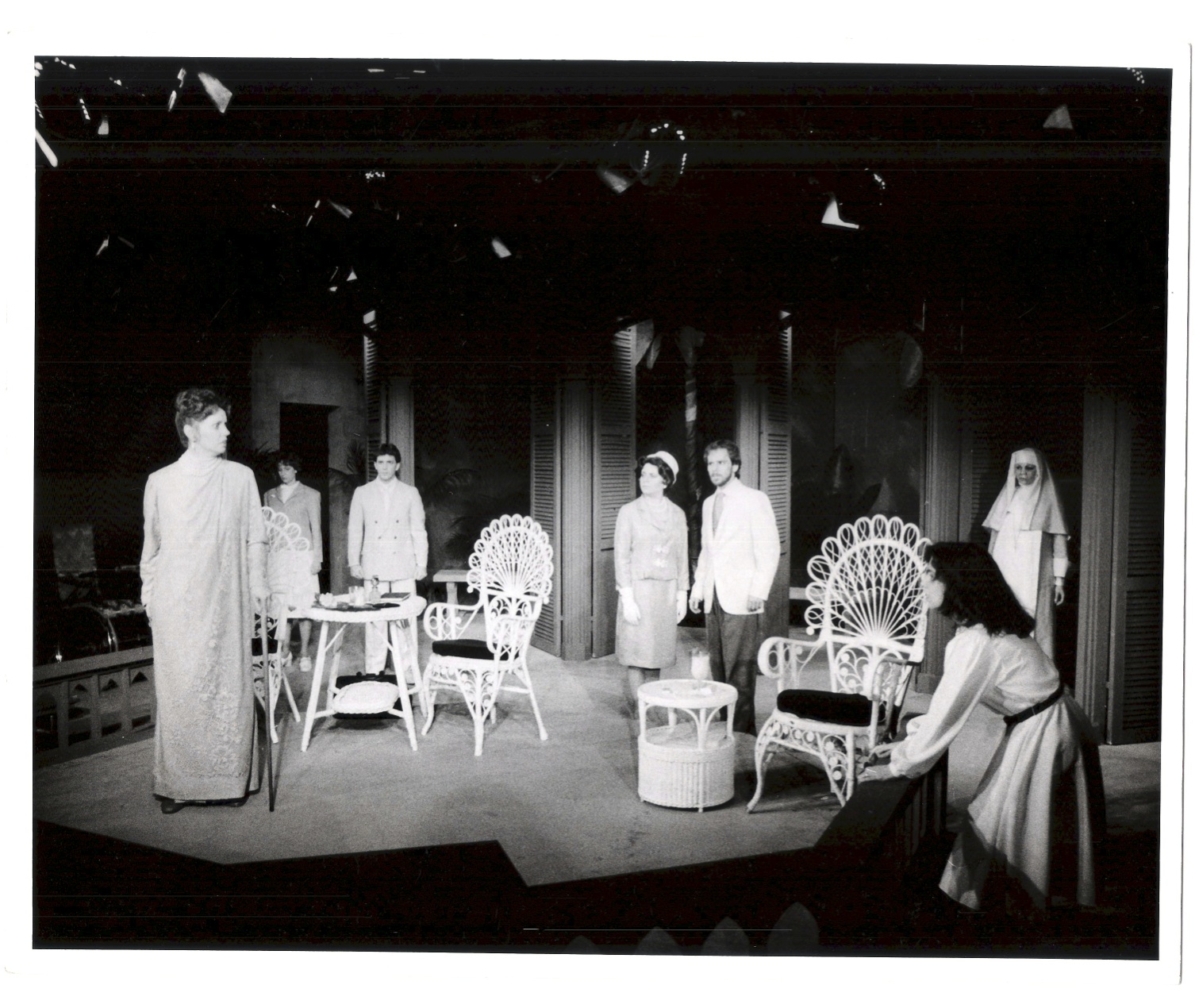
From left to right, Nancy Kaiser, Stacy Lynn Hein, David Shatraw, Lori Gunty, Hal Katzman, Nancy Caronia, and Kym Grethen in Tennessee Williams' Suddenly, Last Summer directed by Richard F. Mason.

From left to right: Nancy Kaiser, Stacy Lynn Hein, David Shatraw, Lori Gunty, Hal Katzman, Nancy Caronia, and Kym Grethen

7. WAKE UP

8. Early on in the rehearsal process he reminded us to: Look into the eyes! Communication!!!! My handwriting not so neat, but my punctuation emphatic.

9. The art of collaboration: We were not alone and we could not do it alone. But what was it? At first, it seemed to be the words on the page transformed to the stage, but it had more to do with Hamlet’s to be or not to be. He wanted us to be and to be with each other. He gave notes on the first day of rehearsal and the last day of performance. His notes assured us that someone nearby was listening, interacting, caring about what we were or were not doing or who we were or were not. His notes focused and helped us to realize his vision. His notes forced me to show up for myself, for him, for the other actors, for the stage crew, and for the audience. Showing up and collaboration were the only things we had—in rehearsal, on stage, and in life. If we did not or could not participate the not to be was assured. This it was the stuff that dreams were made, if only we could learn to stay in our skins. Collaboration was the role to which we were all born and to which he wanted us to aspire.

10. Excellent

11. I worried about hurting the actress who played Sister Felicity with the cigarette I put out in her hand each night and one night he gave me the direction: Not side of but go below table a cig burn fit (w/ashtray). I continued to be too delicate, too careful, too caring.

12. You are singlehandedly boring audience.

13. You must burn Sister Felicity

14. When I finally let go and stamped the cigarette out in the actress’s carefully taped hand, I was sent the note: That’s more like it! and then, a further correction: Don’t hide behind nun on introduction.

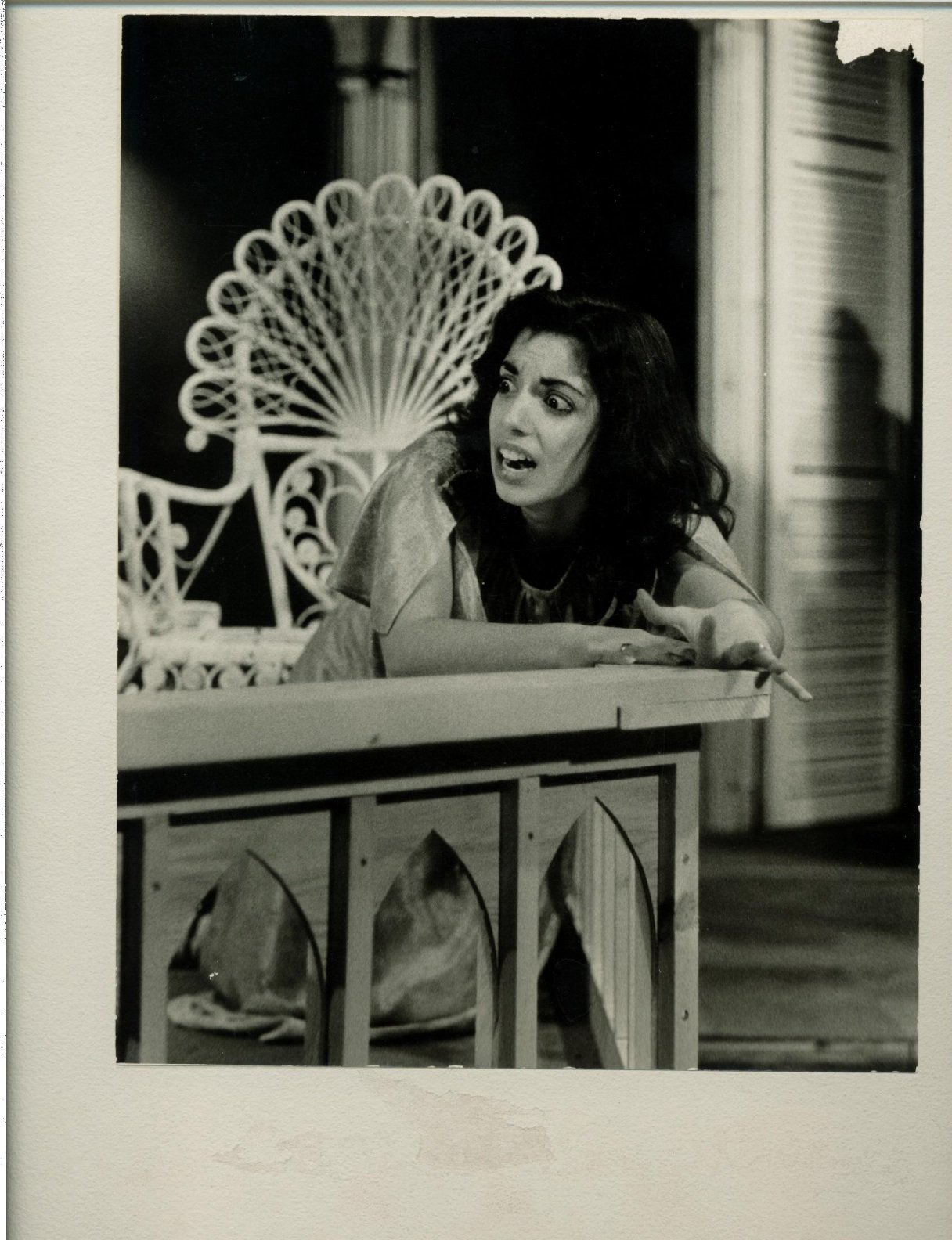
Nancy Caronia as Catharine in Tennessee Williams' Suddenly, Last Summer.

Nancy Caronia as Catharine 

15. The actor who played Doctor Cukrowicz and I were upstage in Mrs. Venables’ garden waiting for our cue. Matt, the actor, pulled out a small red plastic drill and put it against my head and made whirring noises. His satire was a reminder of Catharine’s fate–a forced lobotomy to save Mrs. Venables’ delicate sensibility. I swatted the drill away with my right hand and shot him a look that said, Stop, but I chuckled under my breath. We missed our cue, but there was no yelling, banging, or cursing from the darkness. We were safe—the other actors were asked to return to their previous positions and were given new directions. Our beloved director, who never missed anything, never learned that Matt brought the toy drill to rehearsal. Or perhaps he did, but chose to allow us, the actors playing the handsome doctor and the mentally unstable Southern belle, our mysteries.

16. Later that week, during dress rehearsal, he sends this note back with the assistant director: Lovely physical work during the seduction scene.

17. Two or three days before opening night, he asks to see on stage me and the actors who play my character’s mother Mrs. Holly and brother George Holly. He had already had our assistant director write: See Mason about “how elegant George looks” as left-handed compliment. He was pushing me to not see the Holly family as a cohesive or loving group. Once we three are on stage, he re-blocks our entire scene on the portico—a stage area that was meant to be a boxing ring. I believed he thought the scene wasn’t working, but now I know he saw a spark of what was possible and enclosed us in ourselves so that we could not escape the clash of family dynamics. We had arrived at the inevitable.

18. The previous semester he was to have directed Skin of Our Teeth by Thornton Wilder. He became ill and disappeared. At least that was how it felt. I panicked. He spoke my language or at least I thought if I could learn his language, I could speak with him and anyone else who knew this mysterious tongue of the living. I visited him in Lenox Hill; I needed to know that he would return. He smiled at me, raised his eyebrows slightly, and shrugged when I entered his room — blindingly white and dull — no scarf, no cigarette, and no coffee. Only a pencil and a notebook were on his table. Plans for the future. I don’t remember our conversation, although I know I worried about how pale he looked and that he liked my boyfriend — 23 and a bit of a bad boy (not a college student)— since he raised his eyebrows and smiled at me when Phil entered the room at the end of our visit. He asked about rehearsals and I said we missed him; I couldn’t tell him his vision for the play was ruined—not when he was sitting before me looking like a ruin. As Phil and I left (I felt as though we were abandoning him), he croaked out: Do you have a cigarette? He could tell a smoker a mile away; Phil gave him the cigarette. I rolled my eyes, but said, I’ll see you soon. We all miss you.

19. See Mason about “procuring.”

20. Nota Bene to Language: I first witnessed the magic of his language during his production of Six Characters in Search of an Author—I sat in the back of the West End listening to the sounds of the play—the voices like Bellini’s Norma—a carefully orchestrated musical score playing one against and with the other. The costumes set against the pitch and shadow of the black box theater—a visual collage influenced, I imagine, by Modigliani’s color palate, attitude, and love of long and lean figures and Visconti’s 1963 film Il Gattopardo for the social decay and displacement. The director of the play within Pirandello’s play conducted the action from atop a black box of a throne off to the side of the main playing area—he mimicked Doc’s laugh, and although he was taller and wider, the life on that stage was perhaps the most autobiographical work our beloved director ever conceived. After he had passed, I found out he was not merely a Massachusetts man, but also a Southern Italian. I should have known, but his last name — Mason — was purposefully chosen and thwarted my understanding of our connection, which, I now recognize in retrospect, I had sensed in his production of Six Characters. That silence again. Something unspoken, yet plain if one were paying attention.

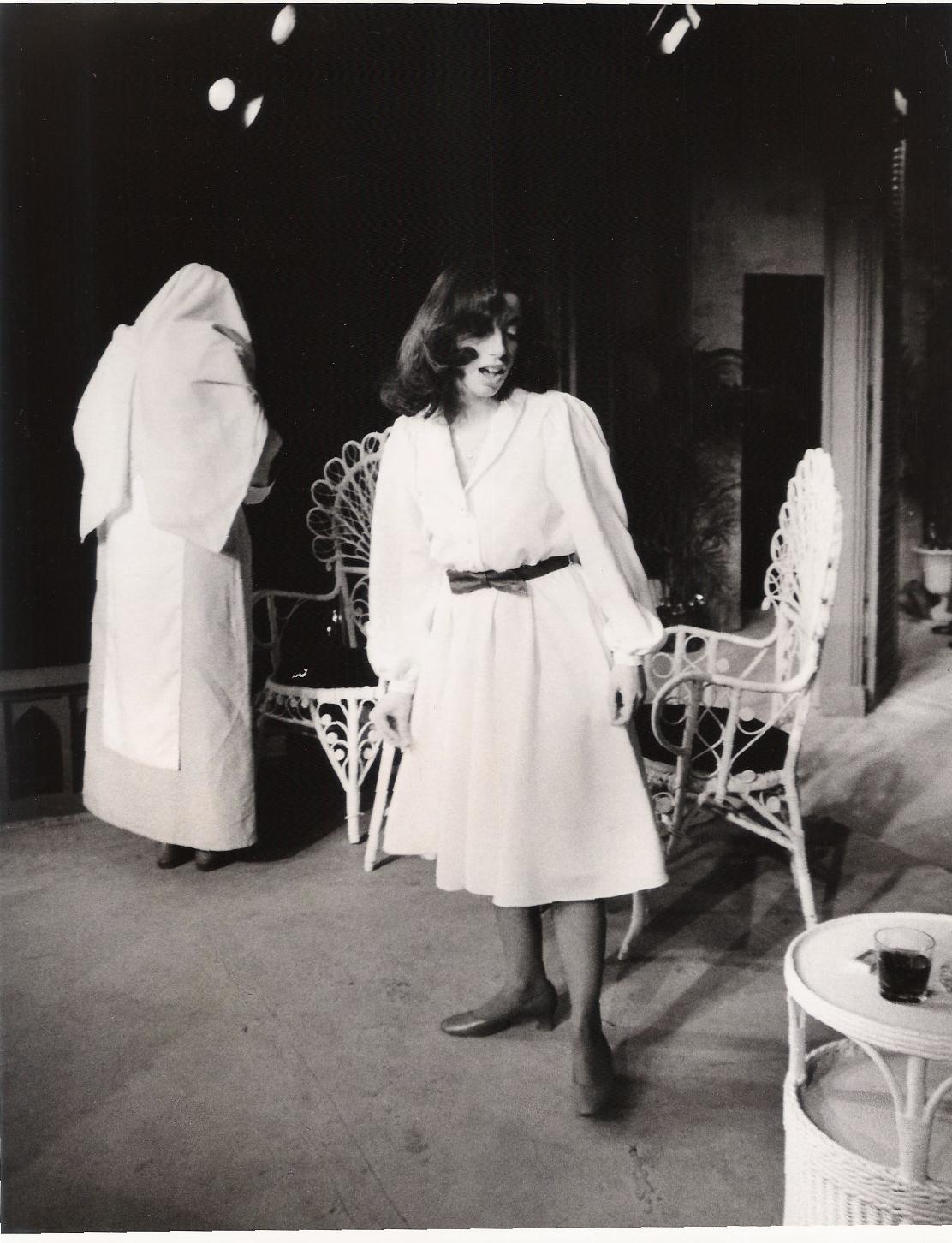
Nancy Caronia as Catharine and Kim Grethen as the nun in Tennessee Williams' Suddenly, Last Summer.

Nancy Caronia as Catharine and Kim Grethen as the nun 

21. Opening night note written with black marker in the assistant director’s hand: See Dr. Mason about “it began w/ his kindness”

22. There was a moment when I lost faith in the process. I went to see him in his office; I was terrified of failing. I accused him of not caring for me. I had never been so bold and so stupid in my life. He was compassionate; he told me to leave his office—now. I sat in the balcony of the John Cranford Adams Playhouse. I knew I was wrong, but I didn’t know what, exactly, I had miscalculated. The actor playing my brother George appeared, put his arm around me, and allowed me a good long cry. That night (or the night after), Doctor Mason handed me my notes, raised his eyebrows, smiled, shrugged his shoulders, and then disappeared through the dressing room door—an imp in the night.

23. What’s wrong is your attitude at the beginning of the story. See Mason about “How it began.”

24. He was the first adult of whom I was not terrified; intimidated—yes, terrified—no.

25. Where is “the mad, are you mad?”

26. He lived in the same apartment on the same street in the West Village for much longer than I ever knew him. We rarely spoke after I graduated (I had abandoned him), but when we did, I was always reminded of possibility.

27. BIGGER pause before “and this you won’t believe” and written under that request: we have to understand “devoured.”

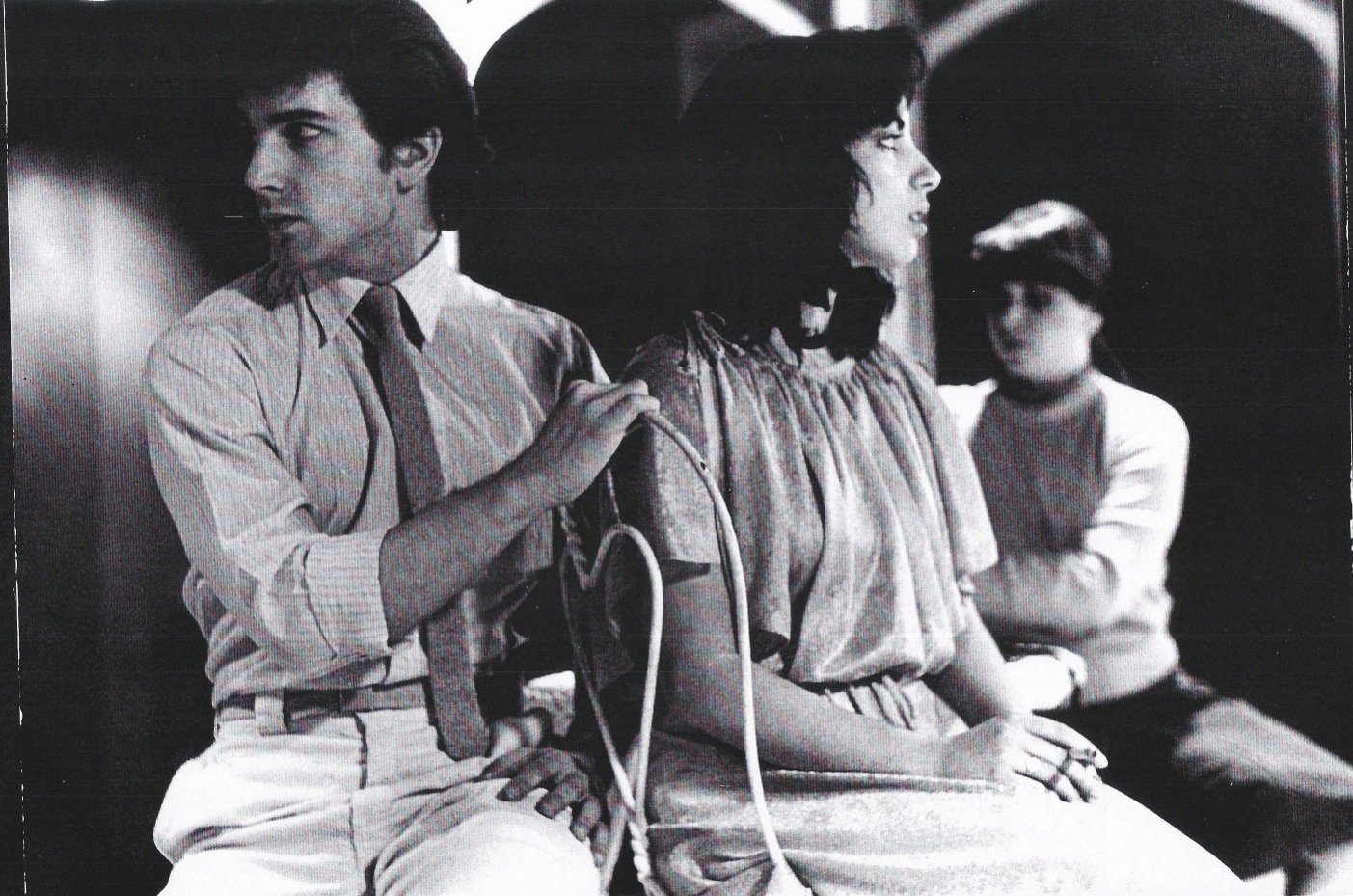
Rehearsal photo, from left to right, David Shatraw as George, Nancy Caronia as Catherine, and Lori Gunty as their mother Mrs. Holly in in Tennessee Williams' Suddenly, Last Summer directed by Richard F. Mason

from left to right, David Shatraw as George, Nancy Caronia as Catherine, and Lori Gunty as their mother, Mrs. Holly

28. Years later, we were eating dinner at this little Italian place in the West Village that he loved—the owners were Caprese and I had lived on Capri and we spoke of shared acquaintances. I loved kissing Doc’s cheek—his scratchy gray beard reminded me of a cat although I have never touched a cat that felt like him or his beard. Doctor Mason was fawning, ordering dinner (The salmon is a good choice for you. Yes, let’s order you salmon.) and making sure my wine glass never sat empty. He could still direct my movement, my every moment in his presence, even though I was no longer his student nor even his friend.

29. Note from my notebook on the first day of rehearsal: Acting is believing/ Art is involved.

30. On the next to last night of the closing of the “Garden District” run, he handed me one note where he had scrawled one word repeated twice. He held it in his hand as I reached out to take it, but he made me meet his eyes before he would release it. We looked at one another for only three seconds, then he let go and turned away from me.

31. Superb! Superb!!

About the author

Nancy Caronia is currently a Lecturer in the Department of Writing and Rhetoric at the University of Rhode Island. Her essays, fiction, and poetry have appeared in the Italian American ReviewThe Milk of Almonds, Don’t Tell Mama!: The Penguin Book of Italian American Writing, and Coloring Book: An Eclectic Anthology of Multicultural Writers.


*Postmortem in theater parlance takes place after the sets are struck, the costumes cleaned and stored away, and the actors have left the stage. A postmortem discussion focuses on the successes and failures of a production with an eye towards the future.

It’s Flash (Non) Fiction Week!

Editor’s note:

Usually we only feature the work of a single author each week, but after receiving these three wonderful flash (non) fiction pieces, we decided to publish them together. All three true stories are written by women and all three capture a single moment: when an idol notices her worshippers, a near-death experience, and a conversation with a stranger. We are also delighted to to include the work of two visual artists, a first for our new blog!

♠♠♠

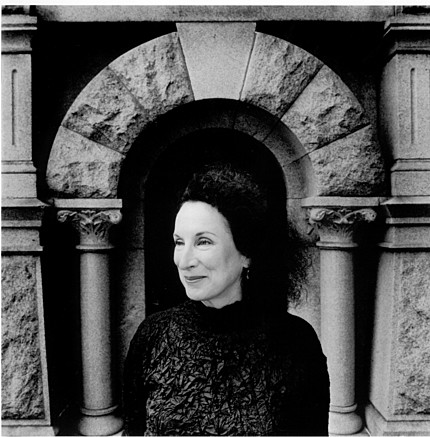
Margaret Atwood and the Stunned Four

image source: http://moniquespassions.com/

image credit: http://moniquespassions.com/

by Mercedes Lawry

The Stunned Four worshipped Margaret Atwood. They’d traveled from different corners of the country to attend her workshop and bask in her wry wit. They also hoped they might feel a small but significant whisper of her affirmation. The Four became instant friends, connected not only by their adoration of Margaret Atwood (or St. Margaret as she was affectionately called), but also by their senses of humor and the camp-like atmosphere complete with dorms and mediocre food. One member of the group rescued a paper cup used by Margaret Atwood during class. Like a relic, it might have the power to confer prophetic proficiency or a deft hand with a snarky phrase. Another member washed dishes at the cottage where Margaret Atwood was staying and where she’d hosted a picnic for the class. That member also played with Margaret Atwood’s young daughter who accompanied her and though that member did like children and found Margaret Atwood’s daughter to be a charming little girl, there was no denying she was also hoping to curry favor. The Stunned Four trekked to town in one of the member’s vans and commissioned a t-shirt printed with a clever phrase that Margaret Atwood had tossed off in class as a dry aside. They presented it to her as a parting gift and she seemed a little startled, not recollecting she had said the phrase. Years later, the members of the Stunned Four were each reading Margaret Atwood’s latest collection of short stories when lo and behold, they stumbled on the t-shirt – their gift – depicted in a slightly different context but clearly recognizable.* They were thrilled, elated, and would share this story with unabashed pride for decades to come. Margaret Atwood had taken note.

*The story is “Loulou, or the Domestic Life of the Language” in Margaret Atwood’s collection, Bluebeard’s Egg and Other Stories.

♠♠♠

A Night By The Sink

Wheeler image

image credit: Lesley Ann Wheeler

by Christine Tierney

It’s after 2am and in waltzes Goldenboy; hair across his golden ass, tight faded Levis, straw cowboy hat worn and split in just the right places.  I’m standing by the kitchen sink.  The window above the sink is open and I am smitten with cricket-song.  But wait — I don’t give a shit about nature, maybe I’m high. Goldenboy reeks of something stronger than beer, and his eyes are blazing red.  Goldenboy staggers toward the refrigerator, slips on Mom’s wicked shiny floor, catches himself, but Goldenboy doesn’t fall. I make a noise — it isn’t quite a chuckle. Goldenboy disappears from the kitchen and returns with his hunting rifle. He rests the muzzle of the rifle against my moist temple, cocks it, and I try not to breathe.  Slowly, Goldenboy counts out loud to thirty, burps real loud like this is some kind of joke, and withdraws. He makes a noise — it isn’t quite a chuckle. Goldenboy and me have unknowingly rehearsed this. Every bitter interaction accreted to this moment. Goldenboy exits the kitchen.  I remain by the sink. A half a minute taints my life.

♠♠♠

This is Why I’ll Never Write a Book 

dd1

image credit: Angie Stong

by Evelyn Katz

Another Monday afternoon in a lifetime of wasted Monday afternoons and once again I’m sitting in the same Dunkin Donuts I always sit in when I think I’m going to be a writer even though it’s not in my zip code anymore and the line of people waiting to use the bathroom is longer than the lines for coffee and ice cream combined.

This time it’s the occupant in the bathroom taking too long and the non-coffee purchasers taking turns knocking on the bathroom door as if a knock on the bathroom door really has the power to speed up the human waste removal process.

One paragraph, God, just let me write one paragraph in peace.

I can never write at home, where there are so many distractions (pets, husband, TV, computer).  I go to Dunkin’ Donuts so I can work in a space where I know no one so, hypothetically, no one should bother me. Three sentences later it’s a phlegmy voice assaulting my ear.

“Hey kid? Wadda ya writing?”

I look up and shake my head. Why God? Why do they call it God-given talent if you don’t make these people leave me alone long enough to use it?

“Is that your homework, kid?”

I twist my neck sideways in the direction of a baseball-cap-wearing, gummy old drunk and tell him, “It’s a story.”

Gummy cups a hand over his ear.  “Wha’d ya say?”

I raise my voice. “It’s a story!”

“A story?  Wadda ya writing, a book?”

“Yes! Yes I am!”

“No kidding, kid? You’re writing a book.” Gummy picks up his coffee cup and spits into it and I think he’s now occupied with whatever landed in the cup so I go back to being a writer again.

Two more sentences and Gummy says, “Hey kid, you a student? You writing that for school?”

“I’m a teacher.”

“What?”

“I’m a teacher,” I over-enunciate.

“A teacher? Nah! You look like you’re ten.  “How old are ya? Twenty?”

“Older.”

“Chirty?”

I hold up four fingers. “Forty.”

You’re forty?  Nah!”

“It’s true.”

“You look like a kid.”

“Thank you.”

I slide my eyes back to the page and draw parenthesis around a word I may or may not use.

“So where do you teach?”

“High school.”

“You’re doin’ alright for yourself, kid.”

I write down two more words.

“You married?”

“Yes.”

“Kids?”

“No.”

“Trying?”

“No.”

“Selfish?”

“No.”

“Then why no kids?”

“Just don’t want them.”

“You got a car?”

“Yes.”

“You’re doin’ alright for yourself, kid.”

“I’m trying.”

The page before me is a jumble of words written by a childless-by-choice woman who is going to have to commit a crime and get sentenced to solitary confinement in order to write one uninterrupted page. Maybe selfishness is a crime.  I’ll go out onto the street and chant childless-by-choice until the cops come and take me away and then I’ll waive my rights to a trial in exchange for pen, paper and solitary confinement.

Gummy gets up, takes his cane that’s hanging on the chair back and says to me, “Alright kid, take it easy,” and shuffles his way out the door.

I lift my coffee cup and gesture in his direction, a silent likewise, because now I’ve decided that if the world won’t let me write my words on paper, then I’m sure as hell not going to sound them out and give them away for free.

This is why I’ll never write a book.

♠♠♠

 About this week’s authors and artists

Primarily a poet, Mercedes Lawry has been published in such journals as Poetry, NimrodSalamander, and others as well as two chapbooks. She’s published short fiction in several journals including 3711 Atlantic, Gravel, and The Newer York and has work forthcoming in Cleaver, Dying Goose and Molotov Cocktail. Additionally she’s published stories and poems for children.  Among the honors she’s received are awards from the Seattle Arts Commission, Hugo House, and Artist Trust, two nominations for the Pushcart Prize, and, a residency at Hedgebrook. She lives in Seattle.

Christine Tierney’s work has been nominated for Best of the Net, a Pushcart Prize, and the Best New Poets anthology, and has appeared or is forthcoming in Fourteen Hills, Poet Lore, Permafrost, PMS, The Tusculum Review, descant, The Yalobusha Review, The Broome Review, Sanskrit, Skidrow Penthouse, Shadowbox, Tattoo Highway, Soundzine, Cider Press Review, Sugar House Review, Gemini Magazine, TheNewerYork, Lungfull!, AEROGRAM, This Literary Magazine, Monkeybicycle, Pismire, scissors & spackle, Weave Magazine, Meat For Tea, and The Boiler Journal.

Lesley Ann Wheeler is a writer, designer, and editor living in Kansas City.  She has a wheelbarrow garden of kale in her backyard.

Evelyn Katz has been searching for space to be a writer since she was in the 2nd grade and her grandmother told her that she was going to be a writer. Her work has been published in RiverrunThe Voices Project and Coffee Shop Poems.  

Angie Stong is a photographer living in Southern Connecticut. At age 17, her photos have already appeared in multiple publications and featured in art shows, and she is recognized for her fine arts approach to photojournalism and portraiture. Her work can be found at:  www.flickr.com/photos/missangieanne or www.facebook.com/AngieStongPhotography.

A Republican’s Story

I’ve been writing this story for months, or years, depending on how you define “write.” I  write and delete, write and delete, until the story’s in tatters. There’s so little left. But it took all that unwriting to figure out that this story is about the telling. And this is how it begins: 

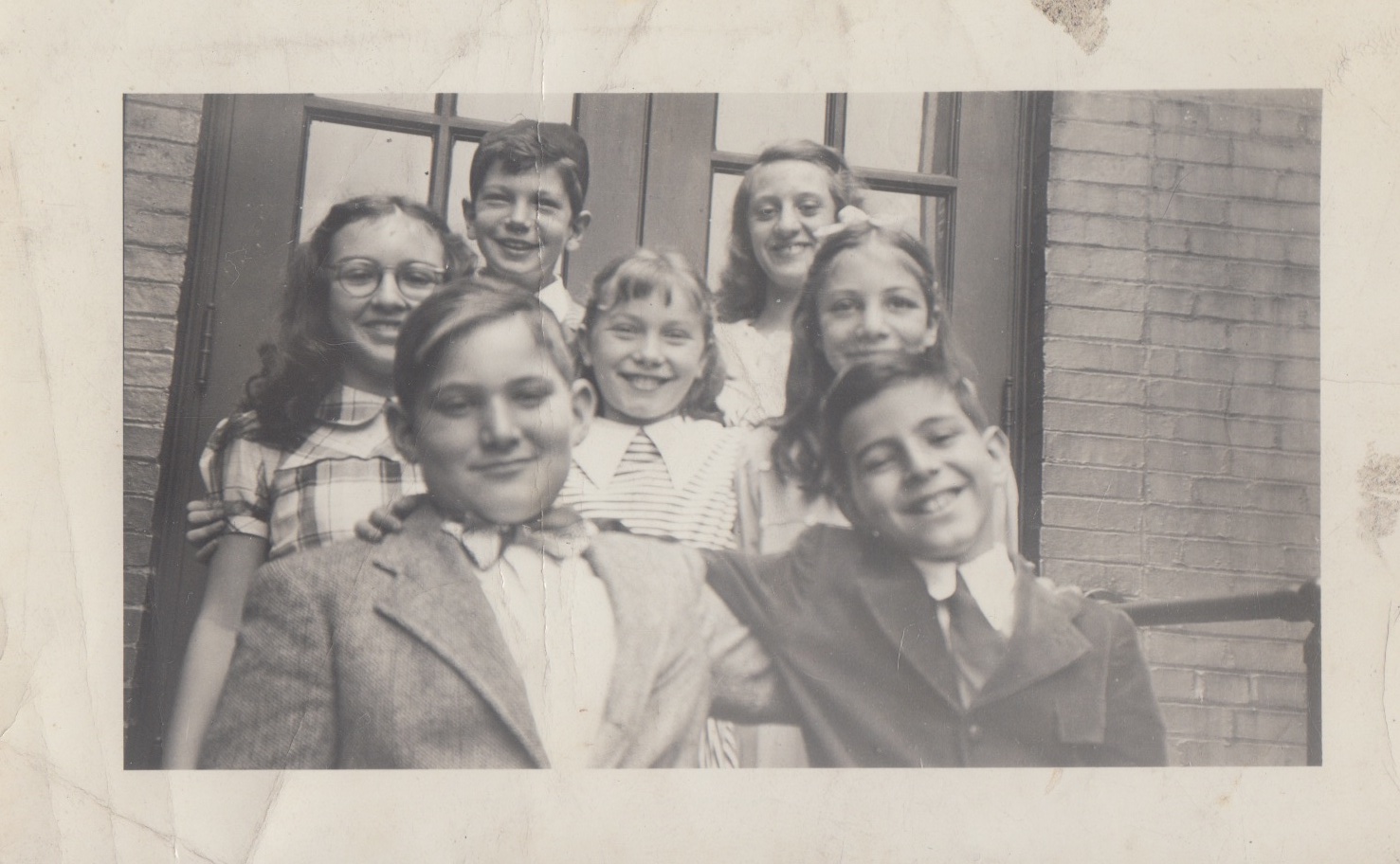
When my grandfather died, nearly 30 years ago, my father received a box of newspaper clippings, college diplomas, and curling black and white photographs that never found their way into an album. In these photos my father is not my father: he’s just another little boy made to smile for the camera.

Dad & classmates

The author’s father, top lefthand corner.

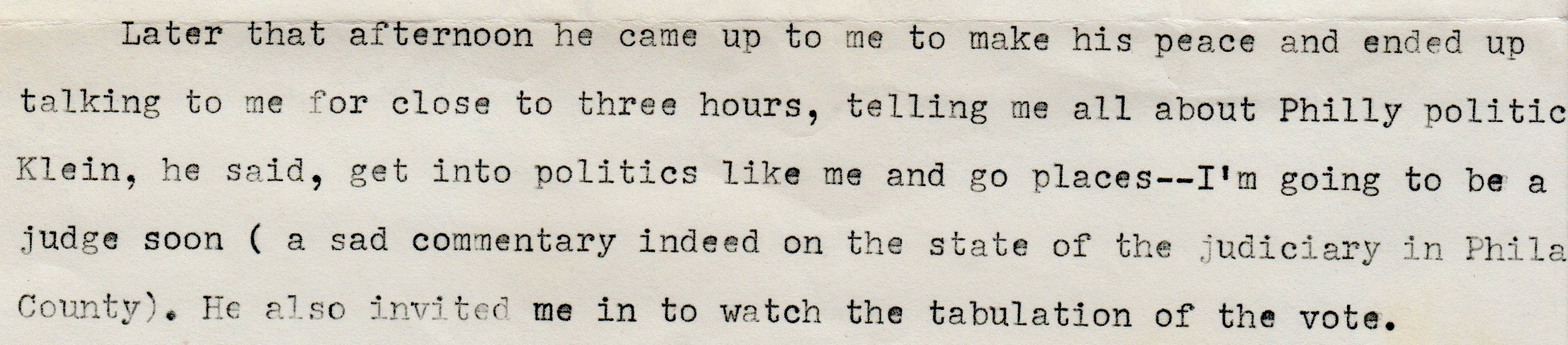
In this box there is a yellowed letter, written just after the 1960 Presidential election, as my father was finishing up his first semester of law school. The letter details his experiences working as a poll watcher in Philadelphia’s 16th ward:

Quote 1

In this letter my father laments how sections of the 16th ward were “herded into the polls” by various political bosses, and as a result, my father writes “Jack took the state.” Even though Nixon lost to “Jack,” my father didn’t see the day as a complete waste. His sharp eye for misconduct and willingness to scrap with Philly’s political machine caught the eye of the aforementioned Ossen, whom my father describes as a “real live political boss”:

quote #2

The letter is signed this way:

Your Staunchly GOP son

But before my father takes Ossen’s advice and runs (and loses) in his bid for political office — before all that it was 1961. Jack was sworn into office and, soon after that,  my grandmother died of cancer. My grandfather’s grief was so unmanageable, my Mom tells me, that my father took a year off from law school in order to tend to him. This story — of my father caring for his own father — surprises me: he was never very good with sick things. When I had the flu, it was my mother putting cool hands on my forehead and rinsing the puke buckets with Lysol. It was my mother who brought me flat ginger ale and made a fuss, not my father. Except for once.


When my brother and I were 13 and 8 respectively, my parents brought us to New York City to see Starlight Express (that’s right, Starlight Express) capped off with an extravagant post-show meal at Tavern on the Green, because if children love one thing, it’s fine dining. The wait for our food was interminable and my fancy dress, last worn at my brother’s bar mitzvah a few months back, was scratchy in the summer heat. Realizing their folly, my parents didn’t fuss when I ate all of the bread on the table — anything to keep me quiet.  I even ate the day-old fruit bread, sticky and sweet, and the culprit, according to the white-suited doctor who came to our hotel room later that night, of my violent food poisoning. By the time my meal arrived, the toxins had already started their work. I pushed my plate aside, cooling my cheek on the glass dinner table.

“What’s wrong with you?” my mother scolded, “We’re in a nice restaurant!” I got up from the table and dashed to the bathroom, but halfway there I lost control and vomited all over the slate dance floor. Kitten-heels and leather Florsheims parted like the Red Sea. I also threw up outside the hastily-hailed taxi cab and again in the tall ashtrays in the lobby of the Milford Hotel. I was sick all the next day, too, but I remember one thing made me feel better: my father holding me tight on the train platform in Penn Station. It’s the only time I can recall having my father care for me when I was sick. But, still, he did a good job.

Louis Klein, bottom right.

Louis Klein, bottom right. 

After one year of caring for my mourning grandfather, my mourning father returned to his law studies with a renewed desire to make something of himself, or at least to make something more of himself than his father had. My grandfather was a civil servant in the Navy Depot, and proud of it, as evidenced by the many photographs he saved and labeled with names and dates: Louis shaking hands with the 2nd Lieutenant at the William Penn Hotel, Louis smiling as the Admiral presents a check of $570.00 to the local USO affiliate, Louis at the Civilian Personnel Division Picnic, giving Miss Emma Lambing lessons in how to pose for the bathing beauty contest.

Louis and Emma Lambing

Louis Klein and Miss Emma Lambing

My mother tells me my father was always a little ashamed of his modest upbringing — that he could never understand why his college-educated father wasn’t more ambitious with his career, so happy to work for a small government salary, back pats from Admirals, and pool parties with Miss Emma Lambing . He also resented that my grandparents took in boarders for extra cash, renting out one of the twin beds in my father’s room to down-on-their-luck men. Once my father sassed off to one of these men and the enraged man chased my father around and when he finally caught him? My father spit in his face.

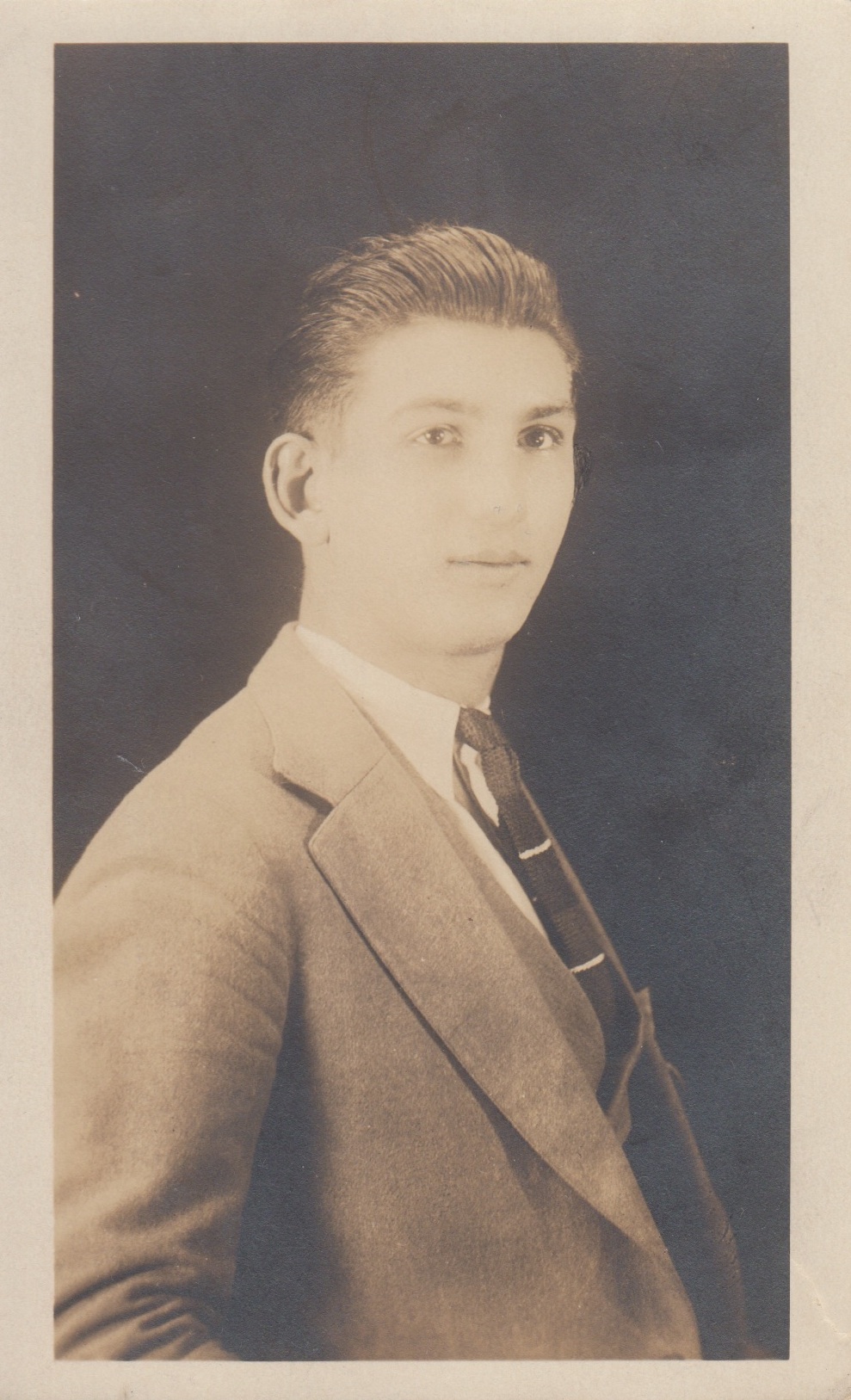
Louis H.S.

Louis Klein, just before going to college.

I try to imagine what my father was thinking as he lay in his bed at night, a strange man breathing there in the dark with him, and how frightened he must have been. I wanted to ask him about it, but my Mom said, “He doesn’t like to talk about it.” We did not talk about it.

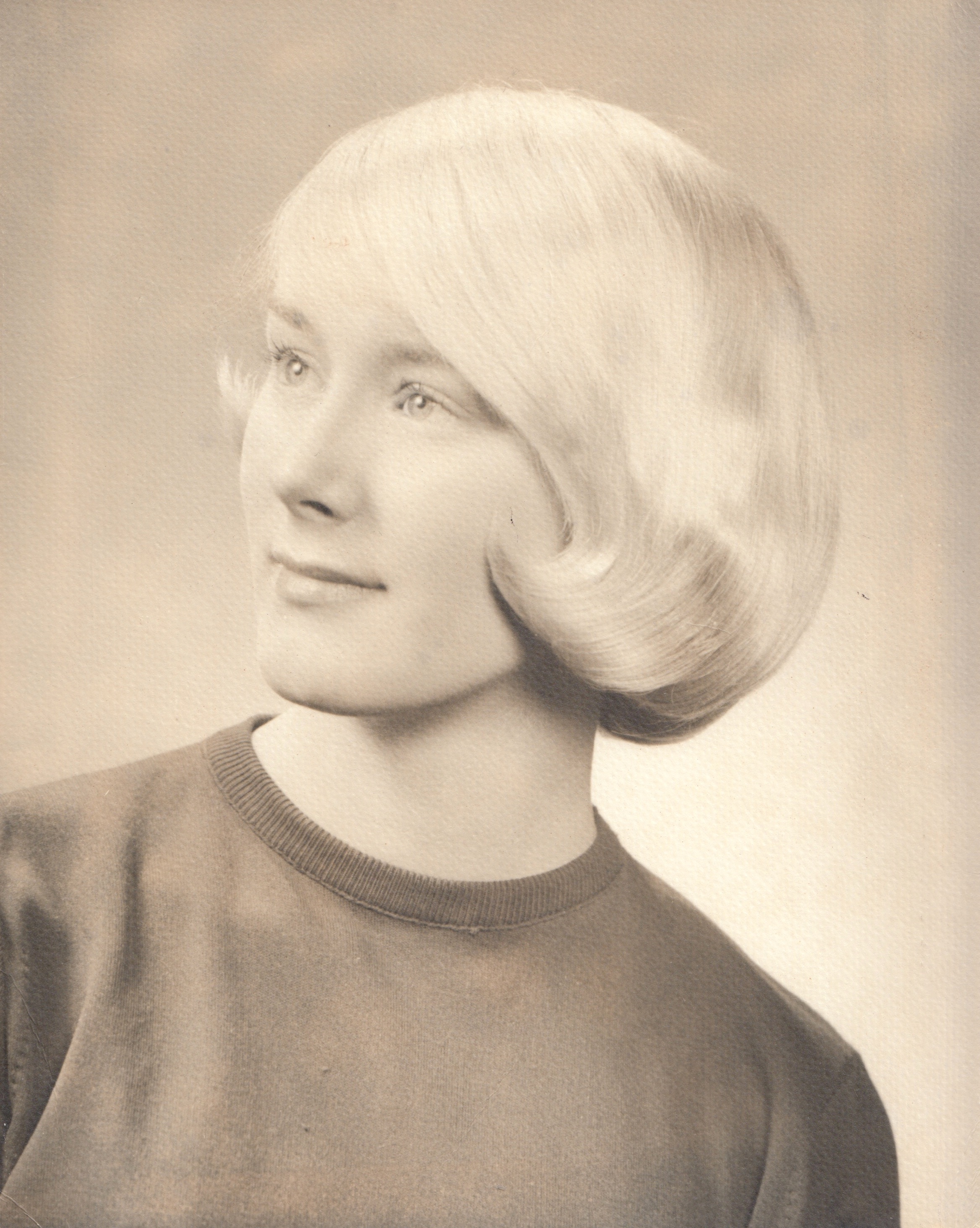
What my father did talk about, though, was the day my mother, a tall, blonde shiksa from Pottsville, went for an after-work drink with her teacher friends.[1] He saw her from across the room and smiled in his sharp, navy-blue suit.  “Who’s the blonde?” he asked. “Sally Shellhammer,” they said. Everything before that, though, is spotty. The transmission doesn’t come through.

lsally

Sally Shellhammer

We never asked my father about his past but it existed, stubbornly, anyway. Of the few stories I have, there is one I like best of all, maybe because it involves me and maybe because it involves murder: it’s the story of Marla [2] and it’s a doozy. In the early 70s, in the city where I was born, there weren’t enough Public Defenders to go around, so private lawyers were often asked to do pro bono work. This is why my father was appointed as Marla’s defense attorney, by the Dauphin County Court of Common Pleas, after she was charged with murdering her husband’s mistress.

Here’s what happened: one summer night, Marla was sitting at home, sewing (this detail is important), when she was informed that her husband was at the bar around the corner with another woman. Marla grabbed her purse (also important), ran to the bar, and found the couple seated on some barstools. As she argued with her husband, Marla reached into her purse and was surprised to discover that her sewing scissors were inside. As Marla stood there, sewing scissors in hand (and confused as to how they had gotten there), the mistress stood up from her barstool, tripped, and fell forward.

According to my mother, my father told the jury that Marla had not intended to stab anyone: when the mistress fell, she just happened to land on Marla’s scissors. Thirteen times. He pointed out that the wounds were unintentional and shallow. But, unfortunately, one of those shallow wounds was in her lungs. Had the ambulance arrived sooner, my father argued, the victim might have lived. Instead her lungs filled with blood and the mistress asphyxiated on the barroom floor, surrounded by the Saturday night crowd. This defense seems hard to believe but Marla was charged with manslaughter — not murder — and served just 4 years in the women’s prison. But this is not the amazing part of the story.

Listen:

Prison agreed with Marla. During her brief incarceration she became a devout Seventh Day Adventist and spent her days making small dolls out of clothespins, which my father would bring home to my mother. It’s hard for me to imagine my father, younger than I am now and still thin, going to visit Marla in jail. But he did. Stranger still: the image of my parents eating dinner, discussing Marla, and her case, and her dolls. This image is a yellowed photograph in my mind: the two of them sitting at the red picnic table in the yellow kitchen in the house where I grew up, even though they wouldn’t buy that house for another few years. But still, I see them sitting there. I think they’re holding hands.

My mother in the yellow kitchen with Muffin.

The author’s mother in the yellow kitchen.

My father was so taken with Marla that he offered her a housecleaning job after she served her sentence. Soon after that he and my mother agreed that Marla would make a fine baby nurse for their new little girl. Marla took the job: she slept on a cot in my nursery for the first two weeks of my life, changing my diapers and feeding me formula.[3]

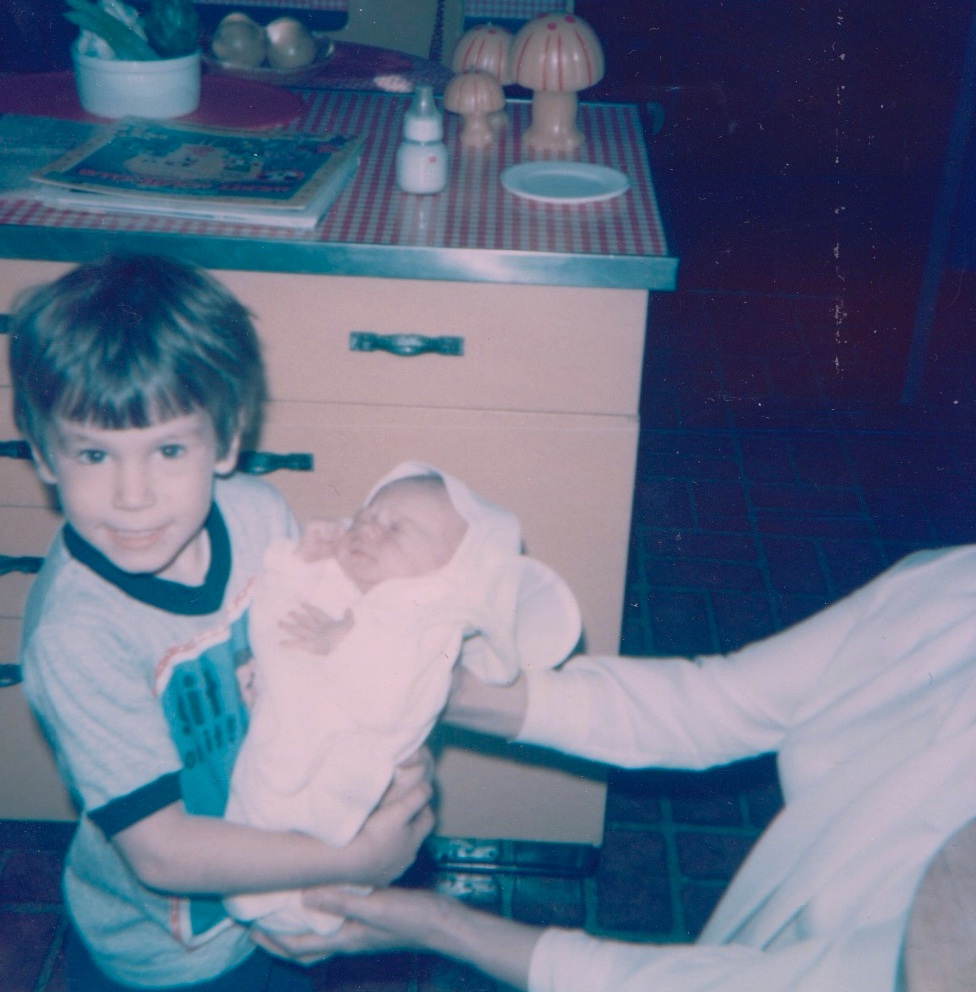
The author and her brother in the yellow kitchen.

The author and her brother in the yellow kitchen.

The first time my parents told me the truth about Marla, I was incredulous: “You hired a murderess to take care of your infant daughter?” My father’s reply was always: “It was manslaughter, not murder,” or, “You really are prejudiced, you know. Against murderesses.” I think he deflected my questions with humor because this story — concrete evidence of a momentary lapse [4] in his “staunchly GOP” ideology — embarrassed him, like getting too drunk at a party and saying something that’s true and painful at the same time.

I don’t actually remember Marla since she took another job when I was very young. I can’t even conjure up an image of her face, just her soft calves, which I would sometimes hug on the waxy kitchen floor. At least I think I used to do that. In college I wrote a poem about Marla and her soft calves — it was a sestina — and maybe now the writing’s created its own memory [5]? One memory I’m certain is true is of the telephone ringing in that same yellow kitchen, one day, when I was around 5 years old. My mother beckoned:

“Come here, Marla wants to talk to you. She saw your picture in the newspaper!”

Who?”

“Marla. You know, Marla. She took care of you when you were a baby?”

I took the receiver:

“Amanda,” she cried, “you’re in the newspaper! I said ‘My baby’s in the newspaper!’ and I had to call.”

This conversation with Marla made me feel loved and important. I did not yet know that she was a murderess.

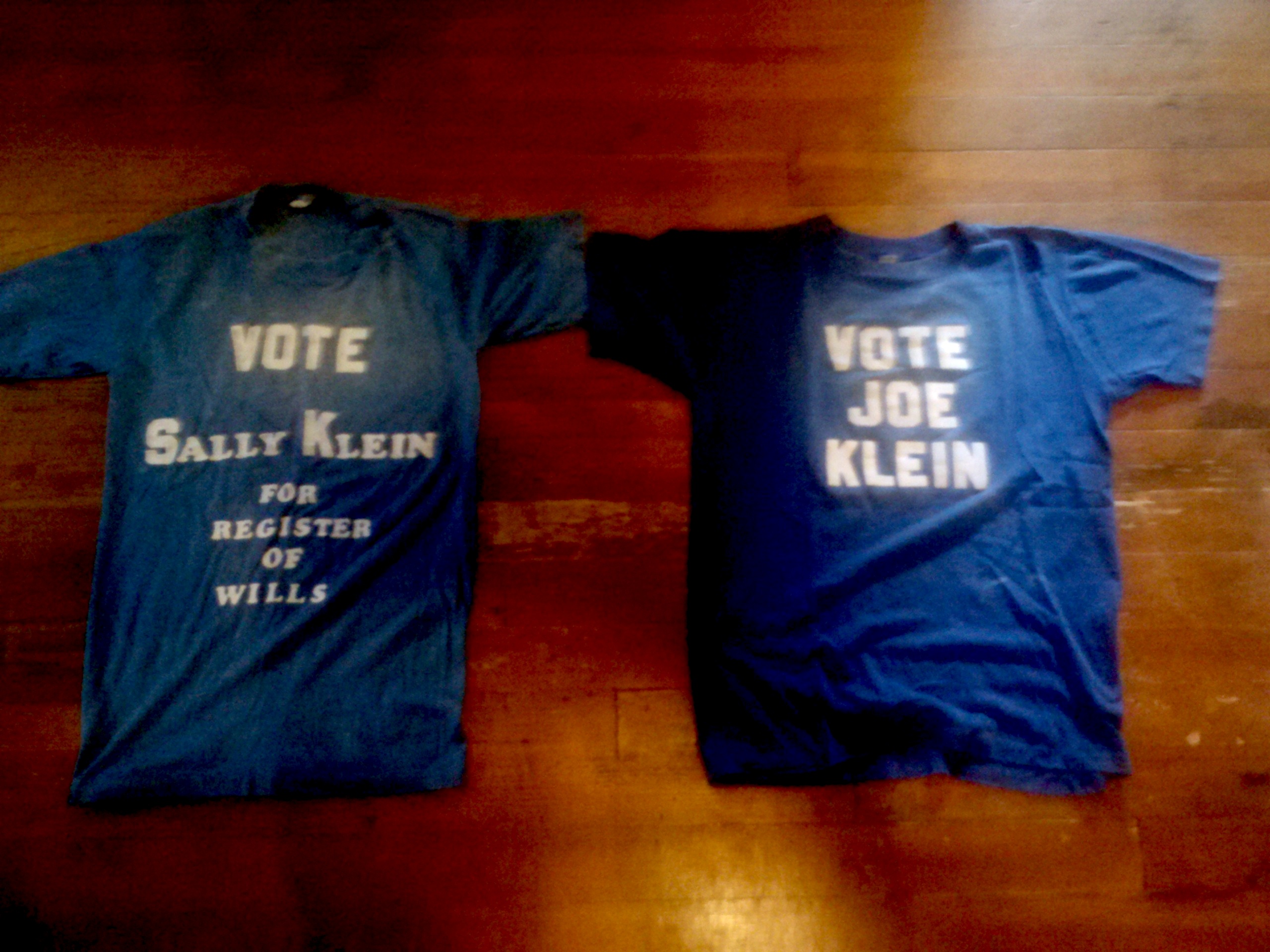
T-shirts the author worse when her parents were campaigning in the 1980s.

T-shirts the author wore when her parents were campaigning in the 1980s.

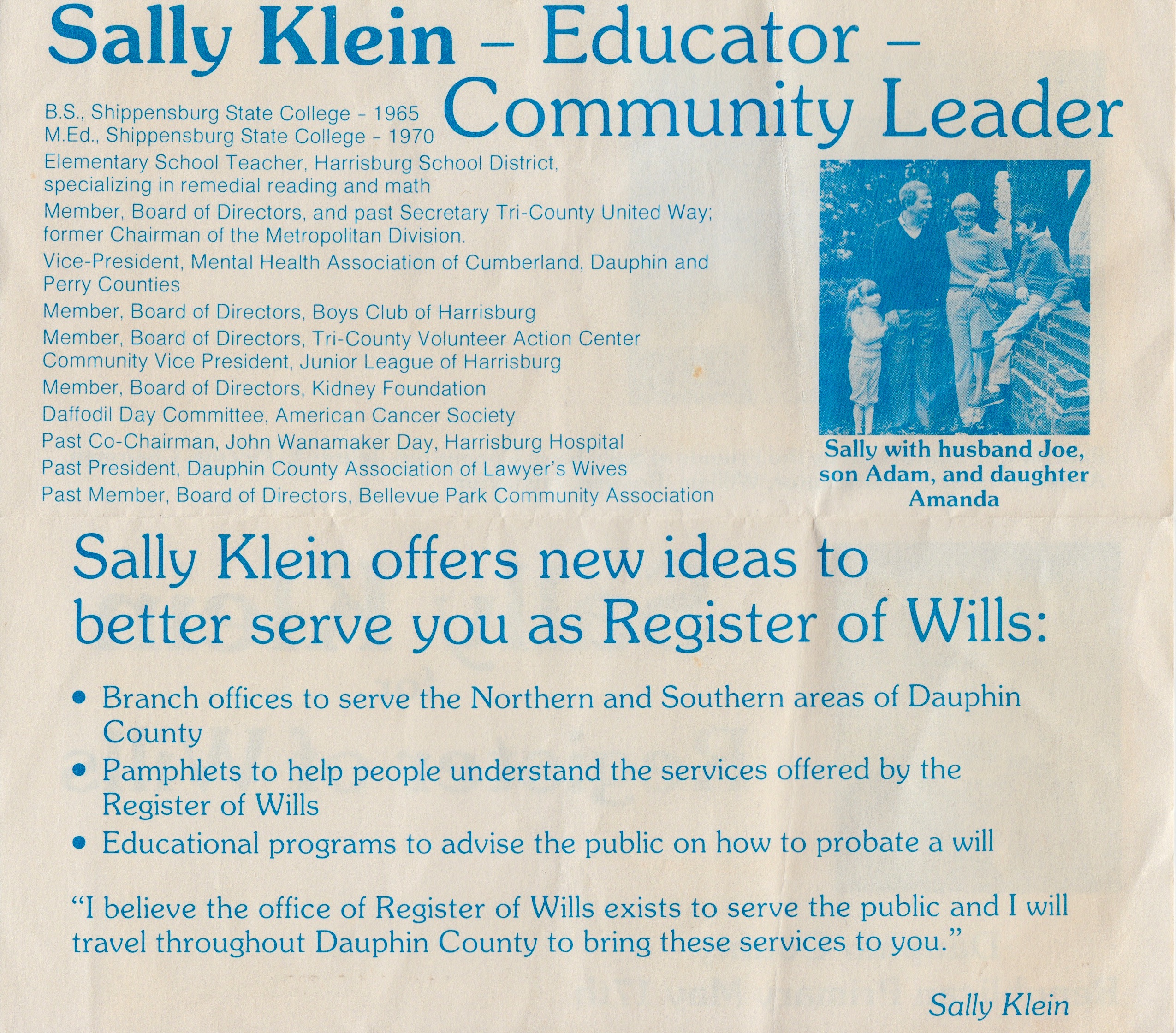
If you haven’t already noticed, I’m also a character in the story I’m telling right now. I play the part of the good Republican daughter raised by Republicans. I said that my father tried — and failed — in his political ambitions. My mother, on the other hand, tried — and succeeded — in her bid for Register of Wills, then County Commissioner, then Chairman of the Board of Commissioners.[6] My father enjoyed my mother’s success as if it were his own. He encouraged her and pushed her. “Klein, get into politics like me and go places,” he must have said to her. They were good Republicans.

flyer

Throughout those early days of my mother’s political career, I was a good Republican too. I posed for family photos and attended county fairs in places with names like Gratz and Berrysburg. I hung back and was dragged forward again to smile in the outfit my mother picked out for me the night before. I played my part well until the age of 16, when I became a vegetarian. This was their first clue. The second clue came when I turned 18 and I registered as an Independent.

“But you can’t even vote in the primary!” my parents protested.

“So I should be a Democrat then?”

“And break your mother’s heart?” my father asked, genuinely, because the word itself was an affront.

From that time forward there were many lengthy and uncomfortable political debates with my family. The irony of these battles is that my “political” choices and acts were so minimal: I wasn’t changing shit. I was just a Democrat who didn’t eat meat and listened to Ani DiFranco. But in my home, with my family, I was Jane Fonda on the tank.

Law school yearbook.

University of Pennsylvania’s Law school yearbook, 1963.

My father, especially, could not understand how I had ended up so different from him, and from the rest of our family. He found my decision to go to graduate school especially confounding. Why, when I could easily go to law school, just as he did and my brother did (and my brother’s wife too), would I choose academia? He expected an upward trajectory: his parents took in boarders, he took his kids to Tavern on the Green, and I go to law school. “Or at least a job that, you know, helps people [7],” my mother liked to/continues to say. I remember visiting my parents during the fall break of my senior year of college and assembling graduate school applications—for a PhD in English—on the dining room table. It was my life’s work condensed into twelve piles of black and white. My father assessed the scene before him and asked, quite seriously, “So when are you scheduling your LSATs?”

***

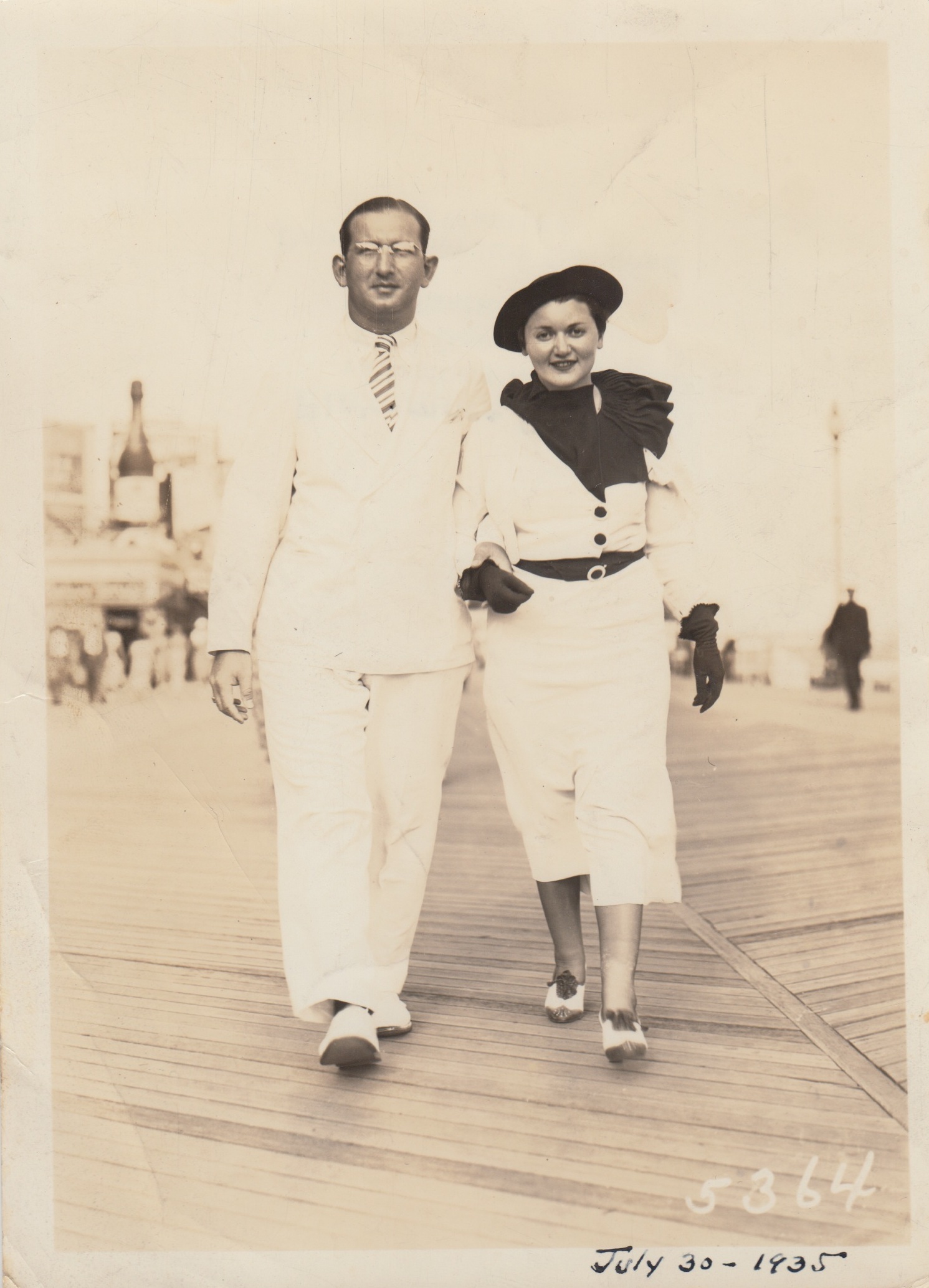
Louis and Goldye Klein im 1935.

Louis and Goldye Klein, Atlantic City,  1935.

This story began with my grandfather’s box of mementos, which I’m looking through now, for stories about my father. It’s filled with photographs of friends and relatives whom I’ll never meet when they were young and smiling on the Atlantic City boardwalk, but my grandfather’s sloping script tells me their names: Goldye, Utie, Julius. I repeat them in my head like a mantra: Goldye, Utie, Julius.

Minerva and Joe

Minerva and Joe Klein

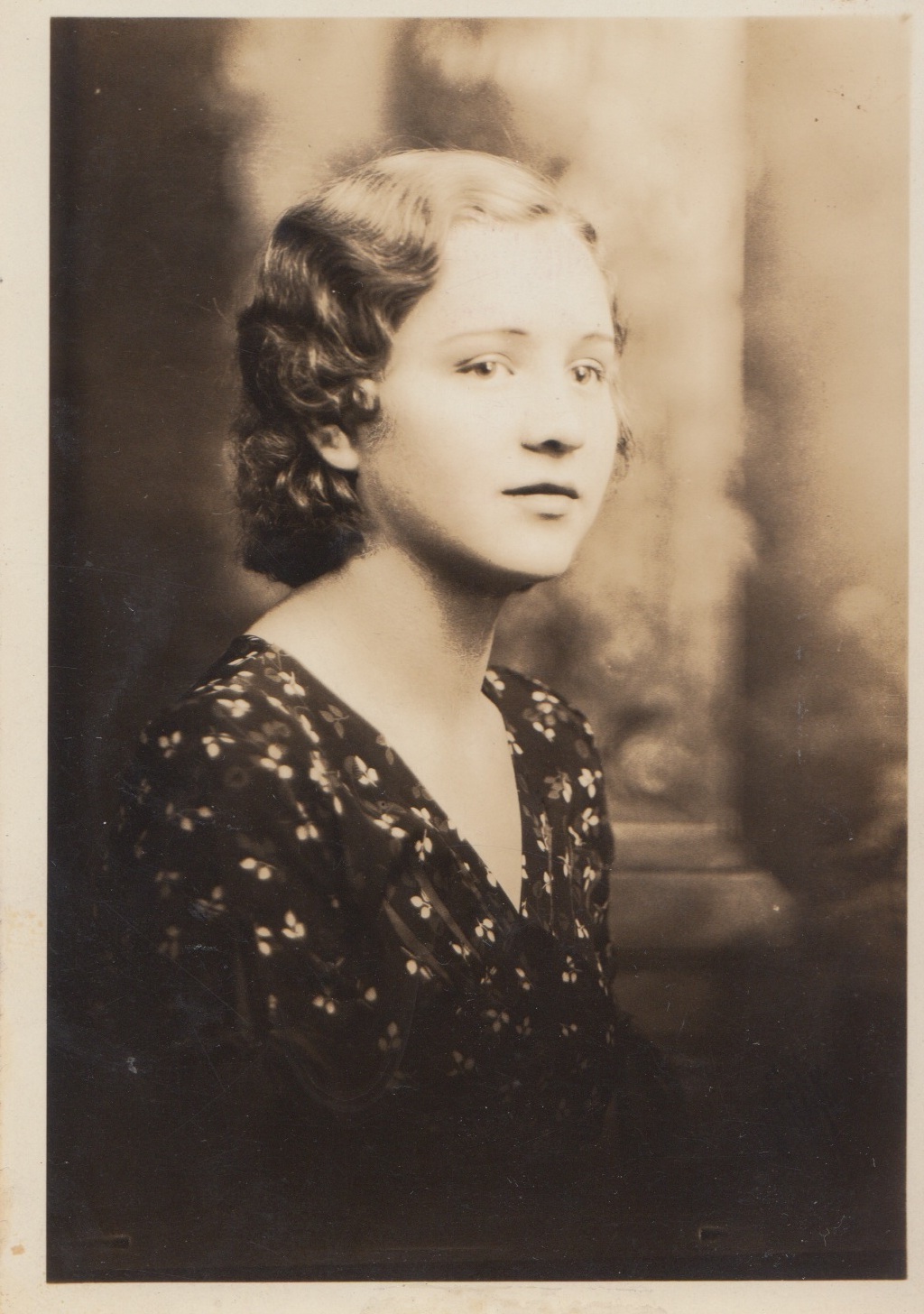
Digging through the box, I find a picture of my Dad and his grandmother. I learn her name is Minerva. “I think they called her ‘Minnie,’” Mom tells me, but she doesn’t look like a Minnie. We’re both surprised by how much my Dad looks like my son, though that shouldn’t be surprising. We’re doing the same work, my mother and I, snapping the pieces together before they float away. I show her the pictures I find in the box, of her mother, my Nana — so  lovely in pin curls — and she tells me another story. I add it to the pile, I’ll use it.

Jeanette Shellhammer (aka, Nana)

Jeanette Shellhammer (aka, Nana)

My mom only knows so much. These aren’t her stories — they’re my father’s and now they’ll stay untold. So I’m crafting my own story out of scraps of paper so old and thin I can feel them disintegrating in my fingers. I write faster. Then I delete, revise, rearrange. The story’s still not right. But when I put them all together, I’ve built something. My own precious artifact. I hold it in my hands, press its smoothness against my cheek — like my mother’s hands during a fever, like the cool glass at Tavern on the Green, like Marla’s warm calves on the kitchen floor — and I put it in the box.

Louis and Joe Klein

Louis and Joe Klein

Notes

[1] My mother tells me “I was the best shiksa in town.”

[2] Marla’s name and certain other personal details have been changed for this story.

[3] Of breastfeeding in the mid-1970s, my mother assures me “It just wasn’t done”.

[4] Why does this story represent a lapse in my father’s worldview? Because my father was a Goldwater Republican from way back who opposed the concept of second chances; his favorite refrain was “Fool me once, shame on you. Fool me twice, shame on me.”

[5] Ben Dolnik writes in “My Crush with Celebrity”: “Because one of the strangest things I’ve learned about being a fiction writer — particularly one who has been known to write autobiographically — is how the things you write begin to blend with, and then replace, the things you experienced.”

[6] My mother insisted that they call her “Chairman,” never “Chairwoman” and never “Chairperson” because, she tells me, “That’s just stupid.”

[7] These professions include: lawyers, medical doctors, and politicians.

The Café Espresso

by Mary Shanley

When I moved to Little Italy in the fall of ’82, my ground floor studio on Mott Street was directly next door to the Café Espresso.  This did not appear to be a fact that bore much significance, as the café was a broken down mess of a place, with faded gold letters peeling off a window crusted with dirt and covered with a moss-green curtain that hung half off the rod.  I wondered, with all the chic cafes springing up around this suddenly chic area, who the hell would ever want to hang out in a dump like this?

I was soon to discover the Café Espresso was not in business to attract customers.  It was a strictly private gathering place, catering exclusively to a tightly knit circle of regulars; very much like the local Italian social clubs that dot the neighboring Mulberry and Prince Streets.  The social clubs, however, are usually named after a saint, and a statue of that saint is featured prominently in the window of the club.  For instance, the St. Francis Social Club, next to Ray’s Pizza on Prince Street, had a statue of St. Francis standing atop a family size box of Kleenex facial tissues.  This no frills look was very popular with the local social clubs.

Ray's Pizza on Prince Street

Ray’s Pizza on Prince Street

The Café Espresso did not feature anything prominently, except Nick and Carmine, who sat out in front of the Café, on straightback wooden chairs, every weekday from 11 a.m. until 4:30 p.m.  Being the friendly type, I introduced myself to Nick and Carmine during my first week in the neighborhood.  Nick, a shrunken specimen somewhere in his seventies sucked back a can of Budweiser while giving me the once over with his beady bloodshot eyes. His eyes darted out from behind oversized glasses that continually slid down his long, pointed nose. A few straw wisps of thin white hair hugged the lower lobe of his suntanned head, and though it was a mild autumn day, Nick was wearing a Herringbone overcoat.

While Nick spit and slurred his way through our introduction, Carmine, a younger, sleepy-eyed character, sat with his chair turned backward, in a kind of urban cowboy style, his large pulpy hands hanging casually over the back of the chair.  A man of a few words, he favored the grunt and mumble style of communication, replying, “Uh-huh” to my greeting, while scouting out the local streetlife in a shiny brown silk suit, no tie. His white sportshirt was open at the neck, revealing a mass of salt and pepper chest hair in a tangle of gold chains.  When I told Carmine that he reminded me of Henny Youngman, only with more hair, he turned to me with the slow-witted expression of a fighter that had taken too many punches to the head, scratched his chin, and returned his gaze to the street.

Henny Youngman

Henny Youngman

My daily encounters with Nick and Carmine developed into quite a chummy friendship. I had a lot of time on my hands while I was detoxing from drugs, so I often carried my wicker chair outside and sat in front of the café with the boys, shooting the shit and eyeballing the street, smoking cigarettes and guzzling coffee. Carmine really started to loosen up when he realized I was an expert in the area of early T.V. sitcom trivia. We’d try to stump each other with questions like, “Who played Lumpy Rutherford’s father on Leave it to Beaver?” or “Who was the actor Peter Graves’ brother, and what show does he star in?” Stuff like that. There was one subject I never discussed with the boys, and it was about what went on the Café Espresso when the regulars arrived.

images (1)

Every afternoon at 4:30, a steady stream of big, black luxury cars came cruising down the cobblestoned Mott Street and pulled up in front of the Café Espresso. Judging from the glimpses I got of these guys as they emerged from behind the tinted windows of the Lincolns and Caddys, they could have been straight out of mob central casting.  These guys all wore shades, expensive slacks with jackets that often fit rather snugly around the waist, piles of gold chains and bejewelled pinkie rings. The regulars hugged and kissed on the street before ducking inside the café. Not a soul ever reappeared outside the café until 7 p.m.

While the inside activity of the café remained a mystery, I did learn that the regulars favored the Boar’s Head brand of lunch meat.  Carmine, who with Nick, always went inside the café when the regulars arrived, began to present me with the regulars’ leftover salami, liverwurst and baloney.  I usually picked up leftovers from the day before in front of the café around two in the afternoon, along with the current copy of the Daily News. Quite a nice little arrangement.

Boar's Head

Boar’s Head

But this one particular afternoon, I didn’t arrive at the café until 4:45, and by this time, everyone was inside the café.  I didn’t think the boys would mind if I popped in to pick up my Boar’s Head and paper, so I opened the door to the Café Espresso.  Upon opening the door, I was struck with a blast of activity so fierce, I can only compare it to the heavy trading on the stock market floor. The café was stocked with small wooden tables, with four chairs to a table. There were one or two phones on every table, and every table was jammed with the regulars. They were talking on the phone, jotting down info, shouting, some laughter, the air thick with cigar and cigarette smoke, and more phones ringing.  The moment they noticed a stranger in their midst, everything stopped. Complete silence.

The silence was broken by the sound of Carmine yelling at me, “What the hell you doing in here? Get the hell outta here! Don’t you ever come in here when that door is closed!” and he starts with the strong-arm stuff, shoving me out the door. God! I couldn’t imagine what I’d done to warrant such an angry reaction, and tried explaining to Carmine as he turned to go back inside, “Hey Carmine, I was just….” But he didn’t listen, just slammed the door and went back inside.

I hot-footed it back to my apartment and sat with the shades drawn, nervously wondering just exactly how much hot water I was in. The fact that I was in my first few weeks of detoxing didn’t help my mind set. “You’re dead meat,” I thought, “You’re never supposed to see anything or know anything about what goes on in this neighborhood. You fucked up good this time…..”  My only hope was that the goodwill that had grown between Nick, Carmine and myself would count for something, and maybe the worst that would happen is I’d have to start buying my own Boar’s Head and newspaper.

That night, as I tossed and turned on my captain’s bed, I recalled the words of my friend Dale, who had recently moved out of Little Italy. She said, “Whatever you see or hear down here, always pretend you didn’t see or hear anything.”

The following morning I awoke at ten, showered, dressed and hit the street. I ran into Nick and Carmine at Johnny’s Donut Shop on the corner of Mott and Prince.  They were sitting at a table with Johnny’s Uncle Sonny, who I happened to also be friendly with. I took a deep breath, waved and said, “Good morning.”  Surprisingly, they returned my greeting with big smiles and Carmine called me over and offered to buy me breakfast. I hesitated, still a bit shaken from the previous afternoon, but figured this was a peacemaking gesture, so I pulled up a chair.

The conversation centered around Johnny’s new cappuccino/espresso machine and the upcoming, ten day San Genarro Feast. I mostly listened to the boys chat, while slowly eating my eggs over easy with jelly donut special. I was amazed at how well things were going!  I was cool. I knew they knew I was cool. I didn’t feel cool. Matter of fact, I was scared shitless, but playing it cool was the name of the game.

Only for the regulars

Only for the regulars

When I finally excused myself, I thanked Carmine for the breakfast and said bye to the boys. As I pushed my chair back, Carmine got up with me. He pulled me aside and asked, “So, you stopping by for your stuff this afternoon?” “Sure Carmine,” I replied, “why not?”  Carmine patted me on the back, “That’s good.”

About the author

Mary Shanley is a poet/writer, living in New York City. She has been reading and performing her work for the past 25 years. Allen Ginsberg suggested she send poems to Long Shot Literary Journal. Thus began a long and creative era of Mary’s poems and stories being published in Long Shot. She has also published her work in: Underground Voices, Poydras, The Newer York, Shangra la Shack, Garbanzo Lit. Journal, Mr. Beller’s Neighborhood, Journey to Crone, U.K., Blue Lake Review, Hobo Camp Review, and many others.

A Twenty-Six-Year-Old Thinking about a Sixteen-Year-Old Kind of Love Story

by Kevin Dublin

Most good stories by guys begin with girls. The girl in this story taught me that “you can’t buy love, but you can rent it” before I knew who Jonathan Larson was. It’ll soon be ten years since our last I love yous were exchanged, and one week later it’ll be a decade since she died. I don’t want to use names for fear of triggering any Google Alerts and raising more pain, but I’d like to share a story.

In another reality, I’m 79. It’s March 12, 2067. At 3:26 a.m. the next day, I’ll be 80 years old. In this reality, I want to live to be 80. That’s it. Why? Because even the Kevin Dublin of this alternate reality sets arbitrary goals for motivation. alt-Kevin Dublin is better, though. He keeps up with his daily yoga and meditation, and he’s overcome his hypersensitive taste and “selective eating disorder.” He’s scheduled and neat. This Kevin also has one other significant attribute that I don’t: he has her.

alt-Kevin starring in ANOTHER EARTH.

alt-Kevin starring in ANOTHER EARTH.

On the morning of July 7, 2003 in Pennsylvania, there was no accident, and an entire family did not die. It’s kinda like that indie movie Another Earth (2011) starring the lovely, Brit Marling because that’s really the only difference between Kevin’s world and alt-Kevin’s world— well, there’s one other difference: Joss Whedon wrote and directed the film version of The Last Airbender, not M. Night Shyamalan. The film spawned two sequels and a Legend of Korra sequel trilogy. Enough of that, though.

THE LAST AIRBENDER in alt-Kevin's world.

THE LAST AIRBENDER in alt-Kevin’s world.

Seventy-nine-year-old alt-Kevin wakes up to first light reddening his eyelids and blurring his blinks. He walks to the bathroom. He pees. He washes his hands and face. He does his daily yoga routine and then steeps some acai-infused green tea while sitting on his condo’s balcony overlooking the waves. He closes his eyes to better hear the seagulls’ squalls. He calls her. It rings and rings and rings, and now I am him.

“You’re late,” she says. “I’ve already started cooking breakfast here.”

“You could’ve just come over. You have a key.” I say. “Or you could’ve come yesterday and spent the night.”

“That wouldn’t have been a good idea.”

“I’m coming.” I say.

“Oh, stop it.”

“I’ll be a dirty old man tomorrow; I’m getting an early start.”

201104-omag-20-bishop-284xFall

On the short train ride to her place, I see a young Black guy reading Elizabeth Bishop’s Complete Poems and a young Latina writing in a notebook. I creep over to sit next to the young guy.

“Are you a poet?” I ask.

“Yes.” He answers.

“Bishop is my favorite twentieth century poet. Well, she and Ted Hughes.”

“I love Ted Hughes!” He exclaims as he shuts Bishop’s book and pulls Hawk in the Rain from his satchel. “We just read him in school. We read a lot of his poems and that one by—umm, what’s his wife’s name?”

“Plath. Sylvia Plath, but no one reads her anymore. Could I suggest two things?”

“Sure.”

“One: if you haven’t read them, read Thomas Sayers Ellis and A. Van Jordan, two excellent early 21st century American poets. Two: you should go talk to the cute girl with the notebook. Carpe diem, homey.”

“Yeah, we’re studying them next week. I dig this Dublin guy too. He was really influenced by them. You should check him out too.”

“I will.” I say and wave and get off at my stop.

On the walk to her condo, in the gray haze of the morning, I think of how many times she and I had dated and broken up— how we had married and divorced, married and divorced, were partners and separated, dated other people, were co-parents—how throughout it all, we were best friends.

I entered her place to the smell of bacon, eggs, and pancakes.

“You’re always late.” She says.

“Then why do you still expect me to be on time?”

“Because I’m insane.”

“Because I like insane.” I say as I sit. She still waddles when she walks. I notice it as she places the last plate in front of me.

“Close your eyes,” she says. “I want you to try something from the fridge.”

“New?”

“Trust me.”

I abide. I try something cold and mushy: a texture that I hate. I cringe. “What the hell is this?”

“Squid.” She giggles.

We argue for ten minutes about why she shouldn’t have done that. I say, “I’m sensitive to that stuff” and “Why would you have me try something that you know I won’t like?” and “You’re ruining my Birthday Eve Breakfast” and “Stuff like this is why I divorced you.” She says, “Be a man” and “You won’t know until you try it” and “There’s no such thing as ‘Birthday Eve’” and “I’m pretty sure that I divorced you both times.”

We’re angry, and we eat. Through her window, I notice that the overcast has receded, and the sun lightens the green of a branch’s leaves.

We apologize and reminisce.

“Do you remember when we were in high school?” She asks. “Do you remember how even afterwards you’d say that you believed ‘people are most in love during those years’?”

“Yeah, I think it’s for several reasons. You know, biologically, ideologically, and chronologically it just made the most sense,” I rambled.

“Do you still believe that?”

I pause. I look at her thinning grey hair. I am unable to distinguish the furrow of her brow from the wrinkles in her forehead. Her crow’s feet are deep with years of anticipation and smiles of success. Her lips are as full as ever and slightly parted. “I did,” I say, “Until right now.” I stand, and she stands, and I kiss her because biologically, ideologically, and chronologically it makes the most sense.

“Did you do your yoga and meditate this morning?” She asks.

“Yes.”

“Good.”

We share a day walking on the beach, reading in a bookstore, eating lunch at a café over Scrabble, seeing a play in the afternoon, and she cooks dinner in the evening. She makes my favorite dish from her restaurant. We talk. We talk more deeply about religion and philosophy and television and film and sex and the Internet and the Polish swim team that is training for the Olympics until we are too tired to continue. It is 9:30 p.m.—way past our bedtimes. I told her that I wanted to wake up next to her on my birthday. She smirked.

Around 12:30 a.m. my prostate sends me to the bathroom. When I return, she has shifted into my spot. I spoon her. I fall asleep. I fall asleep to dream of this reality, to die. I fall asleep to wake back up in my own body, in my own reality, typing flash creative non-fiction that is borderline creepy. I want to end it with a line like, “I never woke up knowing what it was to live a day without her,” but it’s too sentimental already—too melodramatic, so I don’t. Instead, I think of a way to say that some losses, some scars, they take a long time to fade. I go to my bookshelf and take down Elizabeth Bishop’s Complete Poems. I read “One Art.” I pull out a notebook and scribble a poem. It isn’t much good, but I feel better after writing it.

About the author

Kevin Dublin is a writing consultant, part-time micro publisher and poem busker. His work has most recently appeared in Poetry Quarterly, Connotations Press: An Online Artifact, Aries: Journal of Art and Literature, and Strong Verse. After earning his MA at East Carolina University, Kevin is currently pursuing an MFA at San Diego State University.
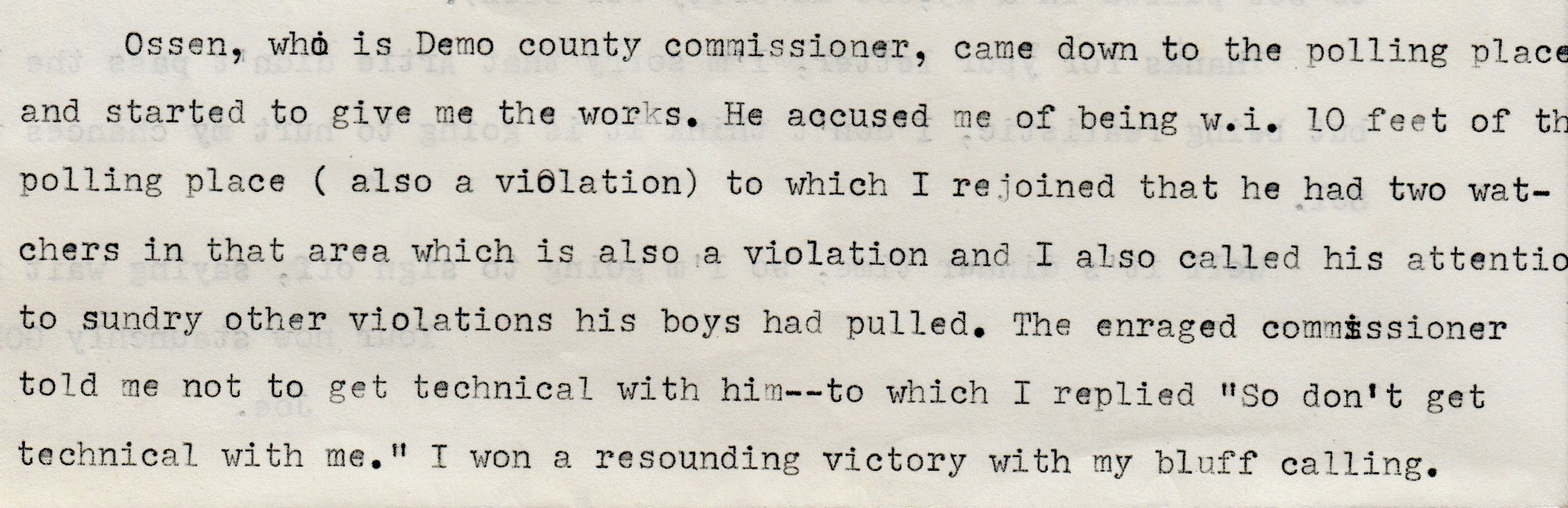
Untitled

by Pete Fleming

dan photo 2

Thanks to the international date line, the day lasted something like 42 hours. I started in Australia and ended up at my mom’s death bed. The Australia part of it was a belated “I passed the bar exam” trip, because my post-law school “I passed the bar exam” was me putting my possessions in a U-Haul in Chicago and driving 24 hours straight to Orlando in the dead of summer to start a government job. When the two-year government job was over, I decided to go to the other side of the world for three weeks before I spent the rest of my life sitting in a Chicago office accounting for my time in six-minute increments.

The death bed part of it was a long time coming, although I certainly wasn’t equipped to realize it at the time. My mom got cancer when I was in law school, beat it, and then got it again when I was in Orlando. For the past year, I had been making trips up to Chicago to sit in wards where bald people shuffled by in hospital gowns and grim-faced doctors pointed at white clusters in X-rays, while we talked about “fighting it.”

My mom last spoke directly to me the morning I left for the other side of the world. I don’t remember what we said, because I assumed we’d have plenty more conversations when I got back. The night before, we’d gone to my cousin’s wedding and we’d danced a little bit. I don’t remember the name of the song, but she got tired and had to sit down before it ended. There’s a picture I just found in my trip diary. She’s very bald and even skinnier than usual. Her eyes are hollow. But she’s smiling.
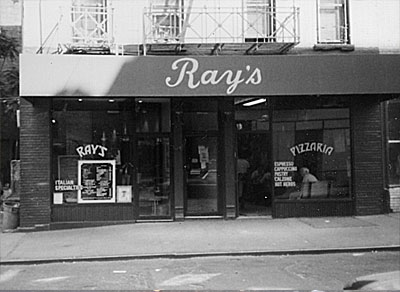
I talked to her a few times from the other side of the world. No matter how many times I double-checked the time difference, the phone always ended up ringing in Chicago in the middle of the night. She seemed out of breath, but  excited to tell the nurse that her son was calling from New Zealand, Australia or wherever I was standing in a pay phone at the time. I was excited to tell her what a great time I was having, and that I would see her soon — when I got back in a week. I told her I was happy that I’d be closer to home now that I was working downtown, that I could help Dad take care of her.

I turned my cell phone on in Los Angeles for the first time in three weeks. I didn’t listen to the many voice messages, but I did call my old man. I guess I was jet lagged as I stood there in the security line: we’d left Sydney on Thursday afternoon and landed in Los Angeles on Thursday morning, I think. My body was screwed up, but I did register the odd note in my dad’s voice.

The ambulance was coming. Or was it already there? She was going to the hospital, and I should hurry. I looked at the security line, out the window, past the LA skyline, all the way to Chicago.

Would I like to speak to mom?

Hi, Mom. How are you? How about a bad joke, because that’s what sarcastic people do to keep from showing emotion.

Nothing but ragged breathing.

Oh shit. Shitshitshit. Don’t cry in the security line. Can I skip the security line? Please? It’s important.

I get on the plane, although I’m not sure how. I think I spoke to my brothers. There weren’t as many odd notes in their voices, but that’s because they weren’t equipped to realize what was going on at the time either.

I watched a Charlie’s Angels sequel on the plane. I tried not to cry because it didn’t seem polite to my seat mates.  But I had that bubbling feeling of anxiety welling up in me, like the one that happened when I figured out the first girl I loved was cheating on me. The kind that made my fingers and toes tingle in a dark way.

Upon arrival, I shoved my way up the aisle and hit the jet way running. Years of competitive racing meant I could run faster and longer than the people around me. I ran to the rental car bus, then I ran to the rental car. I drove the rental car quickly and broke many laws. My luggage circled endlessly at the airport.

As I drove, I listened to a song again and again. I remember this song. Eddie Vedder covering the Beatles. I didn’t have any seat mates to offend now.

In the last mile of my drive, some woman wouldn’t let me cut in front of her. I rolled down the window and asked her if I could please go to that turn lane over there. She asked me why, and I told her. I can’t believe I took the time to tell her. Why do you even care if I go first? Don’t you already know?

I ran through the hospital parking lot and asked the woman at the front desk where I should go. She took her time.  I asked that she hurry up and told her why. The woman hurried up.

I ran to the elevator bank, then down a hallway past my crying uncle.

The room was crowded, and everybody looked like I felt.  Especially her.

I made it.

About the author

Pete Fleming lives in Florida with his wife.  At work, he accounts for his time in six-minute increments.