Call for Submissions

Tell Us A Story is taking this week off so we can spend some quality time with our families this Thanksgiving. But don’t worry–we are still reading your submissions!

So do you have a good story to tell? Remember, you don’t need to be an author by trade (or by hobby) to submit to us. We’re looking for good, compelling, true stories, in any form.

All submissions must be less than 2000 words and must be based on something that actually happened to you (not to your friend or your cousin or your high school math teacher). We are also interested in very short stories (flash [non]fiction), experimental stories, poems, or plays as long as they are true. When possible, we’d like you to send us a scanned photograph or document that correlates with your story, because those kinds of details are nice.

Please send submissions as an editable attachment (no PDFs please!!!), along with images, and a 100 word (or less) biographical statement to tellusastoryblog@gmail.com.  Put “TUAS Submission” in the subject line. Please submit only one submission at a time (unless you are sending poetry).

Can’t Dance

by Carol Sanford

alwaysposter-thumb-190x281-30540


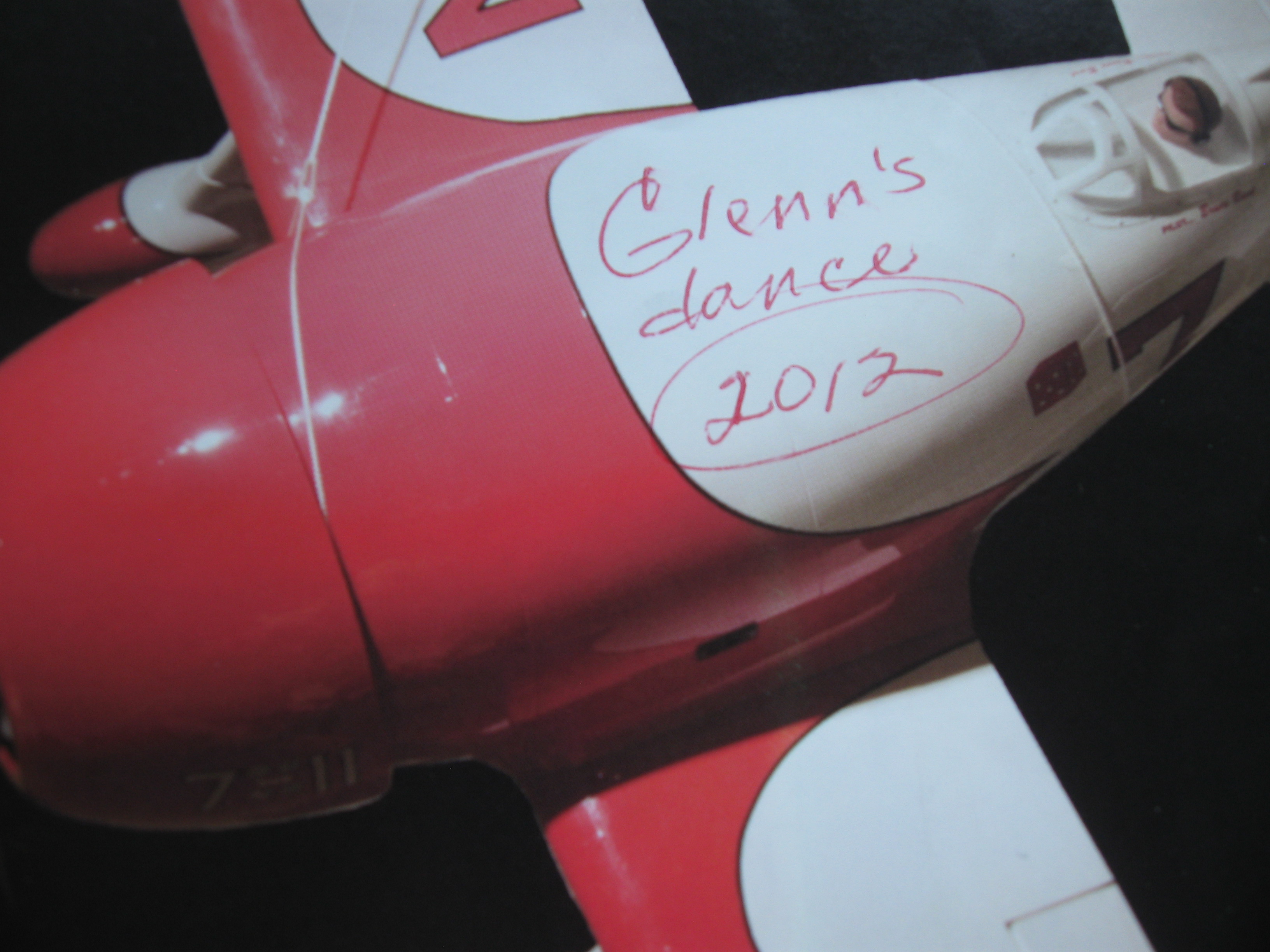
“Sir, would you be willing to come on stage during the play?”

The director of Always…Patsy Cline stands over me and my husband, Glenn, where we’re contentedly touching elbows in our front row center seats. A familiar tune lightens the air in the theater as Patsy’s voice slips from my head into my heart. The set waits, curtain open, for two actresses who’ll carry the whole show.

Glenn hardly pauses before answering, “Only if I don’t have to dance.”

“It’s not necessary to know how,” the director says. She nods a thank you and heads backstage.

I wait a few seconds before leaning over to whisper, “She expects you to go up there.”

No response.

My husband is no dancer. Picture us, the couple who patiently waits for the band’s slowest number to scurry to the dance floor, where we find ourselves incapable of grace. His shoes graze mine, my back soon aches from his tight embrace so I decide to lead, then we stumble around for a while, and end up in a corner rocking back and forth, laughing. We’ve been doing this for twenty five years.

No way, I can’t believe he plans to go up there, embarrassing himself (and me). When asked if he wants to try something new, he’ll often say, “Why not? Can’t dance.” But he’s never foolhardy. So what’s happening here?

apc

I glance at his profile as the lights and music fade: Shhh, play’s starting.


A lamp in the kitchen quarter of the set signals early morning. Out comes Louise Seger, still sleepy, an ultra brassy and sensuous woman. She turns the knob on her radio and hears Patsy’s rendition of “Back in Baby’s Arms” then phones the DJ to find out who’s singing. Smitten for good, Louise sets out to be Patsy’s number one fan.

Louise’s bawdy Texas drawl and exaggerated behavior disappoint me. Then the two women meet for the first time in a bar where Patsy performs, and Always…Patsy Cline takes off. The actress playing Patsy has Patsy’s voice and mannerisms down. What a heartbreaker when she croons “I Fall to Pieces”! Glenn and I reach for each other’s hand, and finally get caught up in the plot.

As intermission nears, I remember what’s probably coming next. Sure enough, with the sudden first bars of “San Antonio Rose” Louise swings her hips, circumvents a few bar tables, sashays to center stage and descends to grab my husband out of the audience. It happens fast. Without a by-your-leave he’s up and gone to the pounding beat. I feel bare.

On stage my husband and Louise whirl with such abandon my jaw unhinges. Is he grinning? He’s managing some kind of funky box-step, appearing to lead and stomping his feet like a Texan. Dear God! Am I embarrassed or in awe? I think it’s awe.

Then it’s over and he’s sitting at my side. Calm, smiling.

“Wow,” I say to him. “Wow. You were great.”

During intermission we don’t speak about his performance or the fact that this Louise character is way over the top.

“Look,” I say, showing him the playbook as lights dim for Act Two. “ We’re going to hear ‘Crazy’ and ‘She’s Got You’, my favorites.” Ex-favorites?

IMG_2958

In the second half of the play, Patsy’s fame skyrockets. We enjoy song after song, big hits. We know how the story ends but don’t want it to happen. When word comes that Patsy’s plane crashed, Louise, face blanching, sits in her kitchen and weeps actual tears. We’re close enough to see them, and I think I like her after all.

Segue to Patsy dressed in an angel-gauzy gown and standing on a platform in order to leave us with a medley of songs we haven’t already heard. Pretty hokey. But when she closes with a rousing “Bill Bailey” we all clap and yelp like crazed teens. Long live Patsy! Always!

As we herd out of the theater, a young man crowding past says “Way to go!” and Glenn thanks him.

“Good job,” a guy Glenn’s age tells him, and another somewhere behind us adds his congratulations. I inch forward in the narrow hallway behind my celeb, pretending no astonishment. My fingers lightly grasp his coat tail. Don’t I know this man, from his balding head to his pre-hammer toes?

“Did you realize what you were in for?” I ask as we drive out of the parking lot. “How did you find the nerve to go up there?”

“Nerve?” he says. “What was there to be nervous about? It was fun.”

Then he tells me, “I wasn’t going to get that chance again.”

And then, circling slow-time through me is the question I don’t want to ask: Darlin’, oh darlin’, why don’t you dance with me like that?


About the author

Retired from teaching, Carol Sanford writes from her home in central Michigan, where she lives with her husband.  Carol has been publishing poems since the 1980s.  Her essays have appeared in Creative Nonfiction and Fourth Genre published an excerpt from her memoir manuscript. More recent work can be found online at Ragazine, New Verse News, and The Zodiac Review. In fall 2014, Andrea Badgley’s “American Vignettes” blog project will include an essay by Carol.

Treatment: Cycles Three & Four

by Adam Rose

The author's CT scan

The author’s CT scan

It’s been two days since my third round of chemotherapy. I needed two Ativan on my way to treatment in hopes that they would keep me calm enough for Roxanne and Mark to insert the tube into a vein. Turns out it was a two person job even with the dopey drug running through my system. The Ativan made my body slow down and my mind fuzz over like frost on a windshield. I squeezed Mark’s hand to pump up the reluctant vessels while focusing on the painting of a rodeo clown leaping over a bull. Roxanne struggled to find a vein that was relaxed enough for the needle.

Mark distracted me with a story of his time on Jeopardy!. He won forty thousand dollars, and afterwards decided he had enough of life as a lawyer. He returned to school and became a nurse. Mark was in his early fifties; he had a dyed beard and curly brown hair. He always knew exactly what to say to mom and Beatrice when they sat at the foot of my bed during the injections. He charmed them with anecdotes involving his time spent in Germany and England. The poisons rushed through my body as they listened to stories about room temperature cask-conditioned beers served with the perfect amount of foam.

*          *          *

My oncologist, Dr. Fisher, was not going to be seeing us for the fourth round. Paige, the nurse practitioner, was to hold our meeting before treatment started. I joked with Beatrice, saying that Paige could be her “sister” wife if we lived in Utah and practiced polygamy (we were on a major Big Love kick at the time). Paige reminded me of Parker Posey. She wore open toed shoes with silver rings on the middle toes. When we weren’t focused on the business of cancer, she would say how jealous she was of our past in southern California.

She looked straight at the computer screen, and in a medically monotone manner said I had tumors in more places than the L-3 vertebrate. There were “trouble spots” in my ribs, further up the spine, and on one of my hips. I didn’t want to know where anything else was–it did me no good knowing where every fucking “trouble spot” was located. It felt like someone giving me the location of every landmine buried in an open field while being plunked down in the center.


*          *          *

Round four began. It was time to commence treatment with mom and Beatrice hanging with their Cosmos and Vogues. Mark injected the first and only red colored chemical into my body. It was thicker than Jell-O as it plunged into my arm. I felt a light burn rush up my forearm, but this one was nowhere near as bad as the last of the four. ABVD are the initials of the four different chemical cocktails pumped into my body every two weeks. The D is the last and takes the longest because of how much it hurts going in. They have it an ominous dark colored bag because it hates direct sunlight. Mark laid a bag of ice on my arm to settle the flare up of red veins mapping out the constellation of my cardiovascular system. I clenched my jaw as tears blurred Beatrice into a blonde watercolor.

Tuesday night I felt horrible: emotionally, physically, mentally wasted. I could barely move. It was a challenge eating dinner, Mom’s chicken and dumplings. I took an early evening nap that had me sweating uncontrollably. The smell of toxins rising from my pores while my intestines twisted into violent knots prevented any sound slumber. Later, I found myself inconsolably weeping in my wife’s arms. Beatrice reminded me that Mark warned us about the steroid pill. He said it might make me extremely emotional for a while. I went back to bed at quarter of seven. I had the most vivid dreams of the chemo endowing me with multiple super-powered abilities — super strength, teleportation, invulnerability, ESP, and something akin to the Force — but the powers all came and went one after the other. The cancer stayed.

Wednesday morning came and I woke with major stomach cramps and a feeling of being hit by a semi- truck. The nausea was coming in waves and the waves became worse and worse throughout the day. The highlight of the day was hitting Bedrock Comics and picking up a decent haul of books for myself. I was able to hold down a turkey sub after that, but later suffered with more nausea and severe acid reflux. My face became inexplicably flushed thus freaking Beatrice out enough to call Mark at the treatment center. He said as along as I wasn’t having any major shortness of breath then everything was okay.

Thursday rounded the corner and last night was rough. My folks acted like I was already out of the woods, but I knew I was still deep in the forest with a dull machete. I didn’t want to be a downer so I tried not to remind them that things were not okay. My mom “joked” with me that morning about sleeping in till nine. I knew it was a joke but I was frustrated- I didn’t want to be a patient anymore- I wanted to feel healthy more than anything. I was tired of feeling like shit and the fracture in my lower back was a constant reminder of all the baloney I was forced to deal with. Everybody around me was healthy and I was not- I wanted my life back. I was terrified.

*          *          *

Don’t worry.

Beatrice went to the emergency room without me Friday afternoon because of a tingling numbness in her right cheek and hand. She had called for a doctor’s appointment, and they could not see her for two weeks. They suggested she go to the ER immediately to play it safe. Beatrice insisted I stay home and treat it like a routine doctor’s appointment. I felt like a shitty husband. Rationally I knew she had a point when taking my back pain into account, but I despised not doing the right thing in this scenario.

The day was already hectic to begin with. Duck eggs nestled next to the pool hatched so we spent the early afternoon scooping baby ducklings out of the pool with a pool skimmer and placing them in a kiddie pool until we collected them all. Eight of the nine ducklings made it safely under the fence and down to the pond with their mama duck. One of them seemed to have suffered an injury in the transfer and didn’t look like it could walk. I already rescued one wayward duckling a second time from the confines of the pool. He was compelled to return to the chlorine; his egg must have been closest to the edge of the pool. Hopefully they all live happily by the pond behind the fence. We intended to check on them when Beatrice returned. I hoped it was carpal tunnel or some simple non-threatening explanation for her numbness. She called and said they wanted to give her a CAT scan. I’d already experienced a CAT scan, PET scan, bone scan, X-ray, MRI, and would spend the final month of treatment being bombarded with radiation on a daily basis. Geiger counters loved me, and I didn’t want them to know Beatrice existed.

*                 *                   *

The following poem may or may not depict the aforementioned rounds of chemotherapy:

Cycle Three


Nurse Mark sets the brochure for cyborgs on my lap:

Insert a port between the patient’s shoulder and neck,

Creating a direct line to the river vein.

I refuse.


He plunges the syringe filled with red Jell-O

Into my right arm until the veins glow,

And I think of the games children play,

Raking the soil of the skin until

Red welts grow and flourish.


My eyes water. My Mother and newlywed bride

Look away and read Time.


He says some veins have collapsed,

And I think of children trapped in a burning house.

An ice pack masks the pain,

And I still refuse the port.


The chemo moves on to the “vampire bag”

Blood brown and

Shielded from sunlight.


I grind my teeth for hours, my bones ache, my muscles wail,

I’m covered in sweat,

And stinking of chemicals.

The steroids arrive in pill form.

Protocol requires the same warning:

Side effects include an overwhelming

Sense of dread.


Two weeks till round four of twelve.

Seconds crawl

I lie in bed with my wife

And we see the beach.

Our children run from the waves

And into the arms of their mother.

They stroll away;

The three of them

Holding hands

Waves washing the beach

Now, always, forever

And I am not there.

 About the author

Adam Rose lives in Los Angeles with his amazing wife and two children. He’s been in remission for six years. He’s currently working on a recently finished novel as well as a soon to be released All Ages graphic novel.  

Squatters

This summer, we’re yours for the reading! Click here for submission details.


by Anjila Joi Guadet

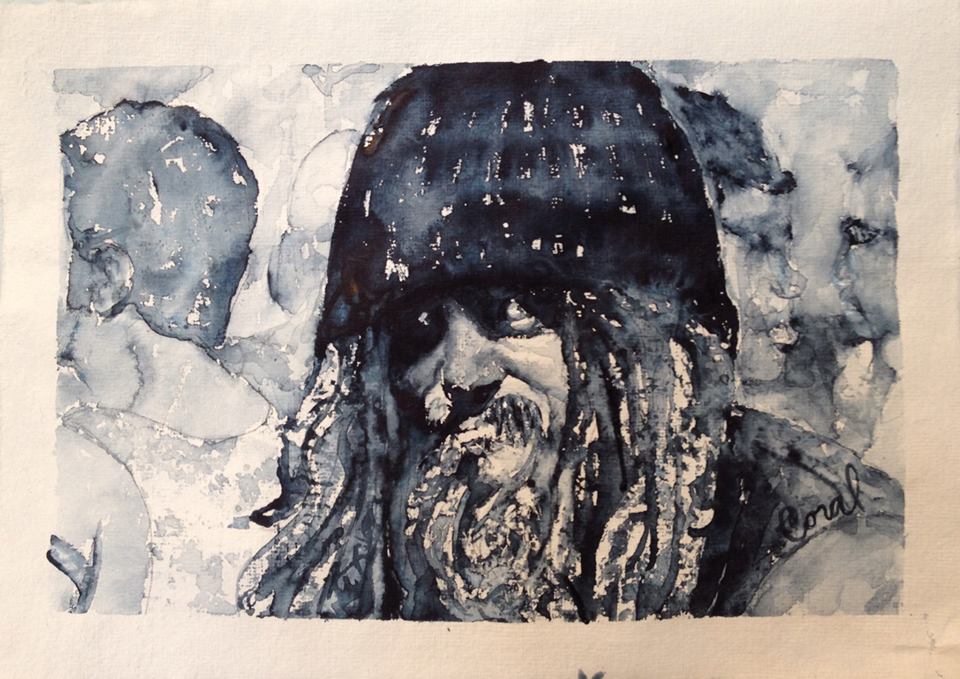
homless man

Image by Coral Staley
Based on the original photograph by Tala Brandeis http://www.rustrat.com/

After hitch-hiking to Washington D.C. for a protest I ended up living in the park across the street from the White House. It was a man named “Care Bear” who showed me the ins-and-outs of surviving in this D.C. park. Care Bear was a black man in his forties. He had a picture of his eight-year-old daughter that he would show to people. There was nothing significant about him as a homeless man, meaning he looked just as dirty and unapproachable as any picture of a random man who slept in the parks anywhere. He drank—a lot. He was filthy and carried all of his belongings in his broken down back-pack. He panhandled and wore shoes that had become asphalt black and were complemented with holes in strange places.

My relationship with Care Bear started with him offering to help me get some blankets for sleeping. What he called “blankets” were actually broken down cardboard boxes which we retrieved from nearby dumpsters. It was necessary to be quick before rats the size of cozy house cats came together and chased you out of their territory. Along with providing me with the blankets, he also showed me where the soup kitchen was and one of the places I could go to get clean, if I thought it necessary. There was a fountain in the park that some of the other homeless women would use as a bath late at night. I stopped cleaning myself even in the fountain when I noticed a dead bird floating in the water. A homeless person has got to have some standards.

In most of the big cities, restaurants would either refuse to let in the dirty, smelly people who wanted to use their bathrooms or would require a token, which one could only get by purchasing food. This made it hard to find a place to bathe and even harder to find a place to pee. Alleys usually worked fine, and I rarely gave it a second thought, though one of my friends had been raped while peeing in an alley in Texas.

It was not unusual for me to go three months without a bath or shower and I never brushed my teeth. When I think about it today, I get a glint of sad protectiveness for my teenage self, remembering that when I got my period each month, I would look for clothing on the side of the street, rip a square off, roll it up and find a private alley to deposit it as a tampon. At the time, it was the least of my worries, but today, I wish I could go back and give that girl a bath.

I have slept in the Lafayette Park across from the White House, Golden Gate Park and parks in Cleveland, Minneapolis and Milwaukee. When a park was not an option, there were always squats in the bigger cities. A squat in San Francisco on the corner of 4th and Folsom had once been a recording studio. Most of the remnants of this building’s music making days had been gutted out and replaced with all types of homeless people: old women who were batty or whose social security just didn’t cut it, Latino immigrants who had not yet found a community, addicts or alcoholics, and young runaways. Each homeless group had their room and it was the unspoken law of the street that you stayed in your part of the building. To aid me in my understanding, I had once ventured off into a section of the building that I hadn’t ever explored. I did not get too far in before I heard people behind me. Two men were waiting behind me with a knife pulled. I suppose when they saw my age and the fear in my eyes, they lost any idea of me as a threat, started laughing at how scared I was and walked away. As in most situations in my life, I was given that lesson very gently and I walked away unharmed.

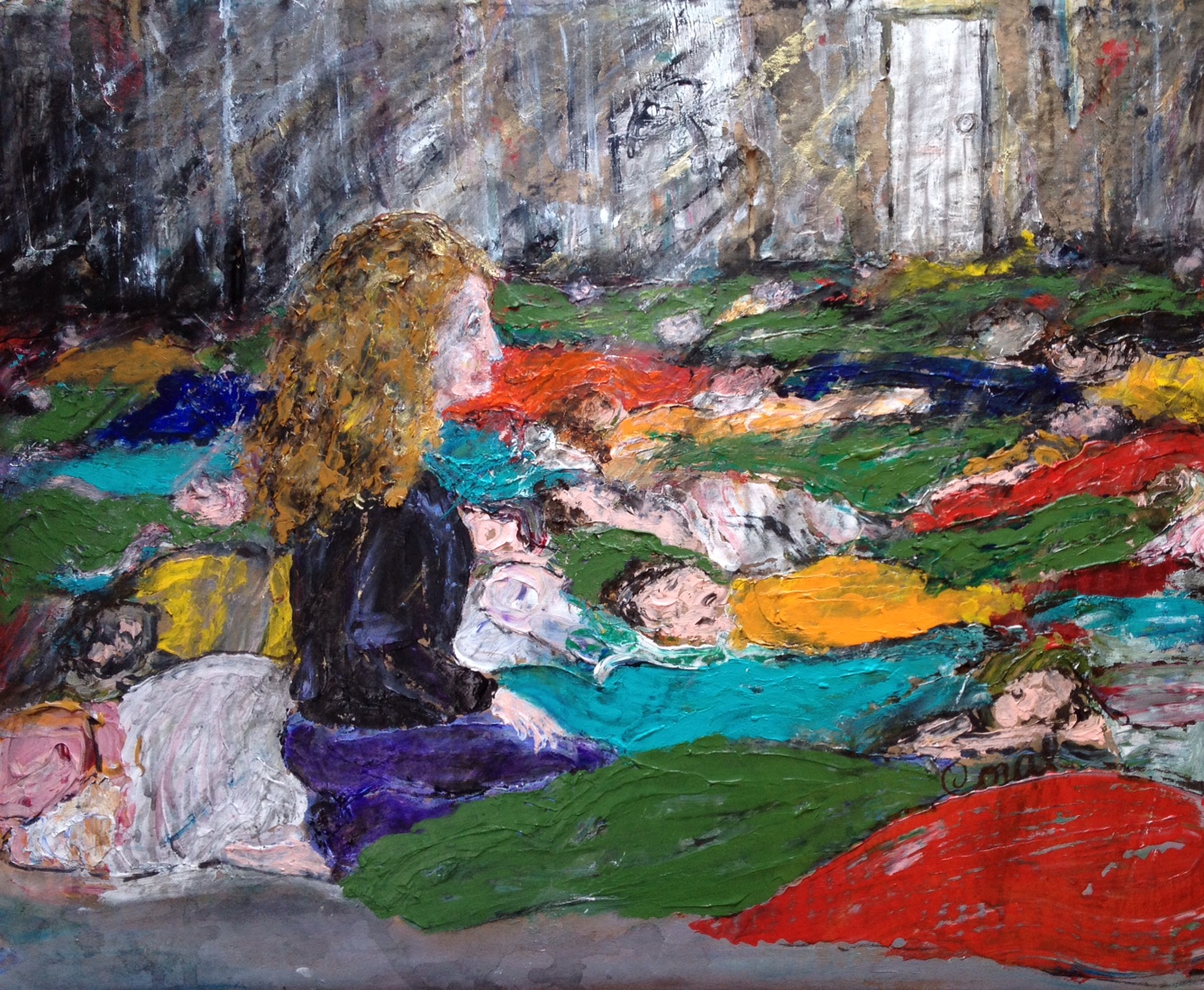
 by Coral Staley

Image by Coral Staley

I belonged to the space full of runaways. We were all teenagers and had a room the size of my bedroom today, so full of young kids that after we all lay down to sleep at night  there was no empty space on the floor to walk. One night after all the floor was covered with horizontal dreamers, I realized I had to go pee—bad. I lay there, crossing my legs and visualizing an empty bladder, trying to make it till morning, but I had to go. This squat was not really an organized community, but we did have enough cooperation to have created a room whose sole purpose was to hold the defecation and urine of all the inhabitants. This is how we kept the squat livable.

I had to find my way to that “bathroom.” When I finally got up to make my way across the dark room, toward the door, I ended up stepping on a bunch of sleeping bodies. Groans and yells filled the darkness and my request for the people sleeping next to the door to move was met with a variety of curses. Dancing the pee dance, I managed to pull the door open and run to the “bathroom” to pee, with great relief.

Upon returning to the “teen room,” I could not push the door open and the bodies lying in front of the door had already made it clear that they were not getting up again. After having learned that the only rooms safe to me were the “teen room” and the “bathroom,” and knowing that the “teen room” was not an option, I returned to the space where I had just gotten so much relief.  I tiptoed around piles of crap all over the floor to a closet that was across the room, in the hopes that this one small area had not been disgraced, but even the closet floor was covered in shit.  I grabbed a grocery cart that was sitting outside the closet door and pulled it across the piles of crap into the closet, where I would be hidden away safely from other bathroom goers. I slept that night in the grocery cart, in a closet, safely three feet or so above poop.

I drive by abandoned buildings today and recognize the tale-tell signs of inhabitants.* I am amazed at the resourcefulness of some of the people who have found themselves on the streets.  If there ever is a worldwide disaster that leaves society without  modern day luxuries, it will be these homeless individuals who will be showing us where to find a blanket, a bathroom, and place to lay our heads.

*These include: plywood boards that are not completely nailed to the building (allowing a space for people to fit through), 5 gallon buckets  (used for toilets), tin cans or other signs of foods (that others might write off as garbage), and articles of clothing or blankets (that others might dismiss as rags, but are legitimately being used as clothes and blankets).

About the author

Anjila Joi Guadet is currently a Home Based Case Manager in the small town of New Albany, IN. She has an MA in Creative Writing and an MFA in Creative Nonfiction. One of her areas of interest when she was in school was the use of writing to work through traumatic experiences. She occasionally teaches journaling and memoir at local women’s homeless shelters in the hope of addressing some of that need in the community.

The True Story of Why I Hate Math*

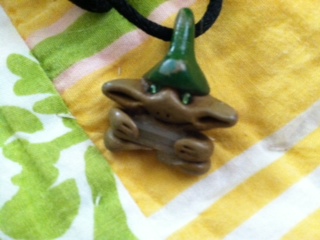
The author's troll necklace, the cracked neck invisible.
The author’s troll necklace, the cracked neck invisible.

by Allyson Wuerth

This summer, we’re yours for the reading! Click here for submission details.

*Some of the names and places in this true story have been changed.

Binomial distribution, I still don’t understand it. What I do know is this: as with any problem, one of two outcomes is possible, success or failure. I say this like it’s that simple. Success or failure. Black or white, like so much from our early years.

I was always a failure at math. Numbers never made any sense to me. Oftentimes in grammar school, well-meaning teachers would send me off to Mrs. Cole, the math tutor whose fingers were spindly wands of smoke. Later she became my middle school language arts teacher and my high school western civilization teacher (I can still hear her raspy voice pronouncing “Ne-buch-ad-nezzar”). We’d count lima beans over and over again, as if this would somehow force logic into my head. 9 beans + 1 bean = 10 beans. Her yellowed fingers sliding them across the desk, bean by bean. Her mouth dryly and slowly managing the numbers, “Nine beans. Plus one bean. Equals. Ten. Beans.” Her voice would rise an octave as she stated the answer, like it was so simple, a you’re-making-this-unnecessarily-complicated tone that I couldn’t quite shake.

She had frosted hair and a tight perm. But in those days I’d walk the hallway back to my classroom remembering nothing but Mrs. Cole’s chalky hands and the smooth feel of so many beans, the icy sound of numbers being dumped back into their glass jar.

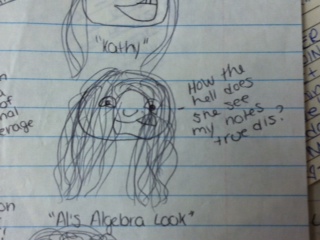
But let’s go back to the beginning or look ahead to high school, depending on how you see things. Binomial distribution. My 10th grade algebra class with Mr. Kilo, or “Billy K.,” or “Blob Jello” as my friend Casey and I called him in our frequent note passing. It was one class. One year. But even now, twenty years later, I say this class changed my life.
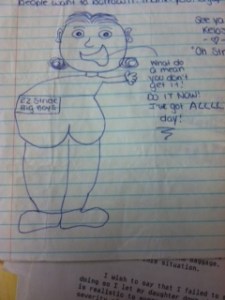
. . .through the eyes of teenagers. . .

. . .through the eyes of teenagers. . .

First, let me explain how each and every one of Billy K.’s classes ran. Even so many years later, this routine, inculcated to memory. We’d all file into his classroom where he would be sitting quietly at his desk drinking his coffee and reading the Evening Sentinel or drinking his coffee and working on the blueprints to a house he was building.

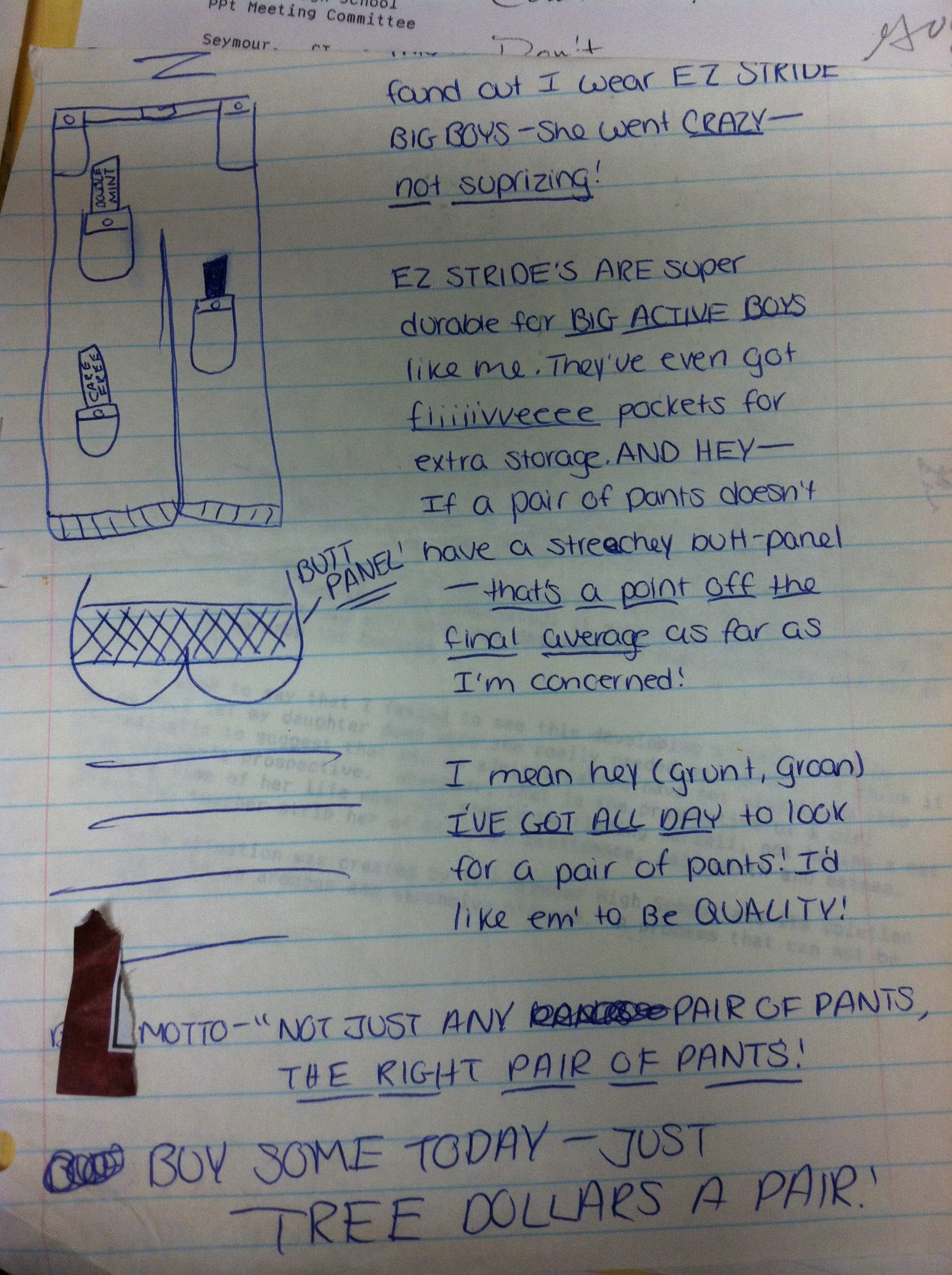
Whichever way Billy K. chose to occupy himself, he stuck to it. He rarely looked up, not to greet us and never to teach us. The blackboard was full of numbers, notes, and lessons. With his head hidden behind blueprints /Sentinel, he’d call out, “Copy the board into your notes. Then do 1-45 odd in your book.” He said the word “odd” like he hated it, as if he’d stuffed his mouth full of a horrible paste. “Odd.” The caw of an unexpected crow. If he did speak, “Dat’ll be a point off yer final average.” Any offense could warrant it. “No book cover on dat algerbra book? Point off yer final average.” Wrong answer? “Point off yer final average.”
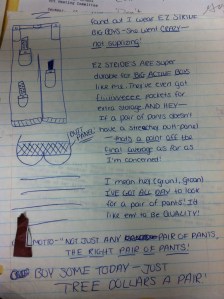
Okay, so maybe things would have turned out differently if I had only been taking math notes!

Okay, so maybe things would have turned out differently if I had only been taking math notes!

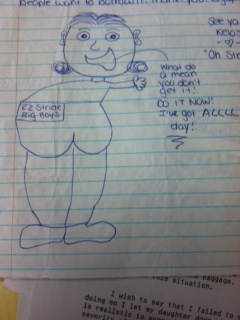
We sat dead silent, a mixture of the riff-raff of the school, smarter freshmen, and jocks who were sent to Coach Billy K. for the sake of the Bobcats. Sometimes he’d stand up, adjust the elastic waist on his cargo pants and spend fifteen minutes checking to see that we all had book covers on our school-issued math books. Casey claimed his pants were called “EZ Stride Big Boys,” and every time he ran his stubby thumbs under the elastic I had to force down a laugh. He’d move through the room, only pausing to clear his throat and ask, “’Comin’ to practice today, Todd?” or “How’s dat arm, Brand?” or “No book cover, Brian? Not surprising. Dat’ll be a point of yer final average.”

Me, I was the riff-raff. I sat against the far wall, second seat in with only Casey  in front of me. We passed notes all of class, every class, amusing ourselves by drawing pictures of Mr. Kilo or making fun of his very obvious weight problem. We were fifteen and willing to risk almost anything. I kept my book covered and my mouth shut; I thought I was okay. The room had two windows, one by Mr. Kilo’s desk and one in the back of the classroom. Later, this became very important to me.

And then, those binomials. I opened my book to do the classwork/ homework, but it didn’t make sense to me. To this day, I don’t know what made me get up from my desk and ask Mr. Kilo for help. But I did. “I’m not sure I understand this. Can you help?” I must have said something like that. His face went tomato red. “Look at yer notes.” He didn’t even look up from his paper.

“I did. I don’t get—‘’

“LOOK at yer notes. Bring me yer notes. Go get ‘em.”

Everyone was looking at me. I went to my desk and gave him my notes. He looked through them, carefully licking his index finger in order to turn each page. I panicked that he would see how at the top of every page I’d written “Algerbra notes.” That’s how Billy K. pronounced it. It was another joke between Casey and me. But he didn’t notice. He handed me my notebook back. It was pink. The cover said, “Algerbra” in cursive with the final “a” transitioning into a blackened heart.

“Go si’down an’ do yer work,” he mumbled. I went and sat down, thought I’d have another silent 15 minutes to collect myself from the embarrassment that just ensued. But, no. Today was different. Mr. Kilo decided we would go over the odd problems in class, without being able to look at the answers in the back of our books. Aloud. Together.

No one in class struggled with these binomials the way I did. Answer after answer: correct, correct, correct. Until he got to me. It was like watching the fire trail on a stick of dynamite, and waiting for the explosion. “I didn’t get this far,” was all I could muster when my turn came, my voice sore and dry.

“Yer answer.”

“I don’t know.”

“Go back to yer notes!” As Billy K. yelled at me, his eyes bulged like such tiny, sweaty blueberries.

I flipped the pages, but the numbers had blurred into nothing but grey lumps. Page after page of foggy grey mountains. Still, I struggled to form those pages into some sort of sense, something more palpable than grey mist. But, I had no answers. I started to cry and quickly covered my face with my long hair. “Look, she’s crying,” he laughed. “Look. She thinks she can hide behind her hair.” Again, laughing. This time the class roared with him. A basketball player looked over at me and glared.
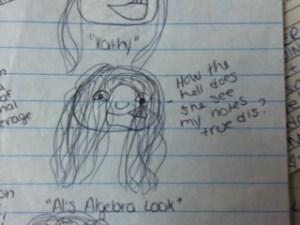
Funny, but not funny.

Funny, but not funny.

I’ve never even come close to being buried alive, but this is how I imagine it feels: thrown in a hole, you scratch and fill your fingernails with dirt, you claw and climb but you keep slipping further and further down into an abyss that swallows you up and hates you for your taste.

Panic Disorder,” is what the therapist said. But, you know, I thought I was dying in the darkness of those days. Panic attacks. I began having them in each of Mr. Kilo’s classes. A dark tunnel would envelop me, breathlessness soaking down inside me. I wanted so badly to “move on,” “get over it,” like the school administrators told my parents time and time again — but my brain forbade it, kept me locked up, caught up in that horrible haze of panic.

Leaving was the only way to break the trance. So, I left. Time and time again. Sometimes I raised my hand; sometimes I just walked out of algebra. Eventually, I began to associate my clothing with panic attacks, foods with panic attacks; days of the week even would lead to panic attacks. I would drink long swigs of Benedryl before math just to disorient the panic, trick it into submission. But those panic attacks were smarter than any elixir I could concoct from my parents’ medicine closet. It always found a way out of my daze. Another trick was to look out the window, imagine myself unlocked in the outdoors. But the truth is, I looked outside and saw nothing but an expanse of weedy land and beyond those sad sights, a new sub-division being built.

Once, at some lame new-age store in the Post Mall, I bought a necklace that was supposed to bring good luck. I actually told myself “Nothing bad can happen if I wear this.” It was a clay troll holding a fake diamond. Who knows what it really meant? Once, in my best friend Zach’s driveway, it cracked. I glued it together meticulously — the crack imperceptible. I wore it every day until the day I graduated high school. To this day, I keep that necklace in my night stand, as if the life I’ve built will disintegrate, disappear into the ether if it’s ever lost.
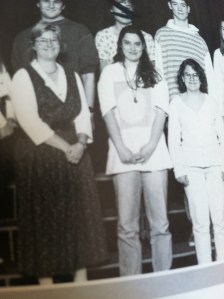
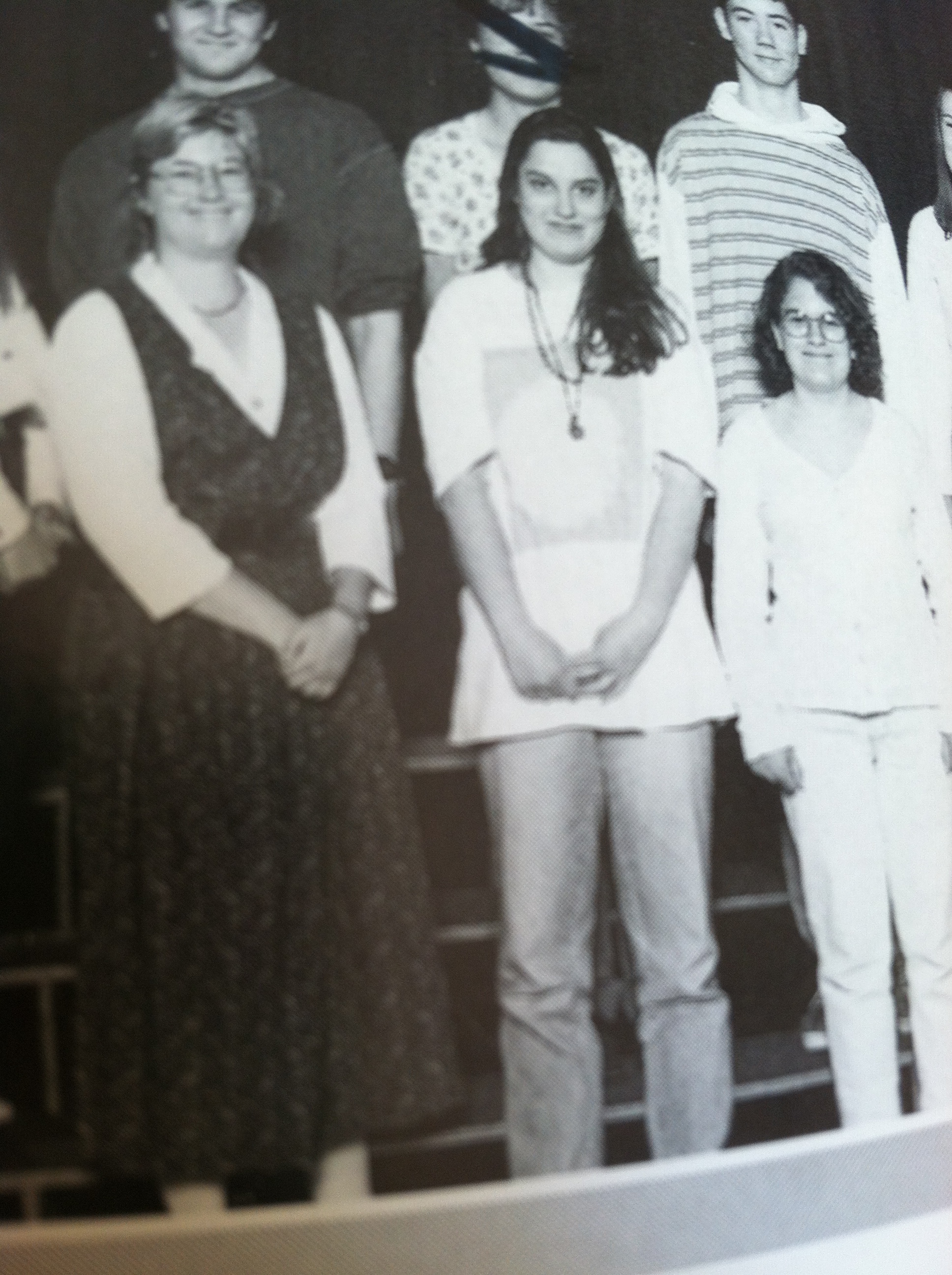
That's me in the front with a Tori Amos shirt on (I only wore Tori Amos shirts or shirts with Smurfs sewn onto them.) I'm wearing my troll necklace! Also, this is the only club I ever joined, Creations, the literary magazine.

That’s me in the front with a Tori Amos shirt on (I only wore Tori Amos shirts or shirts with Smurfs sewn onto them.) I’m wearing my troll necklace! Also, this is the only club I ever joined, Creations, the literary magazine.

But even with my potions and charms, the panic overwhelmed me. When I could no longer keep it inside me, my body erupted in bright islands of eczema. My toes, legs, arms, breasts consumed by such a shape shifter, this panic. Even my heart became an uncontrollable thing, always mixing up its beats and rhythms. “Phobic anxiety,” Teri, my therapist explained. “Your ability to decipher fight or flight is confused.” She gave me a pamphlet that detailed it all with stick figures and thought bubbles, misguided arrows that exposed the true nature of my chemical imbalance. If anything, I found this insulting. We went on this way for months.

Before long I’d missed much of my sophomore and junior years of high school. It was my father who brought me to see that therapist, and later the psychiatrist, Dr. Klugman, who worked with her. My mother was hesitant, embarrassed. But with the promise that I wouldn’t broadcast the news, she let me go. And, eventually, I learned how to cope. A combination of Klonopin, Prozac, breathing exercises, focal points (animal stickers with inspirational sayings), preferential seating (always near a door or window), and a permanent hall pass (golden ticket) allowed me to finish my junior year with mostly passing grades.

Where was this bitch when I needed her? Playing Winnie Cooper, that's where!

Where was this bitch when I needed her? Playing Winnie Cooper, that’s where!

In addition to all these accommodations, my father insisted on having a meeting with school officials and guidance counselors. Mr. Kilo opted not to come, but sent another math teacher in his place. He got married, turned those coffee-stained blueprints into a real home (I’m assuming) while I sat in my closet practicing breathing out the black and breathing in the blue. Out black. In blue. Deep breaths of the blue. Huge exhales of black. For a long time, things were this way. Just this tenuous. My future, ephemeral, bundled tightly in those sad black breaths.

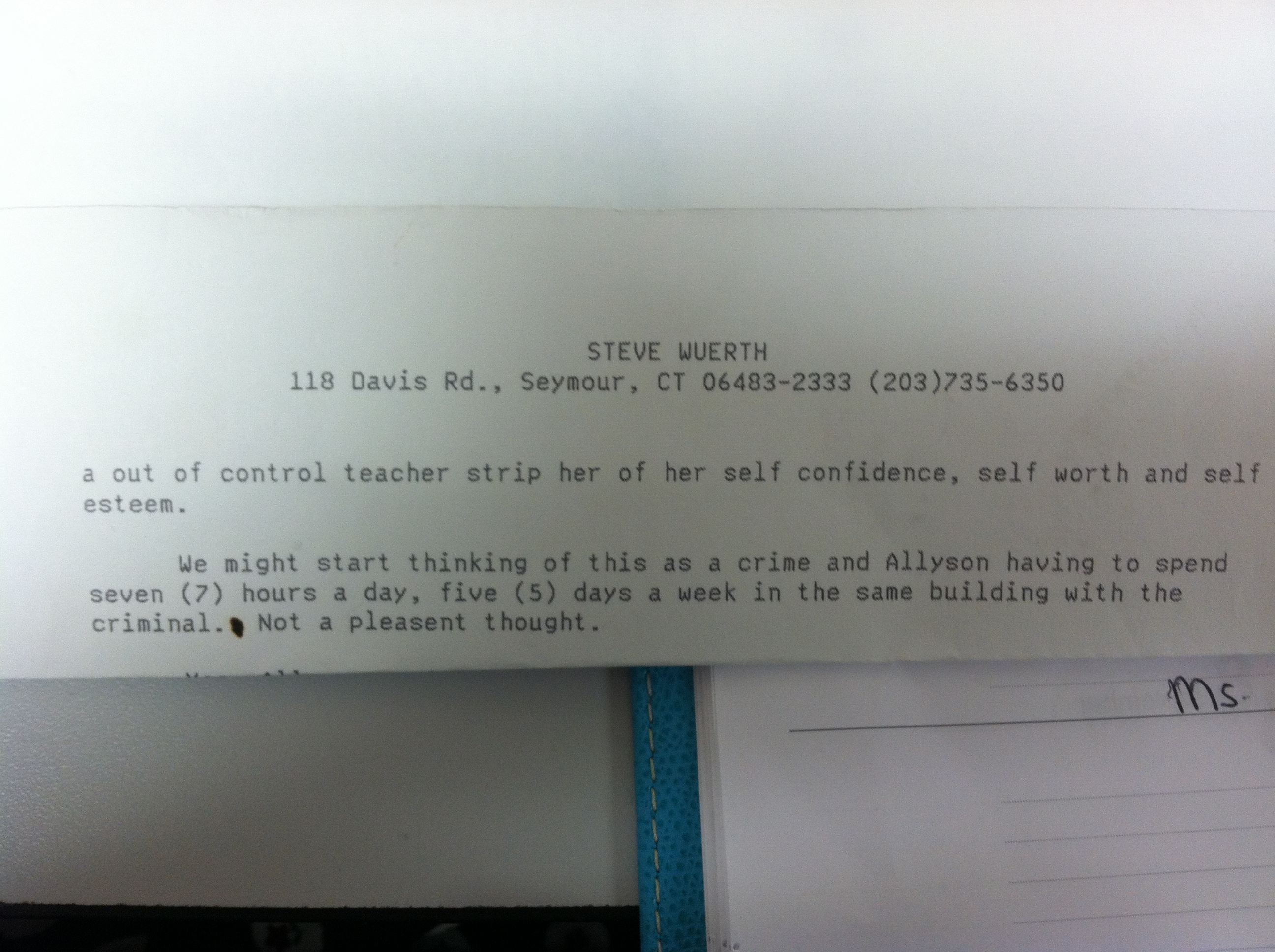
Years after high school ended, I found many drafts of a letter my father had written to the accommodation committee. He had been dissatisfied with our meeting, although I didn’t know it then. One draft had been left out for my mother to read. At the top, he wrote: “Comments?” and then, “Don’t let Allyson see this yet.” I’m not sure what he meant by “yet.” The letter is dated February 14, 1994. I found it in a folder labeled “X High” in his garbage after my parents divorced in 2006.

My father wrote, “I wish to say that I failed to see this developing situation and in doing so I let my daughter down when she really needed my support. I think it is realistic to suggest that you as administrators have not visualized this from Allyson’s perspective. Remember, that is the perspective of a girl during a time in her life when she should be having fun, making friends, and finding herself. Not having an out of control teacher strip her of her self- confidence, self-worth, and esteem.” In his revision, he changed the word “visualized” to “grasped.” I love that he revised his letter again and again. Each draft saved for so many years. In his final copy, he added into his conclusion: “Even with this traumatic experience Allyson is still doing better than most X High School students.”
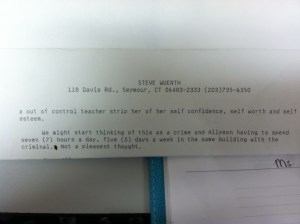
The author's dad's letter

The author’s dad’s letter

I don’t know if my father ever mailed his letter, but I will always love him for writing it. Where my high school labeled me “emotionally weak,” my father had pointed out that they too had failed. Thanks to his persistence, I finished algebra my junior year with a new teacher, and geometry my senior year with a tutor. Trust me, there were no miracles. I passed algebra with a D. My senior year tutor, frustrated with my mathematical incompetence, eventually decided the first half of each of our hour long sessions would be “lunch time.” For the second half hour she’d pile bright sheets of construction paper before me and I’d construct geometrical shapes.

Somehow, this seemed a fitting conclusion to my tenure as a math student, a way for my hands to construct what my mind could not. My rhombus always misshapen, conjuring only nostalgia for Mrs. Cole’s pile of beans. I held them tightly, despite their grimy husks, despite the fact that they were really never mine to hold. All these years, I kept them, then let them go, only to watch them take root here in this story.

Allyson Wuerth received her MFA from the University of Pittsburgh and teaches literature at a private school in Connecticut. She still hates math.

Scenes from a Marriage

 This summer, we’re yours for the reading! Click here for submission details.

by Tabitha Wolfe

I.

[Upon the couch, whilst watching Breaking Bad]

Husband: *sniff*… I think my beard smells funny.

Wife: [baleful stare, as she can see where this is going]

Husband: Ummm…will you smell by beard and tell me if it smells funny?

Wife: No, I will not smell your beard, what is wrong with you?

Husband: I don’t mean funny like, “it smells like poop.”  It just smells funny. Just smell it and tell me what it smells like.

Wife: No.

Husband: [leaning in] Come on. Smell my beard. SMELL THE BEARD. SMELL IT!

Wife: You know, I’m pretty sure the neighbors can hear you.

[Reader, the beard smelled like peanut butter cups]

II.

Advair (not a Horcrux)

Advair (not a Horcrux)

[After watching a Harry Potter movie, Wife walks into the bathroom to find Husband brandishing his toothbrush at his Advair diskus.]

Wife: ….

Husband: I’m making a Horcrux.

Wife: Oh, good. Because for a minute, I thought that was your Patronus, and that would be strange.

Husband: No. No, this can’t be my Patronus. Patronuses are something alive.

Wife: Right! Wow, you’re good.

Husband: My Patronus is Lionel Richie.

III.

[On the eve of an airplane journey]

Wife: So, I don’t know how much attention you’ve been paying to the news. Please be aware that you’re definitely going to get groped at the airport tomorrow. Try not to freak out.

Husband: It’s okay. It’s for the greater good.

Wife: What?

Husband: Whenever anyone touches my junk, it’s for the greater good.

IV.

[Wife stumbles into the apartment late at night, after an unusually long day at work]

Husband: So, I got you a present today.

Wife: [hoping it is a donut] Can I have it now?

Husband: You already have it.

Wife: [blank stare]

Husband: [smiles]

Wife: So…I already have it, but I don’t know what it is?

Husband: That’s right!

Wife: … Is it cancer?

Husband: What?! God! No!

Wife: [depressed face] Is it a baby in my tummy?

Husband: Oh my god. What is wrong with you? I borrowed your car and filled the tank with gas. That was your present.

Wife: [brightly] That’s awesome! Thank you!

V.

[Husband and Wife have a particularly… rowdy night. Probably they have had some drinks; they have failed to clear off the bed pre-rowdiness, and as a result, the evidence of said rowdiness ended up on some of their stuff, including Husband’s most beloved messenger bag. They go to the dry cleaners]

Husband: Yes, there are a few spots on the bag, please do your best to get them out, but I’ll understand if it’s not possible.

[Old Lady at the cleaners starts poking at the spots and running her fingers over them. Husband makes the mistake of making eye contact with Wife, who begins snickering]

Old Lady: Is this all of the spots?

Husband: Yes.

Old Lady: [scratching at spots with her fingernail] What are these? Do you know what these spots are?

Husband: …

Old Lady: Hmmm?

Wife: [trying to stop laughing] I’m sorry. I don’t think we know what it is.

Husband: [loudly] IT’S JELLY.

VI.

Toilet seat cover (not a goal post)

Toilet seat cover (not a football team)

[Upon the couch, watching Game of Thrones]

Wife: You know what I really like? Those paper toilet seat covers.

Husband: [cautiously] Yes. Those are a good invention.

Wife: What I like best about them is, when I take a huge dump at school? And it goes crashing through the paper? I like to imagine that my poop is a champion football team taking the field at the homecoming game.

Husband: [horrified, speechless stare]

Wife: Sometimes I sing a fight song for it.

VII.

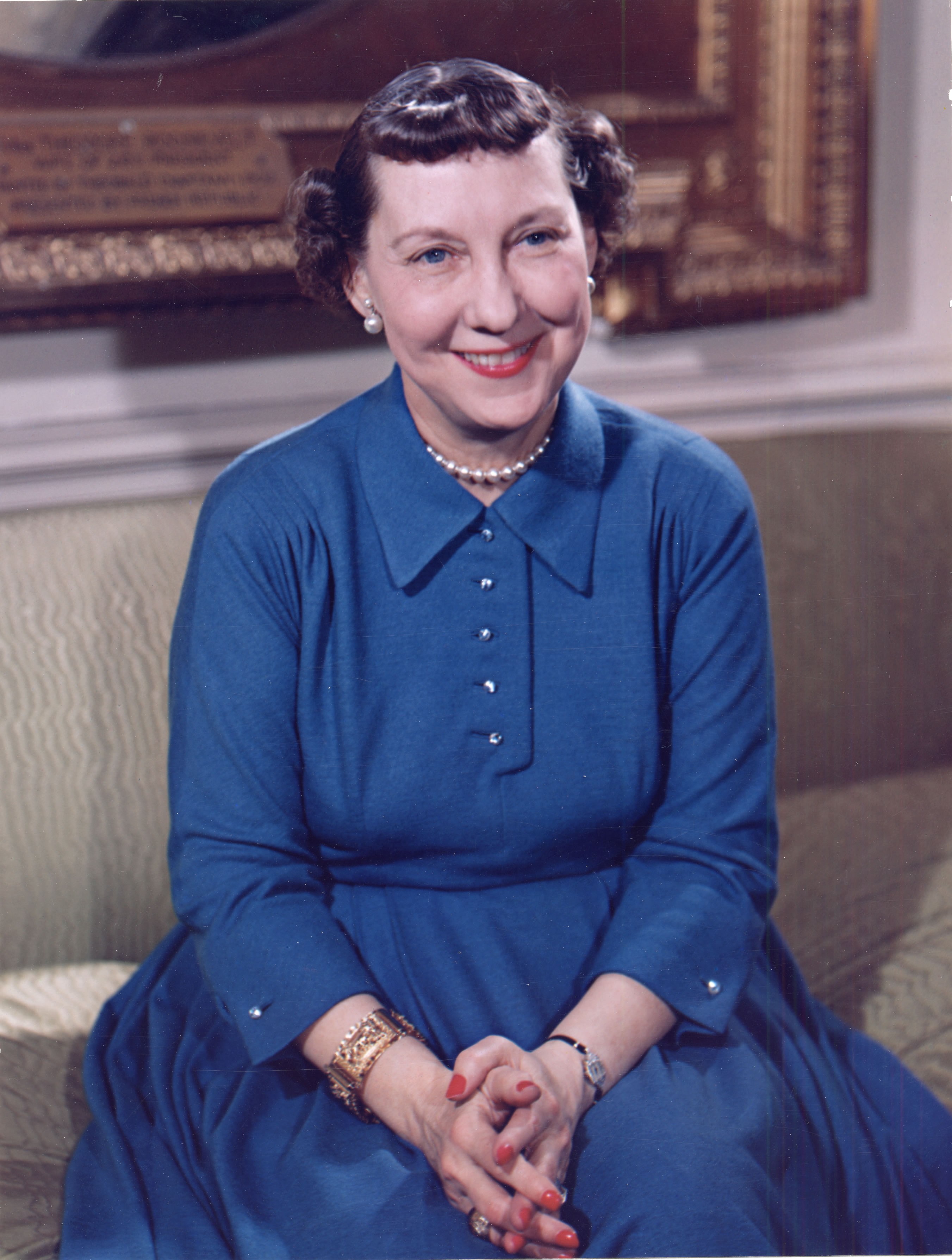
Mamie (not the ghost)

Mamie (not the ghost)

[Just because you’re staying in Abilene, Kansas, and just because you’re staying in a room in a mansion that was where Ike played chess with his childhood friend “Swede,” this does not mean that your Husband will appreciate it if you pounce upon him in the middle of the night and bellow, “I AM THE GHOST OF MAMIE EISENHOWER!!!!”]

VIII.

[On the eve of another airplane journey]

Wife: What’s the next thing on your to-do list before you leave for New York?

Husband: [squinting at list] Cyborg Battle.

Wife: …

Husband: …  I… I can’t really read what I wrote there.

[After an hour: “Super Shuttle.”]

IX.

[Upon the couch, watching Mad Men]

Husband: There’s something sticky on the table. It got on my computer.

Wife: It wasn’t me.

Husband: It had to be you. I was gone. Is this semen? Did you put semen on the table? Have you been collecting semen?

Wife: Have you seen the movieThe Bone Collector?

Husband: Yes…

Wife: Every time we bone, I collect.

X.

[Husband spends at least ten minutes in the bread aisle looking for “Sad Diet Bread” brand bread, not realizing that it is Wife’s bitter description on the grocery list, not an actual product name.]

XI.

[Wife helps Husband to proofread a document. She crosses out the word “synergy” and writes “hateful word; please replace”]

Husband: I don’t think I’ll replace it.

Wife: That’s okay, of course. It’s up to you.

Husband: I mean, if something is truly malworded…

Wife: …

Husband: …

Wife: Don’t worry, honey. If it’s malworded, we’ll reverbify it.

About the author:

Tabitha Wolfe is the pen name of the Wife, who feels it is best to write under a pen name.

Reading

This summer, we’re yours for the reading! Click here for submission details.

by Mark Stricker

This is a story about Pittsburgh.

And reading. 

And writing.

And erasure.

I was supposed to create a “portrait of myself as a reader.”

As with any portrait, its likeness only made me more aware of the limits of representation.

The past self seen in the photo, or the essay, or even the mirror (given the lag of light-speed), lies there like a sloughed-off skin, and is merely a record of where we have been, the distance we have traveled, willingly or not.

To speak of the past in the present tense is the freedom of the living.


I am standing on the sidewalk waiting for the 54C.

I am reading an essay:

Shafts of sunlight, backyards, lakes, the black helix of a phone-cord, a solid wooden desk, the wooly muzzle of a collie.

The bus doors engulf me; I sit, turn the page.

I get off at 19th street and walk ten blocks home.

The husband and the dog and the woman are reunited in the bathroom where she has been crying, and where she has said to herself in the mirror, “It’s a good thing none of this has happened”… the sentence breaks off mid-thought.

Someone has ripped out the final page.

Holy shit.

I sit motionless in the rocking chair.

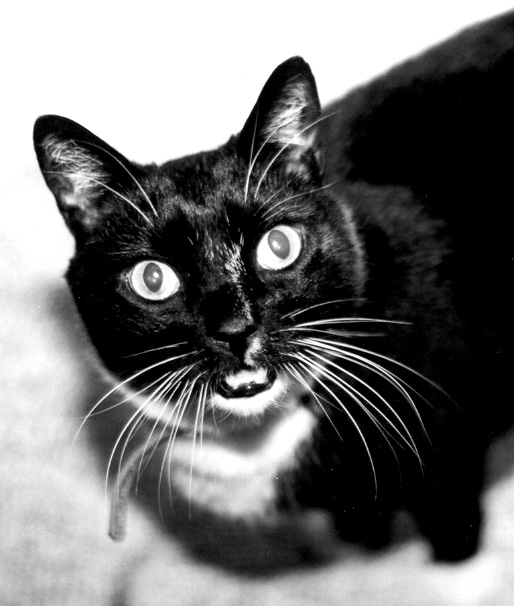
I rub Christopher’s whiskery face and he slides his wet gray gums against my knuckle.

He purrs.

Christopher

Christopher


It is Wednesday.

The fluorescent lights hum above my head.

Emily has loaned me her book.

Instead of waiting, I stand in the hallway and read it immediately.

I am disappointed by the closure.


We read and we are read.

Allyson unzips the black leather case.

Inside: a small machine, needles.

She pricks her fingertip and a red dot of blood appears from beneath the surface.

The blood goes onto a strip of plastic.

The plastic goes into the machine.

The machine reads the blood.

If the number is too high or too low, she must revise the story her blood tells.


Allyson moves away.

I am alone.

Reading is painful.

Writing is worse.

She once wrote:

Whatever we do with all our keys,
blank spaces,
awful tricks of the heart,
whatever becomes of them,
we swear them our ghosts.


The walls in the Hall of Botany are the color of the sound of water.

In one corner, a diorama: the edge of a house juts into a brick patio.

Rosemary, shallots, lemon basil, rose germanium, and tarragon line the windowsill.

When you stand looking at the herb garden, the Destroying Angel lurks behind you:

Death is certain if you eat this, the most deadly of our poisonous fungi, which causes ninety percent of all mushroom poison deaths.

What is this desire to put the beautiful and the dangerous behind glass?

As if to name possesses.

The Destroying Angel

The Destroying Angel


I am netted from a tumultuous sea of dream.

I get out of bed.

I do the morning things one does alone in a big house.

I put on my coat, step off the front stoop.

Overnight an ice storm turned everything into glass.

Surfaces whistle light.

I stand perfectly still, but slide slowly, slowly, down the sidewalk to the intersection.

Later I write:

The streets are slick with an ambiguous precipitation I am hesitant to name.
All I can do is describe this place, peopling it with abstractions
fashioning fabulous escapes clacking hopes together like dumb rocks
as if to speak slackens constrictions. I call it sleet, this sluice of ice,
and proceed down the slippery slope working a subtle magic
berserk for an afternoon or more of comfort because the job
my brain makes my skin do is boring. All this talk of fine lines,
separations, fractions, broken not like a dish dropped
or a stopped clock, but a clock between seconds.  I want to show you
borders as one shared edge, the map of the body broken into
what cannot be held forever: breath and blood,
the flooded landscape smooth, unbroken.

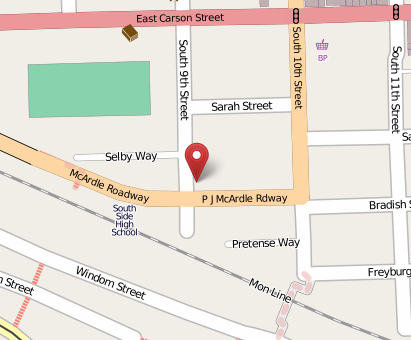
93 S. 9th St. Pittsburgh, PA

93 S. 9th St. Pittsburgh, PA


Think about a song you carry with you: the one you return to in times of sorrow or joy.

Hum its refrain and feel its vibrations in your throat.

You will never be able to communicate, to anyone, exactly how that feels.


Jo Ann sits in the front and faces our class.

She answers our questions.

I cannot think of anything to ask her.

She talks about knowing when a piece of writing is working:

When something isn’t right, it’s like those spaces on the car radio dial when you can hear two stations bleeding together.

When something is right, it is the clear voice of a single channel.


She writes:

The collie wakes me up about three times a night, summoning me from a great distance as I row my boat through a dim, complicated dream.

She writes:

There are squirrels living in the spare bedroom upstairs….  The collie fell down the basement stairs…. Chris Goertz is sitting near the door and takes the first bullet in the back of the head.

The crisis is inevitable.

And so is the rest of life.

Remember.

Jo Ann has to remember; she has no choice.

Remember.

The reader will remember, too.

You have no choice.

The collie does not die in the essay, but her death is inevitable.

Jo Ann prepares us for this.

Yet, we are unprepared.

Like the story broken before its conclusion.

Like the mind racing across the white spaces between words.

Like the blinking of our eyes, darkness accumulating unnoticed.

Until all at once:

About the author

Mark Stricker is a writer & publisher who lives in Bethany, CT.

85% Wolf

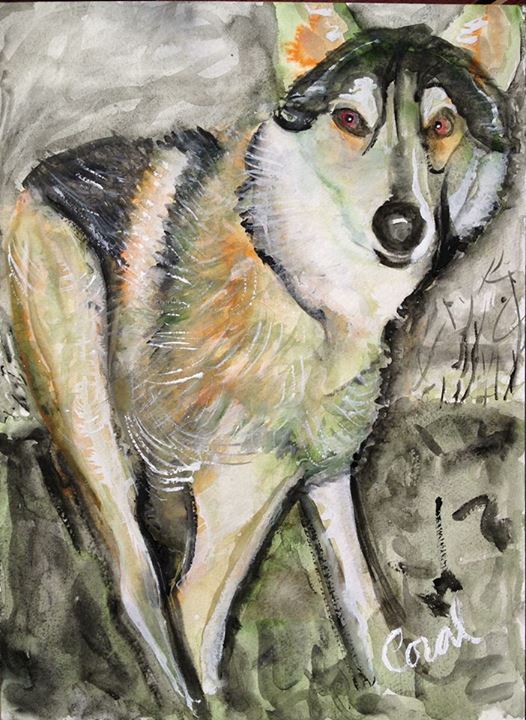
The author painted her Damien.

by Coral Staley

We hadn’t seen my father in 7 years when he showed up on our doorstep that hot summer day. All I felt was fear. I was the oldest, at 15. My sisters were 12 and 9. I told him he would have to return when my mother was home from work. I don’t think this went over well with my sisters, who were, without shame, excited to have their father back. And I admit, I wanted a father too. But not this one. I wanted a different father, a big strong man who would protect us from this one, the one I had no doubt would be beating on my mother again in no time. And maybe us too.

I knew for a short time there would be gifts and sweet talking, so I set upon my mission. I had wanted a dog for a long while, mainly for protection from him. I had a fantasy of a dog attacking my father, risking its own life to protect us. I expected my dad to object to my getting a dog for this reason, but he surprised me when, after showing him a picture of the Rottweiler puppy I wanted, he said he knew about a guy in the Ozarks who was selling wolf pups, and wouldn’t I rather have a wolf? Well, of course I would! The only problem was that I would have to sit in close proximity to my dad for over 8 hours, in the cab of his truck, the same damn green GMC I remembered him pushing my mother out of all those years ago without even slowing down.

This page from the author's diary includes a photo of Damien as a puppy.

This page from the author’s diary includes a photo of Damien as a puppy.

I don’t remember what took place during that long ride from Cape Girardeau to the Ozarks and back. I remember the man breeding the wolves was also breeding pythons — in his trailer, which he explained was the reason it was close to 85 degrees in there. He had a box with 4-week-old wolf pups he was bottle-feeding. They were dark brown, almost black, and already mewling little howls, which I found terribly cute. My pup, which was 10 weeks old, was the last one left of his litter and in a cage outside all by himself. He let us see all of his wolves, then the Malamutes, Huskies and German Shepherds he used for cross-breeding. He said in order for it to be legal to have a pet wolf, they couldn’t be more than 85% wolf. But he confided to us that mine was likely even more wolf than that. I didn’t know if this was true, or how someone could even verify this, but I wanted it to be true.

I had just finished reading The Omen. So naturally I named him Damien. It was one of those strong names, like Madonna, that stands by itself. He had lost that first dark coat and was light blonde. He had some of the wolf markings already; his tail had a prominent V of dark hair about three-quarters up, and a similar V up on his forehead. His ears were already standing up and filled with downy white hair, like he was ready for the Arctic.

The book that inspired the author.

The book that inspired the author.

We were in no condition to have a dog. For one, I knew nothing about obedience training a dog. And dog food was expensive. Our poor cat, Applejack, was forced to live on birds, rabbits and squirrels or else be served stale bread, cereal, or whatever we could come up with once the generic cat food ran out. Food stamps didn’t cover cat food. And we couldn’t afford getting her spayed, so we always had gooey-eyed kittens we were trying to figure out what to do with.

The landlord only said yes to the dog as long as the dog stayed outside. So he was kept on a chain in our backyard for the first couple years of his life. It wasn’t long before my mom and dad were fighting again, and eventually he moved to St. Louis, claiming he was getting his life in order and buying a house for us. Life pretty much resumed to normal. Mom got a new boyfriend.

Damien grew into a beautiful animal that stopped traffic when we went for walks, “Is that a wolf??” I often snuck Damien inside the house and let him sleep in my bed, and I taught him tricks, which back then I equated to obedience training. To teach him to sit, I pushed his butt down into the sitting position and said, “Sit.” After that, I said “Sit,” and he sat down. It was that easy to teach him things. I taught him to lie down, stay, roll over, speak and give kisses. I don’t think he ever went to the bathroom in the house. And really he was like a dog for the first few years. It wasn’t until around three or four years old that he “turned to breed.”

Damien, in the flesh.

Damien, in the flesh.

One day, Damien decided he wasn’t going to take orders from us anymore. And that was that. You could tell him to sit, but he’d just look at you, with those piercing wolf eyes. We moved into a house in what was considered the bad part of town, where white folks were the minority. And almost right away my sisters and I became targets for bullying, especially my youngest sister, who was routinely followed home from school by several kids. On one occasion, she was hit in the back of the head by a basketball. She thought if she brought Damien out on a leash that he would be intimidating enough that they would leave her alone. What she didn’t expect is that the minute he was let out, he went right for them, breaking free from his leash, and pinning the girl who had thrown the basketball at my sister up against a wall and biting her back. When my sister recounts the story to me, what amazes her most is that the bullying had taken place long before this point, but somehow he knew what had happened, who had done it, and what he needed to do. What’s also amazing is that he did not draw blood from this girl. The bite was simply a warning to leave my sister alone. Still, there were threats about putting him down and this or that, but ultimately, my sister wasn’t bullied anymore. And this is also when Damien became her dog.

The neighbors showed their reverence for him by throwing a whole pig into his enclosure. Alive or dead, we don’t know. It was my sister who cleaned up the mess of intestines and guts strewn all over the yard. She remembers him playing with the four pig’s feet. He would throw them into the air, then, not knowing where they had landed in the deep snow, sniff them out and dig them back up.  Rosie says: Almost all the neighbors regularly threw treats and toys to Damien. (All but the home of the girl he attacked and her family anyway.) He had something about him that made people love him.  Even though he looked wolf and could be intimidating, something about him made the people of that neighborhood really love him.  You mentioned that he was revered by the neighbors but it doesn’t really convey completely the way they felt about him.  I also wonder if they felt like they had to take care of him because we couldn’t always.

When I was 18, I joined the Air Force, and like so many irresponsible teenagers do, I left Damien for my mother to figure out what to do with. It was also around this time that my mother was left a small inheritance from her aunt and put down a deposit on a house a couple miles away. The problem was, we had no idea that wolves mate for life, and unbeknownst to us, Damien had chosen his mate back in that other neighborhood: a dog across the alleyway that I’d hardly even noticed before, chained to a doghouse. Every opportunity he got, he was escaping from the new house and returning to her.

It’s almost a sweet story, except, he was very protective of this other dog. He wouldn’t even let her owners feed her, snarling and snapping and causing quite a stir. There were times that my mother was able to get him into the car herself. But other times Animal Control was called, and every time it got harder to catch him. He became even more possessive and vicious. They tranquilized him after the third time and told my mother if it happened again, the Conservation Department would be called, and he would be taken into their custody.

Eventually, on one of these treks back to our old house, he was hit by a car and came home with a pin in his leg. It was then that he became a house dog, and as my sister says, he slowed down. Another reason I believe that he became a house dog is that he simply stopped taking orders to go outside. He’d taken up growling, as if daring my mother or sisters to even try forcing him. Rosie says: I don’t think Patty was around.  She moved to California with Dad shortly after we moved to this house. I remember him always darting in the house but never being aggressive to stay in.  When he had the pin put in his leg they discovered that he had heartworms pretty bad. At that point in time they were just discovering how to treat them with strychnine. It was 50/50 if he would even survive. It was really expensive for Mom too.  Somehow Mom would always take care of the animals when it counted.  Once at home, the treatments gave him life-threatening diarrhea. He hid in the basement for the most part. The vet told my mother and sisters to try to get Pepto Bismol into him. It didn’t take long for Damien to only just see that pink bottle and become the scariest thing you’d ever seen, like having Cujo in your basement Rosie says: I remember he seemed a little crazy right after his treatment.  I wondered if he was having a bad trip like being on acid. While he was in the basement he was having an episode and scratched the door at the top of the stairs as he was desperately trying to come upstairs for whatever thing that spooked him.  The door looked torn up as if a bear had done it. It is still that way today. I came home for a visit and thought I’d just waltz on down there and he’d know who was boss. But Damien quickly let me know that our dynamic was no longer. He was now the alpha, and I better back off. I was worried about my family after that, and knew I’d blame myself if something happened. And I felt like it was just a matter of time.

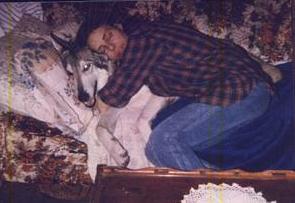
My mother for whatever reason was sleeping on the couch (Rosie says: Mom slept on the couch because I was always getting into trouble and juvenile detention was calling her so much) and he’d even claimed her spot on the couch as his. And she submitted to this arrangement. Mom says: Actually we ended up sharing the couch. I wasn’t about to give up the couch. I liked the couch because it was close to the door and phone, but also because it was easiest on my back. It’s the little things that count sometimes.

The author's mom and Damien on the couch.

The author’s mom and Damien on the couch.

Always a spiritual person, my mother was heavy into astrology, and it was around this time that she developed a deep spiritual bond with Damien, a relationship I don’t think she ever had before or after with a pet. While stationed in England, I found a book called Women Who Run with the Wolves and sent it to her. It was about women learning to embrace their wild, instinctual selves. I connected my mother’s kinship to Damien as her way of embracing her own wildness, a wildness continually being stamped out–by men, by being a single mom to three unruly girls, and by the hard manual labor of working at a saw mill for twelve hours a day. I believe she saw Damien, 85% wolf or not, driven by instincts, refusing to be domesticated, and it fanned the embers of her own stubborn soul, and maybe even vindicated the path she had taken so far, raising us on her own, as hard as it was.

women who run

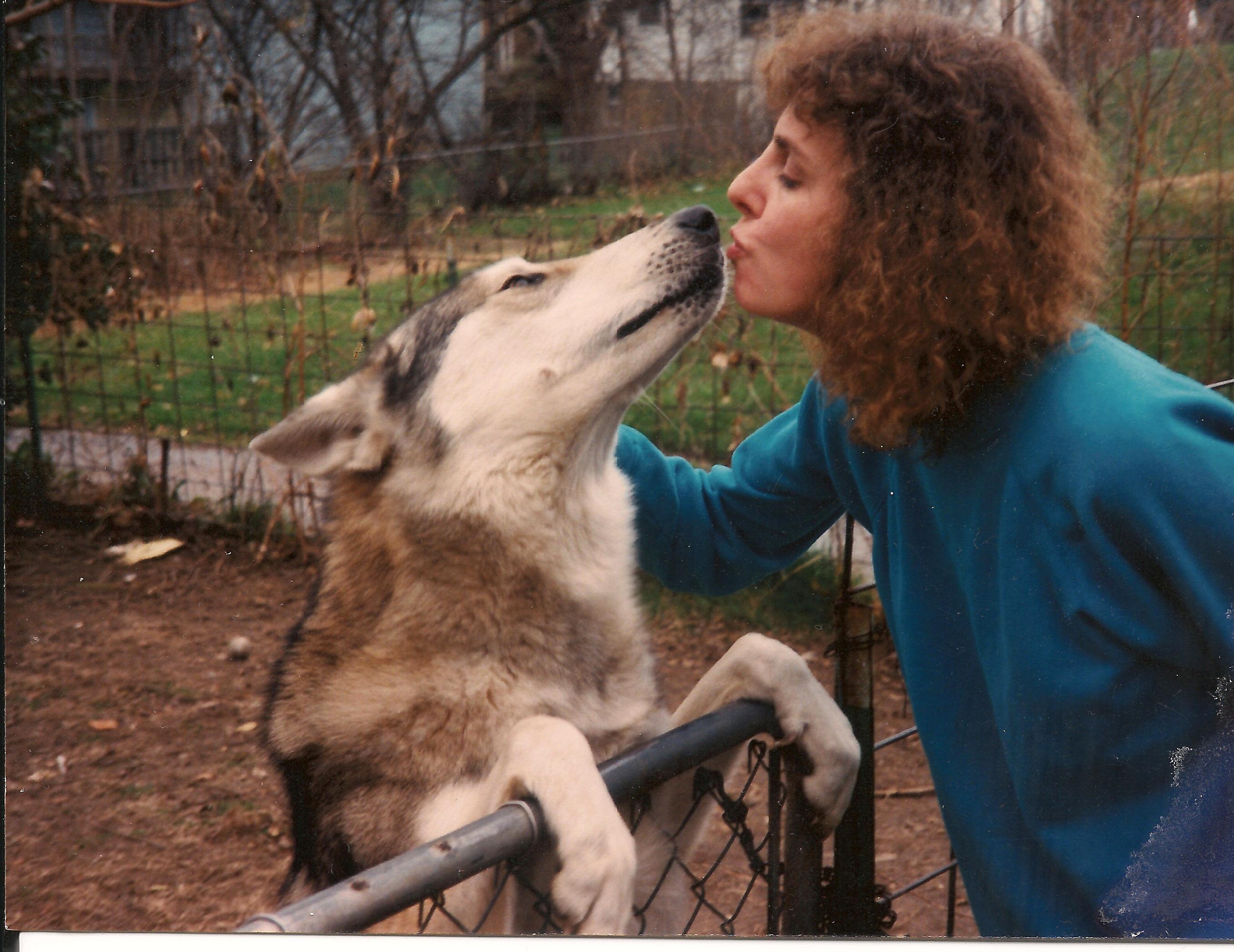
The author's mother gets a kiss from Damien.

The author’s mother gets a kiss from Damien

The day finally came that he somehow sneaked out the front door and ended up back at that house, which brought the Conservation Agency into things. Rosie says: Damien became so docile that we would trust him to be outside off a leash.  Mom left his gate open after doing some yard work or something and he wandered off.  That’s where her guilt stems from. The conservation authorities said the laws had changed. Damien would be released to my mother only if an enclosure was built that met the requirements for housing an exotic species. He would no longer be allowed on walks. While my mother set about having this enclosure built, he was kept at Animal Control in a small cell and not taken out for six weeks. My sister visited him on a regular basis, and one day she walked in and was simply told, “The animal went crazy and was euthanized.” What broke my heart was my mother, hearing her sob as she told me about the last visit to see him, when he jumped up whining, wagging his tail, expecting her to take him home as usual. Twenty years later, my mother still finds it too painful to even recall her memories of Damien.

About the author

Coral Staley has an MFA in Creative Nonfiction but is too busy with her two boys to give writing much thought these days. She does, however, find time to paint and considers it another form of creative nonfiction.

This summer, we’re yours for the reading! Click here for submission details.


This is a Dead Cat Story

Editor’s note: Did you miss our first welcome post? Click here to find out what all this nonsense is about.

This summer, we’re yours for the reading! Click here for submission details.

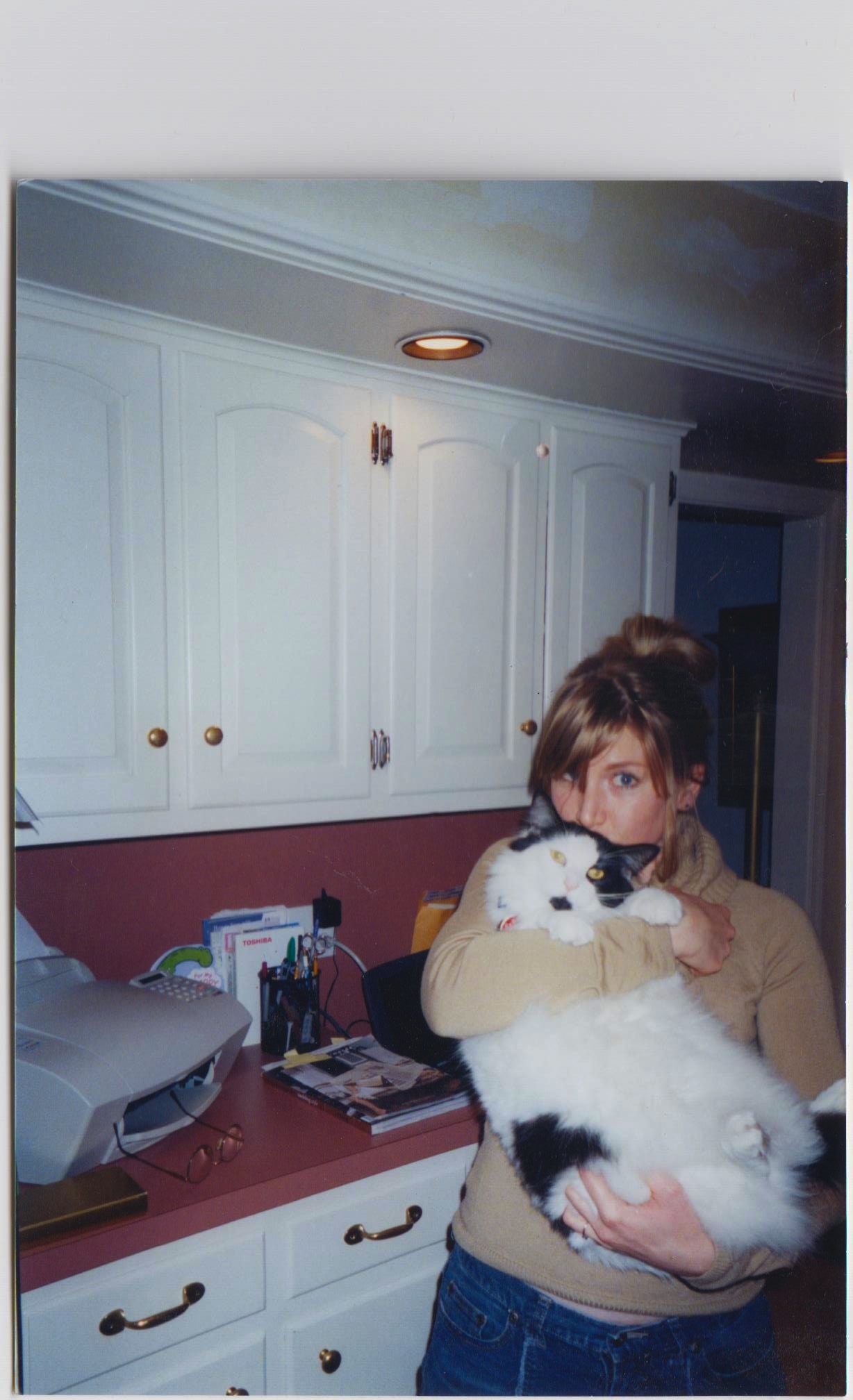
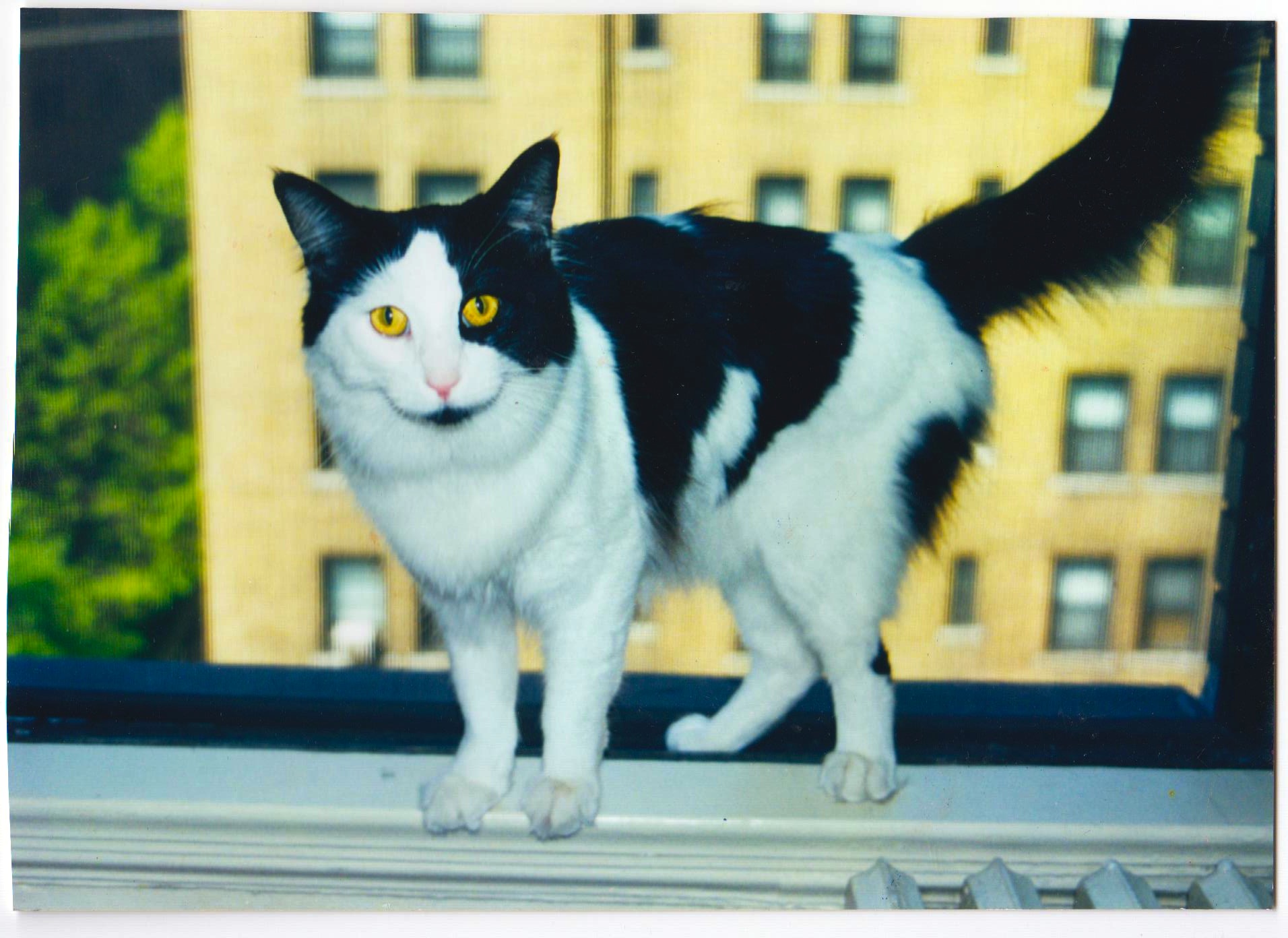
The author and Roogie, in former times.

The author and Roogie, in former times.

I was raised by cat-hating folk. We had goldfish, parakeets, guinea pigs, rabbits, hamsters, dogs, and the turtle I accidentally boiled to death when I made the water too hot for his evening bath. I even remember an exhilarating few days spent caring for a nest of hungry baby birds. I fed them water with an eyedropper. My mother tolerated this activity, in spite of its futility. When we woke up one morning to find all the little birds dead, their mouths frozen in gaping, pink “feed me!” shapes, no one was surprised. I mention this only to illustrate that my family was not anti-pet, just anti-cat.
When I went to the houses of my cat-owning friends, I viewed their pets with both suspicion and curiosity. My friends assured me that their cats were “friendly” and “loving” but I had yet to see any concrete evidence of this. Compared to my dog, a good-natured mutt who welcomed tight hugs and mandatory tea party participation with the same wagging tail and eager eyes, cats were ice queens. I remember them as blurs of fur, racing under beds and couches at the first approach of little girl feet.

I remained staunchly anti-cat until my early twenties, when I moved to Pittsburgh to attend graduate school. There I befriended a woman who was an avid collector of exotic pets: a gecko, a water dragon, a giant German Shepherd (which is different from a non-giant German Shepherd), two cats, a flying squirrel (who tragically drowned in a toilet), a variety of hamsters and rats, and a skunk that was known to walk about the neighborhood in small straw hats and gingham dresses.

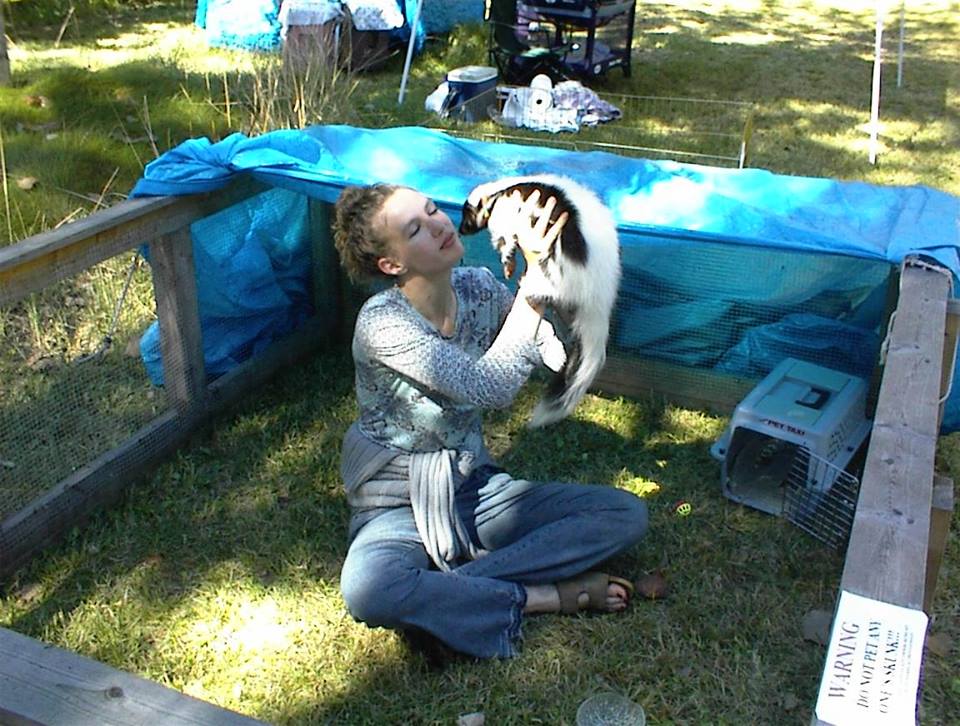
Coral with Fonzie at Ohio Skunkfest

Coral with Fonzie at Ohio Skunkfest

When Coral spent a few weeks in California one summer, I was tasked with caring for one of her cats, a large black and white male named Roogie. In spite of being raised by a bunch of cat-haters, I found the experience rewarding. Roogie was friendly and warm. He solicited my affection and never hid under my bed. I surprised myself by feeling a little sad, even reluctant, to return him at the end of Coral’s trip.

A photo I took of Roogie when he came to visit with me for 2 weeks in the summer of 2000.

A photo I took of Roogie when he came to visit with me for 2 weeks in the summer of 2000.

Therefore, several years later, when Coral’s wild kingdom was at capacity, she began urging me to adopt Roogie. I refused, reminding her, “I’m not a cat person!” Then one evening, during a particularly heated game of Trivial Pursuit, Coral wagered the cat. I don’t remember what I wagered but it was clear to me that whether I won or lost that game, the result would be the same: I was going home with a cat tucked under my arm. And so I did.

Coral first acquired Roogie in 2000 while volunteering at the West Penn Wildlife Rehabilitation Shelter. For a brief period of time, while the Animal Rescue League was renovating its facility, they sent several cats and dogs, including the star of this story, Roogie, to the wildlife shelter. Whenever Coral walked past Roogie’s cage he would reach out a paw and try to touch her. When Coral inquired about him, a shelter employee told her that he had been saved from euthanization once before and that he was scheduled to die soon if someone didn’t adopt him. She convinced Coral to take Roogie home (ironic, given that Coral chose to work at the wildlife shelter precisely so she wouldn’t be tempted to adopt any of the animals).

When adopting an adult pet, its previous life is a series of gaps and mysteries that will never be solved. All Coral knew about Roogie was that he was relatively young, he had been declawed by someone (his first owners?) and his back legs looked like they had been broken and then healed at odd angles. In this way, his body told us the story of his former life, one filled with violence and abandonment.

***

Upon arriving at my home, Roogie demanded the outdoors. Remembering Coral’s advice — that he was a cat of the streets — I let him out. He promptly disappeared for two days. After that harrowing experience I put Roogie on cat house arrest. When people entered or exited our home they had to step around a mewing lump that was using all of his strength to propel his wiry body through that open door. Our house had become the set of The Great Escape and we were the Hannes Messemer to his Steve McQueen. After 6 months of this, we agreed the situation was untenable. The cat must go free.

We soon fell into a comfortable routine. He meowed at the door, we let him out. A few hours later I would call his name into the night air and he’d return. Just like a dog! Roogie was so domesticated that he would accompany us when we took our dog for a walk. Passersby would stop and marvel at the black and white cat who walked alongside his canine companion. We could not take pride in these cat tricks, of course, because we had taught him nothing. In fact, to call Roogie our “pet cat” would be to misrepresent our relationship. We preferred to think of him as a roommate who happened to enjoy long belly rubs.

One day I saw Roogie in the backyard, batting around a toy. I didn’t know that he even liked to play with toys, so I went outside to investigate. The toy turned out to be a mouse’s head, still bloody along its ragged edges. Another day my husband watched as Roogie leapt into the air and snatched a bird, mid-flight, in his jaws. In these moments it seemed we were getting a glimpse into the life he led before arriving at the animal shelter. What else had he killed? And where were the bodies? This made me only a little afraid of him.

It bears repeating that Roogie was declawed because, in addition to decapitating mice and plucking birds out of the sky, he was able to take on the neighborhood strays and remain, miraculously, scratch free. He was clearly Top Cat. The others — some strays, some “indoor-outdoor” like Roogie — would congregate around our front stoop, looking up expectantly each time we left the house. I imagined them talking amongst themselves: “Is it him? Quick boys, look alive!”

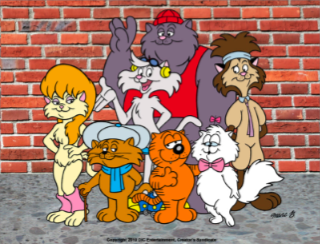
Roogie’s best friend was a ratty looking stray we named Riff Raff, after the Heathcliff cartoon. Riff Raff was always hanging around our stoop and yard, like the kid whose parents don’t want him around and so he always ends up at your house, playing with your kid, eating your food. We never let Riff Raff into the house.

Riff Raff is the baller in the blue scarf. Image courtesy of tvtropes.com

Riff Raff is the baller in the blue scarf.
Image courtesy of tvtropes.com

One evening, while we were watching TV, we heard angry cat noises emanating from the road in front of our house. When I stepped outside I saw two cats perched on their hind legs, swatting at each other with their front claws. It was a catfight. But what surprised me about this scene is that Roogie was lying on his stoop, paws crossed, observing it all with amused detachment. Riff Raff was there too, but hiding in the shadows.

“My God,” my boyfriend exclaimed, “they’re fighting for him!”

“What?”

“They’re trying to impress him.”

See what I mean? Top. Cat.

***

One frigid March evening, I stood at my door calling for Roogie to come inside. But Roogie didn’t come. He didn’t show up the next morning either. I had to catch a flight to New York City that day so I asked a friend in the neighborhood to come to the house and call for him now and then. I was sure he’d come back at some point during my three-day absence — it was a Pittsburgh winter and he would surely freeze to death without any shelter.

But when I returned home from my trip, Roogie had still not turned up. I called my boyfriend, who was out of town at the time, and he was characteristically blunt: “Might as well face it — he’s dead.” I knew it too. But I decided to take one last walk around my neighborhood anyway, just in case I was missing something. I brought my dog along, imagining our combined scents as a cartoon-like cloud snaking its way through the back alleys of my neighborhood towards Roogie’s hidey hole until, at last locating him, it would slowly guide him back to us. This did not happen.

Defeated, I headed home. But before going inside I looked across the street and noticed Riff Raff sitting on the front porch steps of neighbors I did not know. He was looking at me. “Have you seen Roogie?”I asked. Sure, it’s crazy to ask a cat where another cat is but know what’s crazier? I got an answer. “Meow!” was the response, not from Riff Raff, but from concrete steps on which I was standing. “Roogie?” I asked, tentatively. “Meow! Meow! Meow!”

That meow began to move from the steps to the side of the house. I followed, screaming like a crazy cat lady (because what was I at that point if not a crazy cat lady?), until I found myself standing in front of a basement door. The door was locked but also very warped, allowing a one-inch crack between it and the wall. Suddenly, a sooty white paw shot through the crack, reaching out for my hand. I felt like I had inadvertently stumbled into the grisly climax of a slasher film, only with cats.

Long story short — the neighbors had been doing construction on their basement and Roogie must have slipped inside while the doors were open. They completed the job, locked everything up, and hadn’t been down there again in days. Imagine their surprise then when a hysterical, puffy-faced young woman showed up on their porch, accusing them of locking her cat in their basement.

My friend, Griffin, posted this photo to my FB page after I published this story. Seems like it belongs in the story too, then.

My friend, Griffin, posted this photo to my FB page after I published this story. Seems like it belongs in the story too, then.

***

A few years later my husband and I moved to North Carolina with our one year old daughter. We had only been living in our new city for five days when my husband shook me awake at 2 am. “Roogie’s dead” he informed me. Just like that.

It seemed anticlimactic that Roogie survived abandonment by his first family, territorial disputes with a Giant German Shepherd, a winter abduction, and God only knows what else on the streets of Pittsburgh, only to die in Greenville, this shitty little Southern town. He was hit by a car and died instantly. When I held him on the back porch, breathing in the humid July air, his body was still warm. I was sure this inexplicable death was a harbinger of doom, like when the walls in a haunted house start bleeding and a disembodied voice tells those meddling kids to “GET! OUT!” I thought his death meant something. But of course it didn’t. Cats die all the time.

***

Like I said before, I was raised by cat-hating folk. But they made an exception for Roogie. They marveled at the way he solicited their affection by pressing the weight of his silky head against the palms of their hands. “Look at that — he’s just like a dog!” they’d exclaim. And when he’d do anything remotely catlike they were even more impressed, simply because they’d never spent any time with cats before:

“Look at that! He hopped up on the counter! How’d he do that?”

“He’s a cat,” I’d explain.

Roogie has been gone for six years yet my mom still mourns his untimely end. Her lamentations are usually provoked by the presence of our other cat, who she refers to, derisively, as “That Cat”. When That Cat enters the room, demanding our affections with far less finesse than his dead brother did, she wrinkles her nose. “Roogie’s the only cat I ever loved,” she says, as she picks him up and strokes his head, “and you’re no Roogie.” As she tells him this That Cat just buries his head deeper into the crook of her arm. He doesn’t know that she hates cats.

What we Miss Most


This summer, we’re yours for the reading! Click here for submission details.

by Allyson Wuerth

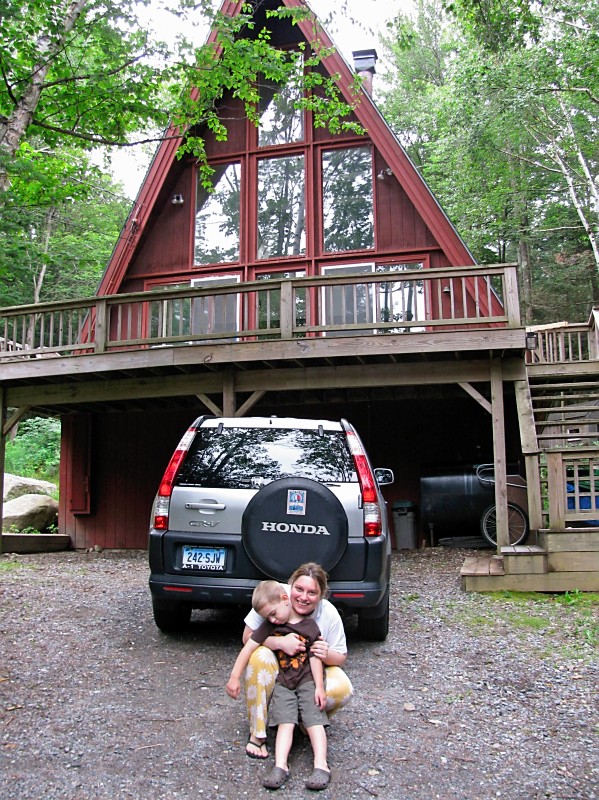
While rifling through the candy basket in our kitchen cabinet, I came across half a bag of Vermont maple candies, so pasty and sweet.  And, immediately, I got sad.  The maple candies, long forgotten, were purchased last summer on our family vacation to Vermont. The perfect vacation with my husband, four year old son, and thirteen month old daughter.  We rented a ski lodge off a winding country road.  We, despite the cool temperatures of that summer, swam in the waters of the private lake that came along with the A frame rental home.

A frame house in Wilmington, VT!

A frame house in Wilmington, VT

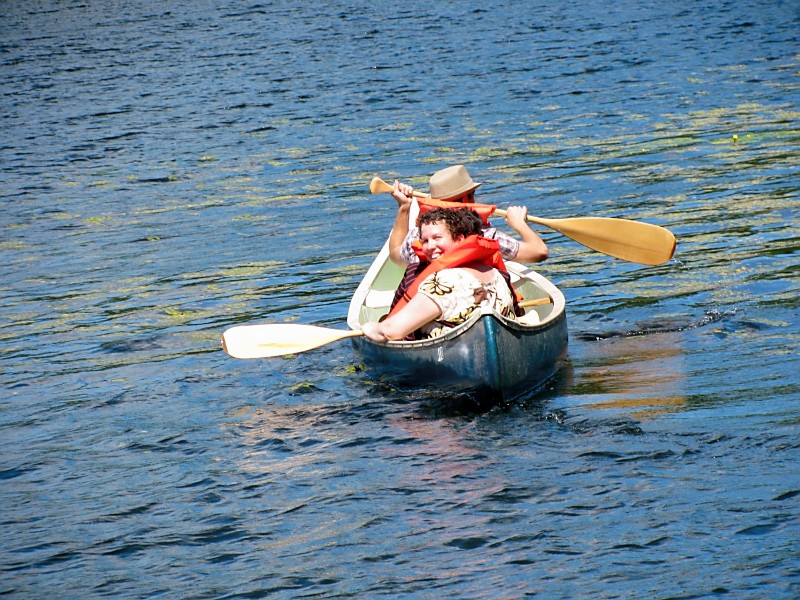
And mid-week, our good friends joined us for an overnight visit on their way to their own vacation in Maine.  Together we canoed, most of us for the first time, and fished in the sunny lake.  I have pictures of this:  Mati, Noam and Dana’s four year old son, and his giant toothless smile.  Dana and her mother aboard the teetering canoe—not quite as worried as I would be.  That day was one of perfect summer weather, the sweet feel of it in the sand.

Dana puts on a brave face for the canoe ride!

Dana puts on a brave face for the canoe ride.

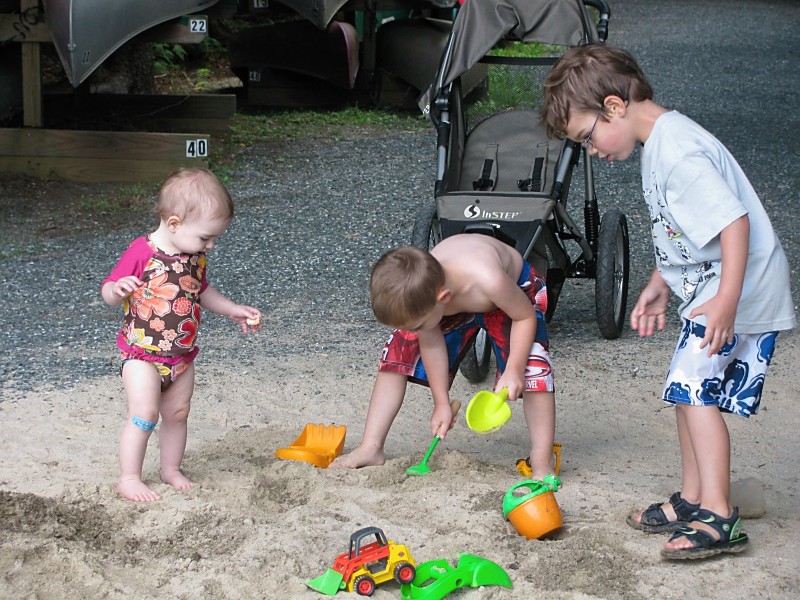
Our boys were best friends.  They were 2 1/2 years old and instantly loved each other.  It just happened that way, their love.  They saw each other nearly every day—if not at daycare, then the park after daycare.  They loved Lightening McQueen and dressing like Iron Man.  They loved talking about underwear and poop.  They felt they were owed each other, even.  And we, the four parents of these two boys, did not disappoint.  We spent summery Friday nights at a local ice cream shop, Kelly’s Kone Konnection. We talked while the boys drenched themselves in ice cream.

This "candy party" got way out of hand!

This “candy party” got way out of hand!

Shortly after our return from the Vermont trip, still the heart of that summer, we met at a local carnival.  The boys rode every ride their height allowed, ate hot dogs and cotton candy.  It was there—in the twilight din of carnival—that Dana told me that she was moving back to Israel to take a job with her old law firm and Mati was going with her. Noam would stay behind and finish up his doctoral work. And there in the midst of snow cones and cheap stuffed animals, my story begins.

Or maybe it begins much sooner than that, when I was five and my best friend Jenna moved to some southern state. Florida? Georgia? Both sound true. Anyway, I couldn’t imagine living without our sleepovers, our flower-picking treks through the woods, our friendship. My mother told me there would be visits, trips, meet-ups, more time for us to play. And by the time I realized these promises were all lies, I’d forgotten the color of Jenna’s hair. Her last name, forgotten. She did visit once when I was much older. She didn’t expressly come to see me, rather other neighbors of ours. Our parents re-introduced us, but we looked at each other like strange cats—disinterested, cautious. Her skin was bronze and she wore white leggings and crimped hair and we never said a word to one another.

This, I consider at the carnival, when Dana tells me she will move with Mati. Our boys and their fathers are on a green caterpillar roller coaster, happy. The sadness I felt when I realized I didn’t care about Jenna anymore, this would happen to Tristan and Mati. There would be a time when they no longer cared to know each other, when they might meet up and regard each other as animals of a different scent.

Happy! Happy!

Happy! Happy!

In this world there is a force that keeps pushing us forward, propelling us into a future for which our past selves are not quite ready. Only the past we crave keeps changing, constantly rendering itself obsolete.

When I told Tristan Mati was moving to Israel, he asked if we could go on the train to visit. “Like Maisy’s?” he asked.  “Like when we went to visit Maisy?”  Earlier that summer, during what could only be termed a temporary lapse in sanity, I boarded an Amtrak train in New Haven with a four year old and a one year old in order to visit my friend and her family in North Carolina. During that night on the train, North Carolina had seemed a lifetime away. My daughter cried almost the whole time, and my son was terrified of the dog that accompanied the soldier sitting near us. She had been injured with shrapnel in the Iraqi War, and her guide dog lay at her feet, loyally.

“No.” I said. “Only on a plane. It would be hard for us all to get there. We might not see him for a little while.” To make our boys feel better, and maybe ourselves too, Dana and I told them that the following summer we would all take a big road trip, rent an RV and travel through America together.

“When? When?” Both boys would ask.

“When you are five,” we would answer.

One warm September day in 2010 my husband and I took Tristan to Bassett Park to say goodbye to Mati. Bassett Park, the place where their friendship grew sturdy, where they smeared their hearts with dirt and let their lungs fill with cool wind. Even though they were four and a half years old, they knew this day was the last of its kind. Tristan did not want to get in the car to meet Mati. “. . .because if I don’t see him today, then it won’t be the last time I see him,” he rationalized. But once together, they stuffed their sadness somewhere deep in the trees behind the park where they ran for pee breaks.

Their last time together at Bassett Park

Their last time together at Bassett Park

The morning Jenna moved she came over one last time to swing on my swing-set with me. It was early and the dew-coated grass shone like snow against the morning sun. Eventually we heard her mother calling her. Maybe the car was loaded, and ready to go. Who knows? She slid down the slide, told me the word vagina was actually pronounced bagina, and left. I believed her and said it that way for a long time.

Special thanks to Mark for cropping out the "baginas"!

Special thanks to Mark for cropping out the “baginas.” That’s Jenna on the left and me on the right.

When it was time for our boys to say their goodbyes, they ran together to a club house where Mati said, “Tristan, I need to tell you a secret.” I pretended not to hear the secret, but I listened closely. I won’t tell it here, but it was sweet and honest, and my son had serious eyes.

A few days later, Tristan started full-time pre-kindergarten at Davis St. School. Our little world of daycare, park, home became a bit more complicated. I told Tristan’s new teacher, extremely experienced with small children, about his best friend moving. Like a fool, I couldn’t even breathe the words without tearing up.

“This must be hard for you too.” Mrs. Bryant’s sympathy made me feel stronger. “Small children are amazingly resilient. He’ll stop talking about his friend before winter, you’ll see.”

But the truth was I didn’t want him to stop talking about Mati. I wanted their story always remembered, always clear. And, really, for a whole year Tristan asked about the road trip with Mati. “Are you and Dana planning, Mommy?” he would ask.

Such purposeful digging from these boys!

Such purposeful digging from these boys.

“We’re planning.” I’d lie. Although, it’s not exactly a lie if you want it to be true. The truth was that Dana had become pregnant with baby Dori, and plane tickets either way were expensive. We tried to explain the cost to Tristan in i Pods, something that he was saving his own money for.  “It would cost our family twenty i Pods to get to Israel, Tristan.”

“Twenty? That’s a lot.” But still he would ask, “How long until we see Mati, Mommy? Is it months yet? Will he look different?” Each time the trip seemed too close, we’d put it off until September. Then May. Then. . .

So, as probably you assumed, the trip to Bassett Park was the last time (to date) that the boys saw each other.  They are now seven, and thriving on their own sides of the world. We still send each other gifts—mostly Israeli and American candies for the kids. Dana and I talk on the phone and email each other;  Noam stays at our house when he has business at Yale.

Once, while talking to Dana, I heard Mati in the background. “Put him on the phone!” I suggested. “And I’ll put Tristan on the phone.”

“He’s lost most of his English.” Then she added, “But it comes out at random moments. Still, I don’t think he could converse in it.” I admit, my heart sank, and I hated my heart for doing that. Added to the countries and oceans that lay between them, would be a language barrier … perhaps the greatest rift of all.

And then there was the day Tristan came home from kindergarten proclaiming, “Joe is my new best friend because we both love army and have a secret code.”

Last week at dinner my husband shared the contents of his email with Noam: “Mati is taking guitar lessons!”  Our son didn’t even look up from his pizza, as if the name itself didn’t register as familiar, loved.

If, for Tristan, Mati has been relegated to what Hawthorne termed the “irrevocable past,” where does that leave me? Afternoon visits to the park have been replaced with baseball games, meetings at work, or doctor appointments. My life will never be as blissfully uncomplicated and innocent as it was in those days of two little boys digging buried quarters from the earth until the air became thick with the hum of crickets.

Or, I suppose, as blissfully uncomplicated and innocent as it was in those days of two little girls crossing a splintered foot-bridge to get to one another’s yard, a passageway that still haunts me.