The Old Man and the Santa Sprint

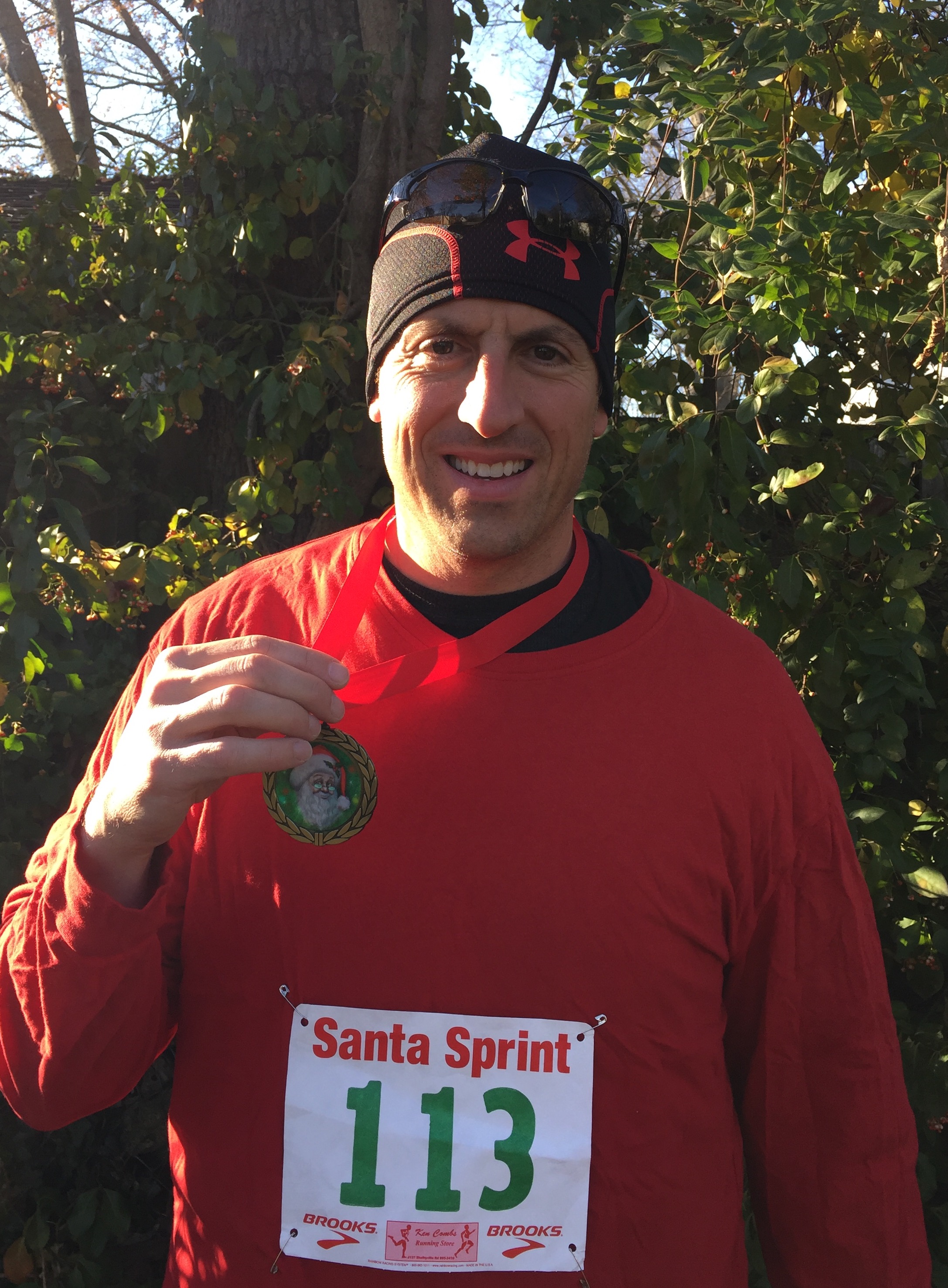
The author at the finish line with his Santa Sprint medal

The author at the finish line with his Santa Sprint medal


It was the first Saturday in December and the annual Santa Sprint, a 5K run to benefit a local ministry. The Olympic Trials it was not. It was a fun-run. It was a fun run – people dressed in red and green, wore festive caps, jingle bells, some brought their dogs nattily attired in plaid sweaters, and dashed, or strolled, down Frankfort Avenue and back before the road was reopened to traffic to release the barrage of Christmas shoppers.

I had run this race before. It was a holiday tradition for me. But unlike the guy who was doing high knee kicks before the start in only a singlet and teeny-tiny shorts despite temperatures hovering around freezing and a threat of snow, I had no aspirations for a podium finish. I was merely out for an easy run, and to maybe do some Christmas shopping myself afterwards.

The race went off as scheduled, sort of, at nine-ish, and after weaving through flocks of hyperactive youngsters bursting forth in every direction, and harried parents pushing oversized strollers, and groups of walkers three or four wide, I settled into a comfortable pace and proceeded on past coffee shops and boutiques and that one bakery that had the flaky croissants.

About fifty yards from the finish line, as the course veered into the middle school parking lot where we had begun, I heard heavy breathing behind me. I glanced over my shoulder and there was a young girl, not older than thirteen I would later learn, quickly gaining ground. I had a niece about her age just getting into running whom I encouraged to keep at it. I immediately got the brilliant idea to do the same for this girl, to ease up and allow her the satisfaction of passing a seasoned runner like myself. It was, after all, a fun-run, and the holidays. And truth be told, I was about out of steam at that point anyway.

As we approached the turn, I noticed a woman up ahead, standing off to the side, hollering and carrying on more than anyone else among the scattering of frigid spectators, no doubt the girl’s mother. Perfect, I thought, my opportunity to do an especially good deed by allowing her to watch her daughter outdistance me, and I would really play it up, feign to struggle to hold my position.

We got nearer to the woman, and her exuberance peaked to a crescendo. She began gesticulating wildly, her entire body shaking, her voice shrill and blaring. “Go on, so-and-so,” she yelled out to the girl, whose name I didn’t catch as I was not paying particular attention to what the woman was saying, not until she completed her sentence, “you can beat this old man!”

Wait, what? What was that? What did she say? Everything about me – my pride, my ego, my sense of worth – deflated like a Mylar balloon squashed by Santa’s sleigh. Had she just called me an old man? I did a double take to check if someone else had come upon us, some legitimately old man, perhaps Jolly Old Saint Nick himself. But it was still only me and the girl. Granted, among the participants – lots of children, and high school- and college-age kids, not to mention the babies in strollers – I skewed toward the adult end of the scale, yet I was by no means an old man.

I stared at the woman, directly, intently, for any indication, no matter how subtle, that her comment had been in jest, a joke that had fallen terribly flat, for some hint of irony, a twinkle in her eyes, an upturn to her mouth, a grin, a dimple. Something, anything. I was willing to give her the benefit of the doubt. It was the blasted holidays after all, and the Santa Sprint for heaven’s sake. But nothing. She meant it, she obviously meant it. That woman had just called me an old man – and she meant it.

Before I responded, and I had a few zingers, I caught myself, remembering that there was a young girl running next to me, and doing her best, and this was her mom – no matter how impolite. I resolved to take the high road, and simply said, incredulous, “Really?” which made the brash expression on the woman’s face drain blank, and offered her a terse “Merry Christmas.” She repeated “Merry Christmas” back to me, sheepishly, devoid of her prior vitriol, and I could tell that in her Grinch-size heart she felt slightly not right with what she had said about me. Nonetheless, undaunted, she continued to root on her daughter, “Looking good, honey, keep going!” – to which I replied, “Thanks.”

What followed was not my finest moment, but I had to do what I had to do or be eternally instilled with the moniker of “old man,” and what I did was to abandon any noble notion of letting this girl pass me in front of her insufferable mother. I instead shifted into another gear, and in the true name of the race, I sprinted away, running as hard and as fast as I could. I ran like there was no tomorrow. I ran like my life depended on it, like I was being pursued by a pack of rabid reindeer. I ran with everything I had left, ignoring the pleas from my body to take it easy and coast in since it was, after all, just a fun-run.

I ran with the will and the desire and the singular determination to not allow this girl to beat me, to not even come anywhere close to beating me. And she didn’t. Not only did I soundly leave her in my wake, I sped by several other runners I had theretofore been content with allowing to finish ahead of me, the timing clock proclaiming in bright red numbers that I had shattered all of my previous 5K records. I could not say that I was entirely pleased with myself for my convincing defeat of that young girl down the homestretch of the annual Santa Sprint – but I was.

At the awards ceremony, the girl came in first in the girls’ thirteen-and-under division, while I placed third in the men’s 40-49 age group. It was a win for both of us. It was a win for old men everywhere. And the tin Santa Clause medal I received for my efforts would forever be a fixture on my Christmas tree.


About the Author:

Peter Stavros earned a BA in English from Duke University, and studied creative writing on a graduate level at Emerson College and Harvard University. His work has appeared in The Courier-Journal, Literary LEO, Hippocampus Magazine, Fiction Southeast and Juked, among others. He lives in Louisville, Kentucky with his wife.
True Story: Selective Mutism has my Daughter’s Face

by Allyson Wuerth


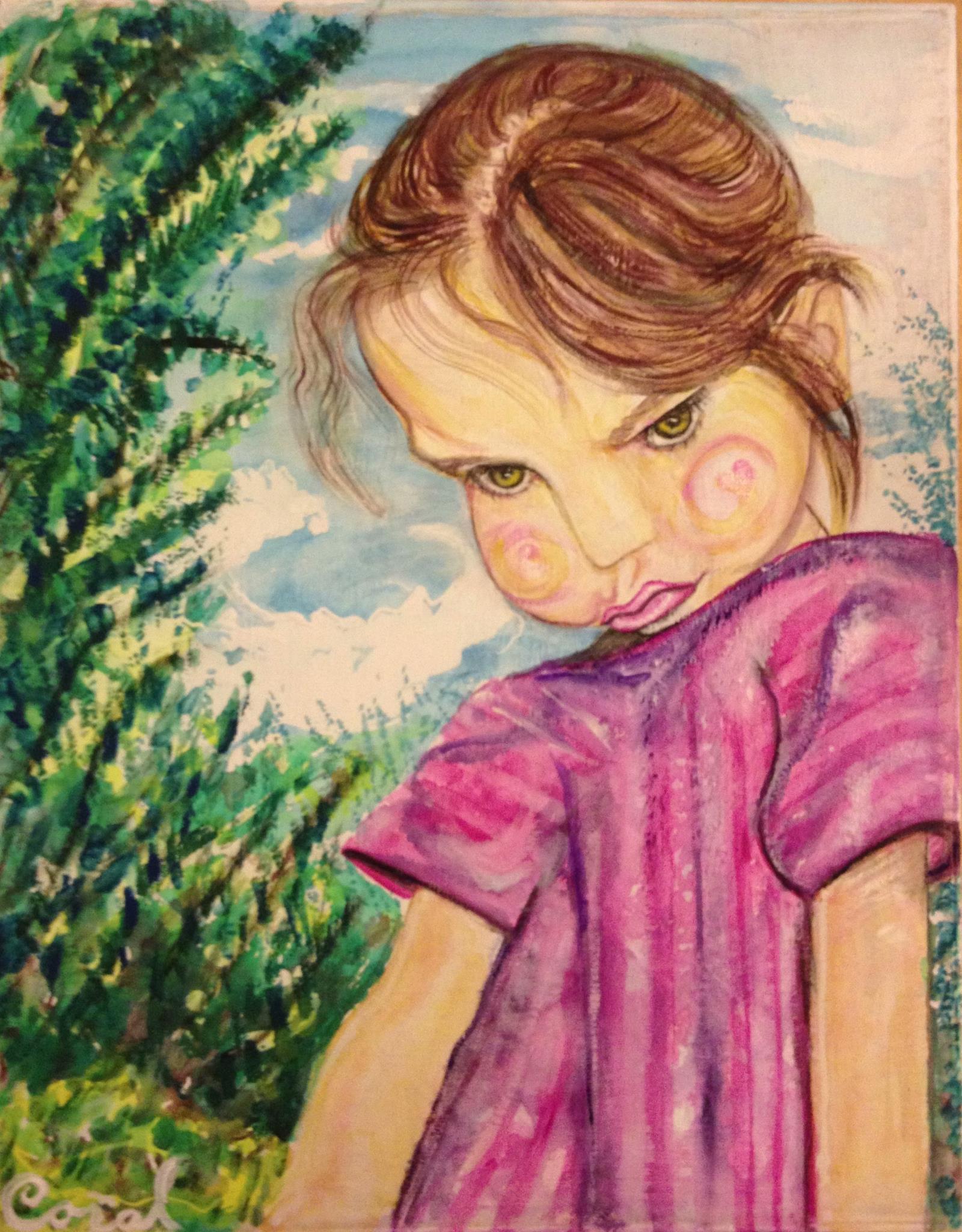
painting by Coral Staley

Sawyer by Coral Staley


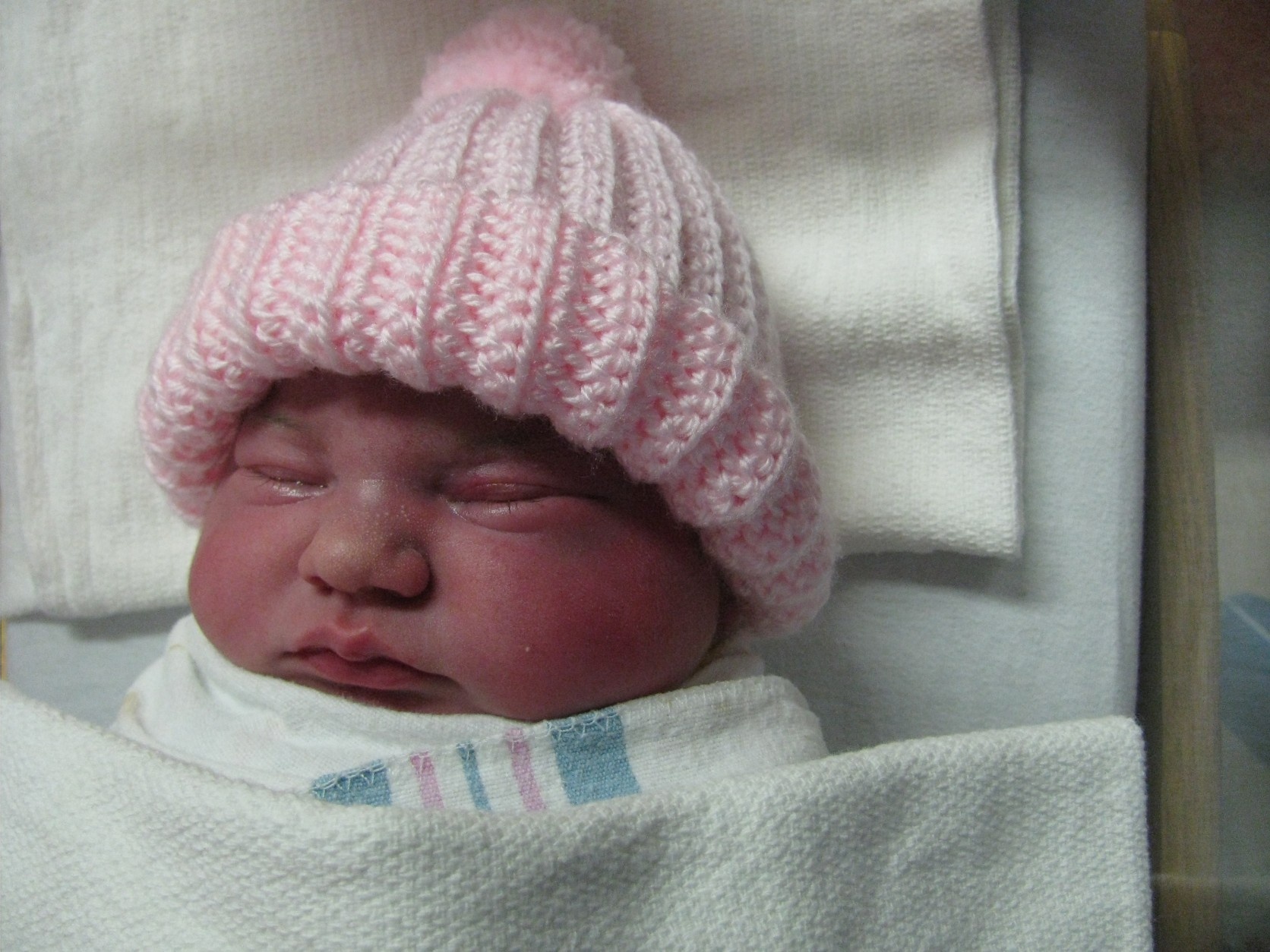
She came into this world silently, too. We held our breaths and waited for the sharp cry that came only after doctors intervened. Her lungs pulling in air and screaming only when her life absolutely depended on it. Such a birth was meant to foreshadow the way we came to know this girl.

IMG_0096

Newborn day

As she grew, we noticed that she wouldn’t speak outside our home. At all. She’d freeze, attach herself to our legs and whimper. Coupled with, what people came to call, her “shyness” were articulation problems that went beyond that of an average 2.5 year old. She had a language of her own, and my family and I became translators of a stony language. “Mem” she would say, when she meant “friend.” Her brother Tristan she would call “Chichin.” “B”s and “D”s, “M”s and “F”s, “K”s and “T”s, “L”s and “W”s all whirled around inside her head and settled into the wrong words. Family and friends convinced us this was the problem. She had the voice but not the language, the desire but not the words. The pediatrician said she was literally tongue-tied, so we scheduled the procedure to have her frenulum clipped. When the words still did not come, the doctor suggested that we get her ears checked. But when she would not acknowledge the sounds provoked by the audiologist, he pronounced her “too young.” “Come back in another year,” he said.

Her silence was under my skin, in my blood. Hadn’t our hearts beat together for nine months? Hadn’t she grown inside me, shifting her weight against my ribs? Hadn’t her heartbeat been enough to assure me of the room she would need in this world? The space she would fill? I felt her silence as a betrayal. But by whom? Of whom?

Photo credit: Kelly Kirkland

Sawyer and her brother

Our pediatrician was hesitant to recommend therapy—firmly stating that Sawyer was too young to be expected to communicate with strange adults. I wanted badly to agree, to believe that with time my tiny girl would smile at people and tell them her name when she was asked it. That she would volunteer stories or hold hands with little girls on the playground. But she’d never even spoken to my grandmother. My grandmother’s declaration still hangs over me, “She just don’t like me, doll.” There was no arguing. For my grandmother, this was just the way it was with Sawyer.

Then, after nearly a full year of pre-school, the words of Miss Mandy, Sawyer’s pre-school teacher, urged me to push harder, “We’ve never even heard her speak.” I was imploding. Really? No words? Never? As in not EVER? Miss Mandy added, as if we were two ladies gabbing over tea, “Yeah, we keep saying we wish some of these other kids were as quiet! Think of the self-restraint a 3 ½ year old must have to not speak all day!”

I called the pediatrician that evening, “I think my daughter has selective mutism.”   I spit the words out and let them sizzle between us. And her own silence told me that she–like so many doctors, teachers, therapists, I’ve spoken to since—had no clue what I was talking about.

Stages of Sawyer. . .

This photo burst–emblematic of Sawyer’s ongoing journey to find her voice…

Selective mutism. I first heard those words, all hushed and breathy sounding at a holiday cookie swap in 2011. The conversation caught my attention—some silent girl–a girl whose mother also affirmed, “She’s a chatterbox at home, I swear!”  This one a little older than my two and a half year old. Somebody mentioned a child psychologist. Another the diagnosis. I listened closer. This girl sounded so much like mine. Mine too looked through strangers and family as if they were ghosts. Mine too chatted happily in our house only to go out into the world pale and blank. I kept those two words–selective mutism– within me for another year before I unpacked them, left them at the ear of the pediatrician. Like the girl’s mother from the conversation I overheard, I too knew the difference between shyness and the eeriness of a silence that ran much deeper.

To make myself understand my girl, I had to go back to 1984 where I am walking up Davis Rd. with some neighborhood boy. He has an idea: let’s throw acorns at cars. Even though his face is too blurry to name him, his words are clear as if they were spoken only yesterday. Let’s. Throw. Acorns. At. Cars. The first two cars don’t stop. The third does. A man gets out. He has shoulder length feathered brown hair. His eyes are invisible. The neighborhood boy yells for me to run. He himself disappears into the fir trees between two raised ranches. But I am frozen. I try to scream, but no words come out. No part of me is willing to move. The man chases the neighbor boy through the trees, walks back to his car, and drives off. And there I am. Still.

Thirty years later, this moment is etched into my heart and it has the ability to change my heart’s rhythm and stumble into its beats. Why didn’t I run? Scream? Even at six, I wondered if I would ever be able to defend myself. Why had my own body betrayed me when I needed it most? As the car drove off, slowly my limbs unfettered themselves. The first few steps I took were numb, heavy, and frustrating. I wore black patent leather Mary Janes, but the feet inside them didn’t seem my own. It was the first time I remember being conscious of my own consciousness. And from that day I decided three things would always be true:

  1. Somewhere in the world there was a better version of me.
  2. Somewhere in the world there was an evil version of me.
  3. One of us wasn’t real.
12045278_10207917391717219_7126229998517242869_o

Not sure which version of me this is…

When you imagine a body wired this way, silence becomes palpable—and your body is a whisper that almost no one can hear.

For the next two years we spent our Thursday afternoons in Dr. Schiller’s small New Haven office filled with Playmobil toys from the 70s, baby dolls, play-doh, and an old wooden doll house. At first it was the three of us—me, the collector of her whispers. Later, I sat in the waiting area and Dr. Schiller and Sawyer negotiated this tricky path of communication together.


Later, in my bedroom we sit like old ladies folding laundry on my bed. I ask her if it’s okay for me to ask her a few questions. “About what?” She asks.

“Your talking,” I say. She looks at me uncomfortably and says okay.

And it is uncomfortable, this interview between my daughter and me. She is shifty and covers her face with a pillow. She tells me that talking to her teacher is scary, that sometimes she knows the answer but it’s too scary to say it. “What’s so scary?” I ask.

“I don’t know. Just talking.”

“Is it scary to talk to mommy?”

“No.”

“Daddy?”

“No.”

“Tristan?”

Again her answer is, “no.” I ask her about friends and classmates. She tells me sometimes it is scary to talk to them, but not mostly. I ask about Alexa, her close friend from class.

“No. It’s not scary to talk to her.”

“Why?” I ask.

“Because she’s quiet…like me.”
11406278_10207098871214718_4628923386358645453_o

And so, we will navigate this silence as one, she and I.

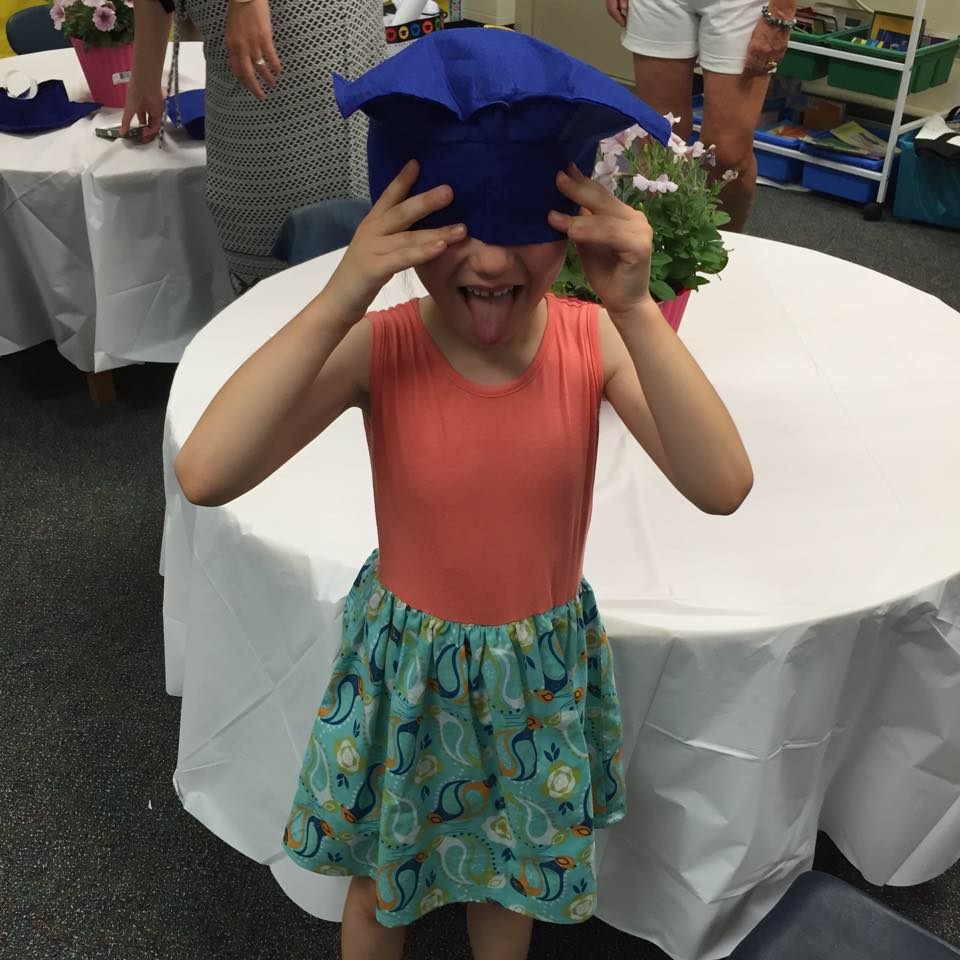
Six years after my daughter’s birth, I sit with her after kindergarten graduation. Her classmates are busy about the room, carrying small plates of grapes and brownies. They squeal, the girls in their frill. But mine sits in her chair, mute. Stone-faced. She pulls me down beside her and whispers in my ear, “snack.”

“Let’s go together,” I say back. She shakes her head. So I collect brownies, grapes, a cup of juice. I hand them to her and she tells me she is tired. She wants to go home from this party she’s been looking forward to for the last few weeks. And so, we gather her things: the papery blue graduation cap, the brightly painted art, her backpack—these final bits of a school year. I say goodbye for her: “Sawyer hopes you have a great summer!” “Sawyer really liked the grapes you brought.” I’d be lying if I said this didn’t unhinge me, this speaking up for a girl perfectly capable of speaking for herself. What must that be like—hearing your own voice filtered through your mother’s body?

But none of it matters. Every day I learn new strategies to help her communicate, to mitigate her social anxiety.

Along with this truth, she’s left kindergarten forever.

11391147_10207097863749532_5506411382685564356_n


About the Author:

148742_10204744922807479_5368057708672071095_n

The author and her daughter

Allyson Wuerth is a co-editor of Tell Us a Story. She is a mom, a wife, a high school English teacher, and a writer. She has published poetry in several literary magazines, and has poetry forthcoming in the anthology, Verse Envisioned: Poems from the Pittsburgh Post-Gazette and Works of Art They Have Inspired. You can read her other two blog posts, The True Story of Why I Hate Math , Two Years and 20 Miles from Sandy Hook, and What we Miss Most by clicking these links.

A Few Seconds

by Ron Burch

The first time it happened it was your fault. You had been at a summer party that night and got carried away with a bottle of Jack until it carried you away. You don’t remember staggering sideways to your truck but you did and you drove home or at least towards home.

When everything shuddered, you awoke. There was a semi-truck with its blinking brake lights and your blue Chevy wedged under it. Through slitted eyes, you saw in your blue cab broken glass and blood. To a man screaming at you. Then the flashing reds of a cop car.

You stumbled from your door and fell and the cop ordered you to stay down. You tried to stand anyway. Don’t fucking get up, he said. You thought he was wearing sunglasses but that couldn’t be right because it was still dark outside. You said something to him and even you knew it was gibberish. Don’t fucking move, he said and crossed over to the older man with the gray beard and red flannel shirt standing next to his semi.

You surveyed your truck and noticed how the front was compacted, bent and jagged-sharded like you sharpened it in your sleep. You noticed blood soaking your jeans and you knew it was your blood and you were disappointed that you had ruined your new jeans. That blood would never wash out.

The cop told you that you were lucky to live. That you bounced off the front tire of the semi and that a second or two later you would have driven under the trailer, which would not have left any room for your head. Woulda killed you straight out, he said. He was bent at the knees, his left hand holding onto your flat truck tire, twisted because of the bent axle, for support as he talked to you as you sat there with your back against your truck door or what was left of it. The ambulance is coming, he said.

None of this was making much sense to you and you threw up a brutal puddle of dark liquid on yourself. The cop stood up, the lights of his car still flashing like they were calling your name. The cop shook his head and said, Boy, you just fucked yourself. And he was right.

The second time it happened it was a few years later. You were driving the same truck. The insurance company hadn’t totaled it. This time you were on a two-lane road coming home from a work party. After the restaurant closed, the head chef had made dinner, mushroom risotto and salmon, for the staff, serving the perfect bottles of wine to go with the meal while you all talked about your lives and where they were going. For most of the ride home, you didn’t see another car on the road. But almost getting there you found headlights coming at you. You thought it was maybe the curve of the road since you didn’t know this way too well but then you realized, almost too late, that the oncoming car was in your lane. This time you didn’t pass out. You sat there, breathless, hands strangling the steering wheel, glass and metal exploding in slow motion around you, the truck spinning and spinning and spinning until you ended up sideways in a roadside ditch. Broken glass, blood, you’d been there before. The other car, it was orange and black, kept going. Don’t know how but it did.

The cop who arrived on the scene carried you out of your truck and sat you on the side of the road. Besides being banged up, you were okay. His radio kicked up. They’d found the other car. It didn’t make it too far down the road. The driver was drunk but still alive. Later, before the court appearance, you found out that the driver had fled the country.

The cop looked at your truck and said another few seconds and the other car would’ve hit you head on, you’d be dead.

You started laughing. He didn’t understand why but you did. He checked to see if you were sober. You were because you had lived through a few seconds before.


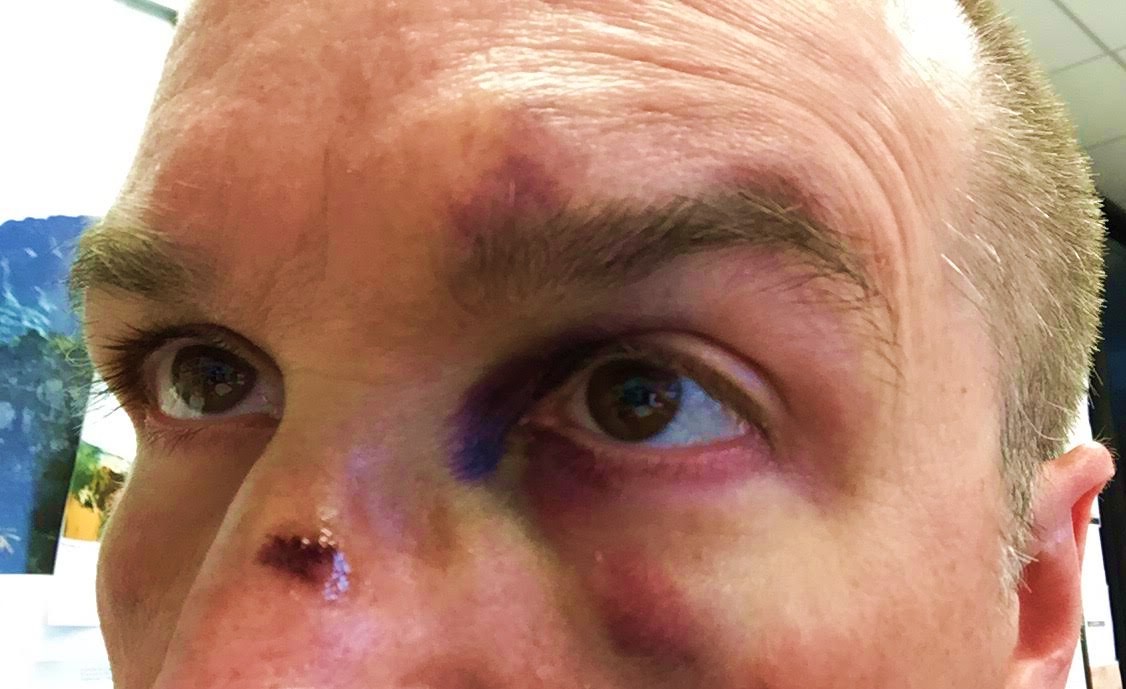
The author and his broken face.

The author and his broken face.


About the author:

Ron Burch’s short stories have been published  in Mississippi Review, Cheap Pop, Pank and others. He’s been nominated for a Pushcart, and his first novel “Bliss Inc.” was published by BlazeVOX Books. He’s currently working on his MFA in Creative Writing at Antioch University. Please visit:  www.ronburch.com.

Bittersweet Fantasy at Sweet Lou’s Cafe

By Judith Alvarado


Sweet Lou's

A dimly lit, cavernous café/bar located close to campus, Sweet Lou’s was best known for its happy hour special: a large pepperoni pizza and a liter carafe of murky Chianti for $10.00. The first time I heard of the cafe was when my professor suggested that we meet there instead of his office to discuss my thesis; life changed forever when I agreed to meet him at Sweet Lou’s on a balmy, Indian summer night.

Pulling into the café’s parking lot that day, my mind drifted away from the present, away from the rendezvous I’d agreed to; away from fretting over what might happen after sitting, outer thighs pressed together, sipping cheap red wine while examining passages of John Milton’s Paradise Lost; away from Sweet Lou’s and the man who waited for me inside.

I was a faithful wife. Very. 17 years faithful. I had never strayed from my marriage. Oh, I fantasized about it, what an active sex life I had while my well-intentioned, emotionally distant husband snored next to me in our vast king-sized bed. Affairs were plenty as I lay next to him. Trips to Rome with the hot construction guy, building the deck on my neighbor’s house. He and I making out next to the Trevi Fountain on a humid summer day, hands roaming over each other’s tan, salty bodies. Secret trysts with the muscular Whole Foods produce man, doing it pressed up against a massive, stainless steel refrigerator in the back of the store. I even fantasized about men I had never met: a billboard ad boasted a hot male model with a smoldering stare—oh, the adventures one can have with a one dimensional person. I had an active imaginary sex life to counter the very real stale one in my bed. It was safe, only I knew about my fictional indiscretions. But to actually cheat, shifting the act from the world of fantasy into the real world, would change everything.

I knew the literal rendezvous would send tremors through my life, an earthquake of the highest magnitude, and that’s what I was thinking as I labored to push open the imposing wooden door to Sweet Lou’s Cafe. I exhaled, hard, put both hands on the recalcitrant door and thrust it open. Wide.

Round tables of different heights and diameters, covered in vinyl red and white checkered tablecloths were arranged in no particular order on top of a dark-stained wooden, plank floor. The tables sat in front of a long oaken bar that accommodated more than 25 barstools, and multiple dormant pool tables hungry for attention were on the bar’s left side. Three muted TVs tuned to various ESPN channels were spaced equally apart, mounted above rows of expectant, liquor bottles, patiently waiting to be tipped over icy, stainless steel shakers. And, an old fashioned, chrome jukebox like the one Danny Zucco from Grease leaned on as he chatted up Sandy, played The Rolling Stones, “You Can’t Always Get What You Want.”

As I walked over the threshold, I spied him, his back to the room, sitting on a stool, both elbows propped on the bar, sipping a half-full glass of Chianti. I thought, I must appear nonchalant. Must conceal my trepidation. I spied my reflection in a smudged, long mirror with the Sweet Lou’s logo on it. I looked good, sexy. My short, silky skirt and thigh-high leather boots were perfect for this meeting. The multiple wardrobe changes were worth the effort, and I was even wearing a thong. Hands trembling, I reminded myself that I’d rendezvoused hundreds of times in my fantasies. I was always calm, the one in control, looking hot. Staring at his hunched back, I ventured further into the café, channeling my best fantasy self. My heart leapt because as I did so, he turned his head to face the door and me.

Unfortunately, though, my suave entrance was disrupted. Shattered. The heal of my leather boot snagged on a sticky, rubbery doormat, and down I went, head-first. My thunderous thud proved to be serious competition for The Rolling Stones, who I wished would give me what I wanted and get me the hell outta Sweet Lou’s. Adding insult to injury, as I lay face first on the wooden floor, I noticed a draft, a draft revealing that my silky skirt had flipped up high over my ass—I was mooning the room.

Splayed, I reached both hands back readjusting my skirt, while at the same time willing the varnished, dark, wood floor to swallow me up. Something this undignified never happened to me in my fantasies. Maybe he didn’t notice, I thought. He’s an intellectual, absorbed in heady thoughts, ruminating on nascent Marxist elements in 17th Century poetry. But a bold hand appeared in front of my face, his actual hand, not the hand of some imaginary man. A warm, manicured hand that I had to grasp. Grasp, rather than do a rewind in my head to restart a fantasy gone awry. It took me a moment to reach for it, but bracing my body and my fragile ego on his hand, I eventually stumbled to my feet.

As I got my footing, I took in his appearance, and, for the first time since meeting him two years prior, I noticed that he was a little man, and I realized that I didn’t much like him. In fact, I didn’t like him at all, but I knew that I had to have him.


About the author:

Judith Alvarado has been published in 101 Words and The Napa Valley Register. Her other newspaper appearance was at age 11: she was the subject for an article in the San Francisco Chronicle when she tried breaking the Guinness Book of World Records pogo stick jumping record.  Although she ended up with bruised legs and no record, she, to this day, fully embraces life’s ups and downs.

Eucalyptus Fears

By Nancy Barnes

The mountains were lovely in the light that followed the dawn. The man who led us along the trail pointed to a giraffe, a calligraphy stroke against the far horizon, then to a herd of bok, much closer, grazing on a hillside. His finger stopped on a reddish brown spot. “Look there,” he said. “That one’s half goat. It was abandoned by the herd when it was a kid so it joined a family of goats at camp. Looks like it’s come back to visit with the bok. ”

The South African teenagers at the camp where I was a counselor had all been affected by HIV/AIDS, many of them orphaned, forced to move from place to place, auntie to cousin to neighbor. I was a white American woman, a college teacher with all the comfort and privilege that suggests. These young people had endured such hardship and loss, almost beyond my imagining.

What did I have to offer them? My assignment at the camp was to teach the kids to swim. I’ve always loved to swim; swimming has gotten me through tough times in my own life. But was that enough? My life was so distant from the lives of the South African campers. I was anxious about the distance between us.

There, in the mountains above Johannesburg, the noonday sun was terrifying. The languages that careened around me at the pool– Xhosa, English, Zulu – left me exhausted. Boys strutted and splashed, shouting to drown out their fears. Thirty campers, one cabin of girls and one of boys, arrived at the tiny pool each hour.

The hour before lunch I was always starving, barely hanging on. I collected mounds of sopping wet towels and hung them to drip on the wooden stakes of the fence that circled the pool. The rusty brown goats that ambled around the cement rim of the pool liked to rub their faces against the towels.

By late afternoon the mountains darkened. All of us, campers and counselors, made our way, single-file, along a dirt path towards a stand of eucalyptus trees beyond the farthest cabin. The eucalyptus were towering mottled trees; they shed a thick, messy carpet of leaves that rustled and crackled underfoot.

Up ahead a dead tree, at least forty feet long, rested in the crotch of a living tree, maybe twelve feet up. The angle was steep. The exposed trunk shone as though polished, gleaming under scabs of bark.

Singing, as ever-present as the mountains, swelled around me. Then the crowd stilled. The camp director began to speak. “You have now entered the panic zone,” he said. “That’s right – the panic zone. For this next activity all of you, not just the children, all of you will walk up that tree. Your fear will teach you the skills you need.”

Huh? The panic zone? All of us? Was he serious? Fear would teach us? I thought I must have misheard him.

The campers couldn’t stand still; they jostled and called out, daring each other to try. A brave young man stepped into the clearing and began to creep up the trunk, his bare feet molded to the bark. My breath caught.

Panic flickered in my throat. I was in my early sixties — there was no way I was going to try that. Wasn’t I old enough to say no? Besides, I stood next to a camp director from the Midwest, a nimble-looking woman in her thirties. Like me, she had come to the camp as a volunteer. “I wouldn’t let my cat walk up that tree trunk ,” she whispered.

I felt myself rooted to the ground. I had never been daunted by the idea of learning something new, or helping others try. Certainly not afraid. Back home, I worked with kids in public high schools in the city and undergraduates at all sorts of institutions. I had experience with the hazards of adolescence, and a special affinity for that age. But rooted there under the eucalyptus, everything felt perilous.

This wasn’t my responsibility, I told myself. The South Africans were not my students. My job at the camp was to teach swimming. Water did not frighten me. I just had to get through the next hour, take some teasing and watch these amazing athletes show off.

Thomas was one of those athletes. He was Zulu, a counselor at nineteen. Tall and skinny and kind, Thomas had a sweet smile. He had been forced to move, alone, into a shack in a township just outside Johannesburg when HIV devastated his family. When he told me his story Thomas stressed how much it had meant to him when he could bring his younger siblings to live with him. His young life had demanded great courage.

One of the first evenings at camp Thomas had noticed that I was awkward and nervous when everyone began to dance. The South Africans seemed to dance as they sang, graceful as floating eucalyptus leaves, from daybreak until bedtime. That night Thomas had pushed through the moving bodies to stand next to me. He knew, somehow, that if I could step with his steps, our hips bumping gently, I would be alright.

Now, Thomas stood behind me in the shadowy grove. “He will love this insane activity,” I thought. This was a man who balanced barefoot on a thin pipe railing outside the dining hall in the first morning light, singing to greet us as we gathered for breakfast.

Through the curtain of trees I could see the figure of the young man edging up the slanted trunk, arms outstretched, teetering, seeming not to breathe as he inched one foot forward, paused, then the other. A group of girls at my side hugged each other tightly. The chanting and goading stilled; low voices encouraged him: “Don’t look down, don’t stop – you’re almost there.” “Beautiful! That’s beautiful!”

Dread settled in my chest. My private fears – being inadequate, losing face in front of the kids — blossomed into fears for them, these teenagers who had already met dangers and borne sorrows almost beyond my ken. I held my breath.

Suddenly a strong dry hand gripped mine. Thomas had stepped to my side, his sneakers silent on the fallen eucalyptus leaves. How did he know I was afraid? How could he know?

I smiled at him. Yelling and screaming erupted as the first climber reached safety and raised his fist in the air. Thomas and I stood still, holding hands.

I smiled again, to thank him.

Thomas did not smile back.

“Nancy,” he said, “I want to climb that tree. I will climb faster than he did. But I don’t know if I can keep walking to get over there.” I felt his arm tremble. “I am so afraid. There might be snakes in this grass, under all these leaves, and spiders.”

“Please don’t let me go,” Thomas said. “I have never been in the forest before.”


About the Author:

Nancy Barnes is a cultural anthropologist who has had a long and wonderful teaching career in college and high school, in women’s prisons, and in Burma, Mexico, and South Africa. She has only recently begun to write personal essays. This is her third publication.

Prankster Comes Clean

by Randall Martoccia

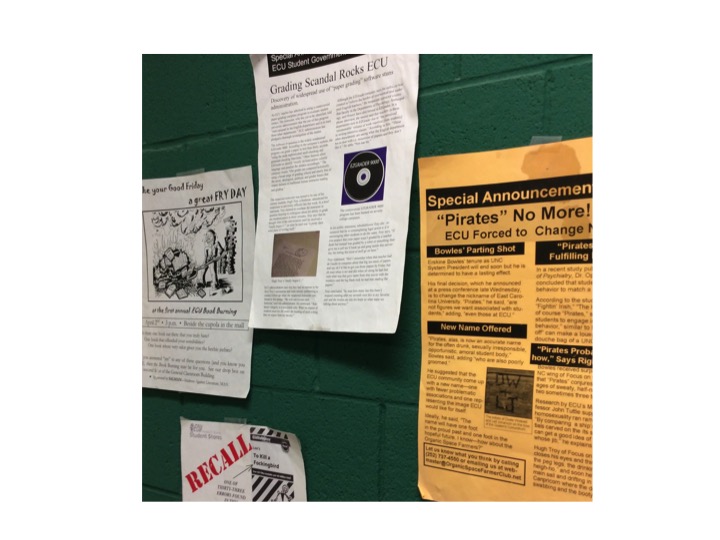
wall of pranks

Wall of Pranks

I was a serial April Fools’ prankster up until that week in 2014. My MO was to make the prank look like a bulletin from a university department or, as in 2014, from the campus newspaper. That year’s prank—my 18th—was an Onion-style article about a pair of characters who are devastated to find out that their beloved East Carolina University athletic program is clean.

“Culprit Comes Clean” capped five days of fallout. On the day after the prank, I dismissed my class and saw a campus cop in the hall. My class had just talked about the Birther conspiracy belief, and the discussion continued down the hall. I noticed that the officer trailed us but I thought little about him. In fact, when he confronted me, I took him to be a former student. I greeted him how I usually greet students whose names I’ve forgotten: “Hey, how have you been doing?”—making up for my memory lapse with exuberance.

He asked if we could talk privately. It beat “publicly,” so we walked to my office. He showed me my flyer and asked me if I knew anything about it. I confessed, which he said was a good idea because I was “all over the surveillance cameras.” Around this time, I half-assumed that I was being out-pranked.

Was it wise of me to wallpaper my office with my past pranks? Probably not. There I was with a uniformed officer questioning me about a hoax, with the evidence of nearly two decades of impishness on the wall behind me. The décor resembled the wall clippings you see in the boudoirs of cinematic serial killers.

With this prank, my last, I made two undeniable mistakes. I used the campus newspaper to distribute the hoax (by stuffing my flyer into the issues). Also, I used the paper’s logo. I assumed that any readers with any sense would realize that it was an absurdist satire, but they would have no way of knowing that the prank was not from the newspaper staff.

Involving the athletic department might have been my third mistake. I did not satirize the university’s sports programs, but I understand why the leaders of the program were angry. The fear of improprieties hangs over any college program, so I get why the officials would dread even the whisper of a scandal—or the screaming of it in a bulletin’s bold headline. Plus, my hoax was off color. I have one of my distraught fans, John Tuttle, posit, “Handjobs get results.” The character is presented as a fool, but since no other hoax generated negative blowback, the fool was possibly correct about one thing: “Hand jobs” might have gotten a result.

That any part of me was expecting the officer to blurt out, “April fools, sucker!” shows my cluelessness. A couple of years ago, my buddy James Marshall asked me how I got away with my annual April Fools’ gags. Unlike corporations, I told him, universities tolerate dissent, even subversion. I pointed to a precedent. Several years ago, my hoax concerned the silencing of the Pirate Rants, a series of anonymous rants that appear in the campus paper, which—by the way—are the paper’s most popular feature. The then editor published a playful response, which read, “I would, however, like to thank the individuals who decided to create this unique prank because our readership increased….” To expect pranks to always be taken in this spirit was just wishful thinking.

Ultimately, no charges were filed. I sent apology letters to all of the offended parties. Seeing my name and face in the paper next to that headline made me edgy. I looked at the article that one time and couldn’t even bring myself to read it all the way through. For weeks afterwards, I avoided picking up the newspaper, fearing a reference in—yep—the Pirate Rants. I was done with April Fools’.

And I was relieved. April Fools’ Day pranks had become an obligation. Late March had become a stressful time for me, as I had to rack my brain to come up with a new gag that could top the previous year’s. A lot of people—I call them normal people—don’t feel the yearly urge to create satirical hoaxes. I’m now one of those people. So in this case, if none other, I’ve been normalized.

The Making of a Prankster

Slide1

Pranksterism runs in the family. My dad sprung something on his family every April 1st. I’ve picked up fake dog shit with a paper towel and swatted a rubber cockroach with a shoe. I’ve seen what looked like a tipped-over bottle of chocolate syrup on the kitchen counter only to realize that the spill was a flat piece of brown rubber.

The pranks he pulled on his Psychology Department colleagues were more sophisticated. They usually appeared in the form of department memos. I remember one of them, in purple mimeograph ink, announcing that ECU would be enrolling a pair of gorillas. This was back when Koko was astounding people with her communication ability. Marsha Ironsmith and John Lutz, my father’s colleagues, recall another prank that followed “a heated debate on the merits of the foreign language requirement.” The next morning, my father, who had been silent during this contentious department meeting, sent out a set of minutes—in French.

In 2001, the first April after my dad died, I was grading papers in my office over the weekend. I had taken on the tradition just a few years earlier, and feeling overwhelmed, I was planning on skipping this year. Then, something kicked in and I decided that, no matter how busy and how drained I was, I had to do something. My prank—a parody of the course flyers that were then common on my department’s walls—was probably my least ambitious both in concept and in execution. I made about ten copies and just taped them up among the real flyers. The mock course, by the way, was the most boring one I could think of, The History of Punctuation. I know of no one who tried to register for the class, nor do I know if it was noticed at all. Still, it’s one of my favorites. Continuing the tradition seemed so important that day, less than four months after my dad died.

In those first pranks, I was doing for (or to) my department what my dad had been doing for the psychology department. Local were the themes and the distribution. I was content to plant posters in the English Department office suites. I expanded into campus-wide pranks in the early 2000s. Some pranks were just silly, as in 2009’s “Bring Your Pet to Class Day.” In 2010’s “‘Pirates’ No More.” I had UNC system president Erskine Bowles change ECU’s nickname to the more politically correct Organic Space Farmers. Most hoaxes are inherently satirical, but with the silly hoaxes, the only target of satire was people’s gullibility. In some years, though, targeting a social issue or campus concern took precedence. In 2004, I had ECU launch a faith-based curriculum. The flyer, designed by my sometime collaborator, had a Heaven’s Gates gatefold.

One of my problems with the 2014 prank resulted from combining a hoax and a social satire. My usual strategy was to attract attention with a shocking headline and use a familiar logo to get past the readers’ skepticism. If someone wanted to suspect ill intentions, the 2014 headline—“Scandal! in the Athletic Department: No-show Classes, Paid ‘Chaperones’ to Entice Recruits, and Illicit Payoffs”—provided ample material. I’m confident that no one fell for the prank. In order for someone to believe that the fan club actually called for improprieties, one would have had to miss my clues, such as the bulletin’s picture and caption, wherein a football player flaunts cash above the words “Brian Cardiff holds up bills shamefully not given to him by the ECU Pirate Athletic Department.” And would anyone who misses the irony actually want to admit it? Still, this prank shows the problems that arise from mixing a hoax with social satire. I couldn’t pull it off, and I had 187 square inches to work with. 

“Whatever It Is, Randall Did It”*

In the days leading up to April 1st, 2015, I told everyone that my plan for that day was to be as innocently visible as possible. A friend threatened to make a bunch of “Randall masks,” assemble a prankster team, and release them—V is for Vendetta-likeon campus. I had a mix of worry and hope. Maybe the scandal would rise up again. Maybe the tradition would continue.

I behaved myself, but I didn’t have a chance to bask in the bright light of virtue for long. On April 2nd, in an unsigned editorial, which was primarily about the loss of several positions in my department, the campus newspaper staff wrote, “We consider it alarming that Randall Martoccia was not among the professors who were let go earlier this year,” meanwhile accusing me of slandering ECU’s football team. That the hit seemed so off (slander?) and so, well, old did not make it any easier to read. The same raw feeling came back, and I wondered about the future. Could I expect the scandal to blaze forth every April like azaleas? And then wilt a few weeks later, also like azaleas?

What disturbed me most was the loss of control of my image. Like most writers, I have some narcissistic tendencies. I occasionally cast myself in my own movies (and—good God—I’m no actor), but in those cases I’m in control of how the world sees me. My name and my old picture (in the 2014 article) were used willy-nilly by people with vats of ink at their disposal. My scandal was very minor, but I found that the public arena is an icky place.

While in that place, I saw myself the way my newspaper detractors saw me. Was I really guilty of something so awful? Well, the newspaper nearly seduced me into thinking so. Then something a colleague told me helped pull me out of my prankster remorse. This colleague—a thoroughly respected and respectable professor—stuck his head in my office and said, “If they can’t take a joke, fuck ‘em.” I had been suckered into seeing myself as a particularly humorless group saw me, and of course I was going to look like a delinquent to them.

As for my friend’s threat to deploy a band of masked pranksters on April 1st—well, I now wished that he had followed through. I wished to see the Pirate sculpture bedecked with shovel and jet pack as he transformed into an Organic Space Farmer. I wished to see the Pirate Rants turn Francais for just one day. I wished to lose control of my image in the grandest possible way. I wished for my face to really be “all over the surveillance cameras.”

Alas, my friend was only bluffing. For the first time in three decades and maybe four, ECU’s campus was free of the Martoccia prankster tyranny.

*On my first prank-less April Fools’ Day, an unidentified colleague posted on my office door a note with this message.

About the author:

Randall Martoccia teaches composition, literature, and film studies at East Carolina University and screens fiction entries (among other duties) for the North Carolina Literary Review. Several of his short videos can be found on YouTube. His most recent is Campus Ghost Walk/Folk Talk, a documentary about legends on East Carolina University’s campus. His work has appeared in War:Literature and ArtJersey Devil Press, and Skeptic Magazine. His poem “Love as a Space-Age Polymer” was a finalist in a Prairie Home Companion sonnet contest. His story “Pipe Dreams,” about his mother’s head shop, was one of the first stories published on the Tell Us a Story blog. You can read it here: Pipe DreamsTo see the pranks mentioned in this article and most of the others from Randall’s 17-year run, go to his blog: https://randallmartoccia.wordpress.com.

Parking Garage Late at Night

by Valerie Maloof

image credit: slog.thestranger.com

image credit:
slog.thestranger.com

A man grabs you by the waist. You don’t know this man. He pushes you against your car, and then it’s your turn. All your years of taking self-defense classes and watching Charlie’s Angels was to prepare you for this moment. You are ready.

Your mother always knew this moment would come. Every time she talked about life she talked about the bad parts. During a thunderstorm she strapped your hot pink Velcro sneakers on so tightly, so that if lighting struck the house you could run to safety from your burning childhood home. Field trips across state lines were nothing but bus accidents. Steak, pork and ribs were nothing but choking hazards. Men were nothing but people to avoid.

You are going to annihilate this man who has grabbed you. Applause breaks will come out of nowhere. Perhaps in this garage there are security cameras that will capture you smashing your pointy elbow into this man’s face and you’ll be on the evening news. Your keys are already poised between your knuckles because how else should a woman walk through an empty parking garage? You’ll clasp both your hands like a little kid praying and you’ll swing your hands like a baseball bat, you’ll get more momentum than a punch and you’ll also protect your chest. The evening news will have never seen such a swing.

You have grown up to be a very confused adult. Tall buildings could collapse, and what’s really holding those windows in place, don’t get too close to the edge, are thoughts you keep to yourself as they eat you up inside. What kind of Mother are you going to be? Your husband will most likely be wimpy. You just know this to be true. Maybe your kids will revolt by eating uncooked fish or riding with friends in the bed of a pickup truck. Or maybe they’ll do something worse. Something you haven’t thought of yet. And that will scare you the most.

The man’s hands are still on your waist and you are still pinned to your car. That’s why you scream. You scream specific directions for him to get off you, for him to leave you alone, for him to go away, and you almost consider begging and saying please, but you don’t, and then you pant loudly while you flail your limbs like there is something crawling all over your skin and you can’t get it off you unless you flail and scream and maybe even beg.

About the author

Valerie Maloof graduated from Emerson College with a BFA in Creative Writing. She is also a student of the Grub Street writing class.

Not Goodbye

by Simay Yildiz

 unnamed

With antichrist on my left shoulder, I walk up the steps: Clank. Clank. Clank. I hold onto James’s arm harder and harder as we go up and up the stairs. He doesn’t say anything, yet I’m sure he wishes I’d be quicker. What he doesn’t know is that the last time I wore these shoes was on Halloween night in 2006, and I only had to walk for a single block. I feel like saying that out loud so that he knows, but my voice is nowhere to be found. Once we get to the door, we pause for a moment, and I can hear him take a hard, deep breath. He holds my hand that is now wet from wiping away my tears and squeezes it as I clank away to where we’re supposed to be seated.

John would laugh his ass off if he saw us like this: me in high heels, James’s big-shape squeezed inside a tuxedo and a tie. And we’d laugh with him and at him, but I’m not sure if I can remember how to right now. I sit, my hand over my mouth, getting even more wet with tears, and I stare at my knees as James keeps getting up and sitting down to greet faces I know I’ve seen before yet can’t remember the names of. I just want this whole thing to be over so I can hit the bottle. Hit it hard.

I’ve never been to a Christian funeral before, let alone a Catholic one. I don’t even know if it makes a difference. I’ve heard Catholics are more strict, and John’s mother has already scared me by asking me a million times to “dress nice” and “dress in black.” My daily color of choice is burning my skin today, screaming out loud how much I ache even though I’m by now numb to the pain. I feel more of an alien than ever as everyone seems to know what they’re doing except me. I’m expecting someone to turn around and single me out as “The Muslim,” and probably shoot me. But then I relax when I realize nobody needs another dead body today.

As I silently curse at myself for the stupid thoughts in my head, people get up. They’re holding books and singing in a language I don’t understand. I catch John’s grandmother’s eye as I look around to maybe figure out what the hell’s going on, and her pupils get bigger when she sees that I’m not singing. I stare at my knees again, for a while, and then I just move my mouth all along without making a sound. Songs sound horrible today.

The singing feels like it lasts for an eternity. Afterwards, we form a line and take turns standing in front of his coffin to say goodbye. It’s black like all the rest of us, but it’s not showing any skin. It’s not showing any skin because he’s in pieces. He’s in pieces and lying inside a box. He’s lying inside a box and not breathing. He’s not breathing and he never will, ever again. I take my hand to my lips and then put it on the coffin where I think his head is. I kiss him, “I’ll see you around.” I’m not saying goodbye. This is NOT goodbye.

James pulls my arm as my shoulders start shaking harder and my vision gets blurry. He sits me down on a chair right under Mother Mary. Is it Mother Mary? I think it is. Whoever she is, she’s smiling, and I’m mad because there is nothing to fucking smile about. I want to smash her face, but it’d be useless. I’m useless because I can’t even see straight or breathe right. I just want to get out.

Once we’re out, James asks me if I want to go to the cemetery. He gives me a crooked smile when I say, “Hell, no.” He offers to drop me off at Times Square, which is where I think I’m going, but I refuse since it already took us twenty minutes to drive for a block earlier this morning. He drops me off at the train station, which is near, and squeezes me tight before I clank away into the crowd.

I call Pat as soon as I get to Times Square. There are people all around, all rushing to god knows where, and I feel like they start walking faster when they see me just to run me over and be done with it. Pat asks me why I’m at Times Square. I say, where else I’m supposed to be. Union Square, he says, and I start cursing at myself yet again for being so fucking stupid. He assures me that it’s no problem and tells me to just walk around until he gets there. I say okay, but I can’t walk anymore in these shoes.

I walk into Starbucks and take the shoes off as I balance myself while holding onto a table where two girls are chowing down their Frappuccinos. They raise their eyebrows at me, staring at my bare feet, but they turn around quickly when I hiss in return. I open my carry-on suitcase and take out my sneakers. I walk outside to put them on because I feel like one of the employees will ask me to leave if I don’t, the cause being my shoe-changing right in the middle of the place and crying all along.

I walk outside. I breathe in, I breathe out. Kids’ laughter and people’s voices burn my lungs. My dad calls. Who the hell told him? Then my mom calls. I also talk to my sister. Then I find out dad had no clue as to what was going on when he called. I guess he just felt like calling, wanted to see how I’m doing. Right after that thought I realize I’m so desperate that I’m even thinking about the fact that my dad decided to care. I laugh in between sobs, and it hurts my stomach.

Pat agrees to take a nap once we get to his apartment in Brooklyn. First, he puts on Chicago, then he gives me a fat-ass glass full of some Scandinavian whiskey I can’t pronounce the name of. I tell him whiskey makes me sick. And he assures me that this one won’t because it’s “the best.” I take sip after sip after sip and it’s sweet and smooth and it burns and it doesn’t hurt that bad when it burns and by the time I see the bottom of the glass, my eyes are starting to shut.

We go out when we wake up. He tells me it’s okay if I want to stay home. I tell him I don’t because then I’ll be thinking, and thinking is the most dangerous of all right now since my mind won’t listen to me and focus on John and the fact that he’s gone; gone for good, gone forever.

He makes me drink some more of “the best” whiskey before we go out.

We go to a Turkish restaurant where the waiters don’t believe I’m Turkish and keep telling me I don’t even have an accent. I show them my passport to prove to them that I am indeed Turkish. Wow, they say and then talk some more, but I’m too tired to listen.

We then go to this Turkish/Arabic café where we share a hookah and get more drinks. I go on a crying frenzy once in a while, and Pat just shoves my head under his arm, squeezes me tight and gets me another drink. I drink and I cry. I cry and I talk to strangers. I talk to strangers and I want to smash each one of their smiling faces. But I don’t. Because it’s useless. Because he’s so far gone that nothing can bring him back.

We go back to Brooklyn and keep changing bars where we hang out with Pat’s friends. They say they’re sorry, I say I am too and I start crying. Pat shoves my head under his arm again, squeezes me tight and gets me another drink. Another one of his friends arrive, they say they’re sorry, I start crying again, and then I’m back under his arm, drinking more and more.

We have cheesecakes before we go back to his place, and I fall asleep on his chest.

“To die would be an awfully great adventure,” right, Peter?

About the author

Simay Yildiz is a nine-to-five-PR-girl, writer, bibliophile, librocubicularist, pluviophile, crafter and future crazy cat lady who’s prone to randomly bursting into song. She has a book blog (in Turkish) at www.zimlicious.com 


Room 568

by Jennifer McQuillan

Callie comes to me dragging her own fears behind her. What she can’t possibly understand is that my own anxieties, long dormant under a layer of medication and therapy and yoga, have risen to the surface like some rotting carp, sickening me with their foul putrescence, long-abandoned insecurities and self-doubt crippling me with their resurrection. Debt collectors shame me into payments I can’t afford, my colleagues whisper about me, my migraines sap my ability to function.

I cannot sleep.

Still I must rise too early to get to the high school, to make what little money I can to rescue myself and my daughter from this apocalypse. My own world is crumbling and yet I am somehow trying to keep myself together and shore Callie up too, a bulwark, a defense against razors and scars, bitches and rumors, tests and homework and expectations.

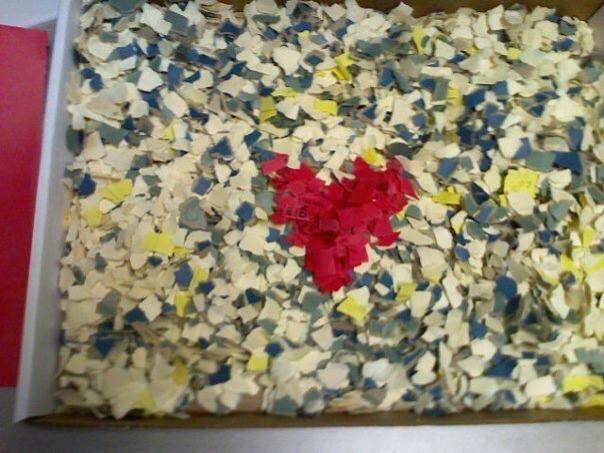
In spite of my own misery, I like it when Callie skips her class and hides in my classroom. It is my planning period, and I am supposed to be grading. Instead, we talk as her delicate hands rip to shreds my ever-decreasing pile of used file folders, “sticking it to the Man,” as she likes to call it. They have lost their authority and organization and meaning. We’ve created quite a box of dun-colored confetti, but it’s no matter. She wants to dip them in paint and make a mosaic, or maybe press it into handmade paper. That would be the transcendental thing to do, she tells me. We like to squish the shreds in our hands. Torn to bits, they are soft and vulnerable, and their hard edges no longer leave paper cuts on our fingers. Callie tells me she has an almost irresistible urge to toss the bits into the air and watch them fall, spinning their way down to the dirty institutional carpeting below. It would be a brief moment of freedom. We would still have to clean them up, the four walls would still press in on us, the florescent lights above mocking our endeavors with their stark hard glare.

Callie's mosaic

Callie & Jennifer’s mosaic

My hands are shaking.

Callie hides behind my desk as I teach, hides from her schedule and counselor and teachers and parents and so-called friends, not reading or writing but curving and looping her way through her own artistic graffiti, swirls and dots and flowers with names and pictures and messages coded cleverly in the maze.

I am lost in that maze too, despairing of ever finding either of us a way out.

***

It gets worse, of course. I am the first to crumple completely into dissolution, declaring bankruptcy, losing my house, my belongings, my mind some days. I have to ask my nine-year old daughter, Abby, to decide what toys she wants to keep and which she is willing to sell. I cannot bear to do this. Broken and wounded, I call Callie, asking her to come over to help me with this heinous task. She comes to my home and gently steers my little girl upstairs to help her sort through Barbies and art supplies and stuffed animals. I busy myself in other areas of the house, staying out of my daughter’s room, tears rolling down my face no matter what I try to do to pack up in preparation for our uncertain future. By the end of the day, Callie hugs me, but no words pass between us. There is really nothing to say. I am shattered, in pieces, the life I have known completely stripped away, and I cannot offer anything to anyone. I have lost eighteen pounds. My flesh has been flayed completely from my body.

I am raw.

***

Callie is next to fall, whatever strength and determination and comfort she brought that day only a mask, only her innate kindness shining through a heroin haze. Immersed in my own pain, I could not see. Her arms, already marked by years of self-mutilation, easily hid needle tracks. Her face-picking was just another manifestation of that ever-present anxiety we shared. When she dropped down the rabbit hole yet again, disappeared for weeks, months, at a time, I called it depression, believing she was still struggling with finding the right medication. I made excuses, I blamed her friends, I blamed her anxiety, I blamed her parents, I blamed her poverty, I blamed it all when it was right there in front of me, and I could not see. No longer a defender but an enabler, I swallowed her lies greedily when she would reemerge from the rabbit hole, so happy was I to see her. Callie had spent some time in the Oakland County Jail for shoplifting, she told me, but knowing her desperate circumstances I excused it, believed that the Great Recession was driving even the finest of us into once unthinkable situations, doing what we could to survive.

Now I blamed myself. I had been blind.

The flurry of text messages on a frigid Friday in December was devastating. Even now the story of what happened to her is too much to share. I promised Callie. It was a promise I would keep for months to come, a promise that I keep today. I went to the psych ward, I went to the detox center, I went to rehab, I went to halfway houses where her room was a cluttered shoebox. I bought her chicken finger pitas, walked up and down Main Street in Ann Arbor with her, clapping for the street entertainers. We drove to the thrift store, Macklemore cranked up in my car. We may not have had $20 in our pockets but we popped some tags anyway. In the middle of a sweltering August day with big thunderclouds overhead, Callie bought herself an enormous granny sweater, incredibly pleased with her purchase. Another winter would come, but this time, she would be prepared.

We are not whole, but we are no longer broken.

 About the author

Jennifer McQuillan is a veteran English teacher in the metro Detroit area. Her work has been published in The Literary Encyclopedia, The Dictionary of Literary Biography, and Proteus: A Journal of Ideas. She is working on her first novel.

At the Sound of the Beep

by Trudi Taylor

photo credit: Trudi Taylor

photo credit: Trudi Taylor

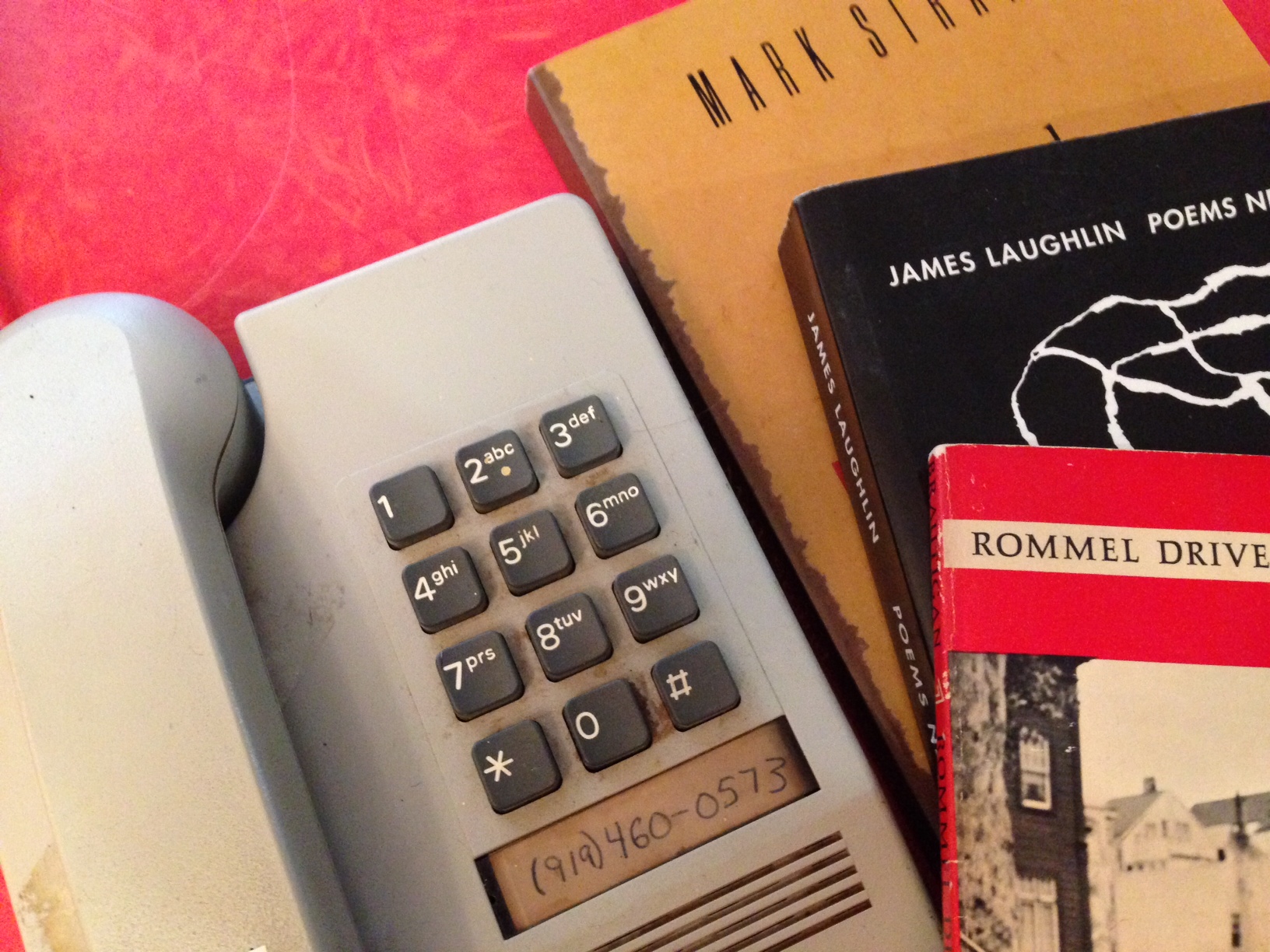
He read Mark Strand poems into my answering machine.

Masculine firmness mouthing each word. Susurrus of certain phrases. Over the next weeks, he quoted Laughlin, Brautigan, to return to Strand. I stopped. Listened. His daily messages were like worms fed to a starving baby bird. Beak to beak. I fell in love.

Then he disconnected and married a roadrunner.


Trudi Taylor, Ph.D., is a Scottish immigrant descended from sculptors, musicians, policemen, and mariners. Starting when she won the 8th grade creative writing contest, Trudi has been published in online and print anthologies. Her book, Breasts Don’t Lie, a short story collection, explores body image, sexuality, and identity. To support her writing habit, Trudi works as a yoga teacher, massage therapist, and counselor in North Carolina.